

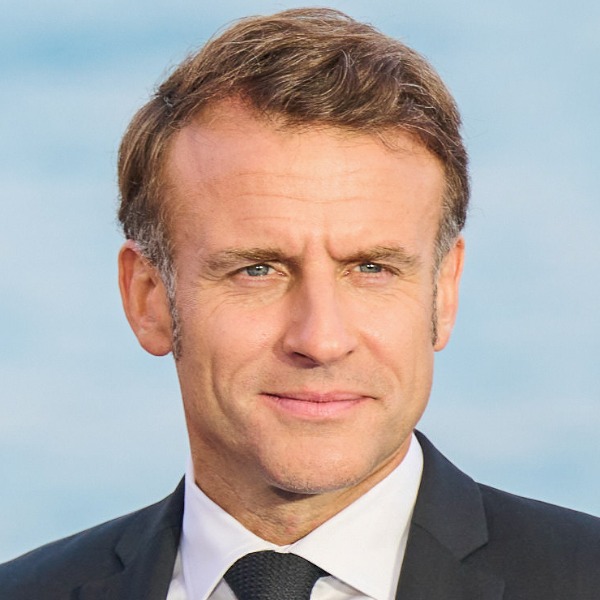
On Thursday evening, in a television interview, the president of France committed his armed forces to defending a Saudi oil terminal. He did not say how many people, which systems, or when they arrive.
What Emmanuel Macron did say was specific about the categories. Soldiers. Radars. Defence systems. The site is Yanbu, Saudi Arabia’s oil export terminal on the Red Sea coast, and it is being shot at.
Hours earlier the Houthis had claimed two waves of attacks on Saudi targets, one of them against the Saudi Aramco facility at Yanbu, after claiming strikes on military sites at Jizan the same day. The Saudi-led coalition said it intercepted six ballistic missiles aimed at Taif and Yanbu.
Quick Facts
- Who: France, announced by President Emmanuel Macron
- When: Thursday 24 September 2026, in an evening television interview
- What: Soldiers, radars and air defence systems. No numbers, types or dates given
- Where: Yanbu, Saudi Arabia’s Red Sea oil export terminal
- The threat: Houthi ballistic missiles, cruise missiles and drones
- That same day: The Saudi-led coalition reported intercepting six ballistic missiles aimed at Taif and Yanbu
- Britain: One RAF Voyager tanker deployed from Cyprus to support Saudi air defence operations
- United States: Escorts through the Strait of Hormuz; no Saudi air defence deployment announced
Why an oil terminal needs an air force
Yanbu is not a military target in any conventional sense. It is pipework, storage and loading berths, and that is precisely the problem. A refinery cannot be hardened the way a hangar can. You cannot bury a crude export terminal. One drone through the right piece of infrastructure takes capacity offline for months, and the people firing know it.
Defending it is therefore an air defence problem with unusually unforgiving geometry. The threat set spans slow propeller-driven one-way drones flying low, cruise missiles that hug the terrain, and ballistic missiles arriving steeply at high speed. No single system handles all three well. You need long-range radar that can see low-flying targets over water, an interceptor with the reach to engage a ballistic track, and something cheap enough to shoot at drones without spending a million-euro missile on a machine that cost a few thousand.
What France actually has to send
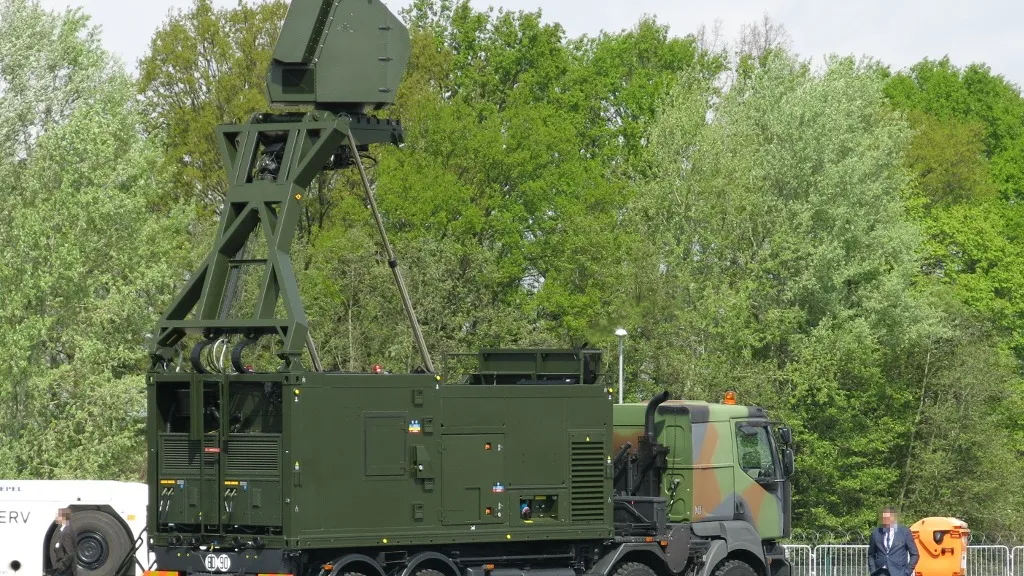
The French army’s long-range surface-to-air asset is the SAMP/T, known in service as MAMBA, a Franco-Italian system firing the Aster 30 and capable of engaging both aircraft and ballistic targets. France has deployed it abroad before, most visibly to Romania. Around it sit ground-based radars of the Ground Master family and the command and control to tie them together.
None of that has been confirmed for Yanbu. Macron named categories, not equipment, and there are good operational reasons not to announce which system is going where. It is worth reading the deployment as a political commitment that has not yet been turned into an order of battle.
A patchwork, not a coalition
What is assembling around Saudi airspace is not a single allied air defence structure. It is a set of separate national decisions that happen to point the same way. Britain sent one Voyager tanker from Cyprus, which sounds modest until you remember that tanking is what lets fighters stay airborne on combat air patrol instead of landing every ninety minutes. The United States is escorting shipping through the Strait of Hormuz and has announced nothing for Saudi air defence.
France now adds ground-based sensors and interceptors. Each contribution plugs a different hole, and none of them was negotiated as part of a common plan. That is how modern coalitions tend to form: not with a treaty, but with three capitals separately deciding that a burning oil terminal is everyone’s problem.
The open question is duration. Air defence deployments are easy to announce and hard to end, because the threat does not stop when the news cycle does. France has just taken on a commitment with no stated size and no stated finish date.
French television coverage of the decision, in French. LCI, 24 September 2026.
Sources: The War Zone; Arab News; Arab Times; LCI. Translations of President Macron’s remarks vary slightly between outlets.

0 Comments