
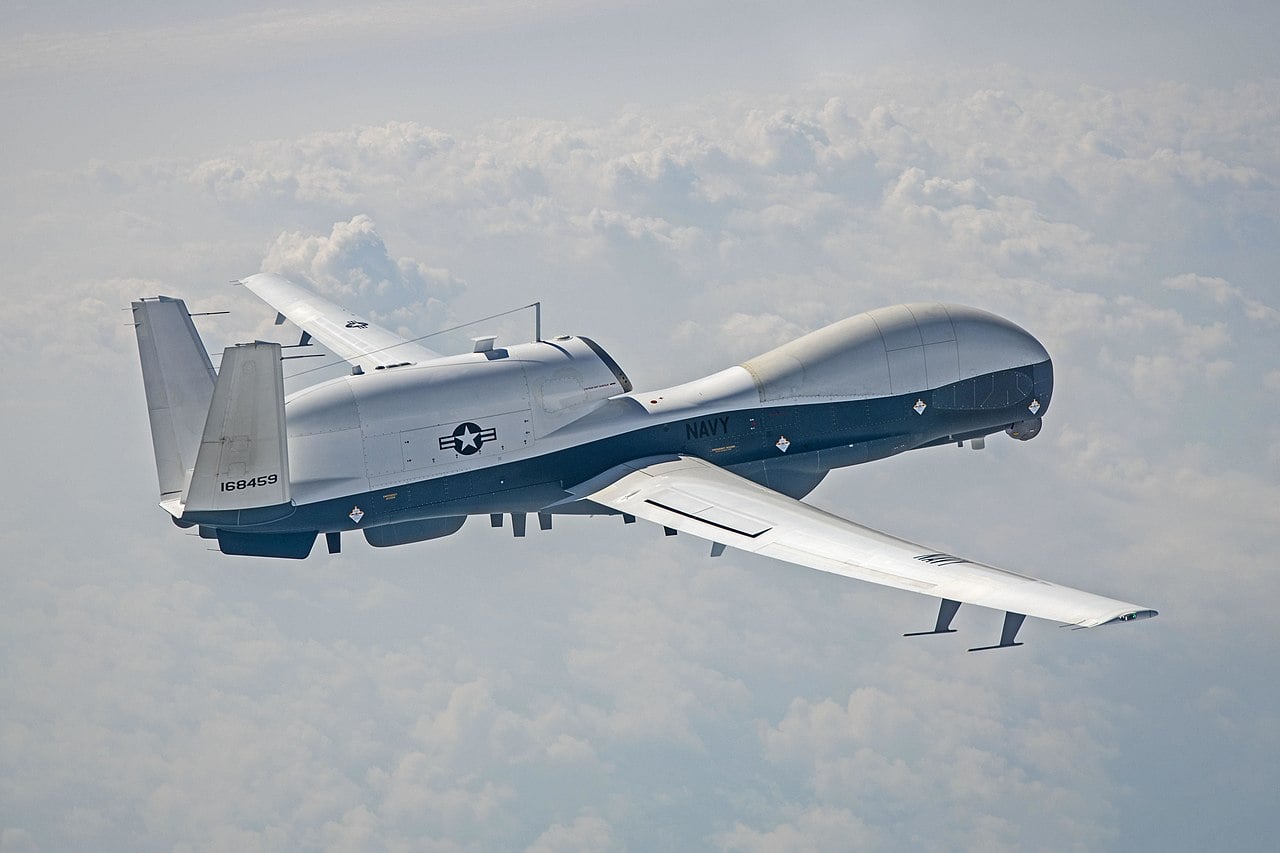
Put a Global Hawk and a Triton side by side and most people would call it the same aeroplane. Same enormous wing, same whale-shaped fuselage, same V-tail, same manufacturer.
They are not the same aeroplane, and the difference comes down to one operational requirement the Air Force never had: the Navy needed to go down.
Quick Facts
| Common ancestor | Northrop Grumman RQ-4 Global Hawk, in US Air Force service since the early 2000s |
| Navy version | MQ-4C Triton, originally the Broad Area Maritime Surveillance programme |
| Key Triton change | Reinforced airframe and wing, de-icing and lightning protection |
| Why | So it can descend through cloud from above 50,000 ft to around 10,000 ft and look at ships |
| Triton radar | AN/ZPY-3 multi-function active sensor, 360-degree maritime coverage |
| Triton coverage | More than 2.7 million square miles in a single 24-hour sortie |
| Global Hawk fleet | Planned at 63, cut to 45; ended with 18 Block 30s and 11 Block 40s |
| Global Hawk status | Block 20s retired 2021, Block 30s gone from the operational fleet by 2023; Congress has blocked full retirement |
| Triton operators | US Navy, Royal Australian Air Force, with NATO acquisition announced in 2026 |
The Air Force problem
The RQ-4 Global Hawk was built to replace the U-2: climb to around 60,000 feet, stay there for a day and a half, photograph things a long way below, and come home. At that altitude there is no weather. Ice, lightning and hail are somebody else’s concern.
That assumption is baked into the structure. The wing is enormously efficient and not especially strong, because it never has to be.
The Navy problem
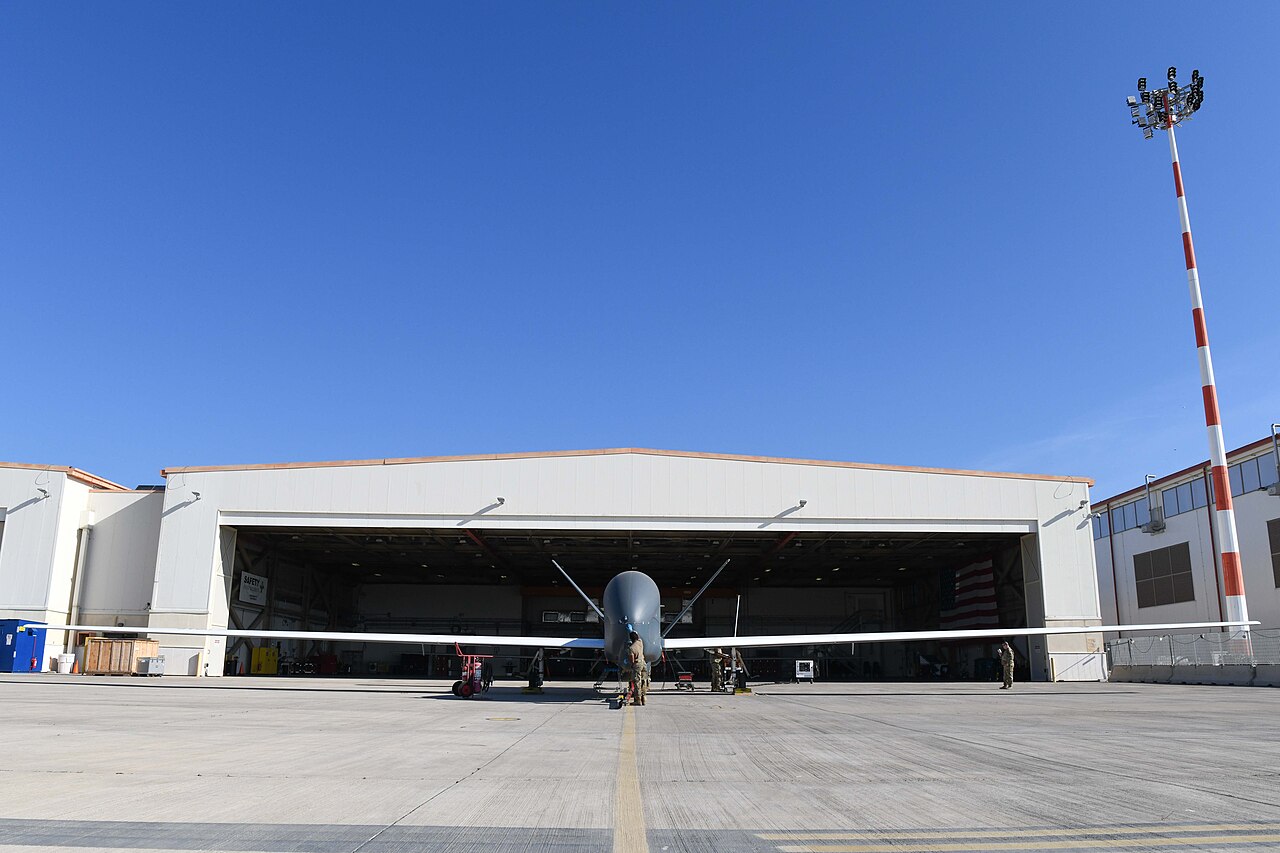
Maritime surveillance is a different question. Finding a radar return on the ocean is easy. Working out what it is, who owns it and what it is doing usually requires a look, and a look means getting under the cloud.
Which means descending from above 50,000 feet to around 10,000, repeatedly, in weather, and then climbing back. For an airframe designed to stay above all of that, this is close to a structural redesign.
So the MQ-4C got a reinforced airframe and wing, de-icing systems, lightning protection and a lower fuselage tough enough to take hail and bird strikes. It is the same shape and a considerably different aircraft.
What it is for
The Triton began life as BAMS — Broad Area Maritime Surveillance — which is an unusually honest programme name. Its AN/ZPY-3 radar looks through 360 degrees and a single 24-hour sortie can cover more than 2.7 million square miles.
The point is not that it replaces the P-8A Poseidon. It is that the Poseidon should not be spending its life searching. The Triton finds; the Poseidon prosecutes. The Australians describe the arrangement as a family of systems, and the phrase is more than marketing.
One programme thriving, one not
The two aircraft have had opposite careers.
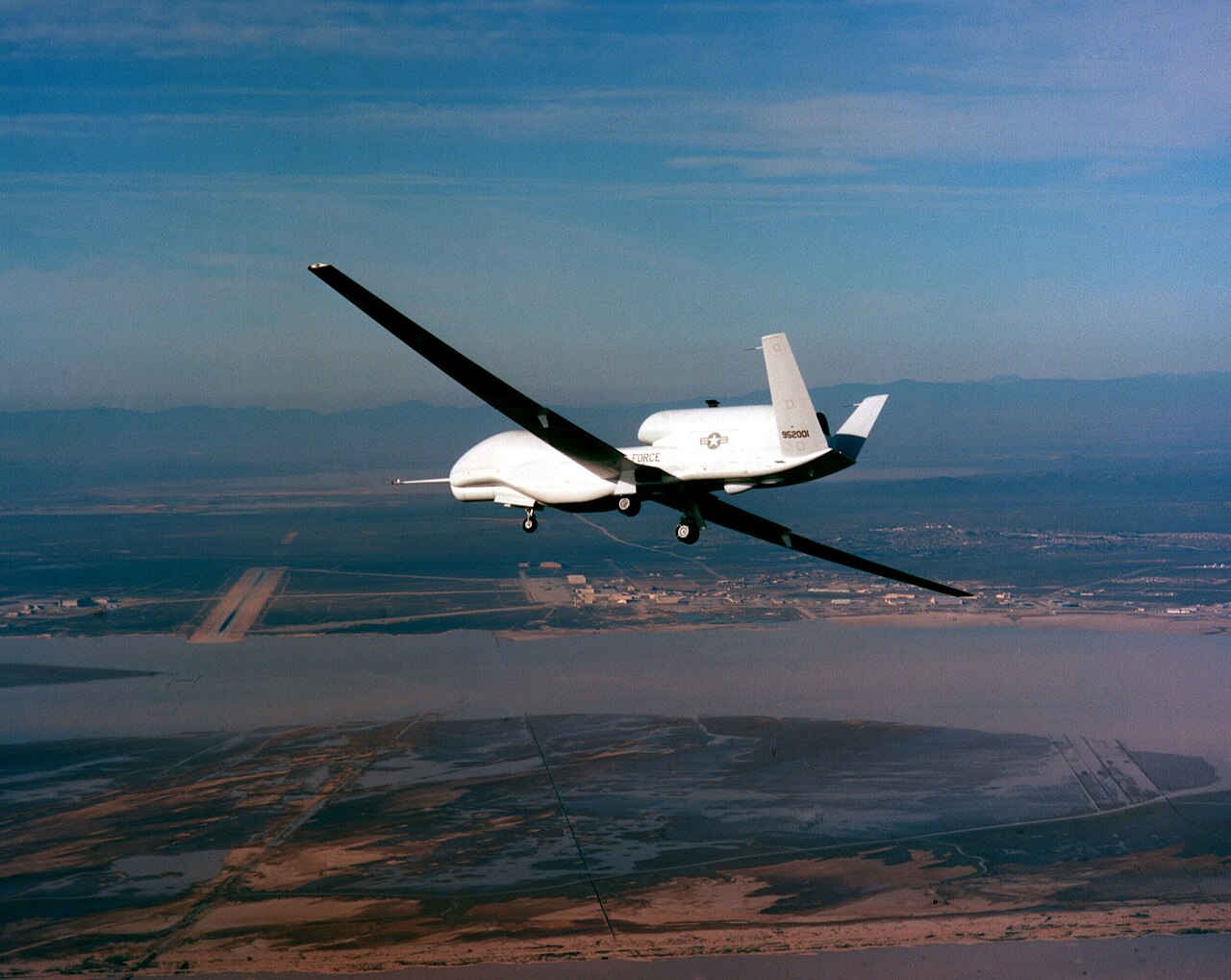
The Air Force planned 63 Global Hawks, cut that to 45, and ended with 27 of the more capable Block 30s and 40s. It first tried to retire the fleet in the fiscal 2013 budget, arguing it could not afford to bring the Block 30 sensors up to U-2 standard. In fiscal 2015 it changed tack, moved money from the U-2 to the Block 30, and proposed retiring the U-2 instead. The 2018 budget postponed U-2 retirement indefinitely.
The Block 20s went in October 2021. The last Block 30 left Beale Air Force Base on 7 July 2022 — leaving behind, at the same base, the U-2 it had been built to replace. Congress has since blocked further retirements, and current solicitations suggest some Global Hawks may still be flying into the 2030s.
The Triton, meanwhile, has just gone operational with a second air force. Australia declared IOC this week and is the only foreign operator; NATO announced its own acquisition in July.
Same wing. Same company. One aircraft built to avoid the weather, one built to fly into it — and it is the second one that people are still buying.
Sources: Northrop Grumman; US Navy; US Air Force; Second Line of Defense; Breaking Defense; Defense News; Air & Space Forces Magazine; The Aviationist.
0 Comments