
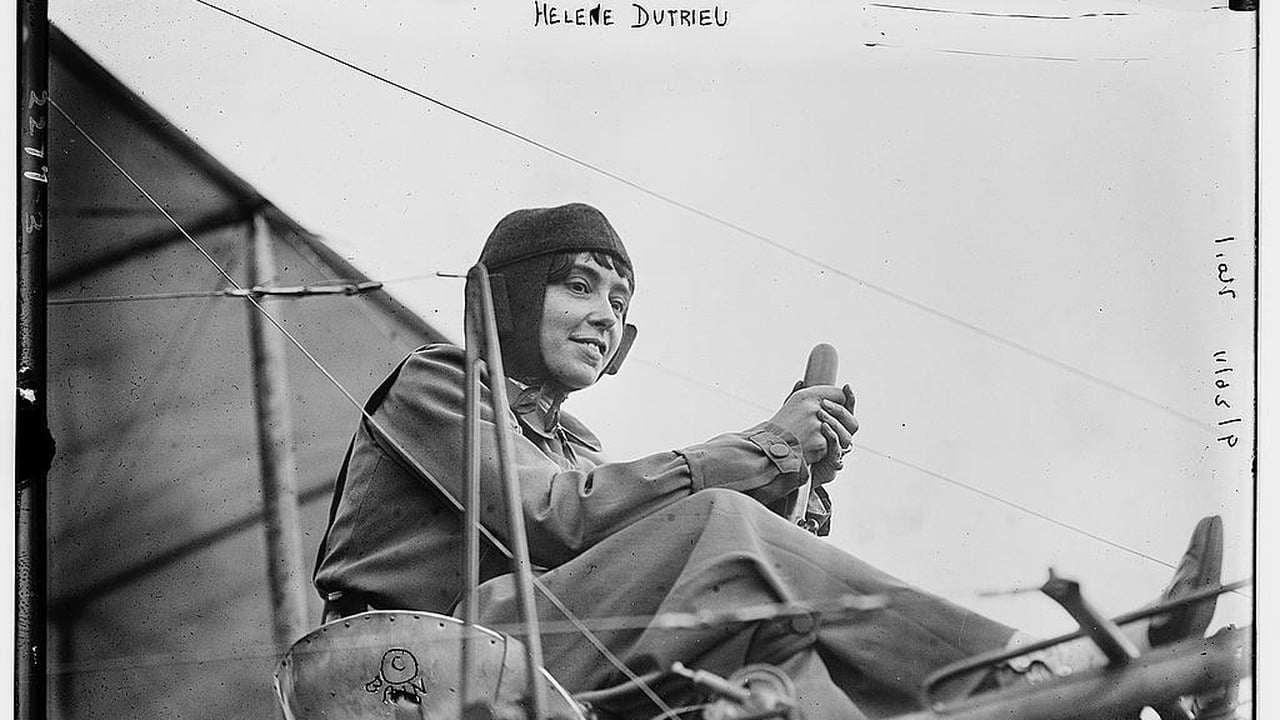
On 21 December 1910, at the airfield of Étampes south of Paris, a small Belgian woman in a Farman biplane took off and simply kept flying. Two hours and 35 minutes later she came down, having covered some 167 kilometres without landing.
Her name was Hélène Dutrieu, and the flight won her the very first Coupe Femina, the prize for the longest flight of the year by a woman pilot. By then she had already been a world champion cyclist, a stunt rider who looped the loop, a racing driver and a music-hall performer. Aviation was simply the latest, and most dangerous, way she had found to go fast.
Quick Facts
- Name: Hélène Dutrieu (later Dutrieu-Mortier)
- Born: 10 July 1877, Tournai, Belgium
- Before flying: World champion track cyclist, stunt rider, racing driver, actress
- Licence: Aéro-Club de Belgique No. 27, 25 November 1910; first Belgian woman pilot
- Coupe Femina: First winner: 167 km non-stop in 2 h 35 min, 21 December 1910
- Passenger: Reported first woman pilot to carry a passenger, 1910
- Honours: Légion d’honneur, 1913, first woman aviator so honoured
- Died: Paris, June 1961, aged 83
The Human Arrow
Dutrieu was born in Tournai, Belgium, on 10 July 1877,. Following her older brother Eugène, a professional cyclist, she took up track racing and became one of the best women riders in Europe, winning the women’s world speed championship in the late 1890s and the Grand Prix d’Europe in 1898.
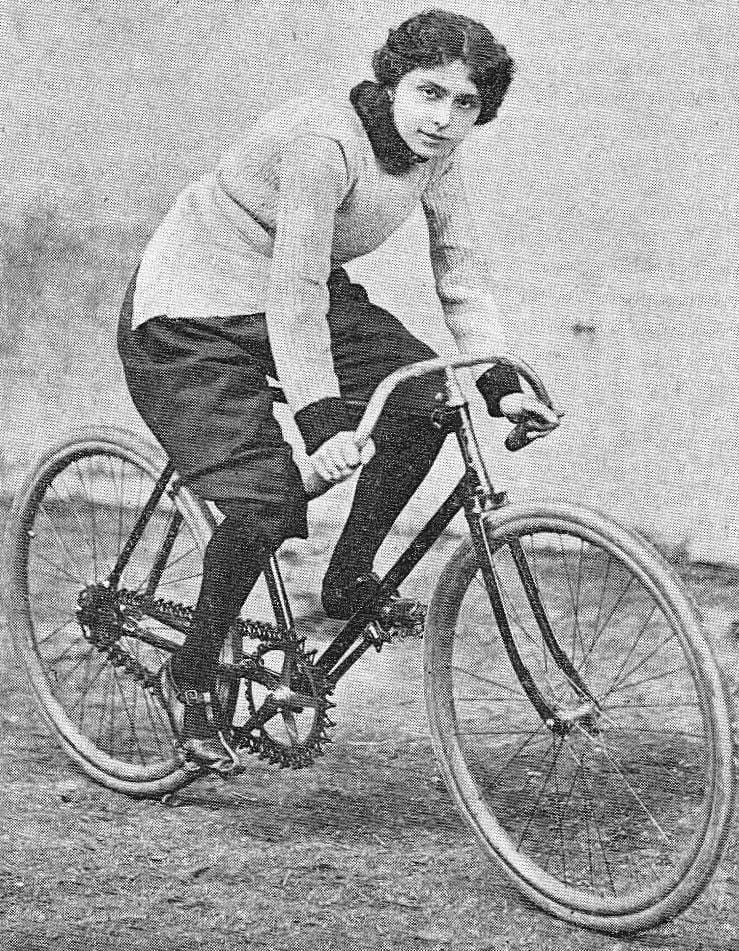
Racing gave way to the music hall. In 1903, at the Eldorado in Marseille, she rode a bicycle around a vertical loop, and her speed earned her the nickname “La Flèche Humaine”, the Human Arrow. She moved on to motorcycle stunts and car racing. Then came the aeroplane.
A Demoiselle and a crash
The French Clément-Bayard company was building the tiny Santos-Dumont Demoiselle monoplane and wanted a pilot to show it off. Dutrieu, small, light and fearless, was an obvious choice. Her first attempt ended in a crash on take-off, and she walked away. In January 1910, practising on the Demoiselle at Issy, she crashed again. The British magazine Flight reported the incident.
She switched to the Farman school, where she learned to fly properly on a Farman biplane. In 1910 she is reported to have become the first woman pilot to take a passenger into the air, with her mechanic beside her; early aviation sources give the date as 19 April 1910, although the claim was never formally recognised. When the press discovered that she flew without a corset, it caused a minor scandal, and only made her more famous.
The Girl Hawk
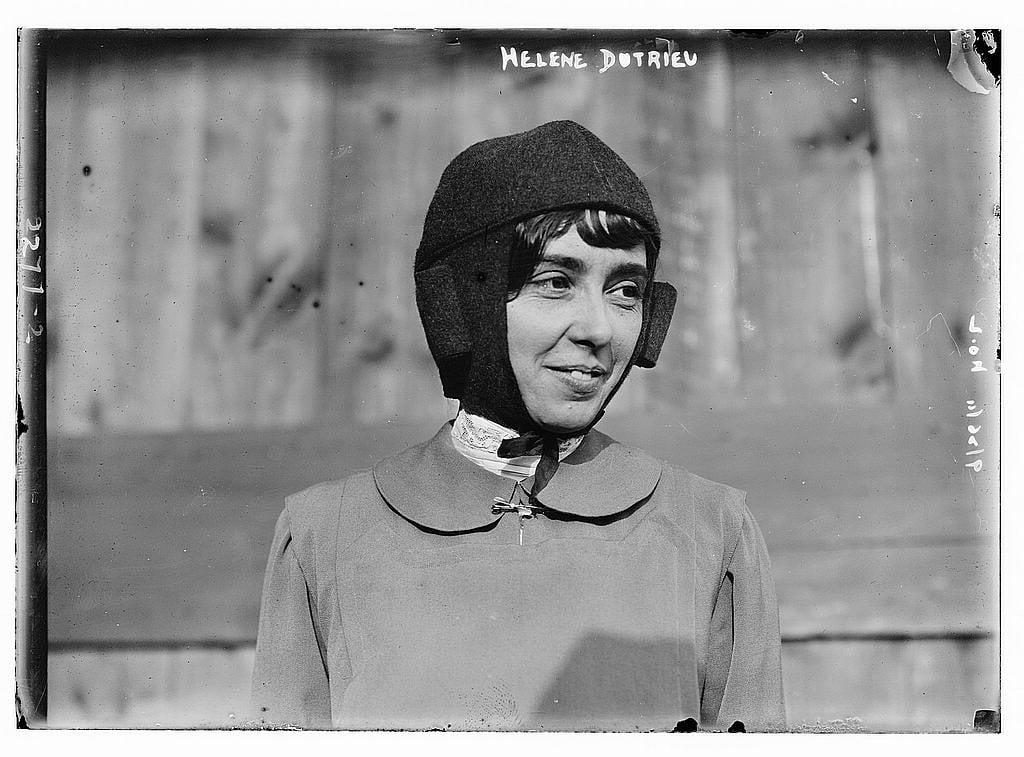
In September 1910 she made a non-stop cross-country flight to Bruges, a feat that delighted Belgian crowds. The Smithsonian’s National Air and Space Museum notes that she became the first Belgian woman to receive a pilot licence, on 25 November 1910. Her Aéro-Club de Belgique licence was No. 27, and she was only the fourth woman in the world to hold one. Air-show audiences nicknamed her the “Girl Hawk”.
The Coupe Femina had been launched in 1910 by Pierre Lafitte, publisher of the French women’s magazine Femina. It offered 2,000 francs to the woman who, by sunset on 31 December, had made the longest non-stop flight of the year. Leaders came and went through the autumn. Then came Dutrieu’s 167-kilometre flight on 21 December, and nobody beat it. She was formally declared the first winner on 31 December 1910.
Les Aventurières du vélo (2024), a French-Belgian documentary on women cycling pioneers, including Hélène Dutrieu (in French).
America, Florence and the 1911 cup
In September 1911 she shipped her Farman biplane to the United States and flew at the Nassau Boulevard meeting on Long Island, where she competed for the women’s altitude record. The same year, in Florence, she was the only woman in a field of 15 pilots for the King’s Cup, and beat all 14 men to win it.
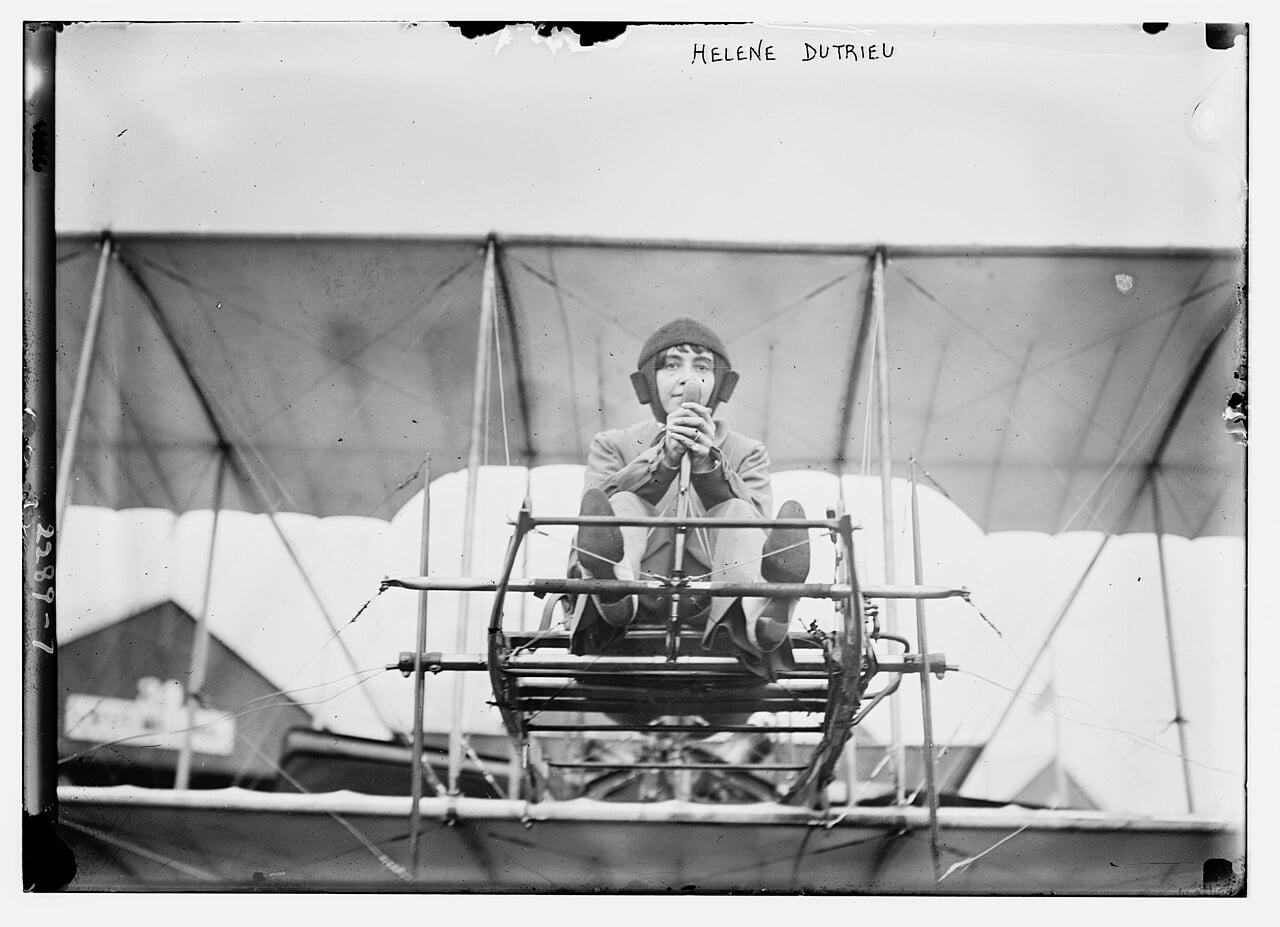
The 1911 Coupe Femina is where the record gets murky. The Smithsonian says Dutrieu won it on 31 December 1911 with a non-stop flight of 254 kilometres in 178 minutes. Some early-aviation sources say Marie Marvingt finally took that year’s cup, because the lead changed hands so often and several temporary leaders were called “winners” in the press. What is not in doubt is that Dutrieu was the first name on the trophy.
In 1913, France made her a member of the Légion d’honneur, the first woman aviator so honoured. She was one of a handful of women, alongside pioneers such as Raymonde de Laroche, the first woman to hold a pilot’s licence, who turned flying from a stunt into a career.
War, marriage and a cup of her own
When the First World War came, Dutrieu drove ambulances and was put in charge of the ambulances at one hospital, later directing a military hospital. After the war she worked as a journalist. In 1922 she married Pierre Mortier and took French nationality.
She never left aviation behind. She became vice-president of the women’s section of the Aéro-Club de France, and later founded the Coupe Hélène Dutrieu-Mortier, a prize for the French or Belgian woman pilot who made the longest non-stop flight each year. It was, in spirit, the Coupe Femina all over again.
Hélène Dutrieu died in Paris in June 1961, aged 83. Half a century earlier, she had shown a sceptical public that a woman could take off, stay up for hours, carry a passenger and beat a field of men. The Human Arrow had simply found a faster way to fly.
Sources: Smithsonian National Air and Space Museum, Historic Wings, Flight (29 January 1910), Early Aviators, This Day in Aviation, Library of Congress (Bain collection)
Header photo: Bain News Service / Library of Congress, public domain

0 Comments