

The President of the United States has Air Force One. The Pope, head of a state of less than half a square kilometre, has no air force, no airline and no airport. Yet he flies more than most heads of state, and when two French Rafales formed up on his Airbus over France on 28 September 2026, nobody doubted who was on board.
So how does the Pope actually fly? The answer involves borrowed airliners, a famous callsign that is mostly a myth, and a press conference at 35,000 feet that has made headlines for more than a decade.
Quick Facts
- Own aircraft: None. The Holy See has no airline, airport or air force
- Outbound flights: Traditionally the Italian flag carrier: Alitalia in the past, ITA Airways today
- Return flights: Usually chartered from the flag carrier or a major airline of the host country
- Italian callsign: Volo Papale ("papal flight") plus the number of flights the Pope has made
- Shepherd One: A callsign the FAA may assign to papal flights in the US or on US airlines
- Short trips in Italy: Italian Air Force AW139 helicopter from the Vatican heliport
- France 2026: Air France Airbus A321s in Vatican colours, escorted by Rafales
Borrowed Airliners
Because the Holy See has no airline, every papal trip abroad is a charter. By tradition the Pope leaves Rome on the Italian flag carrier, for decades Alitalia and today ITA Airways. For the flight home, the Vatican usually charters an aircraft from the host country's national airline or another major carrier.
That tradition gives airlines a rare honour. In September 2026, Air France flew Pope Leo XIV on three state flights during his visit to France, all on Airbus A321s in Vatican colours.
The cabin is typically reconfigured, with a private area for the Pope near the front and the rest of the aircraft given to his entourage, security staff and the accredited journalists who travel with him.
Shepherd One: A Callsign, Not a Plane
"Shepherd One" is often described as the Pope's plane, as if it were a papal Air Force One. It is not. It is a callsign. According to Wikipedia, papal flights within the United States or chartered on a US airline may be given the callsign Shepherd One by the Federal Aviation Administration. It has also been used elsewhere, including by the Philippine Airlines Airbus A340 that carried Pope Francis out of the Philippines.

In Italian airspace, the papal flight has a more literal callsign: Volo Papale, "papal flight," followed by the number of flights that Pope has made. For shorter trips within Italy, the Pope usually travels by helicopter from the Vatican heliport, in an Italian Air Force AgustaWestland AW139.
Fighter Escorts
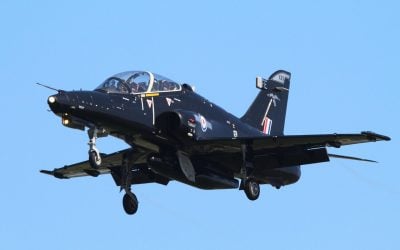
Many countries give the papal aircraft the same treatment as a visiting head of state, including a fighter escort in their airspace. On 28 September 2026, two French Air and Space Force Rafales flew alongside Pope Leo XIV's A321 from Lourdes to Metz. The Pope sat in the cockpit, spoke to the fighter pilots by radio and blessed them.
The Press Conference at 35,000 Feet
The most famous part of any papal flight happens on the way home. For decades, popes have walked back into the cabin on the flight home to take questions from the travelling press corps. The questions range widely, and some of the most quoted words of recent popes were spoken in an airliner aisle.

On that flight from Rio de Janeiro in July 2013, Pope Francis was asked about gay priests. His answer went around the world within hours.
The tradition continues. On the flight home from France, Pope Leo XIV held his own in-flight press conference, which Vatican News published in full.
Pope Leo XIV's in-flight press conference on the return from France, 28 September 2026. Video: Vatican News.
It is a strange arrangement for a head of state: no aircraft of his own, a borrowed airliner in borrowed colours, and a crowd of journalists a few rows back. It has worked for more than half a century.
Sources: Wikipedia (Air transports of heads of state and government; Pope Francis and LGBTQ topics), Air France on X, AFP, Vatican News. Featured image: Tech. Sgt. Suzanne M. Day / U.S. Air Force, public domain


0 Comments