
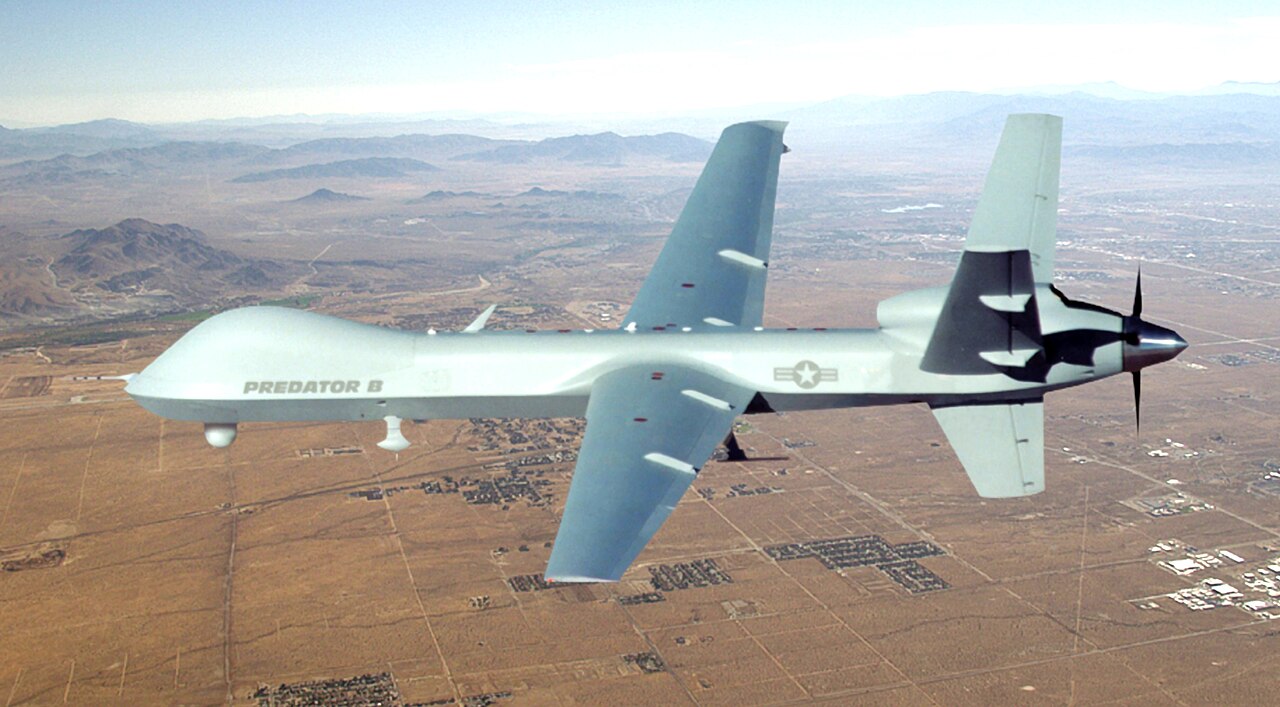
The United States Air Force has lost at least 45 MQ-9 Reapers since the Iran war began. That is roughly a quarter of the fleet, gone, in about a year.
The service has now decided that the answer is not a better Reaper. It is a cheaper one — and it wants it four years earlier than planned.
At a Pentagon media roundtable on 3 September, officials said the Massed Modular Aircraft programme is being accelerated with a target price of $10 million per aircraft and fielding at scale as soon as 2029.
Informazioni rapide
Programma: Massed Modular Aircraft (MMA), a joint US Air Force and Defense Innovation Unit effort announced in July 2026
Target price: $10 million per aircraft, for the base airframe only
Original schedule: Prototype within 21 months of contract, 20 mission-ready aircraft by FY2031
New schedule: Prototype within a year, fielded at scale within three — as soon as 2029
Flotta prevista: At least 180 aircraft, probably more
Range goal: Around 4,000 miles, more than twice that expected of a Collaborative Combat Aircraft
Autista: At least 45 MQ-9s lost since the start of the Iran war, roughly a quarter of the fleet
The number that changed the schedule
Lt. Gen. Christopher Niemi, the Air Force’s new chief modernization officer, said the goals shifted “fairly recently”, when Air Force Secretary Troy Meink called officials in and told them to move faster. The reason was arithmetic.
That is a very restrained way of describing the loss of a quarter of a fleet. The Reaper is not a cheap aircraft to lose either: Niemi put an MQ-9A with its sensors at around $50 million.
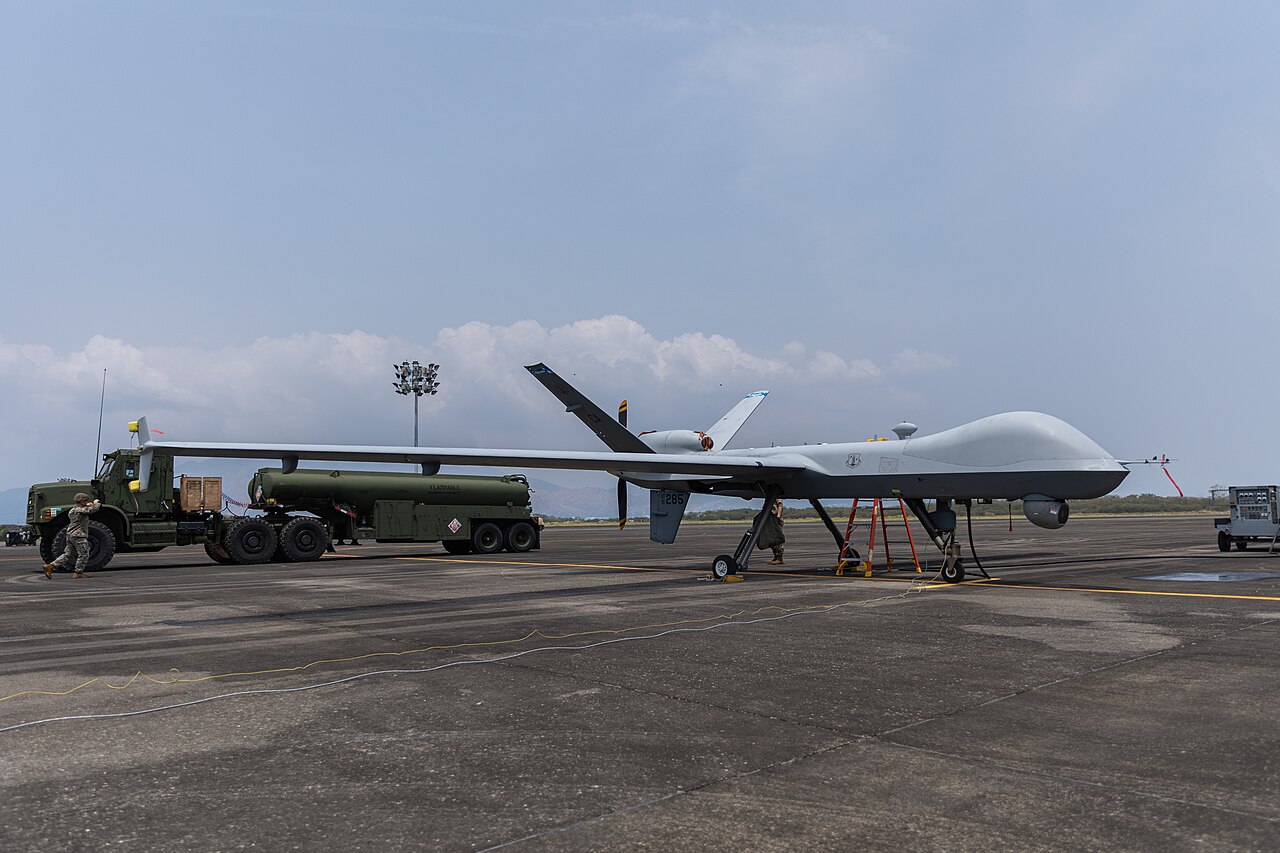
The obvious fix was to buy General Atomics’ MQ-9B, a larger and more capable Reaper. The Air Force looked at it and said no, on grounds that are worth quoting because they explain the entire programme.
Eighty percent is good enough
The engineering philosophy behind MMA is a deliberate rejection of how the Pentagon usually buys aircraft. Niemi described writing the requirements so as not to push technology to the edge, because doing so is expensive, and instead aiming at what he called an approach where eighty percent is good enough, using mature technologies.
In practice that means no cutting-edge flight control systems, no exotic engines, no novel manufacturing processes. The result will look familiar: long, high-aspect-ratio wings and, most likely, turboprop propulsion. In other words, it will look rather a lot like an MQ-9.
Where it will differ is in the ground station. MMA is meant to be far more automated than the MQ-9A — Niemi described it as more mouse clicks and keyboard strokes instead of a stick and throttle — so that fewer people are needed and one operator can handle several aircraft at once.
Not a Collaborative Combat Aircraft
It is easy to confuse MMA with the Air Force’s Collaborative Combat Aircraft programme. Officials were keen to separate them.
The numbers make the split clear. A CCA is meant to look and behave like a fighter, cost around $20 million at full production and fly alongside crewed jets. An MMA is meant to look like a Reaper, cost around $10 million, fly about 4,000 miles — more than twice the expected CCA range — carry a heavy payload, and go slowly.
Both figures are for the bare airframe, before sensors and weapons.
Building for attrition
The most revealing part of the briefing was about factories rather than aircraft. The Air Force wants manufacturers able to ramp MMA production up and down quickly, because in a serious war it expects to be losing them in bulk.
Niemi noted that in major combat operations, depending on the opponent, the service could be losing dozens of these aircraft a day, and that the more complex an aircraft is, the harder it is to increase production. He contrasted it directly with the F-35, where adding new equipment is difficult because of the architecture of the system. MMA, like CCA, will use an open architecture with standardised interfaces so that sensors and weapons from different vendors can be swapped in quickly.
General Atomics, which builds the Reaper, intends to compete with a new design it calls Wildfire. Company spokesman C. Mark Brinkley said Wildfire addresses all of the concerns posed by the MMA solicitation and that the company can deliver years earlier while keeping quality high.
Background on why the US military is moving away from the MQ-9 Reaper.
Il punto più ampio
None of this means the Reaper failed. Air Force Chief of Staff Gen. Kenneth S. Wilsbach called it the most valuable player of Operation Epic Fury at a congressional hearing in May.
What has changed is the environment. The MQ-9 was designed for skies where nobody was seriously shooting back. Against an opponent with functioning air defences, an expensive, slow, non-stealthy aircraft with a long loiter time becomes a target, and no amount of capability upgrade fixes that.
The Air Force’s answer is to stop trying to make the aircraft survivable and start making it affordable to lose. That is a significant philosophical shift for a service that has spent forty years buying fewer and more exquisite aeroplanes.
Domande frequenti
What is the Massed Modular Aircraft programme?
How many MQ-9 Reapers has the US Air Force lost?
How much will the MMA drone cost?
What is the difference between MMA and CCA?
Why did the Air Force reject the MQ-9B?
When will the MMA drone enter service?
Sources: Air & Space Forces Magazine reporting from a Pentagon media roundtable, 3 September 2026; US Air Force and Defense Innovation Unit statements; General Atomics.

0 Commenti