
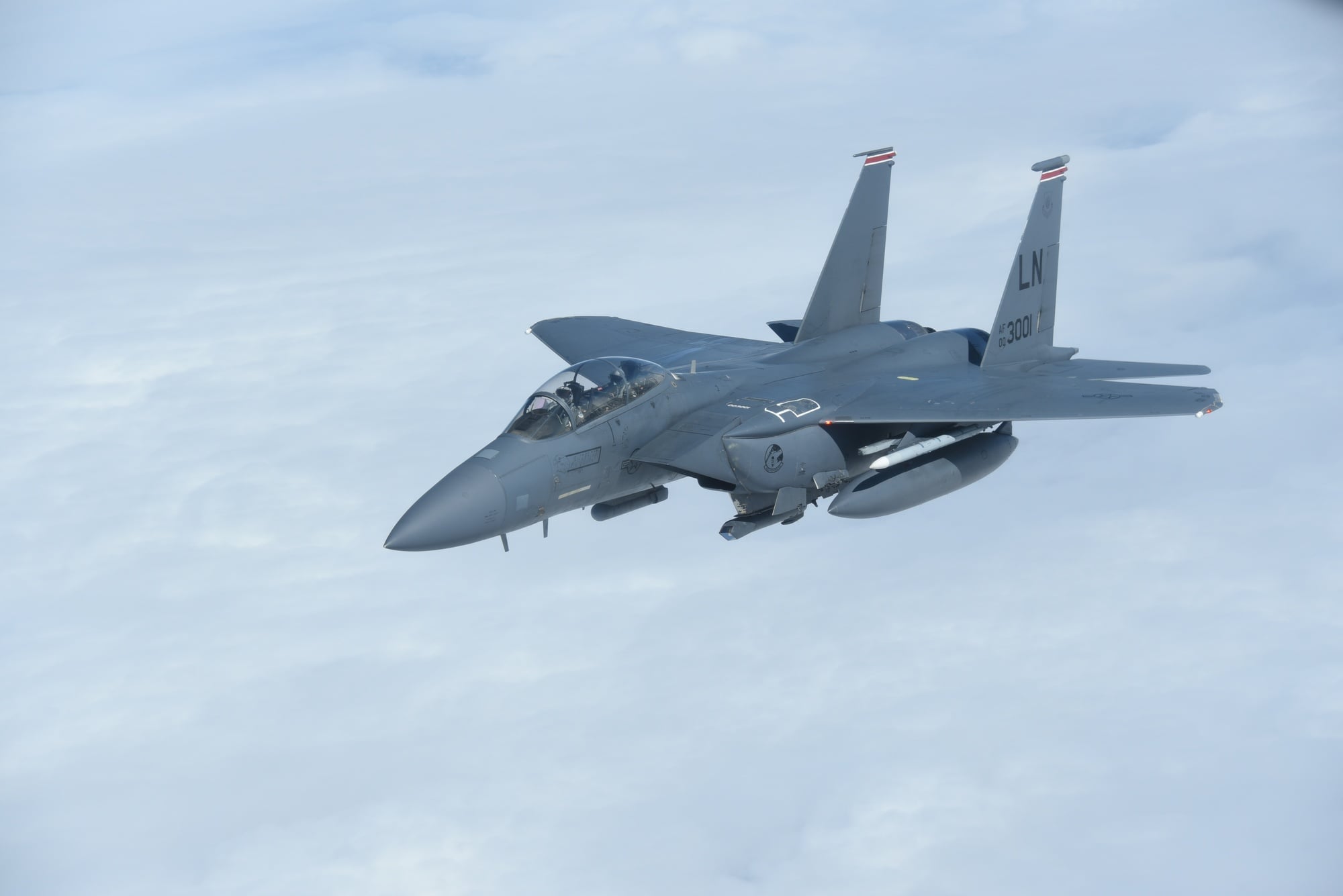
For five months the United States Air Force has said almost nothing about the man it went back for. He has no name in the public record. He has a call sign, and that is deliberate: Dude 44 Bravo, the weapons systems officer of an F-15E Strike Eagle that came apart over southern Iran in April.
On Sunday night he sat down with Norah O’Donnell for the season premiere of 60 Minutes, in a segment titled “Shot Down Over Iran”. CBS agreed to identify him only by call sign, citing continuing security threats from Iran. What he described is the part of the story the Pentagon’s briefing slides never carry: fifty hours alone in the Zagros Mountains with a broken back, and a parachute that had already been wrecked before he ever needed it.
He is a colonel. That is nearly everything the public is permitted to know about him.
Informazioni rapide
Aeromobili: F-15E Strike Eagle, serial 00-3000, 494th Fighter Squadron, 48th Fighter Wing, RAF Lakenheath
Abbattuto: 3 April 2026, day 34 of Operation Epic Fury
Causa: A shoulder-fired heat-seeking missile, according to US officials
Equipaggio: Pilot “Dude 44 Alpha” and WSO “Dude 44 Bravo”, neither publicly named
Alpha recovered: Roughly seven hours later, in daylight
Bravo recovered: Around 50 hours later, at sunrise on Easter Sunday, 5 April
Injuries reported: Fractured back, injured arm and shoulder, sprained ankle, head lacerations
Decorazioni: None announced publicly as of 14 September 2026
A freight train, then silence
Bravo told CBS the missile felt like being hit by a freight train. The aircraft was a two-seat Strike Eagle from the 494th Fighter Squadron at RAF Lakenheath, one of the units that had been flying the long nights of Operation Epic Fury since late February. Both men got out. That is where their stories diverge.
The pilot came down within reach. Bravo did not. He landed in mountainous ground in the Zagros, the two men separated by several miles of very hostile terrain, and the parachute that should have slowed him had been damaged by the same missile that killed the jet.
How fast he was travelling when he hit the ground is the detail that has travelled furthest, and it deserves care. Bravo did not measure it. Asked by O’Donnell how fast he thought he had been going, he answered that “based on my description and the injuries that I had, the professionals think I hit the ground, going somewhere between 70 and 100 mph”. That is a figure reverse-engineered from a hospital chart by unnamed experts, not telemetry, and CBS said so plainly in its own narration: we will never know.
For scale, a healthy parachute brings a crew member down at something closer to 15 miles an hour. Whatever the true number, his injury list, a fractured back among them, is consistent with a canopy that was partly there rather than one that was not there at all. A genuine terminal-velocity fall onto rock is not usually survived and then described on television.
Fifty hours, and a 7,000-foot ridge
What Bravo did next is the reason there was anybody to rescue. Injured as he was, he climbed. CBS reported he worked his way up a 7,000-foot ridgeline to get away from the valley floor and out of the search pattern closing around him. Iranian ground forces were hunting, and senior officers have not been coy about it.
His short messages out became, briefly, the only thing anyone in Washington had. Admiral Brad Cooper, who commands US Central Command, confirmed on camera that what came through was spare to the point of blankness: that he was hurt, that he was moving, and that God is good. Bravo’s own summary of his motivation while lying broken on an Iranian mountainside is the line that will outlive the segment.
The full 60 Minutes segment, in which Bravo describes the ejection, the descent and the two nights that followed.
The scale of going back
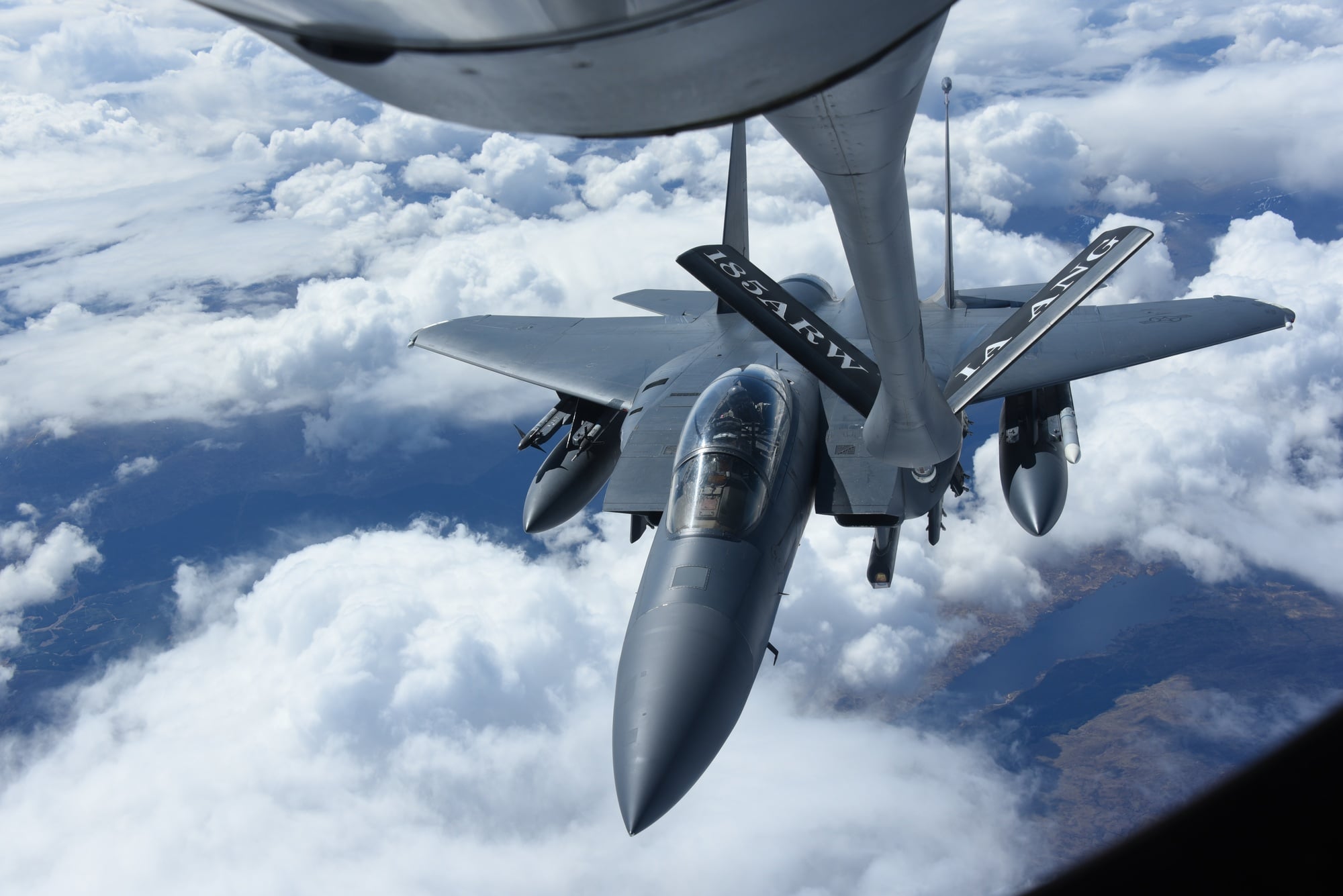
The first rescue, for the pilot, was already enormous. Ten A-10C Thunderbolt IIs flew the Sandy role, escorting HH-60W Jolly Green II helicopters and an HC-130J Combat King II across seven hours of Iranian airspace, inside a package of around 21 aircraft. One HH-60W took multiple small-arms hits with crew wounded aboard. One A-10 was damaged badly enough that its pilot ejected over Kuwait. They found Alpha. They could not find Bravo, and they had to leave.
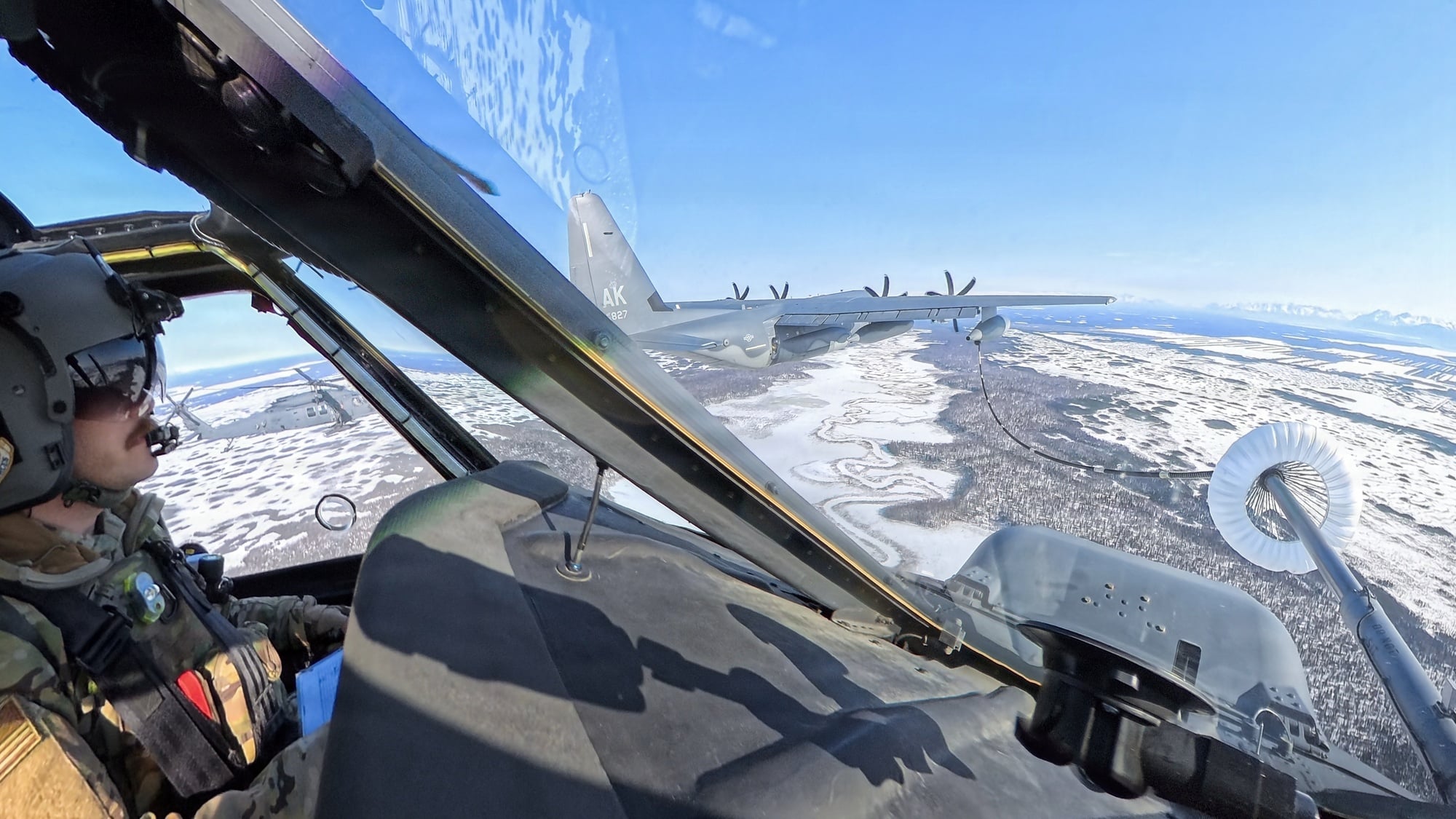
The second attempt, launched overnight on 4 April, was of a different order. By President Trump’s account it involved 155 aircraft, among them 4 bombers, 64 fighters and 48 tankers, and put roughly 92 people on the ground inside Iran. Admiral Cooper called it the first US boots on the ground there in 46 years. Little Birds were carried in aboard MC-130J Commando IIs and reassembled on an improvised strip. Two of those MC-130Js then bogged down in soft ground and had to be destroyed where they sat, along with the helicopters, before replacement aircraft could pull everybody out.
Bravo was recovered at sunrise on Easter Sunday. Asked what he said to the men who reached him, his answer was two words: “Let’s go.”
What the record still will not say
A great deal about this operation remains either classified or contested. The outlets do not fully agree on where the two men came down: CBS places the shootdown in mountainous country south of Isfahan, while other reporting puts the pilot in Khuzestan province and Bravo near Dehdasht in Kohgiluyeh and Boyer-Ahmad. The date wobbles between 2 and 3 April depending on whose clock is being used. Estimates of how deep inside Iran the crew landed range from about 100 miles to twice that.
Nor has anything been announced about medals. No Air Force Cross, no Silver Star, no Purple Heart has been made public for either crew member or for any of the people who went in after them. That may simply mean the paperwork has not surfaced. It is worth noting that the most complete public account of the whole affair is now a television interview with a man whose name the Air Force will not print.
Iran, meanwhile, has the wreckage. In August the IRGC opened an underground exhibition of downed American and Israeli aircraft, and the centrepiece was the canopy and ejection seat of serial 00-3000, tail number legible. The seat survived its descent rather better than the man who used the one beside it.
The extended interview, running close to half an hour, covers the ejection and the evasion in considerably more detail than the broadcast segment.
Sources: CBS News 60 Minutes, “Shot Down Over Iran”, 13 September 2026, and the published CBS transcript; Military Times; CNN; NBC News; The Aviationist; US Central Command.
0 Comments