
Quando the backseater known as Dude 44 Bravo broke his silence on 60 Minutes, most of the coverage went to what he said. The more durable part of the broadcast was what it showed.
Alongside the interview, CBS aired video of both rescues that had not been seen publicly before. For the first time there is imagery, rather than a press briefing, of the aircraft that went into Iran in April to bring two American airmen out. And one of those aircraft has been deliberately blurred.
Informazioni rapide
| What is new | Previously unreleased video of both Dude 44 rescues, aired 13 September 2026 on the 60 Minutes season premiere |
| The shootdown | F-15E Strike Eagle, 3 April 2026, hit by a shoulder-fired missile over southern Iran during Operation Epic Fury |
| First rescue | The pilot, Dude 44 Alpha, recovered in daylight. 21 aircraft, about seven hours |
| Second rescue | The WSO, Dude 44 Bravo, recovered at night roughly 48 hours later. 155 aircraft |
| Aircraft now visible | HH-60W Jolly Green II, MC-130J Commando II, A/MH-6 Little Bird, C-295W |
| Blurred | One Little Bird, obscured in the extraction sequence |
| Reason given | Gen. Dan Caine: protecting the most bespoke capabilities so they can be used again |
| Left behind | Two MC-130Js bogged down inside Iran and three Little Birds, all destroyed in place |
What the video actually shows
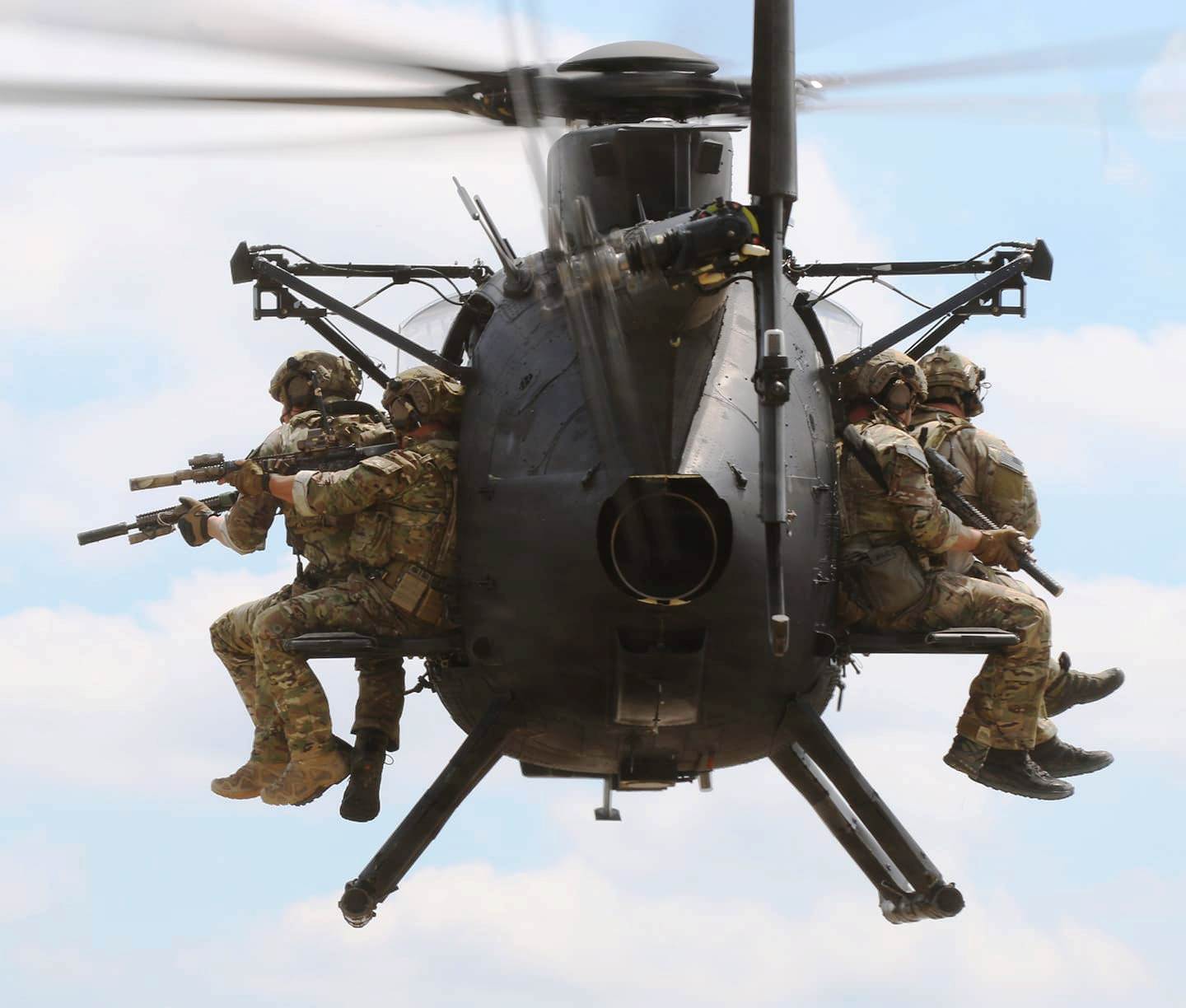
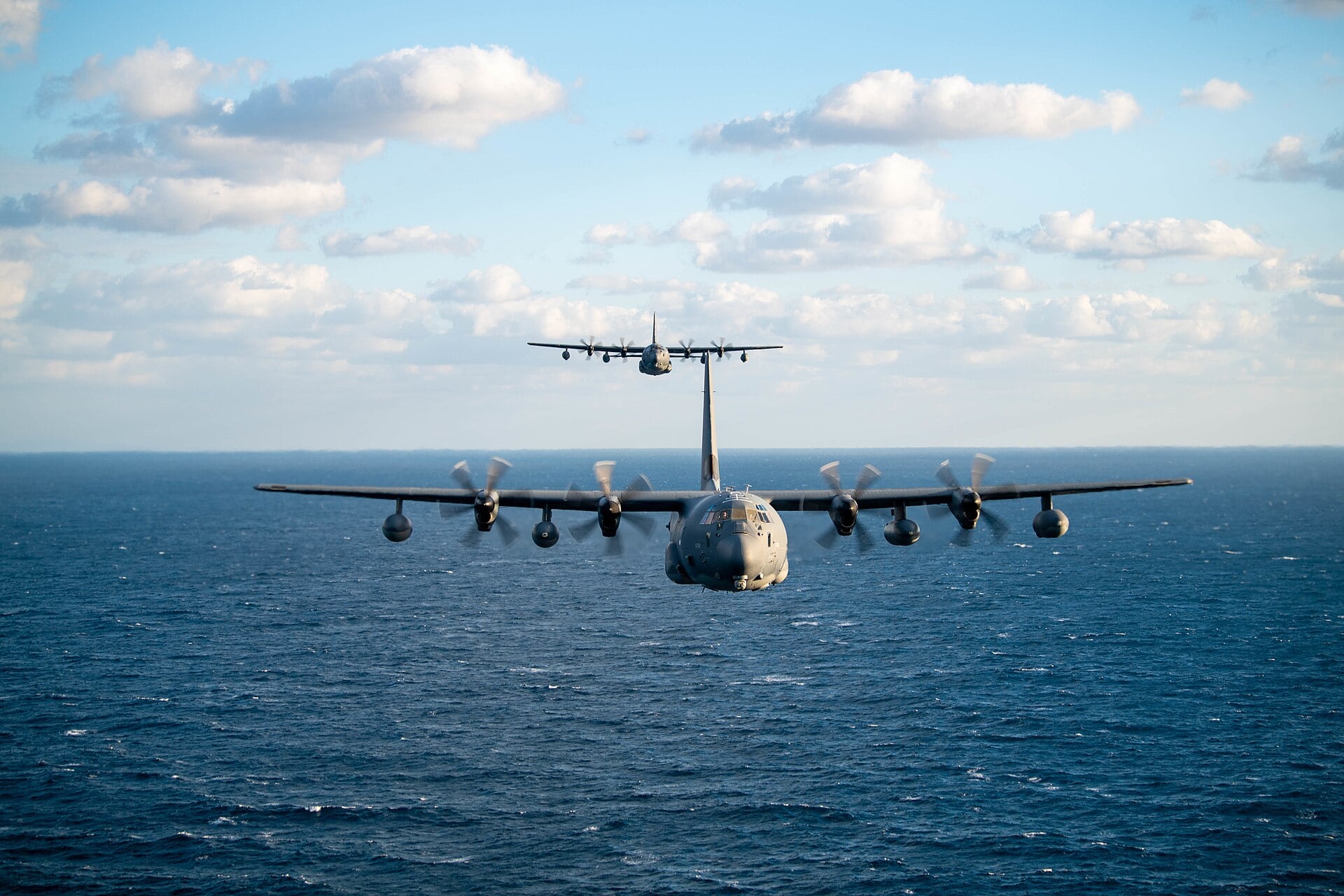
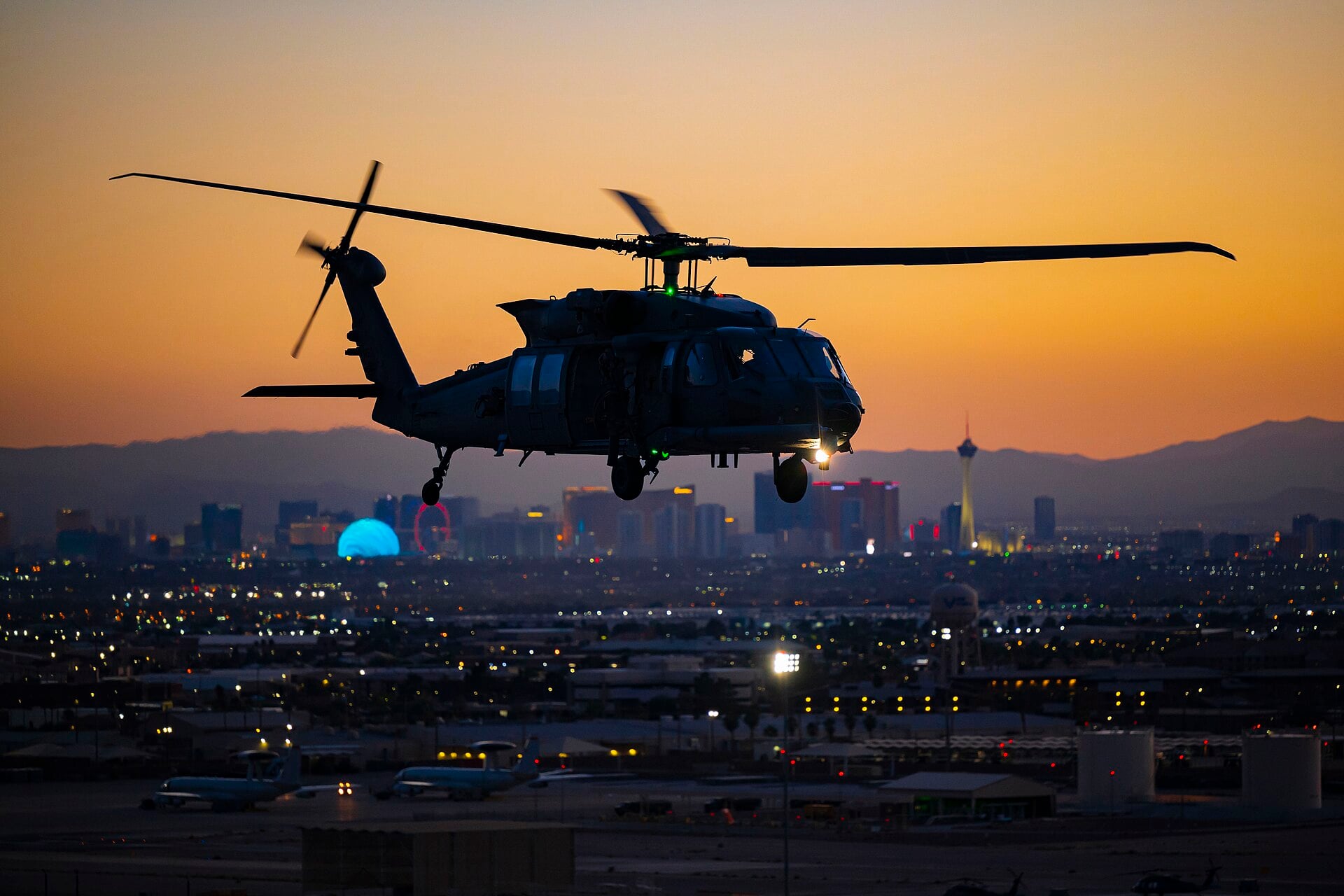
The Aviationist, which went through the broadcast frame by frame, counted four aircraft types in the rescue footage. The HH-60W Jolly Green II appears uncensored, which is not surprising: it is the Air Force’s combat rescue helicopter and there is no secret about it. Two MC-130J Commando IIs are shown on the ground inside Iran. Three A/MH-6 Little Birds are seen being unloaded. A C-295W turboprop appears flying low, a type already documented in the April reporting.
There is also previously unseen video of Bravo’s actual extraction, including the state of his ejection seat and parachute and the injuries he landed with.
The helicopter they blurred
Three Little Birds went in. In the extraction sequence, one of them has been deliberately obscured.
Gen. Dan Caine, the chairman of the Joint Chiefs, addressed it directly: the United States wants to protect what he called its most bespoke capabilities, so that they remain usable. That is a careful phrase. It does not say the aircraft is a type nobody has seen. It says something about that particular airframe, or something fitted to it, is worth hiding from an adversary who now knows roughly what to look for.
The Little Bird family has been quietly modified for decades, and the stealth-modified Black Hawks used at Abbottabad in 2011 are the obvious precedent for a special operations rotorcraft that nobody was supposed to see until one was left behind in a compound.
“Anytime you go behind enemy lines in daylight, it’s gonna be dicey.”
Dan Caine, General, Chairman of the Joint Chiefs of Staff, on 60 Minutes
Two MC-130Js that never came home
The detail that should give planners pause is not the helicopter. It is the pair of MC-130Js.
The Commando II is a special operations Hercules, used for infiltration, refuelling helicopters in flight and landing on surfaces that are not runways. Two of them flew the rescue force and its equipment into Iran and put down on open ground. By the account given afterwards, they bogged down in wet, sandy surface and could not be got out again. They were destroyed where they sat, along with the three Little Birds, to keep American equipment out of Iranian hands.
Five aircraft written off, on the ground, inside hostile territory, on a mission that recovered one man. It was judged worth it, and the man is alive. But the arithmetic is worth stating plainly, because the number usually quoted for this operation, 155 aircraft, makes it sound like an air armada rather than what it also was: a landing behind enemy lines that could not be undone.
Two rescues, not one
The footage makes something clearer than the written accounts did: these were two separate operations with different shapes.
The pilot, Dude 44 Alpha, went down with a working beacon and was picked up in daylight on the first day. That effort ran about seven hours and involved roughly 21 aircraft, including A-10s flying the Sandy role, HC-130s and HH-60Ws. It was not easy. The rescue force took close-range fire, an A-10 was hit badly enough that its pilot later ejected over Kuwait, and a helicopter came back with bullet holes in it.
Bravo was a different problem. He was injured, separated from the pilot by several miles, and hunted. The second effort went in at night about two days later and is the one that generated the 155-aircraft figure: by the Air Force’s own breakdown, four bombers, 64 fighters, 48 tankers and 13 rescue aircraft, plus the special operations package on the ground. Admiral Brad Cooper put the ground element at over 90 people, with several hundred more in the air and several thousand in support.
“One of the greatest moments of my life.”
Dude 44 Bravo, the F-15E weapon systems officer, describing the moment a pararescueman reached him, on 60 Minutes
Why the imagery matters more than the interview
Interviews are testimony. Video is evidence, and it is evidence an adversary studies too.
Everything released here has been chosen. The HH-60W is shown because there is nothing to learn from it. The MC-130Js are shown on the ground in Iran because the aircraft are gone and the story of destroying them is already public. The Little Bird is blurred because something about it is still in service and still useful.
That is the actual news in the broadcast. Five months after the event, the US military has decided which parts of its most complex combat rescue it is willing to show, and the one thing it will not show is a light helicopter that has been flying since the 1980s. Whatever is on that airframe, it is worth more than the two Hercules they burned.
A film is already in motion. Michael Bay is attached to direct for Universal, on the basis of reporting from May, with a book on the operation expected in 2027. The blurred Little Bird will presumably be in that too, and presumably still blurred.
The version going round social media
The interview has travelled widely in condensed form. This retelling, from the aviation account theaviationcircle, is accurate on the human detail: the damaged parachute, the impact at an estimated 70 to 100 mph, the broken back, the climb up a 7,000-foot ridge and the three-word first transmission. What it does not cover, because almost no coverage did, is what the pictures gave away.
Domande frequenti
What did the new Dude 44 rescue footage show?
Why was one of the helicopters blurred in the Dude 44 video?
Why were the MC-130Js destroyed in Iran?
How many aircraft took part in the Dude 44 rescues?
Who is Dude 44 Bravo?
Is there going to be a film about the Dude 44 rescue?
Sources: CBS 60 Minutes; The Aviationist; Air & Space Forces Magazine; Newsweek; Military Times; theaviationcircle on Instagram; Afterburner reporting
0 Comments