
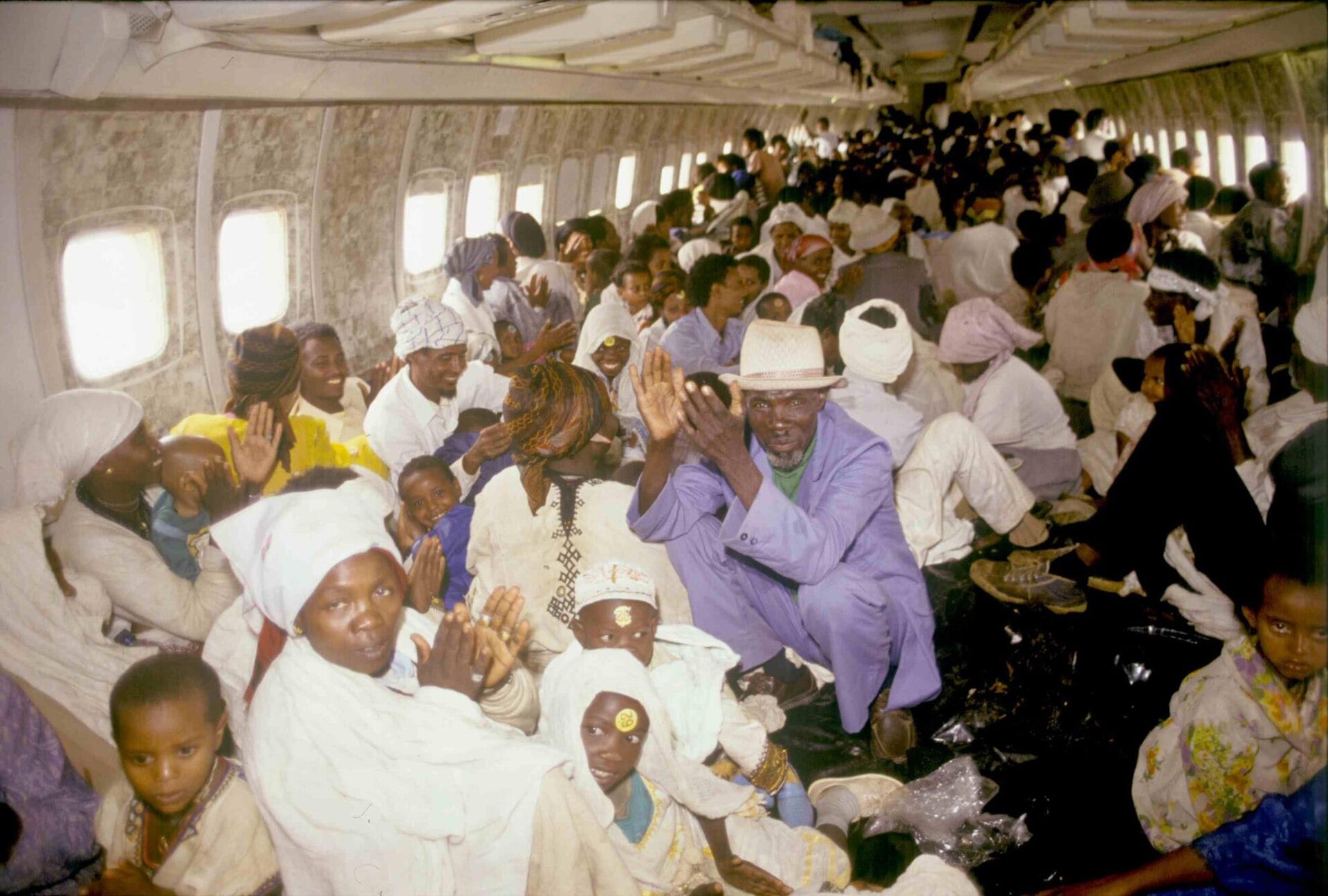
The certified maximum capacity of a Boeing 747-200 in the densest airline layout ever offered was somewhere around 550 seats. On 24 May 1991, an El Al 747 freighter left Addis Ababa carrying, by the Guinness World Records figure, 1,088 people. Two of them were born during the flight.
It remains the record for the most passengers ever carried on a single aircraft, and it is very unlikely to be broken, because the circumstances that produced it were not the kind anyone wants repeated. The flight was one of 35 in a 36-hour airlift called Operation Solomon.
Informazioni rapide
| Operazione | Solomon (Hebrew: Mivtza Shlomo), Israeli airlift of Ethiopian Jews |
| Date | 24 to 25 May 1991, completed in roughly 36 hours |
| People moved | 14,325 |
| Aircraft used | 35, including Israeli Air Force C-130 Hercules and El Al Boeing 747s and 707s |
| Record flight | One El Al 747 freighter; Guinness records 1,088 people, including two babies born in flight |
| Reported range | Contemporary reports give figures from 1,078 to 1,122; an IDF Archives caption says 1,222 |
| Why it worked | Seats removed, passengers seated on the cabin floor, minimal baggage, low average body weight |
| Political trigger | The collapse of the Mengistu regime, a letter from President George H. W. Bush, and a 35 million dollar payment |
Why the Airlift Happened When It Did
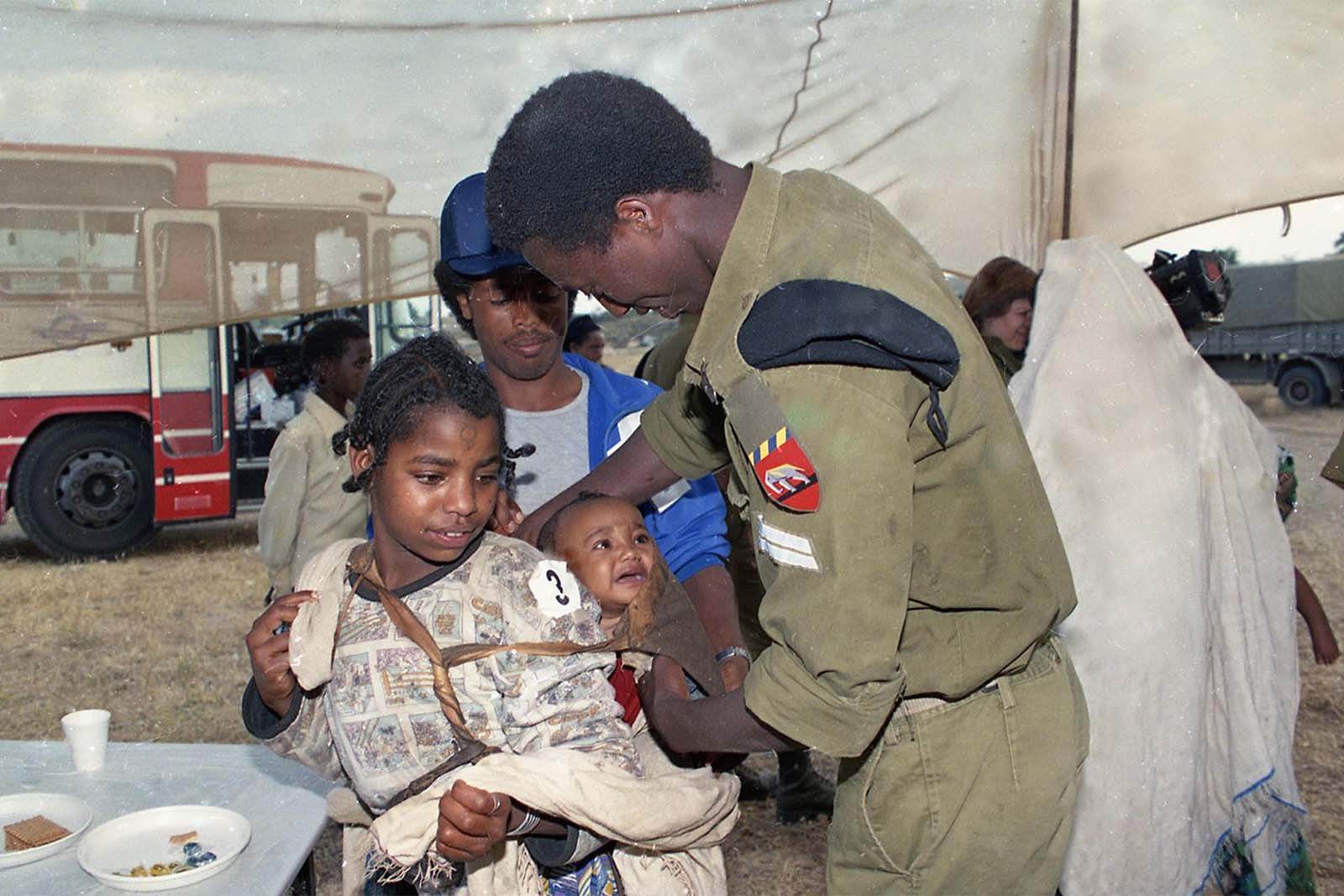
By May 1991 the government of Mengistu Haile Mariam was collapsing. Eritrean and Tigrayan rebel forces were closing on Addis Ababa, and roughly 14,000 members of Ethiopia’s Beta Israel community, most of them originally from the Gondar highlands, were concentrated in transit conditions in the capital. Many had walked hundreds of miles to get there. Some had been robbed on the way; some had been killed.
Israel had tried this twice before. Operation Moses in 1984-85 and Operation Joshua in 1985 both moved Ethiopian Jews out via Sudan, and both were shut down when the quiet permissions that made them possible were withdrawn. In the years between, almost nobody got out.
Nor was the decision uncontested inside Israel. Through the 1980s there was a sustained argument over whether Beta Israel should be recognised as Jewish at all, and a separate argument about whether the cultural distance made resettlement workable. Yehuda Dominitz, then director general of the Jewish Agency’s immigration and absorption department, compared the move to taking a fish out of water.
What broke the deadlock in 1991 was a combination of leverage and money. American diplomats, including Senator Rudy Boschwitz as a special emissary of President George H. W. Bush, pressed the case in Addis Ababa. Bush wrote directly to the Ethiopian leadership. Mengistu had previously wanted weapons in exchange for emigration; in the end the acting president, Tesfaye Gebre Kidan, authorised the airlift, and roughly 35 million dollars was raised by Jewish organisations and paid to the Ethiopian government and the airport. Israeli prime minister Yitzhak Shamir oversaw the operation, and military censorship kept it out of the press until it was done.
The Aircraft, and Why the Numbers Got So Large
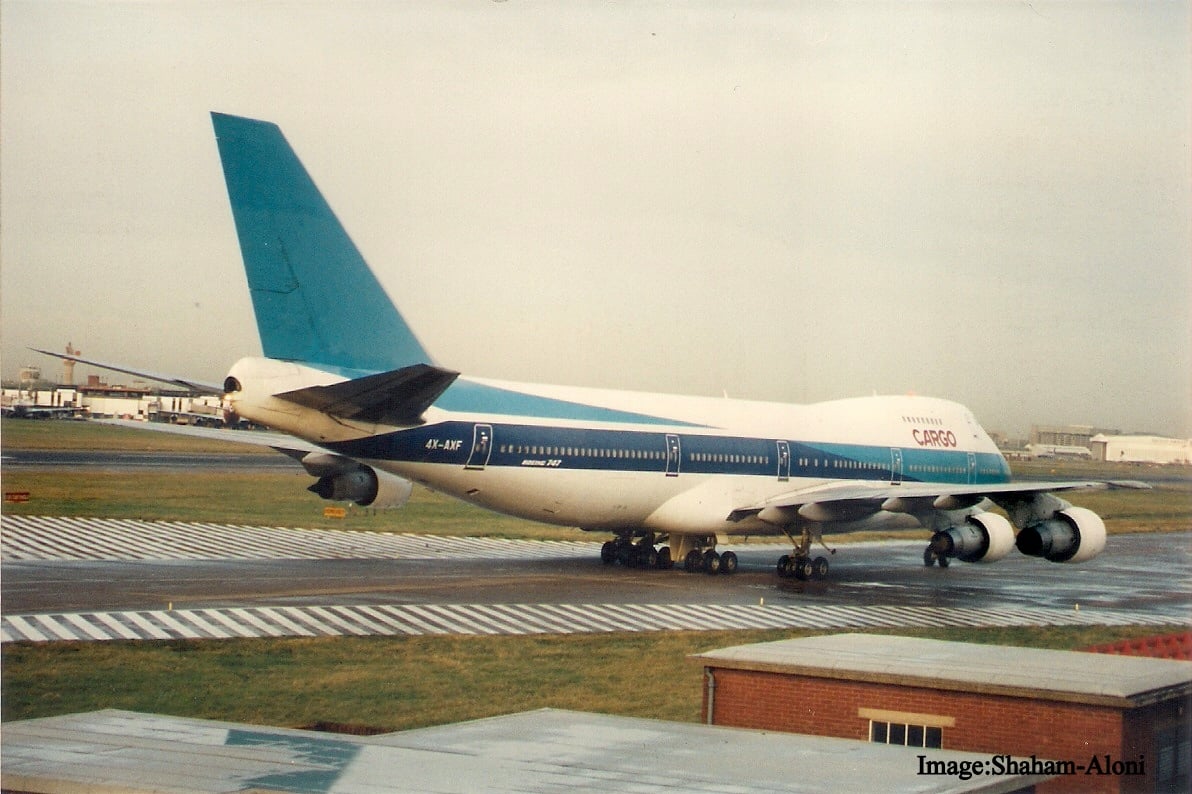
The fleet assembled for the operation mixed military and civil aircraft: Israeli Air Force C-130 Hercules transports alongside El Al Boeing 747s and 707s. The largest loads went onto 747 freighters, which have no seats on the main deck at all, only a flat cargo floor and a set of tie-down tracks.
That is the whole trick, and it is not a trick anyone would use in normal service. Passenger aircraft are capacity-limited by seats, by emergency exits, and by evacuation certification. A freighter carrying people sitting on the floor is limited only by weight and by floor area. The Beta Israel passengers were, on average, light, and they carried almost nothing. One passenger later described arriving with clothes and cooking pots and nothing else.
So How Many People Were Actually on That Aeroplane?
Nobody counted precisely, and the honest answer is a range rather than a number. Guinness World Records lists 1,088, including the two babies born in flight, and notes that contemporary reports of the same aircraft ran from 1,078 to 1,122. An IDF Archives caption on one of the photographs from the operation gives 1,222. Eight children were born across the airlift as a whole.
The record itself is not disputed. No other aircraft has ever carried anything close. For comparison, the highest-density certified airliner configurations in service today top out in the high 500s, and the Airbus A380 has never been certified above 853 seats.
Thirty-Six Hours, and a Friday
The airlift began on a Friday, which mattered in two directions. Friday evening begins Shabbat, when observant Jews do not normally travel or use vehicles. But Jewish religious law explicitly permits breaking Sabbath restrictions to save lives, and the practical effect was that a large number of Israeli vehicles and crews were free rather than committed elsewhere.
Aircraft flew non-stop between Addis Ababa and Israel and turned straight around. At the Israeli end, ambulances met the flights on the tarmac. Around 140 frail passengers needed medical attention immediately on landing, and the women who had given birth in the air went straight to hospital with their babies.
What Happened Afterwards
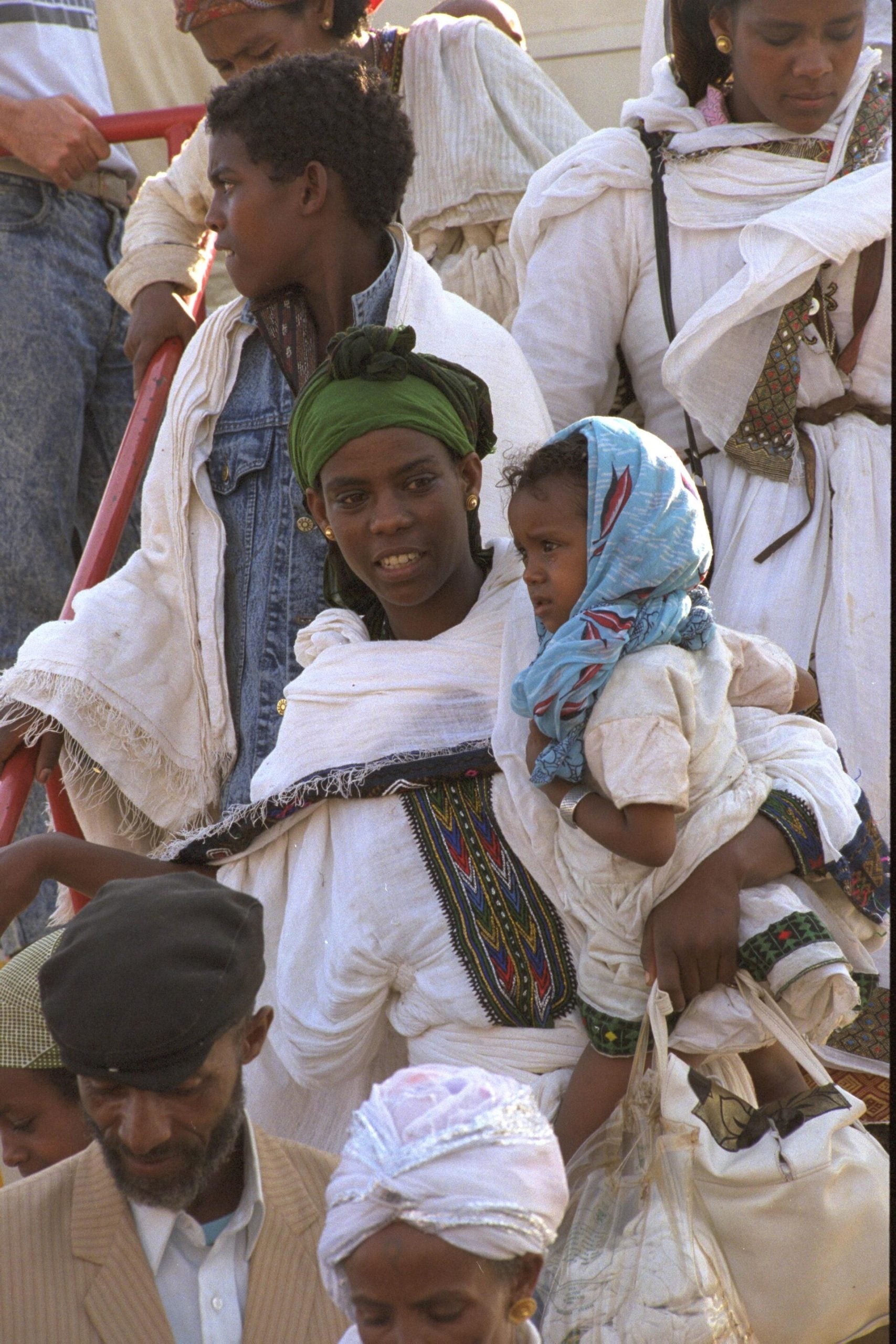
Operation Solomon moved almost twice as many people as Operation Moses had. Between 1990 and 1999, more than 39,000 Ethiopian Jews arrived in Israel.
The landing was harder than the flight. The community moved in a single weekend from a rural, largely agrarian and largely non-Hebrew-speaking life to a dense urban economy. Estimates in 2006 suggested that as many as 80 percent of adult Ethiopian immigrants were out of work and living on state welfare payments. Those figures improved substantially by 2016, to roughly 20 percent of men and 26 percent of women, but Ethiopian Israelis born and educated in Israel have continued to report disproportionate difficulty finding work, and there have been significant public protests over discrimination, notably in 2015.
That is part of the story too, and leaving it out would make the aviation record sound tidier than it was. What the aircraft did in 36 hours was the easy part.
The film Fig Tree (2018), directed by Alamork Davidian, is drawn from the director’s own experience of Operation Solomon. Stephen Spector’s Operation Solomon: The Daring Rescue of the Ethiopian Jews (Oxford University Press, 2005) remains the standard account.
Domande frequenti
What was Operation Solomon?
How many people were on the record-setting Boeing 747?
How could a 747 carry more than a thousand people?
Why did Israel launch the airlift in May 1991?
What aircraft types flew Operation Solomon?
Were any babies born during Operation Solomon?
What happened to the Ethiopian Jews after they arrived in Israel?
Is the Operation Solomon passenger record likely to be broken?
Sources: Joel Brinkley, “Ethiopian Jews and Israelis Exult as Airlift Is Completed”, Il New York Times, 26 May 1991; Guinness World Records, “Most passengers on an aircraft”; Stephen Spector, Operation Solomon: The Daring Rescue of the Ethiopian Jews, Oxford University Press, 2005; Wikipedia; IDF Archives and Israeli Government Press Office via Wikimedia Commons; Haaretz; Vox.
0 Comments