

Somewhere over Lebanon, a few minutes from Damascus, seven Israeli Phantoms are flying low under a grey lid of cloud. The weather was fair when they left Israel. Over the Syrian border it has closed in, with turbulence shaking the jets and the ground below sliding in and out of view. Formation flying is hard. Navigation is close to impossible.
The formation has been in radio silence since take-off. The sensible decision is to turn back. Instead the leader, Major Arnon Lavoshin of 119 Squadron, keys his microphone and tells his crews they are going on. Then the clouds open, the crews correct their course, and the Syrian capital is underneath them.
That was 9 October 1973, the fourth day of the Yom Kippur War, fifty-three years ago today. The target was the Syrian General Staff headquarters in the Abu Rummaneh district of central Damascus. The raid was meant to answer Syrian rockets on Israeli towns. It hit its target, cost Israel one crew and drew sharp international condemnation, because bombs also fell on the buildings around it.
Informazioni rapide
Data: 9 October 1973, day four of the Yom Kippur War
Bersaglio: Syrian General Staff headquarters and the adjoining Syrian Air Force headquarters, Abu Rummaneh district, Damascus
Grilletto: Syrian FROG-7 rockets fired at Ramat David air base and nearby communities, including Migdal HaEmek and Kibbutz Gvat
Squadra d'intervento: Seven F-4E Phantom IIs of 119 Squadron reached the target (eight launched, one aborted); 107 and 69 Squadron formations turned away because of cloud
Bomb load: About five tons per aircraft, according to Israeli accounts
Israeli losses: One Phantom shot down: pilot Capt. Dov Shafir killed, navigator Lt. Yaakov Yaakobi captured. A second jet landed at Ramat David on fire
Collateral damage: A television station and a Soviet cultural centre were also hit. Syria reported 26 civilians killed and 117 injured
Leader: Maj. Arnon Lavoshin (later Lapidot), deputy commander of 119 “Bat” Squadron
The rockets that started it
At 03:35 on the morning of 9 October, Syrian FROG-7 unguided artillery rockets came down on Ramat David, the Israeli Air Force base in the Jezreel Valley. One pilot was killed and several soldiers were wounded. Other rockets landed on the town of Migdal HaEmek and on Kibbutz Gvat nearby.
The timing could hardly have been worse for the air force. It had gone into the war confident it could handle the Arab air defences, then spent its first days covering ground forces that were close to collapse. Histories of the air war put its losses in the first two days at some 50 aircraft. On 7 October alone, six Phantoms went down in Operation Dugman 5, the failed attempt to knock out the Syrian missile batteries on the Golan Heights.
By 8 October the Syrian advance on the Golan had been stopped. The government now decided the FROG strikes needed a reply that Damascus would feel, and it chose strategic targets inside Syria: the oil industry, the power grid and, first, the headquarters running the Syrian war. Israeli accounts give three aims. The raid would disrupt Syrian command and control. It would warn Jordan against opening a third front. And it would show that the air force, badly hurt as it was, could still reach the enemy capital.

Hebrew-language histories of the raid, drawing on the air force’s own records, say Prime Minister Golda Meir hesitated. She worried that Israel would look like it was bombing a city. She approved the strike because the military headquarters stood far enough from the residential blocks around it that civilian casualties should be limited. That judgement turned out to be wrong.
Associated Press footage dated 8 October 1973: Israeli Phantom jets over the Golan Heights, the day before the raid on Damascus.
A route through Lebanon
The direct route to Damascus ran over the Golan, the most heavily defended airspace of the war. So the planners went around it. That morning the air force hit the Lebanese radar station at Barouk, which was linked to the Syrian air defence network and could have warned Damascus of an attack from the west. With the radar gone, strike aircraft could cross Lebanon and approach the Syrian capital from a direction it was not watching.
Three Phantom squadrons were each told to provide eight F-4E Phantom IIs. 119 Squadron, the “Bat” squadron from Tel Nof, would go first, led by its deputy commander Arnon Lavoshin. 107 Squadron from Hatzerim, led by its commander Iftach Spector, would follow, and 69 Squadron would come last.
The jets went out over the Mediterranean at low level, out of sight of Syrian radar, then turned north towards Lebanon and east towards Damascus. Soon after take-off one of the 119 Squadron Phantoms had a technical fault and turned back. Seven continued.
A long Hebrew-language interview with Arnon Lapidot-Lavoshin, holder of the Medal of Distinguished Service, who led 119 Squadron’s Phantoms over Damascus.
A hole in the clouds
The plan relied on surprise, and surprise relied on staying low. Over Syria the weather made that very hard. Heavy cloud hid the ground, and the crews had memorised the terrain from aerial photographs before take-off. Without seeing it, they could not use what they had learned. Lavoshin was close to calling the mission off. Instead he broke radio silence and told the formation to keep going.
Over Damascus the clouds thinned. The crews could see where they were, swung round to come in from the south-west, and found their target. Israeli accounts say that, apart from a single shoulder-launched missile, nobody fired at them until the first bombs had already landed. The city’s air-raid sirens only started after the explosions.
Each Phantom attacked in turn. They came in low, pulled up hard, rolled onto their backs and dived on the target, a pop-up attack meant to give the gunners as little warning as possible. The Hebrew-language accounts put the pull-up at about 6,000 feet. Each aircraft released about five tons of bombs, around 35 tons in all.

What the bombs hit
The upper floors of the Syrian General Staff building were wrecked. The Syrian Air Force headquarters next door was also hit. Both commands had to move to other sites, which disrupted Syrian command at a critical point in the fighting.
Other buildings were hit too: a nearby television station, several buildings in the diplomatic quarter, and a Soviet cultural centre. Early wire reports described a disaster. The United Press International report carried by American newspapers the next morning said that at the Russian cultural centre as many as 30 Soviet employees, their wives and children were said to have been killed. Israeli accounts call the hit on the cultural centre accidental.
Below the air force building, the raid nearly killed Israelis as well. Israeli airmen captured earlier in the war were being held in its lower levels. After they came home, they said Syrian interrogators had questioned them about how the Israeli Air Force had known to spare the part of the building where they were held. It had not known.
Running the gauntlet home
Once the bombs started falling, the advantage of surprise disappeared. The anti-aircraft guns around Damascus opened fire, and two Phantoms were hit badly as they pulled away.
The first, number three in the formation, got clear of the city but came down inside Syria. Its pilot, Captain Dov Shafir, was killed. His navigator, Lieutenant Yaakov Yaakobi, was captured injured, and the Israeli accounts record that he was beaten and tortured in captivity.
The second, flown by Major Omri Afek, came out of the attack with an engine on fire. Rather than eject over Syria and risk capture, the crew kept the burning jet flying west towards Lebanon and on towards home. Afek landed at Ramat David, the base the FROGs had hit that morning. Hebrew-language accounts add that the jet was still burning, had no brakes, and was stopped by the safety net at the end of the runway. The other five Phantoms also landed at Ramat David.
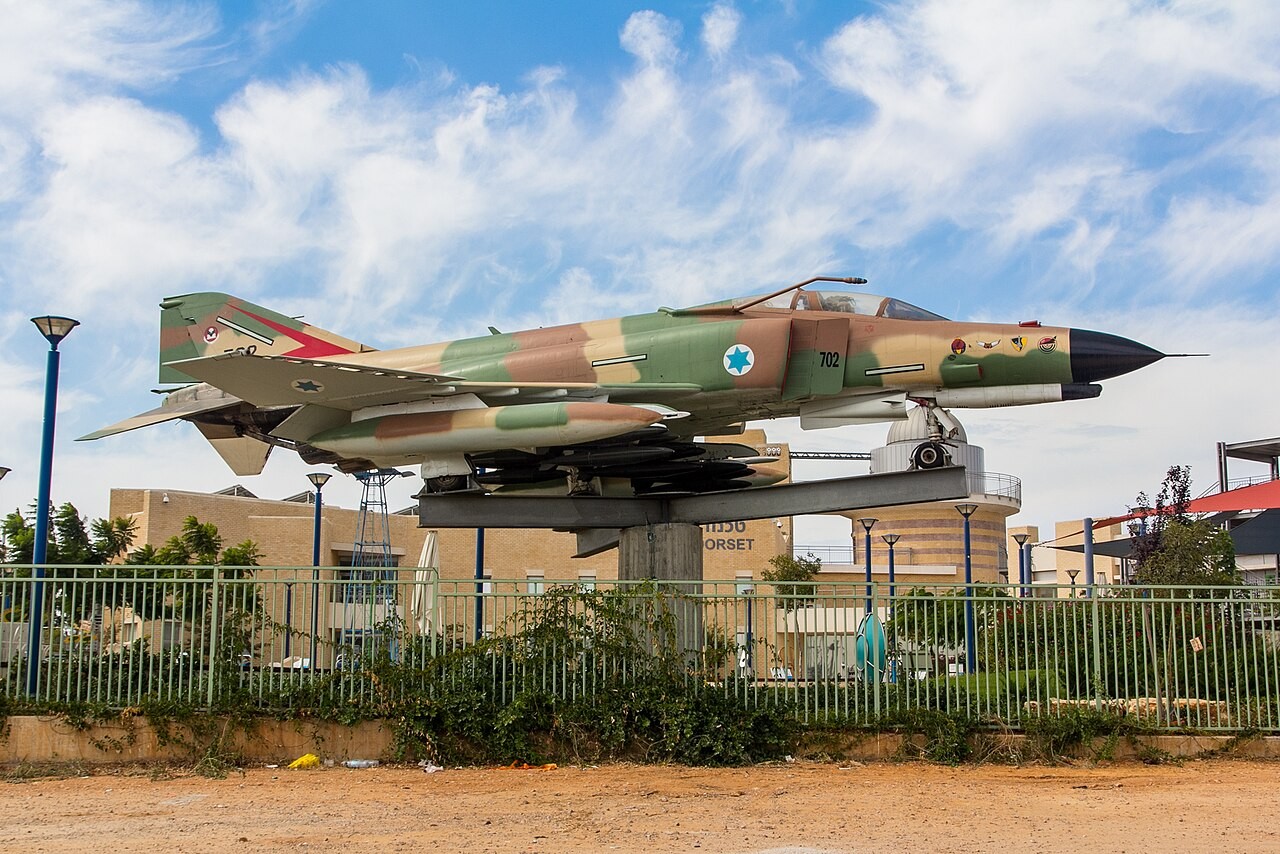
The other two formations never reached Damascus. The 107 Squadron Phantoms took a slightly different route and found no break in the cloud over the target. Spector called off the attack and asked for a different target. He was sent to a Syrian armoured column near Hushniyah on the Golan, and the strike broke it up as Israeli ground forces pushed the Syrians back towards the pre-war ceasefire line.
The 69 Squadron formation heard that 107 had turned back. It jettisoned its bombs and spare fuel into the Mediterranean and returned to base. Other pilots criticised that decision afterwards.
The bill came due in Washington and New York
Syria said 26 civilians had been killed and 117 injured, and claimed four of the attacking jets had been shot down. Israel had lost one. The diplomatic reaction came within hours.
At 8:20 that morning Washington time, a few hours after the raid, Israeli Ambassador Simcha Dinitz briefed Henry Kissinger in the White House Map Room. Kissinger was handling the war’s diplomacy at the UN and with Moscow, and the transcript in the State Department’s official history shows how he took the news from Damascus.
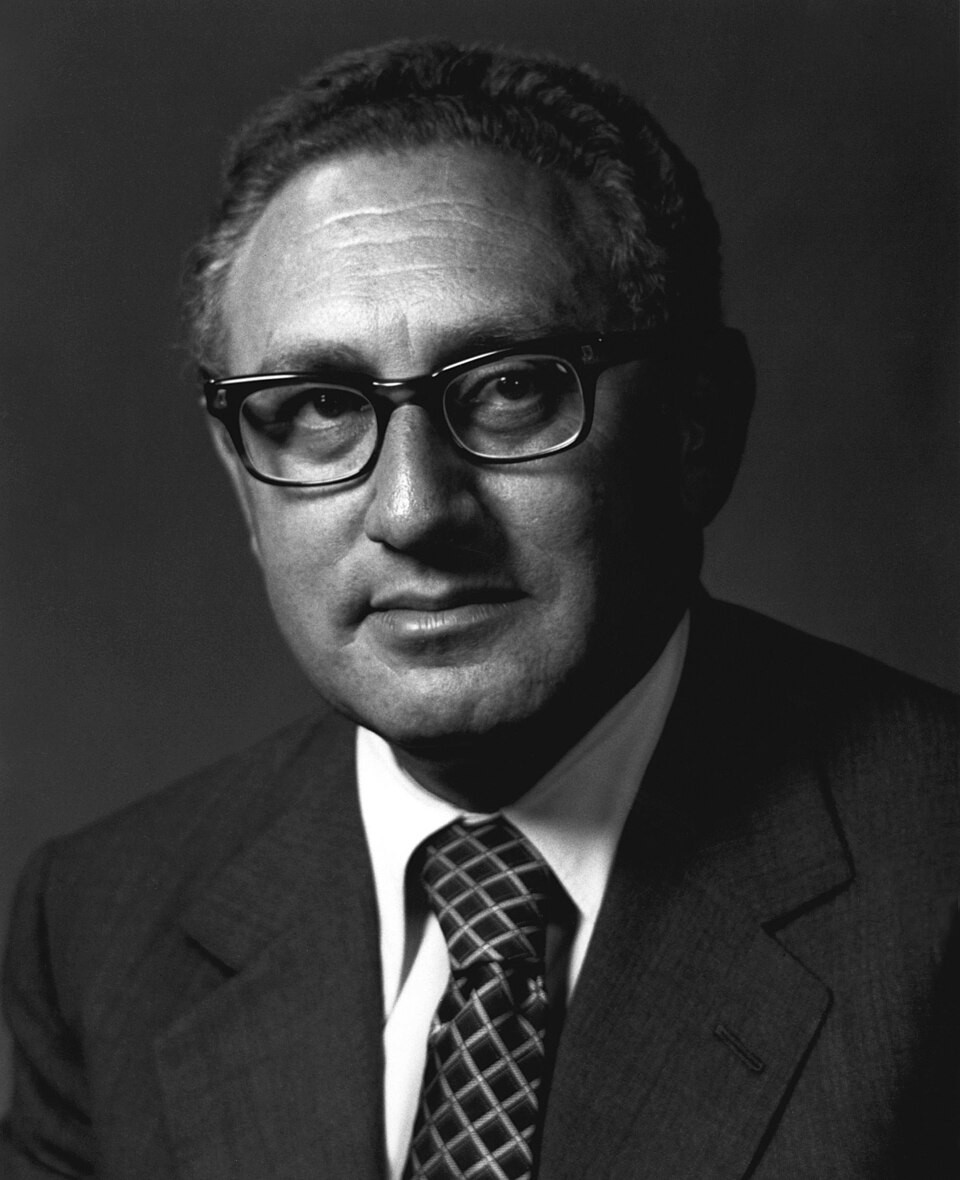
The editors of that official history add that the raid caused a reported 100 civilian casualties, including a UN employee and some Soviet citizens. That evening, when Kissinger asked about the Damascus strike, Dinitz said it had been strategically important because of direct hits on the targets he had listed. About the other casualties, he said, he did not know.
In the Security Council, the Soviet delegation walked out in protest, and the Soviet ambassador, Yakov Malik, blamed Golda Meir and Moshe Dayan personally. Three days later a message from the Soviet leadership was handed to Kissinger for President Nixon. It made the same complaint and added a warning.
Associated Press footage dated 10 October 1973: bomb damage in Syria, then damaged houses and a wrecked classroom at Kibbutz Gvat, one of the Israeli communities hit by the Syrian rockets.
Did it work?
Militarily, the raid did most of what it was meant to do. The Syrian General Staff and Air Force command had to move. The raid and the strikes on power stations and other strategic targets that followed led Syria to pull air defence units back from the front to protect the interior. That thinned the missile belt that had been inflicting such losses on Israeli jets over the Golan.
Jordan never opened a third front, although it did send forces to fight alongside the Syrians. Israeli accounts also note that Syria did not fire FROG rockets at Israel again for the rest of the war. Lavoshin received the Medal of Distinguished Service for leading the raid, and Afek received the same decoration for the raid and for later actions in the war. Lavoshin’s navigator, Lieutenant Elazar Lior, who shared the decision to press on, received a Chief of Staff’s citation.
The political cost was real too. The raid gave Moscow a grievance and handed Kissinger a problem. Within days the United States launched Operation Nickel Grass, the airlift that rebuilt the Israeli arsenal.
Seven Phantoms, one break in the cloud, about thirty-five tons of bombs. The Syrian General Staff moved out of its headquarters, Dov Shafir did not come home, and in Washington Kissinger was already preparing for the reaction at the UN.
Sources: Wikipedia, 1973 Syrian General Staff Headquarters raid (English) and the Hebrew-language article on the raid, which draws on Merav Halperin and Aharon Lapidot, Halifat Lahatz (Ministry of Defence, 2000); Jewish Virtual Library, Israel Air Force: Air Raid on the Syrian General Command (October 9, 1973), after the IDF/AF unofficial history; Foreign Relations of the United States, 1969–1976, Vol. XXV, Documents 134, 139 and 141, and Vol. XV, Document 140 (Office of the Historian, US Department of State); United Press International report of 10 October 1973 as printed in The Daily Tar Heel; Associated Press Archive footage of 8 and 10 October 1973.


0 Comments