

It begins with a reclining chair and an hour of pure oxygen. Before a U-2 Dragon Lady pilot climbs towards 70,000 feet, the physiological support team seals him into a yellow full-pressure suit, screws on the helmet and parks him in a lounger to flush the nitrogen out of his blood. The sortie ahead can run nine or ten hours, alone, in a cockpit the size of a telephone box, above the weather, with very little to look at.
Somewhere in that preparation there may also be a small bottle. The US Air Force publishes a list of the medications its aircrew are permitted to take into the air, and on that list, in plain official language that nobody in the service bothers to euphemise, sit five drugs under two headings: go pill E no-go pill.
They are not a rumour and they are not a scandal. They are a documented, consented, dose-capped, ground-tested part of American military aviation, and they have been since 1960. What they have never been, and what the Air Force has never claimed they are, is a substitute for sleep.
Informazioni rapide
Go pills (USAF): dextroamphetamine (Dexedrine) and modafinil (Provigil)
No-go pills (USAF): temazepam (Restoril), zolpidem (Ambien), zaleplon (Sonata)
Current operational dose, dextroamphetamine: 10 mg every 4 hours as needed, not to exceed 20 mg in 24 hours
Desert Storm dose: 5 mg, one or two tablets every 4 hours
Ground trial: mandatory before operational use, or a documented declination
Consent: signed informed-consent form; use is voluntary
Modafinil authorised: USAF 2003 for certain long missions, 2006 for single-seat fighters
First service use: Strategic Air Command 1960, Tactical Air Command 1962
Sources: Official Air Force Aerospace Medicine Approved Medications (13 May 2019); NAVMED P-6410 (1 Jan 2000); Estrada et al., Aviat Space Environ Med 2012.
What is actually on the list
The governing document is not secret. It is called the Official Air Force Aerospace Medicine Approved Medications list, it is distributed to flight medicine clinics, and the edition published on 13 May 2019 sets out exactly five fatigue-management drugs and the conditions attached to each.
Two are stimulants. Dextroamphetamine carries an operational dose of 10 mg by mouth every four hours as needed, not to exceed 20 mg in 24 hours. Modafinil sits beside it. Three are hypnotics: temazepam, zolpidem and zaleplon, the drugs a crew takes to force sleep that will not come on its own.
What makes the list interesting is not the drug names, which have leaked into journalism for twenty years, but the machinery bolted around them. Before any of the five can be used operationally, the aviator must complete a ground trial or have a declination formally documented. For dextroamphetamine the trial is 10 mg every four hours for two doses, recorded in the medical record, with mandatory DNIF beforehand. For modafinil it is 200 mg every eight hours for two doses.
DNIF is the Air Force abbreviation for Duties Not Involving Flying. Grounded, in other words, while the service finds out what the drug does to you on the floor rather than at altitude.
Eligibility is narrow. Only aircrew designated in current AF/SG, AF/A3O and MAJCOM guidance may use them at all. And both stimulants carry the same blunt restriction: they are not authorised for routine clinical use in flyers and special duty personnel. They are an operational tool for a specific mission, not a treatment for being tired at work.
One line on the list is narrower still. A separate dextroamphetamine product entry is annotated as approved only for U-2 Dragon Lady pilots, flying the operational sorties that gave this article its opening image.

The dose doubled, and almost nobody noticed
Compare that with the protocol the United States actually went to war with. Performance Maintenance During Continuous Flight Operations, NAVMED P-6410, was published by the Naval Strike and Air Warfare Center on 1 January 2000 and remains the most detailed public account of how these drugs were used in the Gulf.
Its case study follows a single F-15 Eagle squadron that deployed to Saudi Arabia on TRANSPAC legs lasting up to 16 hours non-stop, then flew roughly 7,000 hours in 1,200 sorties with a pool of 35 pilots and shot down 16 Iraqi aircraft. The guide records that it had the fewest pilots assigned of any F-15 squadron in theatre, and flew the most hours of any of them.
The stimulant those pilots carried was 5 mg of dextroamphetamine, half of today’s unit dose. The guide describes the regime precisely: one or two tablets taken orally every four hours, with a 45 to 60 minute delay before onset, so pilots were told to take it when the early symptoms of fatigue appeared rather than after they had set in. Each man was issued four to six tablets, replaced as needed. In practice, the guide notes, most used a single 5 mg dose and repeated it every two to three hours.
The medication protocol page caps that regime at 30 mg in any 24-hour period. The 2019 Air Force list halves the daily ceiling to 20 mg while doubling the unit dose to 10 mg. Fewer, larger tablets, taken less often, with a lower total: a quieter change than it looks, and a sign of pharmacology better understood rather than more permissively applied.
How many pilots actually took them
The honest answer is: a lot of them, and the Air Force asked. After Desert Storm an anonymous survey went out to deployed fighter pilots and 464 came back, a 43 per cent response rate. Fifty-seven per cent reported using stimulants at some point during the campaign.
Within that group the pattern was lopsided. Seventeen per cent used them routinely, 58 per cent occasionally and 25 per cent exactly once. Unit by unit the spread was extreme, running from 3 per cent in some squadrons to 96 per cent in others, with the heaviest use in units tasked for sustained combat air patrol, where the mission is to orbit a fixed point for hours and nothing happens until it suddenly does.
Sixty-one per cent of those who used stimulants described them as essential to mission accomplishment. That is a self-report from pilots about their own performance, and it should be read as one, but it is the number the service itself recorded.
The World War Two channel on how widely amphetamine was issued by the Allied forces, the practice the post-war American programmes inherited.
The form you sign before you are handed any
The single most revealing document in the whole system is the consent form, because of what it concedes in its opening sentence. The Informed Consent for Operational Use of Dexedrine begins by telling the pilot that the drug is not approved for the thing he is about to use it for.
The form then states that the decision to take the medication is the aviator’s alone, and lists the side effects he is accepting: insomnia, nervousness and appetite loss among the common ones; rapid heartbeat, palpitations and raised blood pressure among the less common.
A separate pretesting consent form governs the ground trial. There is no flying during the 24 hours of the pretest. No other medications, including over-the-counter ones, are to be taken. Caffeine and tobacco are to be kept to a minimum. Three screening questions are asked and answered in writing: high blood pressure, racing or pounding or irregular heartbeat, and any history of drug or alcohol abuse.
NAVMED P-6410 adds a dispensing rule with an elegant piece of logic behind it. Only enough medication for one or two flights should be issued at a time, because that forces the aviator back to the flight surgeon, which provides automatic follow-up and re-evaluation if the fatigue is getting worse rather than better.
The no-go pill is the harder half
Getting a crew awake is a pharmacology problem. Getting a crew asleep, on a schedule, in daylight, in a tent, eight hours before they are expected to plan a strike, is a harder one.
NAVMED P-6410 set the Desert Storm sedative at 15 or 30 mg of temazepam, and the seven-hour restriction from flight planning, briefing or flying that went with it. The guide is explicit about where that number came from: a laboratory study of a 15 mg dose that found neither hangover nor amnesia seven hours later, plus the absence of adverse reports from aircrew who flew six to eight hours after taking it in the Gulf. It also warns that a 30 mg dose does not necessarily produce better sleep and carries a higher incidence of hangover and amnesia.
The USAF cleared zolpidem for operational use in 1996, largely for its shorter elimination half-life, which the guide puts at around 2.6 hours with mean peak concentrations at 1.6 hours. The 2019 list adds a detail that has no parallel among the stimulants: the zolpidem ground trial is a single dose of up to 10 mg for males and 5 mg for females, with DNIF for six hours afterwards. A sex-differentiated dose, written into an operational flying document.
Zaleplon gets a four-hour DNIF after a single dose of up to 10 mg, which is what makes it the one you can take before a short nap rather than a full night. And all three carry consumption ceilings: temazepam and zolpidem are capped at seven consecutive days and no more than 20 days in any 60-day period, zaleplon at ten consecutive days and 28 in 60. Zolpidem carries one further line: not authorised for use during routine training missions.
The Aerospace Medical Association’s 2009 review of fatigue countermeasures, written by John Caldwell and colleagues for the association’s own Fatigue Countermeasures Subcommittee, confirms the same three hypnotics at the same doses and sets out the common condition plainly.
One operational detail from the Gulf shows how carefully the two halves were kept apart. Sedative medication was not allowed to be carried in the aircraft at all, specifically to prevent a tired pilot reaching into the wrong pocket and taking the sleeping tablet instead of the stimulant. The go pill flew. The no-go pill stayed on the ground.

Tarnak Farm, and what the inquiry actually found
No account of these drugs is complete without the night they ended up in a courtroom, and it has to be told carefully, because the shorthand version that circulates online is wrong in a way that is unfair to everybody involved.
Late on 17 April 2002, at the Tarnak Farm Multi-Purpose Range Complex near Kandahar, soldiers of A Company, 3rd Battalion, Princess Patricia’s Canadian Light Infantry Battle Group were conducting a live-fire exercise. Two US Air Force F-16 Fighting Falcons of Coffee 51 flight, crewed by Illinois Air National Guard majors Harry Schmidt and William Umbach, were transiting overhead. One of them released a 500-pound GBU-12 laser-guided bomb onto the range.
Four Canadian soldiers were killed: Sergeant Marc Leger, Corporal Ainsworth Dyer, Private Richard Green and Private Nathan Smith. Eight more were injured, one of them very seriously.
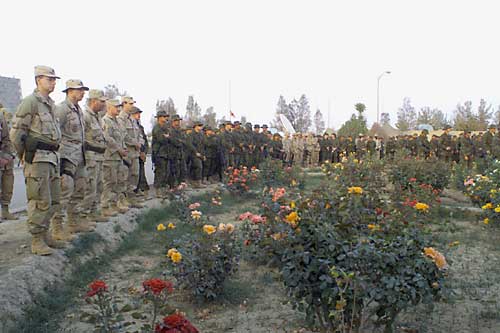
The Canadian Board of Inquiry chaired by General Maurice Baril, retired, reported from Ottawa on 19 June 2002. It found that the Canadian personnel on the range had done nothing wrong by way of coordination procedures or safety regulations. It found that the pilots had mistakenly interpreted the live fire below them as a threat to their formation. It placed the proximate fault on the two pilots, described their conduct as a failure of leadership, airmanship and technique, and separately identified systemic shortcomings in air coordination and control and in mission planning by the tactical flying units.
The go pills entered the story through the defence. Counsel for the two men argued that they had been under pressure from the chain of command to use Dexedrine, and that this bore on their judgement that night. That argument was made; it was not a finding. No investigation concluded that dextroamphetamine caused the attack. The Board put the proximate fault on the decisions the pilots made, and the Air Force’s own response was to defend the policy rather than change it.
The legal outcomes followed the same line. The charges against Umbach were dismissed; in July 2004 he was reprimanded for failures of leadership and allowed to retire. Schmidt’s charges were reduced in June 2003 to dereliction of duty, and he was found guilty at a non-judicial Article 15 hearing, fined a portion of his pay and reprimanded.
What the incident did achieve was to drag a quiet aeromedical policy into public view, and to force the services to explain, in daylight, a system that until then had been described mostly in flight-surgeon guides.
War Stories reconstructs the Tarnak Farm engagement and the investigations that followed.
What changed after 2002, and what did not
The substantive change was a new drug rather than a retreat from the old one. Writing in Aviation, Space, and Environmental Medicine in 2012, Arthur Estrada and colleagues at the US Army Aeromedical Research Laboratory record that the Air Force authorised modafinil in 2003 for certain long missions and in 2006 for single-seat fighter operations.
Their own study put the two drugs head to head in sleep-deprived helicopter pilots: three 100 mg doses of modafinil at four-hour intervals against three 5 mg doses of dextroamphetamine. Both held alertness, mood, cognition and judgement above placebo without side effects of aeromedical concern. Flight performance itself was not significantly better under either drug, which is a result worth sitting with. The pills keep a tired pilot functioning. They do not make a rested one better.
What did not change is the status of the older drug. The same paper states flatly that dextroamphetamine is authorised for use under controlled conditions by the aircrews of all three US military services. Twenty-four years after Tarnak Farm, the go pill is still on the list, still ground-tested, still consented, still capped.
The pill is the last tool, not the first
Everything in the official literature points the same way. NAVMED P-6410 opens its medication chapter with the line that anti-fatigue drugs are not a substitute for wise management of crew rest, and the Air Force list ring-fences them away from routine clinical use. Scheduling, crew rest, napping and sensible sortie length come first. The bottle is what is left when a mission cannot be rescheduled around human biology.
The contrast with civil aviation is stark. The same Aerospace Medical Association review notes that civilian aviation policy allows limited use of zolpidem only, with no more than twice-weekly use and a 24-hour grounding after each dose. There is no civil equivalent of the go pill at all. An airline captain on the eleventh hour of a Pacific crossing has coffee, a bunk and a rostered relief pilot, and that is the entire toolkit.
Which is, in the end, the point. The military authorises these drugs precisely because it accepts missions that civil aviation would simply refuse to fly. The pills are not an enhancement programme. They are the pharmacological margin a service keeps for the nights when the schedule and the human being are irreconcilable, and the honest reading of six decades of policy is that the Air Force has spent most of that time trying to make sure they are needed as rarely as possible.
The civilian side of the same problem: managing fatigue with scheduling and rest, because the pharmacological option does not exist.
Sources: Official Air Force Aerospace Medicine Approved Medications, effective 13 May 2019; NAVMED P-6410, Performance Maintenance During Continuous Flight Operations: A Guide for Flight Surgeons, Naval Strike and Air Warfare Center, 1 January 2000; Estrada, Kelley, Webb, Athy and Crowley, Modafinil as a Replacement for Dextroamphetamine for Sustaining Alertness in Military Helicopter Pilots, Aviation, Space, and Environmental Medicine 83(6), 2012; Caldwell, Mallis, Caldwell, Paul, Miller and Neri, Fatigue Countermeasures in Aviation, Aviation, Space, and Environmental Medicine 80(1), 2009; Final Report of the Tarnak Farm Board of Inquiry, Ottawa, 19 June 2002; Air Force Print News, 14 January 2003.


0 Comments