
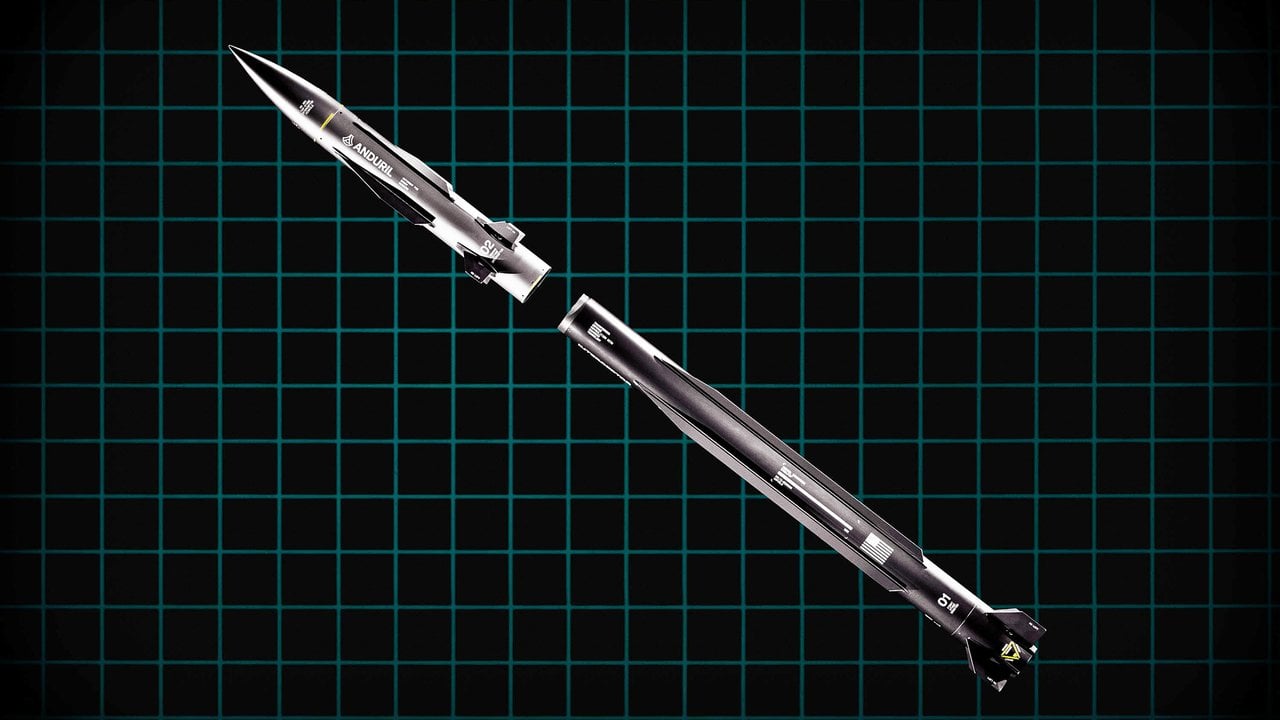
Anduril has never built a surface-to-air missile. On Monday it announced a whole family of them.
Steelfin, unveiled on 12 October as the US Army's AUSA conference opened in Washington, is a two-stage interceptor designed to shoot down cruise missiles, ballistic missiles and hypersonic weapons. Anduril's sales pitch goes straight at the most expensive part of modern air defence: it says one version could do the whole job of the THAAD missile "at a fraction of the cost," and another could do most of a PAC-3's job for under half the price.
On the same day FlightGlobal reported that Anduril has asked the US Federal Aviation Administration for permission to fly its Roadrunner, a reusable jet-powered interceptor, for development tests. One announcement is about volume, the other about speed of testing.
Quick Facts: Anduril Steelfin
Svelato: 12 October 2026, Washington (AUSA)
Disposizione: Two stages: a booster plus a common terminal interceptor
Boosters studied: 10-inch, 18-inch and 21-inch diameters
Kill options: Hit-to-kill and blast-fragmentation versions
Obiettivi: Cruise, ballistic and hypersonic missiles, plus drones
Launchers: M903 Patriot launcher, Mk 41 VLS, Typhon, containerized launchers
Production goal: Several thousand a year in the near term
Flight tests: Planned for 2027
One Missile, Many Sizes
Steelfin is less a single missile than a kit of parts. Every version pairs a first-stage booster with the same second-stage terminal interceptor, which shares its airframe, avionics, software and flight-control system across the family. Change the booster and you change the range. Change the seeker or warhead in the second stage and you change the target set.
Anduril told The War Zone the company is "looking at integrating on 10-inch, 18-inch, and 21-inch boosters," and is studying dual- and quad-pack arrangements for the US Navy's Mk 41 vertical launch system. Anduril plans both hit-to-kill and blast-fragmentation versions, and says Steelfin is designed to plug into existing launchers, including the M903 used for Patriot, the Mk 41, the Army's Typhon and new containerized launchers, as well as the AEGIS and IBCS fire-control systems.
Anduril says it has completed ballistic testing with representative air vehicles. Flight tests of Steelfin variants are planned for 2027. There are no announced orders, and Anduril has not published prices or detailed performance figures.
The Price Problem It Is Aimed At
Air defence has a cost problem, and the Iran war made it impossible to ignore. Interceptors are expensive, hard to build quickly and get used up fast. The War Zone puts a THAAD interceptor at roughly $15.5 million, a PAC-3 MSE at about $5.3 million and an SM-2 Block IIIC at around $2.5 million. Afterburner reported last week that Boeing has to triple output of the PAC-3's seeker to keep up with demand.
Anduril's claims, as relayed by The War Zone, are bold. A top-end Steelfin would sit between the PAC-3 MSE and THAAD. A PAC-3-class version would do about 80 percent of that missile's mission for under half the cost. Against Shahed-type drones, a Steelfin would provide more than 80 percent of an SM-2's capability for about a third of the price. None of that has been demonstrated in flight yet.
The production pitch matters as much as the price. Anduril says it is aiming for several thousand Steelfins a year in the near term, built on shared production lines with the mission-specific parts added at final assembly. Its solid rocket motors already power Boeing's entry in the Army's IFPC Increment 2 second interceptor competition, which moved to its next phase in September.
Roadrunner Wants Civil Airspace
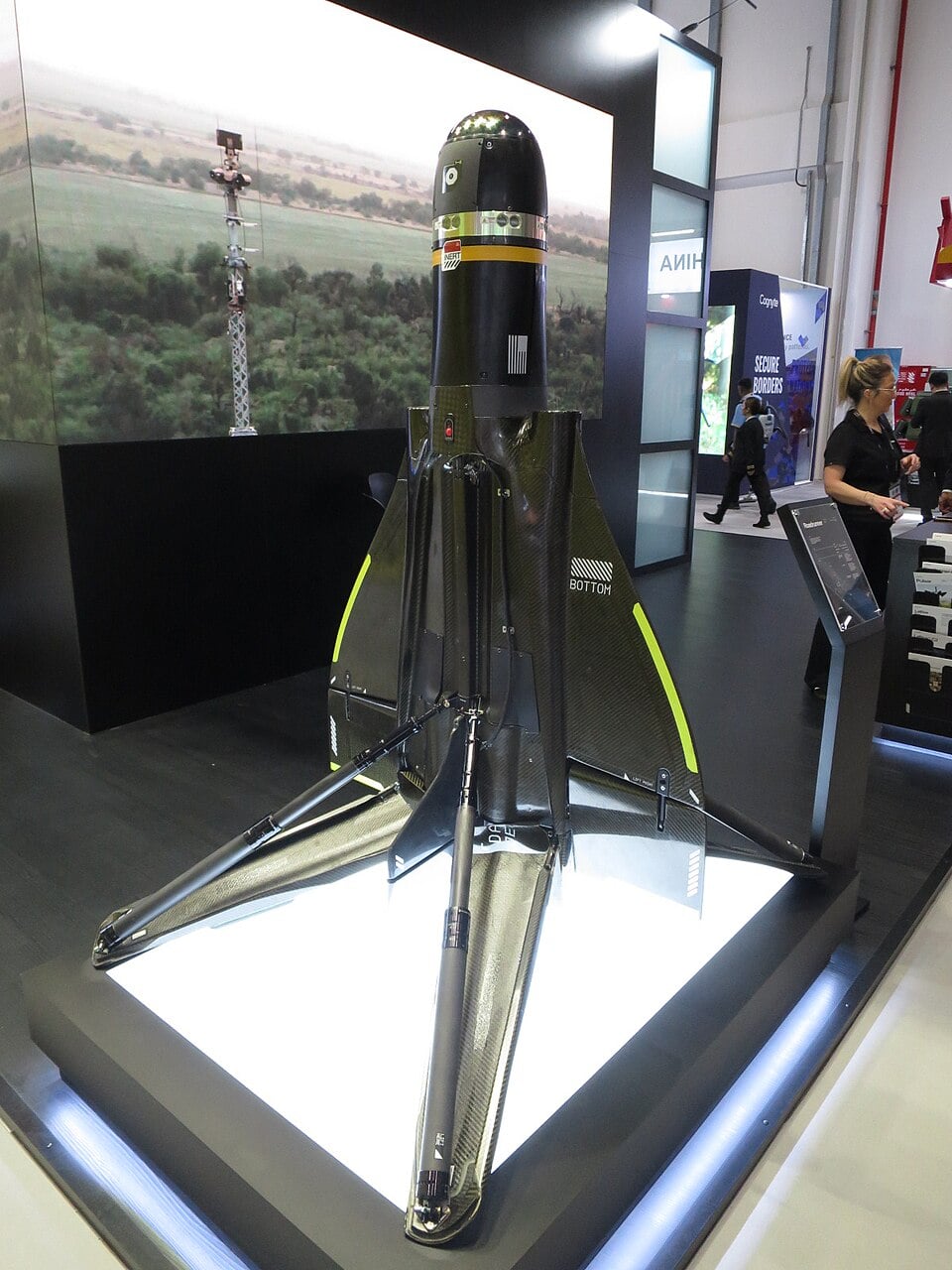
Anduril's other counter-air product is already flying. Roadrunner is a jet-powered uncrewed aircraft with two turbojets that takes off vertically, can act as a drone interceptor or a reconnaissance platform, and can land again to be reused if it does not need to detonate. Anduril unveiled it in December 2023.
According to FlightGlobal, Anduril has now asked the FAA for approval to carry out developmental test flights of Roadrunner, a move intended to expand and speed up testing beyond military ranges. FlightGlobal did not report whether the FAA has responded. It follows a similar Anduril request for its CP-200 remotely piloted aircraft in September.
For a company whose argument is that defence hardware can be developed faster and built in larger numbers, test-range access is a bottleneck. Steelfin's first flights are still a year away. Roadrunner's paperwork is about getting the hardware that already exists into the air more often.
Anduril's official video unveiling Roadrunner and Roadrunner-M in 2023.
Sources: The War Zone; AeroTime; Breaking Defense; FlightGlobal; Anduril Industries.



0 Comments