
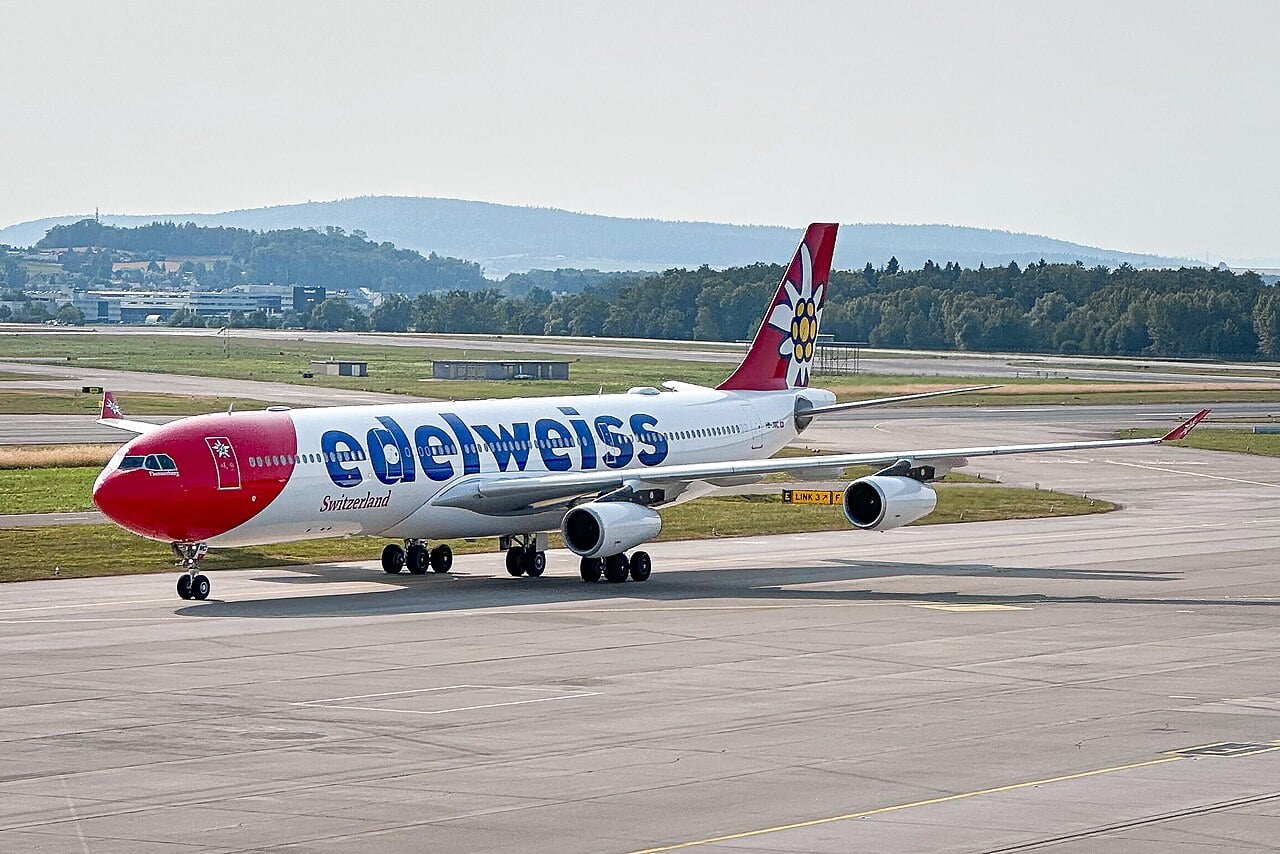
Ten minutes out of Zurich, a fully fuelled Airbus A340 bound for the Caribbean stops climbing and starts drawing circles in the sky north of Aarau. Somewhere beneath the fuselage, one set of wheels has refused to fold away. For the crew of Edelweiss flight WK34 on Saturday, 17 October 2026, the beaches of Punta Cana have suddenly become a problem for later.
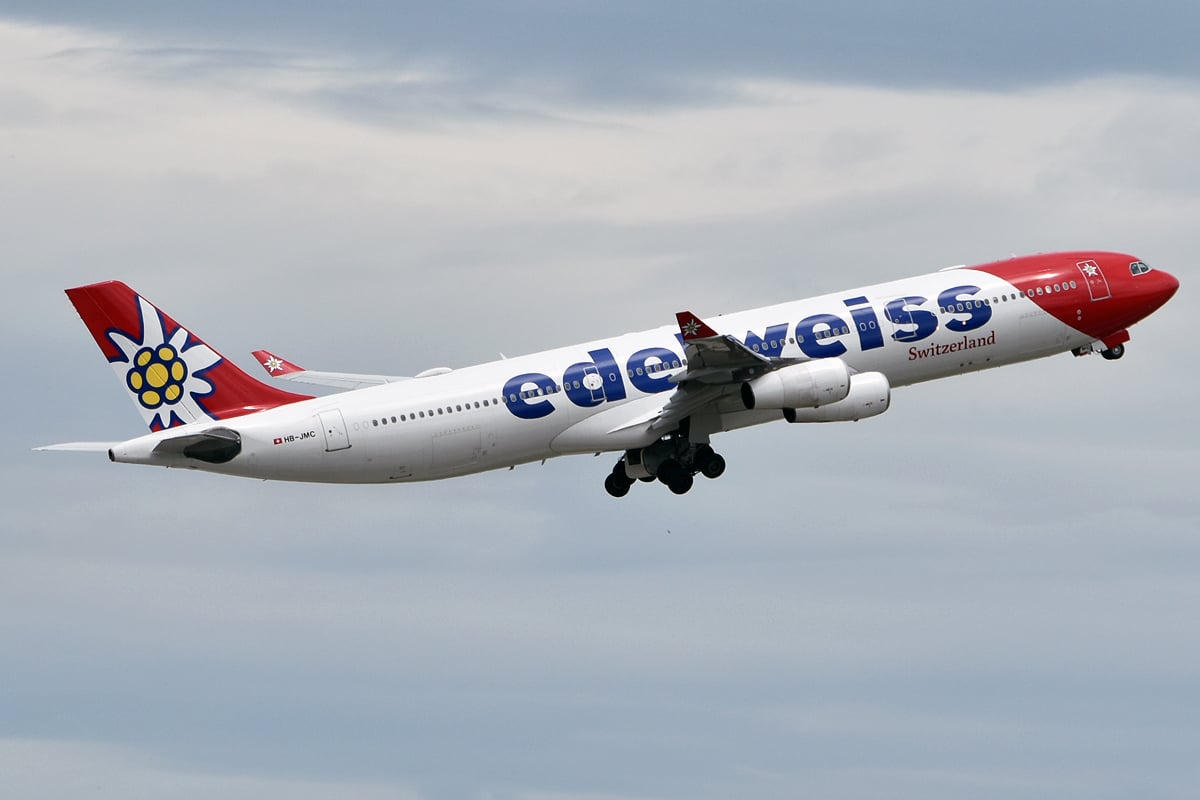
The aircraft was HB-JMC, one of the last four-engined A340-300s still flying in Swiss colours. According to The Aviation Herald, its landing gear could not be retracted after take-off from Zurich. Edelweiss spokesperson Andreas Marti told 20 Minuten and Blick that the culprit was the centre gear, the extra twin-wheel leg mounted under the middle of the fuselage.
What followed was textbook airmanship, and a vivid lesson in why a long-haul jet with its wheels hanging out cannot simply carry on across the Atlantic.
Informazioni rapide
- Volo: Edelweiss WK34, Zurich to Punta Cana
- Data: Saturday, 17 October 2026
- Aeromobili: Airbus A340-300 HB-JMC, about 23 years old
- Fault: Centre landing gear would not retract after take-off
- Fuel dumped: About 45 tonnes, according to Tages-Anzeiger
- Back in Zurich: Landed around 15:00 local time
- Second departure: 17:10, a delay of 3 hours 40 minutes (Edelweiss)
- Pensionamento: Edelweiss plans to fly HB-JMC only until January 2027
Circles over Aarau, loops over the Alps
According to The Aviation Herald, cited by aeroTELEGRAPH, the A340 began circling north of Aarau roughly ten minutes after departure. Tracking data then shows it heading south, climbing, and flying two long loops over the Alps before turning back for Zurich.
Those loops were not sightseeing. The jet was carrying fuel for a transatlantic crossing of more than nine hours, which made it far too heavy to land straight away. Edelweiss confirmed to 20 Minuten that fuel had to be released for the landing because of the aircraft's weight. Tages-Anzeiger put the amount at around 45 tonnes, jettisoned high over the Alps.
The A340 touched down back in Zurich at about 15:00. Edelweiss said there was no danger to the passengers at any point.
Why a jet with its gear down has to turn back
Landing gear is built to hang in the airflow for a few minutes on take-off and landing, not for an ocean crossing. Extended gear and its open doors add a great deal of drag. Aviation safety reference SKYbrary notes that fuel burn is significantly higher with the gear down, and that the flight management system's fuel predictions become less reliable when an aircraft flies outside its normal configuration.
There is also a hard speed limit. Every airliner has a maximum speed at which it may fly with the gear extended, and it is far below normal cruise speed. A jet held to that limit, burning extra fuel against the drag, cannot be sure of reaching an airport on the other side of the Atlantic. Turning back is the only sensible answer.
The weight problem comes next. An A340-300 can take off at roughly 275 tonnes but is certified to land at far less, around 190 tonnes depending on the variant. A long-haul jet that returns minutes after departure is therefore tens of tonnes over its maximum landing weight. Pilots can burn the excess off by flying in circles for hours, or, on aircraft fitted with a jettison system, release it through nozzles on the wings. The A340 has such a system, and 20 Minuten published a reader's video of the fuel streaming from HB-JMC's dump mast.
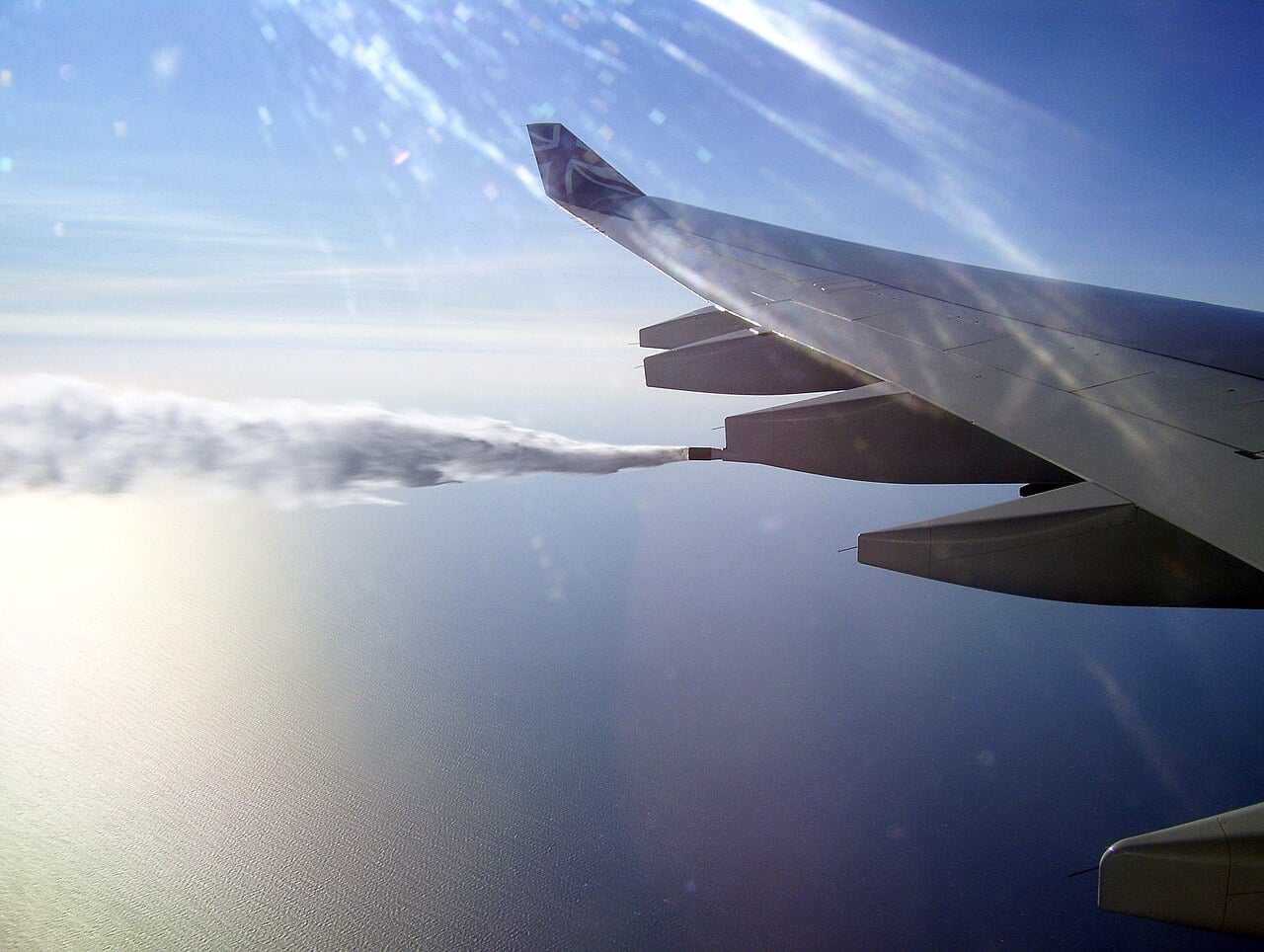
Jettisoned kerosene is released high enough to vaporise and disperse long before it reaches the ground, which is why controllers route aircraft to higher altitudes over sparsely populated terrain before clearing a dump. The Alps south of Zurich fit that description well.
Two hours on the ground, then Punta Cana after all
Engineers met HB-JMC in Zurich. Tages-Anzeiger later described the fault as a gear door problem, while Edelweiss would say only that a part had been replaced. The landing also briefly held up other arrivals, with several flights entering holding patterns while the A340 came in.
After about two hours on the ground, the same aircraft took off again as WK34 at 17:10 and reached Punta Cana without further trouble. Edelweiss put the passengers' delay at 3 hours and 40 minutes, which beats a cancelled holiday by some margin.
Spotter channel ZRH Aircraft posted this clip of an Edelweiss A340 landing on runway 34 at Zurich on 17 October 2026, titled as a safety landing; the registration is not legible in the footage.
An old jet on its farewell tour
HB-JMC is about 23 years old. It flew for SWISS before moving to Edelweiss, and its days are numbered: according to aeroTELEGRAPH, Edelweiss plans to operate it only until January 2027, as the leisure carrier replaces its last A340s with the Airbus A350. Even so, the jet was not neglected. In September 2025 it spent about 15 days in heavy maintenance at Haeco in Hong Kong.
The A340 era in Switzerland is ending on several fronts at once. SWISS has already flown HB-JMB to Twente for retirement and plans to give its last A340-300 to the Swiss Museum of Transport in Lucerne. Its three remaining A340s and Edelweiss's examples are the last of the type still carrying paying passengers out of Zurich.
Saturday's return will not be remembered as a near miss. It was a stuck gear leg, a crew that followed the checklist, 45 tonnes of kerosene over the mountains and a two-hour pit stop. For an old four-engined jet with a few months left to fly, that is a dignified way to make the news.
Sources: The Aviation Herald, aeroTELEGRAPH, 20 Minuten, Blick, Tages-Anzeiger, VOL.AT, AeroCorner, AirLive, SKYbrary
0 Comments