
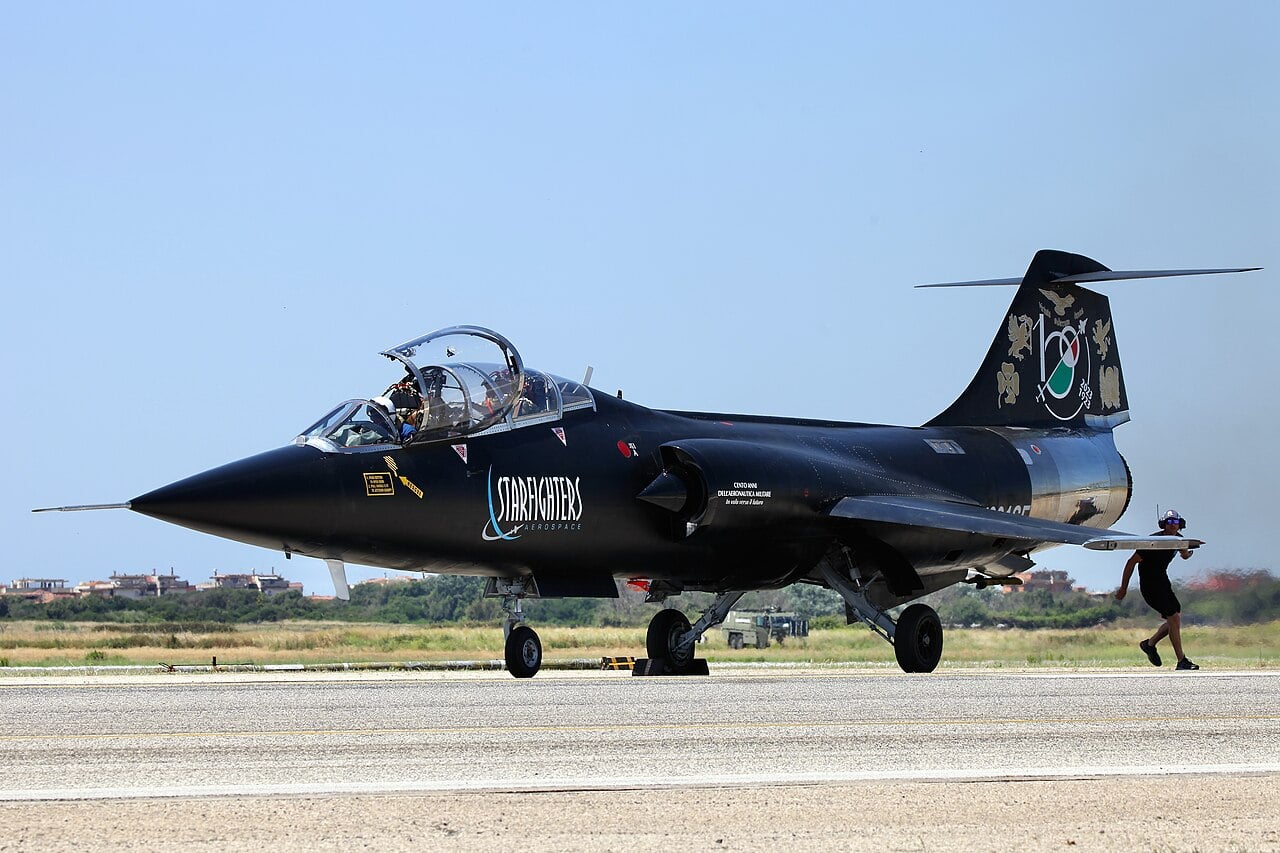
IL Caccia stellare F-104 first flew in 1954. Seventy-two years later, a small fleet of them in Florida is being turned into a launch platform. Starfighters Space, which operates the world’s largest civil fleet of F-104s, has announced that it will fly its STARLAUNCH 1 rocket under the wing of one of its jets in December, in the first captive-carry test of its air-launch programme.
A post on Instagram shares the news. Here is what the company has actually announced, based on its press release of 13 October 2026.
Informazioni rapide
- Veicolo: STARLAUNCH 1, suborbital development vehicle for the air-launch programme
- Carrier aircraft: Lockheed F-104 Starfighter
- Test: Captive carry: the rocket stays attached to the wing for the whole flight
- Quando: Planned for December 2026
- Itinerario: Between NASA Kennedy Space Center and Cecil Spaceport, Jacksonville, Florida
- Inert test article: Built by Robby Moto Engineering, Italy; due at the company’s KSC hangar in November
- Planned propulsion: Hybrid rocket motor from Vaya Defense & Space
- Azienda: Starfighters Space (NYSE American: FJET), founded 1995 by Rick Svetkoff in Clearwater, Florida
What a Captive-Carry Flight Is
In a captive-carry test the rocket never leaves the aircraft. The inert STARLAUNCH 1 test article, with no live motor, will be mounted under one wing and flown from Kennedy Space Center to Cecil Spaceport near Jacksonville. The aim is to see how the shape behaves in real airflow: loads on the pylon, vibration, handling of the F-104 with an asymmetric store, and how the whole system holds up through take-off, cruise and landing. According to the company, the other wing may carry a separate rideshare payload for its “Wind Tunnel in the Sky” flight-test service.
The Road to an Air Launch
Captive carry is the first rung on a ladder. Next comes a drop test over the Atlantic, in which the inert vehicle is released from the jet to check that it separates cleanly. Then the company plans to integrate the propulsion system, a hybrid rocket motor supplied by Vaya Defense & Space, before attempting a powered air launch. Each step depends on the results of the one before, and the company has not set dates beyond December.
Why an F-104?
Air launch is not new. Pegasus rockets have been dropped from a Lockheed L-1011 since the 1990s, and we tell that story in our post on the Stargazer. Launching from an aircraft lets a rocket start above the densest part of the atmosphere, already moving, and from a position chosen for the mission rather than a fixed pad. A fast, high-flying jet takes that further. The F-104 was built to climb quickly and fly at twice the speed of sound, which is exactly what a small air-launched rocket wants from its first stage.
Fly the Florida Starfighters
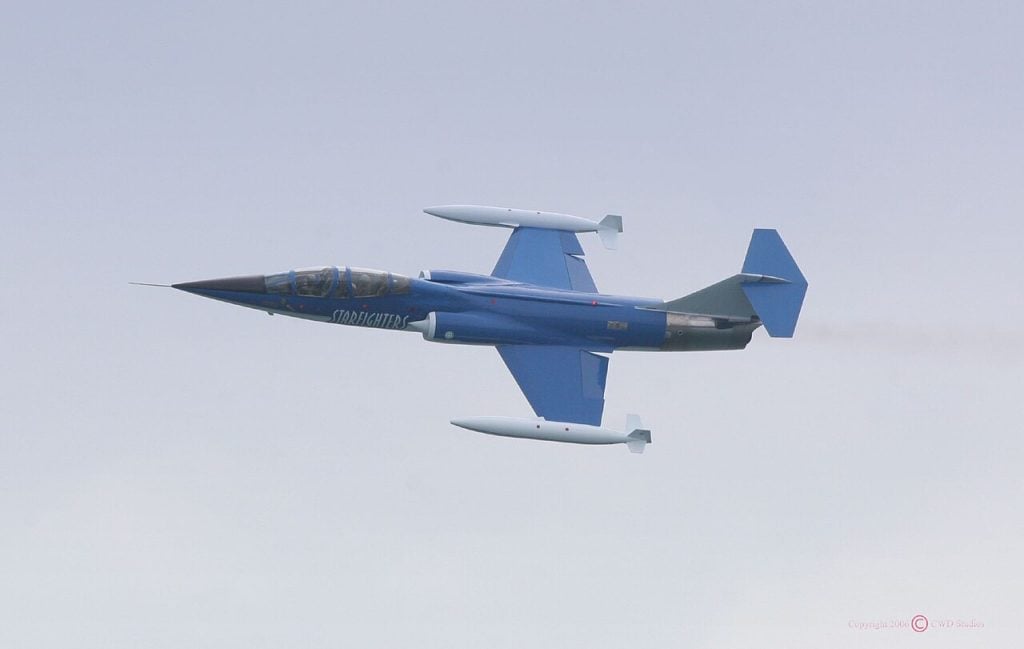
The Florida Starfighters are not only test aircraft. The fleet, based at Kennedy Space Center and Midland, Texas, includes two-seat TF-104G-M and CF-104D Starfighters, and those two-seaters are also available for flights for pilots with MiGFlug. If you want to experience the jet the Germans nicknamed the “Widowmaker” from the back seat, see our F-104 Starfighter flight. The aircraft’s reputation, and what lay behind it, is covered in our Widowmaker story.
What the Viral Post Gets Right
The post is accurate: Starfighters Space does plan a captive-carry flight of STARLAUNCH 1 on an F-104 in December. One point is worth stressing: this flight will not launch anything. The rocket is an inert test article and stays on the wing; a drop test and a powered launch are later steps that have not yet been scheduled.
Visualizza questo post su Instagram
Sources: Starfighters Space press release via Business Wire, 13 October 2026; Starfighters Space company information; Wikipedia, Lockheed F-104 Starfighter and Pegasus (rocket).


0 Comments