
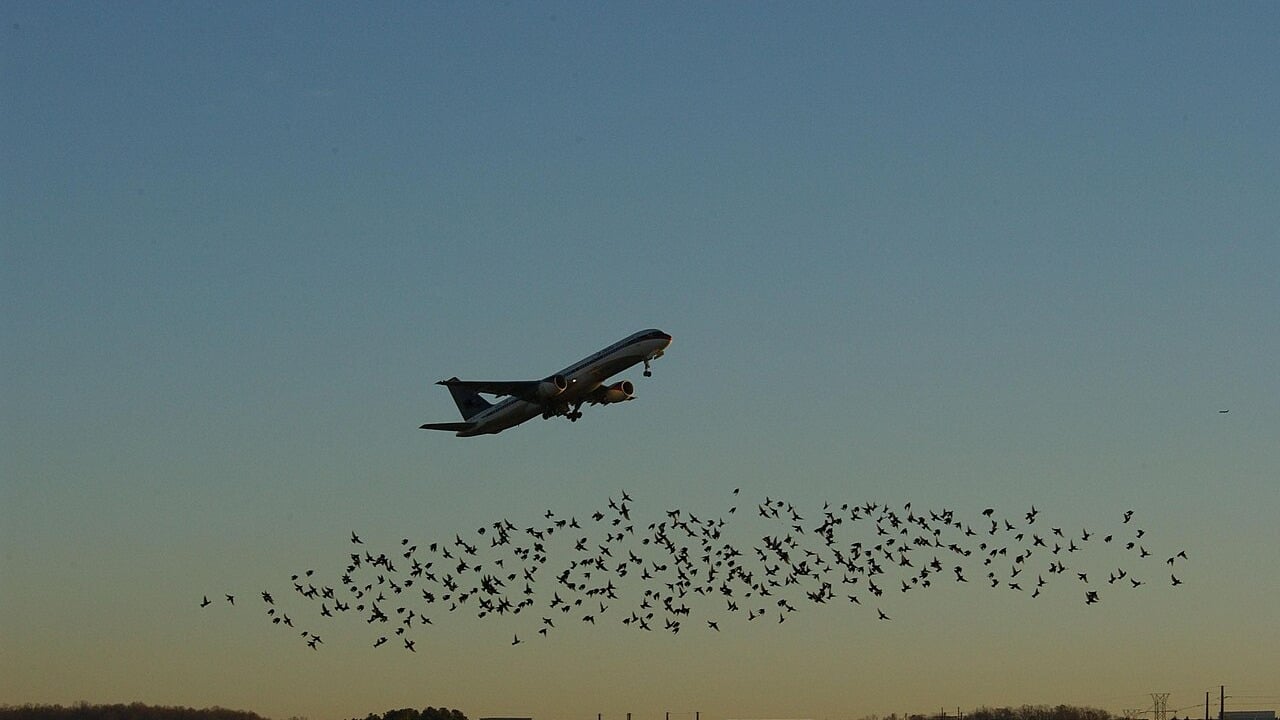
A jet engine is certified to survive a bird. That is the easy half of the problem, and it is the half everyone writes about. The hard half happens on the ground, months earlier, and it involves a biologist with binoculars, a propane cannon, a stack of federal permits and an argument with the county about where to put the landfill.
Every certificated airport in the United States runs a wildlife programme. Most passengers have no idea it exists. It has its own regulation, its own advisory circular, its own federal database, its own interagency agreement with the Department of Agriculture, and its own uncomfortable corner where the only remaining option is a shotgun.
This is how airports keep birds away from aeroplanes, what the rules actually require, and why the problem is getting harder rather than easier.
Informazioni rapide
The rule: 14 CFR 139.337, Wildlife hazard management, applicable to Part 139 certificated airports
The guidance: AC 150/5200-33C, Hazardous Wildlife Attractants on or near Airports, dated 21 February 2020
Reported strikes: about 344,000 with civil aircraft in the USA, 1990 to 2025, including roughly 24,500 at 870 U.S. airports in 2025 alone
Costo: averaging around 272 million dollars a year for U.S. civil aircraft, 1990 to 2025
Where they happen: about 70 per cent of strikes occur between the ground and 500 feet AGL
The disproportion: waterfowl are 4 per cent of identified strikes but 23 per cent of damaging ones
Who does the fieldwork: airport wildlife biologists, in the United States usually from USDA Wildlife Services
Separation guidance: 5,000 ft from piston airports, 10,000 ft from turbine airports, 5 statute miles for approach and departure airspace
The Numbers Nobody Prints on a Boarding Pass
The FAA and USDA jointly run the National Wildlife Strike Database, and the headline figures are startling once you see them laid out. About 344,000 wildlife strikes with civil aircraft have been reported in the United States between 1990 and 2025. Roughly 24,500 of those came in 2025 alone, spread across 870 airports. U.S. carriers reported a further 5,700 at 351 foreign airports over the same period.
Most do nothing. The ones that matter are concentrated in a small band of species and a small band of altitude. Around 70 per cent of strikes happen between the ground and 500 feet, which is to say on the airport or within a mile or two of it. About 61 per cent occur during descent, approach and landing roll, and 36 per cent during the take-off run and climb. Only 3 per cent happen en route.
Then the figure that explains the entire regulatory apparatus: ducks and geese account for only about 4 per cent of identified strikes, but 23 per cent of the strikes that damage the aircraft. Mourning doves are struck far more often, roughly 11 per cent of birds identified to species, and almost never hurt anything. Mass is the whole argument.
The cost of all this averages about 272 million dollars a year for U.S. civil aircraft. Globally, the FAA counts more than 655 people killed and over 350 civil and military aircraft destroyed by wildlife strikes between 1990 and 2025.
That caveat is worth holding onto. Reporting is voluntary for most operators, so an airport with a rising strike count may simply be an airport that has started paying attention. Everyone who works on the problem warns against ranking airports off the database, and the industry argued about publishing it for exactly that reason.
Four Triggers, and the Clock Starts
14 CFR 139.337 is unusually readable for a federal regulation. It opens with a blunt standing obligation: each certificate holder must take immediate action to alleviate wildlife hazards whenever they are detected. No threshold, no grace period.
Then it names four events that force a formal wildlife hazard assessment. An air carrier aircraft experiences multiple wildlife strikes. An air carrier aircraft suffers substantial damage from striking wildlife. An air carrier aircraft experiences an engine ingestion of wildlife. Or wildlife of a size or in numbers capable of causing any of those three is simply observed with access to a flight pattern or movement area.
The fourth is the interesting one, because nothing has to have happened yet. A flock of geese loitering beside a runway is, on its own, a regulatory trigger. The rule is written to catch the near miss as well as the hit.
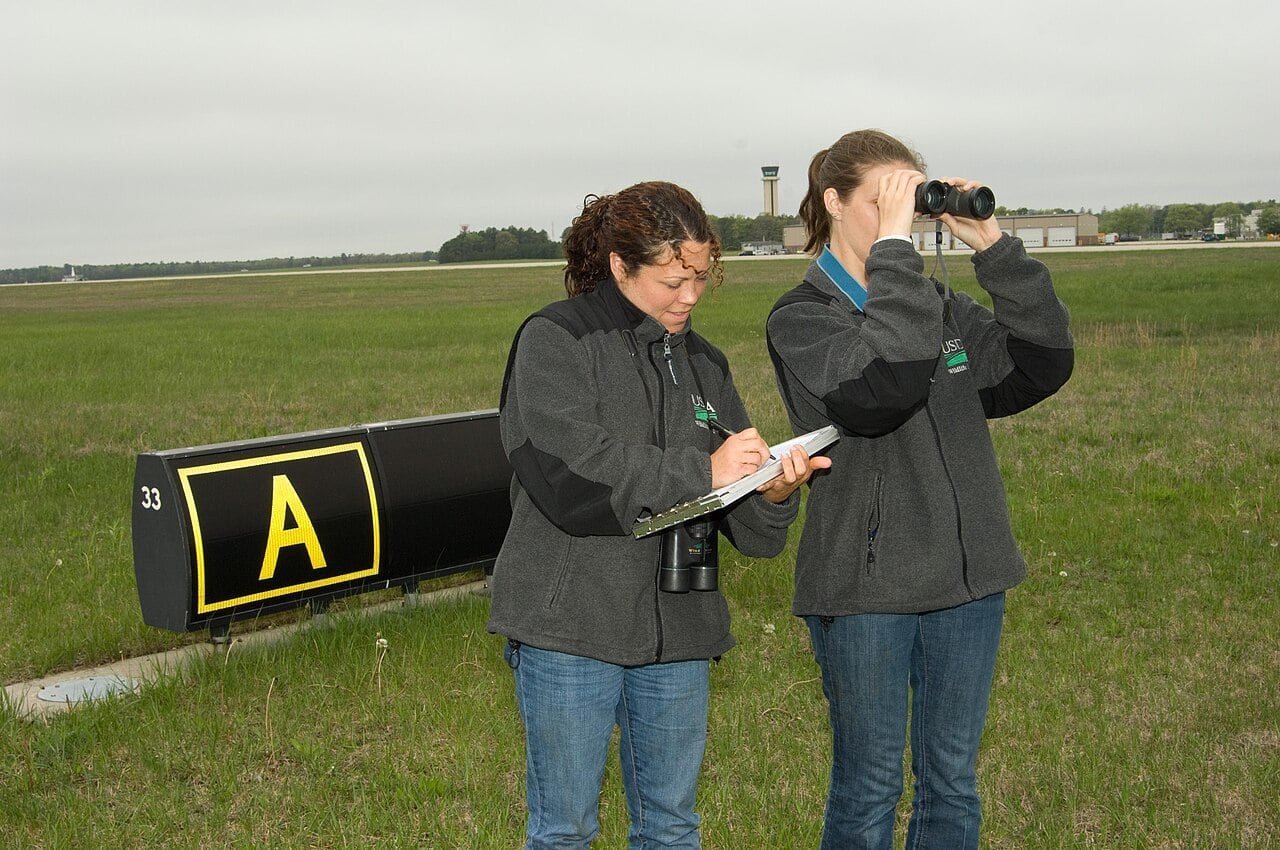
The assessment itself must be done by a wildlife damage management biologist with professional training or experience in airport wildlife management, or by someone working directly under one. It has to identify the species present, their numbers, their local movements and their daily and seasonal patterns, find the features on and near the airport that are attracting them, describe the hazard, and recommend what to do about it.
Three Levers, in Writing, With Dates
The assessment goes to the FAA, which decides whether a wildlife hazard management plan is required. When one is, the plan becomes part of the Airport Certification Manual, which means it is no longer a good intention but a compliance document.
Section 139.337(f) spells out what has to be in it, and the heart of it is a prioritised list of actions in three categories: wildlife population management, habitat modification, and land use changes. Each with a target date for initiation and completion.
That ordering is not alphabetical. Habitat modification and land use are the levers that actually work, because they change why the birds are there. Population management is what you do about the ones who turn up anyway. The plan also has to name the individuals responsible, carry copies of the relevant local, state and federal wildlife control permits, provide for physical inspections of the movement areas before air carrier operations begin, establish a way for the people chasing birds to talk to the tower in real time, and be reviewed every twelve months or after any of the three strike events.
By 2022, according to the FAA and USDA strike report, every Part 139 certificated airport had completed an assessment and then a plan. More than 400 million dollars of Airport Improvement Program money went into wildlife-related projects between 2009 and 2022, a large share of it on perimeter fencing.
The FAA’s own airport safety video on wildlife hazards, above, is the official walk through the system, and it is a useful corrective to the idea that any of this is improvised.
Who Actually Does the Work
In the United States, the biologist in the regulation is very often a federal employee from a different department entirely. USDA Wildlife Services supplies airport wildlife biologists and specialists to hundreds of civilian and military airfields, and it has been the FAA’s partner on the data since 1995, when the two agencies signed the interagency agreement that turned a filing cabinet of paper strike reports into the National Wildlife Strike Database.
The database only works if somebody can say what was hit. That job belongs to the Smithsonian Institution’s Feather Identification Laboratory at the National Museum of Natural History, which receives the remains, known in the trade as snarge, by post. Whole feathers get matched against a reference collection of hundreds of thousands of specimens. Fragments go under a microscope. Smears go to DNA. In 2025, 55 per cent of remains from reported civil strikes were identified to species, and another 12 per cent to species group.

The Circle Nobody Draws on the Map
The most consequential document in airport wildlife management is not the regulation. It is AC 150/5200-33C, Hazardous Wildlife Attractants on or near Airports, updated on 21 February 2020, and it is about land use rather than birds.
It recommends three perimeters. For airports serving piston aircraft, keep hazardous wildlife attractants 5,000 feet from the nearest aircraft movement area. For airports serving turbine aircraft, make it 10,000 feet. And for every airport, protect a 5 statute mile radius covering the approach, departure and circling airspace.
Inside those circles, the advisory circular works through the things that pull wildlife in: waste disposal operations, stormwater management ponds, wetlands, dredge spoil containment, agriculture, aquaculture, golf courses and landscaping. It even flags synergistic effects, where two individually harmless land uses combine into a problem.
Here is the catch, stated in the document itself: this advisory circular does not constitute a regulation, is not mandatory, and is not legally binding in its own right. An airport can run a flawless wildlife programme inside the fence and still lose the argument when a county approves a landfill three miles off the departure end. That is why the FAA recommends standing up a Wildlife Hazards Working Group with the surrounding community, and why the AC devotes an entire chapter to off-airport attractants.
The Uncomfortable Arithmetic
Scaring birds is legally simple. Under 50 CFR 21.41, no federal permit is needed merely to scare or herd depredating migratory birds, provided no attempt is made to kill or capture them, and provided they are not endangered, threatened, or bald or golden eagles. That covers propane cannons, pyrotechnics, distress calls, lasers, falconry, border collies and the human being in the pickup truck who drives the perimeter at dawn.
Killing them is not simple. Almost every bird an airport cares about is protected by the Migratory Bird Treaty Act, so lethal removal, and capture and relocation, both require federal and often state depredation permits. The FAA recommends airports hold them in advance and work with a qualified wildlife biologist through the Fish and Wildlife Service consultation process, because the moment you need one is the moment you do not have time to apply.
A handful of standing orders carve out exceptions, and reading the list tells you which species keep winning. 50 CFR 21.49 is a control order for resident Canada geese specifically at airports and military airfields. 21.50 covers their nests and eggs. 21.43 handles blackbirds, cowbirds, crows, grackles and magpies. Congress and the Fish and Wildlife Service have, in other words, written bespoke legal machinery for the goose problem.
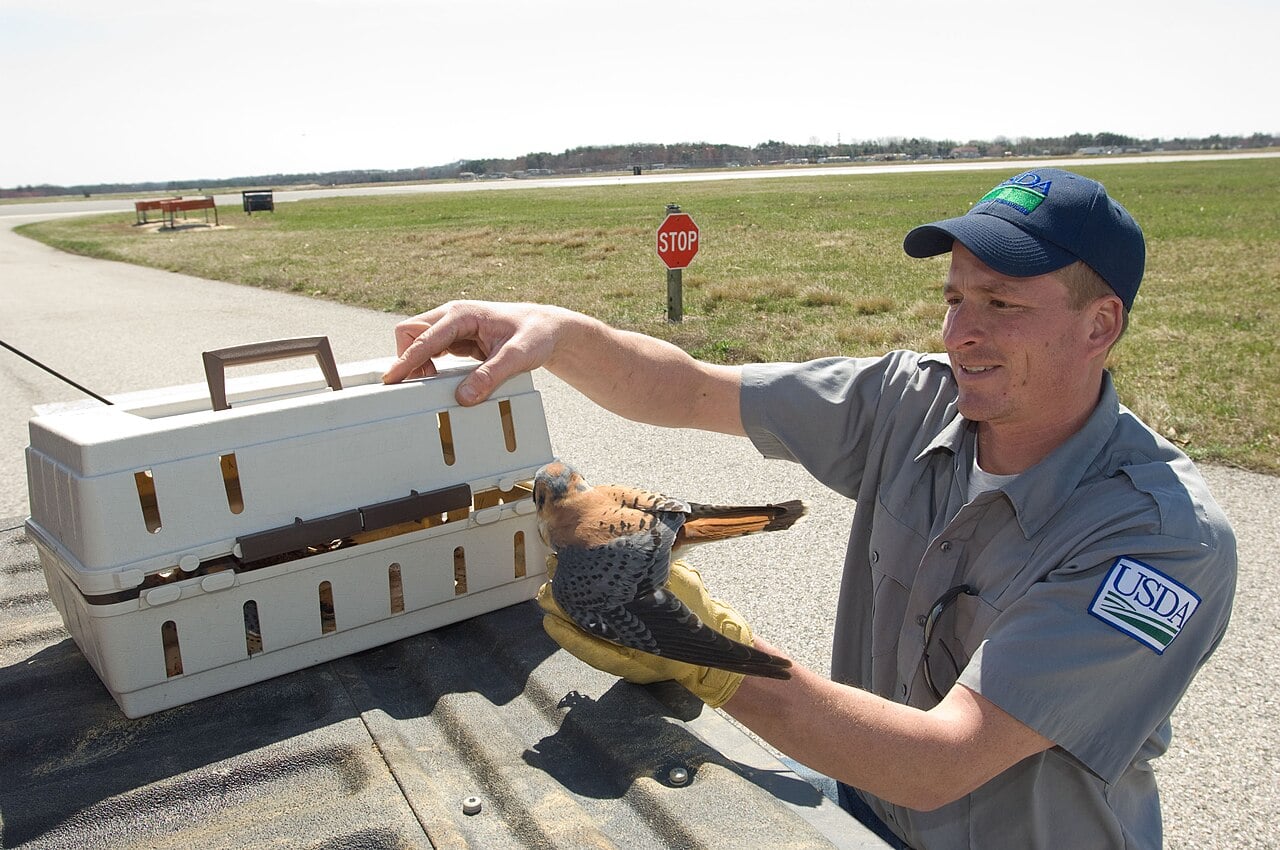
Nobody in this field enjoys that last category, and the official literature does not pretend otherwise. The USDA caption on the photograph above says it plainly: most kestrels are chased away, some are trapped and moved, and some are killed. Relocation sounds like the humane compromise, and for raptors it often is, but birds come back, and the FAA has funded research specifically on how well capture and relocation actually holds.
The honest summary is that habitat modification is the only intervention that scales. Drain the pond, cut the grass to the right height, fence out the deer, move the landfill, and the birds stop arriving. Everything else is managing the ones who turn up regardless, and the end of that chain is a permit and a shotgun.
Why It Gets Harder, Not Easier
Three trends point the wrong way, and the FAA and USDA say so in print.
Large bird populations are up. Resident Canada geese, in particular, have gone from a conservation success story to a standing airfield problem, and they do not migrate out of the way. Traffic is up too, so there are more aircraft meeting more birds in the same thin layer of air.
And then the counterintuitive one. Modern turbofans are quieter than the engines they replaced, and the strike report notes that birds are therefore less able to detect and avoid aircraft than they were in the era of noisier powerplants. The authors draw the analogy with electric cars, where studies have measured markedly higher strike rates for pedestrians and cyclists than with internal-combustion vehicles. Every regulatory push for quieter aeroplanes, including the FAA rule adopted in October 2017 requiring new transport aircraft to be at least 7 decibels quieter than the then-current fleet, makes the bird problem fractionally worse. That is an uncomfortable trade nobody wants to reopen, and nobody is proposing to.
The response has been money and sensors. The FAA has put more than 30 million dollars into wildlife research since Flight 1549 ditched in the Hudson in January 2009, covering avian radar, infrared and electro-optical scanning, aircraft-mounted lighting to make jets more conspicuous to birds, Canada goose movement studies, the efficacy of trapping and relocating raptors, DNA identification, and drones used for both hazing and monitoring.
Dolbeer said that three months after the ditching, when the public still regarded the event as a freak. He had the only dataset that could settle the question, and it told him otherwise. The entire apparatus described above exists because he was right.
None of it makes the airfield sterile, and nobody claims it does. What it does is move the odds. The engine is the last line of defence, and it is designed on the assumption that everything upstream has already failed. Most days, upstream works.
Sources: 14 CFR 139.337 (eCFR, current as of 10 November 2026); FAA Advisory Circular 150/5200-33C, 21 February 2020; FAA Wildlife Strike Database frequently asked questions, updated 2 September 2026; Wildlife Strikes to Civil Aircraft in the United States 1990-2022 (FAA and USDA Wildlife Services); 50 CFR 21.41, 21.43, 21.49 and 21.50; NPR, January and April 2009; USDA APHIS.

0 Comments