
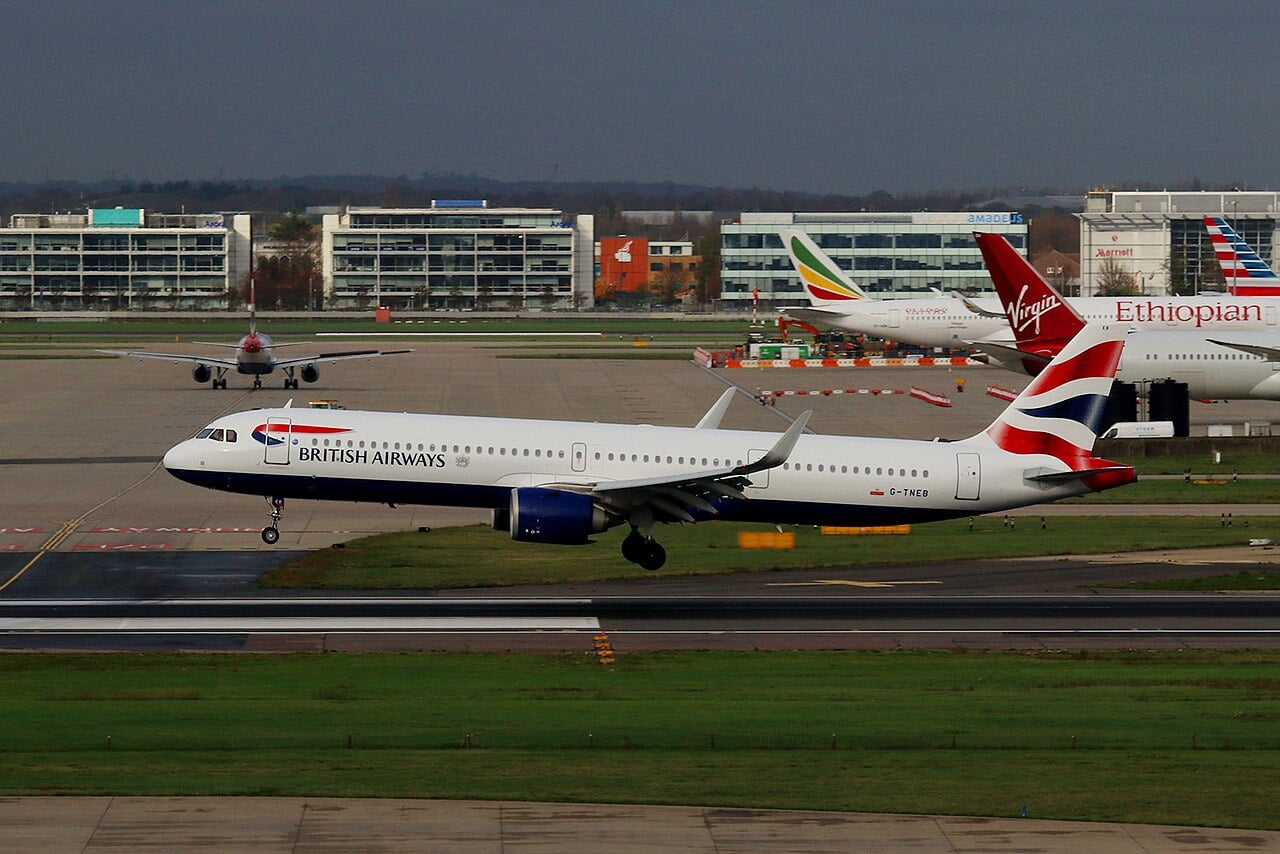
A routine short hop from Amsterdam ended with a moment that was caught on two live airport cameras. On the morning of Thursday 12 November 2026, British Airways flight BA431, an Airbus A321neo registered G-TNEB, bounced on landing on runway 27L at London Heathrow. As it came back down, the underside of its tail touched the runway twice before the crew went around. The aircraft landed safely on its second approach, about 14 minutes later. Nobody was hurt.
Informazioni rapide
- Data: 12 November 2026, around 10:35 local time
- Volo: BA431, Amsterdam Schiphol to London Heathrow
- Aeromobili: Airbus A321neo (A321-251NX) G-TNEB, delivered to BA in December 2023
- Runway: 27L
- Quello che è successo: Bounced landing, two tail contacts, go-around
- Risultato: Landed safely on the second approach; no injuries
- Indagine: UK Air Accidents Investigation Branch (AAIB)
The landing, the two tail contacts and the go-around, caught on Big Jet TV’s live camera. Video: Big Jet TV.
What the Cameras Saw
The weather was calm and clear. The video from the Big Jet TV live camera shows the A321neo touching down and bouncing, and the underside of the tail touching the runway twice before the aircraft climbs away. Flightradar24’s automated airport camera caught the same moment from another angle.
Earlier today, British Airways A321neo G-TNEB suffered an apparent tailstrike during landing on RWY 27L, captured on our automated live stream camera. The aircraft conducted a go-around and landed without incident on the second approach.
— Flightradar24 (@flightradar24) November 12, 2026 https://twitter.com/flightradar24/status/2120918676958491008
A second angle on the same landing.
Why Bounces Lead to Tailstrikes
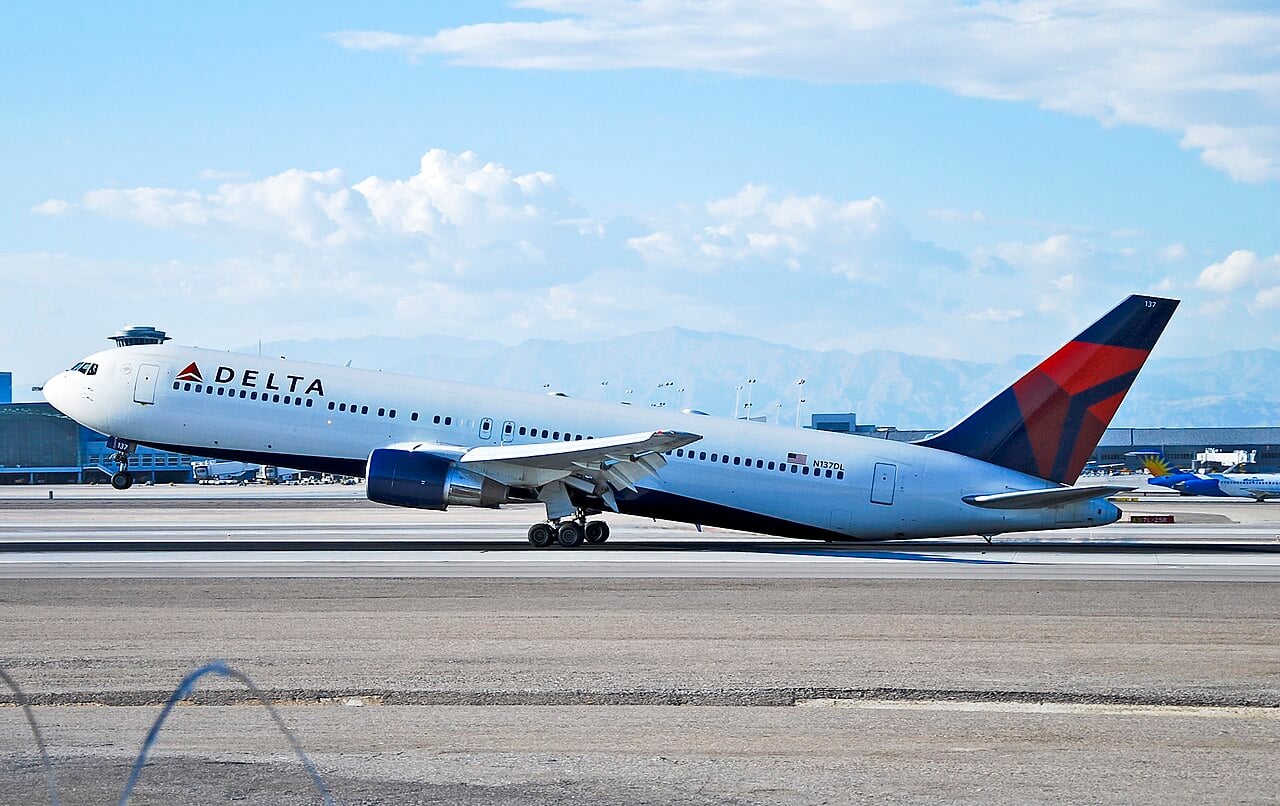
The A321 is the longest member of the A320 family, which leaves less clearance between its tail and the runway when the nose is raised. A bounced landing is a classic trap: as the aircraft lifts off again, the natural reaction is to pull the nose up to cushion the second touchdown, and a go-around adds more nose-up pitch as thrust increases. If the aircraft is still close to the ground at that moment, the tail can reach the runway. Airbus has published specific guidance to its operators on preventing tailstrikes during go-arounds started close to the ground. The full mechanics are in our tail strikes explainer.
Cosa succede dopo?
British Airways took the aircraft out of service for inspection, with a return tentatively planned for 14 November depending on what engineers find. The UK Air Accidents Investigation Branch has been called in.
It is not the first such event at Heathrow this autumn: an Austrian Airlines A320neo also struck its tail there in September 2026 and spent around eight weeks out of service.
Key Points
A bounced landing, two tail contacts and a well-flown go-around: the crew of BA431 did what the procedures call for and brought the aircraft back for a normal landing. How much damage the tail suffered, and why the landing bounced in calm conditions, are questions for the AAIB.
Sources: Big Jet TV live stream and X post (12 November 2026); Flightradar24 on X (12 November 2026); Paddle Your Own Kanoo (12 November 2026); Aviation A2Z (13 November 2026); The Aviation Hub (November 2026); Aerospace Global News (November 2026); aeroTELEGRAPH (November 2026); The Aviation Herald; Airbus Safety First, “Preventing Tailstrike During Go-around Near the Ground”.
Domande frequenti
What happened to British Airways flight BA431 at Heathrow?
Was anyone injured in the BA Heathrow tailstrike?
What is a tailstrike?
Why can a go-around cause a tailstrike?
Who is investigating the BA431 tailstrike?
Post correlati
0 Comments