
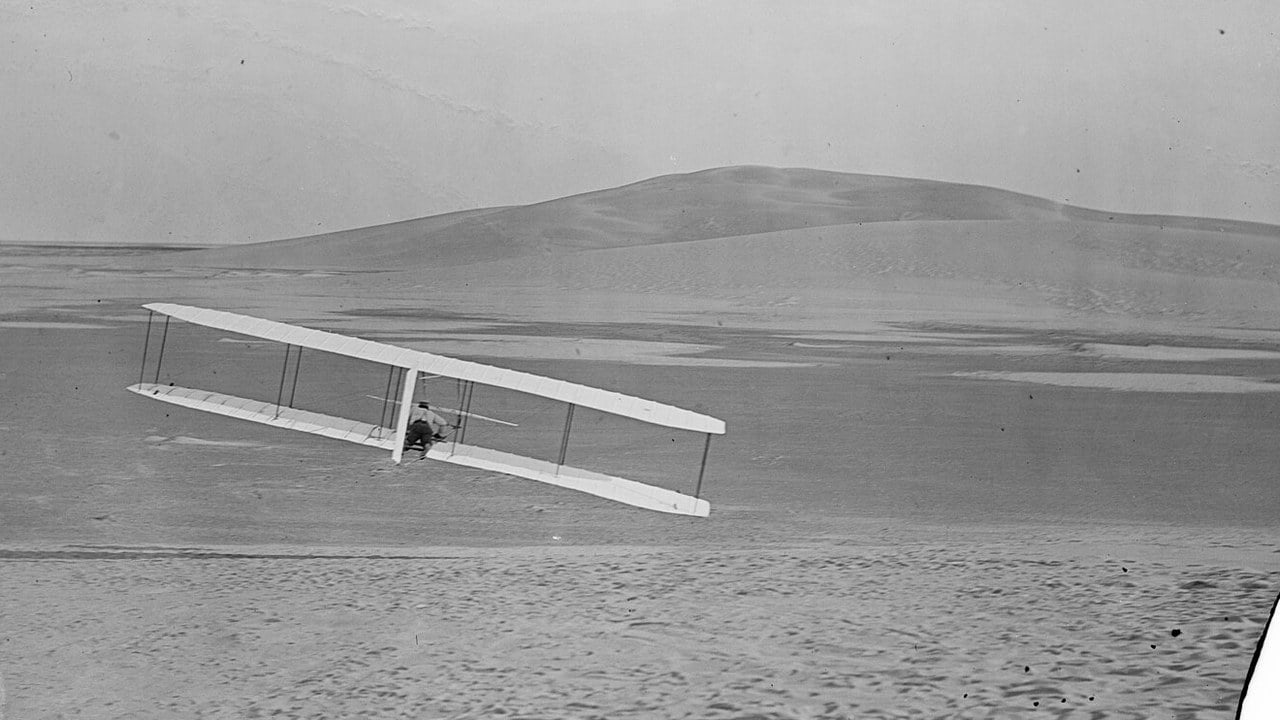
In the autumn of 1902, on the sand dunes at Kitty Hawk, the Wright brothers kept crashing their new glider in the same strange way. When they warped the wings to bank into a turn, the glider would sometimes skid, swing its nose the wrong way, and spiral into the sand. They had sunk a well at their camp by hammering pipe into the ground, and the motion reminded them of it. They called it “well digging”.
What they had run into is called adverse yaw. It is one of the first things a student pilot learns about, and it is the reason every conventional aircraft has a movable rudder. Solving it was, in the Wrights’ own story, the last piece of the control puzzle that let them build a practical aeroplane.
Informazioni rapide
- Che cos'è: The tendency of an aircraft to yaw opposite to the direction of roll
- Main causes: Extra drag on the rising wing, plus lift vectors tilting while the aircraft rolls
- Worst when: Low airspeed, high angle of attack, large aileron deflections, long wingspans
- Cure: Coordinated rudder, shown by the slip indicator ball
- Design fixes: Differential ailerons, Frise ailerons, coupled aileron-rudder, flaperons, roll spoilers
- First solved: 1902 Wright glider: movable rudder linked to wing-warping
Roll right, nose goes left
Adverse yaw is the natural tendency of an aircraft to yaw in the opposite direction to the roll. Move the stick or yoke to the right and the right wing goes down, as intended. But for a moment the nose swings left, away from the turn.
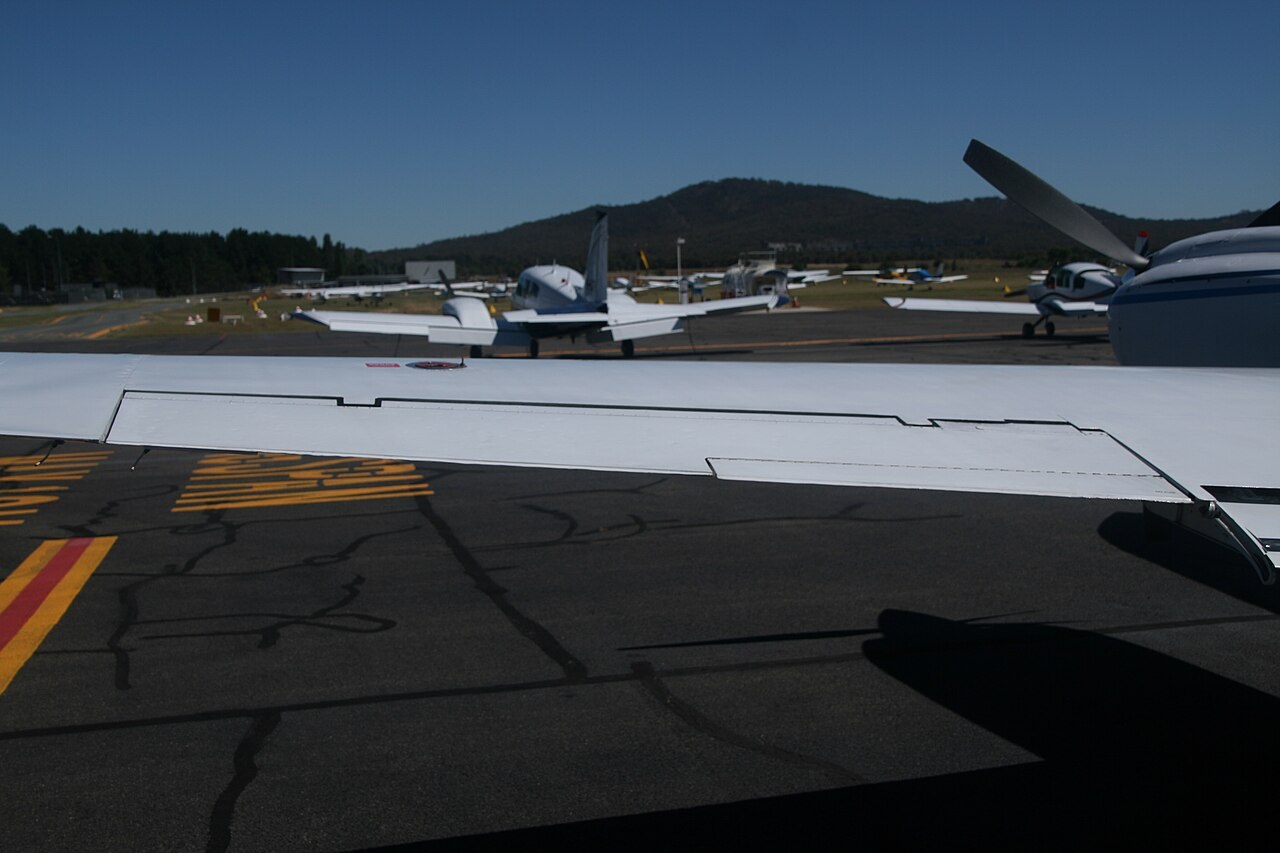
The FAA’s Pilot’s Handbook of Aeronautical Knowledge gives the classic explanation. To roll right, the left aileron goes down and the right aileron goes up. The lowered aileron makes more lift on the left wing, and with it more drag. That extra drag holds the rising wing back, and the nose yaws towards it.
There is a subtler cause too. As an aircraft rolls, the rising wing meets the air at a slightly lower angle and the descending wing at a slightly higher one. Because lift always acts at right angles to the oncoming air, the rising wing’s lift tilts backwards and the descending wing’s tilts forwards, creating a yawing moment away from the turn. This part exists only while the aircraft is actually rolling, yet it often has a bigger effect than the ailerons themselves.
When it bites hardest
Adverse yaw is worst exactly when a pilot can least afford it. At low airspeed the controls have less authority, so the pilot needs bigger aileron deflections, and bigger deflections mean more adverse yaw. The rudder, which is supposed to fix it, is also less effective at low speed.
The FAA notes that the yaw is especially evident in aircraft with long wingspans. That is why gliders, with their very long, slender wings, are a favourite way to demonstrate it: roll with the stick alone and the nose visibly swings the wrong way before the turn begins.
A glider demonstrates adverse yaw in flight, and why aircraft need a rudder.
The cure is to fly coordinated turns, applying rudder in the direction of the turn together with the aileron, and pilots learn it from their first lessons. The slip indicator, the little ball on the instrument panel, shows whether a turn is coordinated.
How the Wrights fixed it
The 1901 Wright glider had no vertical tail at all, and Wilbur could not make controlled turns with it. For 1902 the brothers added a fixed vertical tail, hoping it would stop the skidding. It did not cure the problem: in some turns the glider still pivoted and dug a wingtip into the sand.
Orville worked out what was going on. The part of the wing with the highest angle of attack was also producing the most drag, slowing that end of the wing. His diary for the night of 2 October 1902 records: “I studied out a new vertical rudder.” The brothers made the tail movable so that it could counter the unequal drag and keep the nose pointed into the turn.
Wilbur thought the pilot already had enough to do, so they connected the rudder wires to the wing-warping cradle. A single movement now warped the wings and turned the rudder together. It was an early ancestor of today’s coupled aileron-rudder systems, and it gave the 1902 glider working three-axis control: warping for roll, the front elevator for pitch and the rudder for yaw. The brothers’ famous 1903 patent application was based on it.
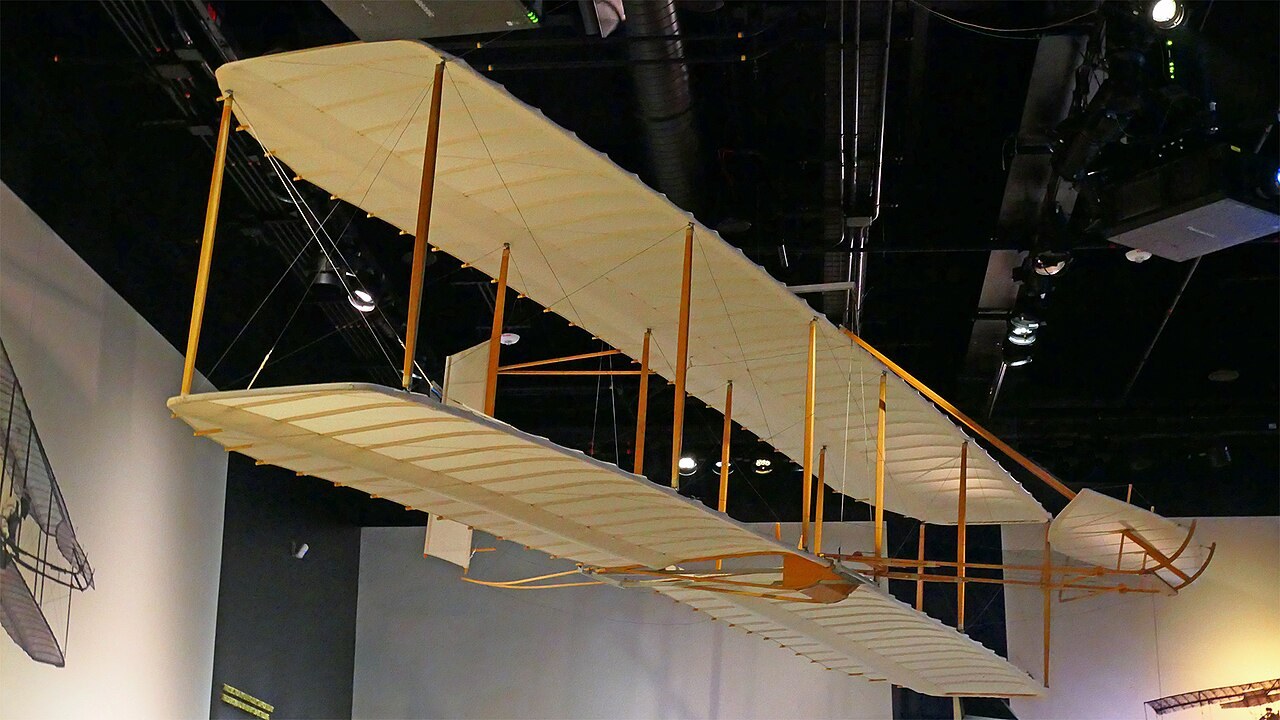
There was a twist later. On their 1905 Flyer III, after a heavy crash, the Wrights gave the rudder its own separate control instead of linking it to the warping. Pilots have had a rudder of their own ever since.
A reproduction 1902 Wright glider flying at Kitty Hawk.
Designing it out
Designers have spent a century trying to make adverse yaw smaller, so pilots have less to correct. The FAA handbook lists four standard approaches: differential ailerons, Frise-type ailerons, coupled ailerons and rudder, and flaperons.
Differential ailerons are the simplest. The linkage makes the up-going aileron move further than the down-going one, adding drag on the descending wing to balance the drag on the rising one. The de Havilland Tiger Moth of the 1930s was one of the earliest and best-known aircraft to use them.
Frise ailerons, developed by Leslie Frise of the Bristol Aeroplane Company to reduce stick forces in the 1930s, are hinged so that the nose of the raised aileron pokes down into the airflow below the wing, adding drag on that side. The Piper J-3 Cub helped bring them to a wide audience. Neither trick removes adverse yaw completely; as the FAA handbook says of both, coordinated rudder is still needed.
Coupled systems go back to the Wrights’ idea. Some light aircraft use interconnect springs that pull on the rudder pedal whenever the ailerons move, and the pilot can override them when needed. In fly-by-wire aircraft, the computers can mix rudder with the roll command electronically.
Spoilers: yaw in the right direction
There is another way to roll an aircraft. Raise a spoiler on top of one wing and that wing loses lift and gains drag, so it drops and is also held back. The aircraft rolls and yaws the same way, into the turn. According to the FAA handbook, eliminating adverse yaw is one of the advantages of roll spoilers.
The wartime Northrop P-61 Black Widow used spoilers for roll control, which freed almost the whole trailing edge of its wing for flaps. Some modern airliners use spoilers to assist their ailerons in roll.
How the Airbus A320 combines ailerons and spoilers for roll control.
Adverse yaw has a close relative in swept-wing jets: the coupled yaw-and-roll oscillation called Dutch roll, which jets tame with a yaw damper. Both come from the same fact that roll and yaw can never be fully separated. The Wrights understood it before anyone else, and every rudder pedal since 1902 is a reminder.
Sources: FAA Pilot’s Handbook of Aeronautical Knowledge (Chapter 6, Flight Controls), Wright Brothers Aeroplane Company (wright-brothers.org)
Header photo: Wilbur and/or Orville Wright / Library of Congress via Wikimedia Commons, public domain

0 Comments