
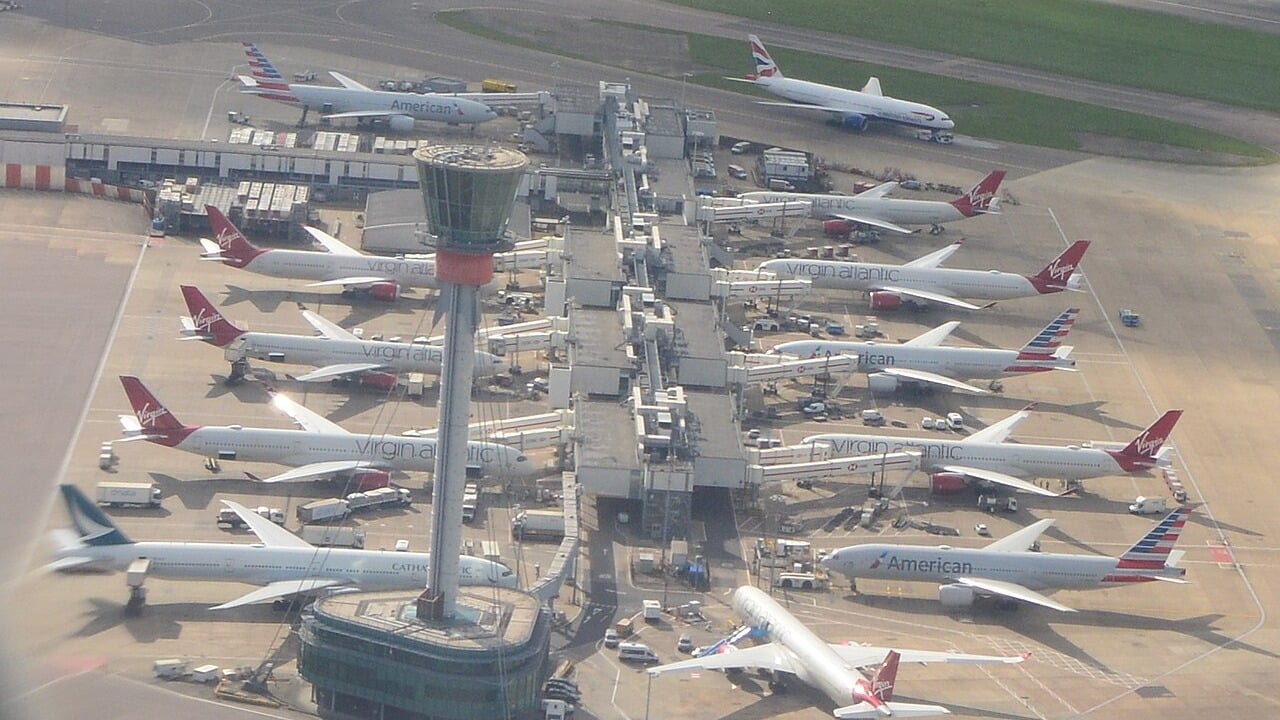
Suppose you start an airline tomorrow. You have the aircraft, the crews, the certificate and the money. You want to fly to London Heathrow.
You cannot.
Not because anyone has refused you, and not because the runways are physically full at the moment you want to land. You cannot because the permission to use the runway at a particular time is a finite thing that already belongs to somebody else, has belonged to them for years, and will keep belonging to them as long as they use it. It is called a slot, and it is the most valuable asset in commercial aviation that does not legally exist as property.
Here is how the system actually works, what the 80:20 rule really says, and why a single pair of take-off and landing permissions once produced a $60 million line in an airline’s accounts.
Informazioni rapide
The rulebook — IATA Worldwide Airport Slot Guidelines, Edition 4, effective 1 August 2025; in the EU, Council Regulation (EEC) No 95/93.
How many — 395 airports were subject to coordination in 2026, of which 216 were fully slot coordinated (Level 3). IATA says about 43 per cent of passengers worldwide depart from a slot coordinated airport.
The 80:20 rule — operate a series of slots at least 80 per cent of the time and you keep it next equivalent season, in perpetuity. That is historic precedence, or grandfather rights.
Heathrow capacity — 9,692 movements a week declared for Summer 2026 and 9,208 for Winter 2026; the two seasons total 478,700 against a planning cap of 480,000 a year.
The only confirmed price — SAS booked a $60 million positive earnings impact in February 2015 for transferring one Heathrow slot pair. It never named the buyer.
The US version — the FAA slot-controls JFK, LaGuardia and Reagan National, and measures the 80 per cent test over a rolling two-month period rather than a six-month season.
Level 1, Level 2, Level 3
Every commercial airport in the world sits in one of three categories, and the IATA guidelines define them in language that is unusually blunt about whose fault congestion is.
A Level 1 airport is one where “the capacity of the airport infrastructure is generally adequate to meet the demands of airport users at all times.” Most airports are Level 1. Turn up, file a flight plan, go.
A Level 2 airport has “potential for congestion during some periods” that can be fixed by schedule adjustments agreed between the airlines and a facilitator. A gentle nudge, not a rationing system.
Level 3 is the interesting one. These are airports “where capacity providers have not developed sufficient infrastructure, or where governments have imposed conditions that make it impossible to meet demand.” Read that twice. The rulebook does not describe Level 3 as a natural consequence of popularity. It describes it as a failure to build, or a political decision not to.
At a Level 3 airport an independent coordinator allocates every arrival and every departure against a declared capacity. In 2026, 395 airports were subject to some form of coordination and 216 of them were fully coordinated. Roughly 43 per cent of the world’s departing passengers leave from one.
IATA’s own explanation of how the slot system is meant to work, from the body that writes the guidelines.
The 80:20 rule, and the word “perpetuity”
Here is the mechanism, and it is simpler than its reputation.
Under the European regulation, slots are allocated for one season and must go back into the pool at the end of it. Article 8(2) then disapplies that return for any airline that can demonstrate its series “has been operated, as cleared by the coordinator, by that air carrier for at least 80 % of the time during the scheduling period for which it has been allocated.” If you clear 80 per cent, you get the same slots back automatically next equivalent season. Article 10(2) says the same thing from the other direction: fall below 80 per cent and you do not.
The IATA guidelines call the result historic precedence. The UK Department for Transport, in its 2024 consultation, described it without any diplomatic softening at all: as long as airlines keep usage at 80 per cent or above, “they maintain their Historic Rights and retain that series of slots in perpetuity.”
The same consultation notes that the 80 per cent threshold “has remained unchanged ever since the Regulation was first introduced nearly 30 years ago.”
And the guidelines are explicit that incumbency wins: “Historic slots may not be withdrawn from an airline to accommodate new entrants or any other category of aircraft operator. Confiscation of slots for any reason other than proven intentional slot misuse is not permitted.”
The pool a newcomer gets to bid into therefore contains only genuinely new capacity, slots that failed the 80 per cent test, and slots somebody chose to give back. At a busy Level 3 airport that is close to nothing.
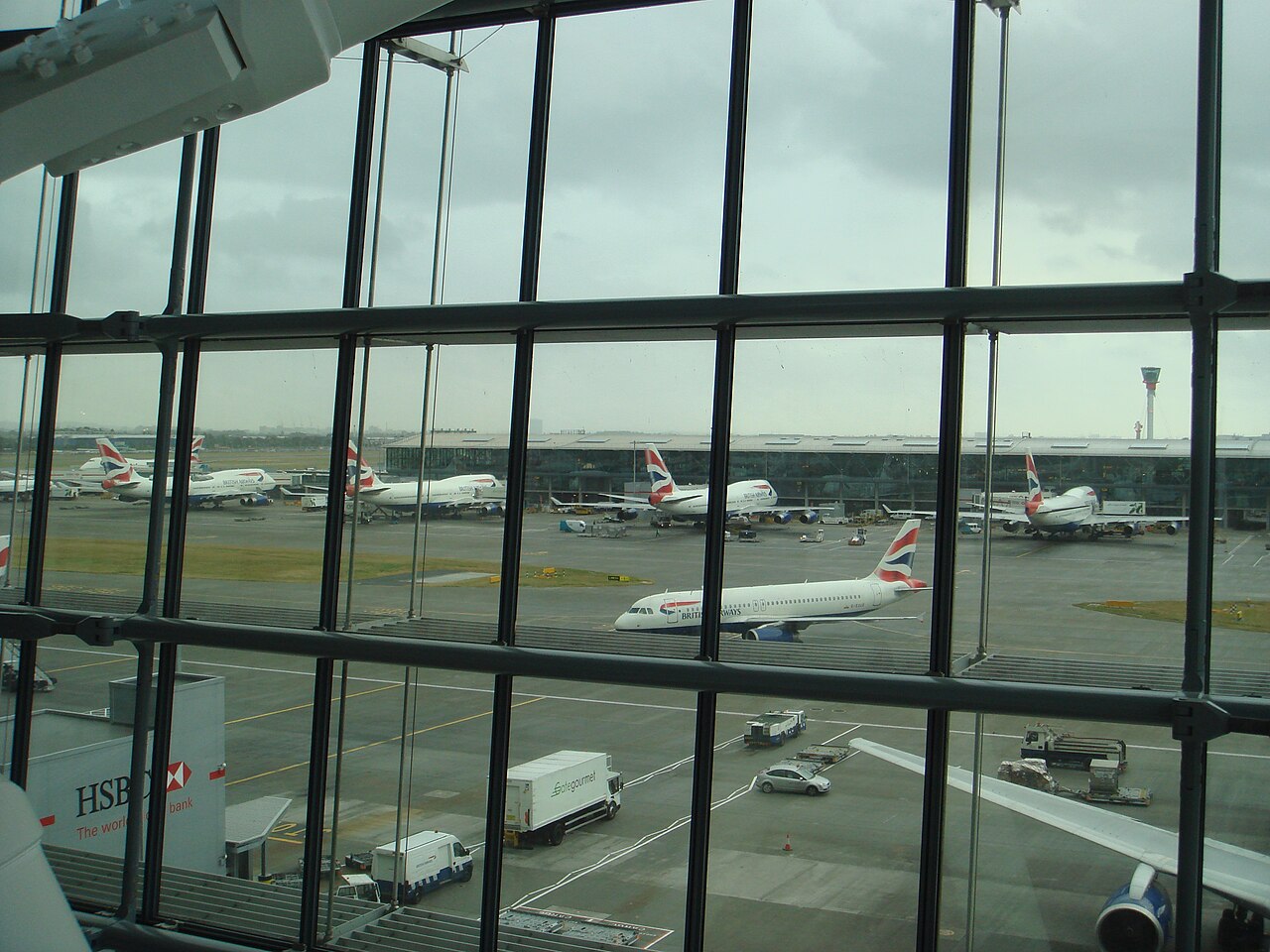
Heathrow is full to within 1,300 flights
Numbers make this concrete better than adjectives do.
Airport Coordination Limited, which has coordinated Heathrow since the company was founded in 1991 and now handles 80 airports worldwide, declares the airport’s capacity each season. For Summer 2026 it declared 9,692 air transport movements a week; for Winter 2026, 9,208. Add the two season totals and you get 478,700 movements.
Heathrow’s annual ceiling is 480,000. It is not a safety limit or a runway limit — it is a planning condition attached to the Terminal 5 development.
So the coordinator declares capacity to within 1,300 movements of the legal maximum. That is 0.27 per cent of headroom across an entire year. Within the day the granularity is finer still: departures are capped at 45 per rolling hour, 16 per 20 minutes and five per five minutes.
This is what people mean when they say Heathrow is full. Not that the tarmac is crowded, but that the legal envelope is essentially exhausted, and has been for years.
The market that was never designed
If a slot is this scarce it should be worth a fortune. It is. The awkward part is that nobody ever decided it should be sellable.
Regulation 95/93 permits slots to be transferred within an airline or a corporate group, or “exchanged, one for one, between air carriers.” It does not mention selling. The entire European secondary market rests on what the word “exchanged” was held to mean in a single English High Court case in 1999, brought by the States of Guernsey Transport Board against ACL over a transfer of Heathrow slots from Air UK to British Airways.
Maurice Kay J held that an exchange where money changes hands is still an exchange — the payment, he found, does not convert it into a sale. The Court of Appeal restated the position in 2017 in the Monarch case: a slot “cannot be the subject of an outright sale”, but the Regulation “allows an undertaking to exchange slots in order to obtain a payment.” Parts of the 1999 reasoning were obiter, and the judge described ACL’s remit as “very limited”.
The UK Government’s own description of the consequence is worth quoting at length, because it is remarkably frank: secondary trading “was not expressly part of the original design of the slot allocation system”, and “consequently, there are no rules or requirements concerning how secondary trading of slots should be conducted.” The coordinator “is not required to hold information about the trading history of any particular slot or the commercial terms of a trade.”
Which is precisely why the prices are so slippery.
What a slot really sold for
Almost every figure you have read about slot prices is a press report that no airline has confirmed. There is one clean exception.
On 4 February 2015 SAS issued a press release headlined “SAS transfers a landing and take-off right (slot pair) at London Heathrow and generates a positive earnings impact of MUSD 60.” One daily slot pair, handed over from the start of the summer programme on 29 March 2015, taking SAS from 21 daily pairs at Heathrow to 20. The buyer was described only as “a major international air carrier” and has never been named by either side. Later reporting attributed the purchase to American Airlines; neither airline has confirmed it.
Everything else is softer than it looks. In 2017 Aviation Week reported that SAS raised $75 million by selling two Heathrow slot pairs to an undisclosed buyer — a figure the UK Department for Transport cites in its own consultation explicitly as a report. Note the arithmetic: two pairs for $75 million in 2017 is about $37.5 million a pair, which is less per pair than the confirmed $60 million for a single pair in 2015. The commonly repeated story of ever-escalating slot prices does not survive contact with its own numbers.
Then there is the most-quoted slot figure in aviation journalism: the roughly $75 million Oman Air was reported by The Sunday Times to have paid for an early-morning Heathrow pair in 2016. No party has ever confirmed it, and the press cannot even agree on who sold it. The international trade press named Air France-KLM; Kenyan and UK consumer titles corrected this to Kenya Airways, with Kenyan reporting putting the price at Sh7.5 billion and saying Kenya Airways kept only Sh3 billion of it — which may well reconcile the two accounts.
For an actual valuation rather than a rumour, the best public source is Frontier Economics’ 2019 work for the UK Civil Aviation Authority, cited by the Department for Transport: a daily, year-round Heathrow slot pair worth around £15 million early in the morning, around £10 million in the middle of the day and £5 million in the evening. The DfT adds, drily, that media reports have indicated considerably more.
Simple Flying on how slots are allocated and why the good ones command the prices they do.
Ghost flights: the rule’s ugliest side effect
If keeping a slot requires operating it 80 per cent of the time, then an airline facing collapsing demand has a choice between losing an asset worth millions and flying an aeroplane nobody is on.
In late December 2021, Lufthansa Group chief executive Carsten Spohr told the Frankfurter Allgemeine that the airline had to make 18,000 additional, unnecessary winter flights purely to secure its take-off and landing rights. A Lufthansa spokesman repeated the figure to CNBC in January 2022. Brussels Airlines was reported to be facing around 3,000 such flights, though the airline pushed back that they were not empty, merely insufficiently filled to be profitable.
The biggest number of all is the British Government’s. The DfT estimates that in the first two years of the pandemic its slot alleviation “may have helped prevent around 300,000 potential Ghost Flights from being flown at Heathrow Airport alone” — an estimate built on the assumption that airlines would otherwise have flown everything they held.
The waivers unwound in stages. The UK ran full alleviation through Summer 2021, then 50:50 for Winter 2021, then 70:30 for 2022, returning to 80:20 on 26 March 2023. The EU set 75 per cent for Winter 2022/23 before restoring 80 per cent for Summer 2023.
2026: Britain and Brussels part company
Which brings us to this year, and to a split that most passengers will never notice.
When the sector asked for a general suspension of the rule in spring 2026 amid a Middle East crisis and fears over jet fuel supply, the European Commission said no. Its guidance of 8 May 2026 declined a blanket waiver and instead endorsed case-by-case relief under the regulation’s existing justified non-use provisions, where cancellations are directly caused by verified jet fuel shortages. The cost of jet fuel, the Commission indicated, does not in principle qualify.
The UK went the other way. ACL’s guidance of 20 May 2026 sets out a forward-looking mechanism for Summer and Winter 2026: an additional 10 per cent of slots may be returned each season, in two tranches of 5 per cent, with any cancellations under those provisions counted as operated. In ACL’s own words, both returns are “in addition to the 20% already afforded to airlines in the Regulation under the 80/20 provision.” The headline threshold stays at 80 per cent; the practical outcome is closer to 70:30.
European airports were not pleased.
Bucharest skips a level
The system is not frozen. Airports still join it, and occasionally one arrives in a hurry.
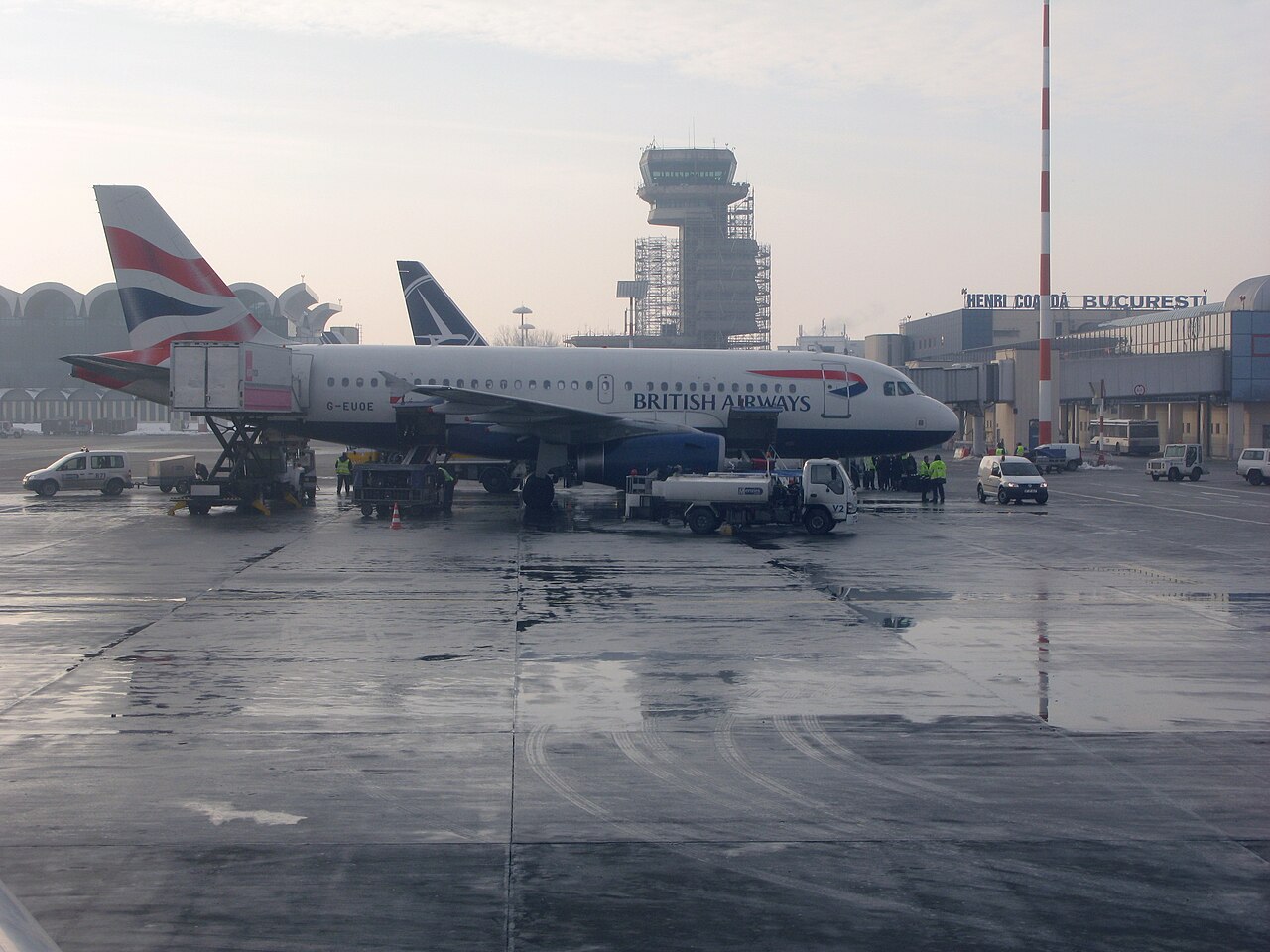
Bucharest Henri Coandă International moved to full Level 3 coordination from 25 October 2026, the start of the Winter 2026 season — straight from uncoordinated, skipping Level 2 altogether. ACL announced it on 8 June 2026; Bucharest is the company’s 80th airport and the first in Romania to run coordinated arrivals and departures.
America does it differently, and harder
The United States runs a parallel system that is both smaller in scope and stricter in operation.
The FAA slot-controls exactly three airports: John F. Kennedy, LaGuardia and Ronald Reagan Washington National. Chicago O’Hare, Los Angeles, Newark and San Francisco are schedule-review airports, where the FAA monitors demand and runs a formal schedule approval process but does not ration slots.
The rules live in 14 CFR Part 93, whose Subpart S is the 1985 Buy/Sell Rule that created the American secondary market — still reckoning holdings by reference to 16 December 1985. And § 93.227 states the usage test in one sentence: “any slot not utilized 80 percent of the time over a 2-month period shall be recalled by the FAA.”
That is the same 80 per cent, measured over two months instead of six. A European airline can have a catastrophic January and recover across the season. An American one cannot. In practice JFK and LaGuardia are now governed by standalone FAA Orders rather than the Part 93 machinery — the JFK Order caps scheduled carrier arrivals and departures at 81 an hour between 06:00 and 22:59 Eastern, and was extended in June 2026 to run to 28 October 2028.
The thing nobody owns
So: an airline that has flown a Heathrow slot for thirty years does not own it. The regulation, the DfT notes, “does not describe an airport slot as a property capable of being owned by an airport or an airline.” Airlines obtain slots for nothing, through an administrative process. They cannot be confiscated except for proven misuse. They cannot be sold, only exchanged — with a payment to balance the exchange, which is a sale with a different noun on it.
And they can be worth more than the aircraft that use them.
The honest summary is the one IATA keeps giving: slot coordination is not a solution to congestion, it is a way of administering a shortage. Nearly 400 airports now need it. The queue of airlines that would like to fly to Heathrow tomorrow morning is not going to get any shorter by rearranging the paperwork.
A longer look at the economics of the slot system and why the best departure times are fought over so hard.
Sources: IATA Worldwide Airport Slot Guidelines Edition 4 (1 August 2025) and IATA Airport Slots fact sheet (June 2026); Council Regulation (EEC) No 95/93 as amended; UK Department for Transport, Airport Slot Allocation Reform consultation, February 2024; Airport Coordination Limited capacity declarations for Summer and Winter 2026, Heathrow Local Rule 3 and ACL guidance of 20 May 2026; SAS Group press release, 4 February 2015; Aviation Week; Court of Appeal, Monarch Airlines Ltd v Airport Coordination Ltd [2017] EWCA Civ 1892; FlightGlobal; 14 CFR Part 93; FAA Orders for JFK and LaGuardia; ACI EUROPE; CNBC.



0 Comments