
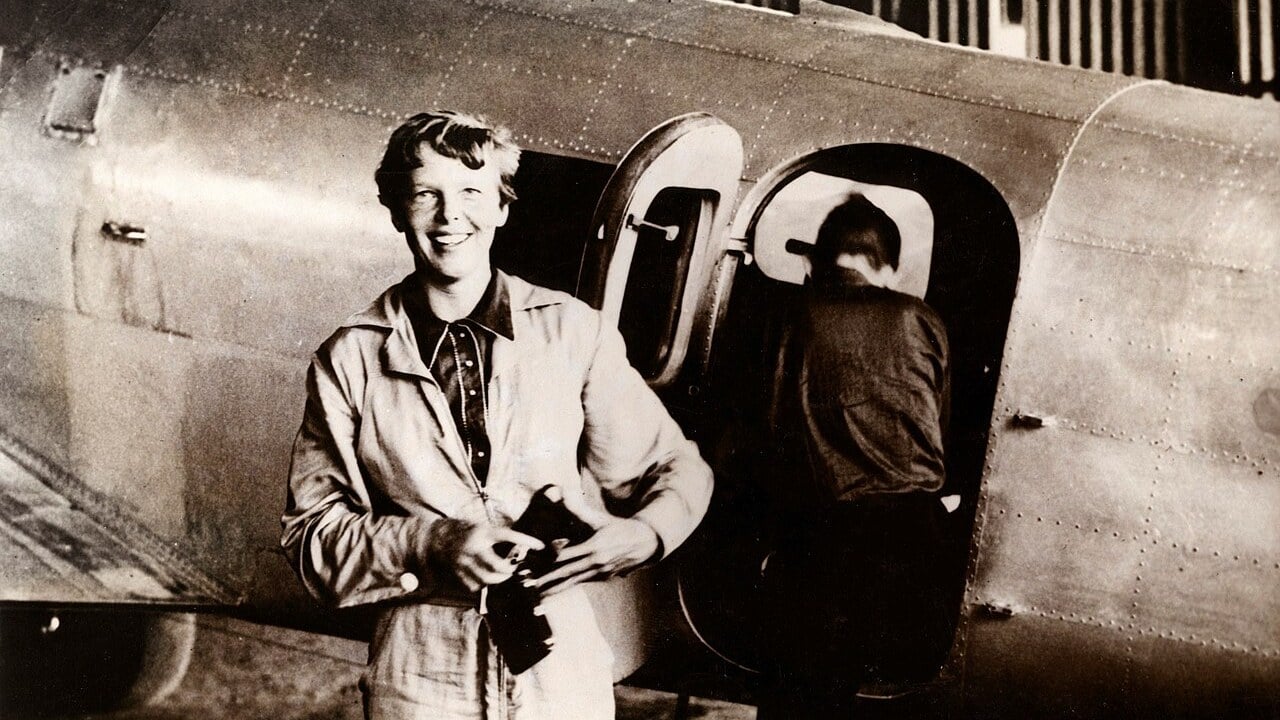
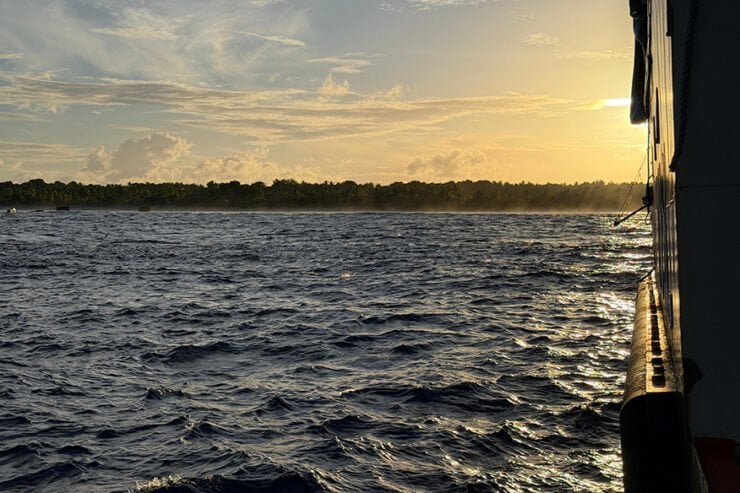
At sunrise on Tuesday, 13 October 2026, small boats pushed off from a supply ship and headed into the lagoon of an uninhabited coral atoll in the middle of the Pacific. Their destination: a patch of lagoon floor where a shape in satellite images might, just might, be the wreck of Amelia Earhart's Lockheed Electra.
After five days at sea from Tarawa, the 17-strong team of the Taraia Object expedition is now on Nikumaroro, in Kiribati. Fieldwork is due to begin on Wednesday, 14 October. Eighty-nine years after Earhart and her navigator Fred Noonan vanished, this is the first expedition dedicated to this particular object.
Quick Facts: The Taraia Object expedition
Organisers: Archaeological Legacy Institute (ALI), Purdue Research Foundation and Purdue University
Expedition leader: Richard Pettigrew, ALI executive director
Team: 17 people, including archaeologists, divers, filmmakers and Kiribati representatives
Bersaglio: The "Taraia Object", an anomaly in satellite imagery of Nikumaroro's lagoon, first spotted in 2020
Arrival: 12 October 2026 offshore; first landing on 13 October
Fieldwork: Scheduled to start on 14 October 2026
Nave: Marin Mainiku
Aircraft sought: Lockheed Electra 10E, lost on 2 July 1937
Equipaggio disperso: Amelia Earhart and navigator Fred Noonan
Why Nikumaroro?
On 2 July 1937, Earhart and Noonan took off from Lae, in New Guinea, bound for Howland Island, a speck of land about 2,556 miles away where they planned to refuel on their round-the-world flight. They never arrived. The US Coast Guard cutter Itasca, stationed off Howland to guide them in, never managed to establish two-way radio contact. The official search ended on 19 July without finding a trace.
Nikumaroro, then called Gardner Island, lies about 400 miles south-east of Howland. The so-called Nikumaroro Hypothesis holds that the pair, unable to find Howland, landed on the reef there and died as castaways. In 1940, a British colonial administrator found thirteen bones on the island. The debate about whose they were has never been settled. Critics argue that none of the evidence is conclusive, and they are right: no part of the Electra has ever been identified on Nikumaroro.

The Taraia Object
The new expedition is chasing something more specific. The Taraia Object is a visual anomaly in satellite imagery of the lagoon, first spotted in 2020 near the Taraia Peninsula. According to Purdue, contemporary photographs suggest it has been in the same spot since 1938. If it is the Electra, it would be the single biggest find in the history of the Earhart mystery. If it is not, it will be one more lead ruled out.
The expedition is a joint effort between the Archaeological Legacy Institute and Purdue, and that connection is personal. Earhart was a visiting faculty member at Purdue from 1935, and the university's Amelia Earhart Fund for Aeronautical Research paid for the Electra, which she called her "Flying Laboratory". She intended the aircraft to return to Purdue after her flight.
Day One on the Island
According to Purdue's update from the island, the team's first day ashore was spent on groundwork. They cut through an overgrown trail to the lagoon, nicknamed the Gallagher Highway, with machetes and hand-held chain saws in under two hours. By 1pm they had reached the Taraia Peninsula and walked the sandspit looking for artifacts, the first phase of the land archaeology.
The maritime team assessed the lagoon floor and its sediment, and the first parts of the expedition's technical system went up under canopy shelters. Work stopped at 4pm, and everyone returned to the Marin Mainiku for the night. The team includes Purdue's general counsel Steve Schultz and two members of Purdue's "Cradle of Astronauts", Sirisha Bandla and Marc Hagle.
Cosa succede dopo?
The team plans to spend several days on the island. ALI and Purdue have not said when results will be announced, and earlier expeditions to Nikumaroro have returned with intriguing finds but no proof. Pettigrew's own promise, made when the trip was announced, was simply to inspect the Taraia Object first-hand and follow the evidence wherever it leads.
Either way, someone will finally look at the thing in the lagoon up close. After 89 years, that alone is news.
WTHR's report on the expedition's arrival at Nikumaroro, October 2026.
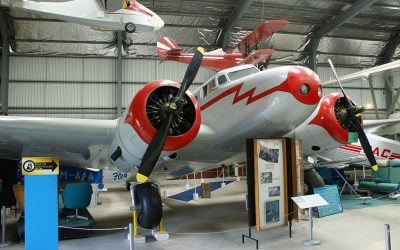
For the story of the aircraft the team is looking for, see Lockheed Electra 10E: The Airliner Amelia Earhart Vanished In.
Sources: Purdue University (13 October and 24 July 2026 releases); Wikipedia (Nikumaroro; Amelia Earhart); The Washington Times; WTHR.
0 Comments