
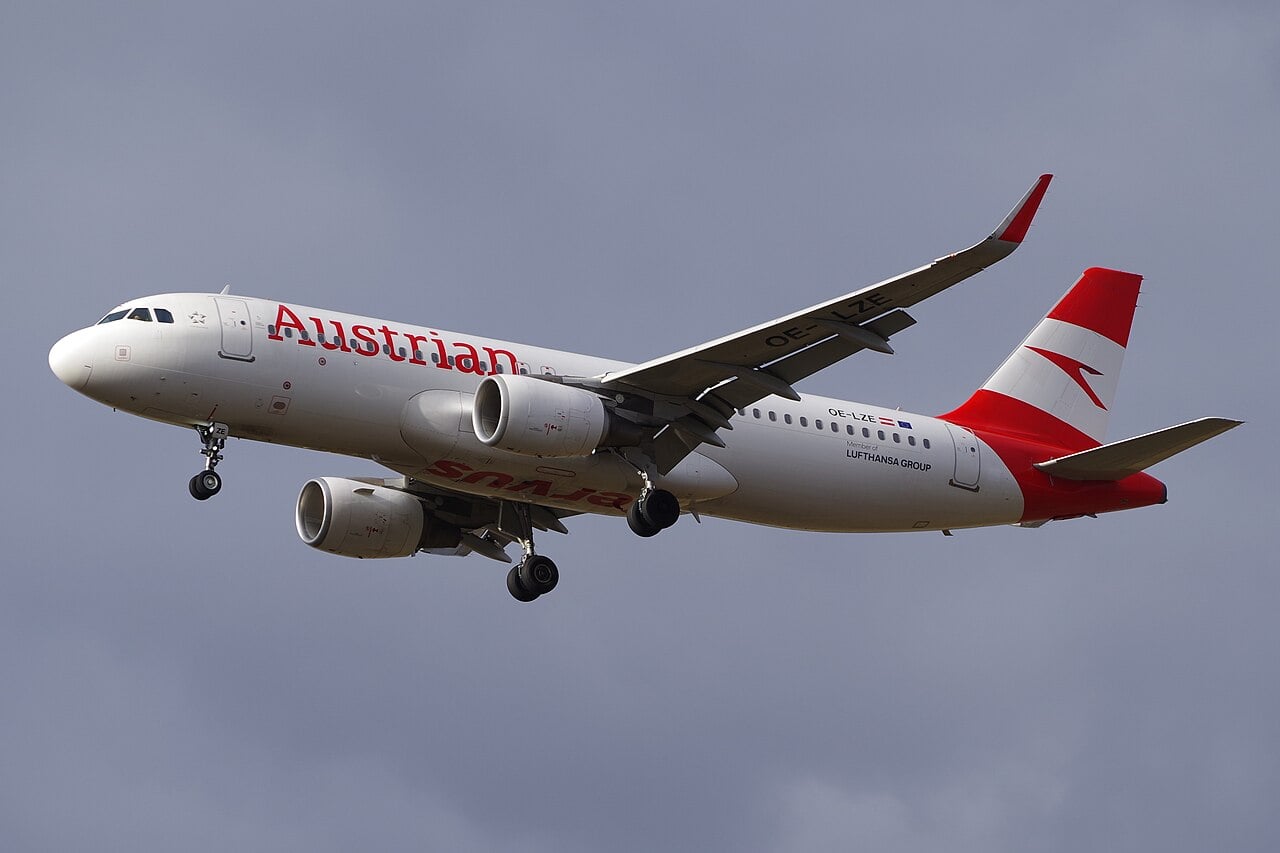
The Austrian Airlines A320 was two hours out of Tel Aviv on Sunday evening, with 51 passengers in the cabin and Vienna still more than an hour away, when the crew received the message every airline crew dreads: a bomb threat against their flight. They turned off the planned route, set the emergency code 7700 on the transponder, and headed for the nearest suitable runway. That runway was in Sofia.
By the time flight OS82 was descending into Bulgaria, it had company. The Bulgarian Air Force had launched a MiG-29 fighter, which escorted the airliner to Vasil Levski Airport. The A320 landed safely at about 21:42 local time. Everyone on board walked off unhurt.
Then came the search. Bulgarian security teams went through the aircraft, the passengers and the crew. On Monday morning Austrian Airlines said nothing dangerous had been found.
Informazioni rapide
- Volo: Austrian Airlines OS82, Tel Aviv to Vienna
- Data: Sunday 18 October 2026
- Aeromobili: Airbus A320-214, OE-LZE (per Austrian Wings)
- A bordo: 51 passengers and 6 crew
- Deviazione: Sofia Airport, Bulgaria, landing at about 21:42 local time
- Scorta: MiG-29 dell'aeronautica bulgara
- Risultato: Aircraft searched; Austrian Airlines says no danger was found
The Threat and the Turn
According to Bulgaria's transport ministry, the crew reported the threat near the Romanian border and chose to land in Sofia. Flight-tracking data reviewed by Al Jazeera showed the jet squawking 7700, the general emergency code. Austrian Wings, the Austrian aviation news site, reports that the crew left their planned route at 18:13 UTC and touched down at 18:42 UTC, after an uneventful descent.
Austrian Airlines confirmed the threat but gave few details on Sunday night. The Israeli newspaper Haaretz described it as an anonymous report of a suspicious object, and Ynet reported that the caller was an Austrian citizen who was not on the plane. Neither claim has been confirmed by the airline or by Bulgarian authorities.
Bulgarian authorities set up a crisis team and opened an investigation, Al Jazeera reported. Passengers were taken off the aircraft before the search began.
Why a MiG-29 Went Up
A fighter escort is standard procedure when an airliner declares a security emergency over a NATO country. Bulgaria's transport ministry said an air force fighter took off to escort the plane, as procedure requires. Bulgaria's defence ministry, quoted by Anadolu Agency, said the scramble was coordinated with NATO's Combined Air Operations Centre at Torrejón in Spain, which oversees air policing over southern Europe.
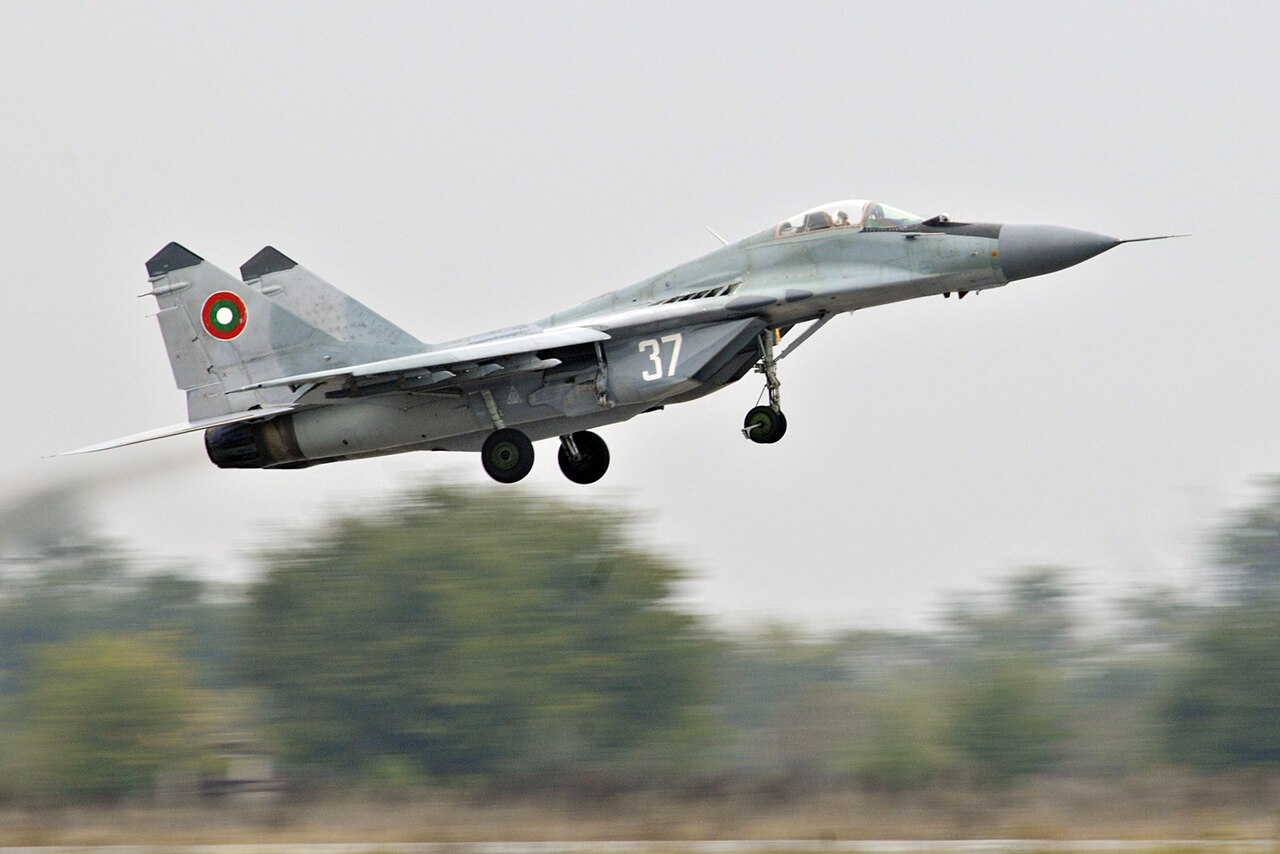
The escort has a practical job. The fighter pilot can look at the airliner up close, check for anything unusual, and stay with it all the way to the runway. If the situation turned into a hijacking, the fighter would already be in position. On Sunday none of that was needed; the A320 flew a normal approach.
For Bulgaria, the alert jet is still a MiG-29. The country flies its Fulcrums from Graf Ignatievo while it waits for its new F-16 Block 70s, whose delivery has slipped. For now, a Soviet-designed fighter still flies the country's quick reaction alert.
A Run of False Alarms
Sunday's scare is the latest in a busy few weeks for crews on flights to and from Israel. In the week before, anonymous bomb threats against Delta Air Lines flights to Israel turned out to be false, according to Anadolu and Austrian Wings. Last month a flydubai pilot reportedly attacked the captain of a Tel Aviv-bound flight and was overpowered; the jet landed safely in Saudi Arabia.
And last week, German and Croatian fighters were scrambled when a Corendon 737 from Corfu to Nuremberg accidentally transmitted a hijack code. Each of these ended safely. Each one also put fighter jets in the air, closed runways and delayed hundreds of people.
ABS-CBN News report on the Tel Aviv to Vienna flight diverted to Bulgaria after the bomb threat.
Cosa succede dopo?
Reports differed on Sunday night about the passengers' onward trip. An Austrian Airlines spokesperson told Austrian Wings that passengers would be rebooked on a quick alternative connection once the aircraft had been checked; other reports said the same jet would carry them on to Vienna. Austrian newspaper Der Standard reported on Monday that the aircraft had arrived in Vienna.
The bigger question is who made the threat, and why. Bulgarian investigators have not said. Until they do, OS82 joins a growing file of hoaxes that cost nothing to make and a great deal to answer, measured in fuel, fighter hours and frightened passengers.
Sources: Al Jazeera, BBC (via SigmaLive), Austrian Wings, Der Standard, Anadolu Agency, Bulgarian Ministry of Transport


0 Comments