
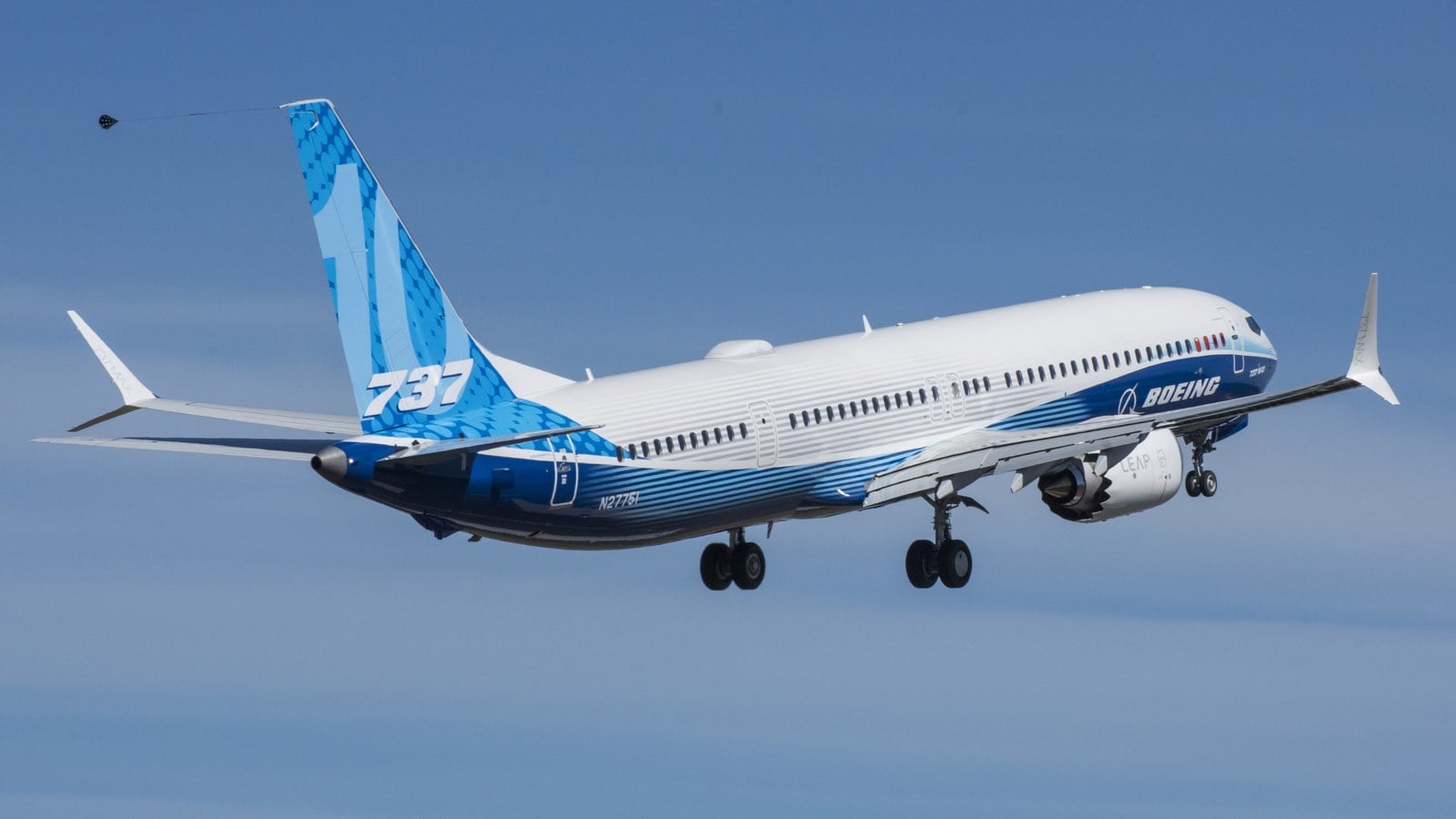
Nine years after its launch at the Paris Air Show and more than six years after its original service-entry target, the Boeing 737 MAX 10 finally has its paperwork. On 20 October 2026 the US Federal Aviation Administration approved the amended type certificate for the 737-10, the longest and largest member of the MAX family.
Transportation Secretary Sean Duffy handed over the documents in person at Boeing’s Everett site in Washington State. The FAA also signed off on production approval, which means Boeing can now turn a fleet of finished but parked jets into deliveries.
The stakes are not abstract. Customers have ordered 1,555 of the type, according to Boeing – more than 30 percent of the entire 737 MAX order book. For Boeing, the 737 MAX 10 certification closes the last open certification file in the family; for its airline customers, it ends a very long wait.
Informazioni rapide
Aeromobili: Boeing 737-10 (737 MAX 10)
Certified: 20 October 2026, FAA amended type certificate
Orders: 1,555 from more than 30 customers
Capacità: 185–210 seats two-class, up to 230 maximum
Allineare: Up to 3,100 nm (5,740 km)
Motori: 2 × CFM LEAP-1B
Primo volo: 18 June 2021, Renton to Boeing Field
Next step: EASA validation; first deliveries expected late 2026 or 2027
A Certificate Nine Years in the Making
Boeing launched the 737 MAX 10 at the Paris Air Show on 19 June 2017 with more than 240 orders and commitments from over ten customers. Service entry was planned for 2020. Then came the two fatal MAX accidents of 2018 and 2019, the worldwide grounding, and a fundamental rewrite of how the FAA certifies Boeing aircraft.
The prototype, N27751, flew for the first time on 18 June 2021, taking off from Renton and landing at Boeing Field in Seattle with 737 chief pilot Capt. Jennifer Henderson at the controls. Boeing then expected entry into service in 2023. That date slipped too.
According to Boeing, the 737-10 is the first commercial airplane certified to the full extent of the 2020 Aircraft Certification, Safety, and Accountability Act, which demands deeper documentation of safety assessments and human-factors evaluations. The campaign logged more than 2,000 flight hours, about 1,000 hours of ground testing and nearly 1,000 test flights.
The Anti-Ice Problem That Held Everything Up
The biggest single obstacle was not the airframe but the engine nacelle. In 2021 Boeing found that the engine anti-ice system on the LEAP-1B could, under certain conditions, overheat the inlet structure – with a risk of damage and, in the worst case, engine failure. Regulators let the 737-8s and 737-9s already in service keep flying; the uncertified 737-7 and 737-10 had to wait for a fix.
Boeing’s own footage of the 737-10 certification milestone. Video: Boeing
Boeing first sought a time-limited exemption for the 737-7, then withdrew the request in January 2024 under intense scrutiny after the Alaska Airlines door-plug blowout. The only way forward was a full redesign. Boeing tested the redesign at GE Aerospace’s facility in Ohio, and in mid-2026 Reuters reported that it would also be retrofitted to aircraft already in service.
A late hiccup followed in September 2026, when Boeing disclosed a flight-management software issue affecting automated vertical navigation during some missed approaches. The FAA judged it not safety-critical and did not make a fix a condition of certification. The smaller 737-7 had already crossed the line in August 2026.
What Is Different About the 737 MAX 10
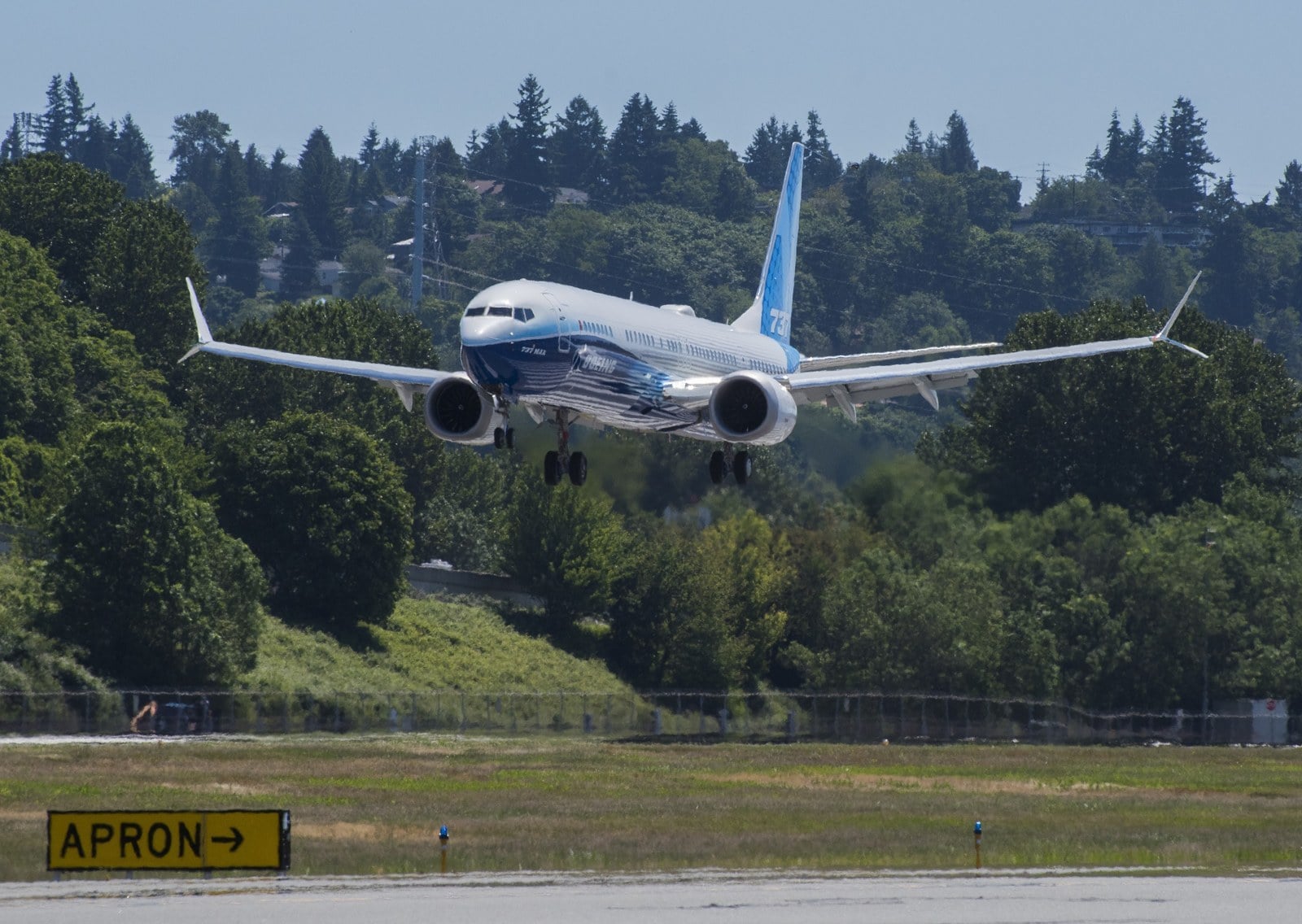
On paper the 737 MAX 10 is a simple stretch: Boeing added 66 inches (1.7 m) to the fuselage of the 737-9, bringing overall length to about 43.8 m (143 ft 8 in). The wing and the CFM LEAP-1B engines remain unchanged. Boeing quotes 185 to 210 seats in a typical two-class layout, up to 230 at maximum density, and a range of up to 3,100 nm (5,740 km).
The stretch creates an old 737 problem: a longer fuselage scrapes its tail earlier on rotation. Boeing’s answer is a levered main landing gear. A down-swinging lever lengthens the gear for take-off and landing, adding about 9.5 inches (24 cm) of height, and shortens it again as it retracts, so the leg still fits the unchanged wheel well of the 737-8 and 737-9.
Two further changes are invisible from the ramp. A new mid-exit door with a variable exit-limit rating allows the cabin to be certified for 230 passengers, and a lighter flat aft pressure bulkhead frees space at the rear of the cabin. Boeing also introduces an enhanced angle-of-attack system that flags implausible sensor data and adds a switch to silence an erroneous stick shaker; it becomes standard across the MAX family and will be retrofitted to the existing fleet.
Who Gets the 737 MAX 10 First
Aviation Week reports that United and WestJet are expected to become the first operators, with deliveries slated for late 2026 or early 2027. WestJet has long been listed as the type’s planned launch operator. Other major customers include Alaska, American, Delta, Pegasus and Ryanair; Delta ordered 100 aircraft in 2022.
Ryanair holds 150 firm orders plus 150 options and expects its first aircraft in mid-2027. That timing depends on Europe. EASA has not yet validated the type; the agency told Aviation Week that the FAA decision is the trigger for it to finalise validation and that the last steps “will take a few months.”
Most 737-10s will be built on a new fourth 737 line in Everett, part of a plan that, according to Aviation Week, will push Boeing’s 737 output beyond 47 aircraft a month. Several finished aircraft have been waiting on the ground for months, so the first deliveries could come quickly once customers are ready.
The Associated Press on the FAA decision. Video: Associated Press
The Fight With the A321neo
The 737-10 exists for one reason: the Airbus A321neo, which has dominated the top end of the single-aisle market for a decade. Boeing claims the lowest seat costs of any single-aisle airplane and 365 nm more range than competitors without auxiliary fuel tanks. Airbus, for its part, offers the A321neo for up to 244 seats and sells longer-range XLR versions the 737 cannot match.
Those are marketing numbers on both sides. The hard fact is that 1,555 orders have survived years of delay, which says airlines want a large 737 that fits existing pilot ratings, gates and maintenance shops.
Inside the 737-10 flight test campaign. Video: Boeing
Certification does not end the story; it moves the test to airline service, where reliability and on-time deliveries count more than press releases. But after a decade in which the MAX family stood for crisis, Boeing can finally sell the whole range. The last piece of the 737 MAX puzzle is in place – years late, and under more scrutiny than any 737 before it.
Sources: Boeing, Federal Aviation Administration, Aviation Week, Leeham News, AeroTime, Reuters, Upgraded Points, Aerospace Global News, Wikipedia

0 Comments