
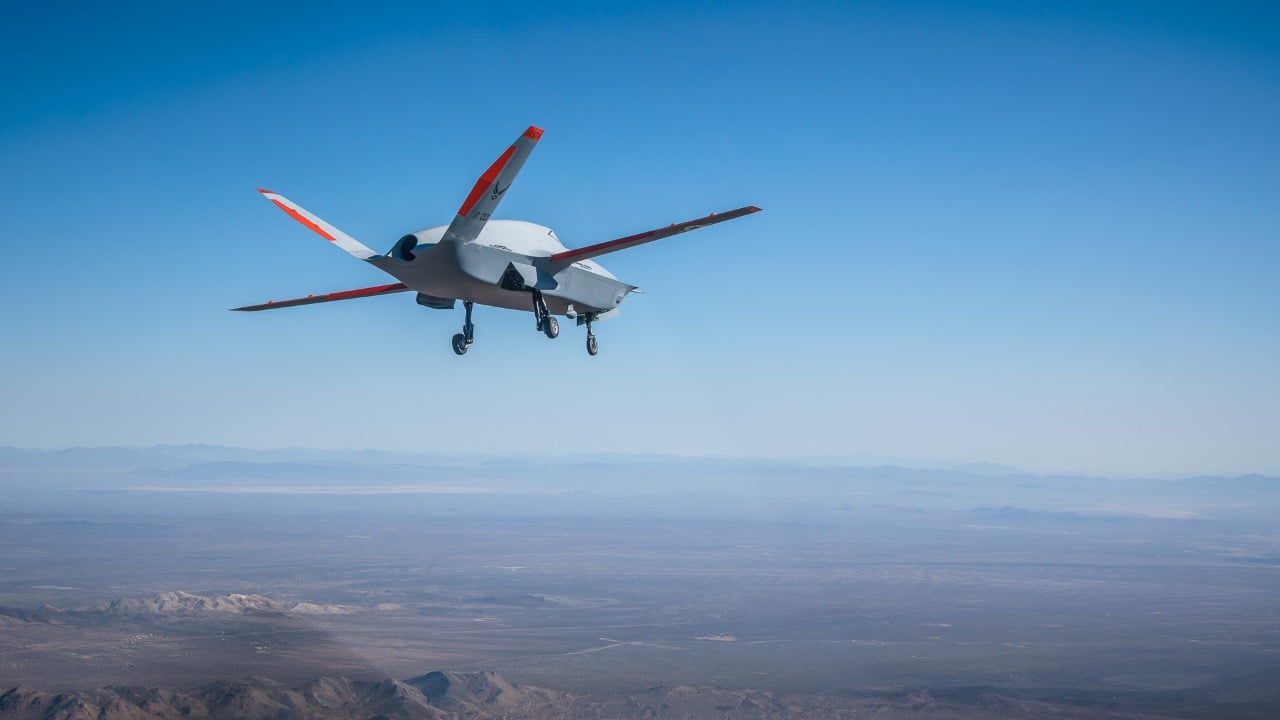
General Atomics has a habit of showing you the aeroplane only once it is already flying. So when the company volunteered, in a statement to TWZ published on 30 October, that it is building a large flying wing called NextGen, the detail worth reading twice was not the shape. It was the engine.
NextGen, the company says, will use “novel hybrid-electric propulsion”, and the engine team has promised more than 60 hours in the air without refuelling. That is two and a half days aloft. It is also, for now, a promise rather than a measurement, and the company was careful to word it that way.
The other notable word was a negative. NextGen, General Atomics says, is non a Collaborative Combat Aircraft — not a wingman drone flying alongside a crewed fighter, which is what almost every uncrewed programme in the United States has been pitched as for three years. It is a fully armed, fully outfitted strike and reconnaissance aircraft in its own right.
Informazioni rapide
Programma: NextGen, a General Atomics flying-wing strike and reconnaissance drone
Rivelato: 30 October 2026, in a company statement to TWZ
Propulsione: described by the company as “novel hybrid-electric”
Resistenza: more than 60 hours unrefuelled — a promise from the engine team, not a demonstrated figure
Not a CCA: the company says NextGen is not a Collaborative Combat Aircraft
Imparentato: the work feeds the Gambit 4 concept
What the company actually said
The disclosure came from C. Mark Brinkley, a General Atomics spokesman, as part of a wider update on the company’s Gambit family. The quotes below are his, as published by TWZ; no press release, conference or filing accompanied them.
That last clause matters more than it looks. Gambit is not one aircraft but a family built around a common chassis: a shared core of landing gear, fuselage structure and flight-control computing, with different missions bolted on top. Gambit 1 is the XQ-67A, which first flew from Gray Butte Field Airport at Palmdale, California. Gambit 2 became the FQ-42A Vengeance. Gambit 5 is a shipboard variant. Gambit 3, the red-air trainer, has no near-term prototype plans.
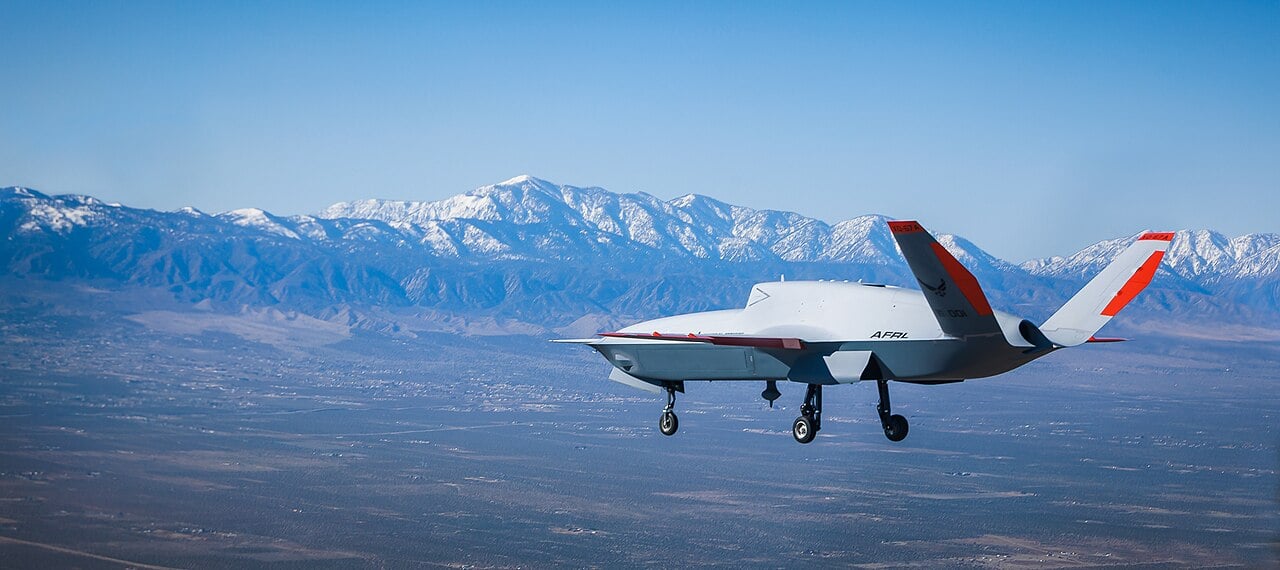
Gambit 4 has always been the gap in that list — a number on a chart with little public substance behind it. Brinkley’s sentence fills it in: the flying wing is where that work is going.
General Atomics’ own footage of an FQ-42A test flight. The Vengeance is Gambit 2, and it is the programme against which NextGen is being defined by contrast.
Why 60 hours changes the shape of the aircraft
Endurance is the quiet tyrant of drone design. A MQ-9 Reaper buys its long loiter with a turboprop, a straight wing and no pretence at survivability; it is a superb aircraft over a permissive battlefield and a target anywhere else. A stealthy flying wing buys survivability and pays for it in fuel fraction and, usually, in hours.
A hybrid-electric powertrain is one of the few ways to refuse that trade. Run a small combustion engine at its single most efficient operating point, use it to generate electricity rather than to drive the aircraft directly, and let electric motors handle the varying demand. The engine never throttles up and down, which is where piston and turbine efficiency goes to die on a long surveillance orbit.
There is a thread here that predates the announcement. In 2025 the Air Force Research Laboratory awarded a contract for a hybrid-electric ducted-fan reconnaissance and strike drone called GHOST. The laboratory has separately flown the XQ-67A under a programme named Demon APE. Whether GHOST, the Air Force’s MQ-Next thinking and NextGen are three names for one aircraft, three stages of one idea, or three different things is not something the public record currently settles, and TWZ said as much.
What happens next, and when
The nearer-term items are more concrete than NextGen. General Atomics says the first missile live-fire for the FQ-42A Vengeance is planned for later this year, and that the aircraft will take part in Exercise Emerald Flag. Separately the company intends a live-fire air-to-ground demonstration in early 2027, company-funded, dropping a ground-attack munition from a Gambit 6 it owns itself.
Company-funded is the operative adjective. A manufacturer spending its own money to put a weapon through an aircraft it also owns is buying a data point it can show a customer who has not yet written a requirement. It is how the Gambit family has been run from the start, and it is why the programme keeps producing flying hardware ahead of the paperwork that would normally authorise it.
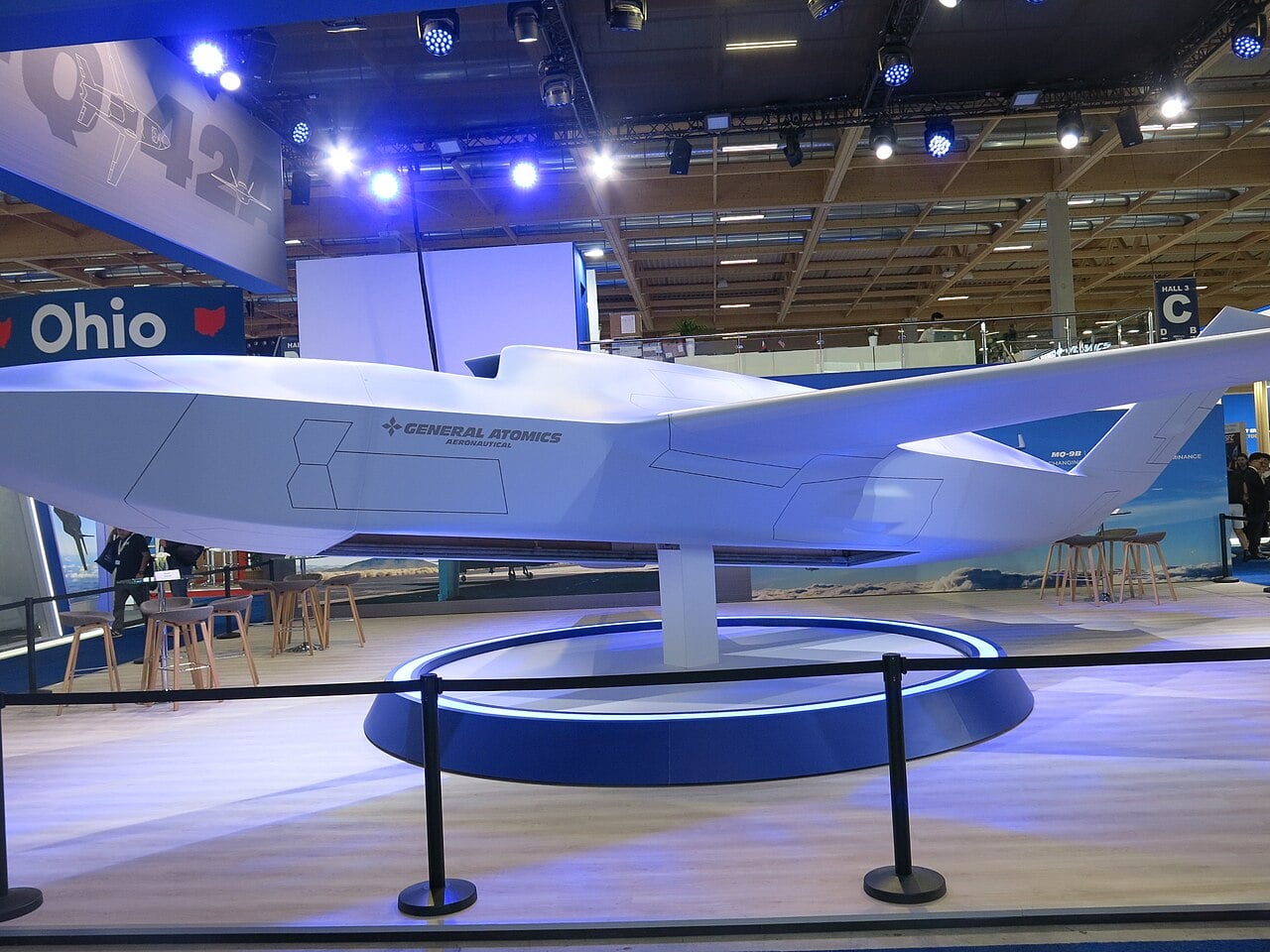
An overview of the Gambit family and the common-chassis idea that underpins it. NextGen is the first member described as a flying wing.
For now there is no NextGen image, no dimension, no weight, no speed and no date. There is a shape, a propulsion architecture, an endurance target and a company that has a record of flying things before it describes them. On this programme, the absence of a photograph is not evidence of absence.
Sources: TWZ; Air Force Research Laboratory; General Atomics Aeronautical Systems.


0 Comments