
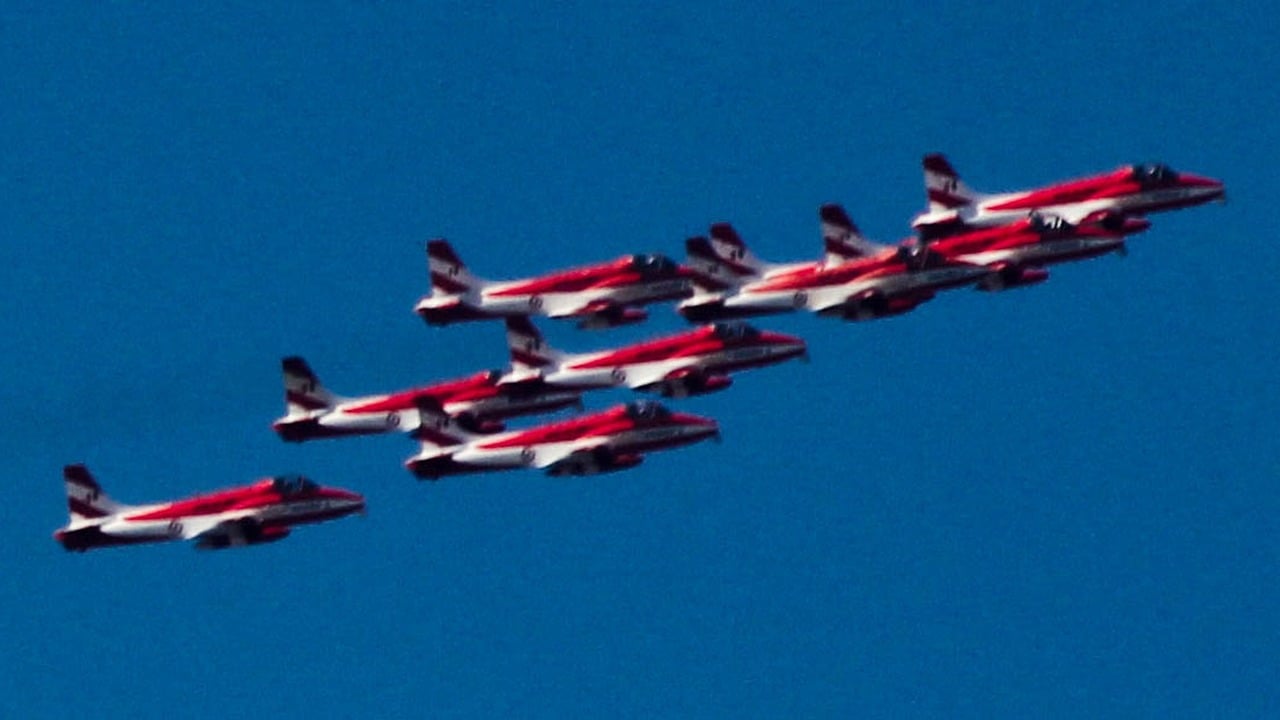
On Tuesday 20 October 2026, India’s most senior airman climbed into a jet trainer that first flew more than 60 years ago. Air Chief Marshal A.P. Singh, days from retirement as Chief of the Air Staff, flew his last sortie in uniform at the Air Force Academy in Dundigal, near Hyderabad. His aircraft was a HAL HJT-16 Kiran Mk I, tail number U707. In the other seat sat Wing Commander V.S. Kochar (retd), the instructor who had taught him to fly the same type in 1984.
Few aircraft can stage a moment like that. The Kiran, Sanskrit for “ray of light”, first flew in 1964 and has trained generations of Aeronautica militare indiana pilots. More than six decades later it is still in service, and still waiting for the replacement that was supposed to retire it long ago.
Informazioni rapide
- Tipo: Two-seat intermediate jet trainer
- Produttore: Hindustan Aeronautics Limited (HAL), India
- Primo volo: 4 September 1964
- In servizio: Indian Air Force from 1968; also Indian Navy
- Motori: Mk I/IA: Rolls-Royce Viper 11, about 2,500 lbf; Mk II: Bristol Siddeley Orpheus, about 4,200 lbf
- Produzione: Ended 1989; 190 Mk I and IA, plus the Mk II
- Velocità massima: About 695 km/h (432 mph) at sea level (Mk I)
- Display teams: Surya Kiran (IAF, 1996-2011), Sagar Pawan (Navy)
- Stato: Still in IAF service in 2026; retirement planned by 2027
A home-grown jet trainer
The Indian Air Force wanted an intermediate jet trainer to bridge the gap between its basic trainers and front-line jets, and it wanted one built at home. Hindustan Aeronautics Limited (HAL) answered with a straight-winged, two-seat jet powered by a single Rolls-Royce Viper 11 turbojet of about 2,500 lbf (11.1 kN). Writers have long noted how closely the layout resembled Britain’s BAC Jet Provost.
The prototype flew for the first time on 4 September 1964. Pre-production aircraft reached the Indian Air Force in March 1968, and full-scale production followed. The design team’s experience then went straight into HAL’s much more ambitious HF-24 Marut fighter.
Mk I, Mk IA and the Orpheus-powered Mk II
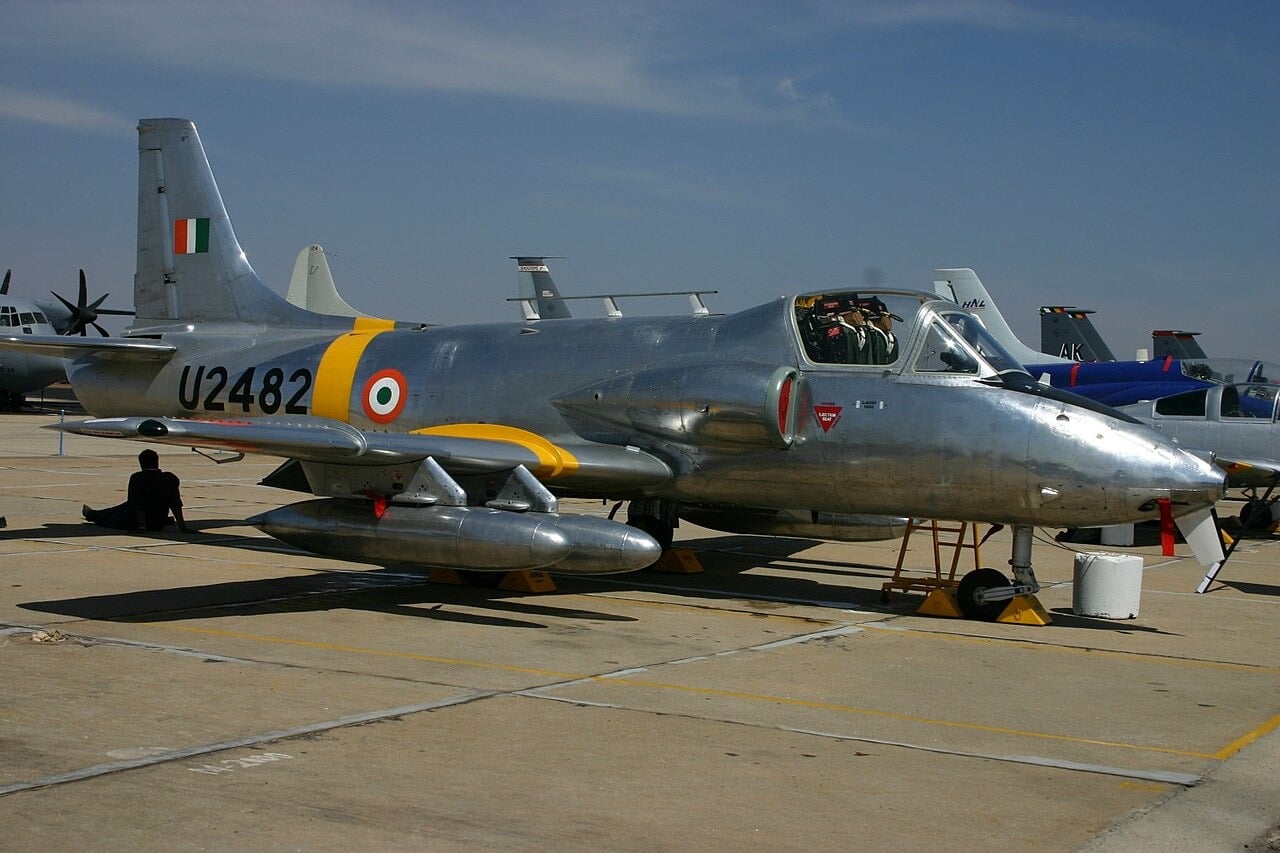
The first production version, the Kiran Mk I, was a pure trainer. The Mk IA added two underwing hardpoints so students could practise weapons delivery with bombs, rocket pods, gun pods or drop tanks. Between them, the Mk I and IA came to 190 aircraft.
The Kiran Mk II was a bigger step. HAL replaced the Viper with a Bristol Siddeley Orpheus turbojet of about 4,200 lbf, the same engine family as the Folland Gnat, added four hardpoints and fitted twin 7.62 mm machine guns in the nose. The Mk II first flew on 30 July 1976. Production of all versions ended in 1989, with a batch also going to the Indian Navy.
An overview of the HAL HJT-16 Kiran, India’s long-serving “ray of light” jet trainer.
The numbers behind the type are remarkable. In February 2015, at a celebration of the Kiran’s golden jubilee, the Deccan Herald reported that it had trained as many as 10,000 pilots and logged 1.2 million flying hours. That was more than a decade ago, and the Kiran was still flying.
Surya Kiran: Rays of the Sun
For the public, the Kiran’s finest hour came with an orange and white paint job. In 1996 the IAF formed the Surya Kiran aerobatic team on Kiran Mk IIs, based at Bidar in Karnataka. It started with four aircraft, grew to six and, by 1998, to nine. The Navy formed its own Kiran team, Sagar Pawan.
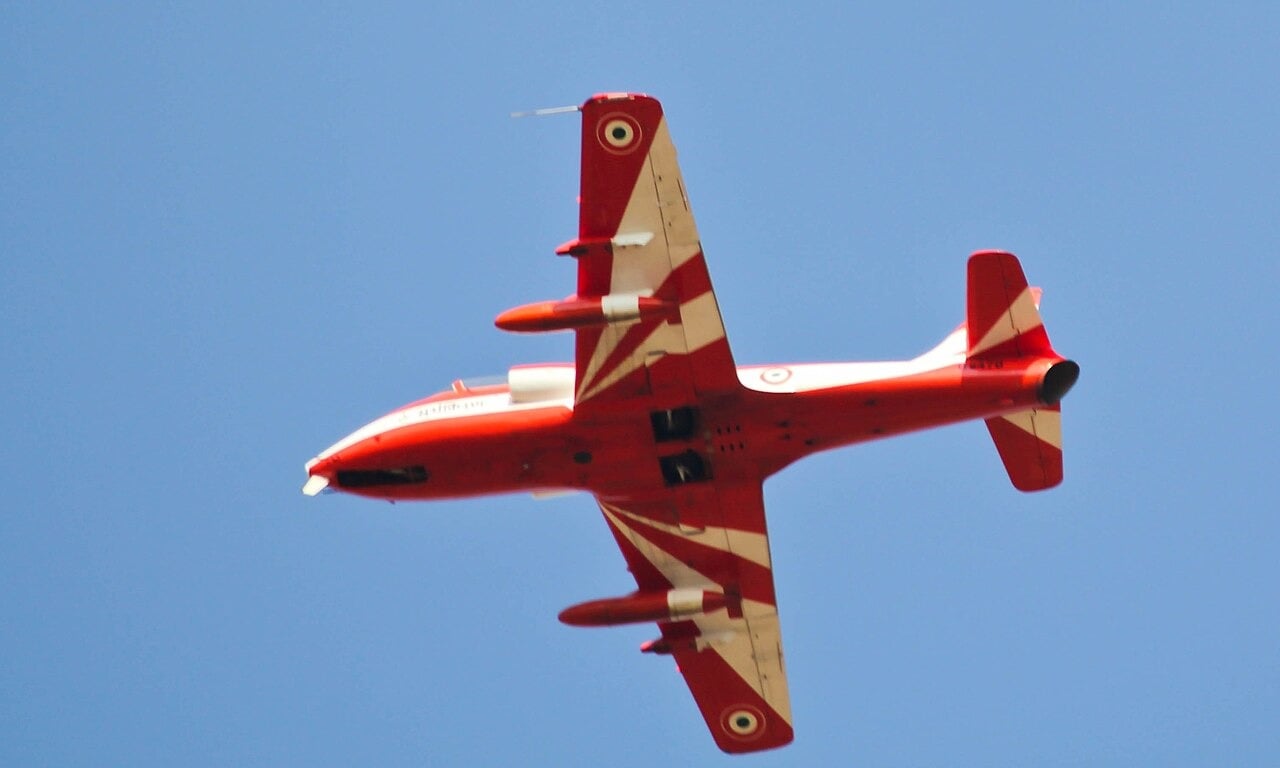
The team ended its Kiran era for a very practical reason. In 2009 the IAF grounded its HPT-32 Deepak piston basic trainers, and the Kiran had to cover basic as well as intermediate training. Every airframe was needed for students, so after Aero India in February 2011 Surya Kiran was stood down and its jets went back to the training role. The team only returned in 2015, now flying the BAE Hawk Mk132.
Surya Kiran flying its Kirans at Aero India in Bangalore in February 2011, the team’s final season on the type.
Still waiting for Sitara
The Kiran was meant to hand over to HAL’s HJT-36 Sitara, which began development in the late 1990s. The Sitara’s path has been long, with accidents during flight testing and an extensive redesign. In the meantime the IAF bought the Pilatus PC-7 Mk II for basic training and licence-built Hawks for advanced training, but neither is a like-for-like intermediate trainer.
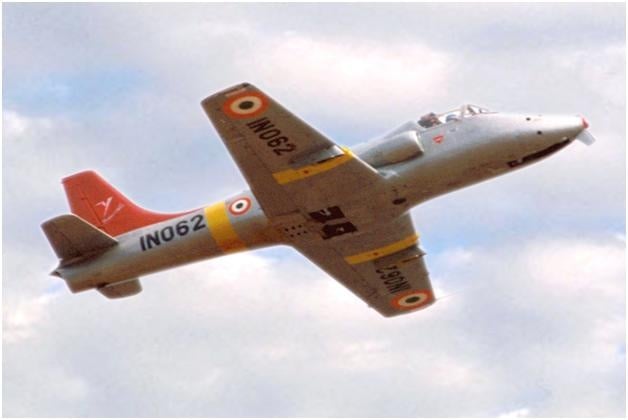
So the Kiran soldiers on. As early as 2015, HAL promised to support the fleet until 2019. The IAF now plans to retire the type by 2027. India also gave a handful of Kirans to Myanmar in December 2018, giving the old trainer a second career abroad.
Full circle at Dundigal
That is what made the October 2026 sortie so fitting. Singh had first flown a Kiran at Dundigal in January 1984 and graduated from the Air Force Academy with the Sword of Honour. Eight days before his final Kiran flight, on 12 October, he had flown his last fighter sortie in an indigenous Tejas at Jodhpur. Then he went back to where it began, flew 55 minutes with his old instructor, and was greeted with a water-cannon salute.
Air Chief Marshal A.P. Singh’s farewell Kiran sortie at Dundigal on 20 October 2026 (Hindi news report).
Kochar, 73, called his former student the “brightest pupil ever”. It would be hard to find a better summary of what the Kiran has done for six decades: take nervous young cadets and turn them into the people who one day run an air force.
Sources: Deccan Chronicle, Swarajya, Deccan Herald, Vintage Aviation News, Indian Air Force
Header photo: Saad Faruque / Wikimedia Commons, CC BY 2.0
0 Comments