
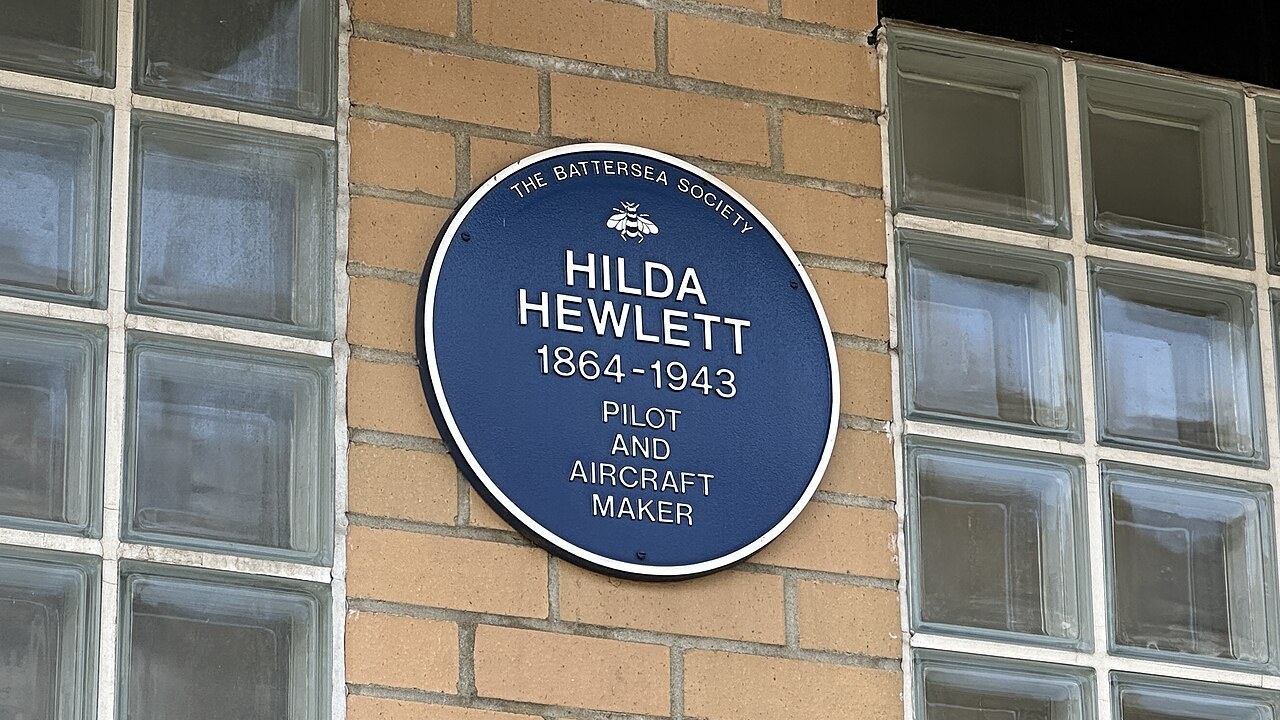
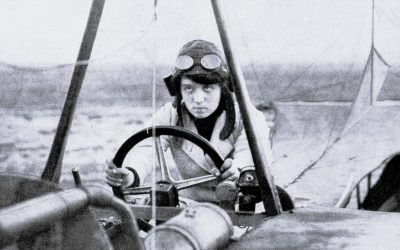
On 29 August 1911, a 47-year-old woman climbed down from her biplane at Brooklands having just completed her flying test. She was the wife of a famous novelist, the mother of two and the daughter of a Vauxhall vicar. She was also, from that day, the first British woman to hold a pilot’s licence.
Hilda Hewlett did not stop there. Within three years she was running an aircraft factory, and by the end of the First World War her company had built more than 800 military aircraft. Then she sailed to New Zealand and started an aero club.
Informazioni rapide
- Nome: Hilda Beatrice Hewlett, née Herbert
- Nato: 17 February 1864, Vauxhall, London
- Morto: 21 August 1943, Tauranga, New Zealand; buried at sea
- Pilot licence: Royal Aero Club certificate No. 122, 29 August 1911, the first for a British woman
- Flying school: Hewlett and Blondeau school, Brooklands, opened 1910; 13 pupils qualified
- Factory: Hewlett & Blondeau Ltd, later at Leagrave, near Luton; more than 800 military aircraft in WWI
- Son: Francis Hewlett, certificate No. 156, November 1911
- Eredità: RAF Hilda B Hewlett Centre for Innovation, opened 2022
A vicar’s daughter with a speeding habit
Hilda Beatrice Herbert was born in Vauxhall, London, on 17 February 1864, one of nine children of the Reverend George William Herbert. She studied at the National Art Training School in South Kensington, specialising in woodwork, metalwork and needlework, skills that would one day go straight into aeroplanes. At 21 she spent a year training as a nurse at a hospital in Berlin.
In 1888 she married Maurice Hewlett, a barrister who became a best-selling novelist. Hilda, known to her family as “Billy”, threw herself into the new world of motoring. She was fined for speeding in May and June 1905, and in 1906 she rode as passenger and mechanic for the pioneering motorcyclist Muriel Hind on a reliability trial from Land’s End to John O’Groats.
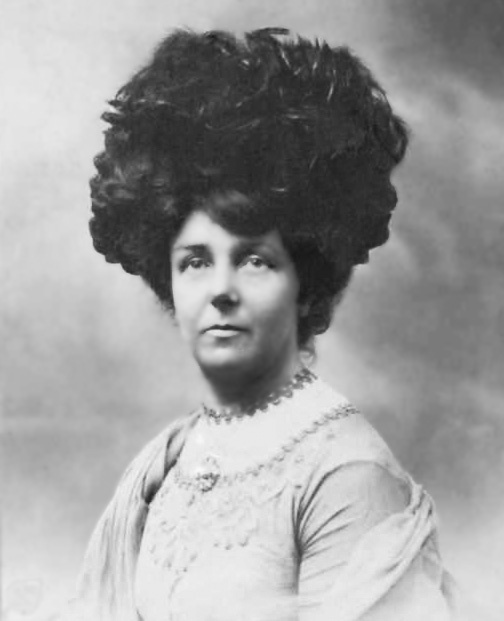
In 1909 she went to one of Britain’s first aviation meetings, at Blackpool, and it changed her life. She wanted to fly, and there was nowhere in Britain to learn.
“Mrs Grace Bird” goes to Mourmelon
So she went to France. To spare her husband the gossip, she travelled under a pseudonym, Grace Bird, to the airfield at Mourmelon-le-Grand. There she teamed up with a French engineer, Gustave Blondeau, in a partnership that would last ten years. She paid for her own aircraft and spent months helping to build it before she was even taken up as a passenger.
In 1910 the pair came home with a Henry Farman biplane nicknamed The Blue Bird and opened the Hewlett and Blondeau flying school at the Brooklands motor-racing circuit in Surrey, one of the first flying schools in Britain. Thirteen pupils qualified there before Hewlett closed it to concentrate on building aircraft.
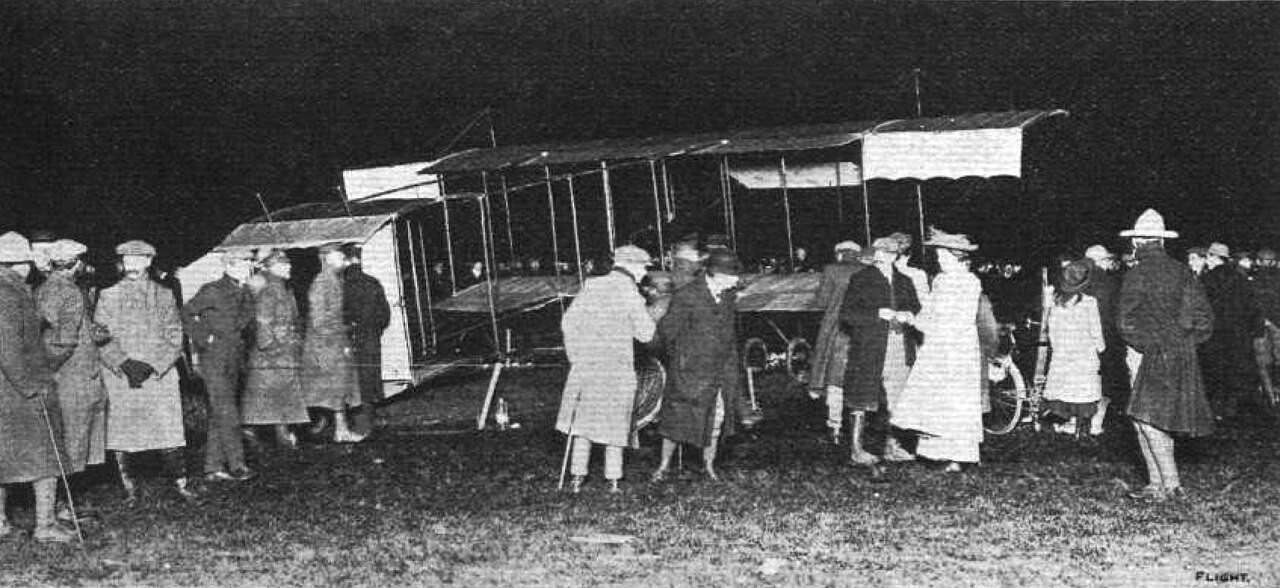
Blondeau taught her to fly. On 29 August 1911 she passed her test at Brooklands in her own biplane and received Royal Aero Club aviator’s certificate No. 122. Her son Francis, a Royal Navy lieutenant, earned certificate No. 156 that November. The newspapers loved the story of a man taught to fly by his mother, although she assisted rather than did all of his training.
Britain’s flying establishment was not exactly welcoming. When Hewlett joined the Royal Aero Club, she found that women were barred from all but one of its rooms, and she later quit, saying it had “not been the slightest use to me”. She kept flying in public anyway, appearing at air displays, and in 1912 she won a quick-start competition.
Francis went on to a distinguished flying career. On Christmas Day 1914 he flew in the Cuxhaven Raid, went missing and was feared dead, then turned up days later after being picked up by a Dutch trawler. He was awarded the Distinguished Service Order.
The Women’s Engineering Society and author Gail Hewlett on the life of Hilda Hewlett, Britain’s first woman pilot and aircraft manufacturer.
Hewlett & Blondeau: the aircraft maker
Hilda Hewlett understood earlier than most that the future was in building aircraft, not just flying them. Hewlett & Blondeau Limited, managed by her, started at Brooklands, moved to the Omnia Works, a former skating rink near Clapham Junction, and in 1914 settled on a 10-acre site at Leagrave, near Luton. The firm built Farman, Caudron and Hanriot designs under licence, and by August 1914 had produced ten different types.
Then the war came. During the First World War the company supplied more than 800 military aircraft and employed several hundred people, up to 700 by some accounts. Hewlett also trained women in aircraft construction, convinced that they could do the delicate, exacting work as well as any man.
Two of her factory’s aircraft even reached New Zealand before she did: a Caudron biplane bought by the pioneer aviator Will Scotland in 1914, and an Avro 504K that arrived in 1920 as a post-war imperial gift aircraft.
A short animation from 1000 Londoners on the Hewlett and Blondeau aeroplane factory near Clapham Junction.
Peace killed the business. After the war the firm tried farm machinery, but the factory closed in 1920 and the site was sold in 1926. Today a street near Leagrave station, Hewlett Road, is named after her.
“Old Bird” in Tauranga
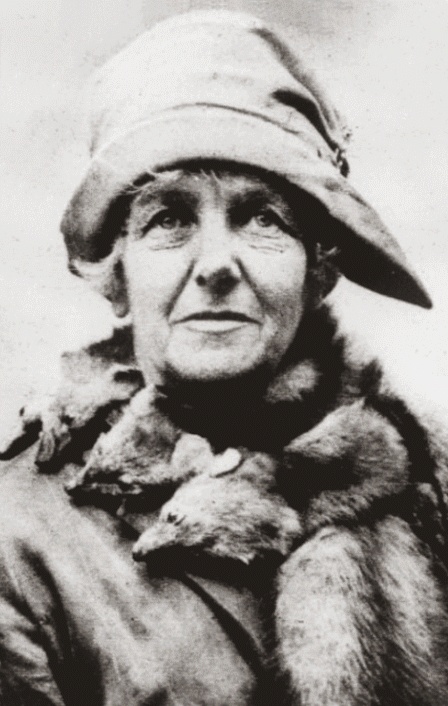
In her sixties Hewlett emigrated to Tauranga on New Zealand’s North Island with her daughter Pia and Pia’s family. Her grandchildren called her “Old Bird”. She camped, fished and, inevitably, got involved in aviation again.
In June 1932 she was at the founding meeting of the Tauranga Aero and Gliding Club and the following month became its first president. She argued for a proper all-weather airfield rather than the tidal estuary the town had been using. In 1934 she hosted Jean Batten after her record flight from England to Australia, and in January 1939, at the opening of Tauranga’s new aerodrome, the defence minister named a nearby road after Hilda and her son.
A centre named after her
Hilda Hewlett died in Tauranga on 21 August 1943, aged 79. After a service on the railway wharf, she was buried at sea, as she had asked.
More than a century after her flight test, the Royal Air Force gave her name to the Hilda B Hewlett Centre for Innovation, a 3D printing and scanning facility created by No 71 Inspection & Repair Squadron and opened in October 2022. The RAF called it its first step into advanced component manufacturing. It is a fitting tribute. Britain’s first woman pilot was, above all, a builder, and she would have liked the idea of aircraft parts made on demand.
Sources: Wikipedia (Hilda Hewlett), Dictionary of New Zealand Biography / Te Ara (Pat Irene Winton, 1998), Women Who Meant Business, Royal Air Force (“A new journey in RAF Engineering”, October 2022), Flight

0 Comments