
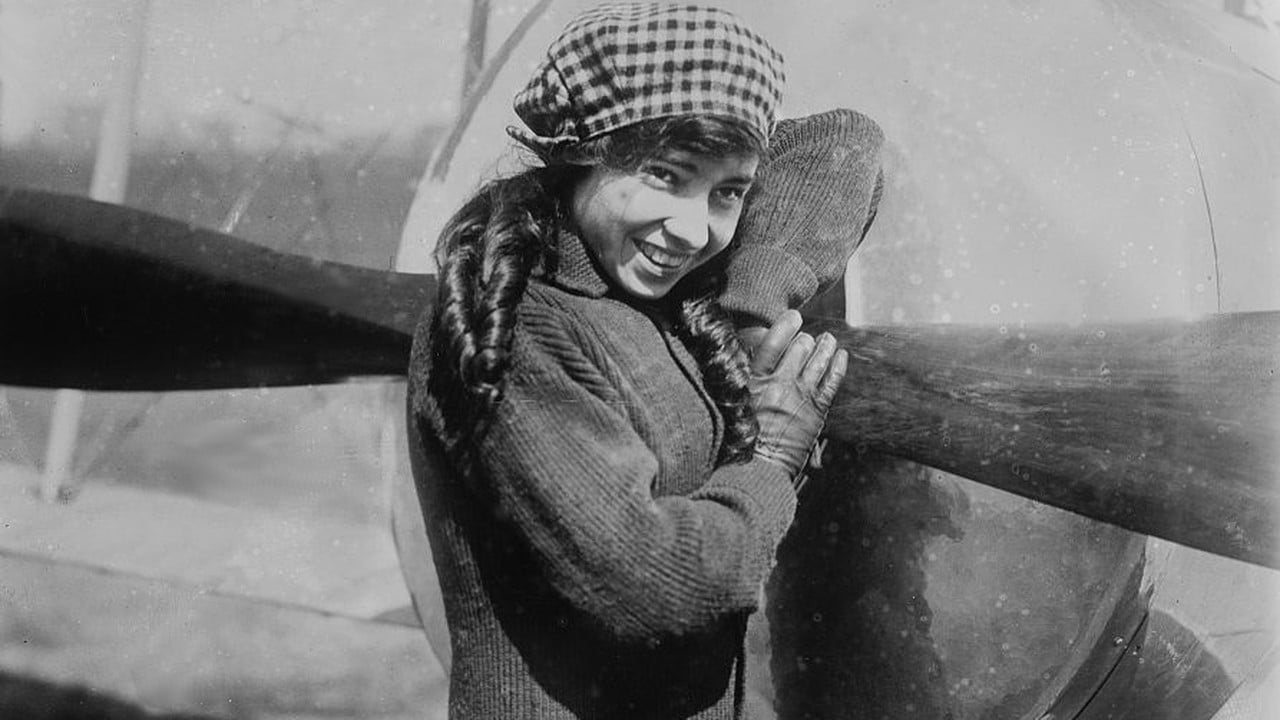
On the evening of 9 July 1918, a small yellow biplane appeared out of the south over Edmonton, Alberta, following the railway line up from Calgary. In the cockpit sat a 27-year-old American woman. In a mailbag beside her were 259 letters, the first mail ever flown in western Canada.
Katherine Stinson had already been a star for five years by then. She was the fourth woman in the United States to earn a pilot’s licence, one of the first women anywhere to loop an aeroplane, a pioneer of night flying and skywriting, and the first woman to fly in Japan and China. Huge crowds turned out wherever she flew.
She flew for barely six years. But in that time the girl the newspapers called the Flying Schoolgirl did as much as anyone to convince the world that flying was not a man’s job.
Informazioni rapide
- Nome: Katherine Stinson (later Katherine Stinson Otero)
- Born / died: 14 February 1891, Fort Payne, Alabama / 8 July 1977, Santa Fe, New Mexico
- Licence: 24 July 1912, the fourth American woman to gain an FAI pilot certificate
- Soprannome: The Flying Schoolgirl
- Prime volte: First woman authorised to carry US mail by air (1913); early night flyer and skywriter; first woman to fly in Japan and China (1916–17)
- Loop: First loop 18 July 1915, Cicero Field, Chicago; some 500 loops without an accident
- Record flight: 11 December 1917, San Diego to San Francisco non-stop in 9 h 10 min
- Canada: 9 July 1918: first air mail in western Canada, Calgary to Edmonton, 259 letters
She sold the piano
Stinson was born in Fort Payne, Alabama, on 14 February 1891. She was musical, and dreamed of studying piano in Europe. Flying looked like a way to pay for it: exhibition pilots could earn a fortune at county fairs. After a ride in a balloon in 1911, she sold the family piano to fund flying lessons.
Finding a teacher was the hard part. Max Lillie, a Swedish-born instructor in Chicago who flew Wright aeroplanes, at first refused to teach a woman. She talked him round, and in July 1912 she soloed in a Wright Model B after only about four hours of instruction. On 24 July 1912, aged 21, she received her licence from the Fédération Aéronautique Internationale, the fourth American woman to do so.
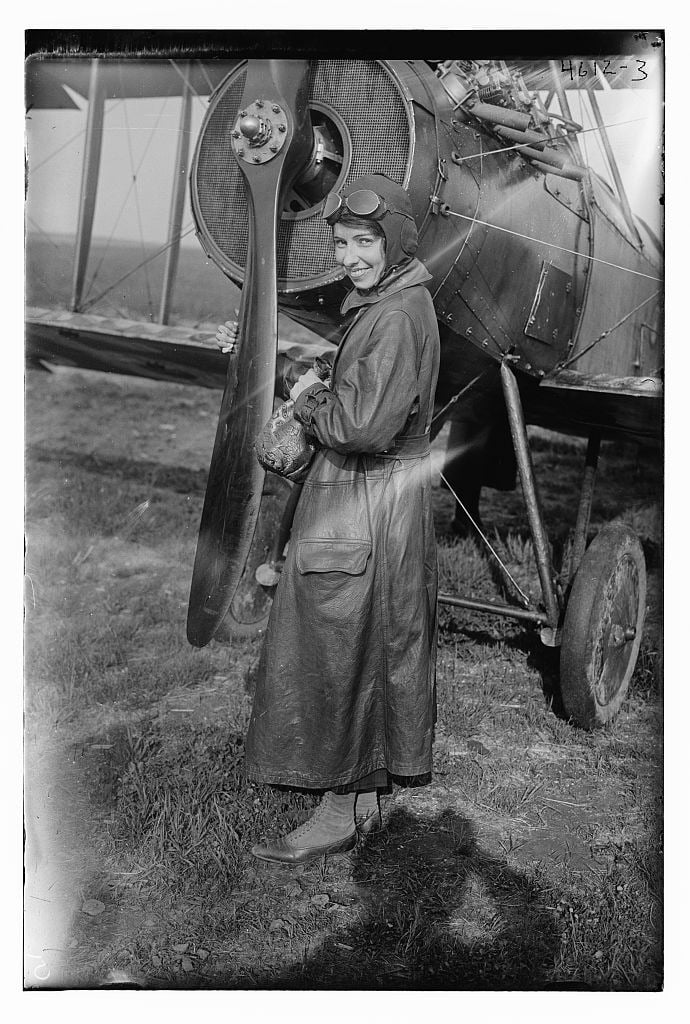
In April 1913 she and her mother founded the Stinson Aviation Company in Hot Springs, Arkansas. She was small, slight and looked younger than her years. A Kansas City reporter thought she could pass for a high school sophomore, and promoters began billing her as the Flying Schoolgirl.
Loops, flares and a family flying school
She toured the fairgrounds of America in her Wright biplane, often dismantling and rebuilding it herself between shows. In September 1913, at the Montana State Fair in Helena, she became the first woman authorised to carry mail by air in the United States.
Then she went after the most famous stunt of the day. Male pilots would not teach a woman to loop the loop, so she watched them and worked it out. On 18 July 1915, at Cicero Field in Chicago, she looped for the first time. She went on to loop some 500 times without an accident.
She also flew at night, which very few pilots dared to do. Over Los Angeles, with flares fixed to her aircraft, she traced the letters “CAL” across the dark sky, the first night skywriting on record. Meanwhile the Stinson family opened a flying school in San Antonio, Texas, where her sister Marjorie taught and her brother Eddie worked as a mechanic. Today the field is Stinson Municipal Airport.
The Henry Ford’s Innovation Nation on Katherine Stinson, the loop pioneer and first woman to fly US mail.
The Air Queen in Asia
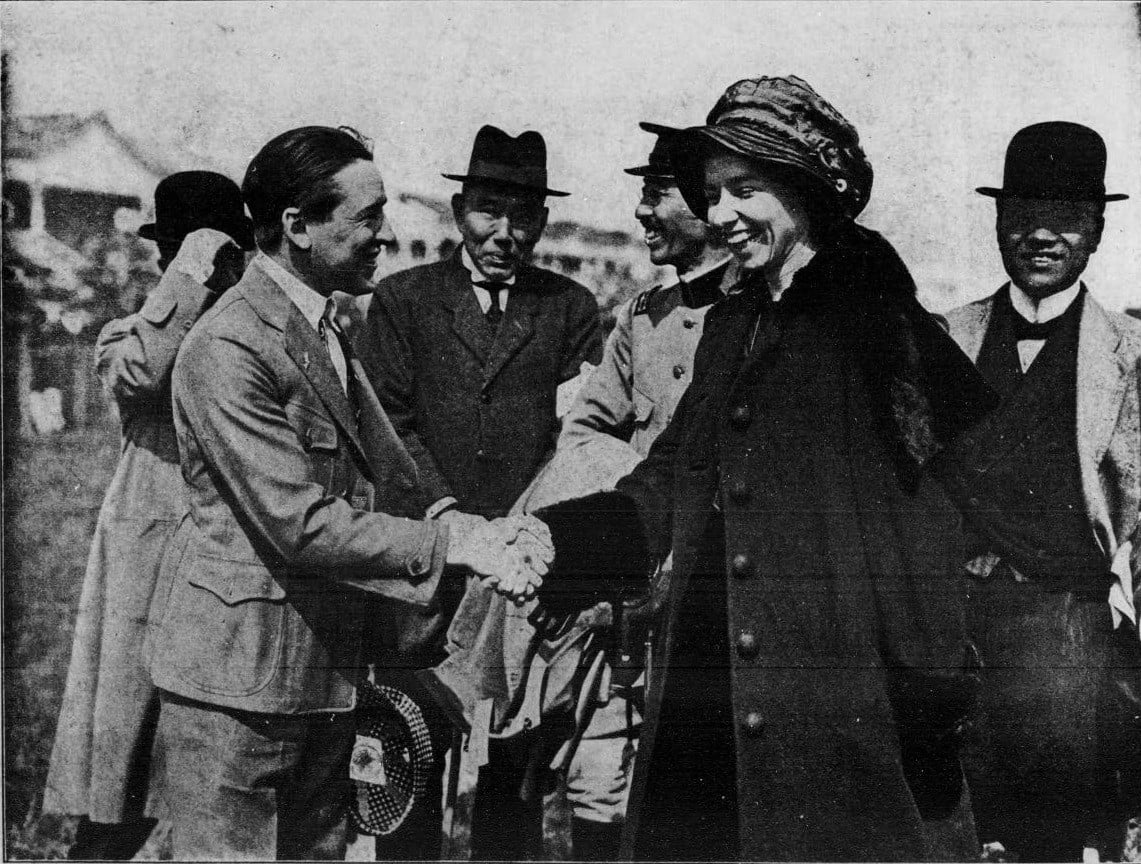
In December 1916 she shipped her aircraft across the Pacific for a tour of Japan and China that ran into the middle of 1917. No woman had ever flown in Asia before. In Yokohama, according to one biography, more than 25,000 people watched her skywrite with fireworks, and Japanese women formed fan clubs in her honour. The Japanese press called her the Air Queen.
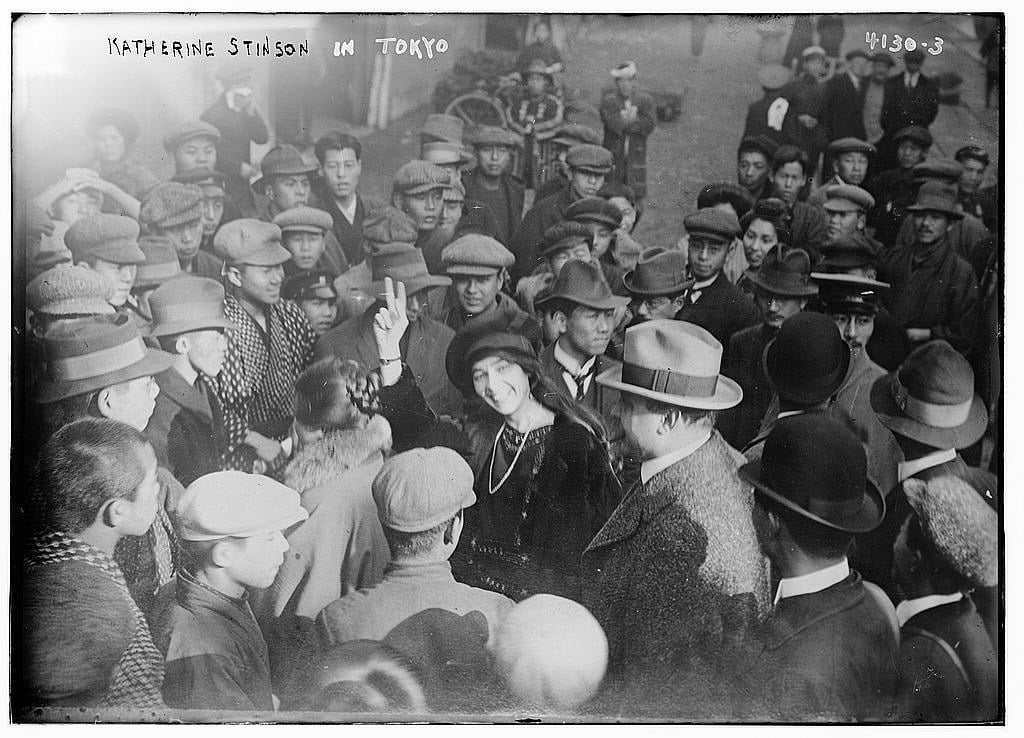
Her timing overlapped with another American stunt flyer touring Japan, Art Smith, and the two met in Osaka. She returned home a celebrity on two continents, and with an award for her flying in China.
Turned away by the army
When the United States entered the First World War in April 1917, Stinson volunteered to fly for the military. So did her fellow exhibition flyer Ruth Law. Both were turned down because they were women. Instead, Stinson flew for the American Red Cross. On a flying tour from Buffalo to Washington in June 1917, she helped raise some $2 million in pledges.
On 11 December 1917 she took off from North Island, San Diego, in a one-off Curtiss-Stinson Special and flew non-stop to the Presidio of San Francisco in 9 hours and 10 minutes, crossing the Tehachapi Mountains at about 8,000 feet. Flying magazine noted that the distance record still belonged to Ruth Law, but called the flight a new record for cross-country duration.
Weeks later, at Tanforan race track near San Francisco, she looped, flew upside down and was presented with a medal for the flight.
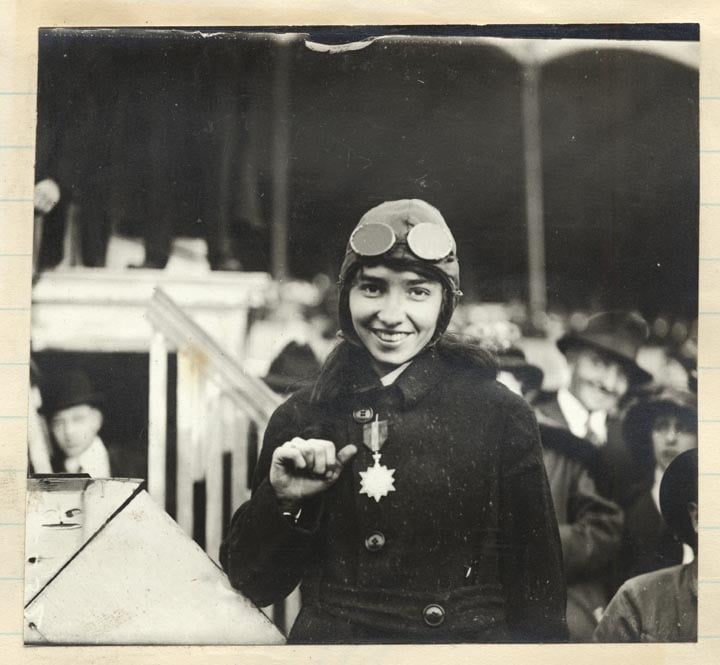
Silent 1917 newsreel from the Prelinger Archives: Stinson in San Francisco after her non-stop flight from San Diego, with her aircraft.
Mail across two countries
Civilian flying was largely shut down during the war, but the new US air mail service still needed pilots. In 1918 Stinson flew a special mail run from Chicago towards New York, fighting headwinds all the way. She made it non-stop to Binghamton, New York, before she had to land for fuel, flipped the aircraft over in a field, and finished the trip after repairs. For a brief spell she flew the New York to Philadelphia route as the US Post Office’s first woman mail pilot.
That summer she toured the Canadian prairies. On 9 July 1918, during the Calgary Industrial Exhibition, she took the Calgary postmaster’s bag of 259 letters, made a forced landing on a farm just after take-off, had the aircraft fixed, went back to Calgary to start again, and then flew non-stop to Edmonton, arriving just after 8 p.m. to a cheering crowd.
Ambulances, illness and adobe
Still determined to serve, she went to France as a volunteer ambulance driver for the Red Cross. There, in November 1918, she caught influenza, which turned into tuberculosis. She spent years recovering in sanatoriums, finally in the dry air of Santa Fe, New Mexico. She never flew as a pilot again.
In Santa Fe she built a second career, as a self-taught architect designing houses in the Pueblo Revival style; one client was Dorothy McKibbin, the “gatekeeper” of the Los Alamos atomic bomb project. She married Miguel Antonio Otero Jr., a former army aviator who became a judge. Her brothers Eddie and Jack stayed in aviation, and her flying inspired the Stinson Aircraft Company.
The National Aviation Hall of Fame’s tribute to Katherine Stinson on her enshrinement in 2019.
Katherine Stinson Otero died in Santa Fe on 8 July 1977, at 86. A replica of her Curtiss-Stinson Special now greets visitors at the Alberta Aviation Museum in Edmonton, and in 2019 she was enshrined in the National Aviation Hall of Fame. A century on, the Flying Schoolgirl who taught herself to loop is finally getting the recognition the army once refused her.
Sources: Wikipedia (Katherine Stinson), Encyclopedia of Alabama, CALS Encyclopedia of Arkansas, This Day in Aviation, SFO Museum, US Air Force (af.mil), Vintage Wings of Canada, WestJet, Women in Texas History, New Mexico Historic Women Marker Initiative
Domande frequenti
Who was Katherine Stinson?
When did Katherine Stinson first loop the loop?
Was Katherine Stinson the first woman to fly in Japan and China?
Which airmail flight did Katherine Stinson make in Canada?
Why did Katherine Stinson stop flying?
What record did Katherine Stinson set in 1917?
Post correlati
Harriet Quimby: America’s First Licensed Female Pilot Crossed the Channel — Then Died at an Airshow
Raymonde de Laroche: The World’s First Licensed Woman Pilot
Bessie Coleman: America Refused Her a Flying Lesson — So She Learned in France
Glenn Curtiss: l'uomo che inventò l'idrovolante e fece infuriare i fratelli Wright.
0 Comments