
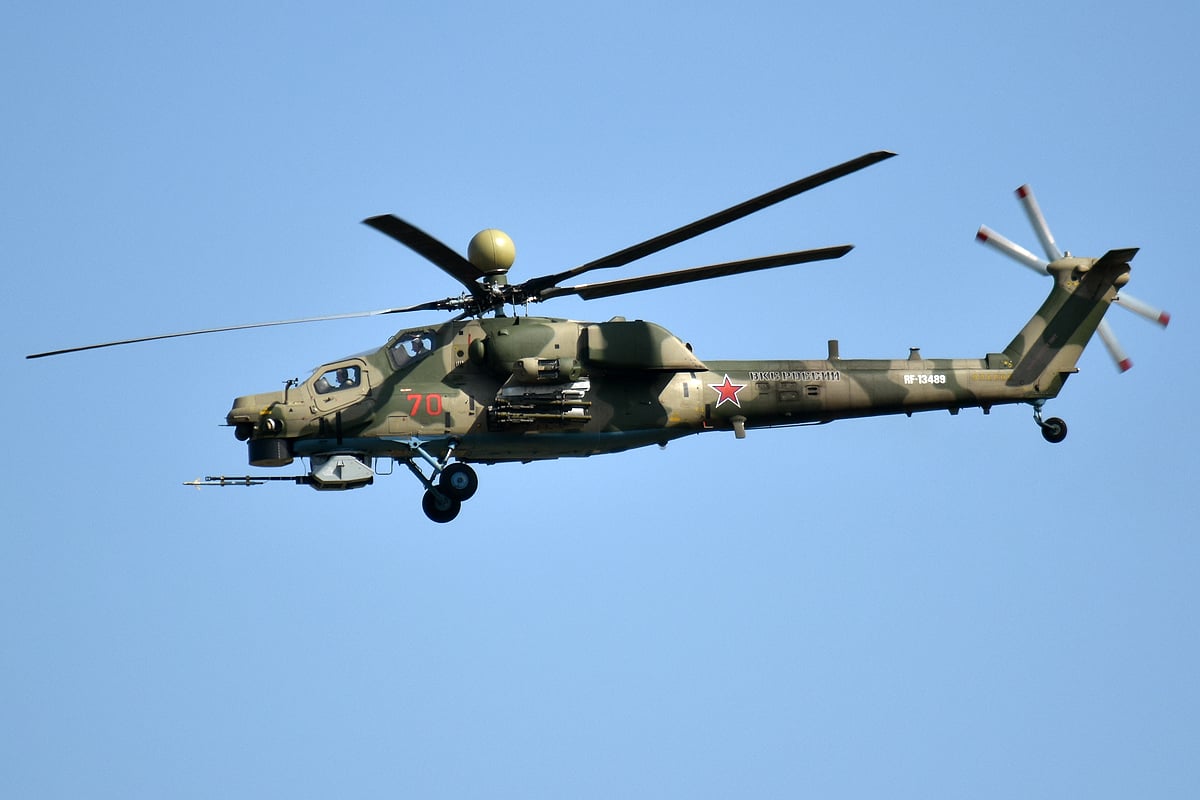
The camera is mounted on a small fixed-wing drone, and it is chasing a helicopter. A camouflaged Russian Mi-28NM fills more of the frame with every second as the drone closes from behind and slightly above, lined up on the engine bay. Then the video cuts out.
That clip, released on 16 October 2026 by Ukraine's 115th Separate Mechanized Brigade, is the second Ukrainian claim in three days of an interceptor drone hitting one of Russia's newest attack helicopters. Both strikes reportedly happened over Russia's Belgorod region, on the Russian side of the border.
Everything here is a Ukrainian claim. The brigade has not given the dates of the strikes, only when it published the footage. Neither video shows the helicopter's fate, and at the time of writing no independent source had confirmed either loss.
Informazioni rapide
- Claimed by: 115th Separate Mechanized Brigade, "Prybultsi" ("Aliens") air-defence battalion
- Claim 1: Footage published 14 October 2026; brigade said the Mi-28NM was hit and its crew left no chance
- Claim 2: Footage published 16 October 2026; no damage claim beyond the strike itself
- Posizione: Belgorod region, Russia; OSINT geolocation puts the two sites about 4 km apart
- Arma: VB140 fixed-wing interceptor drone by Vinnytsia Bees (second strike)
- Bersaglio: Mi-28NM Havoc, the latest production version of the Mi-28
- Confirmed?: No independent confirmation of destruction for either helicopter
Two Claims in Three Days
The first post went up on the brigade's Telegram channel on the morning of 14 October. Titled "minus an enemy Mi-28NM", it credited the pilots of the Prybultsi anti-aircraft missile battalion with hitting a modernised Russian attack helicopter in mid-air.
Two days later the same unit posted a second video with the caption "We can, and we repeat!" The post thanked the drone maker Vinnytsia Bees and the Come Back Alive foundation for supplying the weapon.
OSINTtechnical, a widely followed open-source analysis account, shared the footage on 17 October and summed up the month so far: the 115th Brigade has hit several Russian Mi-28 Havocs with FPV drones over Belgorod Oblast since the start of October.
The brigade's wording on the first strike went further than the video. According to UNITED24 Media's translation, the unit wrote:
Destroyed or Damaged? The Honest Answer
Nobody outside the brigade knows yet. UNITED24 Media notes that the second video cuts off just before a possible collision with the rotor blades, leaving the extent of any damage unconfirmed. Militarnyi reports that the first clip also ends just before impact.
UA.NEWS put it plainly: there is no information on the extent of damage to either helicopter, or on whether they can still fly. Russia has not commented. The first video also ended with a clip of a crashed Russian helicopter, which open-source analysts said was a Mi-8 and had nothing to do with this strike.
Location is the one thing open-source researchers could check. The analyst Bendik geolocated the second strike to Russia's Belgorod region, about 4 km north of the site of the 14 October attack. UNITED24 places it near the village of Yasnozorenskoye, roughly 16 km from the front line.
The Drone That Caught a Gunship
UNITED24 Media identifies the second weapon as a VB140, a fixed-wing interceptor built by the Ukrainian company Vinnytsia Bees. A fixed wing matters here: a helicopter at cruise speed can outrun many quadcopter FPVs, and a winged drone has a better chance of catching one from behind.
On 17 October a senior sergeant of the brigade's interceptor battery, call sign "Hector", described the work on Ukrainian broadcaster Suspilne, as reported by UNN. He said the team modified the drone because Russian electronic warfare over Russian territory is strong enough to stop most drones from flying there.
Russia has seen this threat coming. UNITED24 reports that recent Mi-28NMs have been photographed with new sensors marked NVCh, a Russian abbreviation for microwave frequencies, on the wingtips, nose and tail. Their purpose is not confirmed, but they may be part of an anti-drone layer added to the helicopter's L-370 Vitebsk defensive suite.
Meet the Mi-28NM Havoc
The Mi-28, NATO reporting name Havoc, is a tandem two-seat, twin-engine attack helicopter that first flew in 1982. The Mi-28NM is the latest production version, a deep upgrade of the Mi-28N that first flew in October 2016. It has a mast-mounted N025 radar, a chin turret with a 30 mm 2A42 cannon and guided missiles including the Izdeliye 305, or LMUR.
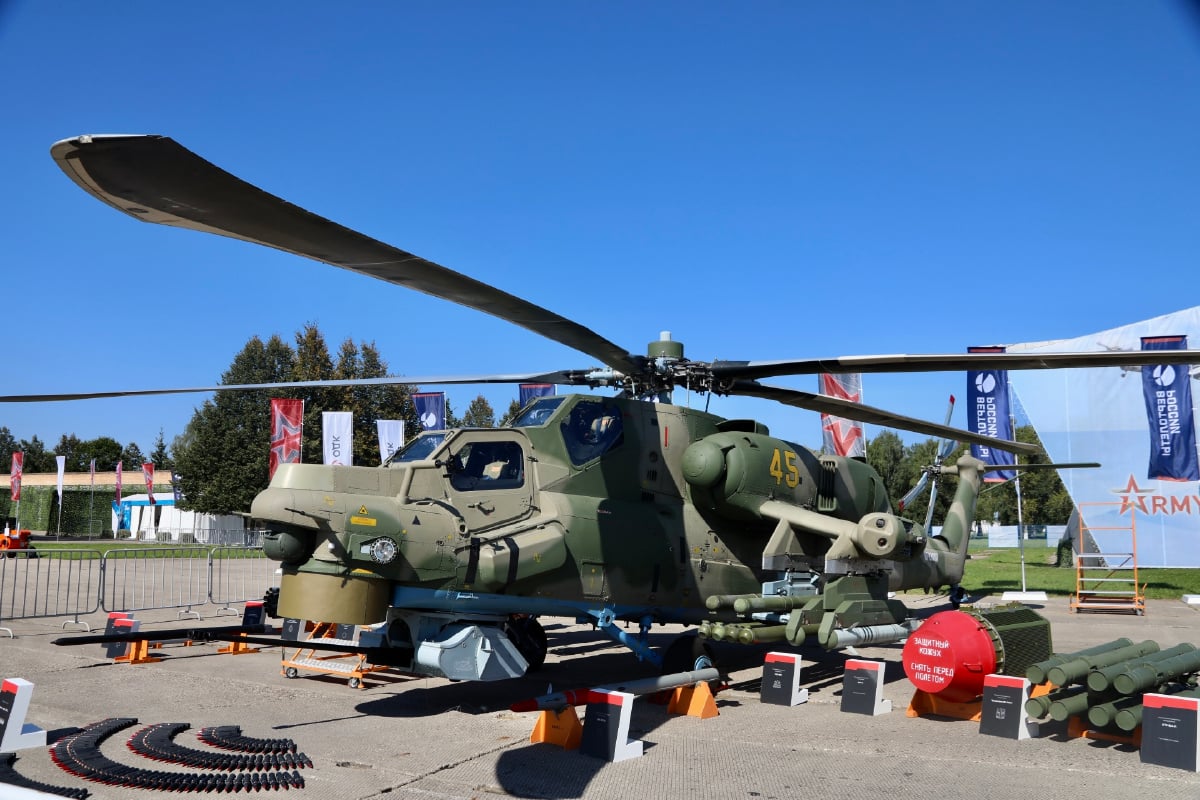
In 2019 the Russian Ministry of Defence signed for 98 Mi-28NMs to be delivered by 2027, so the type is meant to be the backbone of the Russian Aerospace Forces attack helicopter fleet for years. Every one lost to a drone that costs a tiny fraction of its price hurts both the balance sheet and the fleet plan.
Why Russian Helicopters Hunt Drones, and Get Hunted
The irony is hard to miss. Russia increasingly uses Mi-28s as drone hunters, flying low and slow to shoot down Ukrainian long-range drones with the 30 mm cannon. Ukraine also uses Mi-8 E Mi-24 helicopters to hunt Russian Shahed drones. Helicopters suit the job because they can match a slow drone's speed and keep the gun on it.
Ukraine has been working towards this moment for two years. In August 2024 Ukraine's SBU security service claimed the first FPV hit on a Russian Mi-28 in flight, over Kursk Oblast. In mid-July 2026 Ukrainian drone units claimed another Mi-28 over Belgorod Oblast.
Kyiv Independent footage from August 2024 of what Ukraine called the first FPV drone hit on a Russian Mi-28 in flight, over Kursk Oblast.
Two claimed hits in a week by one brigade suggest the tactic is becoming routine rather than a lucky one-off. The key ingredients are early warning from neighbouring units, a winged interceptor fast enough to catch a helicopter, and links that can survive Russian jamming.
Whether the two Havocs were destroyed, damaged or flew home with scorched paint, the message to Russian helicopter crews near the border is the same. The hunters are now being hunted, and the thing chasing them costs a fraction of what they do.
Sources: 115th Separate Mechanized Brigade (Telegram), UNITED24 Media, UNN/Suspilne, UA.NEWS, Militarnyi, Ukrainska Pravda, OSINTtechnical, Bendik, Kyiv Independent, Wikipedia (Mil Mi-28)


0 Comments