
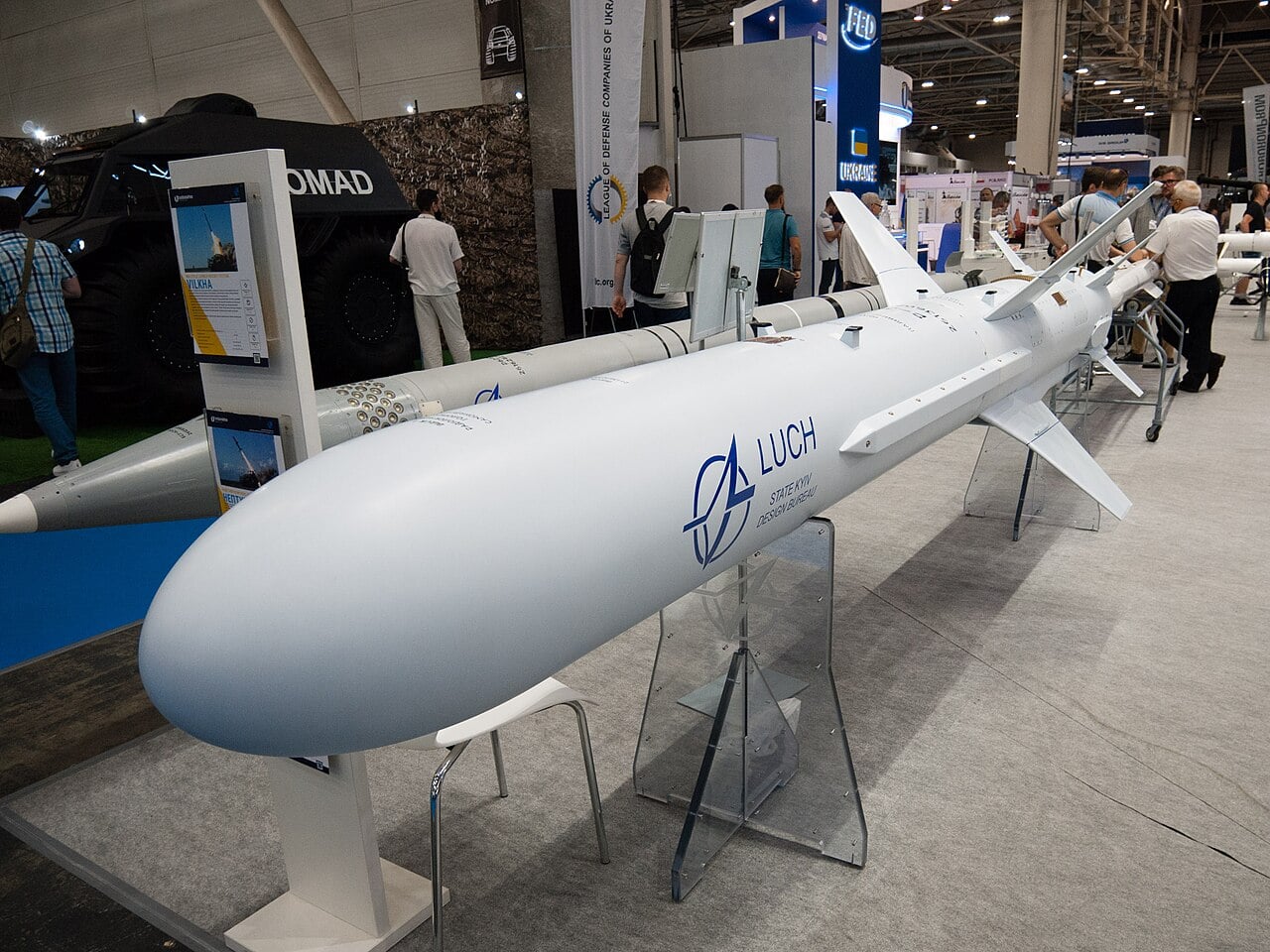
In April 2022, Ukraine says, two missiles hit the flagship of Russia’s Black Sea Fleet. The cruiser Moskva caught fire, its ammunition exploded, and the ship sank. The weapon Ukraine credited was a missile almost nobody outside the region had heard of: the R-360 Neptune.
Four years later, Neptune has become one of Ukraine’s most important long-range weapons. It hits ships, oil depots, radars and, as the strike on Borisoglebsk air base showed this week, parked Russian bombers. Here is how a coastal anti-ship missile became a deep-strike weapon.
Informazioni rapide
- Nome: R-360 Neptune; the coastal system is the RK-360MC
- Sviluppatore: Luch Design Bureau, Kyiv
- Basato su: The Soviet Kh-35 anti-ship missile
- First tests: March 2016
- In servizio: First missile battalion with the Ukrainian Navy, March 2021
- Anti-ship version: 870 kg, 150 kg warhead, subsonic, range over 280 km
- Long Neptune: Land-attack version with a 260 kg warhead and a claimed range of up to 1,000 km, first used in 2025
- Launcher: USPU-360 truck with four missiles
A Soviet Design, Rebuilt in Kyiv
Neptune was developed by the Luch Design Bureau in Kyiv, starting from the Soviet Kh-35 anti-ship missile. Luch improved its range, targeting and electronics. The missile was first shown at the Arms and Security exhibition in Kyiv in 2015, first tested in March 2016, and in August 2018 it hit a sea target 100 km away during a test in the Odesa region.
The anti-ship version weighs about 870 kg and carries a 150 kg warhead. A solid-fuel booster pushes it off the launcher, then a Motor Sich MS400 turbofan takes over for a subsonic cruise, low over the water. Its range is usually given as more than 280 km. The coastal system mounts four missiles on a USPU-360 truck, supported by reload, command and cargo vehicles, and is designed to operate up to 25 km inland.
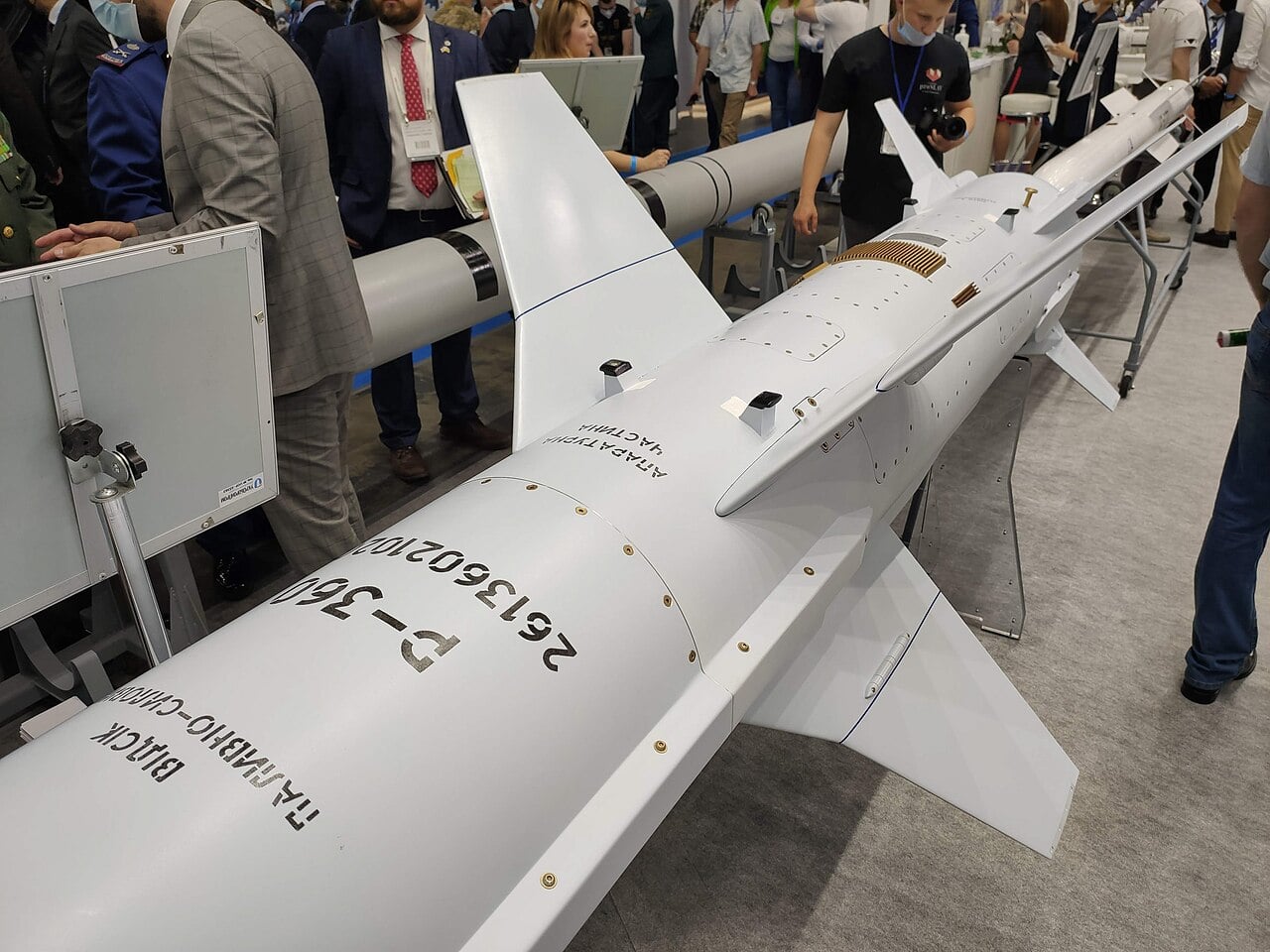
The first training missile battalion entered service with the Ukrainian Navy in March 2021, less than a year before Russia’s full-scale invasion.
An animated explanation of how the Neptune missile works and how it was used against the Moskva.
The Moskva
On 13 April 2022, according to Ukrainian sources, two Neptunes struck the cruiser Moskva in the Black Sea, starting a fire and an ammunition explosion. Russia’s Defence Ministry said only that a fire had set off munitions and that the crew had been evacuated. Russian state media later reported that the ship sank in stormy weather while under tow.
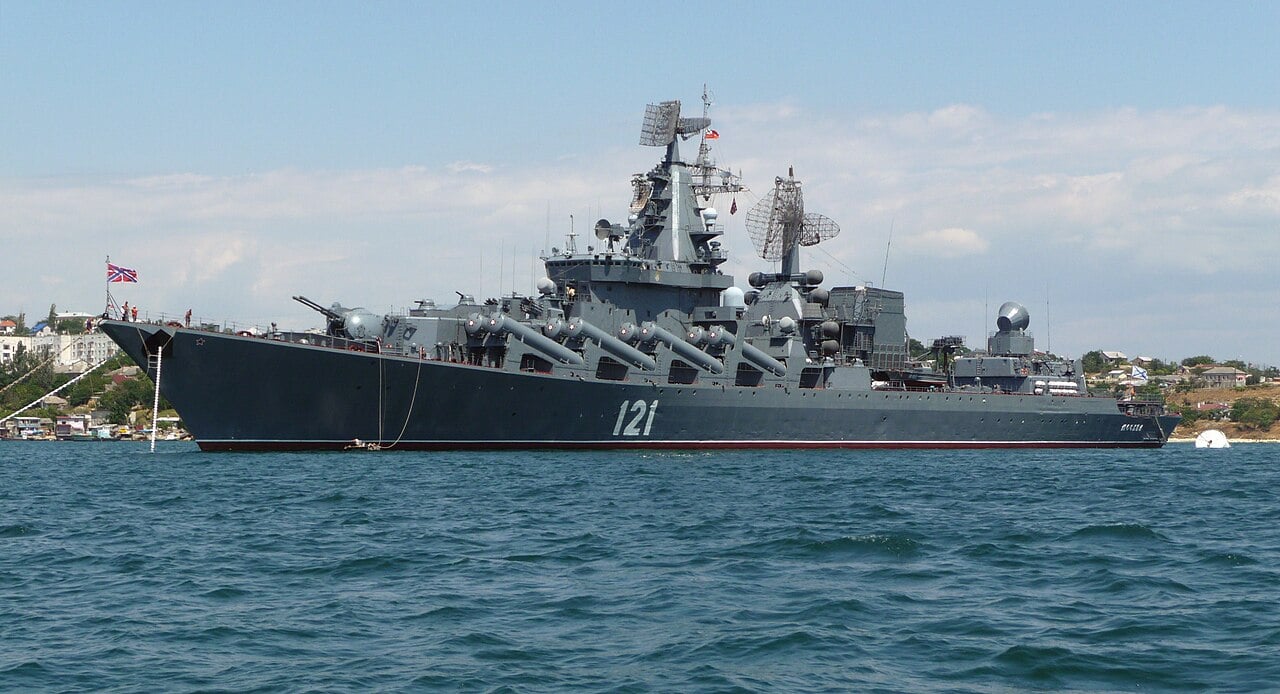
Whatever the exact sequence, losing a flagship to a relatively small, subsonic missile was a stark lesson for navies everywhere. It also made Neptune famous. Ukrainian sources later credited Neptune with strikes on the frigate Admiral Essen and the landing ship Konstantin Olshansky.
ThePrint explains the Neptune missile after Ukraine’s claim against the Moskva.
Long Neptune: From Ships to Refineries
From 2023, Ukraine fielded a land-attack variant. In August 2023 a modified Neptune reportedly destroyed an S-400 radar in Crimea, and over the following years Neptunes were reported hitting an oil depot at Port Kavkaz, an airbase in Kursk and power infrastructure inside Russia.
The biggest change came with the Long Neptune. Its fuselage was widened from 38 cm to about 50 cm, its warhead grew to 260 kg, and Ukraine claims a range of up to 1,000 km. Russian forces call it the Neptune-MD. President Zelensky announced its first combat use on 15 March 2025:
Neptune Against Airfields
Parked aircraft are an ideal Neptune target: large, fragile and often lined up in the open. On the night of 14–15 October 2026, the Ukrainian Navy said it used Neptune to hit six Su-34M bombers at Borisoglebsk air base in Russia’s Voronezh region. Satellite images published by the monitoring channel AviVector appear to show four destroyed and two badly damaged.
Neptune’s future may be international. Romania and Ukraine announced plans in August 2024 to produce and improve the missile together, Indonesia signed a memorandum on a possible purchase, and in June 2026 Luch and MBDA signed a memorandum to develop a Neptune 2. A missile designed to guard Ukraine’s coast has become one of the most talked-about cruise missiles in Europe.
How the Neptune missiles are believed to have sunk the cruiser Moskva, by Engineering X.
Sources: Wikipedia (R-360 Neptune); Militarnyi; Euromaidan Press; Ukrainian Navy; Defence Blog



0 Comments