On 29 November 1929, Norwegian pilot Bernt Balchen flew Richard Byrd over the South Pole in the Ford Trimotor Floyd Bennett. Then his life got even more remarkable.
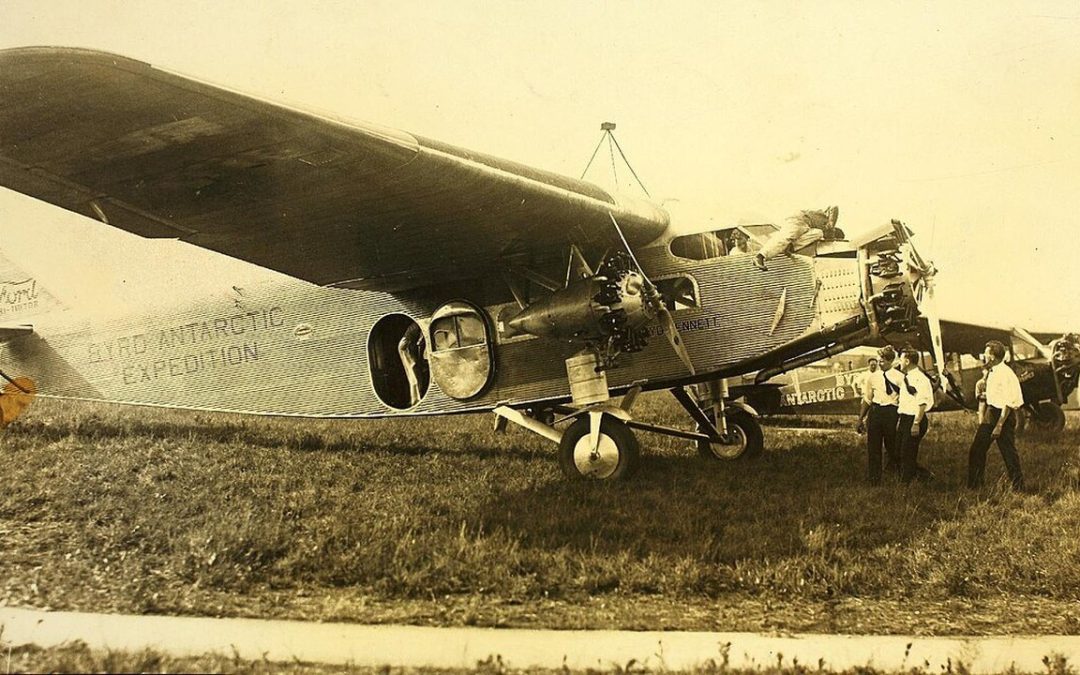

On 29 November 1929, Norwegian pilot Bernt Balchen flew Richard Byrd over the South Pole in the Ford Trimotor Floyd Bennett. Then his life got even more remarkable.
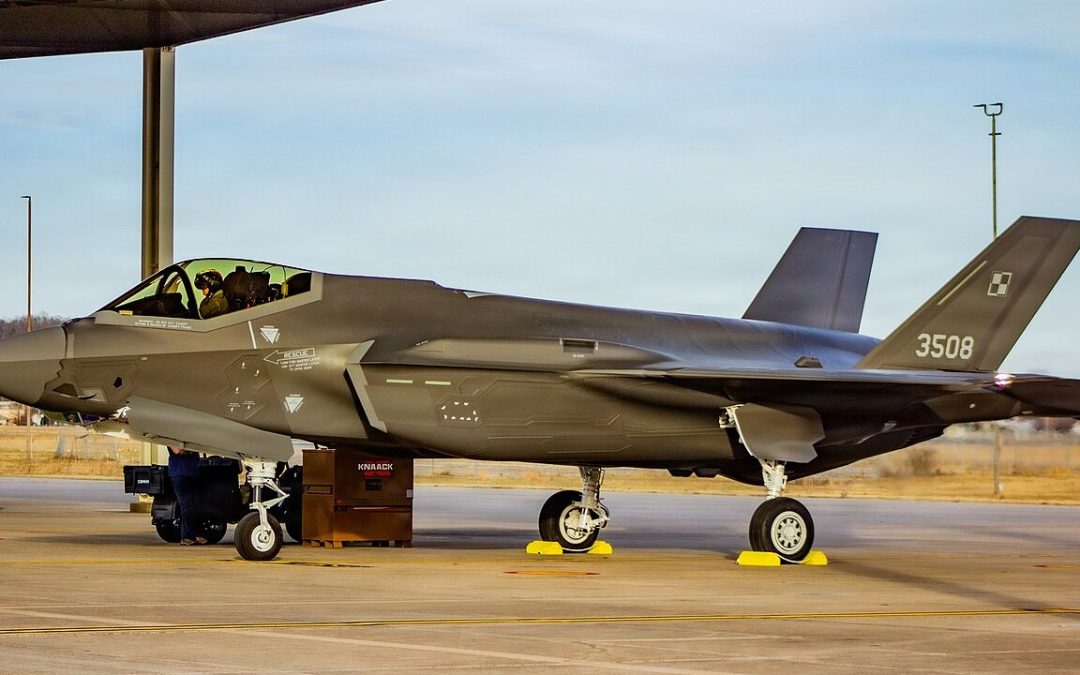
Two more Cameri-built F-35A Husarz fighters landed at Łask on 26 November 2026, bringing the number of F-35s in Poland to 12, with two more due this year.

In the autumn of 1991 a Hungarian crew drove a turretless T-34 tank up to burning oil wells in Kuwait and blasted them with the exhaust of two MiG-21 jet engines, laced with thousands of litres of water. The world press called it Big Wind. Its story begins with Soviet experiments in the 1960s and still has not ended.

In the winter of 1943 an RAF prisoner watched snow drift upward past the roof of Colditz Castle and had an idea. Over the next year he and his friends built a two-seat glider from bed boards, floorboards and bedding in a hidden attic above the chapel. It never flew in the war. Two replicas, in 2000 and 2012, proved that it could have.

A Tu-144 hangs over the escalators at Pykhtino, Icarus guards a passage at Aviamotornaya and Deineka’s aircraft circle above Mayakovskaya. The story of how Moscow put the sky underground, from 1938 to the airport station at Vnukovo.

Type I to Type IV, plus A, B and C: what the letters and numbers on an aircraft emergency exit actually mean, why they decide how many seats an airliner may sell, and why a Boeing 737-9 has a plug in the side.

Three hundred joules, a body-armour rating, a lock the pilots can veto and a panel built to blow out. How the FAA hardened the flight deck door, and what the new secondary barrier rule actually requires.

Share this story Some of our guests did not want to go fast and low. They wanted to go up: as high as a two-seat fighter can take a passenger, to where the horizon bends and the sky above turns a deep, dark blue. We called them Edge of Space flights, and for 13 years...

In June 1942 the largest gun ever used in combat, the 80 cm Schwerer Gustav, fired its first shells at Sevastopol. It weighed about 1,350 tonnes and needed well over a thousand men. Overhead, Richthofen’s bombers were delivering far more explosive with far less effort. This is the story of the biggest gun ever fired, and of the aircraft that made it a dead end.

Headlines said Russia’s new plasma engine could get astronauts to Mars in 30 days. Rosatom’s lab prototype is real, and its exhaust is fast. But the physics of thrust, power and reactor mass, and the story of VASIMR’s “39 days to Mars”, show why the headline figure is a projection, not a promise.

Robert Esnault-Pelterie built the REP monoplanes, pioneered the single-lever control stick and later helped found the science of astronautics.

The Soko G-2 Galeb, first flown in 1961, was the first Yugoslav-designed jet trainer in series production. Soko built 248, and some still fly today.

From 1988 to 2018 the two-seat Mirage 2000N carried France’s ASMP nuclear missile, trained to fly at 200 feet and 600 knots, and never had to use it.

On 8 July 1908 in Turin, French sculptor Thérèse Peltier flew with Léon Delagrange, by most accounts the first woman to fly in an aeroplane. Weeks later she flew alone.

The Aero L-159 ALCA went from Czech white elephant to combat jet in Iraq, aggressor for Draken and the RAF, and the centre of a 2026 drone-hunter row.

Jean Navarre flew a red Nieuport 11 with Escadrille N 67 over Verdun in 1916, scoring a double on 26 February. The poilus called him the Sentinel of Verdun.

The Lockheed S-3 Viking hunted Soviet submarines, tanked strike jets, carried President Bush as Navy One in 2003 and ended its career flying research for NASA.