
Shortly before midnight on 14 May 1982, Royal Navy Sea Kings clattered in low over the dark, wind-scoured grass of a small island north of West Falkland. Out of them climbed about 45 men of D Squadron, 22 Special Air Service, each loaded with mortar bombs, explosive charges and rockets.
Their target was a grass airstrip beside the island’s small settlement. Parked on it were eleven Argentine aircraft. By dawn, every one of them was wrecked, an ammunition dump and a fuel store had gone up, and the raiders were back aboard the carrier HMS Hermes having suffered only minor wounds.
The Pebble Island raid was the SAS doing exactly what it had been founded to do 40 years earlier in the North African desert: walk onto an enemy airfield at night and destroy the aircraft on the ground. It also cleared a serious threat from the flank of the British landings at San Carlos a week later.
Informazioni rapide
- Operazione: SAS raid on the Argentine airstrip at Pebble Island (Isla Borbón), Falkland Islands
- Data: Night of 14/15 May 1982
- Raiders: About 45 men of D Squadron, 22 SAS, plus a Royal Artillery naval gunfire observer
- Delivery: Sea King HC4s of 846 Naval Air Squadron from HMS Hermes
- Fire support: HMS Glamorgan, 4.5-inch guns; HMS Broadsword escorted Hermes
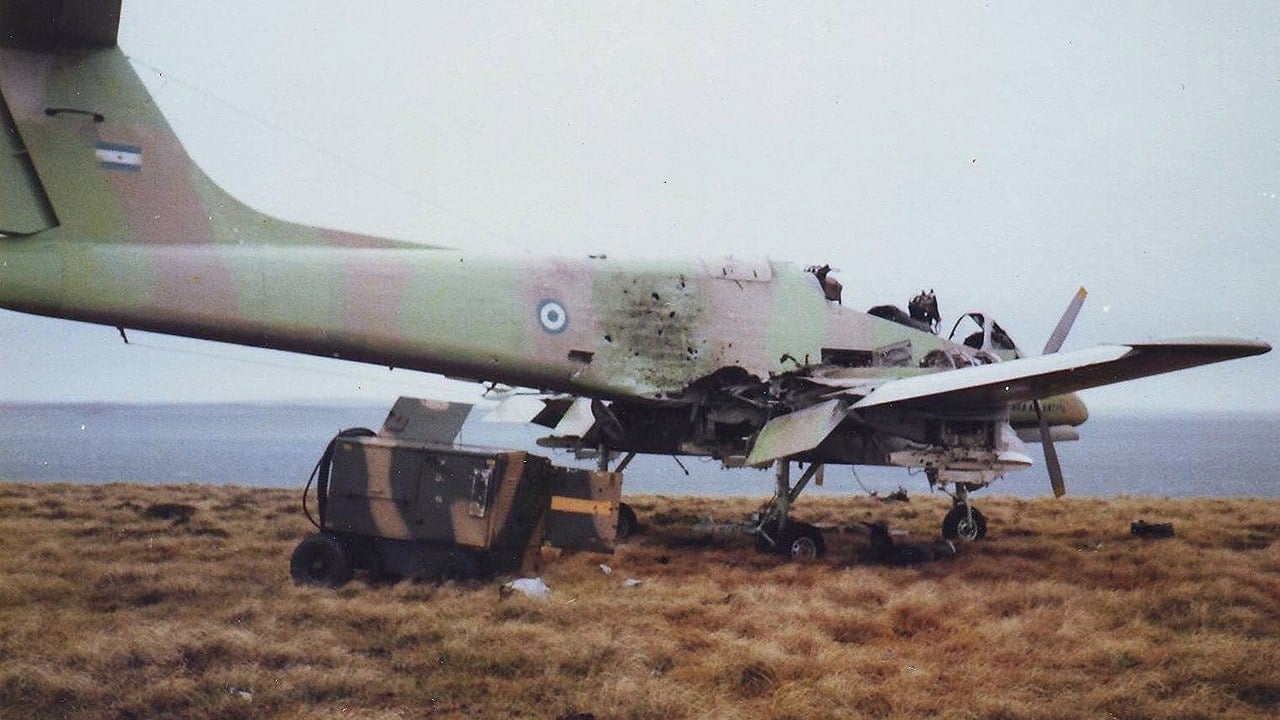
- Destroyed: Six FMA IA 58 Pucarás, four T-34C Turbo-Mentors, one Short Skyvan, ammunition and fuel dumps
- British losses: None killed; minor wounds
- Raid leader on target: Captain Gavin Hamilton, Mountain Troop
An airstrip on the flank
Pebble Island is one of the smaller Falkland Islands, about 40 square miles of moorland, beaches and penguin colonies lying off the north coast of West Falkland. After the invasion in April 1982, Argentina turned its little airstrip into a forward base, which it called Isla Borbón.
IL Argentine Air Force moved FMA IA 58 Pucará ground-attack aircraft there, joined by Beechcraft T-34C Turbo-Mentors di Argentine Naval Aviation and a Short Skyvan transport of the Argentine Coast Guard. The Pucará, a twin-turboprop with cannon and machine guns, was built for exactly this kind of rough-field war.
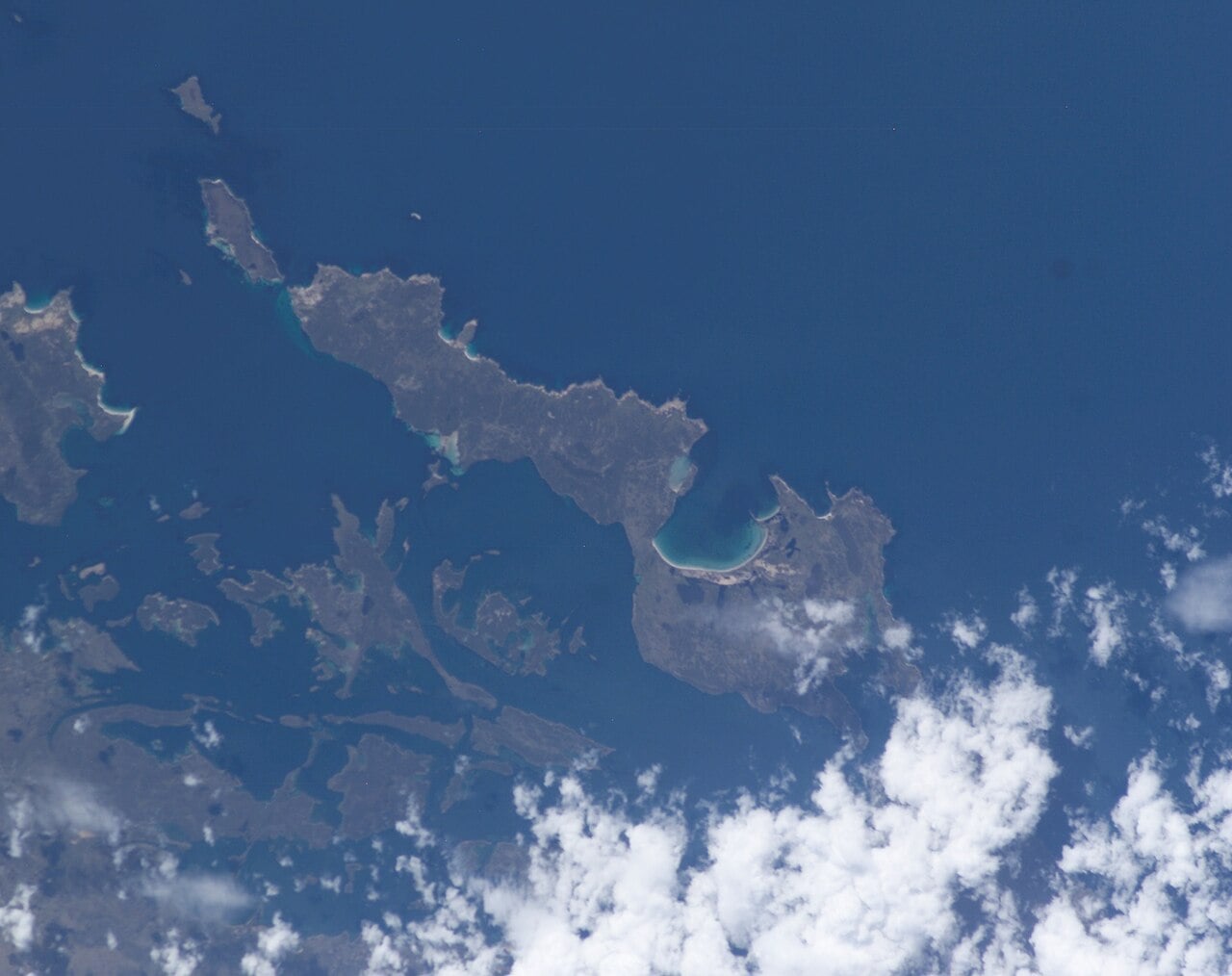
For Rear Admiral Sandy Woodward’s task force, the base was a problem. Aircraft flying from Pebble Island could spot the amphibious ships as they approached Falkland Sound, and the island sat close to the waters the British would have to use for their landings. The decision was to remove it before the main assault.
Canoes, then helicopters
The job went to D Squadron, embarked on Hermes. A few nights before the raid, eight men of the squadron’s Boat Troop paddled in by Klepper canoe, lay up within sight of the airstrip and reported back what they saw: eleven aircraft and an Argentine garrison.
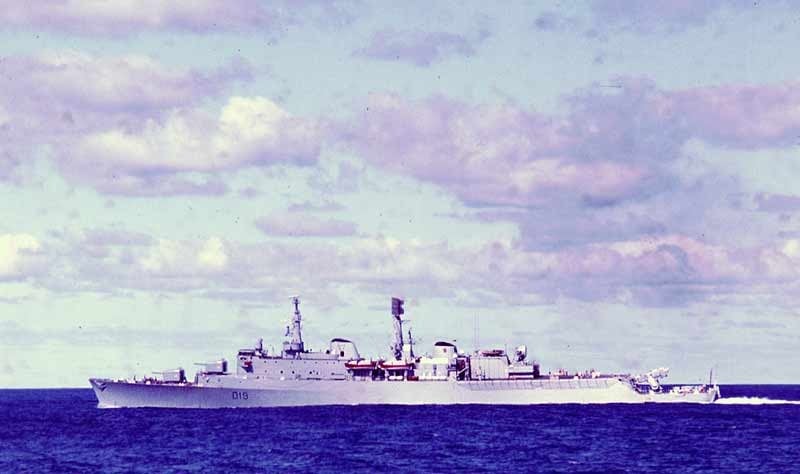
On 14 May, Hermes left the carrier group and steamed towards the island with the frigate HMS Broadsword as her escort and the County-class destroyer HMS Glamorgan to provide naval gunfire support with her 4.5-inch guns. Strong headwinds slowed the run-in and cut the time the raiders would have on target, so the plan was simplified: destroy the aircraft first, everything else second.
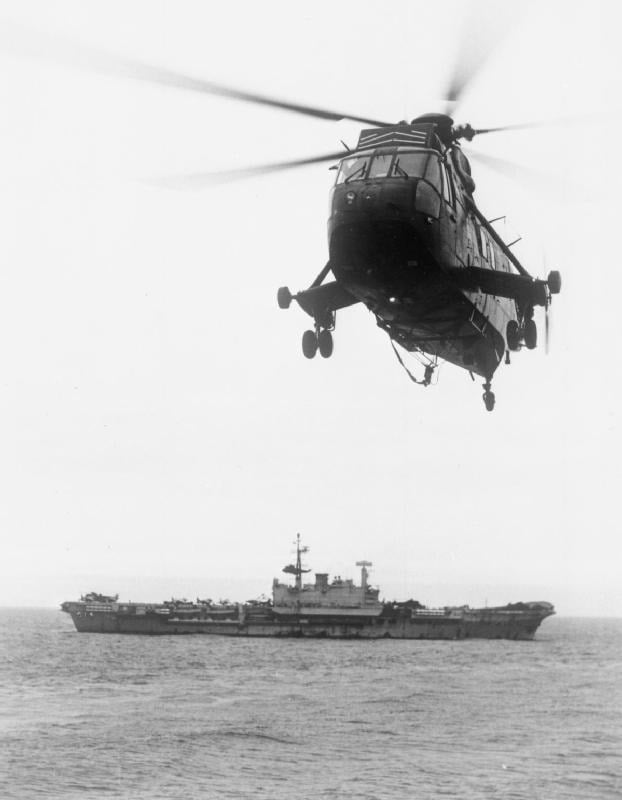
Westland Sea King HC4s of 846 Naval Air Squadron, part of the Fleet Air Arm, flew the squadron in and set it down several kilometres from the strip. Each man carried at least two 81 mm mortar bombs for the fire-support teams. A Boat Troop soldier who had done the reconnaissance led the approach march.
Military historian Mark Felton tells the story of the SAS raid on Pebble Island in May 1982.
Eleven aircraft, one night
Mountain Troop, commanded by Captain Gavin Hamilton, had the aircraft. The rest of the squadron secured the approaches and formed a reserve, while a Royal Artillery naval gunfire observer, Captain Chris Brown of 148 Battery, stood ready to call in Glamorgan’s shells. Hamilton, a veteran of the South Georgia operation weeks earlier, turned 29 that night.
The troopers moved along the dispersal and placed charges on the aircraft, then opened up with rifles, M203 grenade launchers and 66 mm rockets. Some aircraft had their undercarriage shot away. Glamorgan’s high-explosive rounds fell on the Argentine positions, setting off the ammunition dump and the fuel store.
The defenders stayed in their shelters during the shelling. As the raiders regrouped to leave, the Argentines set off demolition charges they had buried under the strip to deny it to an attacker, believing a full-scale assault was under way. The blast wounded a British soldier. The SAS returned fire, and by British accounts the Argentine officer leading the response was killed.
The final tally was six Pucarás, four Turbo-Mentors and the Skyvan, plus the ammunition and fuel dumps. The squadron carried its wounded back to the landing site and the Sea Kings had everyone aboard Hermes before daybreak. Not one British life was lost.
Historigraph’s animated documentary on the raid, from the canoe reconnaissance to the destruction of the aircraft.
Echoes in Parliament and at San Carlos
News of the raid reached London quickly. Five days later, as the House of Commons debated the war on the eve of the landings, Sir Paul Bryan, a Conservative backbencher who had won the Military Cross and the DSO in the Second World War, singled it out.
The raid also became a template for deception. On 21 May, as 3 Commando Brigade went ashore at San Carlos Water, the SBS hit Fanning Head and the SAS staged a noisy raid near Darwin. Admiral Fieldhouse later wrote that the aim was to convince the enemy the British were following the pattern of Pebble Island, and to mask the scale of the main landings.
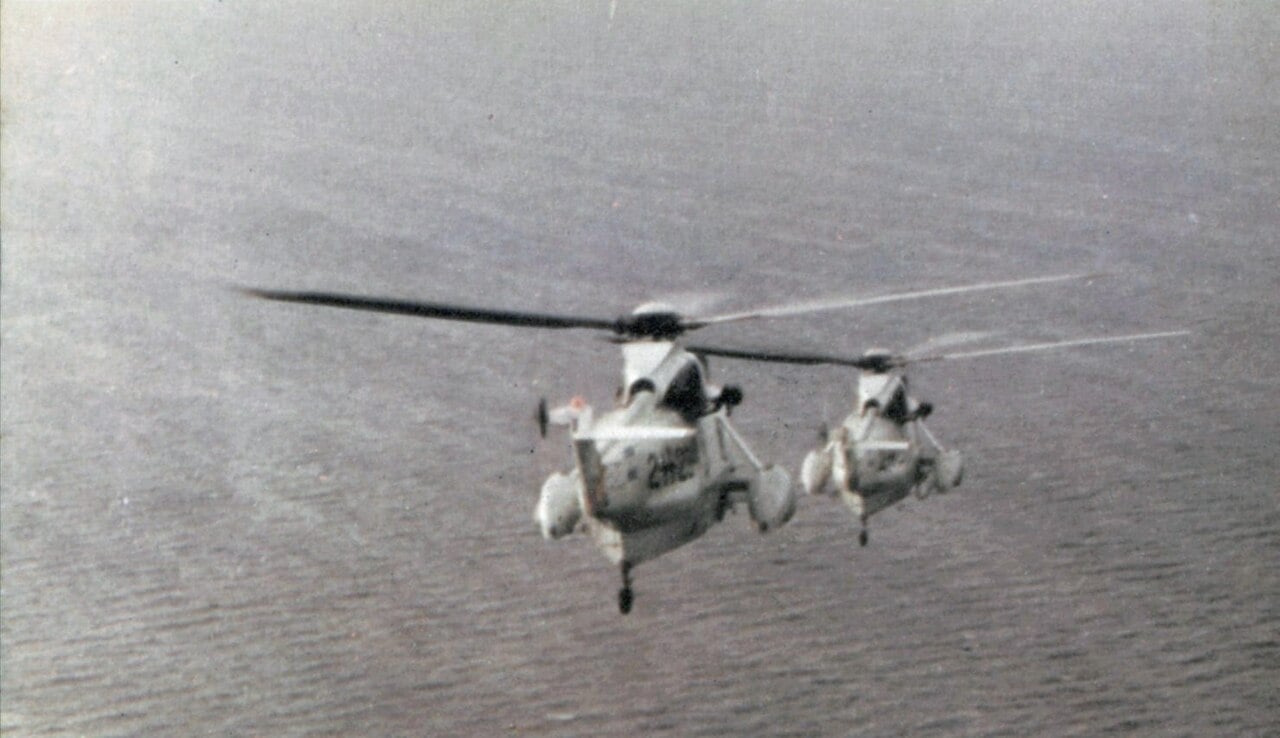
The Argentines held on to the battered strip. Two Argentine Navy Sea Kings finally flew the remaining garrison out on 1 June. The wrecked Pucarás stayed behind on the grass, where they were photographed after the war.
What it cost, later
Gavin Hamilton did not live to see the end of the war. On 10 June, leading a four-man observation patrol overlooking Port Howard on West Falkland, his position at Many Branch Point was discovered and he was killed while covering the withdrawal of his radio operator. He was awarded a posthumous Military Cross.
Glamorgan paid too. Two days later, on 12 June, an Exocet fired by Argentine Navy technicians from an improvised launcher ashore struck the destroyer, killing 14 of her crew. Despite the damage, she survived.
Imperial War Museums on the war at sea in the South Atlantic, the campaign that the Pebble Island raid supported.
As a piece of military craft, Pebble Island remains almost a textbook case: a small force, delivered by helicopter from a carrier at sea, wiping out an enemy air detachment in a single night and leaving before the sun came up. The SAS had been born raiding airfields. In May 1982, on a windy island at the edge of the world, it proved it had not forgotten how.
Sources: Wikipedia (Pebble Island raid; Gavin Hamilton; HMS Glamorgan), London Gazette (Despatch by Admiral Sir John Fieldhouse, 1982), Hansard (20 May 1982), Naval-History.net, Think Defence
0 Comments