
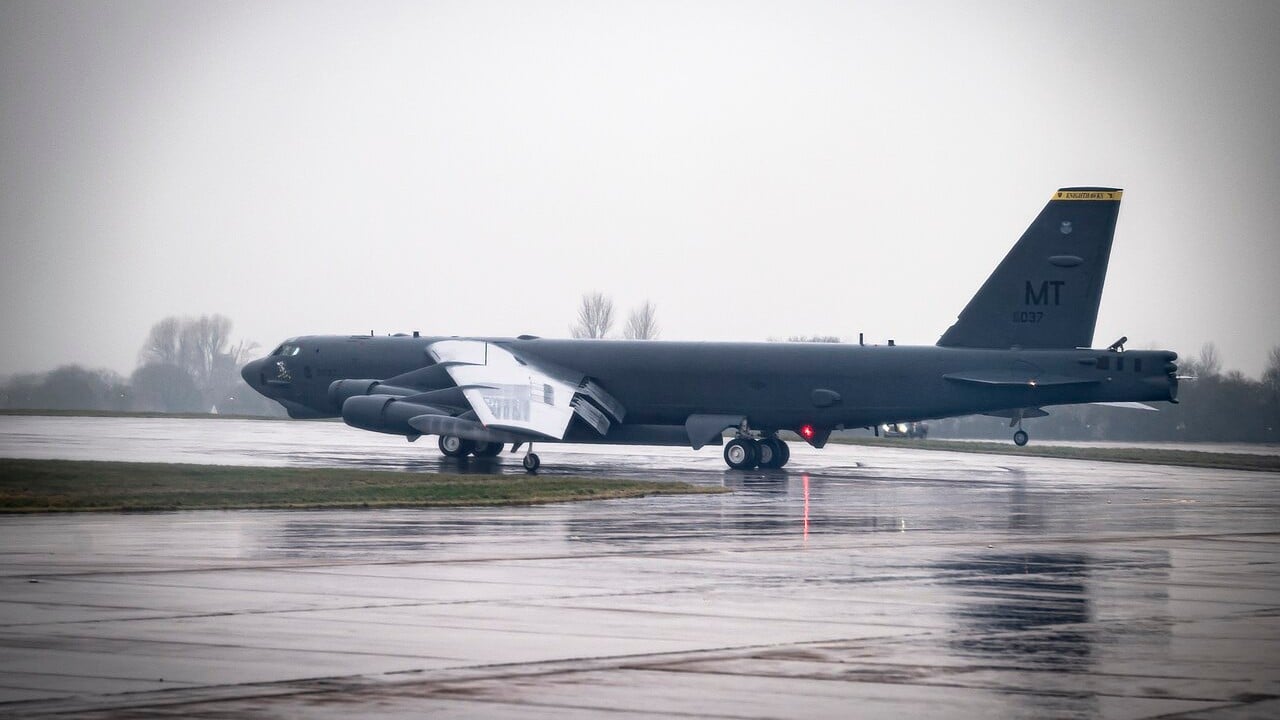
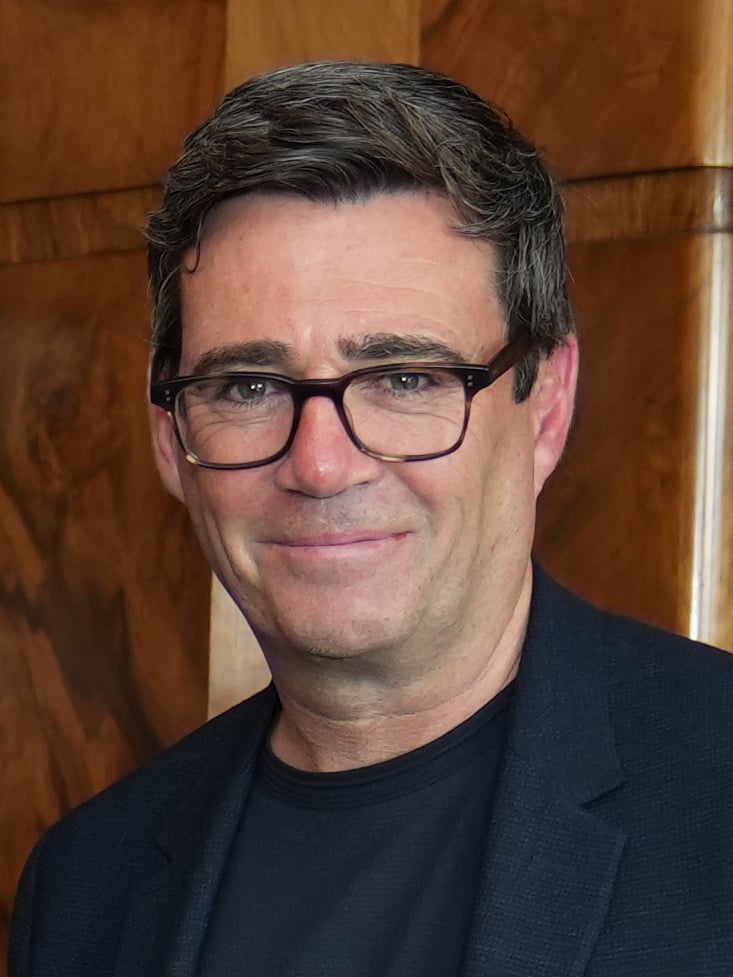
For two weeks the British government chose its words carefully. On Monday it stopped. Standing at the despatch box in the House of Commons on 12 October, Prime Minister Andy Burnham said the suspected plot against RAF Fairford, the Gloucestershire airfield that hosts American bombers in Europe, was "highly likely to have been coordinated in Iran" and "almost certainly directed by Iran's Islamic Revolutionary Guard."
That is the language of a formal attribution, and it came with consequences attached. Within hours the Foreign Office sanctioned two men it links to the Revolutionary Guard's covert networks, and Foreign Secretary Ed Miliband summoned Iran's ambassador. Tehran rejected the accusation as "unfounded and malicious speculations."
On 1 October, Afterburner reported Burnham saying there were "strong indications" of an Iranian hand. Twelve days later, the hedge is gone.
Quick Facts: The RAF Fairford Plot
Incidente: Vans stopped near RAF Fairford in the early hours of 27 September 2026
Arresti: Seven men arrested in total, all released on bail; no one charged
Found: A quantity of petrol; police said no viable explosives
Attribution: 12 October 2026, PM Andy Burnham in the House of Commons
Blamed: Iran's Islamic Revolutionary Guard Corps (IRGC)
Sanctioned: Ruhollah Bazghandi and Shahram Ali Reza Tamarzadeh Jakki
Iran's reply: "Unfounded and malicious speculations"
What Burnham Told the Commons
Burnham's statement was billed as a report back from the UN General Assembly and a run of international meetings. The Fairford section was the part that made the news. Beyond the attribution, he promised to "crack down on Iran's use of criminal networks, using our full range of powers," and said Britain would "bring further sanctions to restrict the capacity of Iran and the IRGC to do us harm."
The UK Defence Journal reported that the assessment also covered a separate incident at RAF Molesworth in Cambridgeshire. More on that below.
The two sanctioned men show where British investigators think the threat comes from. Ruhollah Bazghandi is named by London as the IRGC's head of counterespionage operations. Shahram Ali Reza Tamarzadeh Jakki is described as a facilitator for the Zindashti network, a criminal group already under sanctions and accused of plots against Iranian dissidents abroad. The pattern is a familiar one: a state service pays criminals to do the dirty work, and the people arrested at the scene may have no idea who is ultimately paying.
It is a deliberate escalation. In July Britain used new powers to ban support for the IRGC, and a joint statement from the foreign ministries of nearly 30 countries, including the United States, Canada, France and Germany, this week condemned what it called "Iran's use of violent attacks, including the acts of lethal plotting, arson, sabotage, cyberattacks" across Europe.
The Night of 27 September
The case began at about 12:45am on Saturday 27 September, when police were called about suspicious vehicles heading for the base. Armed officers from Gloucestershire Constabulary stopped three vans near the village of Whelford and arrested five British men. A major incident was declared, nearby homes were evacuated and Army bomb disposal teams examined the vehicles.
What they found was less than the first headlines feared. Counter-terrorism police said no improvised explosive devices were recovered, only a quantity of petrol. Two more men were arrested later, including a British-Iranian dual national detained in Westminster. All seven have been released on bail under strict conditions. Nobody has been charged.
Why Fairford matters is no secret. It is the US Air Force's preferred forward base for heavy bombers in Europe, and American B-1B Lancers E Stratofortature B-52 flew from it during the war with Iran. US officials told Reuters they suspected an Iran-linked drone attack plot. On 4 October, a week after the arrests, the B-1Bs left. US European Command said only that they were returning to their home stations.
Molesworth: A Second Base, a Second Breach
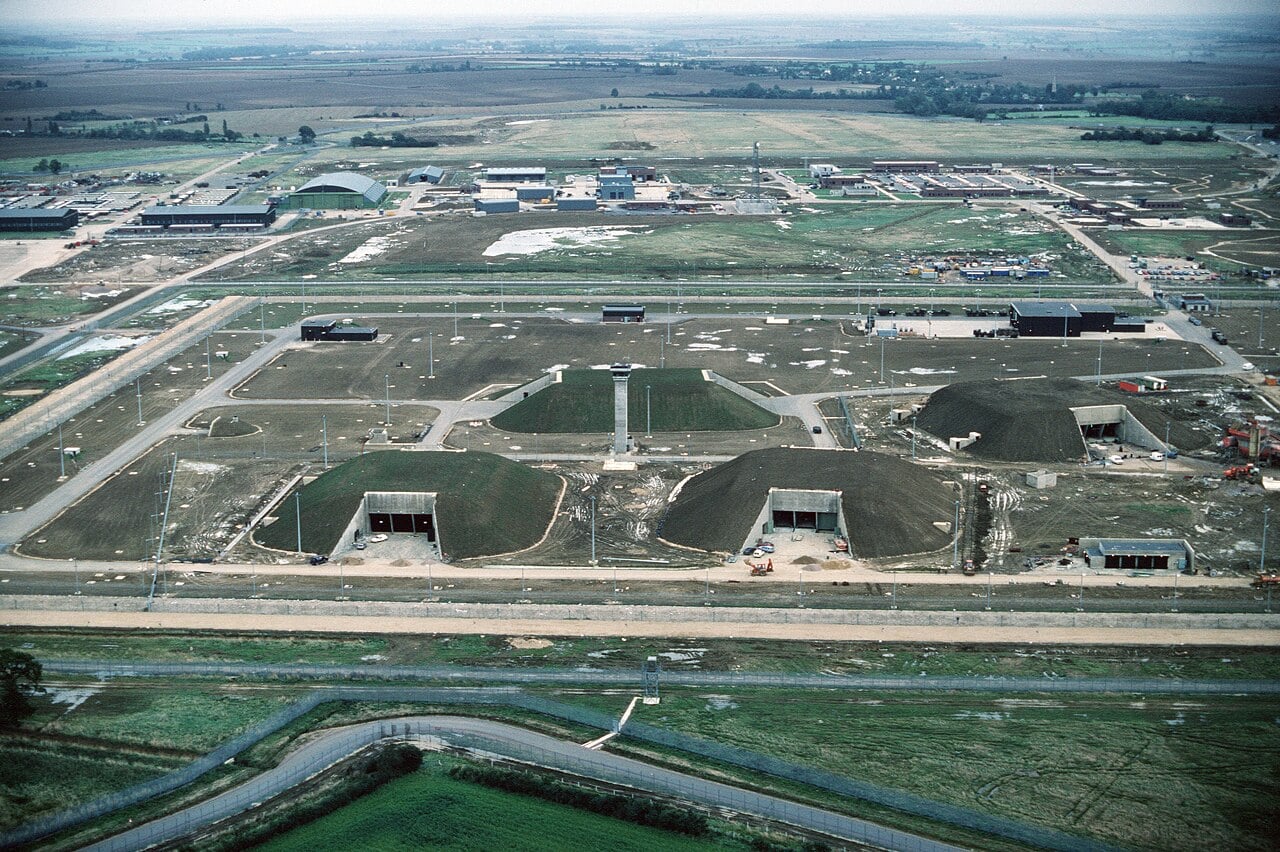
Eleven days after Fairford, there was another night-time arrest at a US-used base in England. At about 2am on Thursday 8 October, two men were found inside RAF Molesworth, a few hours after Ministry of Defence patrols had spotted an abandoned vehicle by the perimeter. The two are UK-resident Latvian nationals, aged 36 and 32.
They were first held on suspicion of trespass and criminal damage, then re-arrested under the National Security Act 2023 for "entering a prohibited place for a purpose prejudicial to the UK." Both have been bailed. Counter Terrorism Policing London is leading the investigation, and police say they are still working to establish a motive.
Molesworth no longer operates aircraft. Its value is what sits inside: the US Joint Analysis Center, which supports US European and Africa commands, and a NATO intelligence fusion centre. A breach there is a different kind of threat from vans of fuel near a bomber flightline, and the government's statement put the two cases side by side.
Cosa succede dopo?
Attribution is the easy part. Charges are harder. Seven people arrested over Fairford are on bail, the two Molesworth suspects are on bail, and none of them has yet been charged. The government's case against the Revolutionary Guard rests on intelligence it has not published, which is normal in espionage cases and also means outsiders cannot test it.
For the US Air Force, the practical question is simpler: whether and when the bombers come back to Gloucestershire. Fairford sits in open countryside with public roads close to the wire. That was always part of its appeal as a quiet forward base. After 27 September it looks like a weakness.
Sky News live coverage of Andy Burnham addressing MPs on 12 October 2026.
Sources: UK Defence Journal; Times of Israel / Reuters; Jewish News; ITV News Anglia; UK Foreign Office; Sky News.
0 Comments