
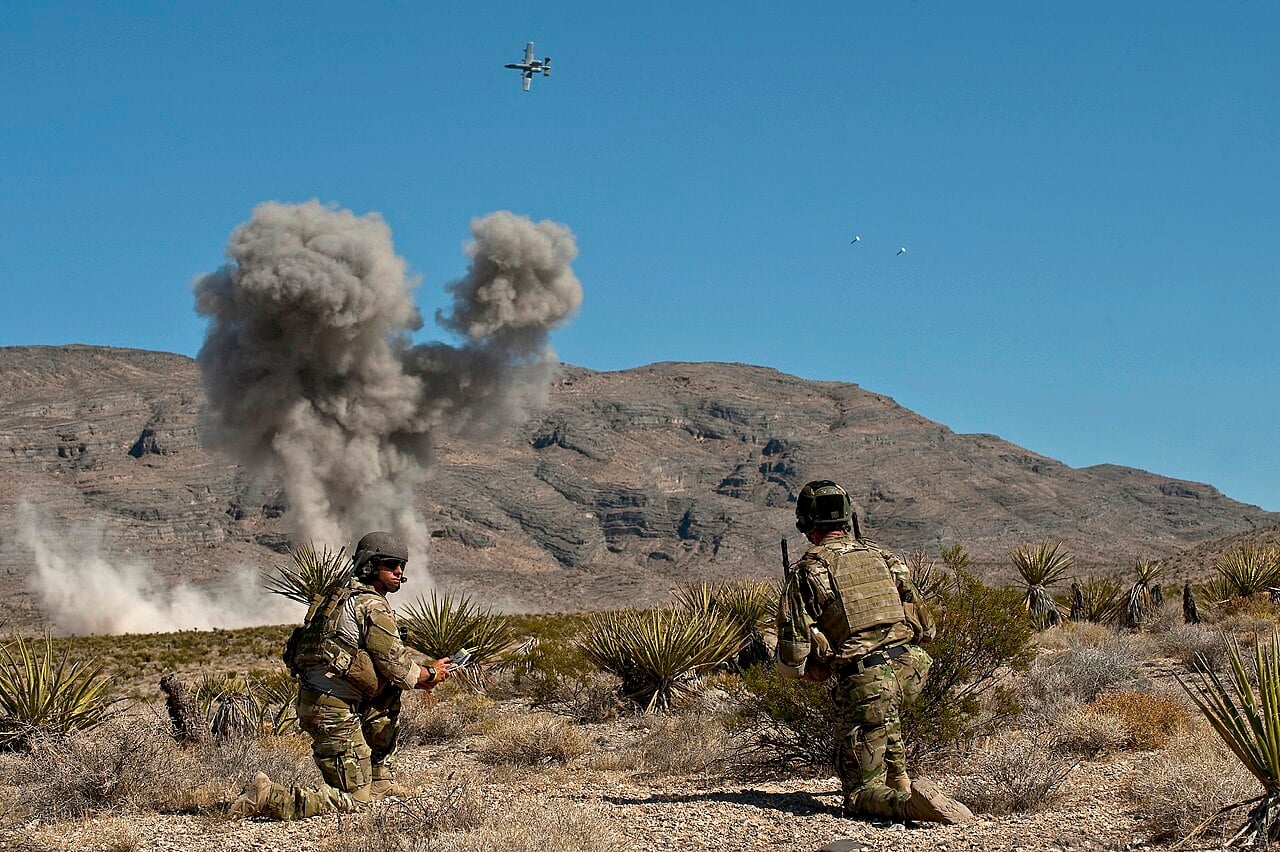
Every new American weapon, from a heat-seeking missile to a stealth fighter, has to be shot, dropped, jammed or flown somewhere before it goes to war. For the past 80 years, that somewhere has mostly been a handful of enormous fenced-off deserts in the American West.
This week President Trump announced plans for a new “super range” in Montana. To understand why, it helps to look at the ranges the US military already has, what they were built for, and why even areas the size of small countries are starting to feel cramped.
Informazioni rapide
- Nevada Test and Training Range: About 11,740 km² of land, plus 13,000 km² of restricted airspace; home of Red Flag
- White Sands Missile Range: Nearly 8,300 km² in New Mexico; site of the first atomic bomb test in 1945
- China Lake: About 4,500 km² in California; birthplace of the Sidewinder missile
- Utah Test and Training Range: About 6,930 km² of land and over 49,000 km² of airspace
- Il problema: Modern weapons need more space than open-air ranges can offer (Pentagon DOT&E)
- The response: A planned Montana “super range”, announced 14 October 2026
Nevada: Where Fighter Pilots Go to War
The Nevada Test and Training Range, north of Las Vegas, is the best known. According to Wikipedia, it covers about 4,531 square miles (11,740 km²) of land, with some 5,000 square miles of restricted airspace above it and another 7,000 square miles of shared military operating areas. The land was first set aside as a bombing range in 1940.
Today the range is run from Base aerea di Nellis and hosts the Red Flag exercises, where US and allied crews fly against a simulated integrated air defence system and some 1,200 targets. The Tonopah Test Range sits within its boundaries, and Groom Lake, the airstrip of Area 51, lies near its north-eastern edge.
Inside Red Flag: how fighter pilots train for war over the Nevada desert.
White Sands: The Biggest of Them All
White Sands Missile Range in New Mexico covers nearly 3,200 square miles and is described as the largest military installation in the United States. It began in 1941 as the Alamogordo Bombing and Gunnery Range. On 16 July 1945, the first atomic bomb was detonated at the Trinity Site near its northern boundary.

After the war, the US Army brought 100 captured German V-2 rockets to the range and test-fired 67 of them between 1946 and 1951. Nike, Patriot and countless other missiles followed. In 1982 the Space Shuttle Columbia even landed there, on the Northrup Strip, at the end of STS-3. According to TWZ, electronic warfare testing at White Sands is now a bottleneck.
Archive film of White Sands Missile Range in 1963.
China Lake: Home of the Sidewinder
The Navy’s equivalent is Naval Air Weapons Station China Lake in California’s Mojave Desert, about 1.1 million acres, larger than the state of Rhode Island. It became the Naval Ordnance Test Station in 1943, and in 1950 its scientists developed the AIM-9 Sidewinder, one of the most widely used air-to-air missiles in the world. HARM, JSOW and JDAM were also tested or developed there.
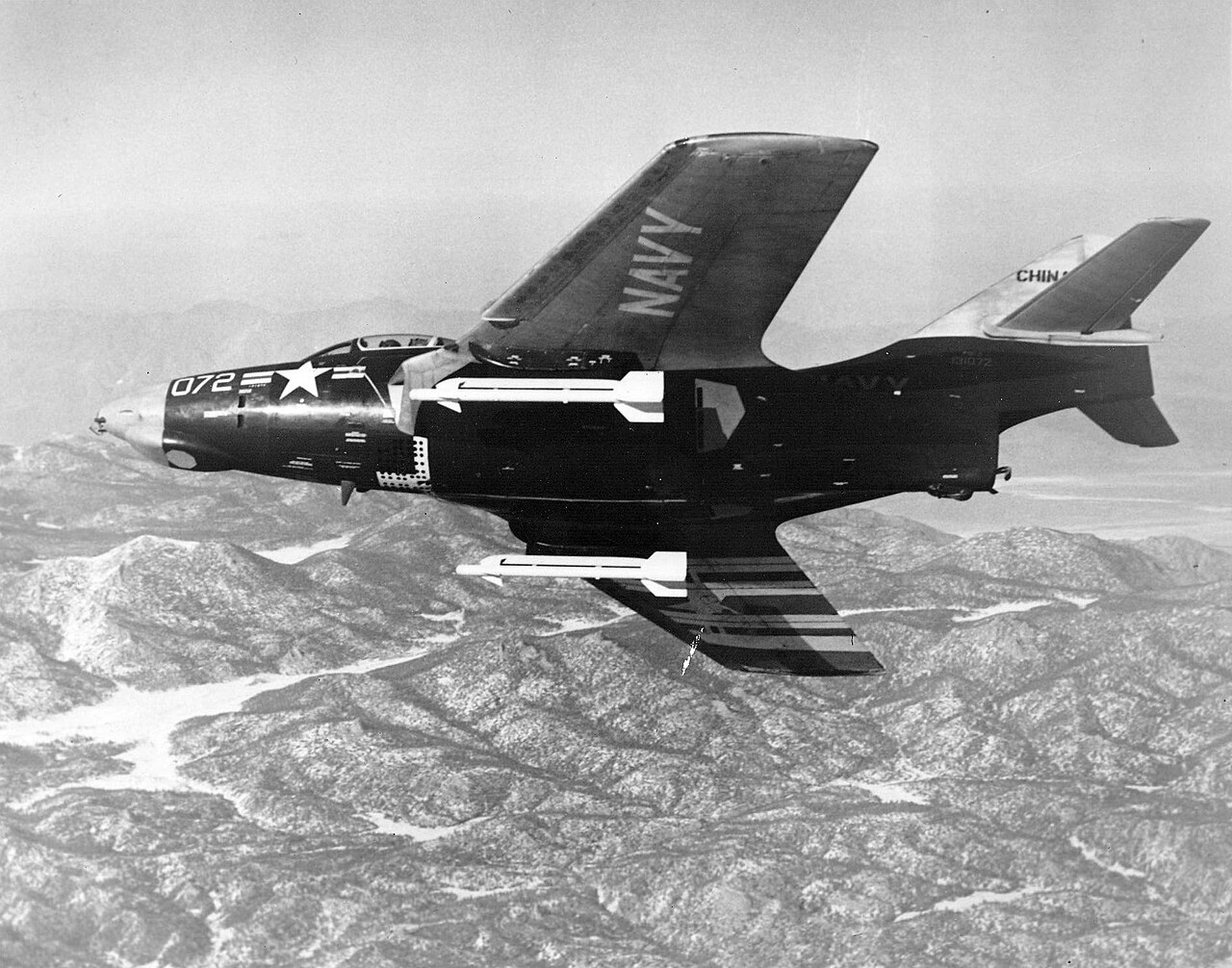
China Lake holds about 85% of the land the Navy uses for weapons testing. In July 2019, two earthquakes of magnitude 6.4 and 7.1 struck with their epicentres inside the station, leaving it “not mission capable” and causing about $5.2 billion in damage.
Utah: The Supersonic Playground
The Utah Test and Training Range, run from Hill Air Force Base, covers about 2,675 square miles of land and more than 19,000 square miles of airspace. It is described as the largest contiguous block of overland airspace authorised for supersonic flight in the contiguous United States. NASA has also used it to land sample-return capsules, including Stardust, Genesis and OSIRIS-REx.
Why They Are No Longer Big Enough
These ranges were built for an age of shorter-range weapons. A hypersonic missile can cross several of them in minutes. Long-range air-to-air missiles, swarms of autonomous drones and powerful jammers all need more room, and they must be tested without interfering with civilian air traffic and radio communications. The Pentagon’s own test and evaluation office has been blunt about it:
That is the gap the Montana super range is meant to fill. Senator Tim Sheehy, who has pushed for it, put the case this way after President Trump’s announcement in Kalispell on 14 October 2026:
Allies feel the same squeeze. Australia now hosts US hypersonic testing over its vast interior, and allied air forces travel to Nevada every year for Red Flag. The deserts that shaped American air power for 80 years are still essential. They are just no longer enough on their own.
The Royal Australian Air Force at Exercise Red Flag over the Nevada Test and Training Range.
Sources: Wikipedia (Nevada Test and Training Range; White Sands Missile Range; Naval Air Weapons Station China Lake; Utah Test and Training Range); TWZ; NBC Montana
0 Comments