
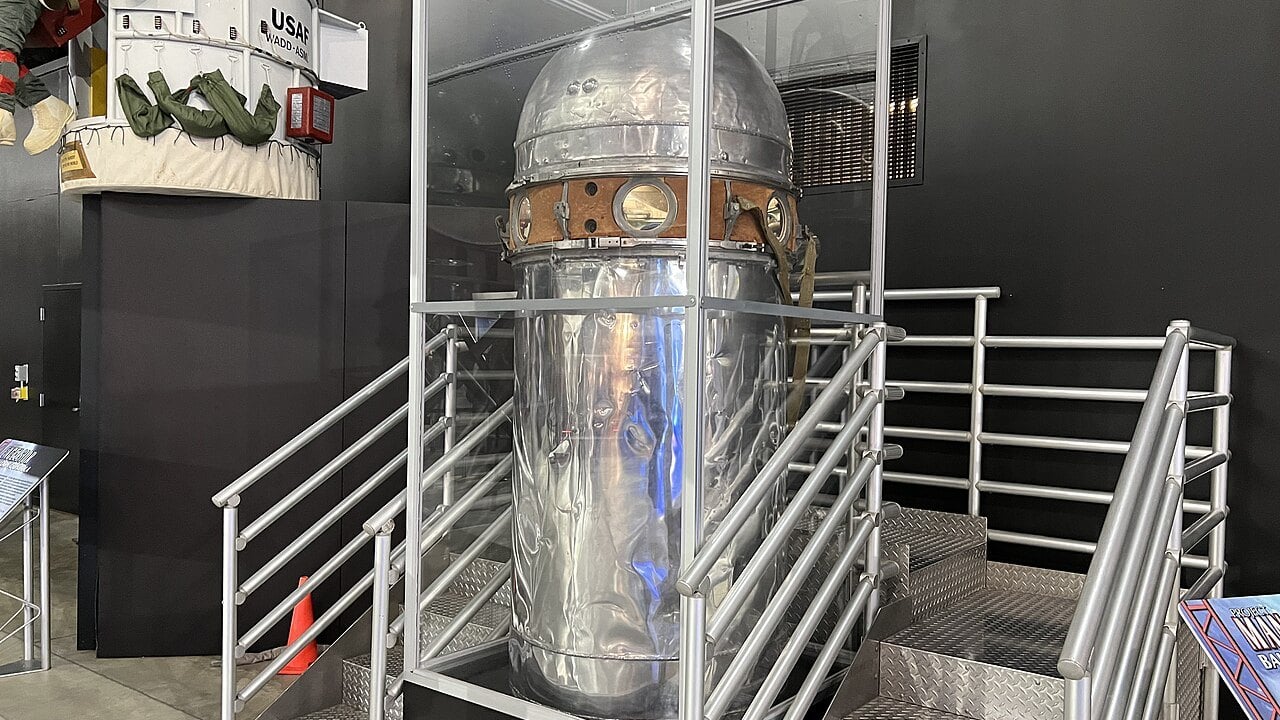
On 19 August 1957, a plastic balloon rose from a mine in Crosby, Minnesota, carrying a sealed aluminium capsule barely big enough for one man. Inside sat Major David G. Simons, a US Air Force physician. Before the flight was over he had reached 101,516 feet, higher than any balloonist had ever been.
Simons was not an astronaut. There were no astronauts yet; Sputnik would not fly until October. He was one of three Air Force aeronauts who took part in Project Manhigh, a series of stratospheric balloon flights in 1957 and 1958 that tested whether humans could live and work at the edge of space before any rocket could take them there.
Quick Facts
- Programme: Project Manhigh, US Air Force aeromedical balloon research
- Started: December 1955
- Manhigh I: Capt. Joseph Kittinger, 2 June 1957, about 96,800 ft
- Manhigh II: Maj. David Simons, 19-20 August 1957, 101,516 ft, 32 hours
- Manhigh III: Lt. Clifton McClure, 8 October 1958, about 98,100 ft
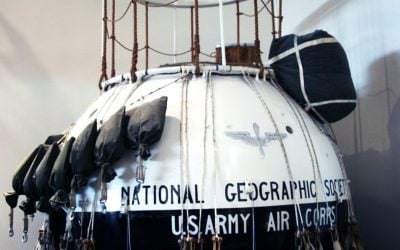
- Gondola: Pressurised aluminium alloy, built by Winzen Research
- Legacy: Candidate screening became the standard for selecting Mercury astronauts
- Today: Gondola displayed at the National Museum of the USAF, Dayton, Ohio
Medicine at 100,000 feet
Project Manhigh began in December 1955. Officially it was an aeromedical research programme, set up to study the effects of cosmic rays on humans, but its designers saw it as a stepping stone to space. It grew out of the high-altitude research of Colonel John Paul Stapp, the Air Force flight surgeon famous for riding rocket sleds to test the limits of human endurance.
The hardware came from Winzen Research, which built both the pressurised aluminium-alloy gondola and the huge polyethylene balloons. The gondolas were sealed, like early diving bells. Outside was near-vacuum, with temperatures as low as 90 degrees below zero; according to the Smithsonian, a loss of pressurisation would bring unconsciousness in about ten seconds and death in three minutes.
Balloons had one big advantage over rocket-powered aircraft like the X-15: they could stay at extreme altitude for hours, not minutes. That made them the only practical way in the 1950s to study what long exposure to the upper atmosphere did to a human being.
Kittinger goes first
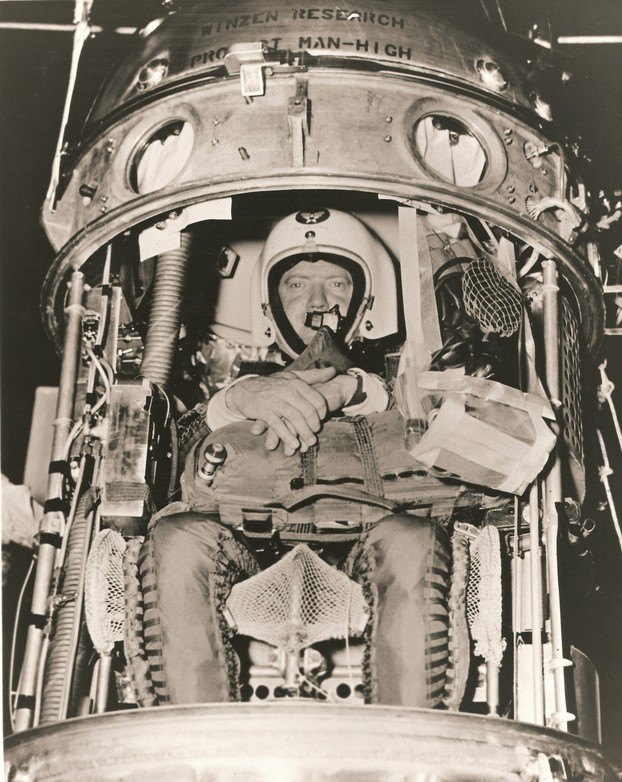
The first flight, Manhigh I, went up from South St. Paul, Minnesota, on 2 June 1957 with Captain Joseph W. Kittinger aboard. His balloon was 172 feet wide and held two million cubic feet of helium. Kittinger reached about 96,800 feet, a record at the time, but a problem with his oxygen supply forced the flight to be cut short.
Kittinger had been a fighter and test pilot before joining Stapp’s team at Holloman Air Force Base in New Mexico. Three years later, his balloon work would lead him to the open gondola of Project Excelsior and the most famous parachute jump of the era.
Project Manhigh, a segment from the PBS American Experience documentary “Space Men”.
Thirty-two hours in the stratosphere
Manhigh II was the big one. Simons lifted off from the Portsmouth Mine in Crosby on 19 August 1957, under a balloon that expanded at altitude to about 200 feet across with a volume of some three million cubic feet. With pilot and scientific payload, the gondola weighed 748 kg (1,649 lb).
He stayed aloft for 32 hours, working through a programme of 25 experiments and observations, and reached 101,516 feet. Along the way he became the first person to watch a sunset and a sunrise from the top of the atmosphere. Simons came home a celebrity, with his face on the cover of Life magazine.
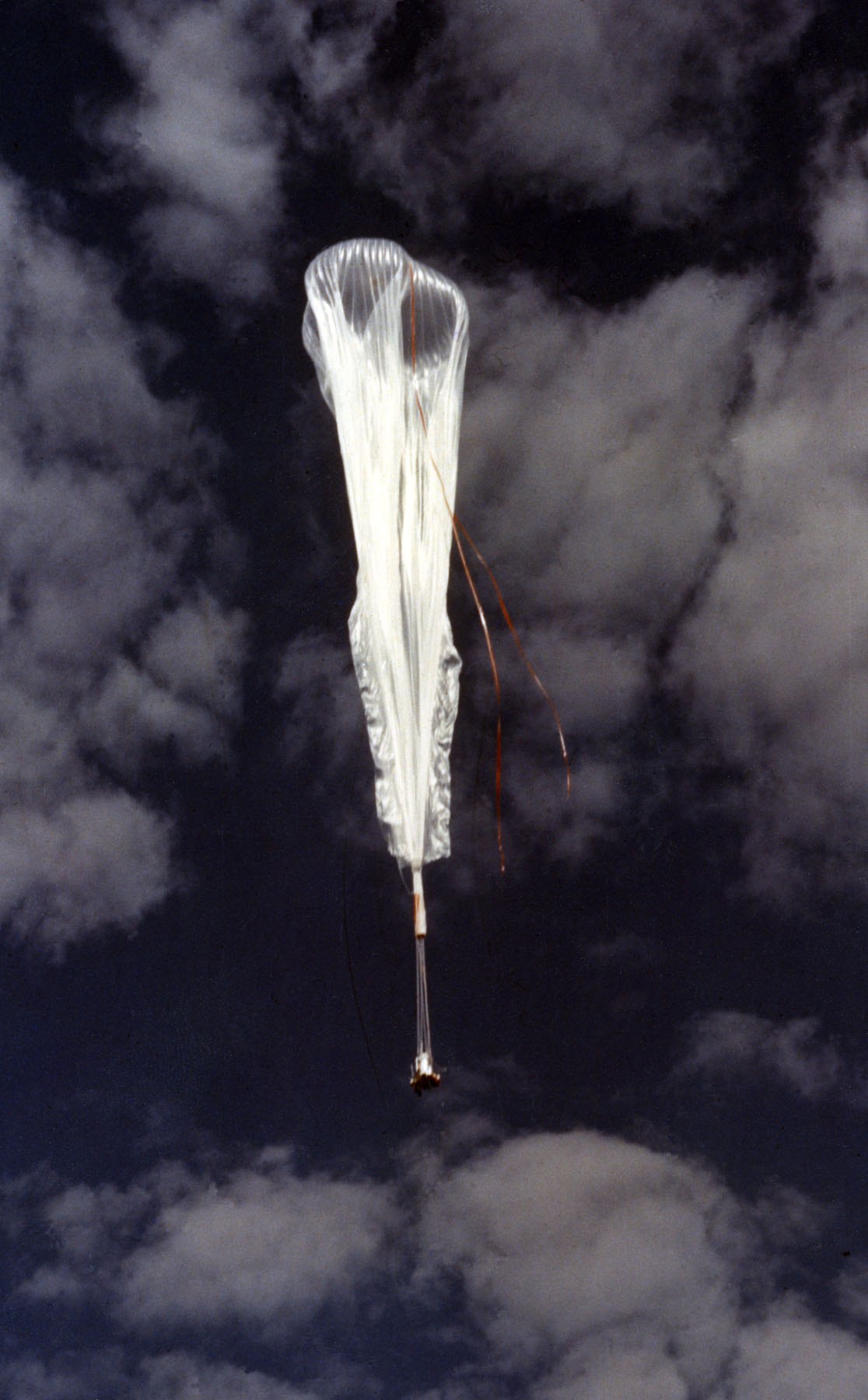
He was well chosen for the job. Shortly after joining the Air Force in 1947, Simons had served as project officer for animal studies on V-2 rocket flights. Manhigh II turned him from the doctor studying the subjects into the subject himself.
The last flight and the screening that outlived it
Manhigh III flew on 8 October 1958 over New Mexico, with Lieutenant Clifton M. McClure in the gondola. He reached about 98,100 feet. By then the space race was on, NASA had just been founded, and the questions Manhigh had been asking were about to become urgent.
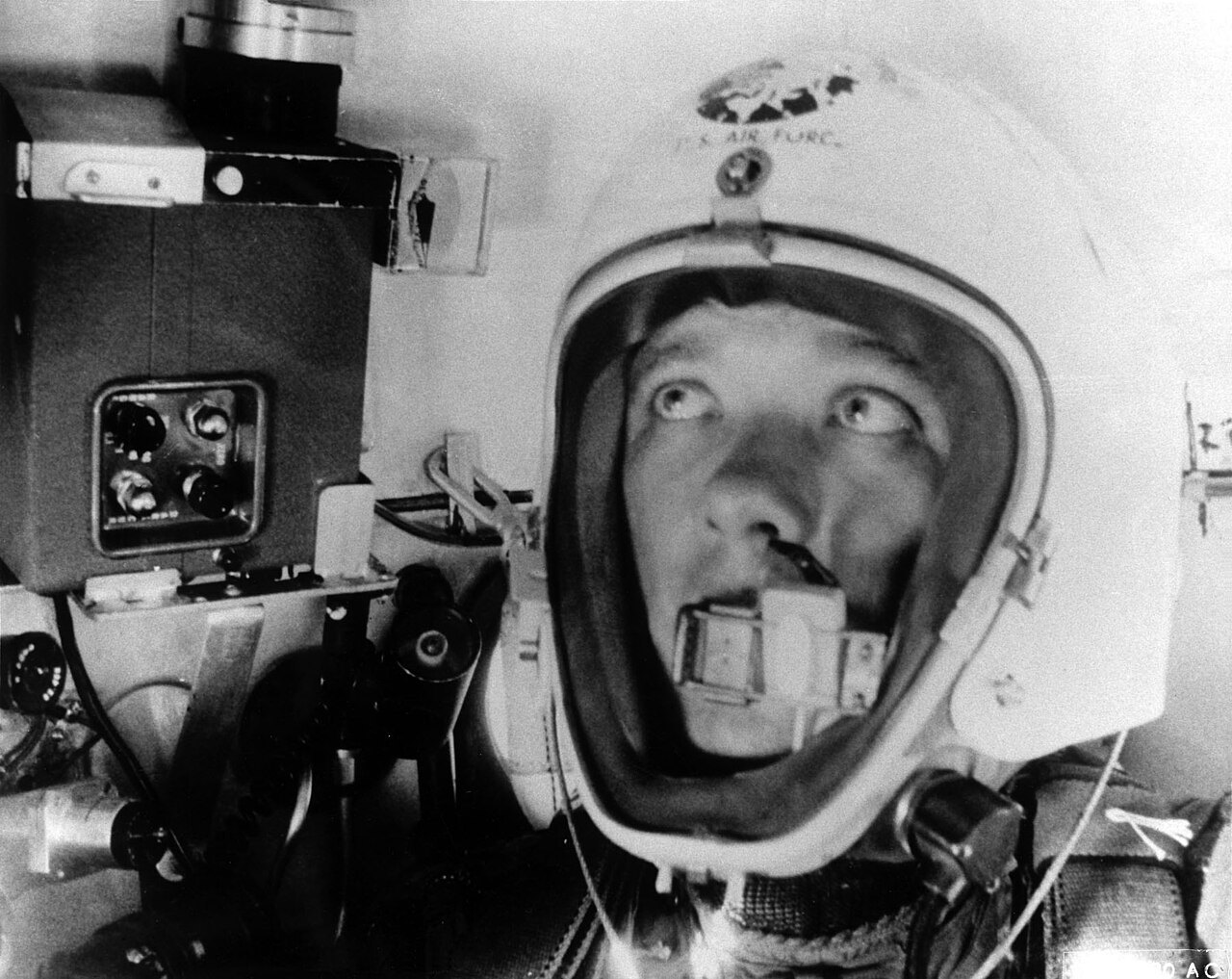
The answers were not only in the flight data. Every Manhigh candidate had to get through a battery of physical and psychological tests, because hours alone in a cramped sealed capsule risked claustrophobia. Those tests became the standard for selecting the Project Mercury astronauts, America’s first crewed spaceflight programme.
Manhigh’s successor, Project Excelsior, took the next step. On 16 August 1960, Kittinger stepped out of an open gondola at 102,800 feet and fell for more than four minutes before his parachute opened. Afterburner has told that story in The Man Who Jumped From the Edge of Space.
British Pathé newsreel “Nineteen Mile Up By Balloon” (1957), showing Major David Simons being prepared for Manhigh II at Crosby, Minnesota.
Forgotten pioneers
The gondola that flew all three Manhigh missions survives at the National Museum of the United States Air Force in Dayton, Ohio. It is an unremarkable-looking aluminium cylinder with a ring of portholes, but it carried men nearly 20 miles up years before Yuri Gagarin or Alan Shepard.
Simons died in April 2010 at the age of 87. Once Mercury and Gemini took over the headlines, the balloon aeronauts slipped into the background. Yet they were the first to prove that a human being could survive, think and work above 99 percent of the atmosphere, and to come back down to tell what it looked like.
Sources: Wikipedia (Project Manhigh), National Museum of the United States Air Force (Project Man High Gondola fact sheet), Smithsonian National Air and Space Museum (Air & Space Quarterly, “Space Jumper”, 2023), Air & Space Forces Magazine
0 Comments