
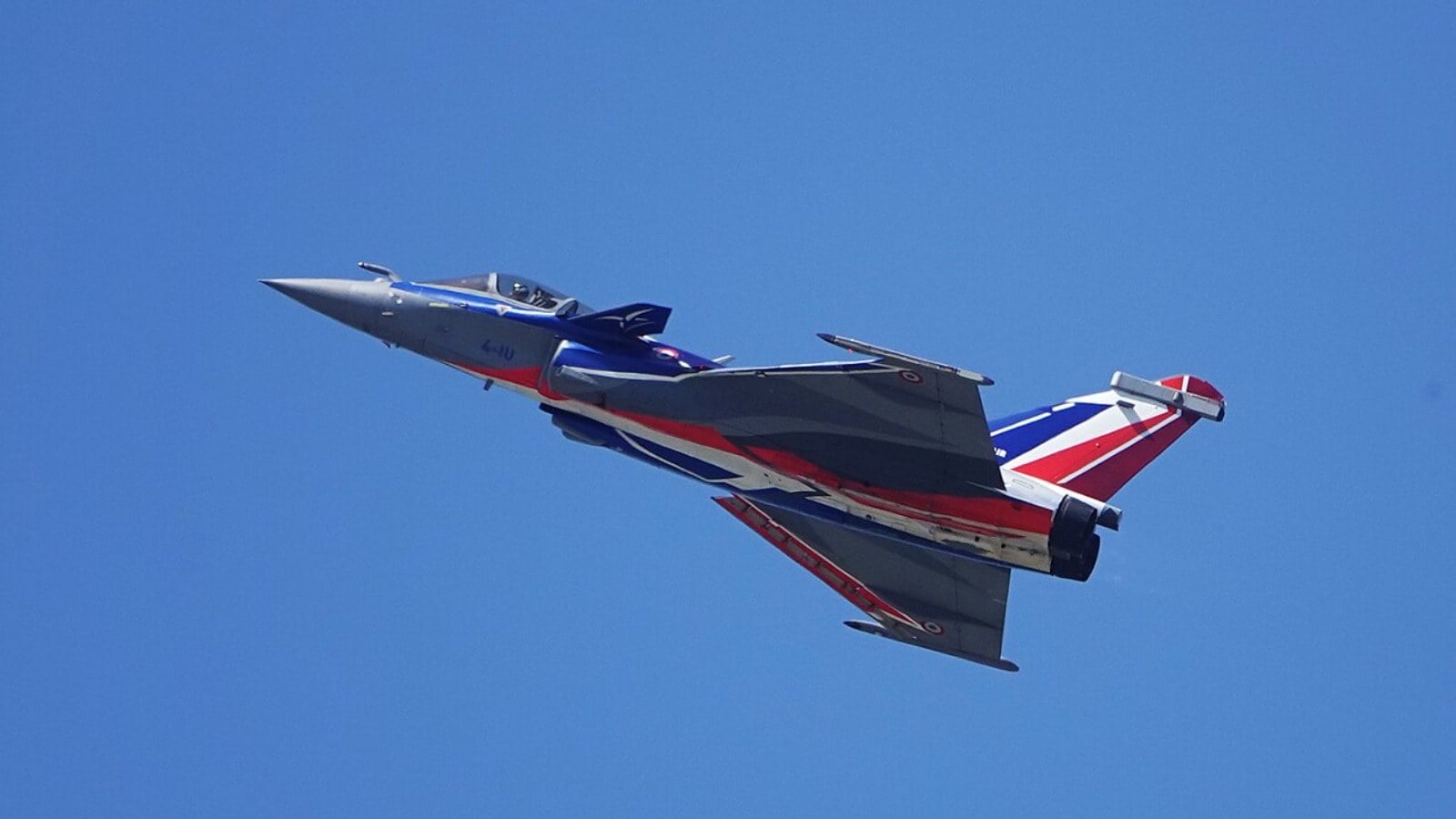
Abu Dhabi, Tuesday 20 October 2026. Between a tour of Edge Group factories and a round of energy deals, France and the United Arab Emirates signed an intergovernmental agreement on cooperation on the Rafale F5 standard — the next great leap of Dassault’s fighter. Six months ago, the same partnership was being written off in Paris as a divorce.
The financial terms were not disclosed. But the wording matters: according to The National, the deal covers cooperation on the Rafale F5 “within the French and Emirati Rafale programmes,” together with the technical and financial specifications for industrial cooperation on future combat aviation. Abu Dhabi, already the largest export customer of the Rafale F4, is stepping back into the room where the jet’s future is designed.
Emmanuel Macron, who toured Kuwait, the Emirates, Bahrain and Qatar from 19 to 21 October, put it in a single sentence at his closing press conference in Doha.
Quick Facts
Agreement: France–UAE intergovernmental agreement on Rafale F5 cooperation
Signed: 20 October 2026, Abu Dhabi, during Emmanuel Macron’s Gulf tour
Terms: Not disclosed; size of any Emirati funding share unconfirmed
F5 programme cost: About €5 billion (widely reported estimate)
Earlier UAE offer: Up to €3.5 billion, roughly 70% of the cost (talks stalled)
F5 qualification: Expected around 2033
UAE Rafale F4 order: 80 aircraft, signed December 2021; first deliveries due end of 2026
In plain English: an intergovernmental agreement, plus a package of accords, to give Paris and Abu Dhabi a common strategy on the “fifth generation” of the Rafale. Macron did not say how much the Emirates will pay, nor what they will be allowed to see.
What was actually signed in Abu Dhabi
The Rafale document was one strand of a dense day. In the presence of President Sheikh Mohamed bin Zayed and Macron, the UAE Minister of State for Defence Affairs, Mohamed bin Mubarak Al Mazrouei, and France’s Minister of the Armed Forces, Catherine Vautrin, exchanged a Strategic Defence Partnership Framework. France’s armaments chief Patrick Pailloux and Nasser Humaid Al Nuaimi of the Tawazun Council exchanged a separate agreement on defence-industrial arrangements, according to the Emirati coverage carried by Sharjah24.
A further French defence ministry agreement targets interoperability between the two armed forces, industrial resilience, artificial intelligence and space, The National reported. The two presidents then walked the floors of Edge Group companies at the Tawazun Industrial Park, a pointed reminder that the Emirates want factories and know-how, not just aircraft on a ramp.
What none of the published texts settles is the question that broke the talks in the first place. As Defence24 noted, the agreement does not yet establish whether the UAE will restore its previously discussed €3.5 billion contribution, or whether it gains access to the technologies Paris guards most jealously.
Associated Press: Macron meets UAE President Sheikh Mohamed bin Zayed in Abu Dhabi, 20 October 2026.
From divorce to Rafale F5 partnership
The story of the Rafale F5 and the Emirates is a very French romance: passion, money, and a quarrel over secrets. Paris had asked Abu Dhabi to fund around €3.5 billion of a programme estimated at roughly €5 billion, about 70% of the bill. In return, the Emiratis wanted access to the most sensitive technologies — advanced optronics above all. France said no.
Talks stalled, and by spring 2026 France was preparing to carry the Rafale F5 alone. In September the DGA, the French procurement agency, awarded the first development contracts, among them a preliminary design study to Safran for the M88 T-REX engine, which is meant to deliver around 20% more thrust.
Then the war with Iran changed the arithmetic. French forces helped defend the Emirates, and according to General Jérôme Bellanger, chief of staff of the French Air and Space Force, Rafales intercepted around 100 drones and missiles, as reported by Opex360. Few arguments for a fighter are as persuasive as watching it work over your own cities.
What the Rafale F5 brings
The F5 is not a facelift. The standard is built around the new RBE2-XG radar, upgraded electronic warfare, more resilient communications and the uprated M88 T-REX engine. It is designed to fight alongside a future unmanned combat aircraft, and to carry France’s next airborne nuclear weapon, the hypersonic ASN4G.
Qualification is expected around 2033, with export availability following a couple of years later. For a customer that has just ordered 80 jets, having a voice in that roadmap is worth far more than a seat in the audience when it is unveiled.
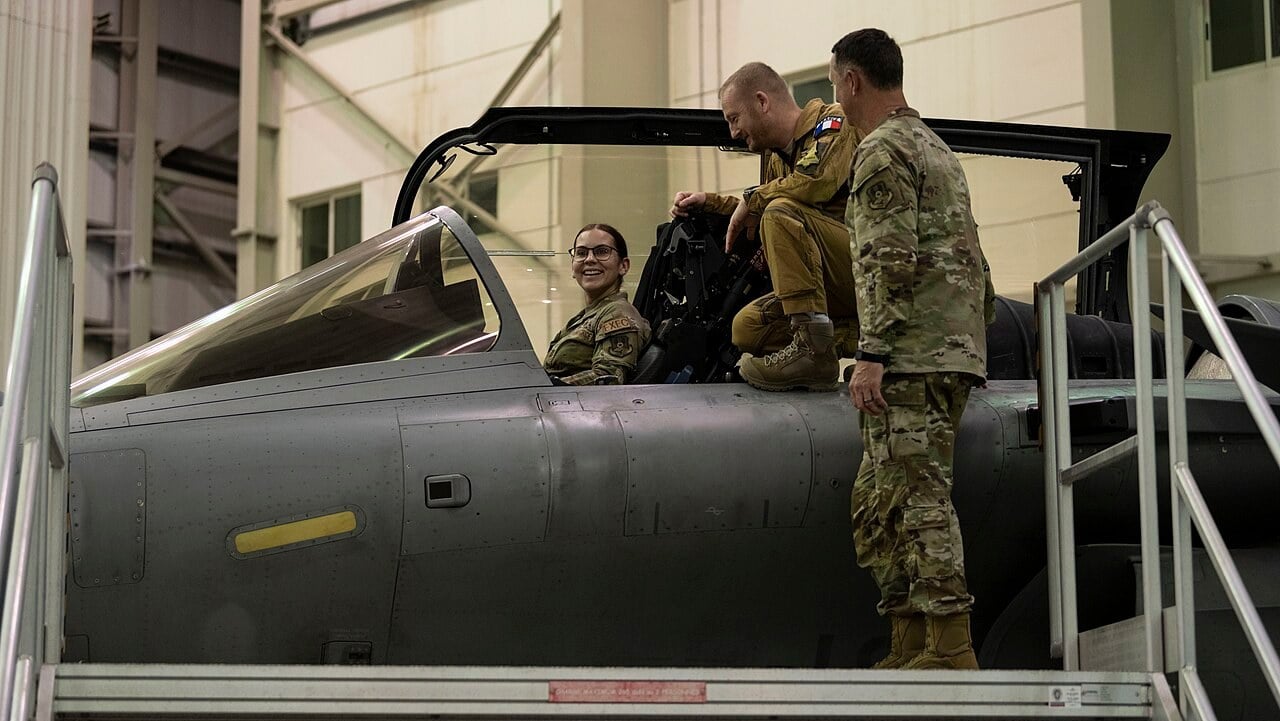
Eighty Rafale F4s, still on their way
The F5 agreement sits on top of the contract that made Emirati aviation history. In December 2021, Abu Dhabi signed for 80 Rafale F4s in a package of aircraft, weapons and support worth well over €16 billion, to replace its Mirage 2000-9 fleet.
Dassault presented the first Emirati Rafale on 29 January 2025; it stayed at the company’s flight test centre for trials. Dassault says the first deliveries to the UAE Air Force and Air Defence are scheduled for the end of 2026, so the first jets could arrive in the Gulf within weeks of the F5 signature.
Industry is moving in parallel. Edge launched EDGE Europe in Paris in June 2026, signed an industrial and technology cooperation framework with the DGA, and agreed with Safran Electronics & Defense to set up a joint venture on next-generation precision weapons.
Partner, or premium customer?
For Paris, the calculation is cold and elegant. A foreign co-funder lightens the load on France’s defence budget, and an Emirati stake makes the Rafale F5 a more attractive export proposition from day one. In Doha, Macron even hinted that Qatar’s air arm would be upgraded with a new generation of Rafale.
For Abu Dhabi, a partner’s title only means something if it buys influence over the requirements and, eventually, a share of the work. Whether the Emirates got that is exactly what the undisclosed annexes will reveal.
Either way, the most coveted fighter programme in Europe now has two capitals at its table instead of one. Divorce, it turns out, was only a long separation.
Sources: Élysée, The National, Defence24, Opex360 (Zone Militaire), Sharjah24 / WAM, Dassault Aviation, Shephard, Aviation Week, Indomiliter, Associated Press
0 Comments