
On 14 October 2026, SWISS flew its Airbus A340 HB-JMB for the last time: one hour from Zurich to Twente in the Netherlands, where it will be taken apart. It is one of hundreds of airliners that reach the end of their lives every year. Most passengers never think about where they go.
The short answer is: into pieces, very carefully. A retired airliner is worth far more as a collection of certified spare parts than as a whole aircraft nobody wants to fly. Here is what actually happens between the last landing and the last load of scrap metal.
Quick Facts
- Aircraft dismantled per year: Roughly 400–450, according to industry figures cited by Wikipedia
- Recyclable share: Up to 85% of an aircraft’s weight can be recycled or reused (Airbus PAMELA project)
- Parts value: About $1–3 million per aircraft, most of it in the engines
- Three steps: Decommissioning, disassembly, dismantling
- Industry body: Aircraft Fleet Recycling Association (AFRA), founded 2006
- Why deserts: Dry air slows corrosion, so stored aircraft keep their value
Step One: Storage, or the End of the Line
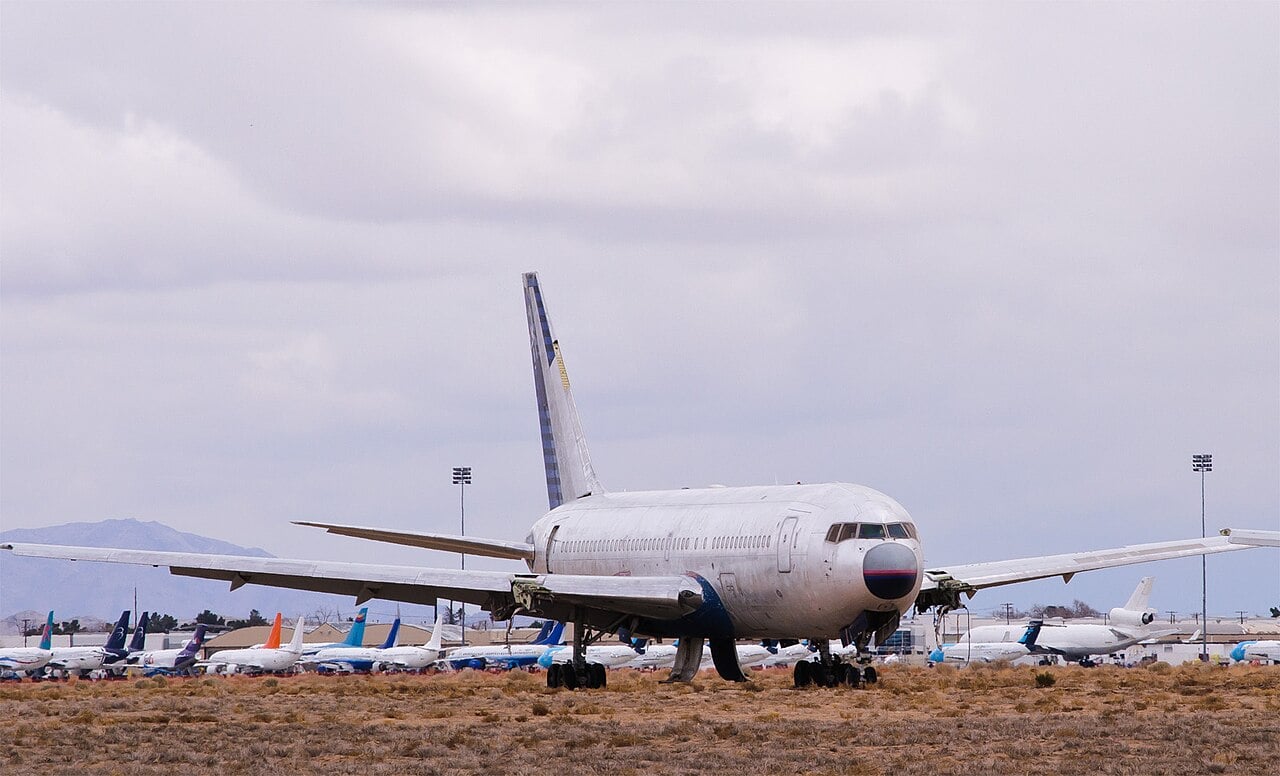
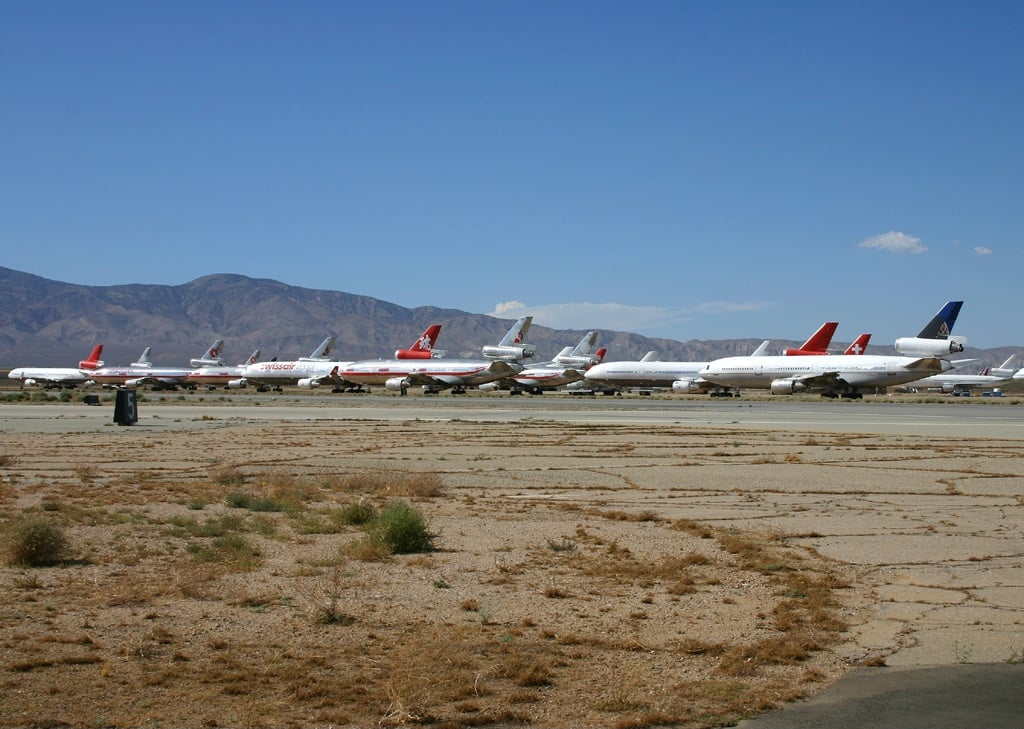
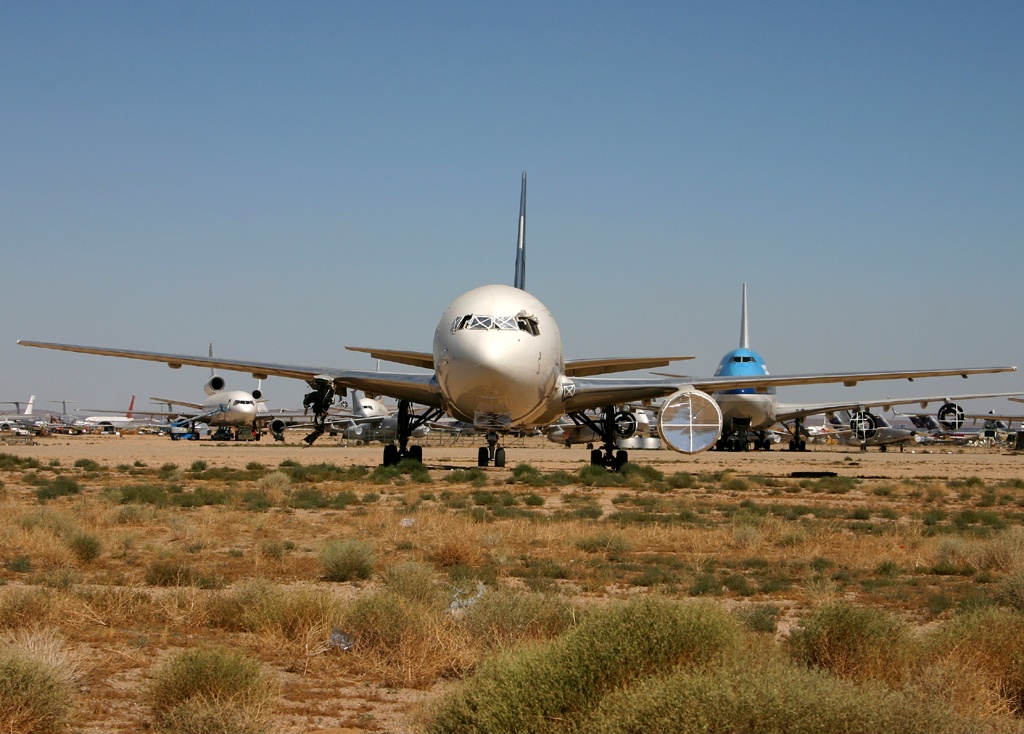
Not every retired aircraft is scrapped straight away. Many first go into storage, often in deserts such as California’s Mojave, where dry air slows corrosion and the hard ground needs no paving. Engines are covered, fuel is drained, the airframe is washed and protected, and the aircraft waits while its owner decides whether it will fly again, be sold or be broken up.
Bringing a stored airliner back is possible. According to Wikipedia, reactivating a narrowbody from long-term storage takes roughly 40 hours of work, a widebody roughly 100. But for an older four-engined jet like the A340, the market has spoken. Airlines want twin-engined aircraft that burn less fuel, so the value lies in the parts.
Step Two: Parting Out
The second step is disassembly, known in the trade as “parting out”. Technicians remove everything that can be reused: engines, landing gear, auxiliary power units, avionics, flight controls, galleys, seats and countless smaller components. Each part is inspected and recertified, and its paperwork is checked, because a part without a traceable history may be worthless.
This is where the money is. Industry estimates put the parts value of a typical retired airliner at between $1 million and $3 million, and close to 80% of that comes from the engines. A landing gear set can sell for more than $1 million. AELS, the company now dismantling HB-JMB at Twente, describes its business as buying end-of-life aircraft, taking them apart and selling the parts with full traceability.
That is also why SWISS sent its own technicians to Twente first. Some components from HB-JMB remain the airline’s property and will be removed before AELS begins its work. For an airline that still flies three A340s, a stock of parts from a retired sister ship can keep the others flying.
What happens to old airliners after their last flight, explained by VISION.
Step Three: Dismantling and Recycling
What remains after parting out is a hollow shell. In the final step, dismantling, the airframe is cut into sections, non-recyclable materials are removed, and the metal is sorted by alloy before it is melted down. Airbus’s PAMELA project, launched in 2005 with an old A300 at Tarbes in France, showed that up to 85% of an aircraft’s weight can be recycled or reused.
The Aircraft Fleet Recycling Association, founded in 2006, sets standards for this work and accredits companies that follow them. Writing in ICAO’s 2016 Environmental Report, one of its representatives explained how much of an aircraft goes straight back into service as parts:
A television report on aircraft disassembly, dismantling and recycling by Channels Television.
The Carbon Fibre Problem
Older aircraft such as the A340 are mostly aluminium, which is easy to recycle. Newer types like the 787 and A350 are largely made of carbon fibre composites, and those are much harder. Composites are difficult to sort, especially when metal is mixed in, and recycled fibre is usually turned into low-value filler rather than new aircraft parts.
So the industry faces a growing challenge. By 2040, more than 13,000 aircraft, around 44% of today’s fleet, are expected to retire. The next generation of airliners will be lighter and more efficient in the air, but harder to recycle at the end of their lives.
How gigantic aircraft are scrapped and recycled, by FRAME.
Sources: Wikipedia (Aircraft recycling; Aircraft boneyard); ICAO Environmental Report 2016; AELS; aeroTELEGRAPH



0 Comments