
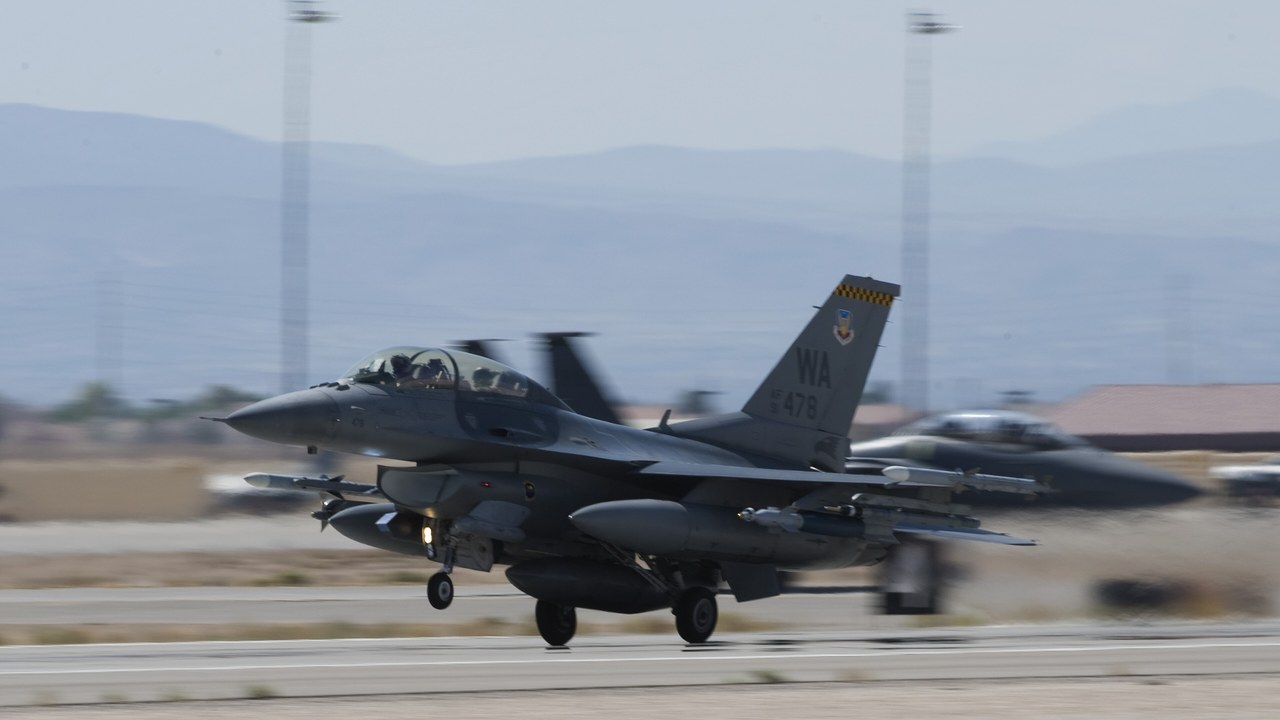
Listen to a fighter pilot reading back a heading or a squawk code and you will hear something odd: "two-seven-niner", "tree", "fife". It sounds like a quirk of military slang. It is not. Those pronunciations are written into the international standard for aviation radio, and they exist for one reason: on a noisy, crackling frequency, a number that is misheard can put an aircraft at the wrong altitude or on the wrong heading.
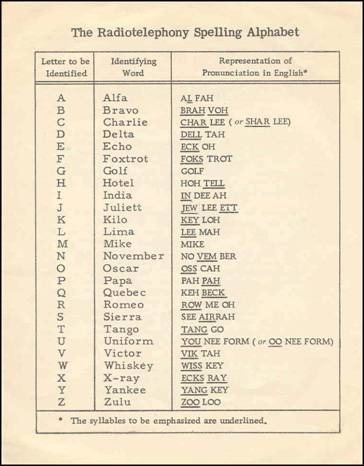
The same logic gave aviation its spelling alphabet, Alfa, Bravo, Charlie and the rest. Its official name is the International Radiotelephony Spelling Alphabet. Most people call it the NATO phonetic alphabet, but it was actually developed for civil aviation by the International Civil Aviation Organization (ICAO), and it took years of testing to get right.
Quick Facts
- Official name: International Radiotelephony Spelling Alphabet
- Developed by: ICAO, defined in 1955–1956
- In force: since 1 March 1956, unchanged since
- Special numbers: 3 = tree, 4 = fower, 5 = fife, 9 = niner
- Odd spellings: Alfa and Juliett, so non-English speakers pronounce them correctly
- Its predecessor: the wartime US-UK "Able Baker" alphabet
- Example: "DH98" is read as "Delta-Hotel-Niner-Eight"
Why "Niner"?
ICAO, NATO and the US Federal Aviation Administration all modify four English digits on the radio. Three becomes tree, four becomes fower, rhyming with lower, five becomes fife, and nine becomes niner. Each change fixes a specific way the word can go wrong:
- Tree: so that three is not mispronounced as "sri" by speakers who struggle with the "th" sound. For the same reason, thousand is spoken as "tousand".
- Fower: the long, old-fashioned pronunciation keeps it distinct from "for".
- Fife: the normal "v" sound in five is easily confused with "fire", a word nobody wants misheard on a military radio.
- Niner: the extra syllable keeps nine distinct from the German word nein, "no".
The German explanation for niner is the one Wikipedia gives in its history of the alphabet. On a frequency shared by crews from many countries, a short "nine" in the middle of an instruction could be confused with a "no".
These versions have not always been the standard. Before 1956, three and five were spoken with their normal English consonants, but with the vowel stretched into two syllables. The current forms arrived with the alphabet itself.
From "Able Baker" to "Alfa Bravo"
Spelling alphabets are older than aviation radio. Telephone companies used them on bad long-distance lines, and the first internationally recognised civil version was adopted in 1927, then revised in 1932. That version was used in civil aviation until the Second World War.
The war changed everything. In 1941, the US adopted the Joint Army/Navy alphabet, known as "Able Baker" after its words for A and B. The Royal Air Force had a similar one. In 1943, the US and UK merged them so their forces could talk to each other. Harvard's Psycho-Acoustic Laboratory was even asked to test which words worked best "in the intense noise encountered in modern warfare", and found that many words in the military lists were hard to understand.
After the war, ICAO adopted Able Baker for international aviation in 1946. The trouble was that it was built on English sounds. Latin America used its own "Ana Brazil" alphabet, and the airline association IATA pushed for words that worked in English, French, Spanish and Portuguese alike.
Getting It Right Took Two Attempts
In 1948 and 1949, linguist Jean-Paul Vinay of the Université de Montréal worked with ICAO on a new alphabet. ICAO set strict rules: every word had to be a real word in English, French and Spanish, start with the right letter, be clear on the radio, and avoid any objectionable meaning.
The new alphabet came into force for civil aviation on 1 April 1952, and problems appeared almost at once. Delta was confused with Extra, Nectar with Victor, and some words were hard to understand in poor conditions. Some users went back to Able Baker.
So ICAO started again. Tests were run with speakers from 31 nations, led mainly by the UK and the US. In the end, only five words changed: those for C, M, N, U and X. Coca became Charlie, Metro became Mike, and Extra became X-ray. ICAO implemented the final version on 1 March 1956, NATO adopted it the same day, and the code words have not changed since. A NATO memo from 1955 explains why nobody has tinkered with them.
Alfa, Juliett and Other Odd Spellings
Two of the code words are deliberately misspelled by English standards. Alfa is written with an "f" because a speaker who does not know that "ph" sounds like "f" might mispronounce Alpha. Juliett has a double "t" because French speakers might otherwise treat a single final "t" as silent.
Today the alphabet is used far beyond aviation, by ships, armies, radio amateurs, retailers on the phone and IT help desks. But aviation is where it matters most. In a busy control tower, like the one at Aviano Air Base in Italy, a controller passes headings, altitudes and frequencies all day long, and each one is read back by a pilot.
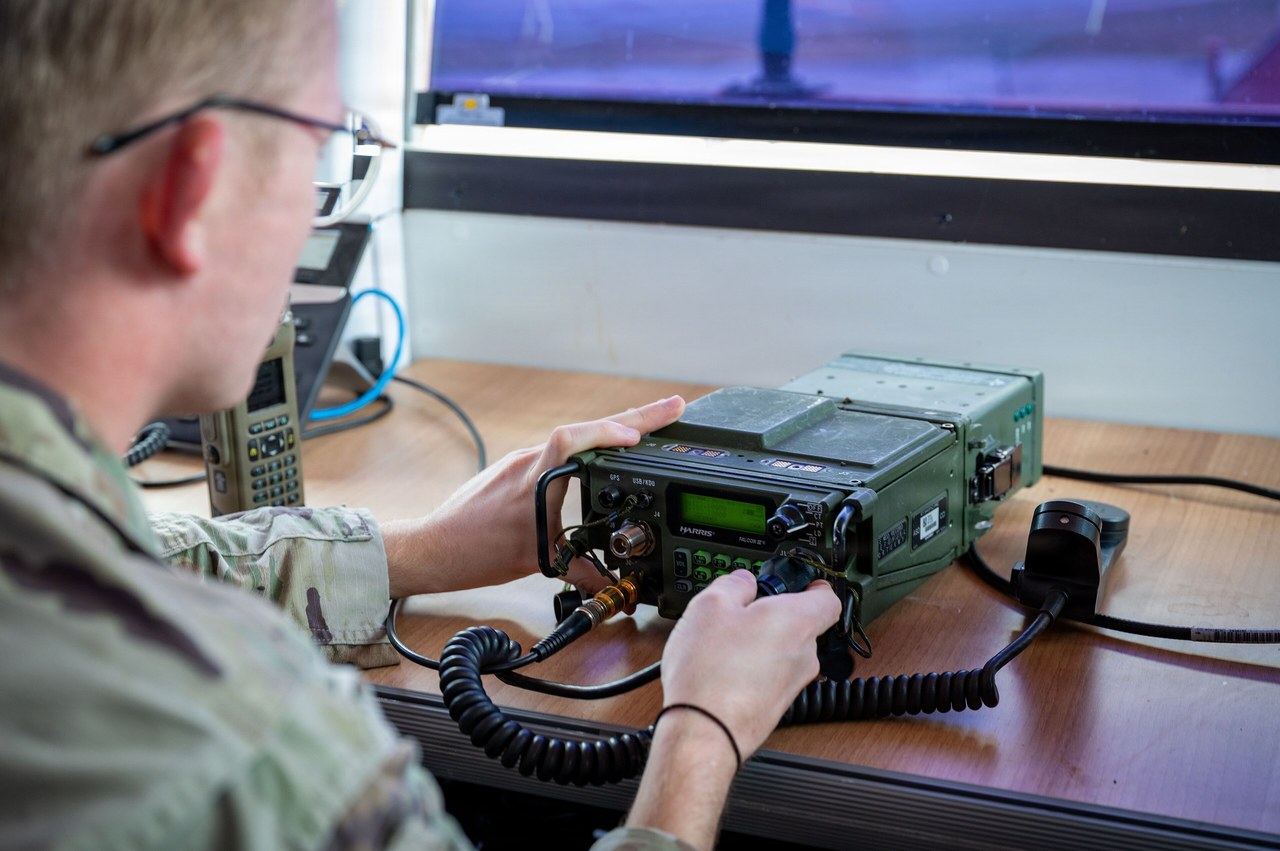
That readback is the whole point. When a controller says "climb flight level two-niner-zero" and the pilot repeats it, both sides know the number is right. A misheard "five" or "nine" is caught on the radio, not discovered when two aircraft meet at the same altitude.
Captain Joe explains the history of the pilot's alphabet in the video below.
Sources: Wikipedia (NATO phonetic alphabet), citing ICAO, NATO and ITU documents and the US Federal Aviation Administration; ICAO 1955 Radiotelephony Spelling Alphabet pamphlet via Wikimedia Commons; US Air Force photo caption (Aviano Air Base, August 2026); Captain Joe, "Pilot's alphabet history explained"
0 Comments