

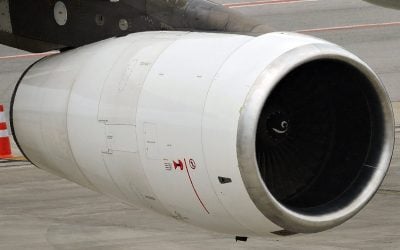
There is a particular kind of corporate embarrassment that can only be photographed from an airport perimeter fence. At Bydgoszcz in northern Poland, a handful of nearly new Airbus A321XLRs are parked up with holes where their engines used to be.
The engines have not been sent for repair. They have been bolted onto ordinary Wizz Air A321neos and sent back to work flying two-hour sectors around Europe. The airframes built to cross oceans are sitting on a Polish apron acting as a spare parts shelf.
It is the neatest possible summary of how completely Wizz Air’s long-haul ambition has collapsed. Bloomberg reported the engine removals, and aeroTELEGRAPH picked the story up on 11 September 2026.
Quick Facts
Airline: Wizz Air, the Hungarian ultra-low-cost carrier; the XLRs sit on its Malta operating certificate
What happened: Pratt & Whitney geared turbofans removed from A321XLRs stored at Bydgoszcz, Poland, and fitted to regular A321neos. Bloomberg put the number at three; some other accounts say two
Where the fleet is: three stored at Bydgoszcz, two at Katowice after being pulled off London Gatwick, one on the ground in Milan with damage but still carried as in service, and three actually flying European short-haul
Fleet size: nine A321XLR delivered, two more on order, eleven planned in total
Original plan: 47 aircraft
What changed: 36 XLR orders were converted to standard A321neos after Wizz Air Abu Dhabi ceased operations on 1 September 2025
The aircraft: the A321XLR can fly up to 4,700 nautical miles, roughly 8,700 km, and is designed for sectors of up to about eleven hours
Longest routes Wizz actually flew with it: around seven hours, London Gatwick to Jeddah and Medina — both since dropped
Forty-seven aircraft, then eleven
Wizz Air once ordered 47 A321XLRs. It was, at the time, one of the boldest bets any low-cost carrier had made on the idea that a single-aisle aeroplane could open up genuinely long routes without the cost base of a widebody.
The plan had a hub attached to it. Wizz Air Abu Dhabi, a joint venture with the sovereign wealth fund ADQ, was supposed to be the springboard: XLRs pushing east into India and Pakistan, and west into Europe, from a Gulf base.
That venture stopped flying on 1 September 2025. Chief executive József Váradi called the decision tough but necessary, and pointed at a combination of engine reliability, geopolitics and regulatory friction. He also said something more revealing about where the airline wanted to be instead.
Without Abu Dhabi, the XLR had no obvious job. Wizz converted 36 of the orders into ordinary A321neos and kept eleven of the long-range jets.
The engine problem underneath the strategy problem
The engine swaps are not really about the XLR at all. They are about the Pratt & Whitney geared turbofan, and the inspection and overhaul programme that has kept large numbers of A320neo-family aircraft on the ground across the industry for years.
When shop visits take many months and spare engines are scarce, an airline does brutal arithmetic. An engine hanging on a stored aircraft earns nothing. The same engine on a jet flying six sectors a day earns money. If you have airframes you cannot usefully employ, they become the donor.
Seen that way, stripping the XLRs is not a panic move. It is the coldly rational thing to do with an asset you have decided you do not need — which is itself the story.

Seven-hour flights, briefly
For a while Wizz did try. It based XLRs at London Gatwick and ran roughly seven-hour services to Jeddah and Medina, serving the pilgrimage market. Those routes have since gone, and the two Gatwick aircraft are now sitting at Katowice awaiting redeployment on short-haul.
Chief commercial officer Ian Malin was blunt about the logic when he spoke at Routes Europe.
So the surviving eleven will be flown, in Wizz’s own description, essentially as though they were standard A321neos, with the extra range used only when an opportunity or an operational need happens to call for it.
What it costs to carry range you never use
An XLR is not a free upgrade over a neo. It carries a permanent rear centre tank, a strengthened undercarriage and a higher maximum take-off weight, and all of that is structure and mass you haul around on every sector whether you need the range or not.
On a flight from Budapest to Milan, the extra capability is pure penalty: a heavier aeroplane burning more fuel to do a job a standard A321neo does better. Wizz has ended up owning eleven aircraft that are slightly worse at the flying it actually intends to do.
None of which is a verdict on the aeroplane. Iberia and Aer Lingus are flying XLRs across the Atlantic, and United has built a whole European network plan around the type. The XLR works. It simply requires an airline that wants to fly long routes, and Wizz Air, for now, has decided it does not.
Why the A321XLR is both a remarkable aircraft and an awkward one to place in a fleet.
Sources: Bloomberg, aeroTELEGRAPH, Aviation Week, FlightGlobal, CAPA Centre for Aviation, Simple Flying, Airbus, Wizz Air corporate statements.


0 Comments