
The two-seater that Germany learned to fear — once its crews stopped flying it like one.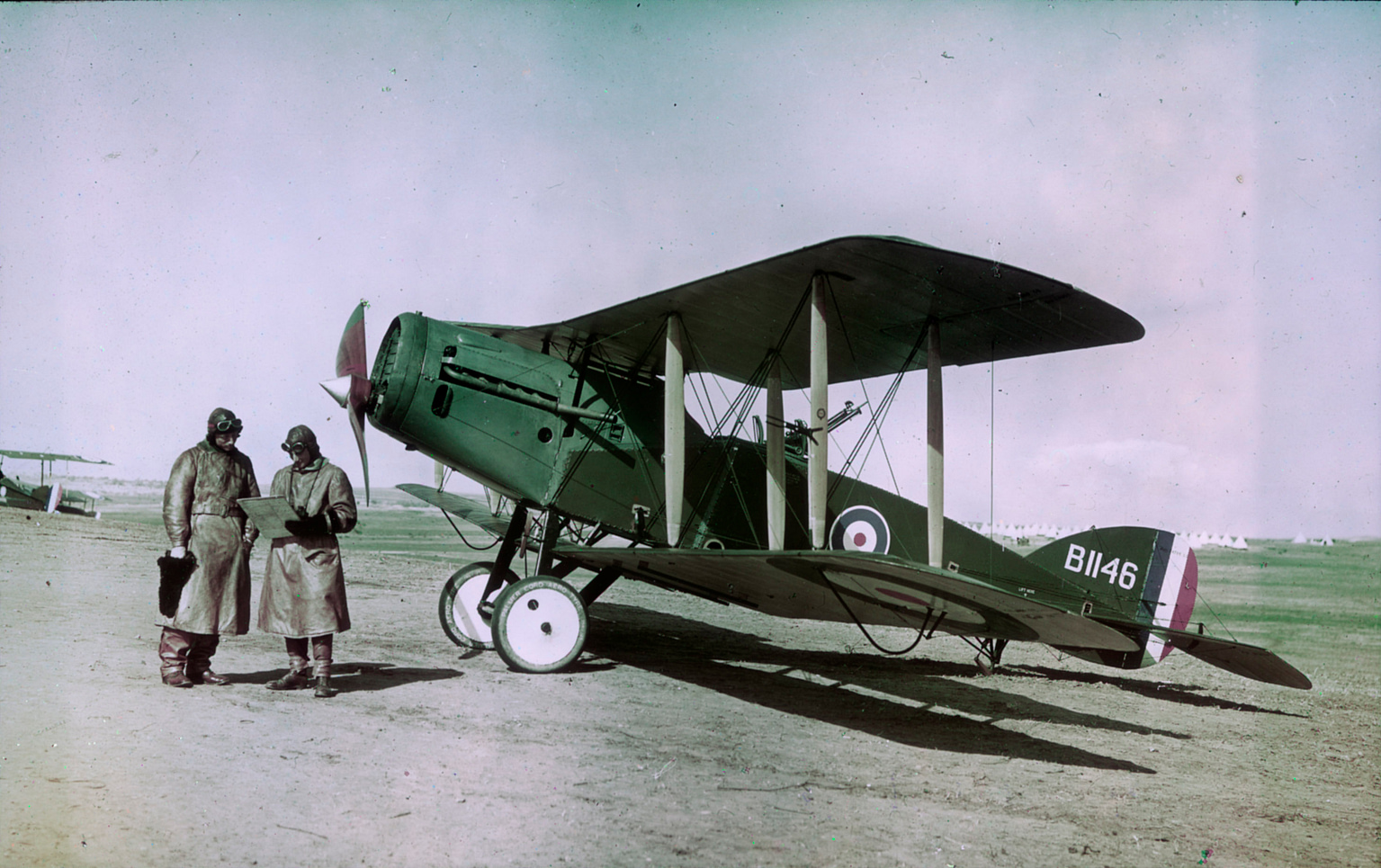
Bristol F.2 Fighter
“Brisfit” · “Biff”
EraFirst World War · 1917
引擎Rolls-Royce Falcon III V12 (~275 hp)
Origin英国
StatusRetired from RAF c.1932 · one airworthy
Can you fly a Bristol Fighter today?
The Bristol F.2 Fighter: the two-seater that had to be flown like a single-seat scout
By the middle of the First World War the two-seat aeroplane had a reputation problem. Machines like the B.E.2 were steady camera platforms and gentle to fly, but in a dogfight they were slow, poorly armed and desperately vulnerable — the German scouts of 1916 treated them, in the bitter phrase of the day, as “cold meat”. When the Bristol Aeroplane Company’s young chief designer Frank Barnwell set out to design a replacement, he did something unusual: he built a two-seater with the performance and the punch of a fighter.
The result, the Bristol F.2 Fighter, first flew in September 1916. Its heart was the Rolls-Royce Falcon, a compact and beautifully made V12 that in its definitive Falcon III form gave about 275 horsepower — enough to push a strong, two-bay biplane along at roughly 198 km/h and up to some 5,500 metres. Barnwell hung the fuselage between the wings rather than resting it on the lower wing, giving both crew members a superb field of view. The armament told the story of his intent: a single fixed Vickers machine gun firing forward through the propeller for the pilot, and one or two Lewis guns on a Scarff ring for the observer to cover the tail. This was not a reconnaissance machine that could defend itself. It was a fighter with a second pair of eyes and a second gun.
Almost nobody understood that at first — and the misunderstanding was very nearly fatal. When No. 48 Squadron took the new “Bristols” into action over Arras in April 1917, at the height of the slaughter the Royal Flying Corps would remember as “Bloody April”, the crews flew them the way two-seaters had always been flown: defensively, formating tightly, trusting the observer’s gun to keep the enemy at bay. On 5 April a patrol led by William Leefe Robinson — already a national hero and Victoria Cross winner for shooting down an airship over England — ran into the Albatros scouts of Manfred von Richthofen’s Jasta 11. Four of the six Bristols were shot down; Leefe Robinson himself was forced down and captured. It looked like a humiliating failure.
It was, in fact, the wrong lesson learned the hard way. Pilots quickly discovered that the F.2B was strong, fast and manoeuvrable enough to be flown like a single-seat scout: point the nose and the fixed Vickers at the enemy, fight aggressively, throw the aeroplane around — and let the observer guard the blind spot behind. Flown that way, the Bristol Fighter turned from “cold meat” into one of the most feared fighting aircraft of the war, a machine German pilots learned to leave alone. It was so good that the RAF kept it in front-line service for well over a decade after the Armistice.
Tough, versatile and honest, the “Brisfit” went on to soldier through the 1920s as the RAF’s standard army-cooperation aircraft, policing the frontiers of an empire from Iraq to India, and it was exported around the world. More than five thousand were built. Few designs of the First World War aged so well, and only one still flies today.
01The Bristol Fighter’s design brief: why Frank Barnwell built a two-seater to fight
Frank Barnwell had already given Bristol the pretty little Scout, and when he began work on what became the F.2 he was thinking about a replacement for the vulnerable reconnaissance two-seaters then in service. His first sketches, the R.2A and R.2B, imagined an Army Co-operation machine around a smaller engine. The arrival of the Rolls-Royce Falcon changed everything: with roughly 275 hp available in the mature Falcon III, Barnwell could give a two-seater genuine fighter performance. He redesigned the aircraft around the big V12, mounted the fuselage on struts in the interplane gap for visibility, and gave it the fixed forward Vickers of a scout as well as the observer’s Lewis gun. The prototype flew on 9 September 1916. The initial production F.2A reached France in the spring of 1917; the refined F.2B, with a modified lower centre-section, better view and small aerodynamic tweaks, became the definitive version and the one built in the greatest numbers.
What made the Bristol F.2 Fighter work: strength, a great engine and a fixed front gun
A fighter’s engine in a two-seater
The water-cooled Rolls-Royce Falcon V12 — about 275 hp in the Falcon III — gave the F.2B the speed, climb and reserve of power a scout needed. It was the single most important reason the design succeeded, and the reason a shortage of Falcons became the programme’s biggest headache.
Two guns, two jobs
A fixed, synchronised Vickers gun let the pilot fight head-on like a single-seater, while one or two Lewis guns on the observer’s Scarff ring covered the tail. Handled aggressively, the combination gave the aeroplane a lethal “sting in the tail” that caught many attackers by surprise.
Built to take punishment
The wire-braced, fabric-covered wooden airframe with its fuselage slung in the wing gap was famously strong and forgiving. It could be thrown around in combat, absorb battle damage, operate from rough forward strips and, later, endure years of hard colonial service — the durability that kept it in RAF use into the 1930s.
02The Rolls-Royce Falcon: the engine that made the Bristol Fighter — and the shortage that limited it
The Falcon was a smaller sibling of the famous Rolls-Royce Eagle, a liquid-cooled V12 of about 867 cubic inches. In its Falcon III form it produced around 275 hp and it was, by the standards of 1917, superbly reliable and smooth. The problem was that Rolls-Royce built engines to jeweller’s standards and could not build them fast enough. Falcon production never kept pace with airframe production, and that single bottleneck shaped the whole programme: it forced the Air Board to fit alternative engines to many airframes, and those alternatives — described below — were consistently disappointing. Contemporary and later historians are consistent on the point: a Falcon-engined Bristol Fighter was a first-class combat aircraft, and the shortage of Falcons, not any flaw in the design, was what held the type back.
03The engine that nearly ruined it: the Sunbeam Arab and Hispano-Suiza alternatives
When Falcons ran short, airframes were completed with the Sunbeam Arab (nominally around 200 hp) or the Hispano-Suiza. Both were less powerful than the Falcon, and the Arab in particular was plagued by vibration and reliability troubles that were never fully cured. Aircraft so fitted were noticeably inferior — slower, less pleasant and less trusted — and they coloured some early opinions of the type unfairly. The lesson every source draws is the same, and it is worth stating plainly: judge the Bristol Fighter by its Falcon-engined form. That was the aeroplane the German scouts learned to respect; the under-powered, wrong-engined examples were a wartime expedient forced by industrial shortage, not the design as intended.
04How pilots learned to fly the Bristol Fighter: from defensive two-seater to aggressive scout
The tactical revelation of 1917 is the single most important thing to understand about the Bristol Fighter. The early crews, following two-seater doctrine, flew defensively and let the observer do the fighting — and were slaughtered. The survivors and the squadrons that followed learned to treat the F.2B as a single-seat fighter that happened to have a rear gun: attack with the fixed forward Vickers, manoeuvre hard, use the aircraft’s strength and speed, and rely on the observer only to protect the tail. Flown this way the Bristol Fighter was devastating. The change was not to the aeroplane but to the men flying it, and it turned a near-failure into one of the outstanding combat aircraft of the war — a reminder that a weapon is only as good as the doctrine behind it.
Bristol F.2B Fighter specifications: engine, performance and armament
Airframe & Performance
- 全体人员
- 2 — pilot and observer/gunner
- 长度
- ~7.87 m (25 ft 10 in)
- 翼展
- ~11.96 m (39 ft 3 in)
- 高度
- ~2.97 m (9 ft 9 in)
- 空重
- ~975 kg (~2,150 lb)
- Loaded weight
- ~1,290 kg (~2,850 lb)
- Max speed
- ~198 km/h (123 mph) at low level*
- 设备天花板
- ~5,500 m (~18,000 ft)*
- Endurance
- ~3 hours
Propulsion & Production
- Engine (main)
- 1 × Rolls-Royce Falcon III V12
- Power
- ~275 hp (Falcon III); Falcon I/II lower
- Alternative engines
- Sunbeam Arab, Hispano-Suiza (less satisfactory)
- 武器
- 1 × fixed .303 Vickers + 1–2 × .303 Lewis (Scarff ring)
- First flight
- 9 September 1916
- Built
- ~5,300+ (sources vary; production ran on post-war)*
- 制造商
- Bristol Aeroplane Co. and sub-contractors
- Unit cost
- Not reliably recorded (WWI)
- Cost per flight hour
- ~$3,000–$5,000 (modern warbird est.)*
*Figures marked with an asterisk are contested or approximate. Performance varied considerably with engine fit and altitude; the quoted speed and ceiling are for the Falcon III. Production totals are commonly given from about 5,300 upward and continued after the Armistice. There is no reliable First World War unit price; the cost-per-flight-hour figure is a rough modern estimate for operating a Falcon-engined vintage airframe (a single airworthy example exists) and is offered only for comparison.
05Bristol Fighter variants: F.2A, F.2B and the export machines
The first production version was the F.2A, of which only a relatively small number were built before it was superseded. The definitive wartime and post-war version was the F.2B, distinguished by a revised lower centre-section for a better downward view, a slightly larger tailplane and other refinements; the great majority of Bristol Fighters were F.2Bs. Airframes were completed with Falcon, Sunbeam Arab or Hispano-Suiza engines depending on supply. A separate and largely unsuccessful effort saw the Americans plan mass production of a Liberty-engined version in the United States, which was abandoned after severe development problems. In the 1920s the RAF introduced tropicalised and army-cooperation sub-variants for overseas service, and numerous countries flew exported examples.
06The Bristol Fighter’s operating costs: what it cost then, and what a survivor costs now
No reliable unit price survives from the First World War, and comparing 1917 procurement figures to modern money is fraught, so we flag any number as an estimate. What can be said is that the Bristol Fighter was, by the standards of a Rolls-Royce-powered fighter, an expensive machine to build — the Falcon engine alone was a precision product in short supply. In the present day the relevant “cost” is the cost of keeping a vintage airframe airworthy. Operating a genuine Falcon-engined biplane of this era — hand-built spares, a rare vintage aero-engine, specialist maintenance and insurance — is broadly comparable to running other flying First World War originals, on the order of a few thousand pounds or dollars per flight hour. That figure is a rough estimate only; there is no commercial rate because the type is not offered for rides.
07Guns and gunnery: the Vickers, the Lewis and the Scarff ring
The pilot’s weapon was a single belt-fed .303-inch Vickers machine gun mounted on the fuselage centreline and synchronised to fire through the propeller arc — the same class of gun and interrupter gear as a contemporary single-seat scout. The observer had one, and sometimes two, drum-fed .303-inch Lewis guns on a Scarff ring, a rotating mounting that let him swing the gun rapidly through a wide arc to cover the vulnerable tail. Some crews mounted a second Lewis for extra weight of fire. The combination was the key to the aeroplane: an attacker who dived on a Bristol Fighter expecting an easy two-seater kill could find himself flying straight into the observer’s guns while the pilot manoeuvred to bring the fixed Vickers to bear.
The Bristol F.2 Fighter: from 1916 prototype to 1930s frontier patrols
Barnwell’s design and first flight
Frank Barnwell redesigns his two-seater around the Rolls-Royce Falcon; the prototype flies on 9 September 1916.
“Bloody April” disaster
No. 48 Squadron’s debut is a catastrophe; flown defensively, four of six are lost to Jasta 11 on 5 April and Leefe Robinson is captured.
The tactics change
Crews learn to fly the F.2B aggressively as a scout, attacking with the fixed gun; the type’s reputation is transformed.
One of the war’s best
The Bristol Fighter serves on the Western Front, in Italy, the Middle East and Home Defence; aces like McKeever run up big scores.
Imperial policeman
The RAF’s standard army-cooperation aircraft, patrolling Iraq, India’s North-West Frontier and beyond; widely exported.
Retired at last
Withdrawn from front-line RAF service after some fifteen years — an extraordinary career for a 1916 design.
The Bristol Fighter in action: twelve stories from disaster to mastery
The debut that nearly killed the design
On 5 April 1917 six Bristols of No. 48 Squadron met Richthofen’s Jasta 11 — and four went down.
Read the full story
No. 48 Squadron was the first unit to take the Bristol Fighter to France, and its introduction to combat came in the worst month the Royal Flying Corps ever endured. On 5 April 1917 a patrol of six aircraft led by Captain William Leefe Robinson — the airman who had won the Victoria Cross for destroying a German airship over England in 1916 — ran into the Albatros scouts of Jasta 11, led by Manfred von Richthofen. Flying in the tight defensive formation appropriate to older two-seaters, the Bristols were unable to use their real strengths. Four of the six were shot down, and Leefe Robinson was forced down and taken prisoner. To observers it looked as though the new “fighter” was no better than the machines it replaced. The truth was almost the opposite: the aircraft was superb, but the tactics were wrong, and the price of learning that was paid in the first days of April 1917.
Fly it like a single-seater
The fix was not a new aeroplane but a new idea: attack with the front gun and trust the observer behind.
Read the full story
Within weeks of the disaster, pilots began to work out what the Bristol Fighter really was. It was strong, it was fast, and with the Falcon it climbed and manoeuvred like a scout. The men who survived started to fly it as one: turning to bring the fixed Vickers to bear, diving and zooming aggressively, treating the observer’s gun as insurance against attack from behind rather than as the primary weapon. The change in results was dramatic. Squadrons that had dreaded the type began to rack up victories, and German pilots — who had briefly thought the Bristol easy prey — learned to be extremely wary of it. It is one of the clearest examples in air warfare of a weapon whose potential was unlocked not by engineering but by doctrine.
Andrew McKeever, the deadliest Brisfit crew
The Canadian pilot and his observers scored around 31 victories — proof of what the type could do.
Read the full story
The most successful Bristol Fighter pilot of the war was the Canadian Andrew Edward McKeever of No. 11 Squadron, credited with roughly 31 aerial victories — an extraordinary total for a two-seater and more than many single-seat aces achieved. McKeever fought his Bristol exactly as the type demanded: offensively, using the front gun as his main weapon and coordinating with his observers, among them Leslie Powell, to deal with anything that got behind. On one celebrated occasion the pair took on a much larger formation of German aircraft and fought their way clear. McKeever’s record was the emphatic answer to Bloody April: in the right hands, the Bristol Fighter was one of the deadliest aircraft in the sky.
The sting in the tail
The man behind the pilot, swinging his Lewis on the Scarff ring, was what made attacking the Bristol so dangerous.
Read the full story
Attacking German pilots developed a healthy respect for the Bristol Fighter’s rear cockpit. The observer sat behind the pilot with one or two Lewis guns mounted on a Scarff ring — a spring-balanced rotating mount that let him swing his fire quickly through a wide arc and elevate it to cover the whole rear hemisphere. A scout diving on what looked like a slow two-seater could find itself flying straight into a stream of .303 fire from an alert observer while the pilot hauled the nose round to add the fixed Vickers. Good crews worked as a team, the observer calling threats and clearing the tail while the pilot pressed the attack. It was this cooperation, more than any single feature, that gave the aeroplane its lethal reputation.
The Rolls-Royce Falcon
A jewel of a V12 — and in such short supply that it shaped the entire programme.
Read the full story
Everything good about the Bristol Fighter began with its engine. The Rolls-Royce Falcon was a compact liquid-cooled V12, a smaller relative of the Eagle, giving about 275 horsepower in its Falcon III form. It was smooth, reliable and powerful enough to make a two-seater fight like a scout. But Rolls-Royce built engines slowly and to exacting standards, and Falcon output never matched the number of airframes coming off the lines. That shortage forced the fitting of inferior substitute engines to many aircraft and was, by common agreement, the single greatest limitation on the type — a limitation of industry, not of design.
The Sunbeam Arab problem
When Falcons ran out, airframes got the troublesome Arab — and the aeroplane suffered for it.
Read the full story
To keep production moving in the face of the Falcon shortage, many Bristol Fighters were completed with the Sunbeam Arab, an engine of nominally around 200 horsepower, or with Hispano-Suiza units. The Arab was persistently troubled by vibration and reliability problems that were never really solved, and aircraft fitted with it were markedly inferior to the Falcon-engined machines: slower, less pleasant to fly and less trusted by their crews. These under-powered examples unfairly coloured some early judgements of the design. The consistent verdict of historians is to judge the Bristol Fighter by its Falcon form — the substitutes were a wartime compromise, not the aircraft Barnwell built.
Chasing raiders over Britain
Bristol Fighters stood guard against the Gotha bombers and Zeppelins attacking England.
Read the full story
The Bristol Fighter did not only serve over the trenches. Home Defence squadrons in Britain used it against the German bombing raids of 1917–18, when Gotha and Giant aircraft — and, earlier, airships — attacked London and the south-east. Its combination of a good climb, endurance and two guns made it a useful night and day interceptor at a time when catching a fast bomber over a blacked-out country was desperately hard. The type’s association with home defence was fitting: its most famous early pilot, Leefe Robinson, had won his Victoria Cross shooting down an airship over England before he ever flew a Bristol.
Palestine, Ross Smith and No. 1 Squadron AFC
Australian crews flew Bristol Fighters over the Sinai and Palestine in the campaign against the Ottomans.
Read the full story
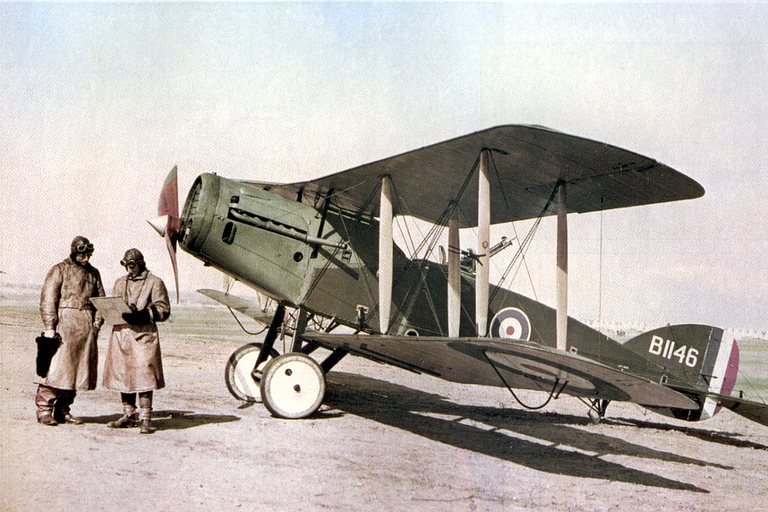
Far from the mud of Flanders, Bristol Fighters served in the Middle East, where No. 1 Squadron of the Australian Flying Corps flew them in support of the advance through Sinai and Palestine in 1918. The dry, open theatre suited the aeroplane’s range and ruggedness. Among the pilots was Ross Smith, later to become famous for the first flight from England to Australia; photographs by the war photographer Frank Hurley captured him and his Bristol against the desert landscape. In this theatre the type ranged widely on reconnaissance, escort and ground-attack work, harrying retreating columns and helping to establish the air superiority that contributed to the collapse of the Ottoman armies.
Policing an empire from the air
Through the 1920s the “Brisfit” patrolled Iraq and the North-West Frontier as the RAF’s workhorse.
Read the full story
After the war the RAF adopted a policy of “air control” — using aircraft to police remote and rebellious territories cheaply. The Bristol Fighter, rugged and easy to maintain, became the standard army-cooperation aircraft for this work. It flew from dusty strips in Iraq, over the mountains of India’s North-West Frontier and across the Middle East, carrying out reconnaissance, message-dropping, light bombing and support of ground columns. The role was often grim and politically controversial, but it kept the type in demanding front-line service for well over a decade — a longevity almost unheard of for an aeroplane designed in 1916. It is a large part of why so many Bristol Fighters were built.
Building thousands of Brisfits
Bristol’s Filton works and a web of sub-contractors turned out more than five thousand airframes.
Read the full story
The Bristol Aeroplane Company’s works at Filton, near Bristol, were the heart of production, but demand far outstripped what one firm could supply and a network of sub-contractors built airframes as well. Estimates of the total vary — figures from about 5,300 upward are commonly quoted — and production continued after the Armistice to meet the needs of the peacetime RAF and export customers, which is one reason the totals are hard to pin down. Whatever the exact number, the Bristol Fighter was built in quantities that put it among the most numerous British aircraft of its generation, and enough survived in service and in store to keep the type flying for many years.
D8096: the one that still flies
The Shuttleworth Collection keeps an airworthy Falcon-engined F.2B flying at English airshows.
Read the full story
Of the thousands built, one genuine Bristol Fighter is kept in flying condition today: D8096, an F.2B operated by the Shuttleworth Collection at Old Warden in Bedfordshire. Restored to fly with a Rolls-Royce Falcon engine, it is one of the very few airworthy aircraft of its type and era anywhere in the world, and it appears at Shuttleworth’s flying displays where the public can watch and hear a real First World War Bristol Fighter in the air. It is important to be clear about what this is and is not: D8096 is a priceless historic aircraft flown by its custodians for display, not a machine you can book a ride in. Seeing it fly is the closest anyone can come to the real thing.
Why the Bristol Fighter lasted
Strength, a good engine and honest handling gave it a career that spanned fifteen years.
Read the full story
Very few aircraft designed in 1916 were still doing useful front-line work in 1932, but the Bristol Fighter was. Its secret was a combination of virtues: a strong, repairable airframe; the fine Rolls-Royce Falcon engine; genuine fighter performance; and honest, forgiving handling that suited both a raw wartime pilot and a peacetime frontier squadron. It could fight, reconnoitre, escort, bomb lightly and police a colonial territory, and it could be kept flying with the tools and skills of a modest field workshop. That versatility, more than any single record, is the measure of the design — and the reason the “Brisfit” is remembered as one of the great aeroplanes of the First World War.
The Bristol F.2 Fighter in photographs
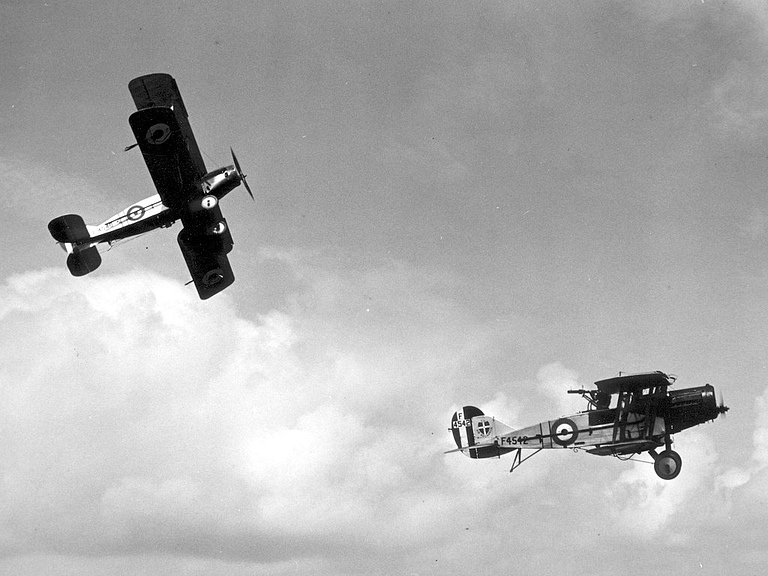
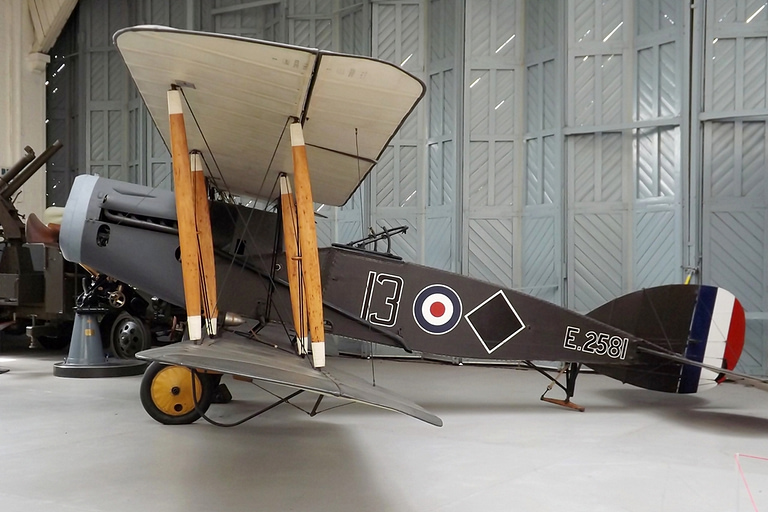
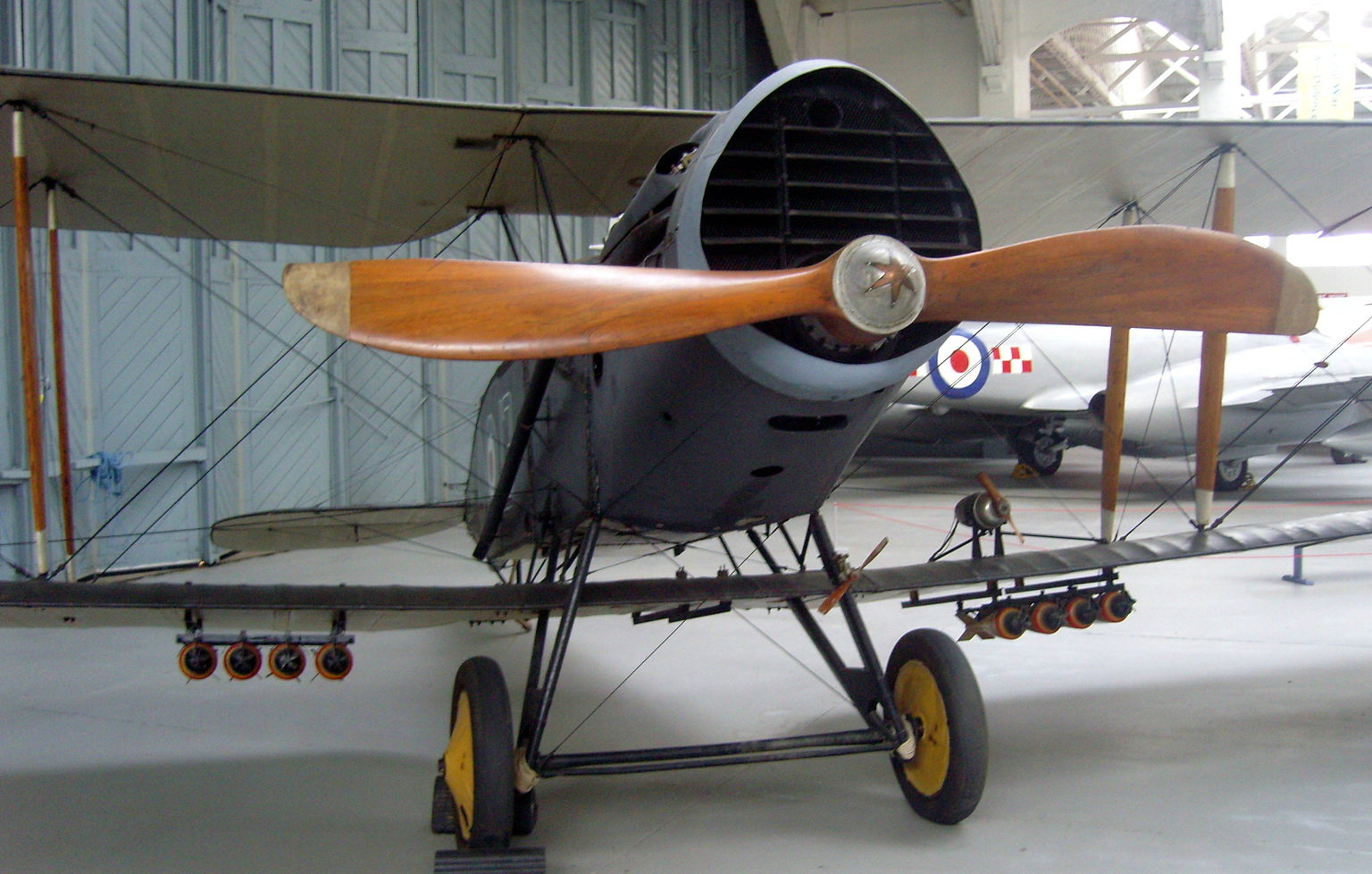
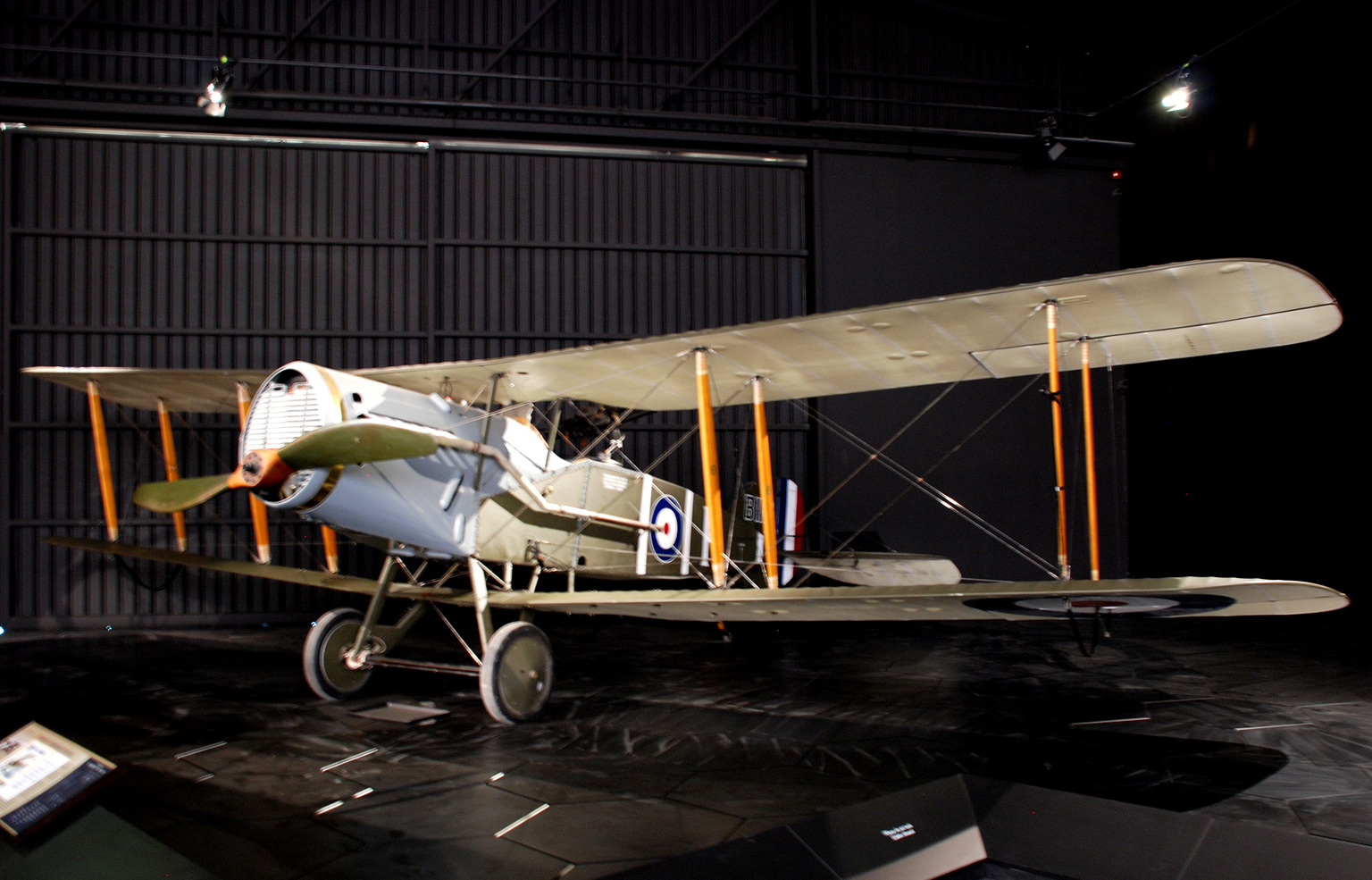
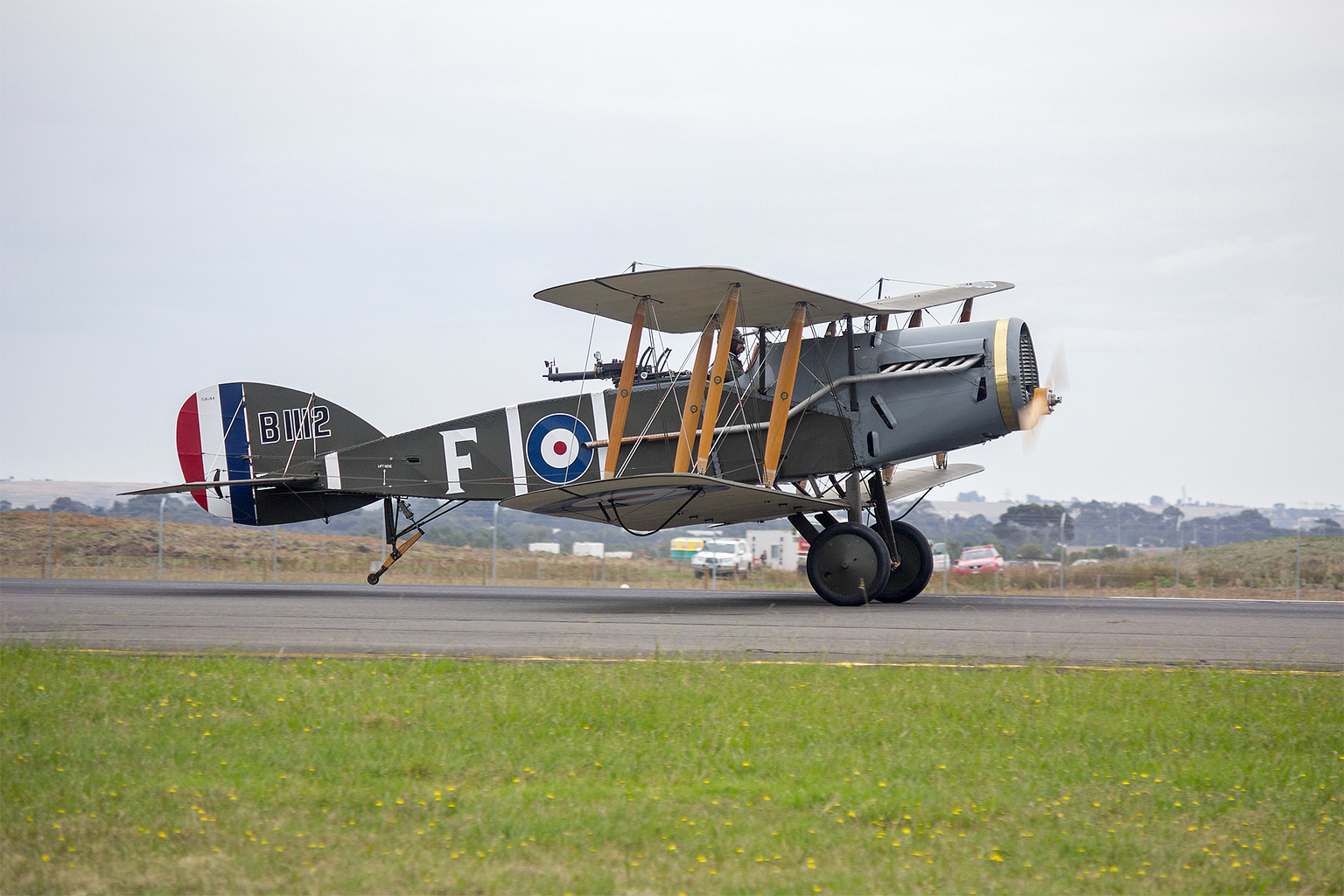
The Bristol Fighter on film: starting an airworthy F.2B
“How To Start A Bristol Fighter” — the Shuttleworth Trust, the custodians of the airworthy F.2B D8096, show how their Rolls-Royce Falcon-engined original is brought to life. Posted by the official operator’s channel (The Shuttleworth Trust), with several thousand views.
Where the Bristol Fighter served: origin, wartime fronts, exports and survivors
The Bristol Fighter was designed and built in Britain, fought in the hands of the RFC/RAF and Allied crews from 1917, went on to a long post-war career as an exported army-cooperation aircraft into the 1930s, and survives today in museums and, in one case, in the air. Toggle the categories to see each layer of its global story.
The Bristol Fighter’s combat record: from “easy meat” to one of the war’s most feared fighters
The Bristol Fighter’s reputation is a study in reversal. Its first weeks in action in April 1917 were a costly failure; within months, flown properly, it had become one of the outstanding fighting aircraft of the war and stayed in front-line service for fifteen years.
Precise victory-versus-loss figures for a type flown across so many fronts and roles are impossible to state with confidence, and any single number should be treated as an estimate. For how we handle contested air-combat figures, see our combat statistics methodology.
Everything people ask about the Bristol F.2 Fighter
Can I fly in a Bristol F.2 Fighter?
Why was the Bristol Fighter’s combat debut such a disaster?
What made the Bristol Fighter so effective once tactics changed?
Who designed the Bristol F.2 Fighter and what engine did it use?
How many Bristol Fighters were built and how long did it serve?
Are there any surviving Bristol Fighters?
What were the Bristol Fighter’s nicknames?
You can’t fly the Bristol Fighter.
These, you can.
No airline sells a seat in a 1917 Bristol Fighter, and its one airworthy survivor is a museum treasure, not a ride. But the feeling that made men climb into these machines — real flight in a real military aircraft — is something MiGFlug still makes possible today. From Cold War jet trainers to genuine fighters, here are aircraft you actually can fly in.
 Fly the L-39 AlbatrosThe world’s most-flown jet trainer — aerobatics included
 Fly the F-104 Starfighter“The missile with a man in it”
 Fly the MiG-21The Cold War’s most-produced jet
 驾驶T-33流星战斗机America’s first jet trainer
 Fly the DH VampireA piece of early jet history
 Fly the S.211Agile Italian jet trainer
 Fly the MB-326The classic Aermacchi jet
 Fly the MiG-15The Soviet legend of the Korean War
Continue through the Aircraft Museum
The deadliest scoutSopwith CamelThe tricky, twitchy single-seater credited with more air-combat victories than any other Allied type.Explore
The Allied thoroughbredSPAD S.XIIIFrance’s fast, rugged fighter flown by the aces of a dozen Allied air forces.Explore
Every fact on this page, traceable
- Royal Air Force MuseumHoldings and reference material on the Bristol F.2B Fighter and its RAF service.
- Imperial War Museums (IWM)Bristol Fighter airframes and wartime photographs, including the aircraft at Duxford.
- The Shuttleworth CollectionCustodians of the airworthy Falcon-engined F.2B D8096 at Old Warden.
- The Vintage AviatorDetailed engineering and reproduction work on First World War types including the Bristol Fighter.
- Smithsonian National Air and Space MuseumReference material on First World War aircraft, engines and armament.
- Canada Aviation and Space MuseumPreserves an original Bristol F.2B in the national collection.
- Omaka Aviation Heritage CentreNew Zealand collection of Great War aircraft, including a Bristol Fighter.
- J. M. Bruce, The Aeroplanes of the Royal Flying Corps (Military Wing)The standard scholarly reference on RFC aircraft design and service.
- J. M. Bruce, Bristol Fighter (Windsock Datafile)Detailed monograph on the F.2A/F.2B, its engines and variants.
- MiGFlug — Afterburner MagazineMiGFlug’s own features on warbirds, fighter history and flying genuine military aircraft.
Contested or approximate figures — top speed, service ceiling, production totals and any cost estimate — are flagged as such in the text and specification tables. Performance figures are for the Rolls-Royce Falcon III-engined F.2B and vary with engine fit and altitude. Wikipedia is deliberately not used as a cited source.