
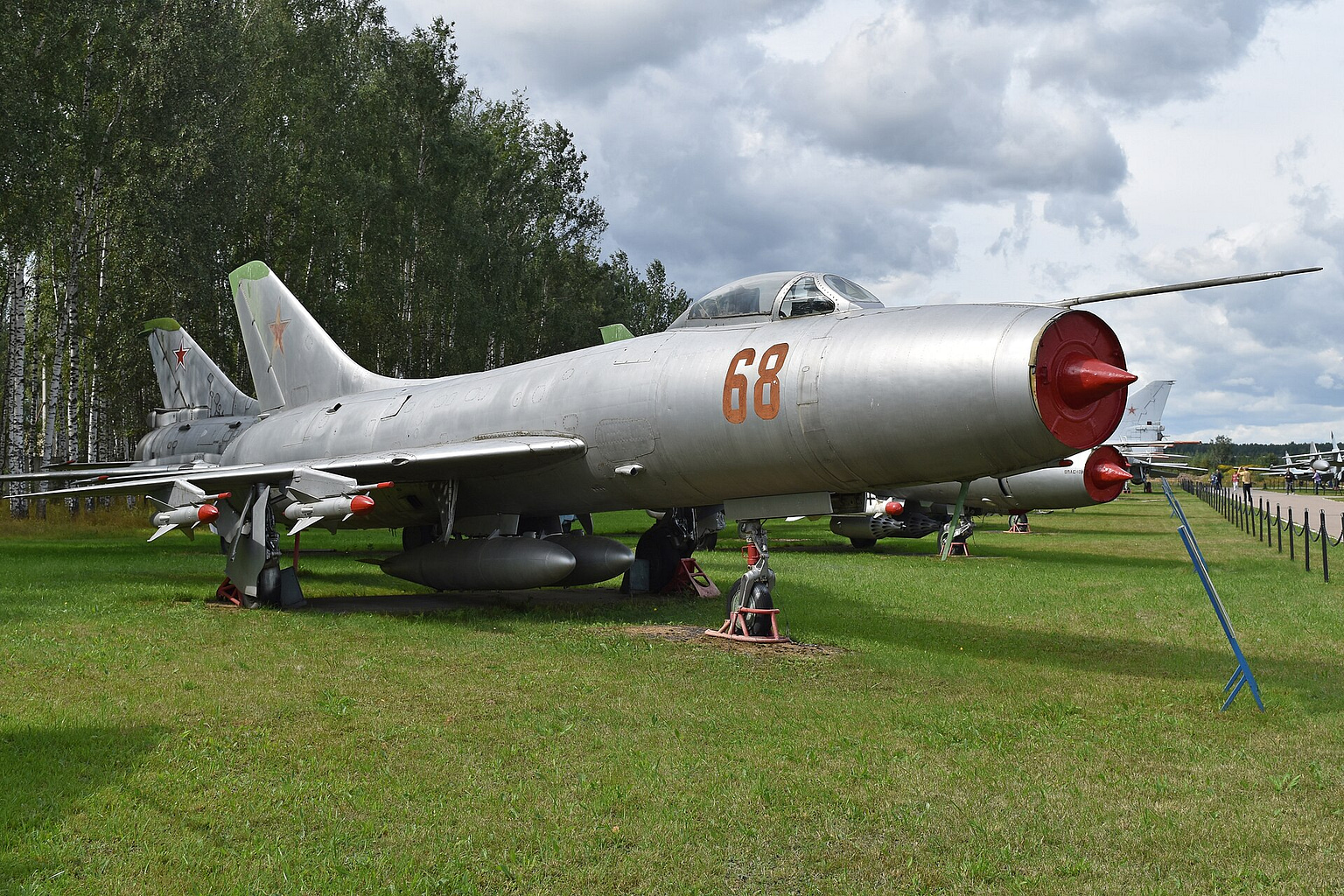
Sukhoi Su-9 / Su-11
“Fishpot”
The Soviet PVO’s delta-wing all-weather interceptors — built to climb fast and high against Western bombers, armed with guided missiles and no gun, and never sold abroad.
The Su-9 and Su-11: the Soviet delta that guarded the stratosphere
In the mid-1950s the Soviet PVO air-defence force needed an interceptor that could climb quickly to high altitude and meet Western bombers and reconnaissance aircraft head-on, in any weather. The recently re-formed Sukhoi design bureau explored two competing wing shapes on parallel prototypes — a swept wing (the S-series, which led to the Su-7 fighter-bomber) and a tailed delta (the T-series). The delta prototype, commonly dated to a first flight in 1956, matured into the aircraft that entered PVO service in 1959 as the Su-9.
The Su-9 paired a large delta wing with a conventional tailplane, a single afterburning Lyulka AL-7F turbojet, and a circular nose intake whose movable centre-body shock cone housed a search radar (the RP-9 / TsD-30, NATO “Spin Scan”). It carried four beam-riding RS-2US (K-5, NATO AA-1 “Alkali”) missiles and — unusually for a fighter of its day — no gun. It climbed hard and flew high, but it was short on range and demanding to handle, with a high landing speed.
这 Su-11, which flew in prototype form from the late 1950s and reached service around 1964, was an improved development: a lengthened nose housing the larger Oryol (NATO “Skip Spin”) radar, an uprated engine, and two larger R-8 (K-8, NATO AA-3 “Anab”) missiles, typically one radar-guided and one infrared-homing. Only about 108 Su-11 were built, against well over a thousand Su-9. Both types were flown by the Soviet Union alone, were never exported, and were gradually replaced by the twin-engined Su-15 and the MiG-25 through the 1970s and into the 1980s.
01The Su-9 and Su-11: how Sukhoi’s tailed delta beat its own swept-wing twin
When the Sukhoi bureau was re-established in 1953 it hedged its bets, developing two families of prototype in parallel: a swept-wing series (the “S” aircraft) and a tailed-delta series (the “T” aircraft). The swept wing became the Su-7 ground-attack aircraft; the delta became the interceptor. The delta’s big wing gave the lift needed to reach and hold high altitude, while the all-moving tailplane preserved control at supersonic speed — a combination that suited the PVO’s need for a fast-climbing, high-flying missile carrier more than it suited close-in dogfighting.
The result reached the PVO as the Su-9 in 1959, and the design was refined into the Su-11 a few years later. Both shared the same basic tailed-delta airframe and single-engine layout; the visible differences were in the nose — a longer radome on the Su-11 — and in the missiles they carried.
What makes the Su-9 and Su-11 special
A tailed-delta built to climb, not to turn
The Su-9 and Su-11 used a large delta wing with a separate all-moving tailplane, driven by a single Lyulka AL-7F afterburning turbojet. That layout was optimised for rapid climb and high-altitude performance rather than sustained turning, which matched the PVO’s job of intercepting high-flying bombers under ground-radar control. The trade-off was a demanding aircraft with a high approach speed and limited endurance.
A fighter with no gun
Reflecting late-1950s Soviet doctrine that guided missiles would replace cannon, the Su-9 carried four beam-riding RS-2US (AA-1 “Alkali”) missiles and no gun at all. The beam-riding guidance required the pilot to keep the target centred in the radar beam until impact. The Su-11 switched to two larger R-8 (AA-3 “Anab”) missiles, usually mixing a radar-guided and an infrared round — still with no internal gun.
Radar inside the intake cone
Both types drew air through a circular nose intake with a movable conical centre-body, and it was inside that cone that the radar lived. The Su-9’s RP-9 / TsD-30 (“Spin Scan”) was a modest set; the Su-11’s enlarged Oryol (“Skip Spin”) radar in a longer nose gave better range and became the clearest way to tell the two apart. Neither had a true look-down capability against low-flying targets.
02The Su-9’s beam-riding missiles: why an early Soviet interceptor dropped the gun
The Su-9 entered service armed only with four RS-2US missiles — a beam-riding weapon derived from the K-5 family. Beam-riding meant the missile flew along the interceptor’s radar beam toward the target, so the pilot had to hold the enemy steadily in the radar’s cone throughout the engagement. It worked best against large, non-manoeuvring targets such as bombers at altitude, which was exactly the threat the PVO expected. The Su-11 replaced these with the heavier, longer-ranged R-8, but the philosophy stayed the same: a radar-directed missile interceptor rather than a gun fighter.
03The Su-9 and Su-11’s demanding handling: short legs and a hot landing
The performance that made the Fishpot a good high-altitude interceptor also made it a handful. The delta wing bled energy quickly in hard manoeuvres, endurance was limited, and the landing approach was fast — a challenge on the shorter runways of the era. Range was modest, so the type depended heavily on ground-controlled interception to be vectored efficiently onto its target. These limitations, together with the single engine, were among the reasons the PVO moved on to the twin-engined Su-15 and the MiG-25.
Full specifications of the Su-9 and Su-11
Airframe & Performance
- 全体人员
- 1
- 长度
- ~18.06 m (Su-9) · ~18.23 m (Su-11)
- 翼展
- ~8.54 m
- 高度
- ~4.82 m
- Max takeoff weight
- ~12,250 kg (Su-9) · ~13,900 kg (Su-11)
- Max speed
- ~Mach 2 · ~2,120 km/h
- 设备天花板
- ~20,000 m (Su-9) · ~18,000 m (Su-11)
- 作战半径
- Short — commonly cited around 450 km
- First flight
- 1956 (delta prototype) · late 1950s (Su-11)
- Record altitude
- ~28,857 m (T-431 research aircraft, 1959)
Propulsion & Systems
- 引擎
- 1 × Lyulka AL-7F (Su-9) / AL-7F-1 (Su-11)
- 推力
- ~90–100 kN with afterburner
- Radar
- RP-9 / TsD-30 “Spin Scan” (Su-9) · Oryol “Skip Spin” (Su-11)
- Armament (Su-9)
- 4 × RS-2US (AA-1 Alkali) — no gun
- Armament (Su-11)
- 2 × R-8 (AA-3 Anab) — no gun
- Entered service
- 1959 (Su-9) · ~1964 (Su-11)
- Built
- ~1,150 Su-9 · ~108 Su-11
- Unit cost
- No reliable public figure (Soviet state product)
- Cost per flight hour
- No reliable public figure
04The Su-9 and Su-11’s operating costs: why no reliable price exists
The Su-9 and Su-11 were Soviet state products, built for the PVO and never sold on an open market, so no firm flyaway unit price or cost-per-flight-hour figure exists in the public record. Any precise dollar figure attached to these types should be treated as an estimate rather than a sourced number. What can be said with confidence is that the Su-11 was built in far smaller numbers (~108) than the Su-9 (well over a thousand), and that both were superseded by more capable — and more expensive — twin-engined interceptors.
From delta prototype to Cold-War relic
Sukhoi reborn
The Sukhoi design bureau is re-established and begins parallel work on swept-wing and tailed-delta prototypes.
The delta flies
The tailed-delta T-3 prototype makes its first flight — the ancestor of the Su-9 and Su-11.
Su-9 enters service
The Su-9 joins the Soviet PVO air-defence force as a missile-armed, all-weather interceptor.
The U-2 scramble
On 1 May a Su-9 is reportedly scrambled against Gary Powers’ U-2 and ordered to ram it — but is unarmed in ferry configuration and overshoots (see the stories below).
Record flights
Su-9-derived research aircraft (T-431 / T-405) set altitude and speed records, reportedly reaching around 28,857 m.
Su-11 built
About 108 Su-11 are produced, distinguished by a longer nose, the Oryol radar and two larger R-8 missiles.
Su-11 in service
The improved Su-11 reaches PVO squadrons as a longer-ranged development of the Su-9.
Withdrawn
Both types are superseded by the twin-engined Su-15 Flagon and the MiG-25, and are gradually retired from PVO service.
Twelve stories of the Su-9 and Su-11
Two wings, one bureau
Sukhoi developed a swept wing and a tailed delta side by side; the delta became the interceptor.
Read the full story
The delta takes off
The tailed-delta prototype first flew in 1956, opening the line that became the Su-9.
Read the full story
A radar in the air intake
The Fishpot carried its radar inside the movable cone of its circular nose intake.
Read the full story
The interceptor with no gun
The Su-9 relied entirely on four beam-riding missiles and carried no cannon.
Read the full story
Ordered to ram a U-2
A Su-9 pilot was reportedly told to ram Gary Powers’ U-2 — but his jet had no weapons fitted.
Read the full story
Records under a research designation
Su-9-derived research aircraft set altitude and speed records around 1959–61.
Read the full story
A bigger nose and bigger missiles
The Su-11 improved the Su-9 with a larger radar and the heavier R-8 missile.
Read the full story
Short legs, hot landings
The Fishpot climbed and flew high, but it was thirsty and fast on approach.
Read the full story
Guarding the Soviet interior
Fishpots stood air-defence alert across the vast Soviet landmass for two decades.
Read the full story
A jet the Kremlin kept at home
Unlike the MiG-21, the Su-9 and Su-11 were never exported.
Read the full story
Overtaken by two engines
The single-engined Fishpot gave way to the Su-15 and the MiG-25.
Read the full story
Where to see a Fishpot today
Preserved Su-9 and Su-11 airframes survive in Russian museums.
Read the full story
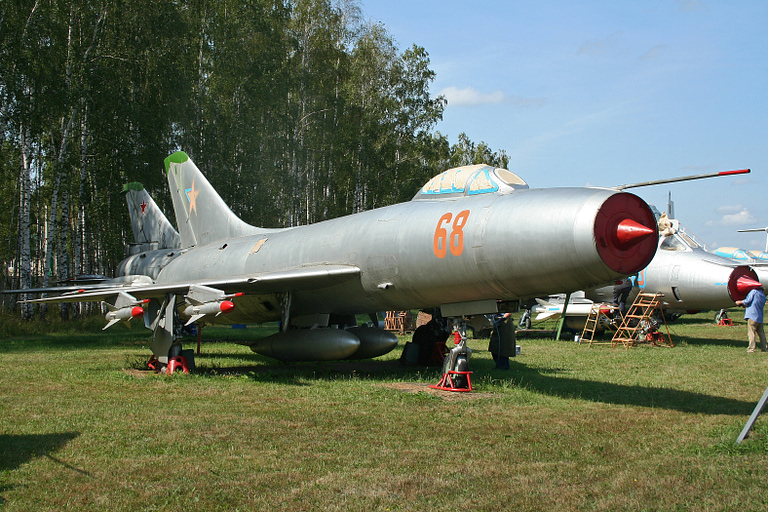
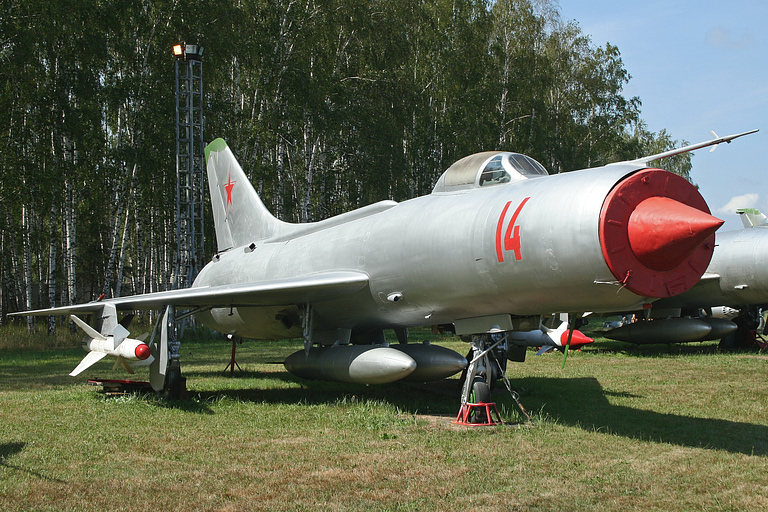
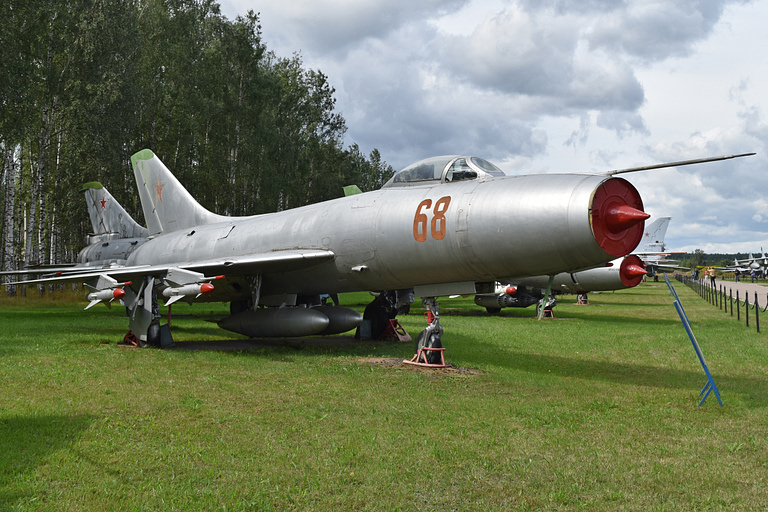
The Fishpot in pictures
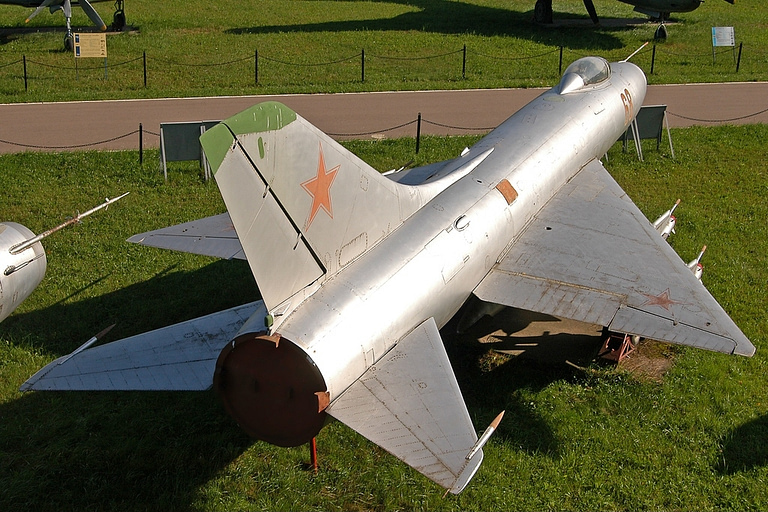
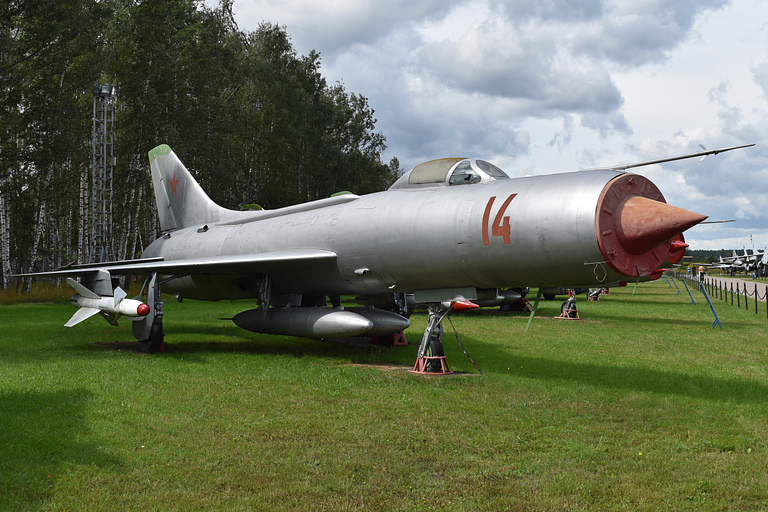
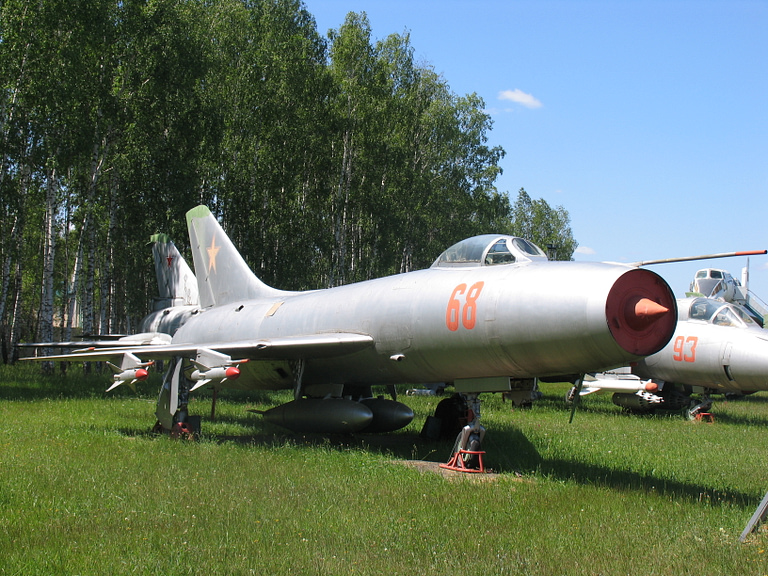
The Fishpot in motion
A dedicated, high-authority video feature on the Sukhoi Su-9 and Su-11 is coming soon. In the meantime, explore the photo gallery above and the operator map below.
Where the Fishpot flew
The score that defines it
The Su-9 and Su-11 were built to deter and, if needed, to shoot down high-flying bombers over Soviet territory — not to dogfight. They served as interior air-defence interceptors, were never exported, and have no widely confirmed air-to-air kills in the public record. Their story is one of readiness, records and a famous near-intercept rather than aerial victories.
Compare the combat record of every military aircraft. Figures as of July 2026.
Everything people ask about the Su-9 and Su-11
Can I fly in a Su-9?
What is the difference between the Su-9 and the Su-11?
Did a Su-9 shoot down the U-2 in 1960?
Why did the Su-9 have no gun?
How fast and how high could the Su-9 and Su-11 fly?
Were the Su-9 and Su-11 exported?
What replaced the Su-9 and Su-11?
You can’t fly the Su-9.
These, you can.
Some legends only live in museums — others are fuelled and waiting. MiGFlug has put civilians in real military jet cockpits since 2004.
 Fly the L-39 AlbatrosThe world’s most-flown jet trainer — aerobatics included
 Fly the F-104 Starfighter“The missile with a man in it”
 Fly the MiG-21The Cold War’s most-produced jet
 驾驶T-33流星战斗机America’s first jet trainer
 Fly the DH VampireA piece of early jet history
 Fly the S.211Agile Italian jet trainer
 Fly the MB-326The classic Aermacchi jet
 Fly the MiG-15The Soviet legend of the Korean War
Continue the tour
Every fact, checked
- Vintage Aviation News — First Flight of the Sukhoi Su-9Development history and first-flight dating of the Su-9.
- Vintage Aviation News — First Flight of the Sukhoi Su-11 Fishpot-CSu-11 radar, engine, R-8 armament and production numbers.
- The Aviation Geek ClubThe Su-9 pilot ordered to ram Powers’ U-2 in 1960 (hedged account).
- The AviationistThe 1960 U-2 shoot-down and the aircraft scrambled against it.
- The National InterestThe Soviet pilot who tried to ram Francis Gary Powers.
- Military Factory — Sukhoi Su-9Specifications, dimensions and performance reference.
- FAI records databaseSoviet altitude and speed records set by Su-9-derived research aircraft.
- CIA — the U-2 programmeBackground on the 1960 Powers overflight and its interception.