
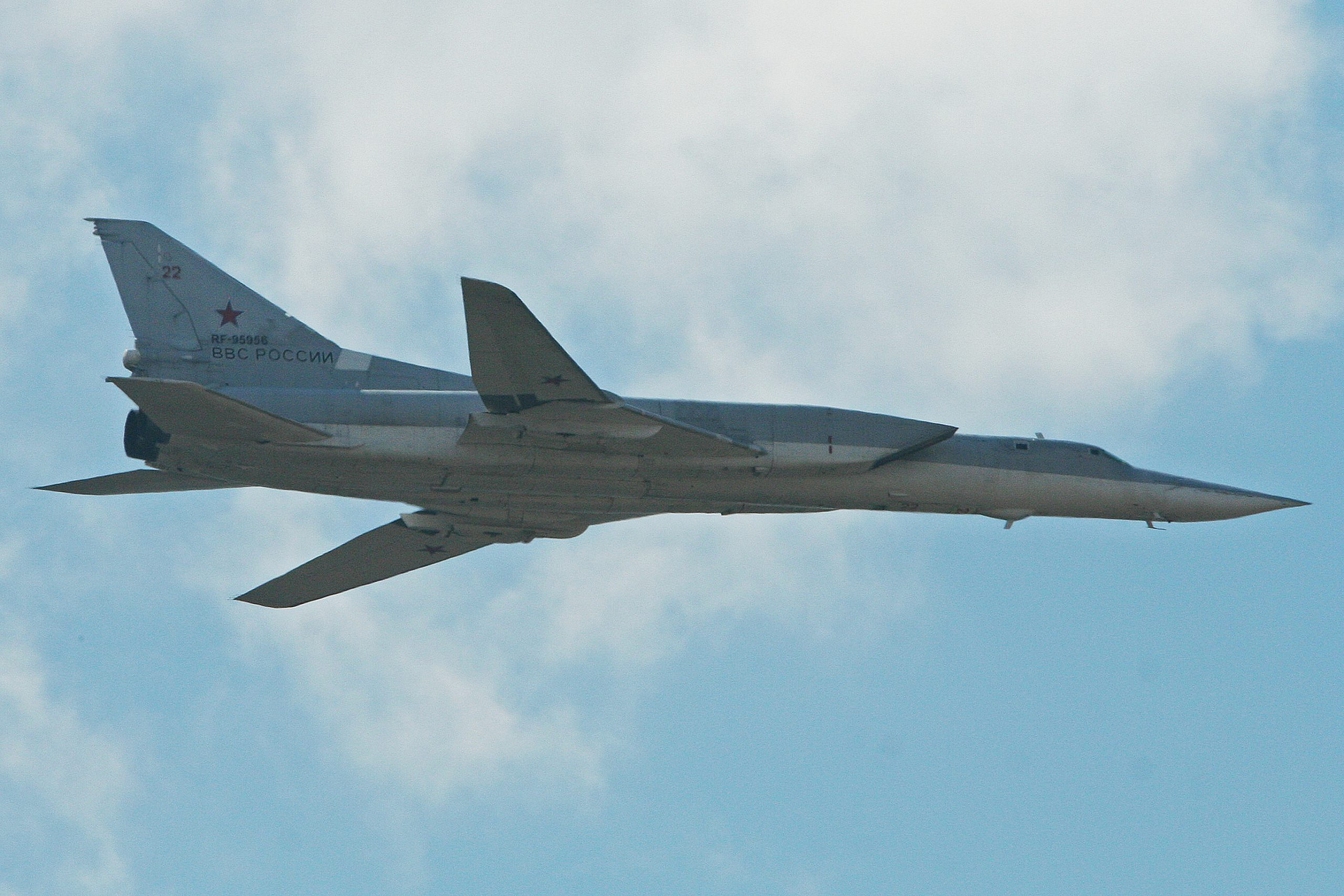
Tupolev Tu-22M
“Backfire”
A variable-sweep supersonic bomber built to hunt NATO carrier groups with heavy stand-off missiles — despite its designation, a largely new aircraft rather than a version of the earlier Tu-22, and one whose range once became a sticking point in Cold-War arms-control talks.
A new bomber wearing an old name
By the mid-1960s the Soviet Union’s first supersonic bomber, the fixed-wing Tupolev Tu-22 “Blinder,” had proved a disappointment — difficult to fly and short on range. Tupolev’s answer was a very different machine built around a variable-geometry “swing wing”: an aircraft able to take off and cruise economically with its wings spread, then sweep them back for a supersonic dash. It first flew as the Tu-22M0 on 30 August 1969 and, through successive versions, entered Soviet service during the 1970s. NATO named it “Backfire.”
Despite the shared “Tu-22” designation, the Backfire is largely a new design rather than a derivative of the Blinder. Several accounts suggest the “M” (modification) label was useful politically — it helped the programme through the Soviet bureaucracy and, during arms-control talks, could make the aircraft look like an upgrade of an existing type rather than a new strategic bomber. That framing should be treated as the widely reported explanation rather than documented certainty.
The Backfire was conceived above all as a stand-off missile carrier. Armed with the large, fast Kh-22 (NATO AS-4 “Kitchen”) missile, it was designed to threaten NATO aircraft-carrier groups and land targets from beyond the reach of their defences. The definitive version, the Tu-22M3 (“Backfire-C”), first flew in the late 1970s and became the main production model; roughly 500 Backfires of all versions were built before production ended in 1993. Russia continues to operate a fleet today and has been modernising survivors to Tu-22M3M standard.
01The Tu-22M Backfire versus the Tu-22 Blinder: why the names mislead
The earlier Tupolev Tu-22 “Blinder” was a fixed-wing supersonic bomber that entered service in the 1960s and earned a reputation as fast but troublesome, with limited range and demanding handling. When Tupolev developed its successor it adopted a variable-geometry wing and a substantially different airframe and mission profile, yet kept a designation in the “Tu-22” family — Tu-22M. The two aircraft are easy to confuse by name but are different machines: the Blinder is a slim, fixed-wing jet, while the Backfire is a larger swing-wing bomber optimised as a missile carrier. Some Western analysts at the time argued the “modification” designation understated how new and capable the Backfire really was. Treat the “deliberate disguise” version of the story as plausible but not firmly documented.
What makes it special
A variable-sweep wing and a supersonic dash
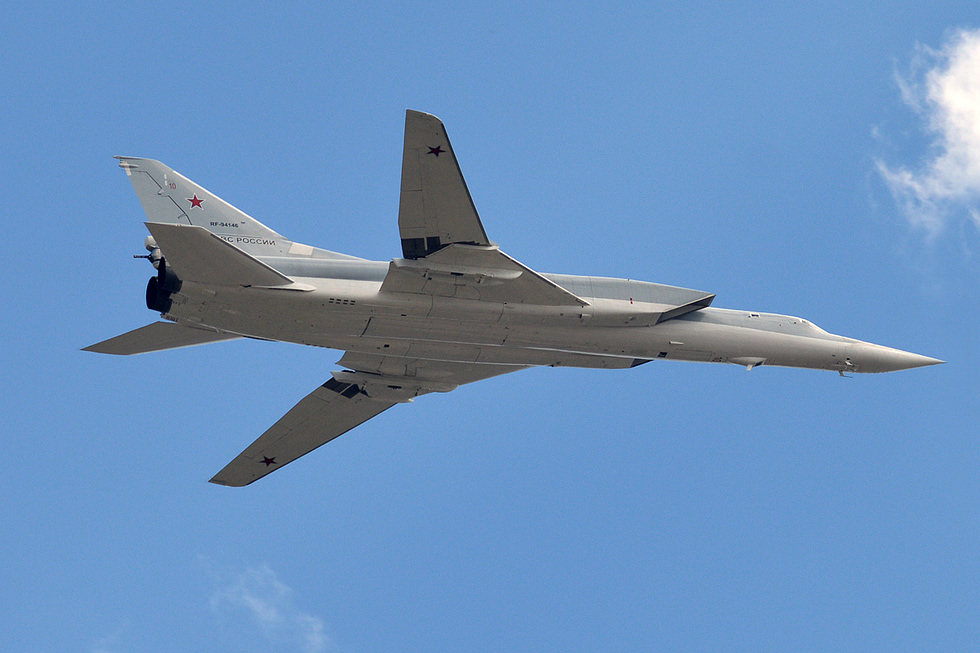
The Tu-22M3’s outer wing panels pivot from roughly 20° spread to about 65° swept. Spread, the long wing gives the lift and efficiency a heavy bomber needs for takeoff and cruise; swept back, drag falls away and the aircraft can dash to about Mach 1.88 at altitude. (The exact sweep angles are the commonly cited figures rather than a manufacturer-published table.) The swing wing is what lets one airframe both range far and sprint.
Heavy stand-off and anti-ship missiles
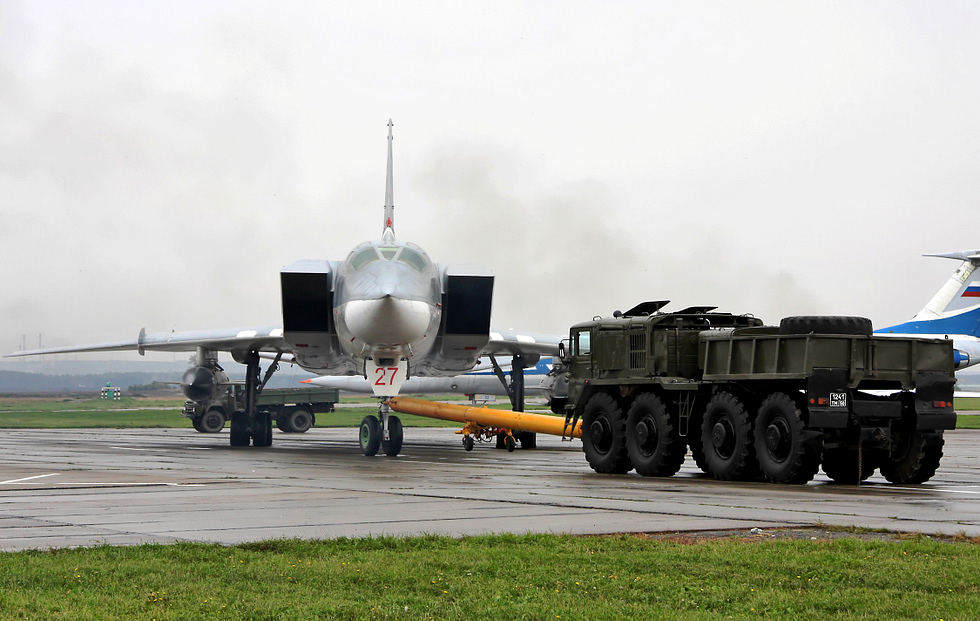
The Backfire was built around large stand-off missiles — principally the Kh-22 (NATO AS-4 “Kitchen”), a fast, long-range weapon designed to strike ships and land targets from well outside a defender’s reach. A Tu-22M3 can carry up to three Kh-22-class missiles, and later aircraft integrate the modernised Kh-32. Maximum ordnance is commonly cited at around 24,000 kg, including free-fall bombs.
A long-range maritime-strike role
More than a bomber, the Backfire was a naval threat. Soviet planners intended it to attack NATO aircraft-carrier battle groups and shipping in the North Atlantic and Pacific, closing at speed and launching heavy missiles from stand-off range. Its combat radius — commonly cited at roughly 2,400 km, though Cold-War estimates varied widely — made it a persistent concern for Western navies.
02The Tu-22M Backfire’s Kh-22 missile: an anti-ship weapon now used against land targets
这 Kh-22 was designed in the Cold War as a supersonic anti-ship missile: launched from a Backfire, it would climb, accelerate to several times the speed of sound and dive onto a warship from stand-off range, with a large warhead intended to disable or sink major vessels. Its modernised successor, the Kh-32, is credited with improved range and guidance. In Russia’s war on Ukraine since 2022, Tu-22M3s have launched Kh-22 and Kh-32 missiles at ground targets — a role for which the anti-ship Kh-22 in particular was never designed. Western and Ukrainian assessments describe it as inaccurate against fixed land targets, and several deadly strikes on civilian buildings have been attributed to Kh-22-class missiles. Specific attributions are contested and are presented here factually, without endorsement.
03The Tu-22M Backfire and SALT: the arms-control fight over its range
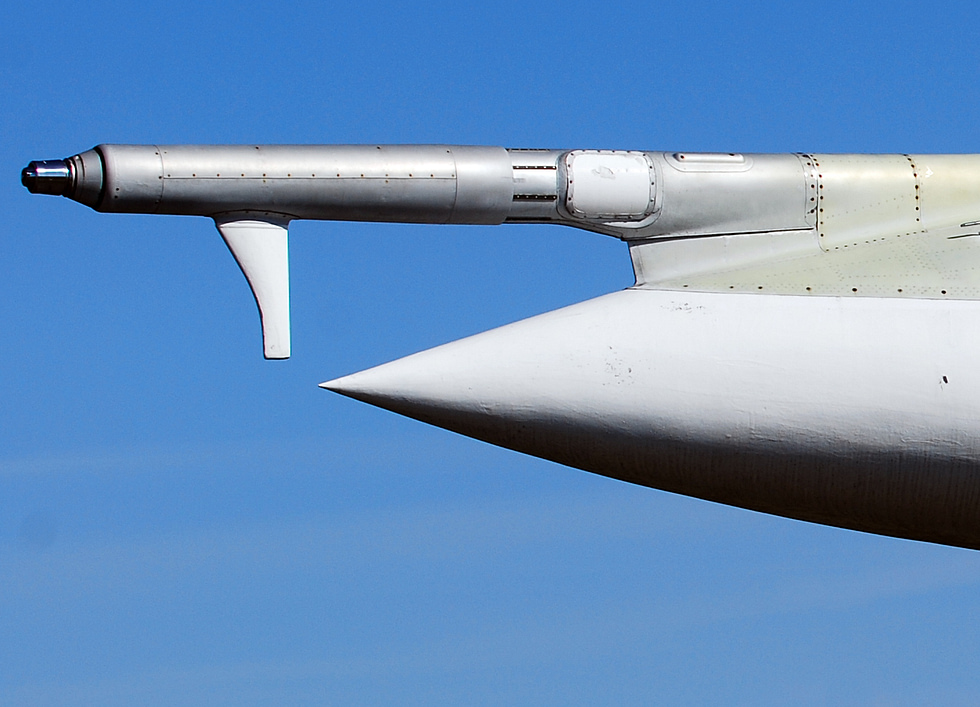
During the SALT II negotiations of the 1970s, the Backfire became a point of dispute. US officials argued that with aerial refuelling the bomber might reach the continental United States, which would make it a strategic system that ought to count against treaty limits; Soviet officials maintained it was a medium-range theatre aircraft. The disagreement was politically significant. The Soviet side ultimately gave assurances about the aircraft’s production and range, and the aerial-refuelling probe was removed from Tu-22M aircraft to underline that it was not intended for intercontinental missions. Some Western sources later claimed the probes were retained and could be refitted — a claim that should be treated as unverified.
Full specifications
Airframe & Performance
- 全体人员
- 4 (pilot, co-pilot, navigator, weapons operator)
- 长度
- ~42.4 m
- Wingspan (spread)
- ~34.3 m
- Wingspan (swept)
- ~23.3 m
- Wing sweep
- ~20° to 65° variable
- Max takeoff weight
- ~124,000–126,000 kg
- Max speed
- ~Mach 1.88 · ~2,300 km/h at altitude
- 作战半径
- ~2,400 km (estimates vary)
- 范围
- ~6,800 km (unrefuelled, cited)
Propulsion & Systems
- Engines
- 2 × Kuznetsov NK-25 turbofans
- Thrust (each)
- ~245 kN with afterburner
- Max ordnance
- ~24,000 kg
- Primary armament
- Up to 3 Kh-22 / Kh-32 missiles; bombs
- Defensive gun
- 1 × twin-barrel GSh-23 (23 mm) tail turret
- First flight
- 30 August 1969 (Tu-22M0)
- Built
- ~497 all variants (to 1993)
- Unit cost
- No reliable public figure (see note)
- Cost per flight hour
- No reliable public figure
04The Tu-22M Backfire’s cost: why no reliable price exists
The Tu-22M was a Soviet state product, never sold on an open market, so no firm flyaway unit price exists in the public record. Any dollar figure attached to the type is, in practice, an estimate — and Soviet-era production costs do not translate cleanly into Western accounting. No credible cost-per-flight-hour number exists for the aircraft in open sources either. Modernisation of survivors to Tu-22M3M standard has been described by Russian officials in rouble terms, but those are state-programme figures for a subsidised upgrade rather than a market price, and should be read as order-of-magnitude only.
From Cold-War carrier-hunter to modern missile carrier
Blinder’s shortcomings
The fixed-wing Tu-22 “Blinder” proves fast but short-ranged and hard to fly, prompting Tupolev to design a swing-wing successor.
First flight
The Tu-22M0 prototype makes its maiden flight on 30 August 1969, introducing the variable-geometry wing.
Into service & SALT dispute
Early Backfires enter Soviet service; the aircraft’s range becomes a contested issue in SALT II talks, and its refuelling probe is later removed.
The definitive Tu-22M3
The Tu-22M3 (“Backfire-C”) becomes the main production version, with more powerful NK-25 engines and the Kh-22 missile.
阿富汗
Tu-22Ms fly conventional bombing missions, most intensively during the Soviet withdrawal from Afghanistan.
First combat loss
A Tu-22M3 is shot down over Georgia on 24 August 2008 during the Russo-Georgian War — the type’s first known combat loss.
Syria
Tu-22M3s conduct conventional bombing strikes in Syria from Russian territory.
Ukraine war & reported losses
Russia uses Tu-22M3s to launch heavy Kh-22/Kh-32 missiles at Ukrainian ground targets; a Tu-22M3 is lost in April 2024 in circumstances Russia and Ukraine describe differently.
Twelve stories of the Backfire
A swing wing for a failed bomber
The disappointing Tu-22 Blinder drove Tupolev to a very different successor.
Read the full story
Why the designation misleads
Despite the shared “Tu-22” label, the Backfire is largely a new aircraft.
Read the full story
Built to hunt carriers
The Backfire was designed to threaten NATO carrier groups with heavy missiles.
Read the full story
The swing wing
Variable-geometry wings let one airframe both range far and dash fast.
Read the full story
The SALT argument
US and Soviet negotiators clashed over whether the Backfire was strategic.
Read the full story
The Kh-22 “Kitchen”
A large supersonic missile designed to sink ships from stand-off range.
Read the full story
Conventional bombing
Backfires flew heavy bombing missions late in the Soviet-Afghan War.
Read the full story
The first combat loss
A Tu-22M3 was shot down during the 2008 Russo-Georgian War.
Read the full story
A late combat debut abroad
Tu-22M3s bombed targets in Syria from Russian territory.
Read the full story
Missiles against ground targets
Since 2022 Backfires have launched heavy Kh-22/Kh-32 missiles at Ukraine.
Read the full story
A downing both sides describe differently
A Tu-22M3 came down in southern Russia in April 2024.
Read the full story
Ageing fleet, slow upgrade
Russia keeps a Backfire fleet and is modernising survivors to Tu-22M3M.
Read the full story
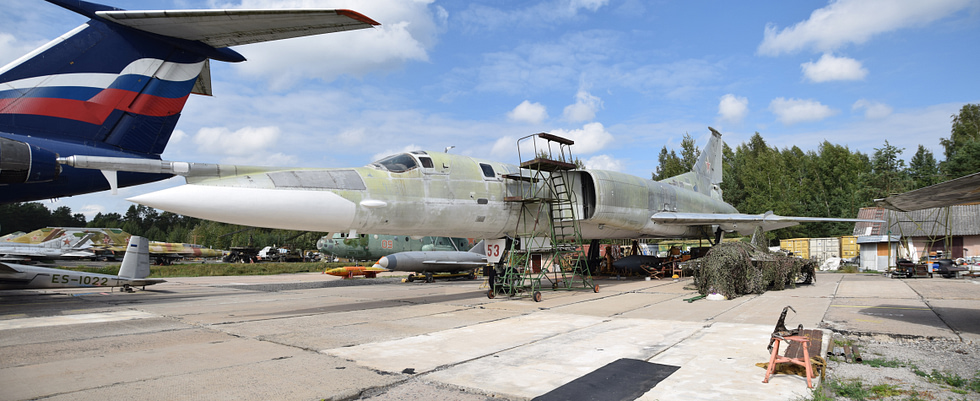
The Backfire in pictures
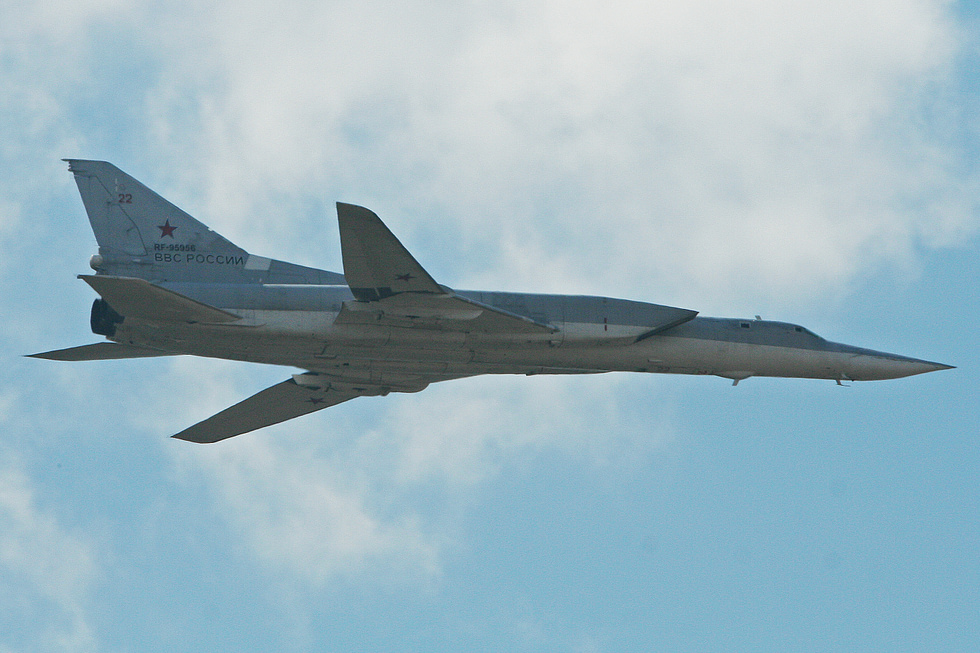
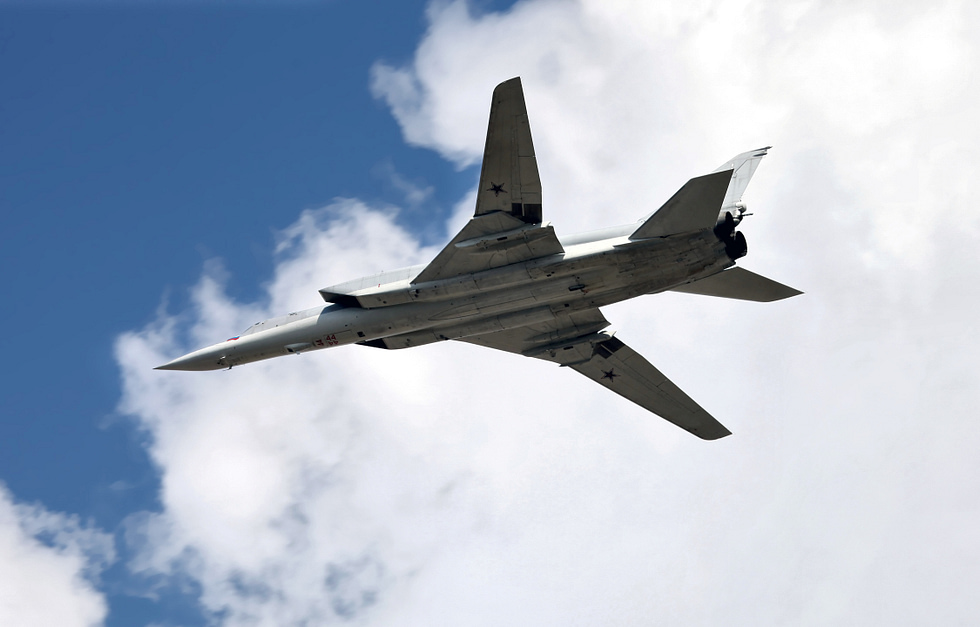
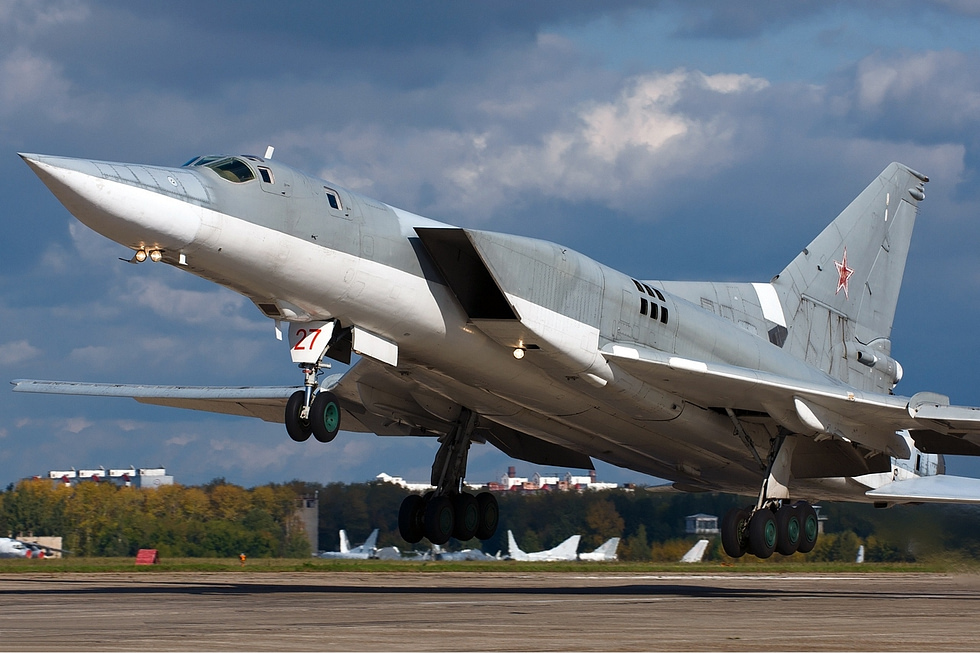
The Backfire in motion
A verified, high-authority video feature for the Tu-22M is still being selected — video coming soon. In the meantime, the photo gallery above and the stories carousel cover the aircraft in depth.
Where the Backfire operates
The record that defines it
For most of the Cold War the Tu-22M was a deterrent and a maritime-strike threat that never fired in anger. Its later record is written in conventional bombing and, more recently, in the use of heavy stand-off missiles against ground targets — a role for which its anti-ship Kh-22 was not designed. Claims arising from its combat use are contested; we present them factually and without endorsement.
Compare the combat record of every military aircraft. Figures as of July 2026.
Everything people ask about the Tu-22M
Can I fly in a Tu-22M?
How fast is the Tu-22M?
Is the Tu-22M the same as the Tu-22 Blinder?
What is the Tu-22M’s main weapon?
Why was the Tu-22M an issue in arms-control talks?
Has the Tu-22M been used in combat?
Did Ukraine ever operate the Tu-22M?
How many Tu-22Ms were built, and is it still in service?
You can’t fly the Tu-22M.
These, you can.
Some legends only live in museums — others are fuelled and waiting. MiGFlug has put civilians in real military jet cockpits since 2004.
 Fly the L-39 AlbatrosThe world’s most-flown jet trainer — aerobatics included
 Fly the F-104 Starfighter“The missile with a man in it”
 Fly the MiG-21The Cold War’s most-produced jet
 驾驶T-33流星战斗机America’s first jet trainer
 Fly the DH VampireA piece of early jet history
 Fly the S.211Agile Italian jet trainer
 Fly the MB-326The classic Aermacchi jet
 Fly the MiG-15The Soviet legend of the Korean War
Continue the tour
Every fact, checked
- Federation of American Scientists — Tu-22M BackfireDevelopment history, variants, the SALT/refuelling dispute and production numbers.
- Airforce Technology — Tu-22MSpecification sheet: NK-25 engines, tail gun, dimensions and the Chechnya bombing use.
- Military Factory — Tu-22MCross-checked specifications, NATO reporting names and the ~497 production figure.
- Popular ScienceAccessible development and combat overview, including current fleet estimates.
- The War Zone (TWZ)Reporting on the contested April 2024 loss — crash versus S-200 shoot-down claims.
- NewsweekThe Kh-22’s inaccuracy against ground targets and the Dnipro strike attribution.
- Defense ExpressContext on the 2008 Georgia shoot-down and later loss claims.
- The National InterestThe Tu-22M3M modernisation programme and the type’s current role.