
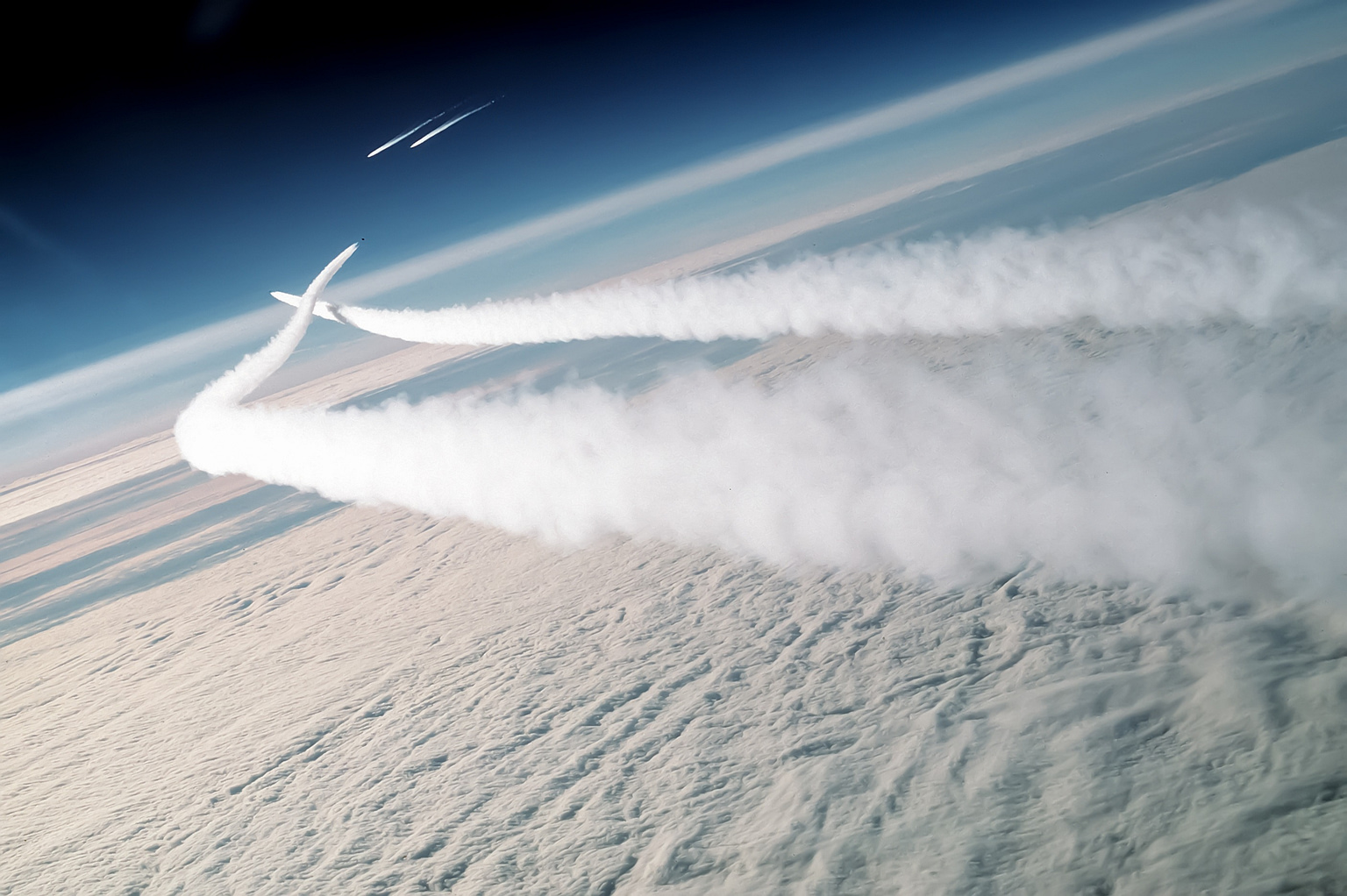
Mikoyan MiG-29
“Fulcrum”
The light Soviet air-superiority fighter that stunned NATO after German reunification — a nimble, twin-engined dogfighter whose helmet-cued R-73 missile could kill from angles Western jets couldn’t answer, and one of the very few fighters MiGFlug can still take a civilian supersonic toward the edge of space.
The light fighter that shocked NATO
The MiG-29 was born from the Soviet PFI requirement of the early 1970s — Moscow’s answer to the American F-15. When the programme split into a heavy and a light half, Sukhoi took the heavy side (which became the Su-27 Flanker) and Mikoyan took the light one: a smaller, cheaper, mass-produced frontline air-superiority fighter. A Council of Ministers decree of 26 June 1974 authorised the work, and the first prototype flew on 6 October 1977 with Alexander Fedotov at the controls. The Fulcrum entered Soviet service in 1982–83; more than 1,600 were eventually built at Moscow and Nizhny Novgorod.
Its reputation was forged in an accident of history. When Germany reunified in 1990, the Luftwaffe inherited 24 East German MiG-29s and flew them in mock combat against NATO’s best. The results stunned Western pilots: in the merge, the Fulcrum’s R-73 (AA-11 Archer) missile — cued by the pilot’s helmet-mounted sight — could lock and fire at targets far off the nose, well beyond where an F-16 or F/A-18 could point. Combined with a blistering turn rate and cobra-like high-alpha theatrics, the MiG-29 forced NATO to accelerate its own helmet-cueing and high-off-boresight missile programmes. Beyond visual range, though, Western radar and AMRAAM still held the edge.
The Fulcrum is still very much alive in 2026. It remains a frontline type for Russia, India and many other air forces; the navalised MiG-29K flies from Indian and Russian carriers, and the 4++ generation MiG-35 keeps the bloodline current. And uniquely among modern fighters, it is one that a civilian can actually fly — MiGFlug has taken passengers up in a real MiG-29, supersonic and toward the edge of space.
01The MiG-29’s origins: how the Soviet PFI split created both the Fulcrum and the Flanker
The early-1970s PFI (Perspektivny Frontovoi Istrebitel, “advanced frontline fighter”) requirement was the Soviet reply to the U.S. F-X programme that produced the F-15. It proved too much for one airframe, so it was divided: the heavy TPFI went to Sukhoi and became the long-ranged Su-27 Flanker, while the light LPFI went to Mikoyan and became the MiG-29. The two aircraft are stablemates — visually similar, born of the same doctrine — but built for different jobs. The Su-27 is the big, long-legged heavy fighter; the MiG-29 is the compact, short-range frontline fighter meant to be built in numbers and operated from austere forward airfields.
What makes the MiG-29 special
R-73 missile & helmet sight
The Fulcrum’s single most influential feature. The Vympel R-73 (AA-11 Archer) short-range infrared missile, cued by the pilot’s Shchel helmet-mounted sight, gave the MiG-29 a high-off-boresight first-shot capability — the pilot could point his head, not the whole jet, and launch. Western fighters could not match it for years, and it forced a generation of NATO upgrades to catch up in the visual-range fight.
Blended lift-body aerodynamics
The MiG-29’s wing-body blending and large leading-edge root extensions (LERX) make the fuselage itself generate a large share of total lift — cited as high as ~40%. The result is outstanding sustained and instantaneous turn performance and controlled flight at very high angles of attack, the basis of both its dogfight agility and its famous cobra-like airshow passes.
Rugged twin RD-33 engines
Two Klimov RD-33 afterburning turbofans give a high thrust-to-weight ratio and a ferocious climb. Crucially, the main intakes can be sealed by protective doors on the ground and take-off, with air drawn instead through auxiliary louvers on the wing roots — a FOD defence that lets the Fulcrum operate from rough, debris-strewn frontline strips.
02The MiG-29’s R-73 and helmet sight: the edge that rewrote Western dogfight doctrine
Before the Fulcrum, a fighter pilot had to point his aircraft’s nose more or less at the enemy to get a missile lock. The R-73 and Shchel helmet sight broke that rule: the seeker could be slaved to where the pilot was looking, letting a MiG-29 lock and launch at a target well off the boresight line. In the close-in merge that was decisive — a glance was enough to shoot. When reunified Germany flew its inherited MiG-29s against NATO, Western pilots discovered they could be killed from angles their own jets simply could not answer. The scramble to field equivalent helmet-cueing and high-off-boresight missiles (the AIM-9X, the ASRAAM and their sighting systems) was a direct response. It remains arguably the most influential single capability the MiG-29 introduced.
03The MiG-29’s rough-field intakes: closing the doors to eat gravel
Soviet doctrine assumed that airfields would be cratered and frontline jets would operate from rough, debris-strewn strips. The MiG-29 was engineered for exactly that. On the ground and during take-off, blank-off doors can seal the main engine intakes to keep stones and debris out of the compressors, while the engines breathe through auxiliary louvers on top of the wing-root extensions. Once safely airborne the main intakes open and the louvers close. It is a heavier, more complex solution than a Western fighter’s clean intake — but it let the Fulcrum taxi and launch from surfaces where cleaner-throated jets risked swallowing FOD and destroying an engine.
Full MiG-29 specifications
Airframe & Performance
- 全体人员
- 1 (2 in the UB trainer)
- 长度
- ~17.3 m (with probe)
- 翼展
- ~11.4 m
- 高度
- ~4.7 m
- 空重
- ~10,900 kg
- Max takeoff weight
- ~18,000–20,000 kg
- Max speed
- Mach 2.25 · ~2,450 km/h at altitude
- 设备天花板
- ~18,000 m
- 作战半径
- ~700 km (ferry ~1,500–2,900 km)
- 攀升速率
- ~330 m/s
- g-limit
- +9 g
Propulsion, Armament & Cost
- Engines
- 2 × Klimov RD-33 turbofan
- 推力
- ~50 kN dry / ~81 kN reheat (each)
- Cannon
- 1 × 30 mm GSh-30-1 (~150 rds)
- Missiles
- R-73 (AA-11), R-27 (AA-10); R-77 on later variants
- External load
- ~3,000 kg on up to 6 stations
- First flight
- 6 October 1977
- Built
- 1,600+ (all variants)
- Unit cost
- ~$11 M (1990s) to ~$29 M (MiG-29K)
- Cost per flight hour
- ~$12,000 (MiGFlug estimate)
04The MiG-29’s operating costs: what a Fulcrum costs to buy and fly
Firm figures for the MiG-29 are slippery, because it was a Soviet state product and export prices varied enormously by variant, era and buyer. A rough baseline MiG-29 was quoted in the low tens of millions of dollars in the 1990s (~$11 M), while the modern navalised MiG-29K and its derivatives have been cited nearer $29 M — treat both as era- and variant-dependent estimates. Cost-per-flight-hour is even less official: around $12,000 is a MiGFlug/unofficial working figure, not a published military number. What is certain is the design intent: the Fulcrum was meant to be cheaper and simpler than the heavy Su-27, buildable in the hundreds and affordable for frontline air forces across the Warsaw Pact and the wider Soviet export world.
Five decades of the Fulcrum
The programme is launched
A Council of Ministers decree of 26 June 1974 authorises the light LPFI fighter — the Mikoyan half of the PFI split that also produced the Su-27.
First flight
The prototype (Product 9.11) makes its maiden flight on 6 October 1977 with test pilot Alexander Fedotov at the controls.
Enters Soviet service
The MiG-29 joins the Soviet Air Force as a frontline air-superiority fighter; the first operational squadrons form.
Revealed to the West
The Fulcrum is shown at Kuopio-Rissala, Finland in 1986 and makes its Farnborough debut in 1988, dazzling crowds with high-alpha displays.
The naval MiG-29K flies
The carrier-borne MiG-29K prototype makes its first flight on 23 July 1988, piloted by Toktar Aubakirov from Saky.
The NATO shock
Reunified Germany inherits ~24 East German MiG-29s and flies them against NATO fighters — the R-73 and helmet sight stun Western pilots.
Gulf War combat debut
Iraqi MiG-29s meet the coalition in 1991 and fare poorly, several downed by USAF F-15s in the opening days. (Claims contested.)
Fulcrum vs Flanker
In the Ethiopia–Eritrea war, Su-27s and MiG-29s fight the only air duels in history between the two types; NATO also downs Yugoslav MiG-29s over Serbia.
Carriers and the MiG-35
The MiG-29K enters Indian (2010) and Russian naval service; the 4++ generation MiG-35 is developed from the MiG-29M/K line.
War in Ukraine
Ukrainian MiG-29s — bolstered by ex-Slovak and ex-Polish jets — are adapted to fire Western weapons such as the AGM-88 HARM; Russia flies MiG-29/MiG-35. War-era claims stay contested.
From the flight line: twelve Fulcrum stories
The jet that rewrote Western dogfight doctrine
Reunified Germany’s MiG-29s humbled NATO in mock fights.
Read the full story
Look, lock, kill
A glance was enough to launch.
Read the full story
Two Soviet legends meet over Africa
The only time these jets ever fought each other.
Read the full story
Closing the doors to eat gravel
Built for battered frontline strips.
Read the full story
High-alpha theatre
Tailslides and cobra-like passes made the MiG-29 a display legend.
Read the full story
Outmatched on day one
The Fulcrum’s combat debut was harsh.
Read the full story
The naval rebirth
Nearly forgotten, then reborn on carriers.
Read the full story
A Fulcrum on every continent
Few fighters spread as far.
Read the full story
Grounded before the fight
Over Serbia in 1999, NATO’s AMRAAM found the Fulcrum.
Read the full story
The family’s latest face
The bloodline didn’t stop.
Read the full story
Old jet, new tricks
Since 2022, Soviet airframes firing Western weapons.
Read the full story
Civilian to the edge of space
You didn’t need wings on your uniform.
Read the full story
The Fulcrum in pictures
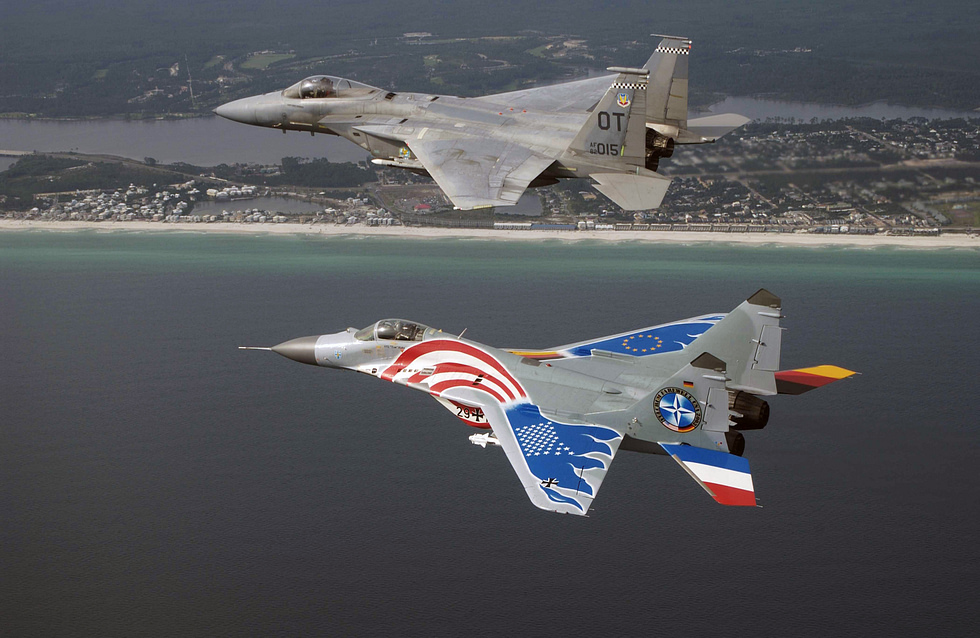
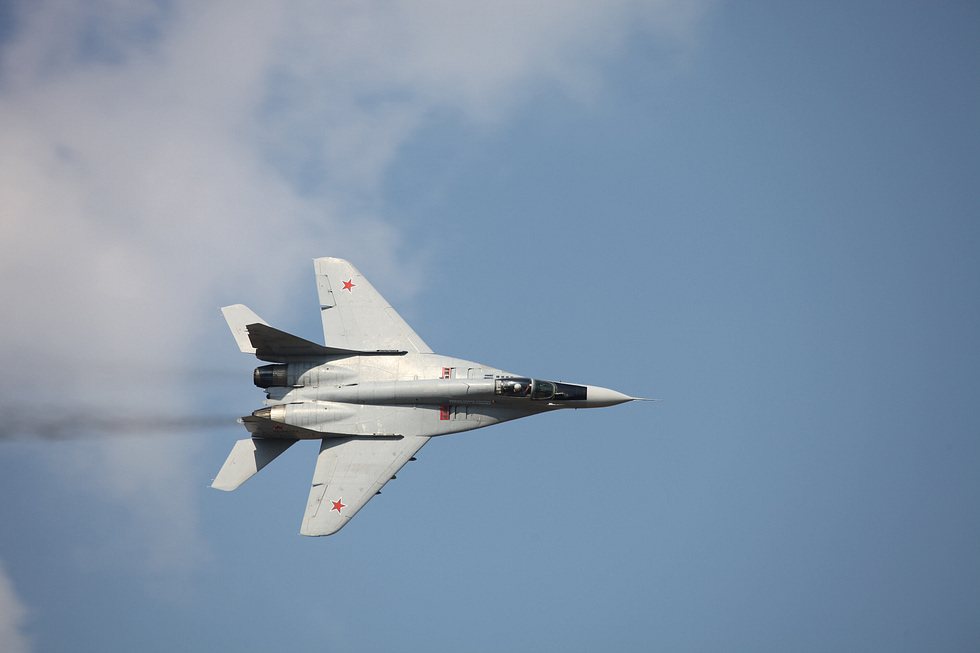
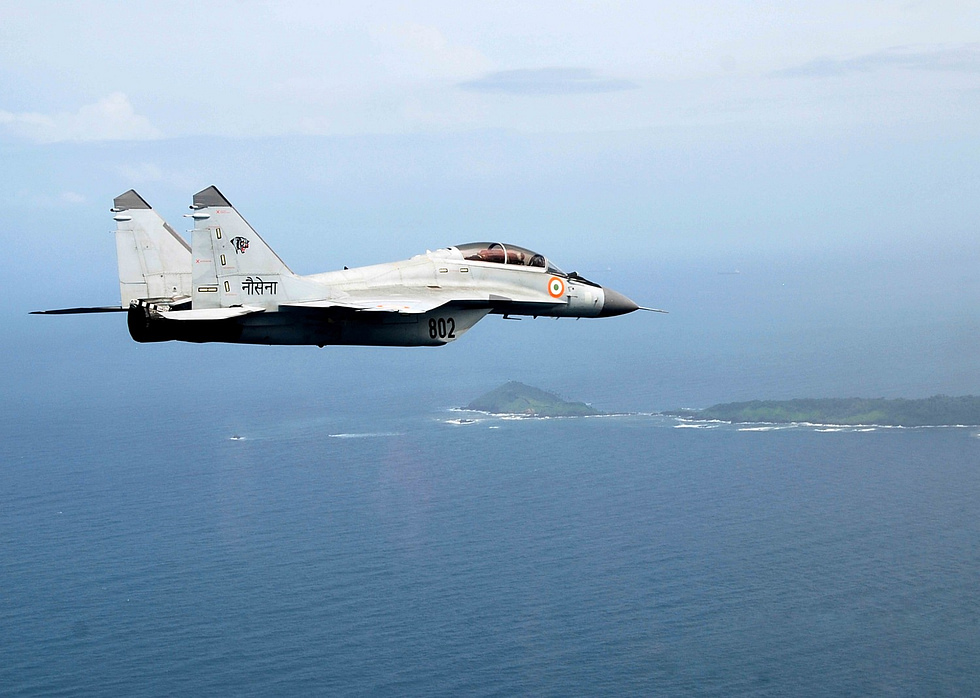
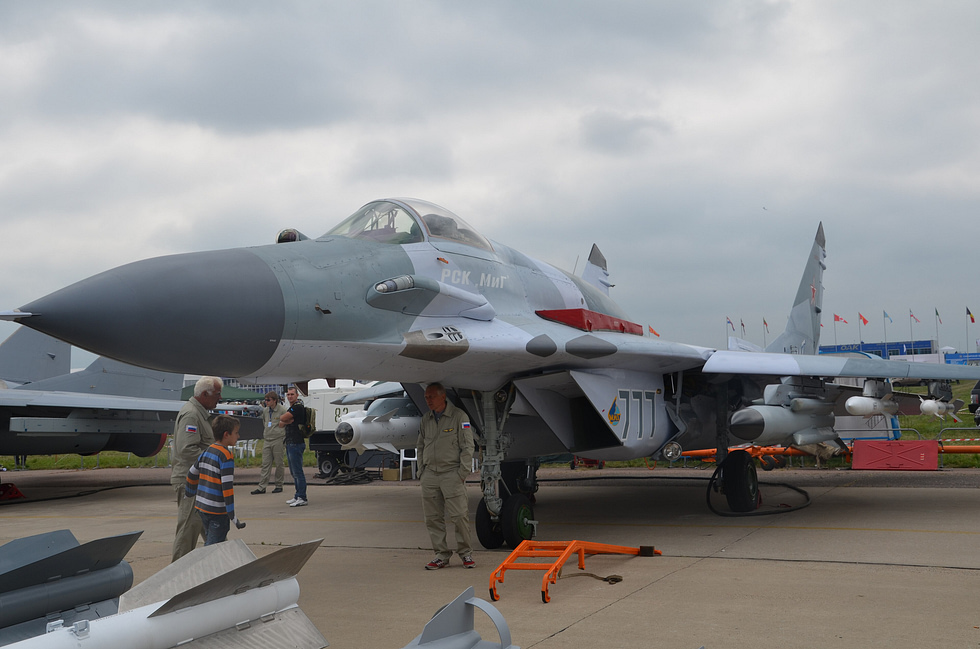
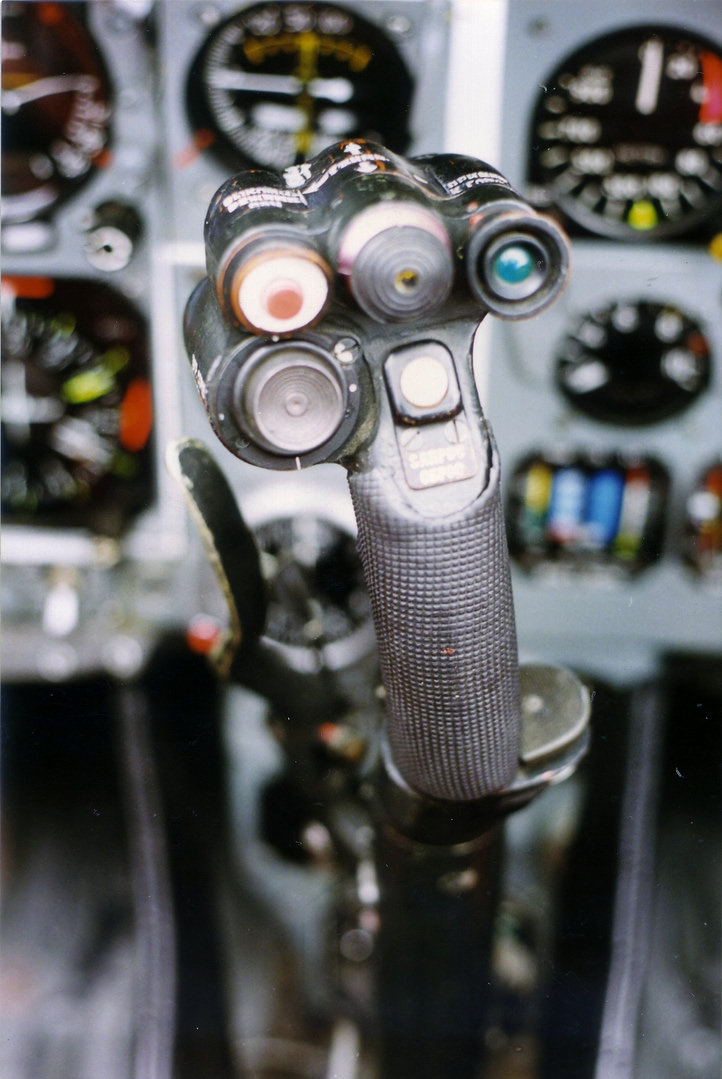
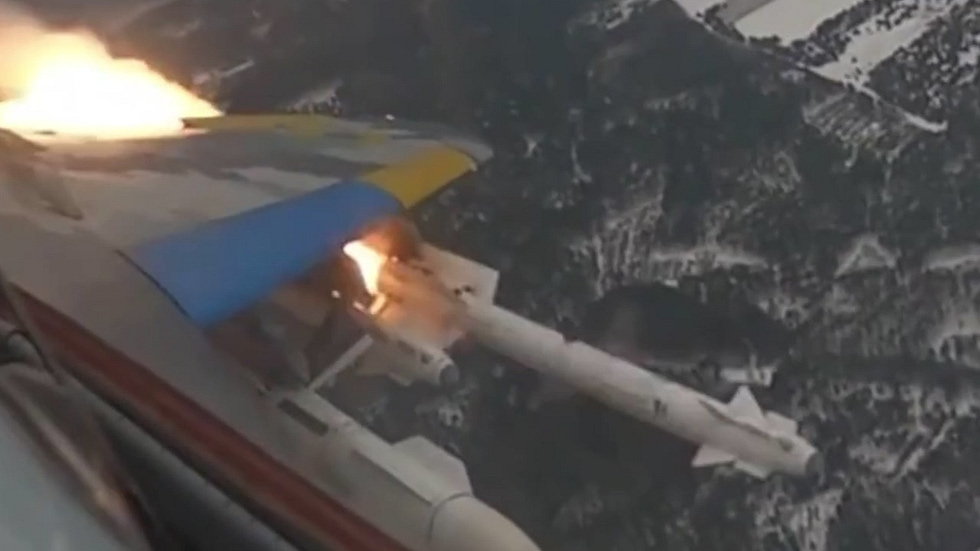
The Fulcrum in motion
A cockpit and technical walkthrough of the MiG-29 Fulcrum.
Where the Fulcrum flies
Tested on four continents
The MiG-29 fought in the Gulf War, over the Balkans, in the Horn of Africa and — from 2022 — over Ukraine. Its published kill and loss records are among aviation’s most politically contested, so always read them as claims, not settled scores. What is beyond dispute is the breadth of the Fulcrum’s service and the shock it delivered to NATO in mock combat.
Compare the combat record of every military aircraft. Figures as of July 2026.
Everything people ask about the MiG-29
Can I fly a MiG-29?
How fast is the MiG-29?
Is the MiG-29 still in service?
What was the R-73 and helmet sight about?
MiG-29 vs Su-27 — who wins?
How many MiG-29s were built?
What is the MiG-29K?
How does the MiG-35 relate?
你 can actually fly the MiG-29.
Pick your cockpit.
Some legends only live in museums — others are fuelled and waiting. MiGFlug has put civilians in real military jet cockpits since 2004.
 Fly the L-39 AlbatrosThe world’s most-flown jet trainer — aerobatics included
 Fly the F-104 Starfighter“The missile with a man in it”
 Fly the MiG-21The Cold War’s most-produced jet
 驾驶T-33流星战斗机America’s first jet trainer
 Fly the DH VampireA piece of early jet history
 Fly the S.211Agile Italian jet trainer
 Fly the MB-326The classic Aermacchi jet
 Fly the MiG-15The Soviet legend of the Korean War
Continue the tour
Every fact, checked
- GlobalSecurity.org — MiG-29Detailed development, specification and combat-history references.
- Naval TechnologyMiG-29K/KUB carrier-fighter programme details for India and Russia.
- We Are The MightyGermany inheriting East German MiG-29s and NATO’s mock-combat surprise.
- The AviationistCockpit-video and display-flying reporting on European Fulcrums.
- Russia BeyondNarrative of the Ethiopia–Eritrea Su-27 vs MiG-29 duels (contested figures).
- Military Watch MagazineVariant breakdowns and the East African air-war analysis.
- Vintage Aviation NewsFirst-flight anniversary and development background.
- MiGFlug AfterburnerThe civilian MiG-29 flight experience and Fulcrum feature articles.