
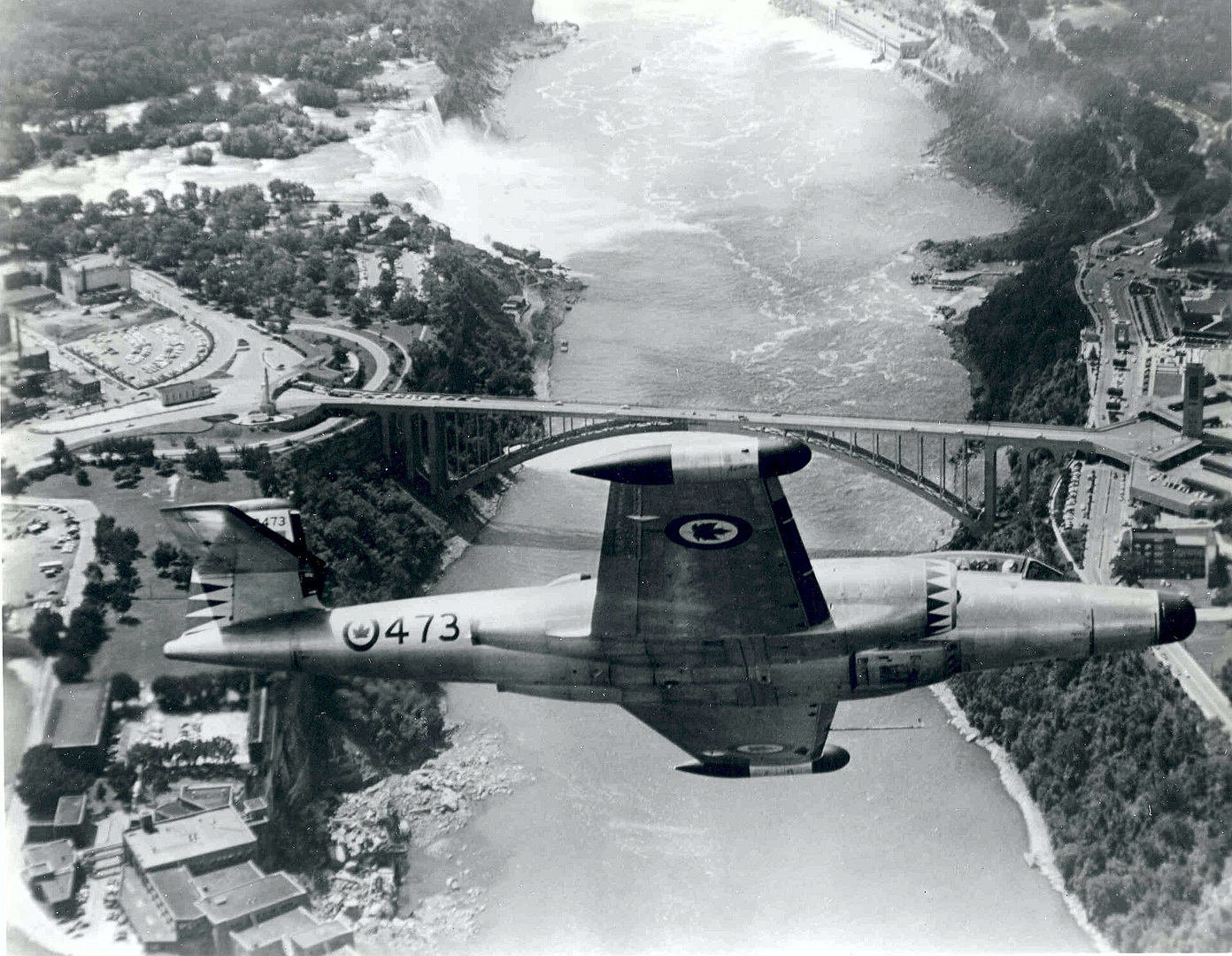
Avro Canada CF-100
“Canuck”
Canada’s big twin-jet all-weather interceptor — the only Canadian-designed combat aircraft ever to reach large-scale production, the first straight-winged jet to go supersonic, and the rugged NORAD guardian the crews affectionately called “the Clunk.”
Canada builds its own interceptor
In 1946 the young Royal Canadian Air Force faced a hard geographic fact: the shortest route for Soviet bombers to reach North America ran straight over the Canadian Arctic, and they would come at night and in weather that grounded lesser aircraft. Rather than simply buy an interceptor abroad, Canada chose to build its own. The task went to Avro Canada, and the result — first flown on 19 January 1950 — was the CF-100 Canuck, the first jet aircraft designed and built in Canada, and the only Canadian-designed combat aircraft ever to reach large-scale production.
The Canuck was a big, honest machine: a two-seat, straight-winged interceptor with the pilot and a radar navigator in tandem, powered by two Canadian Avro Orenda turbojets buried in the fuselage roots. It was never meant to dogfight. Its job was to be scrambled into the dark, vectored by ground control, find a bomber on its own radar and destroy it on a single pass. Crews nicknamed it “the Clunk” — commonly said to be for the heavy noise the nose gear made retracting — and, less kindly, the “Lead Sled.” The names stuck to an aircraft that proved tough, dependable and surprisingly capable.
It also had a genuine claim to fame. On 18 December 1952, Avro test pilot Janusz “Jan” Zurakowski pushed a CF-100 prototype past the speed of sound in a dive — making the straight-winged Canuck, by the most-cited account, the first straight-wing jet aircraft to fly supersonic in controlled flight. The definitive interceptor models, the Mk 4 和 Mk 5, carried batteries of unguided “Mighty Mouse” 2.75-inch rockets in wingtip pods, the Mk 5 relying on those rockets alone after its guns were deleted and its wingtips and tail extended for better high-altitude reach.
The Canuck stood alert for NORAD across Canada, and from the mid-1950s equipped RCAF squadrons in Europe under NATO, guarding the continent’s skies from bases in France and West Germany. Belgium liked it enough to buy 53 of them. It flew in the shadow of its glamorous stablemate, the supersonic Avro Arrow — and outlived it: the Arrow was cancelled in 1959, while the humble Canuck soldiered on. Replaced in the interceptor role from about 1961 by the CF-101 Voodoo, it found a long second career as an electronic-warfare and target-towing aircraft, finally retiring in 1981 — more than three decades after its first flight.
01The Avro Canada CF-100 Canuck’s origins: how the Arctic bomber threat gave Canada its own interceptor
The Canuck was born from a 1946 RCAF requirement for a long-range, twin-engined, radar-equipped all-weather interceptor able to defend Canada’s vast, thinly-populated north in any conditions. No foreign type quite fit, and Canada’s wartime aircraft industry was looking for a peacetime future, so the newly-formed Avro Canada was handed the job of designing the country’s first jet fighter from scratch.
The programme was ambitious for a nation that had never designed a jet combat aircraft, and the early flight-test phase was troubled. But the aircraft that emerged was a genuine success on its own terms: rugged, roomy, well-suited to Arctic operations, and built around the radar and fire-control system that were its real weapons. That it was also home-grown — airframe and Orenda engines both Canadian — made it a point of national pride.
What makes it special
A wholly Canadian interceptor — airframe and engines
The CF-100 was designed and built in Canada by Avro Canada, powered by two Canadian Avro Orenda axial-flow turbojets developed by the same industrial group. Very few nations have ever fielded a home-designed jet fighter with home-designed engines; the Canuck made Canada one of them, and remains the only Canadian-designed combat aircraft to reach volume production.
The straight wing that went supersonic
Where its swept-wing contemporaries chased speed, the Canuck kept a thin, straight wing for the steady handling an all-weather radar platform needs. Yet on 18 December 1952 test pilot Jan Zurakowski dove a CF-100 through Mach 1 — by the most-cited account the first straight-winged jet to fly supersonic in controlled flight, a feat few expected of the type.
All-weather radar and a wall of Mighty Mouse rockets
The Canuck’s true weapon was its nose radar and Hughes fire-control system, worked by the back-seat navigator to find a bomber in cloud or darkness. The definitive Mk 5 was armed entirely with unguided 2.75-inch “Mighty Mouse” rockets — some 58 of them in two wingtip pods, ripple-fired in a single saturating salvo.
02The CF-100 Canuck’s supersonic dive: Jan Zurakowski and the straight-wing sound barrier
On 18 December 1952, Avro Canada’s chief development test pilot Janusz Zurakowski — a Polish-born wartime RAF pilot and famed aerobatic display flyer — took a CF-100 into a dive and pushed it past the speed of sound. Because the Canuck had a conventional straight wing rather than the swept wing then thought necessary for supersonic flight, the achievement is widely cited as the first time a straight-winged jet aircraft exceeded Mach 1 in controlled flight.
It was a dive, not level flight — the Canuck was never a supersonic aircraft in service — but it demonstrated the strength of the airframe and the skill of Avro’s test team, and it burnished the reputation of an interceptor that critics had written off as a heavy, plodding “Lead Sled.”
03The CF-100 Mk 5 Canuck’s armament: from cannon to an all-rocket interceptor
Early Canucks mixed guns and rockets: the Mk 4 carried a belly pack of eight 0.50-in machine guns alongside its rocket pods. The final production model, the Mk 5, took the concept to its logical end — it deleted the gun pack entirely and relied solely on unguided 2.75-inch “Mighty Mouse” folding-fin rockets carried in the wingtip pods, roughly 58 in total.
The Mk 5 also gained extended wingtips and tailplane to improve handling and reach at high altitude, where the bombers it hunted flew. The idea was blunt but effective for the era: get the radar onto a target in the dark, then empty a wall of rockets into its path on a single firing pass, trading pinpoint accuracy for sheer volume of fire.
Full specifications
Figures below are for the definitive rocket-armed CF-100 Mk 5. Several period sources differ on top speed and ceiling, so contested values are given as commonly cited figures rather than exact numbers.
Airframe & Performance
- 全体人员
- 2 (pilot + radar navigator)
- 长度
- ~16.5 m (54 ft 2 in)
- 翼展
- ~17.7 m (58 ft); ~18.5 m over rocket pods
- 高度
- ~4.4 m (14 ft 6 in)
- 空重
- ~10,480 kg (23,100 lb)
- Max takeoff weight
- ~16,780 kg (37,000 lb)
- Max speed
- ~1,046 km/h (~650 mph) at altitude
- 设备天花板
- ~13,700–16,400 m (~45,000–54,000 ft)
- 范围
- ~3,220 km (~2,000 mi)
Propulsion, Armament & Cost
- Engines
- 2 × Avro Canada Orenda 11 turbojets
- Thrust (each)
- ~32.5 kN (~7,300 lbf)
- Fire control
- Hughes APG-40 radar / MG-2 FCS
- Armament (Mk 5)
- ~58 × 2.75-in Mighty Mouse FFAR (wingtip pods)
- Armament (Mk 4)
- 8 × 0.50-in MGs + rockets
- First flight
- 19 January 1950
- Built
- 692 total (incl. 332 Mk 5), 1950–1958
- Unit cost
- ~CA$1 million (1950s, estimate)
- Cost per flight hour
- No reliable public figure
04The CF-100 Canuck’s cost: what Canada’s home-built interceptor was worth
As a Canadian government procurement of the early 1950s, the Canuck never carried a modern-style flyaway sticker price, and published figures are scarce. Period estimates place the unit cost on the order of CA$1 million in 1950s dollars — a substantial sum reflecting the aircraft’s size and its expensive radar and fire-control electronics. That figure should be read as an order-of-magnitude estimate, not a sourced flyaway price.
No reliable public cost-per-flight-hour number exists for the type. As with most first-generation Cold War interceptors, operating-cost data was never published in a form comparable to modern figures, so any precise dollar-per-hour claim for the CF-100 is effectively a guess.
From Cold-War prototype to NORAD workhorse
The requirement
The RCAF calls for a twin-engined, radar-equipped all-weather interceptor to defend the Canadian Arctic; Avro Canada gets the job.
First flight
The prototype CF-100 makes its maiden flight on 19 January — the first jet aircraft designed and built in Canada.
Through the sound barrier
On 18 December, Jan Zurakowski dives a CF-100 past Mach 1 — the first straight-winged jet to fly supersonic in controlled flight.
Enters RCAF service
The Canuck reaches operational squadrons as Canada’s front-line all-weather interceptor, standing NORAD alert.
Guarding NATO’s skies
RCAF CF-100 squadrons deploy to Europe with 1 Air Division, flying air-defence alert from bases in France and West Germany.
Belgium buys in
The Belgian Air Force orders 53 Mk 5 Canucks — the only export customer for the type.
Production ends
The last of 692 Canucks is delivered as the supersonic Avro Arrow flies — the Arrow is cancelled the following year.
Handed the second job
Supersonic CF-101 Voodoos take over interception; the Canuck begins a long career in electronic warfare and target towing.
Retirement
The last CF-100s are withdrawn from RCAF service — more than three decades after the type first flew.
Twelve CF-100 Canuck stories
Why it is “the Clunk”
RCAF crews nicknamed the Canuck for the heavy clunk its nose gear made retracting.
Read the full story
Canada’s own jet fighter
The CF-100 was the first jet aircraft designed and built in Canada — and the only Canadian combat type built in numbers.
Read the full story
First straight-wing jet to go supersonic
On 18 December 1952, Jan Zurakowski dove a CF-100 through the sound barrier.
Read the full story
Guarding the top of the world
The Canuck existed to catch Soviet bombers crossing the Arctic at night, in any weather.
Read the full story
A wall of Mighty Mouse rockets
The Mk 5 dropped its guns entirely for 58 unguided 2.75-inch rockets in wingtip pods.
Read the full story
Made in Canada: the Orenda
The Canuck was powered by two Canadian Avro Orenda turbojets — a national engine for a national fighter.
Read the full story
A Canadian jet over Europe
From the mid-1950s, RCAF CF-100 squadrons stood NATO alert from bases in France and West Germany.
Read the full story
Belgium’s 53 Canucks
Belgium was the CF-100’s only foreign buyer, operating 53 Mk 5s in the all-weather role.
Read the full story
Living in the Arrow’s shadow
The Canuck flew alongside — and outlived — the doomed supersonic Avro Arrow.
Read the full story
From interceptor to electronic warrior
Replaced as an interceptor around 1961, the Canuck became an EW and target-towing aircraft.
Read the full story
Three decades in the air
First flown in 1950, the last CF-100 was not retired until 1981.
Read the full story
The interceptor Canada built itself
Judged on its own terms, the CF-100 did exactly what Canada asked of it.
Read the full story
The Canuck in pictures
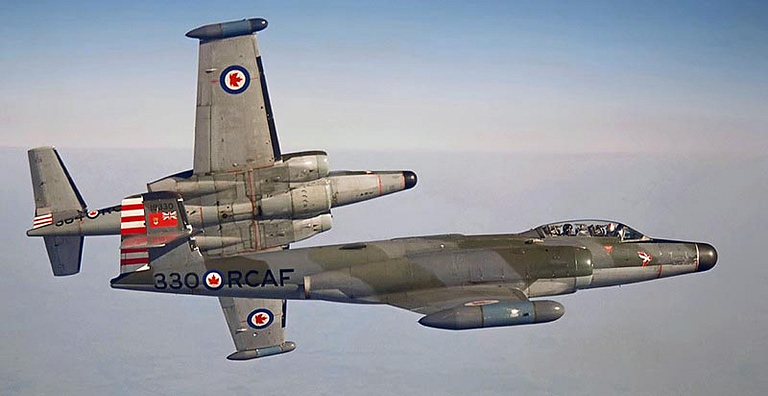
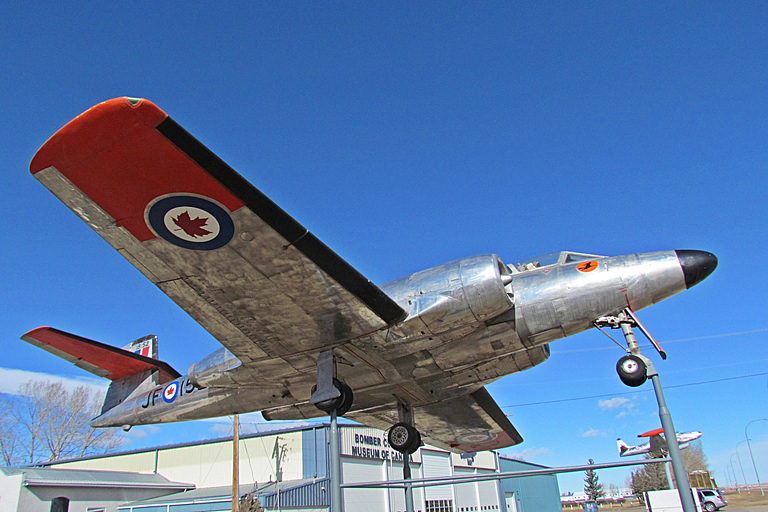
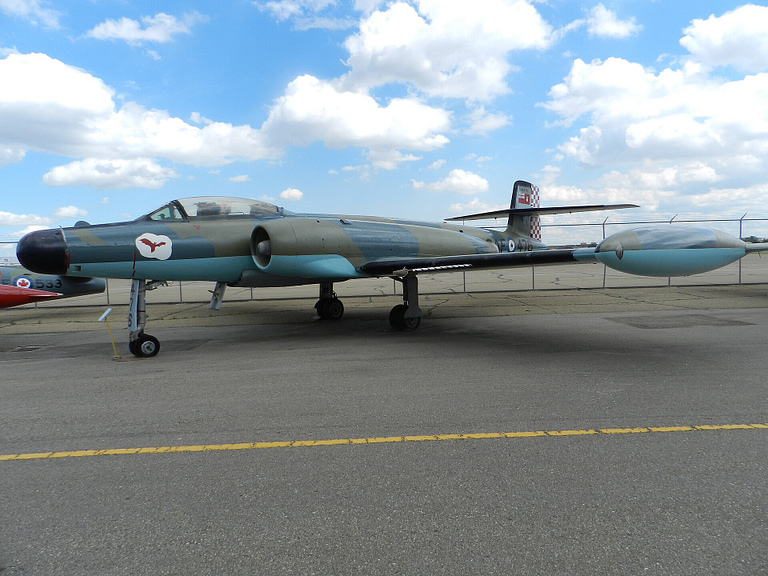
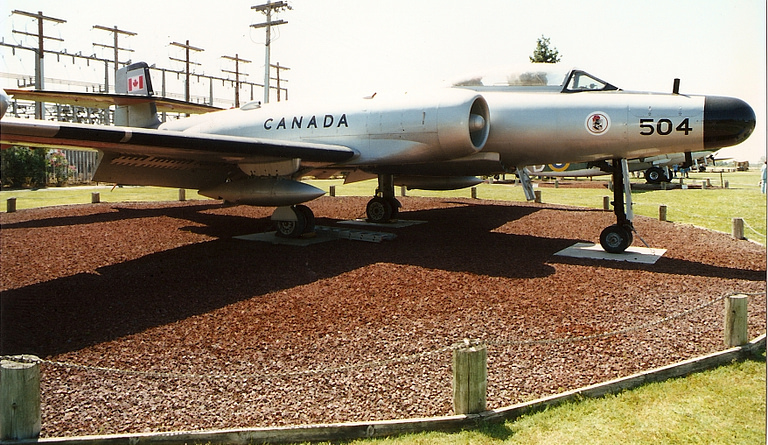
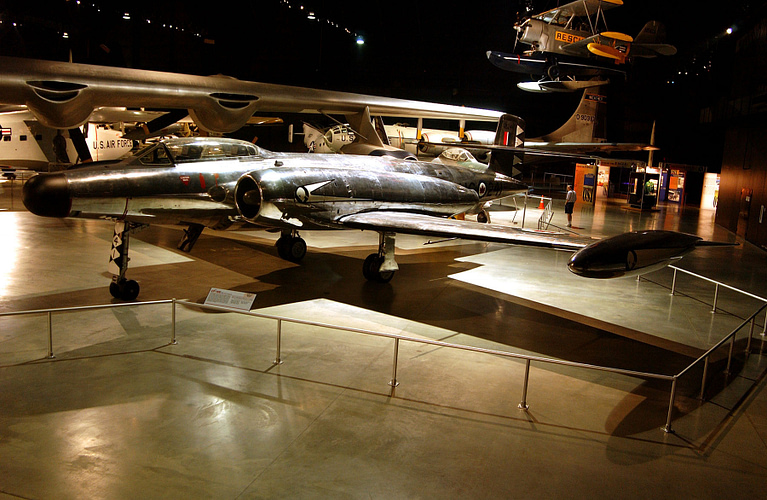
The Canuck in motion
A curated video feature for the Avro Canada CF-100 Canuck is coming soon. In the meantime, explore the photo gallery above and the operator map below.
Where the Canuck served
Where the record stands
The CF-100 never fired a shot in anger at an enemy aircraft — the Soviet bomber raids it was built to stop never came. Its record is instead one of constant alert across the roof of the continent, of a genuine engineering first, and of remarkable longevity. Its true achievement was deterrence: standing guard, ready, over Canada and NATO Europe for the most dangerous years of the Cold War, so that the intercepts it trained for were never needed.
Compare the combat record of every military aircraft. Figures as of July 2026.
Everything people ask about the CF-100 Canuck
Can I fly in a CF-100?
Why is the CF-100 called “the Clunk”?
Was the CF-100 really the first straight-wing jet to go supersonic?
How was the CF-100 armed?
Who operated the CF-100 Canuck?
What was the CF-100’s connection to the Avro Arrow?
You can’t fly the CF-100.
These, you can.
Some legends only live in museums — others are fuelled and waiting. MiGFlug has put civilians in real military jet cockpits since 2004.
 Fly the L-39 AlbatrosThe world’s most-flown jet trainer — aerobatics included
 Fly the F-104 Starfighter“The missile with a man in it”
 Fly the MiG-21The Cold War’s most-produced jet
 驾驶T-33流星战斗机America’s first jet trainer
 Fly the DH VampireA piece of early jet history
 Fly the S.211Agile Italian jet trainer
 Fly the MB-326The classic Aermacchi jet
 Fly the MiG-15The Soviet legend of the Korean War
Continue the tour
Every fact, checked
- Royal Canadian Air Force — CF-100 CanuckOfficial RCAF history: service dates, roles and the aircraft’s place in Canadian air defence.
- Ingenium — Canada Aviation and Space MuseumAirframe history, Mk 5 details and the type’s national significance.
- Air Vectors — Avro Canada CF-100 Canuck & CF-105 ArrowDeep engineering and variant history, and the Zurakowski supersonic dive.
- Skytamer — CF-100 Mk 5 CanuckMk 5 specifications, armament, production totals and Belgian service.
- GlobalSecurity.org — CF-100 CanuckProgramme background, dimensions, engines and operational history.
- Canadian Warplane Heritage Museum — CF-100 Mk 5Preserved-airframe notes, crew, roles and the “Clunk” nickname.
- flugzeuginfo.net — CF-100 Canuck Mk 5Cross-check of Mk 5 dimensions, weights, speed and ceiling.
- The Hangar Flight Museum — Avro CF-100 CanuckCanadian museum overview of the type’s design, service and legacy.