
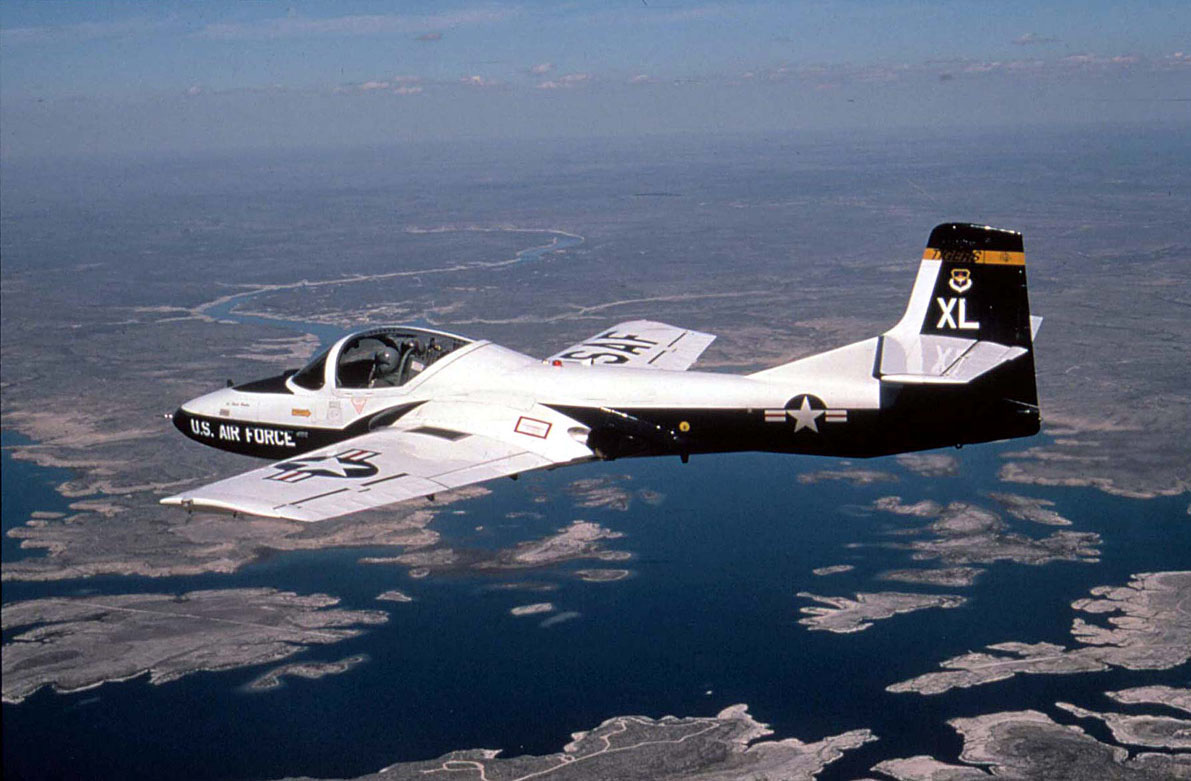
Cessna T-37
“Tweet”
The little twin-jet that taught America to fly. For over half a century the T-37 was the U.S. Air Force’s first jet — a side-by-side primary trainer so ear-splitting it earned the name “the 6,000-pound dog whistle.”
The Cessna T-37 Tweet: the little screamer that made a pilot
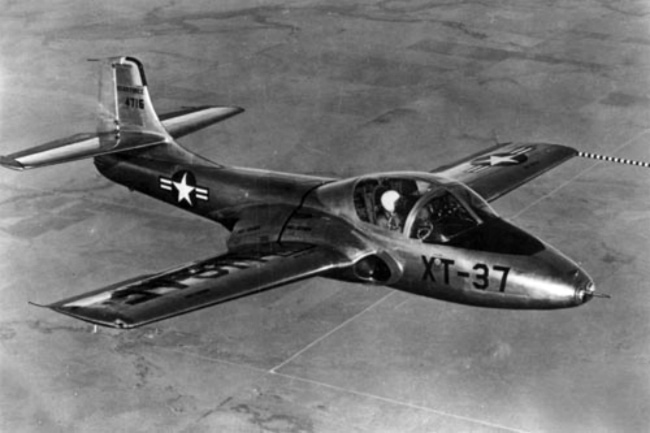
In 1952 the U.S. Air Force went looking for something it had never had before: a jet aircraft designed from the very first sketch to teach a raw student to fly. Its Trainer Experimental (TX) competition asked for a small, docile, side-by-side jet, and Cessna — a company famous for light civilian aircraft, not military jets — won it with the Model 318. The prototype, designated XT-37, first flew from Wichita, Kansas on 12 October 1954. It was the first American aircraft conceived from conception purely as a jet trainer.
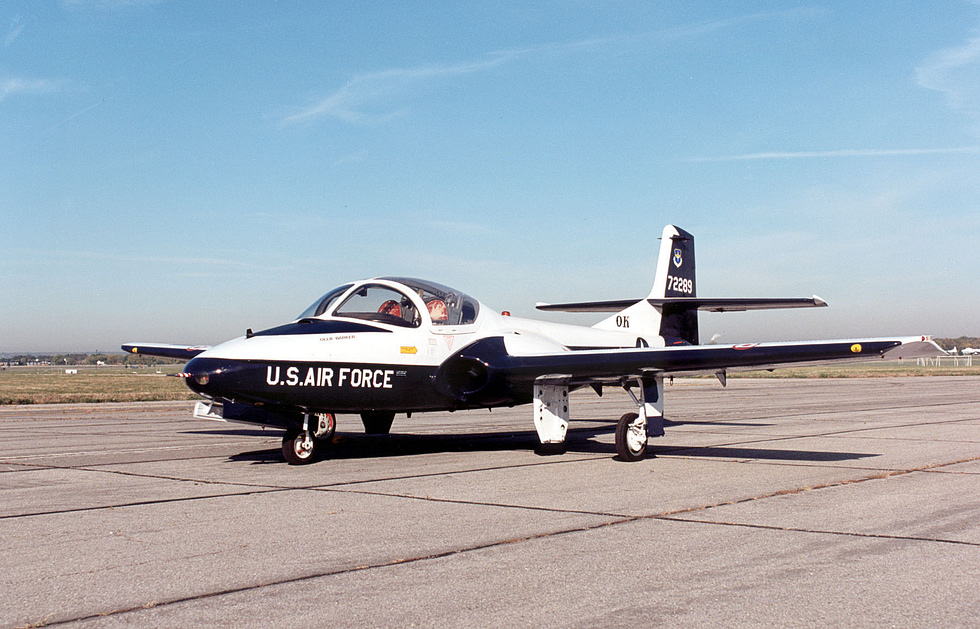
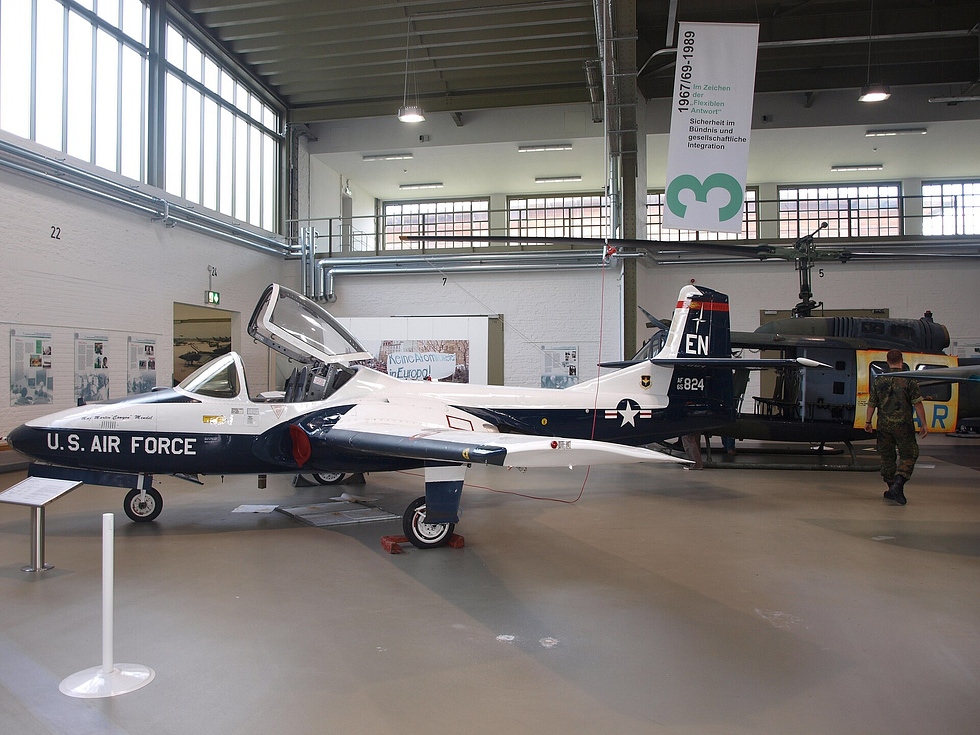
What emerged was tiny, friendly and unlike almost every other trainer of its age. Where most put instructor and student in tandem, the T-37 sat them side by side, close enough for the instructor to point, demonstrate and shout over the noise. It had a low straight wing, tricycle landing gear, a wide clamshell canopy and two small turbojets buried in the wing roots. It was honest, forgiving and, crucially, a superb aircraft in which to practise spins — the exercise that separates pilots from passengers.
Then there was the sound. The T-37’s two Continental J69 engines — license-built versions of the French Turbomeca Marboré — spun at very high rpm and shrieked at a piercing, high frequency that could be heard for miles and was punishing on the flight line. Generations of ground crew and instructors gave it the names that stuck: “Tweet,” “Tweety Bird,” “Screaming Mimi,” the “Converter” (it converted fuel and air into pure noise) and, most memorably, the “6,000-pound dog whistle.”
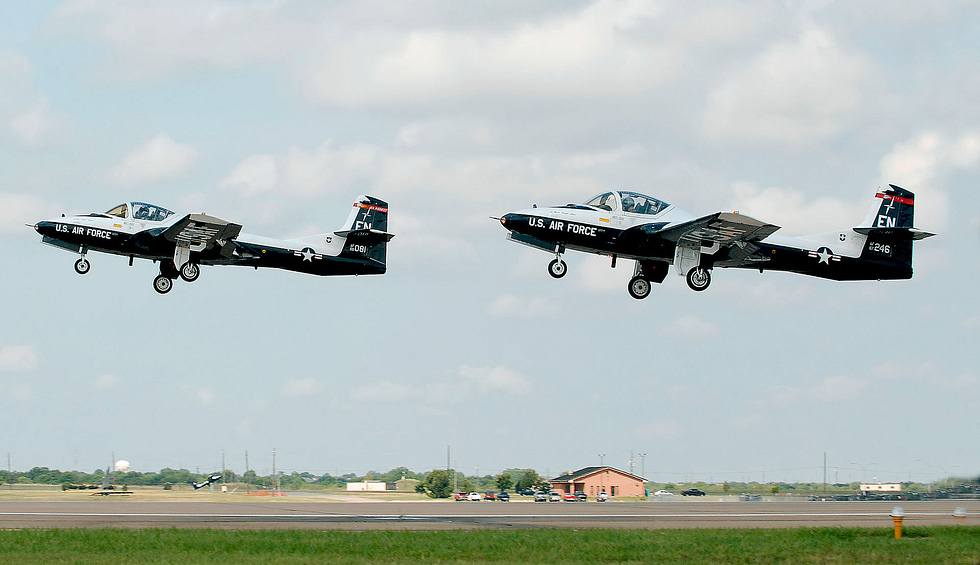
The T-37A entered service in 1957; the improved T-37B of 1959 added uprated engines and better avionics. For the next five decades almost every American military pilot began the same way — strapping into a Tweet, soloing it, then stepping up to the supersonic T-38 Talon. Cessna also built the armed A-37 Dragonfly attack version, which went to war in Vietnam, and exported the type to a long list of allied air forces. The Tweet finally bowed out of USAF service in 2009, replaced by the turboprop T-6 Texan II after more than half a century of teaching.
01The Cessna T-37 Tweet’s side-by-side cockpit: why the Air Force sat student and instructor shoulder to shoulder
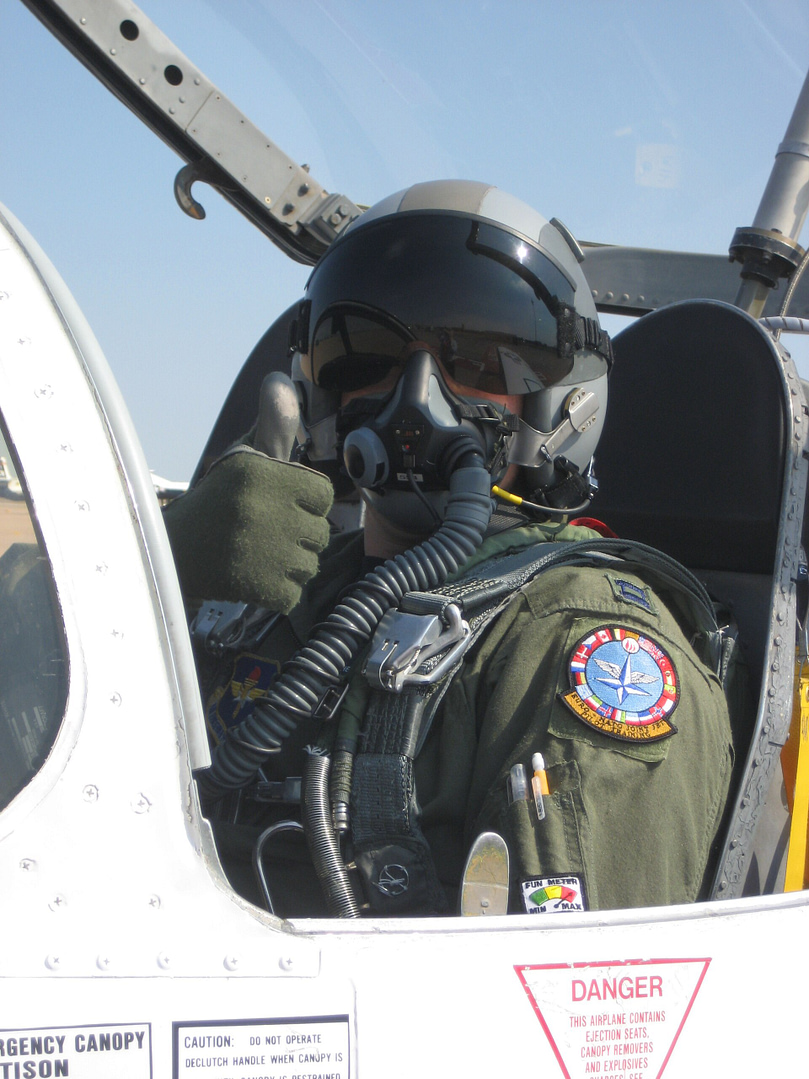
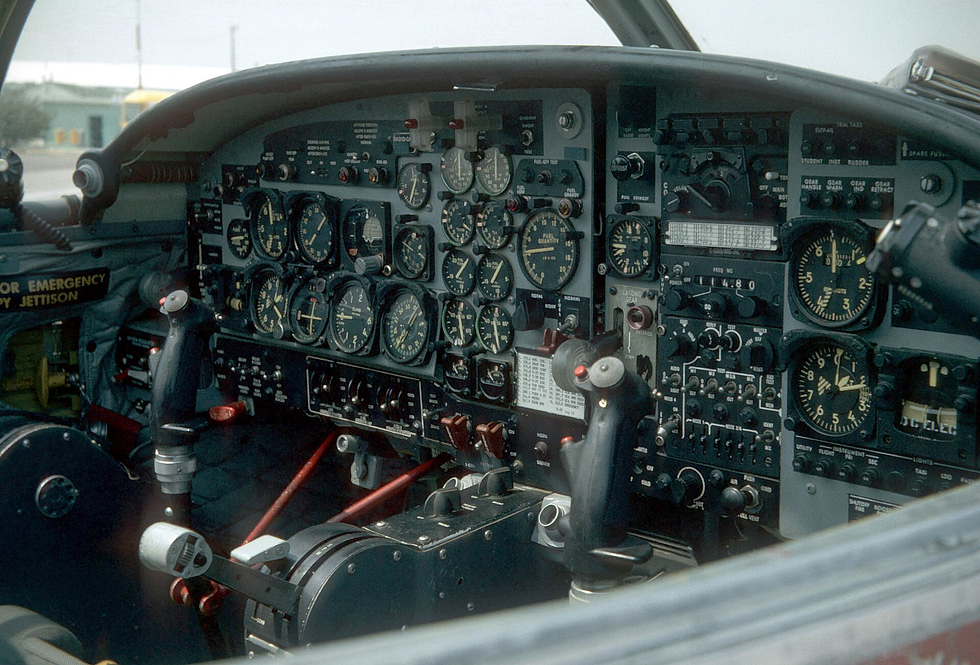
Most trainers — the T-6 Texan, the T-38 Talon, the Hawk — seat the student in front and the instructor behind. Cessna’s T-37 broke with that tradition and put the two crew members side by side. The Air Force chose the layout deliberately: in the early jet age it believed an instructor sitting next to the student, able to see the student’s hands, point directly at instruments and communicate face-to-face, would teach basic flying faster and more safely than one sitting behind. The arrangement made the fuselage wider and a little draggier, but for a primary trainer that never mattered. It became one of the Tweet’s defining and most-remembered features, and shaped how tens of thousands of pilots learned their trade.
What makes the Cessna T-37 Tweet special
Two tiny turbojets — and an unforgettable scream
The Tweet was powered by two Continental J69 turbojets, license-built from the French Turbomeca Marboré and producing about 1,025 lbf of thrust each in the T-37B. Small and simple, they spun at very high rpm and gave off a piercing high-frequency whine that carried for miles — the source of every one of the aircraft’s nicknames, from “Tweet” to the “6,000-pound dog whistle.”
Side-by-side seating — a jet built for teaching
Unusually for a trainer, the T-37 seated instructor and student shoulder to shoulder rather than in tandem. The instructor could watch the student’s hands, point at instruments and talk face-to-face — a layout chosen to make primary jet instruction faster and safer, and one that became the Tweet’s signature.
The Air Force’s favourite spin trainer
Light, docile and fitted with ejection seats, the Tweet was forgiving enough for a first solo yet honest enough to teach real spins and aerobatics. That combination — friendly on the controls but capable of a proper, recoverable spin — made it the ideal aircraft in which to find out whether a student would become a military pilot.
02The Cessna T-37 Tweet’s engines: the J69 and the “6,000-pound dog whistle”
The T-37’s two Continental J69 turbojets were compact centrifugal-flow engines derived under licence from the Turbomeca Marboré. Each produced only around 920–1,025 lbf of thrust, but they ran at extremely high rotational speed, and the intakes fed air through openings that produced an intensely high-pitched shriek. On the flight line the noise was notorious — ground crews reached for ear protection long before the more familiar roar of afterburning fighters bothered them. The sound gave the aircraft its entire family of nicknames and made the Tweet instantly recognisable, often before it even came into view.
03The Cessna T-37 Tweet in training: soloing the little jet before the T-38
For most of its career the Tweet sat at the very start of the U.S. Air Force pilot-training pipeline. A student would master its handling, aerobatics and spin recovery, fly a first jet solo in it, and only then graduate to the sleek, supersonic Northrop T-38 Talon for advanced training. Because it was the aircraft in which so many pilots first flew a jet alone, the Tweet holds an outsized place in Air Force memory — remembered with a mixture of affection and ringing ears by nearly everyone who passed through undergraduate pilot training between 1957 and 2009.
Cessna T-37B Tweet full specifications
Airframe & Performance
- 全体人员
- 2 — instructor + student, side-by-side
- 长度
- 8.92 m (29 ft 3 in)
- 翼展
- 10.30 m (33 ft 10 in)
- 高度
- 2.80 m (9 ft 2 in)
- Max takeoff weight
- ~3,000 kg (6,600 lb)
- Max speed
- ~684 km/h (425 mph · 369 kt)
- 设备天花板
- ~10,700 m (35,000 ft)
- 范围
- ~1,500 km (930 mi)
- 攀升速率
- ~1,065 m/min (3,500 ft/min)
Propulsion & Programme
- Engines
- 2 × Continental J69-T-25 turbojets
- Thrust (each)
- ~1,025 lbf (4.6 kN)
- First flight
- 12 October 1954 (XT-37)
- Introduced
- 1957 (T-37A)
- Retired
- 2009 (U.S. Air Force)
- Built
- ~1,269 (1955–1975)
- Unit cost
- ~$160,000 (T-37B, 1960s · estimate)
- Cost per flight hour
- No official public figure (see note)
04The Cessna T-37 Tweet’s operating costs: the cheap little jet that trained a nation
The T-37 was prized precisely because it was inexpensive to buy and to run. A T-37B cost only in the region of $160,000 in 1960s dollars — a figure that should be read as an order-of-magnitude estimate rather than an audited price — and its small, simple engines burned far less fuel than any frontline jet. No authoritative, published cost-per-flight-hour figure exists for the type in open sources; contemporary accounts simply describe it as one of the cheapest jets the Air Force ever operated. Any precise dollar-per-hour number attached to the Tweet online should be treated as an estimate, not an official statistic.
The Cessna T-37 Tweet: from drawing board to retirement
The competition
The U.S. Air Force launches its Trainer Experimental (TX) contest for a purpose-built side-by-side primary jet trainer.
First flight
Cessna’s XT-37 prototype makes its maiden flight from Wichita, Kansas on 12 October — the first U.S. aircraft designed from scratch as a jet trainer.
Enters service
The T-37A joins the Air Force and begins turning cadets into jet pilots.
The definitive T-37B
Uprated J69-T-25 engines and improved avionics produce the T-37B, the version most pilots would fly.
Export and attack
The armed T-37C export variant and the attack-configured A-37 are developed from the trainer.
The Dragonfly goes to war
The A-37 Dragonfly enters combat in Vietnam, taking the Tweet’s airframe into counter-insurgency operations.
The replacement arrives
The turboprop T-6 Texan II begins taking over primary training from the ageing Tweet.
The last scream
The U.S. Air Force retires its final T-37s after 52 years of service — the flight line falls quiet at last.
From the flight line: twelve T-37 Tweet stories
A light-plane maker builds a jet
Cessna, famous for civilian aircraft, beat the field to win the Air Force’s first purpose-built jet-trainer contest.
Read the full story
Maiden flight at Wichita
The XT-37 prototype first flew on 12 October 1954 — the first U.S. aircraft conceived purely as a jet trainer.
Read the full story
The 6,000-pound dog whistle
The J69 engines’ piercing shriek gave the Tweet a whole family of names.
Read the full story
Shoulder to shoulder
The side-by-side cockpit set the Tweet apart from almost every other trainer.
Read the full story
The first solo
For half a century, a Tweet was the jet in which American pilots first flew alone.
Read the full story
Teaching the spin
The Tweet’s honest spin behaviour made it a superb aircraft for learning recovery.
Read the full story
From Tweet to Talon
Graduates of the Tweet moved up to the supersonic T-38 Talon.
Read the full story
The Dragonfly goes to war
Cessna turned the trainer into the armed A-37 Dragonfly for Vietnam.
Read the full story
A trainer for allied air forces
The armed T-37C was exported to a long list of friendly nations.
Read the full story
Smoke and formation
Some operators flew the Tweet on the airshow circuit.
Read the full story
Fifty-two years on the line
Few aircraft serve one air force for over half a century.
Read the full story
The flight line goes quiet
The turboprop T-6 Texan II finally replaced the Tweet.
Read the full story
The Cessna T-37 Tweet in pictures

The Cessna T-37 Tweet in motion
Authentic Hellenic Air Force cockpit footage of a T-37 “Tweety Bird” flying a spin-training sortie — exactly the exercise the Tweet was prized for, filmed from inside the side-by-side cockpit.
Where the Cessna T-37 Tweet flew
The Cessna T-37 Tweet: a trainer, not a fighter — and proud of it
The Tweet never carried weapons in U.S. service and never fired a shot in anger. Its record is not measured in kills but in careers — the tens of thousands of pilots it taught, and the sheer length of its front-line life. Its armed cousin, the A-37 Dragonfly, took the airframe to war; the trainer itself simply made the pilots who flew everything else.
The Tweet’s combat legacy belongs to its derivative — explore the armed A-37 Dragonfly, or compare the combat record of every military aircraft.
Everything people ask about the Cessna T-37 Tweet
Can I fly in a Cessna T-37 Tweet?
Why is the T-37 called the “Tweet” or the “6,000-pound dog whistle”?
How fast is the Cessna T-37 Tweet?
Why did the T-37 have side-by-side seating?
When did the Air Force retire the T-37?
What replaced the Cessna T-37 Tweet?
Is the A-37 Dragonfly the same as the T-37?
How many T-37s were built?
You can’t fly the Cessna T-37 Tweet.
These, you can.
Some legends only live in museums — others are fuelled and waiting. MiGFlug has put civilians in real military jet cockpits since 2004.
 Fly the L-39 AlbatrosThe world’s most-flown jet trainer — aerobatics included
 Fly the F-104 Starfighter“The missile with a man in it”
 Fly the MiG-21The Cold War’s most-produced jet
 驾驶T-33流星战斗机America’s first jet trainer
 Fly the DH VampireA piece of early jet history
 Fly the S.211Agile Italian jet trainer
 Fly the MB-326The classic Aermacchi jet
 Fly the MiG-15The Soviet legend of the Korean War
Continue the tour
Every fact, checked
- National Museum of the U.S. Air Force — Cessna T-37B TweetPrimary reference for specifications, service history and the aircraft’s training role.
- National Museum of the U.S. Air Force — Cessna A-37 DragonflyReference for the armed attack derivative and its Vietnam service.
- AirVectors — The Cessna T-37 / A-37Greg Goebel’s detailed development and variant history of the Tweet family.
- Avgeekery — Cessna’s T-37 Primary Jet TrainerBackground on the nicknames, noise and training culture around the Tweet.
- Plane & Pilot — The Cessna T-37 Tweety BirdOverview of the design, handling and legacy of the type.
- Air Facts Journal — The Production T-37 TweetFirst-hand perspective on flying and instructing in the Tweet.
- Military Factory — Cessna T-37 TweetCross-check for dimensions, weights, performance and production totals.
- Vintage Aviation News — Flight Test Files: Cessna T-37Notes on the aircraft’s flight-test history and lateral dynamics.