
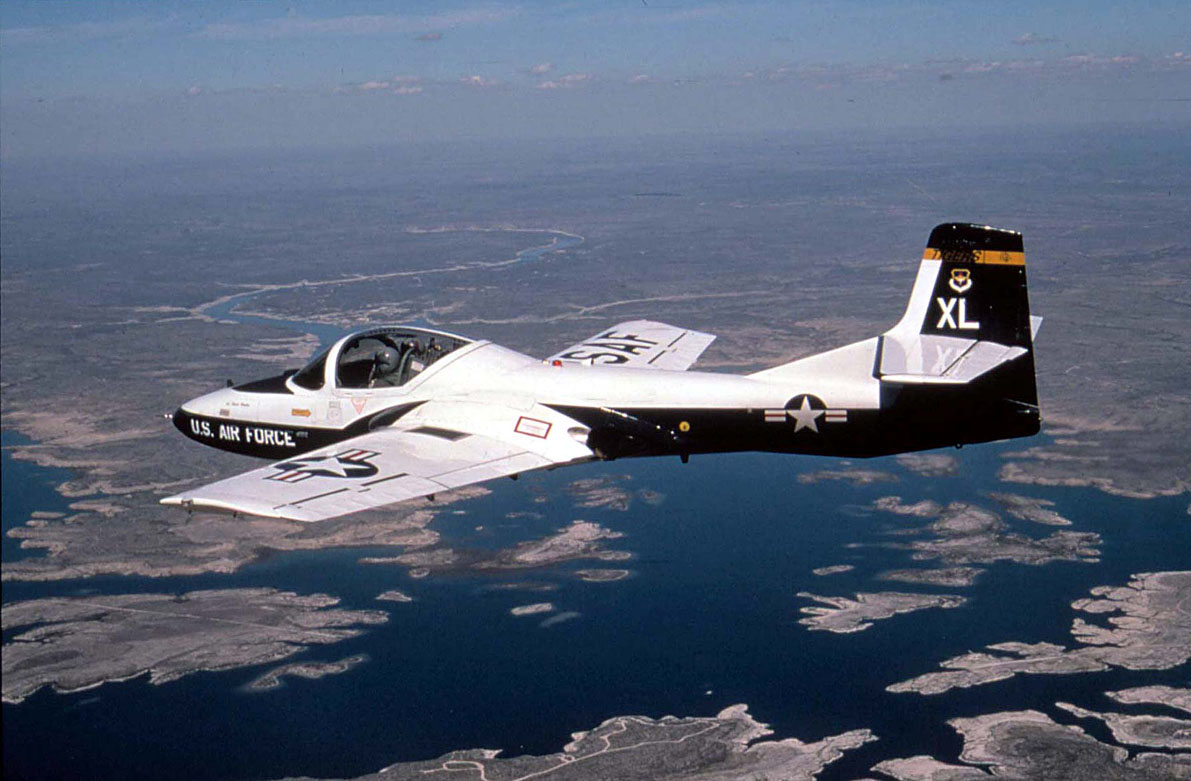
Cessna T-37
“Tweet”
The little twin-jet that taught America to fly. For over half a century the T-37 was the U.S. Air Force’s first jet — a side-by-side primary trainer so ear-splitting it earned the name “the 6,000-pound dog whistle.”
The Cessna T-37 Tweet: the little screamer that made a pilot
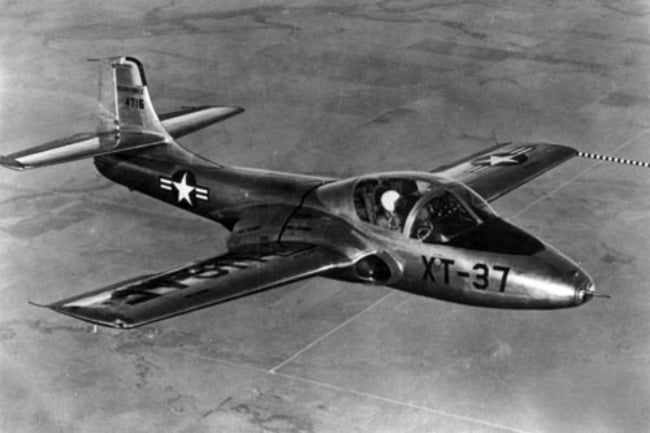
In 1952 the U.S. Air Force went looking for something it had never had before: a jet aircraft designed from the very first sketch to teach a raw student to fly. Its Trainer Experimental (TX) competition asked for a small, docile, side-by-side jet, and Cessna — a company famous for light civilian aircraft, not military jets — won it with the Model 318. The prototype, designated XT-37, first flew from Wichita, Kansas on 12 October 1954. It was the first American aircraft conceived from conception purely as a jet trainer.
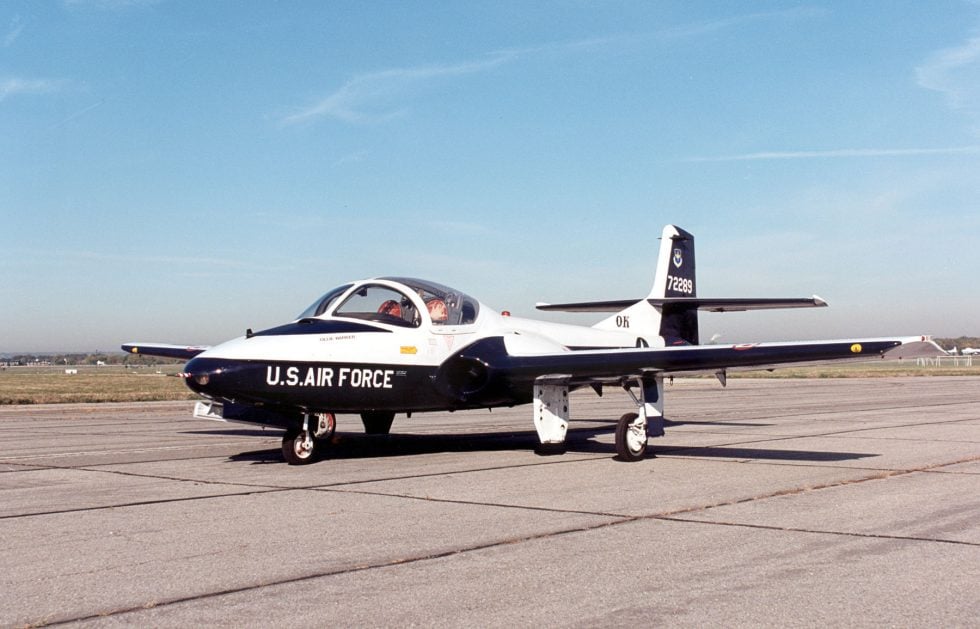
What emerged was tiny, friendly and unlike almost every other trainer of its age. Where most put instructor and student in tandem, the T-37 sat them side by side, close enough for the instructor to point, demonstrate and shout over the noise. It had a low straight wing, tricycle landing gear, a wide clamshell canopy and two small turbojets buried in the wing roots. It was honest, forgiving and, crucially, a superb aircraft in which to practise spins — the exercise that separates pilots from passengers.
Then there was the sound. The T-37’s two Continental J69 engines — license-built versions of the French Turbomeca Marboré — spun at very high rpm and shrieked at a piercing, high frequency that could be heard for miles and was punishing on the flight line. Generations of ground crew and instructors gave it the names that stuck: “Tweet,” “Tweety Bird,” “Screaming Mimi,” the “Converter” (it converted fuel and air into pure noise) and, most memorably, the “6,000-pound dog whistle.”
The T-37A entered service in 1957; the improved T-37B of 1959 added uprated engines and better avionics. For the next five decades almost every American military pilot began the same way — strapping into a Tweet, soloing it, then stepping up to the supersonic T-38 Talon. Cessna also built the armed A-37 Dragonfly attack version, which went to war in Vietnam, and exported the type to a long list of allied air forces. The Tweet finally bowed out of USAF service in 2009, replaced by the turboprop T-6 Texan II after more than half a century of teaching.
01The Cessna T-37 Tweet’s side-by-side cockpit: why the Air Force sat student and instructor shoulder to shoulder
Most trainers — the T-6 Texan, the T-38 Talon, the Hawk — seat the student in front and the instructor behind. Cessna’s T-37 broke with that tradition and put the two crew members side by side. The Air Force chose the layout deliberately: in the early jet age it believed an instructor sitting next to the student, able to see the student’s hands, point directly at instruments and communicate face-to-face, would teach basic flying faster and more safely than one sitting behind. The arrangement made the fuselage wider and a little draggier, but for a primary trainer that never mattered. It became one of the Tweet’s defining and most-remembered features, and shaped how tens of thousands of pilots learned their trade.
What makes the Cessna T-37 Tweet special
Two tiny turbojets — and an unforgettable scream
The Tweet was powered by two Continental J69 turbojets, license-built from the French Turbomeca Marboré and producing about 1,025 lbf of thrust each in the T-37B. Small and simple, they spun at very high rpm and gave off a piercing high-frequency whine that carried for miles — the source of every one of the aircraft’s nicknames, from “Tweet” to the “6,000-pound dog whistle.”
Side-by-side seating — a jet built for teaching
Unusually for a trainer, the T-37 seated instructor and student shoulder to shoulder rather than in tandem. The instructor could watch the student’s hands, point at instruments and talk face-to-face — a layout chosen to make primary jet instruction faster and safer, and one that became the Tweet’s signature.
The Air Force’s favourite spin trainer
Light, docile and fitted with ejection seats, the Tweet was forgiving enough for a first solo yet honest enough to teach real spins and aerobatics. That combination — friendly on the controls but capable of a proper, recoverable spin — made it the ideal aircraft in which to find out whether a student would become a military pilot.
02The Cessna T-37 Tweet’s engines: the J69 and the “6,000-pound dog whistle”
The T-37’s two Continental J69 turbojets were compact centrifugal-flow engines derived under licence from the Turbomeca Marboré. Each produced only around 920–1,025 lbf of thrust, but they ran at extremely high rotational speed, and the intakes fed air through openings that produced an intensely high-pitched shriek. On the flight line the noise was notorious — ground crews reached for ear protection long before the more familiar roar of afterburning fighters bothered them. The sound gave the aircraft its entire family of nicknames and made the Tweet instantly recognisable, often before it even came into view.
03The Cessna T-37 Tweet in training: soloing the little jet before the T-38
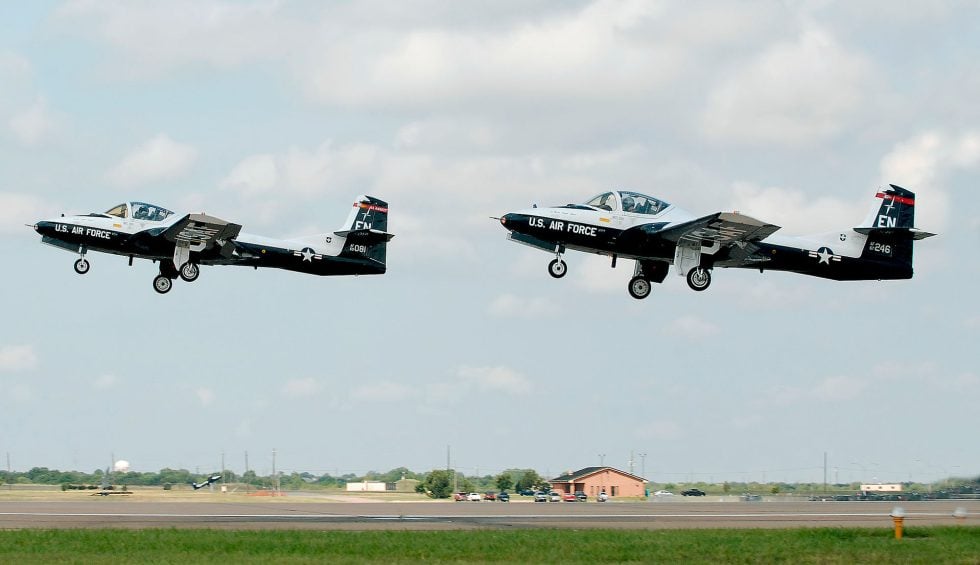
For most of its career the Tweet sat at the very start of the U.S. Air Force pilot-training pipeline. A student would master its handling, aerobatics and spin recovery, fly a first jet solo in it, and only then graduate to the sleek, supersonic Northrop T-38 Talon for advanced training. Because it was the aircraft in which so many pilots first flew a jet alone, the Tweet holds an outsized place in Air Force memory — remembered with a mixture of affection and ringing ears by nearly everyone who passed through undergraduate pilot training between 1957 and 2009.
Cessna T-37B Tweet full specifications
Baseline: two aeroplanes share this page and they are not the same aeroplane, so both baselines are stated. Trainer figures describe the T-37B, the definitive United States Air Force version with two Continental J69-T-25 of 1,025 lbf, the standard to which the surviving T-37As were rebuilt and the mark that flew the last USAF training sortie in 2009. Attack figures describe the A-37B, the production Dragonfly with two General Electric J85-GE-17A of 2,850 lbf apiece, and they are set in grey beside the trainer wherever the two differ. They differ almost everywhere. The Dragonfly kept the T-37 cockpit, the side-by-side seating, the wing planform and the tail, and changed practically every number that matters: 2.8 times the thrust, more than twice the maximum weight, eight pylons where there had been none, and a useful load heavier than the trainer complete. Three warnings before the figures. First, wing area. T-37 documents publish 18.7 m² (201 sq ft); A-37 documents publish 17.08 m² (183.9 sq ft) for a wing of the same planform and span that was strengthened rather than redrawn. The literature does not explain the gap and it is almost certainly a difference in how the fuselage carry-through is counted, so both figures are given rather than one being quietly preferred, and every wing loading below states which area it uses. Second, length. The T-37B is published at 8.92 m (29 ft 3 in) and the A-37B at 8.62 m (28 ft 3 in), although the two fuselages are near-identical forward of the tailcone and the Dragonfly additionally grew a nose refuelling probe. Neither figure is reconciled anywhere in print. Treat the aircraft as being a little under 9 m long and distrust any comparison drawn from the 30 cm difference. Third, production. The T-37 total is almost always given as 1,269, yet the variant tallies in general circulation — 3 prototypes, 444 T-37A, 552 new-build T-37B and 269 T-37C — come to 1,268, and the picture is further muddied because most T-37As were later converted to T-37B standard and 39 T-37Bs were rebuilt as A-37As. New-build A-37s number 577, all of them A-37B; add the 39 conversions and about 616 airframes wore Dragonfly markings, but 39 of those had already been counted as Tweets. Airframe totals and delivery totals are not the same number and the difference is worth roughly one squadron.
Dimensions & weights
- Crew
- 2, side by side the single most consequential design decision on the aeroplane. Cessna argued that an instructor sitting beside a student, able to point at an instrument and watch a hand move on the throttles, taught faster than one sitting behind him. The Air Force agreed and then spent fifty years living with the consequence: a wide, draggy fuselage on a trainer, and later a two-seat attack aircraft in which the right seat was usually empty or held a second pilot doing the map-reading
- Length
- 8.92 m (29 ft 3 in) A-37B published at 8.62 m (28 ft 3 in), excluding the nose refuelling probe. See the baseline note; the discrepancy is unexplained
- Wingspan
- 10.30 m (33 ft 9 in) A-37B 10.93 m (35 ft 10.5 in) over the permanent tip tanks, which account for the whole 63 cm difference. The wing itself did not grow
- Height
- 2.79 m (9 ft 2 in) A-37B 2.70 m (8 ft 10.5 in). Low enough that ground crew loaded the inboard pylons standing up, which was part of the point
- Wing area
- 18.7 m² (201 sq ft) A-37 sources give 17.08 m² (183.9 sq ft) for what is structurally the same wing. Both conventions are in print
- Aspect ratio
- 6.2 unchanged between trainer and attack aircraft. A modest, honest number: enough span for a docile stall and a long loiter, not enough to make the aeroplane fast
- Aerofoil
- NACA 2418 at the root, NACA 2412 at the tip thick, unswept, entirely conventional. The section is the reason the Tweet stalls gently and the Dragonfly could be flown accurately at 200 kt down among the trees, and equally the reason neither could exceed about Mach 0.7 without the airframe telling them not to
- Undercarriage track
- 4.3 m (14 ft) exceptionally wide for so small an aircraft and deliberately so: student pilots land crooked. The Dragonfly inherited the track and had the legs strengthened again for unpaved strips in the Mekong Delta
- Empty weight
- 1,840 kg (4,056 lb) A-37B 2,817 kg (6,211 lb). The Dragonfly carried some 977 kg of extra engine, structure, armour, gun and fuel plumbing before a single bomb was hung on it
- Max take-off weight
- 2,982 kg (6,574 lb) A-37B 6,350 kg (14,000 lb), more than twice the trainer. This is the number that makes the two aircraft incomparable despite the shared silhouette
- Useful load
- 1,142 kg (2,518 lb) of fuel and two people A-37B 3,533 kg (7,789 lb) — more than its own empty weight in fuel, ammunition and ordnance. Very few aircraft of any era carry more than they weigh
- External stores
- None. The T-37B had no pylons the armed T-37C carried up to ~454 kg (1,000 lb) on two underwing stations. The A-37B is rated at 2,600 kg (5,800 lb) across eight pylons, though fuel, ammunition and take-off distance normally settled for rather less
- Wing loading
- 159 kg/m² (32.7 lb/sq ft) at max weight, on the 18.7 m² figure A-37B 372 kg/m² (76.1 lb/sq ft) on the 17.08 m² figure, or 316 kg/m² on the larger one. The trainer is a glider by comparison, which is exactly what a first jet should be
Performance
- Maximum speed
- 684 km/h (425 mph, 369 kt) at 25,000 ft A-37B 816 km/h (507 mph, 441 kt) at low level. The armed T-37C, dragging pylons and tip tanks, fell to about 595 km/h (370 mph)
- Never-exceed speed
- Not separately published for the T-37B A-37B 843 km/h (524 mph, 455 kt). The limit is structural and aerodynamic, not a lack of thrust: with 5,700 lbf on a clean airframe the Dragonfly reached its placard easily
- Cruise speed
- 580 km/h (360 mph, 310 kt) at 35,000 ft A-37B maximum cruise 787 km/h (489 mph, 425 kt). In Vietnam the working speed over a target was far lower, typically 300–400 km/h in the dive and pull-off
- Stall speed
- 137 km/h (85 mph, 74 kt) A-37B 182 km/h (113 mph, 98 kt) at maximum landing weight. The trainer stalls at a speed a light aircraft would recognise; that gentleness is a teaching tool, not an accident
- Rate of climb
- 17.1 m/s (3,370 ft/min) A-37B 35.5 m/s (6,990 ft/min), better than twice as good. Instructors who converted from Tweet to Dragonfly describe the difference as the aeroplane finally having enough engine
- Service ceiling
- 11,800 m (38,700 ft) A-37B 12,730 m (41,765 ft)
- Operational ceiling
- 7,600 m (25,000 ft) neither aircraft was pressurised, so the useful ceiling was set by human physiology and oxygen equipment rather than by the wing. The published service ceilings above are therefore almost entirely theoretical: a T-37 spent its life below 25,000 ft and an A-37 spent it below 10,000
- Range
- 1,500 km (932 mi, 810 nmi) the armed T-37C with droppable 246-litre (65 US gal) tip tanks reached about 1,770 km (1,100 mi), the one respect in which arming the trainer improved it
- Combat range
- Not applicable to the trainer A-37B ~740 km (460 mi, 400 nmi) with maximum payload. Against the light-attack competition of the period this is a genuinely long reach, and it is why the Dragonfly could work the Delta and the Cambodian border from bases well behind the fighting
- Ferry range
- Not separately published A-37B 1,629 km (1,012 mi, 879 nmi) with four 379-litre (100 US gal) drop tanks. The in-flight refuelling probe made even this figure academic on the deployments that used it
- Endurance
- ~2 hours on internal fuel exactly the length of a training sortie, and no more. The T-37 was designed around the syllabus, not the syllabus around the aeroplane
- Load factor limits
- Not published for the T-37B in general references A-37A +5 g, A-37B +6 g with a design fatigue life of 4,000 hours. Field experience showed 7,000 hours between overhauls could be tolerated, which is a remarkable statement about an airframe originally stressed for student handling
- Thrust-to-weight
- 0.31 at max take-off weight A-37B 0.41. A ratio of one third is why the Tweet climbed like a heavily-laden trainer and why the standard joke had it converting fuel and air into noise
Propulsion & systems
- Engines, trainer
- 2 × Continental J69-T-25 turbojets, 4.56 kN (1,025 lbf) each the XT-37 and T-37A flew on the J69-T-9 of 4.1 kN (920 lbf), and the roughly ten per cent extra thrust of the T-25 is the substantive difference between an A and a B. Nearly all T-37As were converted
- Engines, attack
- 2 × General Electric J85-GE-17A turbojets, 12.7 kN (2,850 lbf) each the YAT-37D prototypes and the 39 A-37As used the J85-GE-5. The J85 is the same engine family that, with reheat, powered the Northrop F-5; in the Dragonfly it was run dry, which is why the aircraft was frugal as well as brisk
- Engine origin
- The J69 was a licence-built Turbomeca Marboré, made in the United States by Continental the same French engine powered the Fouga Magister, so the two great side-by-side and tandem jet trainers of the 1950s shared a powerplant. The Marboré is a small, simple, single-stage centrifugal machine, which is precisely why it was cheap, reliable and unbearably shrill
- Noise
- High-frequency shriek from air entering the small-diameter intakes the origin of every name the aeroplane ever had: Tweet, Tweety Bird, Screaming Mimi and the 6,000-pound dog whistle. This was not a nuisance but a budget line. The USAF spent considerable money soundproofing buildings at bases where the T-37 flew, and the tone was of a frequency that carried for miles and penetrated hearing protection that coped happily with larger jets
- Internal fuel
- T-37B, sufficient for ~2 hours A-37B ~1,920 litres (507 US gal, 422 imp gal) usable including the permanent tip tanks, roughly 1,500 kg of fuel. The tip tanks hold 360 litres (95 US gal) apiece and are structural, not jettisonable, on the Dragonfly
- External fuel
- T-37C, 2 × 246-litre (65 US gal) droppable tip tanks A-37B, up to four 379-litre (100 US gal) underwing tanks, at the cost of pylons that could otherwise have carried bombs. Two tanks and six weapon stations was the common compromise
- Fuel management
- Manual, and a known hazard the T-37 spin syllabus depended on symmetrical fuel. Mismanaged distribution could set up a lateral imbalance in which a developed spin became difficult or impossible to recover, and mishandled throttles and fuel featured in a large share of the 132 Class A losses recorded by 1996, in which 75 people died
- Cockpit and escape
- Unpressurised throughout, clamshell canopy hinged at the rear, ejection seats from the outset A-37B seats were armoured and the cockpit lined with nylon flak curtains. An unpressurised cockpit on a 1954 jet trainer was a deliberate simplification; on a 1967 attack aircraft it was an operational limit that kept the aeroplane low, which is where the ground fire is
- Protection, attack
- Armoured seats, foam-filled self-sealing fuel tanks, and elevator control runs deliberately routed as far apart as the fuselage allowed a coherent survivability package rather than a sales feature. Over more than 160,000 combat sorties in Southeast Asia, only 22 USAF A-37s were lost to enemy action
- Avionics and sight
- Trainer: basic instruments, no weapon system. Attack: gun camera, fixed reflector gunsight, tactical radios no radar, no computing bombsight of any consequence, no navigation system worth the name and no radar warning receiver. Pilots achieved an average delivery accuracy of about 14 m (45 ft) with a sight that did nothing but hold a pipper still
- In-flight refuelling
- None on the trainer. A-37B carried a fixed probe on the nose with the plumbing wrapped around the lower canopy lip probe-and-drogue, unusual for a USAF aircraft in a boom-refuelling air force, and a candid admission that a small jet with short legs sometimes needed to reach a long way
- Foreign object protection
- Screens pivot across the intakes when the undercarriage is lowered an elegant solution to the standing problem of low-set intakes on aircraft flown by beginners from imperfect runways, and directly useful again on unpaved Vietnamese strips
- Maintainability
- More than 100 access panels and doors; an experienced crew could change an engine in about half an hour the A-37B needed roughly two maintenance man-hours per flight hour, about a sixth of the figure for a McDonnell F-101 Voodoo. In a war fought by sortie count rather than by sortie quality, that ratio was worth more than performance
04The Cessna T-37 Tweet’s operating costs: the cheap little jet that trained a nation
The T-37 was prized precisely because it was inexpensive to buy and to run. A T-37B cost only in the region of $160,000 in 1960s dollars — a figure that should be read as an order-of-magnitude estimate rather than an audited price — and its small, simple engines burned far less fuel than any frontline jet. No authoritative, published cost-per-flight-hour figure exists for the type in open sources; contemporary accounts simply describe it as one of the cheapest jets the Air Force ever operated. Any precise dollar-per-hour number attached to the Tweet online should be treated as an estimate, not an official statistic.
Armament & payload
The Dragonfly hung 5,800 lb of iron ordnance on an airframe built to teach teenagers how to spin
The T-37 carried nothing. That is the first fact of this section and it should not be skipped over, because the entire armament story of the type is the story of what happens when an air force takes a deliberately harmless aeroplane and asks it to kill people. The armed export T-37C added two underwing stations and a gun pod, which made it a weapons trainer and, for a handful of small air forces, a light strike aircraft by default. The A-37 was something else: eight pylons, a six-barrel minigun buried in the nose, armour, self-sealing tanks and 2,600 kg of disposable load on an aircraft weighing 2,817 kg empty.
What the Dragonfly never had was sophistication. There is no guided weapon in the American inventory of the type, no radar, no computing sight, no defensive-aids suite. It hit what the pilot could see by diving at it, and it did so with an average error of about 14 m, which was better than most fast jets managed with far more equipment, because the Dragonfly was slow enough and steady enough to aim. Against an enemy with heavy calibre anti-aircraft artillery or missiles this would have been suicidal; against men in trees it was close to ideal, and Southeast Asia obliged by presenting mostly the second problem. The bill for that bargain was paid later, in El Salvador and over the Cenepa, where SA-7s and interceptors were waiting. Store fits varied enormously by operator and by decade. The lists below mix American clearances of 1968 with Latin American practice of the 1980s and 1990s; almost no operator carried the full published range, and several cleared local ordnance never mentioned in a Cessna brochure.
Gun
- 1 × GAU-2B/A 7.62 mm six-barrel minigun in the starboard side of the nose, 3,000 rounds per minute, 1,500 rounds carried — about thirty seconds of firing in short bursts, and rather less if the pilot got excited
- Rifle calibre, like the Strikemaster and the AC-47 before it. Devastating against men in the open, adequate against light vehicles and sampans, useless against anything armoured
- SUU-11/A minigun pods could be carried on the pylons to multiply the volume of fire, a common fit for helicopter escort and night work
- The T-37C used an entirely different arrangement: a General Electric multi-purpose pod with a single .50 calibre (12.7 mm) machine gun and 200 rounds, plus a computing gunsight and gun camera
- The 20 mm GPU-2/A and a 30 mm DEFA-pattern cannon pod were both trialled on the A-37B with favourable results and then, so far as the record shows, seldom or never used operationally
Air-to-air
- Provision for the AIM-9 Sidewinder existed on the T-37C for export customers and is listed for the A-37, but operational carriage is very hard to evidence and no air-to-air missile engagement by the type is recorded
- This card is kept rather than deleted because the gap mattered. Several operators bought the Dragonfly as effectively their only combat aircraft, leaving them with a 7.62 mm gun and a fixed sight as their air defence
- The consequence arrived on 10 February 1995 in the Cenepa War, when a Peruvian A-37 was shot down by an Ecuadorian IAI Kfir. A subsonic light attack aircraft has no answer to a delta-winged interceptor and none was expected of it
- The type did make one air-to-air kill, and it is not one anybody wants: on 20 April 2001 a Peruvian A-37B, cued by a CIA-run surveillance aircraft, shot down a civil Cessna A185E floatplane wrongly believed to be carrying drugs, killing an American missionary and her infant daughter
Air-to-surface guided
- None in United States service. No Maverick, no wire-guided anti-tank weapon, no laser-guided bomb, no anti-radiation missile was ever integrated on a USAF A-37
- The omission is period-typical for the counter-insurgency mission as the USAF defined it in 1967, but it aged badly: by the 1980s a light attack aircraft with no guided weapon could not hit a moving or a hardened target at all
- The single exception is Colombian. Colombia modified its A-37Bs to carry the GBU-12 Paveway II laser-guided bomb, which gave a thirty-year-old airframe a genuinely modern strike capability against camps and bridges in the FARC conflict
- The Colombian fleet was retired at the end of 2023, taking the type's only precision capability with it
Bombs
- Mk 81 (250 lb) and Mk 82 (500 lb) general-purpose bombs, the everyday load; M117 (750 lb) on the inner stations for harder targets
- Fire bombs: BLU-1C/B and BLU-32B napalm, used heavily in Vietnam against tree lines, bunkers and troops in contact
- Cluster munitions CBU-12, CBU-22 and CBU-24, and the SUU-14 dispenser for bomblets and mines
- Pylon limits are asymmetric and worth knowing: the four inner stations take 390 kg (860 lb) each, the two intermediate stations 270 kg (600 lb) and the two outer 230 kg (500 lb)
- Practice ordnance for the training role, and for the T-37C, four practice bombs on a carrier and nothing heavier than 227 kg per wing station
Rockets
- 2.75 in (70 mm) folding-fin aircraft rockets in LAU-3/A nineteen-tube pods, the standard heavy fit, and in seven-tube pods where drag or weight mattered more
- White phosphorus marking rockets, which became the primary weapon of the OA-37B in the forward air control role after 1980: the Dragonfly marked and someone heavier destroyed
- The T-37C carried two 70 mm rocket pods as part of its General Electric weapons fit, alongside the gun pod
- Rockets suited the aeroplane better than bombs did. A shallow dive at 300 kt with a nineteen-tube pod covered a hillside, and the Dragonfly's steadiness in the dive made the pattern tight
Pods & other stores
- Up to four 379-litre (100 US gal) drop tanks, though every tank is a pylon not carrying weapons; two tanks and six weapon stations was the usual compromise
- SUU-11/A gun pods, flare dispensers for night interdiction, and gun cameras for both scoring and intelligence
- No electronic countermeasures pod, no radar warning receiver and no chaff or flare self-protection dispenser in the original fit — a serious omission by the time man-portable missiles reached Central America
- The permanent tip tanks on the A-37B are not stores but structure: 360 litres each, non-jettisonable, and part of the reason the wing needed strengthening
Three typical loadouts
- Close air support, South Vietnam, 1970
- Four Mk 82 500 lb bombs on the inner pylons, two LAU-3/A rocket pods on the intermediate stations, two 100 US gal tanks outboard, minigun with 1,500 rounds. The everyday Dragonfly sortie: twenty minutes to the target, several passes under a forward air controller's direction, and home. Two maintenance man-hours per flight hour meant the same aircraft could fly again that afternoon.
- Night interdiction and helicopter escort
- Two SUU-11/A minigun pods, two flare dispensers, two rocket pods, nose gun loaded, no bombs. Volume of fire and illumination rather than destructive power, flown low and slow enough to see what was moving on a trail. The aircraft's small size and unfamiliar speed made it awkward to track by ear and by eye, which mattered more at night than any performance figure.
- Counter-insurgency, El Salvador, mid-1980s
- Two or four Mk 81 250 lb bombs, two 70 mm rocket pods, full minigun, one or two tanks. Light loads flown from short strips against a dispersed enemy, at altitudes chosen to stay above small-arms fire and below the cloud. From 1990 the calculation changed: an SA-7 destroyed a Salvadoran A-37 on 23 November that year, and an aircraft with no flare dispenser had nothing to answer with.
Sourcing caveat: the American store list is drawn from USAF and Cessna documentation of 1967–1972 and describes what was cleared, not what was routinely carried. Latin American practice diverged substantially over forty years of local modification, and the Colombian Paveway fit in particular has no counterpart in any factory publication. Ammunition and pylon-limit figures are consistent across the standard references; sortie and loss figures are discussed in the variants section below.
Variants
One airframe served as a primary trainer, an armed export and a counter-insurgency bomber for fifty-five years
The family divides cleanly into three. The trainers, T-37A through T-37C, are one aeroplane refined over twenty years and then flown for another thirty-five without further change; the USAF took delivery of the first production aircraft in 1956 and retired the last on 31 July 2009, having put a majority of its jet pilots through the type. The armed exports blur the line, most obviously in Chile, which rebuilt its own trainers into something close to a Dragonfly. And then there is the A-37, which is where the story becomes consequential.
The Dragonfly flew over 160,000 combat sorties in Southeast Asia for 22 USAF aircraft lost to enemy action — a ratio that has few parallels in the war, helped by the fact that the type was never sent north into the heavy defences. It was cheap, roughly a quarter the cost of an F-4 Phantom II, and it was undemanding, which meant it could be given away. It was given to South Vietnam in quantity: 254 A-37Bs, of which around 187 remained in April 1975. Ninety-two were flown out and recovered by the United States; ninety-five were not. Thirty-three intact aircraft had already fallen into North Vietnamese hands at Da Nang at the end of March, and on 28 April 1975 captured A-37s flown by North Vietnamese crews bombed Tan Son Nhut air base, two days before the war ended. It is an unusual distinction: an American attack aircraft used against the air force it was built for, from a runway it had operated from a month earlier.
The Vietnam People's Air Force then flew its inherited Dragonflies over Cambodia against the Khmer Rouge and in the 1979 border war with China, before spares ran out at the turn of the decade. Some captured airframes went to Czechoslovakia, Poland, the Soviet Union and East Germany for examination, which is why one of the better preserved A-37Bs today sits in a museum in Kraków. The second life of the type was Latin American and it lasted longer than the first: El Salvador flew the aircraft hard through its civil war, Guatemala and Honduras and Colombia used it for counter-insurgency and counter-narcotics, and Peru and Ecuador used theirs against each other in the Cenepa War of 1995.
- XT-37 (1954, 3 built)
- Prototypes to the USAF Trainer Experimental requirement, J69-T-9 of 920 lbf, first flight 12 October 1954. The first aircraft was lost during spin testing — an early warning that the type's spin behaviour would need work and, eventually, that it would become a teaching asset rather than a hazard.
- T-37A (1955–1959, 444 built)
- First production trainer, J69-T-9. Delivered from June 1956 and in training use from 1956–57 depending on which source one follows. Underpowered, deafening, and almost all subsequently converted to T-37B standard.
- T-37B (1959–1973, 552 new-build plus conversions)
- The definitive trainer: J69-T-25 of 1,025 lbf, improved navigation and communications. This is the aeroplane in which generations of USAF pilots first spun an aircraft deliberately, using a memorised recovery sequence — throttles idle, controls neutralised, stick abruptly full aft, full opposite rudder, then stick forward — that had to be flown exactly and in order.
- T-37C (1962–1975, 269 built)
- Export weapons trainer and light strike aircraft: two underwing stations, droppable 65 US gal tip tanks, computing gunsight, gun camera, and about 1,430 lb of added weight that cost it 55 mph off the top speed while adding some 170 mi to the range. Sold to Brazil, Turkey, Greece, Portugal, Thailand, South Korea, Colombia, Cambodia and others.
- YAT-37D (1963–1965, 2 converted)
- The Dragonfly prototypes, following a favourable Special Air Warfare Center evaluation of the T-37 at Eglin in late 1962. J85-GE-5 engines of roughly double the power, strengthened wing, ruggedised undercarriage, 360-litre tip tanks, minigun, gunsight, and three pylons per wing on the first aircraft and four on the second. First flight October 1964.
- A-37A "Combat Dragon" (1967, 39 rebuilt from T-37B)
- Pre-production batch, essentially the prototypes in service dress, gross weight 12,000 lb and 2,700 lb of ordnance, limited to +5 g. Twenty-five deployed to Bien Hoa in August 1967 for operational evaluation flying close air support, helicopter escort, forward air control and night interdiction. None were lost to enemy fire; two were written off in landing accidents.
- A-37B (1967–1975, 577 built)
- The production Dragonfly and the only new-build member of the family: J85-GE-17A of 2,850 lbf, 14,000 lb maximum weight, +6 g, 4,000-hour fatigue life, armoured seats, self-sealing tanks, nose refuelling probe. Every A-37 outside the 39 conversions is one of these.
- OA-37B (from the early 1980s, conversions)
- Redesignation of Air National Guard and Air Force Reserve A-37Bs reassigned to forward air control after the war, working with marking rockets rather than bombs. They flew in Operation Just Cause in Panama in December 1989 and were replaced in the FAC role by the A-10, the USAF retiring the type in 1992.
- Chilean armed T-37 (late 1970s, local conversion)
- With war against Argentina looking possible, Chile rebuilt its T-37s into an armed configuration close to A-37 standard and then bought 44 genuine Dragonflies as well. The fleet retired at the end of 2009, the last two aircraft flying to Santiago-El Bosque on 27 May 2010.
- Cessna Model 407 and 405 (late 1950s, not built)
- Civil and military light transport derivatives of the airframe. A wooden mock-up of the pressurised four-seat Model 407 was built and the project cancelled; a Navy tandem-seat proposal lost to the T-2 Buckeye; a lift-jet VTOL study never left paper.
Survivors and current status. Original airframes are numerous rather than rare: T-37s and A-37s survive in dozens of American museums and gate guardian sites, and further examples are preserved in Chile, New Zealand, Poland, Thailand and Vietnam — the Vietnamese examples being genuine 1975 captures rather than gifts. Two original A-37Bs, 68-10779 and 68-10805, are maintained in airworthy condition by the Temora Aviation Museum in New South Wales; there are no reproductions of either type, and none would make sense. A small number of A-37Bs were still flying in 2026 with Latin American air forces, El Salvador, Guatemala, Honduras and Peru among them, but published fleet figures for these operators date from 2022 and earlier, Colombia retired its aircraft at the end of 2023 and Uruguay planned to do so in 2026. No corroborated current inventory could be assembled, so none is presented here rather than dressing stale numbers as live ones. The last USAF T-37B student sortie was flown on 17 June 2009 and the aircraft was retired on 31 July 2009, replaced by the turboprop T-6 Texan II.
The Cessna T-37 Tweet: from drawing board to retirement
The competition
The U.S. Air Force launches its Trainer Experimental (TX) contest for a purpose-built side-by-side primary jet trainer.
First flight
Cessna’s XT-37 prototype makes its maiden flight from Wichita, Kansas on 12 October — the first U.S. aircraft designed from scratch as a jet trainer.
Enters service
The T-37A joins the Air Force and begins turning cadets into jet pilots.
The definitive T-37B
Uprated J69-T-25 engines and improved avionics produce the T-37B, the version most pilots would fly.
Export and attack
The armed T-37C export variant and the attack-configured A-37 are developed from the trainer.
The Dragonfly goes to war
The A-37 Dragonfly enters combat in Vietnam, taking the Tweet’s airframe into counter-insurgency operations.
The replacement arrives
The turboprop T-6 Texan II begins taking over primary training from the ageing Tweet.
The last scream
The U.S. Air Force retires its final T-37s after 52 years of service — the flight line falls quiet at last.
From the flight line: twelve T-37 Tweet stories
A light-plane maker builds a jet
Cessna, famous for civilian aircraft, beat the field to win the Air Force’s first purpose-built jet-trainer contest.
Read the full story
Maiden flight at Wichita
The XT-37 prototype first flew on 12 October 1954 — the first U.S. aircraft conceived purely as a jet trainer.
Read the full story
The 6,000-pound dog whistle
The J69 engines’ piercing shriek gave the Tweet a whole family of names.
Read the full story
Shoulder to shoulder
The side-by-side cockpit set the Tweet apart from almost every other trainer.
Read the full story
The first solo
For half a century, a Tweet was the jet in which American pilots first flew alone.
Read the full story
Teaching the spin
The Tweet’s honest spin behaviour made it a superb aircraft for learning recovery.
Read the full story
From Tweet to Talon
Graduates of the Tweet moved up to the supersonic T-38 Talon.
Read the full story
The Dragonfly goes to war
Cessna turned the trainer into the armed A-37 Dragonfly for Vietnam.
Read the full story
A trainer for allied air forces
The armed T-37C was exported to a long list of friendly nations.
Read the full story
Smoke and formation
Some operators flew the Tweet on the airshow circuit.
Read the full story
Fifty-two years on the line
Few aircraft serve one air force for over half a century.
Read the full story
The flight line goes quiet
The turboprop T-6 Texan II finally replaced the Tweet.
Read the full story
The Cessna T-37 Tweet in pictures
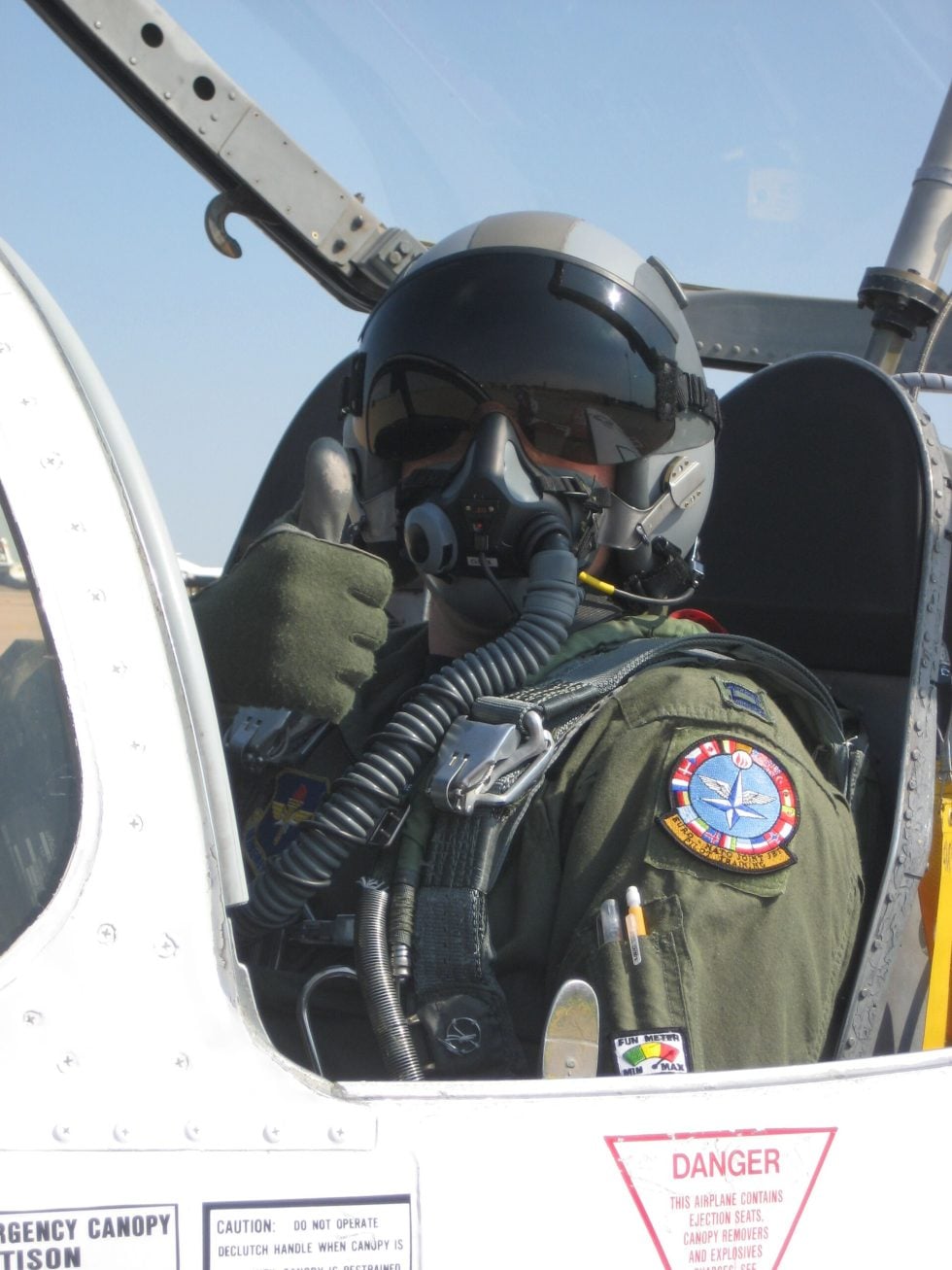
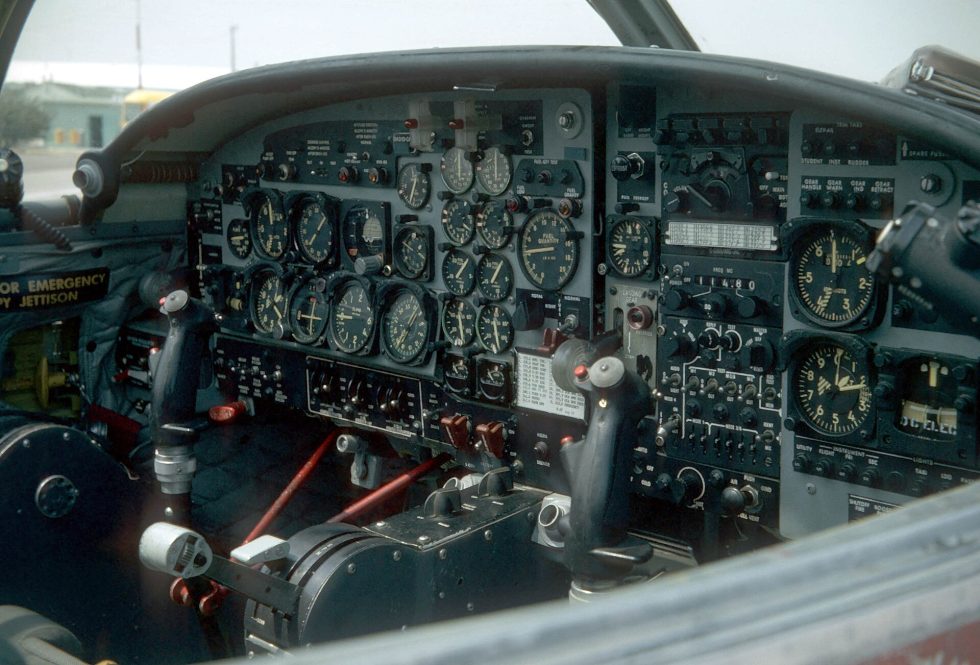
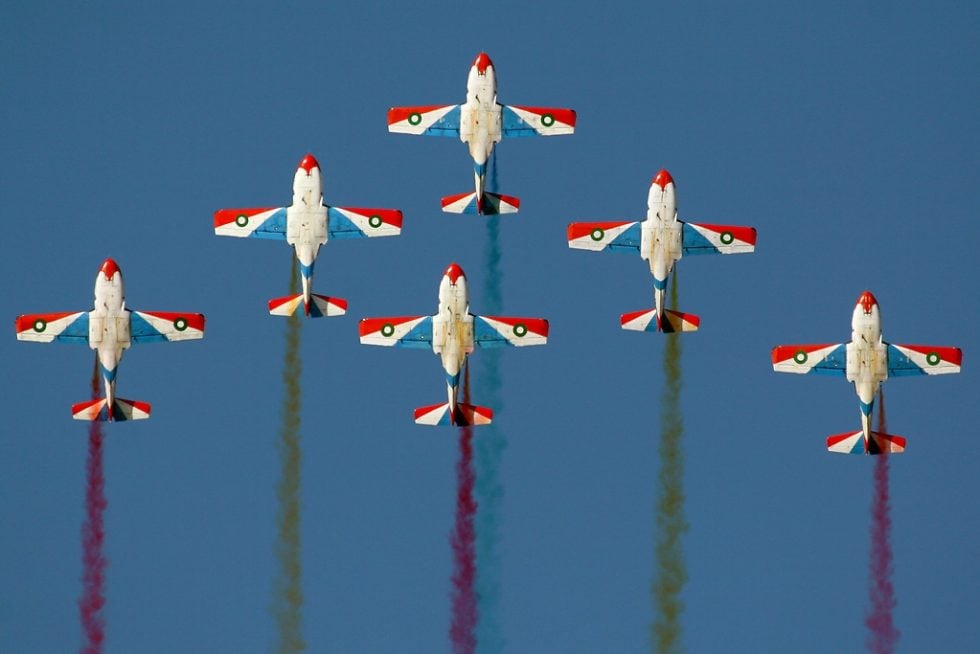
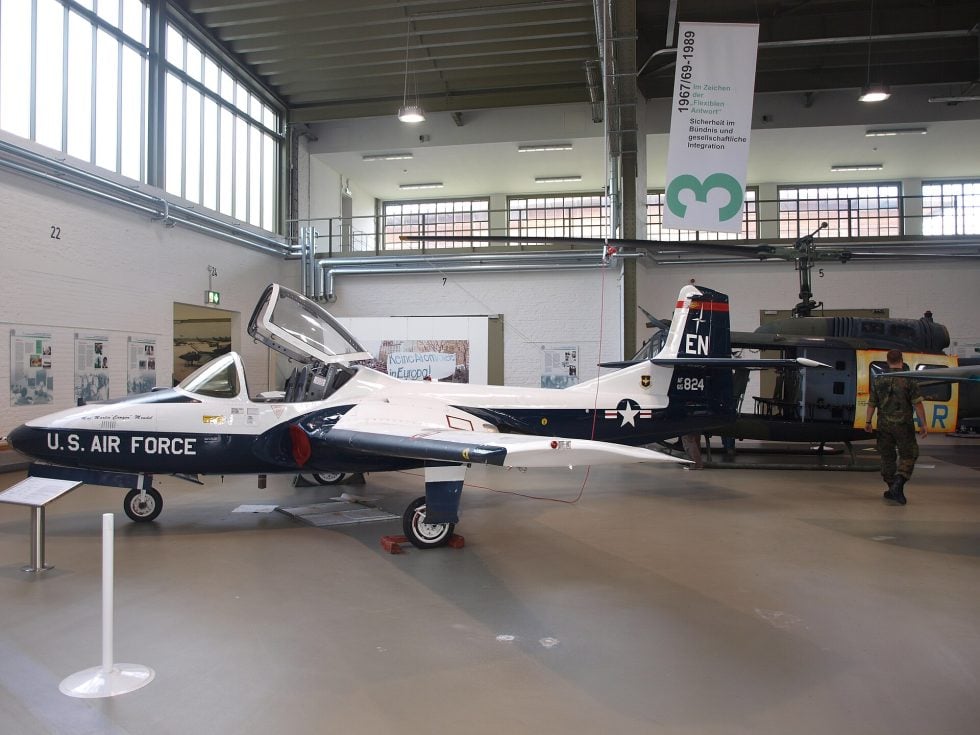
The Cessna T-37 Tweet in motion
Authentic Hellenic Air Force cockpit footage of a T-37 “Tweety Bird” flying a spin-training sortie — exactly the exercise the Tweet was prized for, filmed from inside the side-by-side cockpit.
Where the Cessna T-37 Tweet flew
The Cessna T-37 Tweet: a trainer, not a fighter — and proud of it
The Tweet never carried weapons in U.S. service and never fired a shot in anger. Its record is not measured in kills but in careers — the tens of thousands of pilots it taught, and the sheer length of its front-line life. Its armed cousin, the A-37 Dragonfly, took the airframe to war; the trainer itself simply made the pilots who flew everything else.
The Tweet’s combat legacy belongs to its derivative — explore the armed A-37 Dragonfly, or compare the combat record of every military aircraft.
Everything people ask about the Cessna T-37 Tweet
Can I fly in a Cessna T-37 Tweet?
Why is the T-37 called the “Tweet” or the “6,000-pound dog whistle”?
How fast is the Cessna T-37 Tweet?
Why did the T-37 have side-by-side seating?
When did the Air Force retire the T-37?
What replaced the Cessna T-37 Tweet?
Is the A-37 Dragonfly the same as the T-37?
How many T-37s were built?
You can’t fly the Cessna T-37 Tweet.
These, you can.
Some legends only live in museums — others are fuelled and waiting. MiGFlug has put civilians in real military jet cockpits since 2004.
 Fly the L-39 AlbatrosThe world’s most-flown jet trainer — aerobatics included
 Fly the F-104 Starfighter“The missile with a man in it”
 Fly the MiG-21The Cold War’s most-produced jet
 Fly the T-33 Shooting StarAmerica’s first jet trainer
 Fly the DH VampireA piece of early jet history
 Fly the S.211Agile Italian jet trainer
 Fly the MB-326The classic Aermacchi jet
 Fly the MiG-15The Soviet legend of the Korean War
Continue the tour
Every fact, checked
- National Museum of the U.S. Air Force — Cessna T-37B TweetPrimary reference for specifications, service history and the aircraft’s training role.
- National Museum of the U.S. Air Force — Cessna A-37 DragonflyReference for the armed attack derivative and its Vietnam service.
- AirVectors — The Cessna T-37 / A-37Greg Goebel’s detailed development and variant history of the Tweet family.
- Avgeekery — Cessna’s T-37 Primary Jet TrainerBackground on the nicknames, noise and training culture around the Tweet.
- Plane & Pilot — The Cessna T-37 Tweety BirdOverview of the design, handling and legacy of the type.
- Air Facts Journal — The Production T-37 TweetFirst-hand perspective on flying and instructing in the Tweet.
- Military Factory — Cessna T-37 TweetCross-check for dimensions, weights, performance and production totals.
- Vintage Aviation News — Flight Test Files: Cessna T-37Notes on the aircraft’s flight-test history and lateral dynamics.