
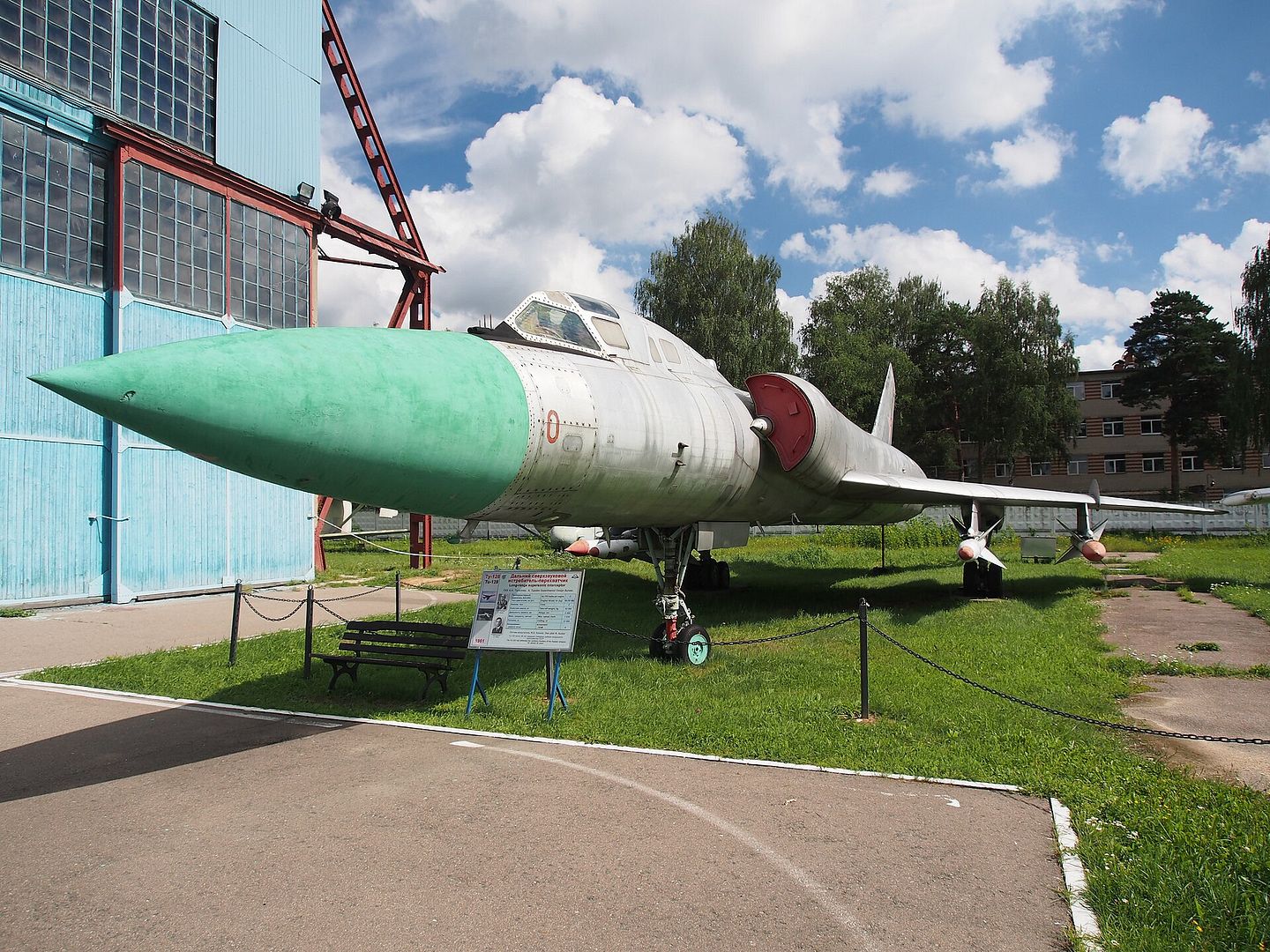
Tupolev Tu-128
“Fiddler”
The largest and heaviest fighter-interceptor ever to enter service — a bomber-sized jet built to guard the vast, radar-poor Soviet Arctic and Siberia against American nuclear bombers.
A fighter the size of a bomber
The Soviet Union faced a defensive problem no other country shared: thousands of kilometres of Arctic coastline and Siberian frontier, thinly covered by radar and dotted with only a handful of airfields. Across that emptiness American strategic bombers — the B-52 and its successors — could in theory approach from the north. Small, short-legged interceptors could not hope to patrol such distances. What the PVO air-defence force needed was something entirely different: a very large aircraft that could fly far, loiter for hours, and carry a radar and missiles powerful enough to find and kill a bomber on its own.
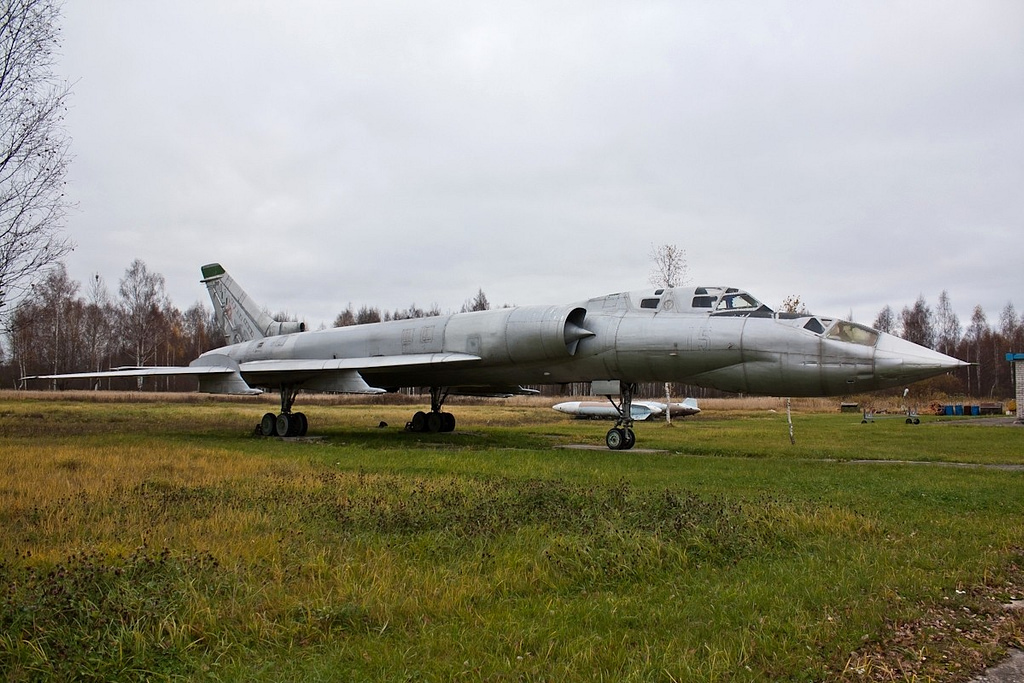
The answer was the Tupolev Tu-128, known to NATO as the “Fiddler.” Tupolev was a bomber design house, and the interceptor showed it: the Tu-128 grew out of the abandoned Tu-98 “Backfin” supersonic bomber, and at close to 30 metres long and roughly 43 tonnes it was larger and heavier than many of the bombers it was meant to shoot down. It is commonly described as the largest and heaviest purpose-built interceptor ever to enter service.
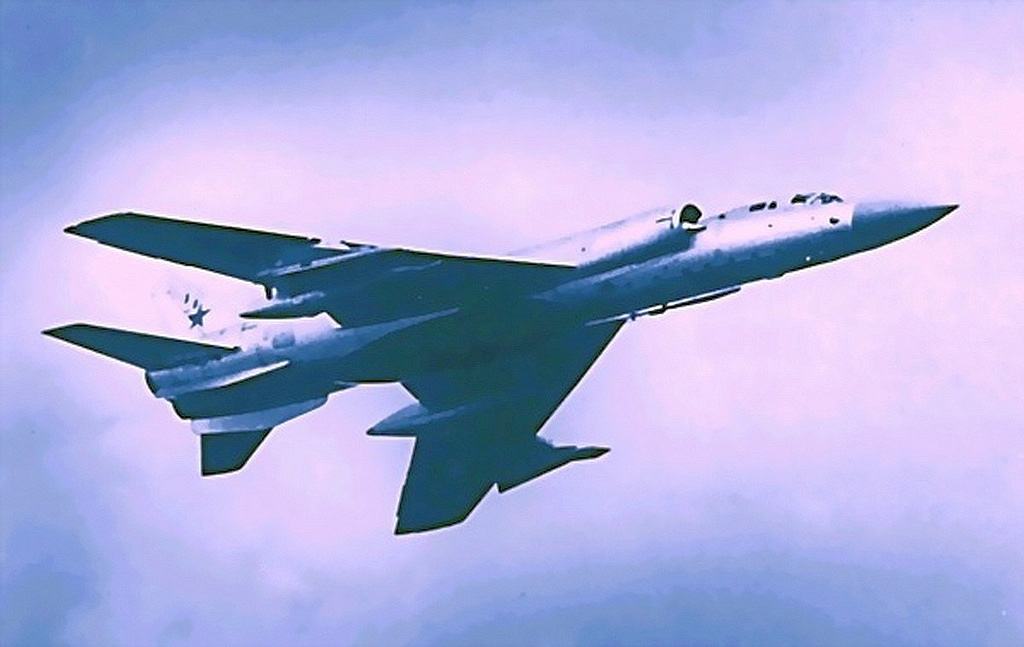
First flown on 18 March 1961 and revealed to the public at the Tushino aviation display that summer, the Tu-128 entered PVO service in 1965 as part of an integrated interception complex — the aircraft, its big Smerch radar, four large R-4 (NATO AA-5 “Ash”) missiles, and a ground-control network. Its size bought range and endurance rather than agility: this was never a dogfighter, but an area-defence weapon designed to meet a bomber far from base and destroy it with a single long-range salvo.
The Tu-128 was flown by the Soviet Union alone and never exported. Around 198 were built before production ended, and the type served the length of the northern frontier until it was retired around 1990, its role passing to the far more capable MiG-31 “Foxhound.” It fought no air battles and is credited with no aerial victories — its value was measured in deterrence and in the coverage it gave an otherwise almost undefendable expanse.
01The Tu-128 Fiddler’s mission: defending the Soviet Arctic against the bomber threat
Soviet air defence in the late 1950s was built around ground-controlled interception: radar stations tracked an intruder and vectored a fighter onto it by radio. That system worked over populated western regions but broke down across the Arctic and Siberia, where radar coverage was sparse and airfields were hundreds of kilometres apart. A bomber crossing the pole toward Soviet cities might fly for a long time before any interceptor could reach it.
The Tu-128 was the PVO’s answer to that gap. By making the interceptor very large, Tupolev could give it the fuel for long patrols — commonly cited endurance is on the order of two-and-a-half to three hours — and a radar big enough to search for targets with less dependence on ground stations. A small number of regiments, spread along the northern frontier, could in principle cover an enormous area. It was a solution shaped entirely by Soviet geography, and no Western air force ever built anything quite like it.
What makes it special
Built for reach, not for turning
The Tu-128 was sized around fuel and endurance. Two Lyulka AL-7F-2 afterburning turbojets carried a jet of roughly 43 tonnes on patrols lasting a reported two-and-a-half to three hours. Its wing was large simply to lift that weight; the airframe was limited to gentle manoeuvres (around +2.5 g). This was an area-defence interceptor meant to cover distance, never to dogfight.
The Smerch radar and the R-4 missile
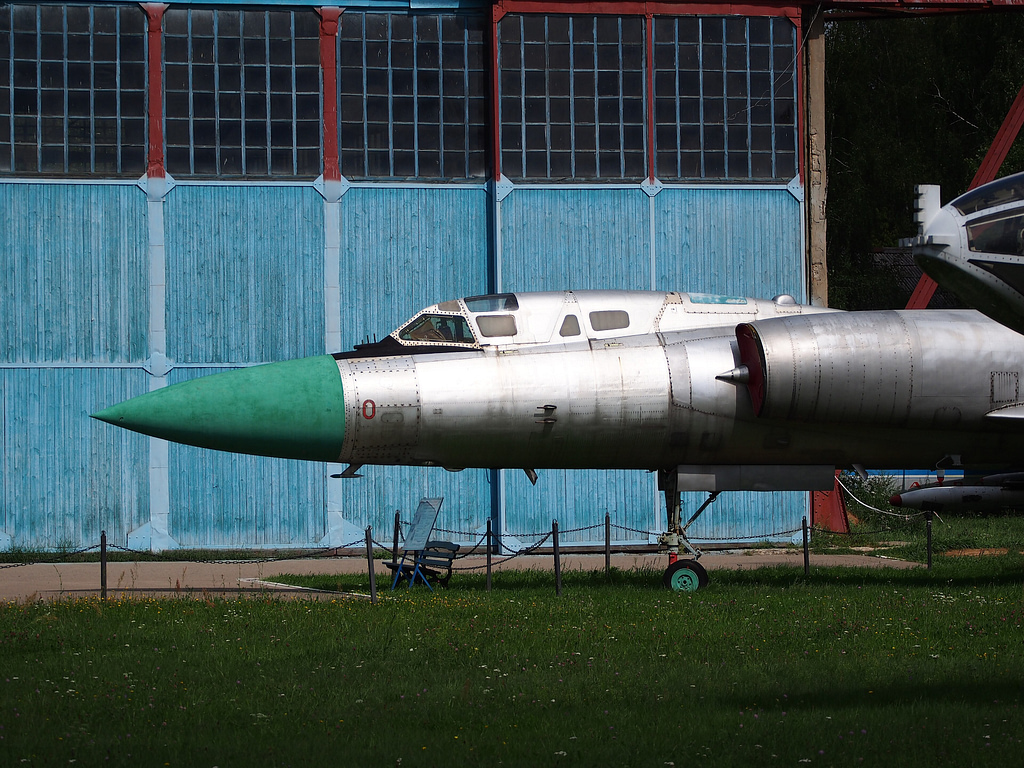
The interceptor was one half of a weapon system. Its Smerch radar (NATO nickname “Big Nose”) filled the enormous nose and is commonly cited with a bomber-detection range of around 50 km. It guided four huge R-4 (AA-5 “Ash”) missiles — two radar-guided R-4R and two infrared R-4T — each weighing close to half a tonne. The Tu-128 was the only aircraft ever to carry the R-4.
A bomber airframe turned interceptor
Tupolev was a bomber bureau, and the Tu-128 descended directly from the cancelled Tu-98 “Backfin” bomber prototype. The result was a two-seat aircraft — pilot and radar operator in tandem — nearly 30 metres long. That heritage is why the “fighter” ended up larger and heavier than many strategic bombers, and why it is so often called the biggest interceptor ever flown operationally.
02The Tu-128 Fiddler’s radar and missiles: hunting bombers far from the ground network
Smaller Soviet interceptors of the era leaned heavily on the Vozdukh ground-control system to be steered onto their targets. The Tu-128 was designed to need it less. Its Smerch radar was large and powerful for its day, giving the two-man crew the ability to search a volume of sky and lock a bomber-sized target at a reported few tens of kilometres, then engage with radar-guided R-4R missiles at range or infrared R-4T missiles closer in. In the radar-poor north that semi-autonomous capability mattered: a Tu-128 could be pointed roughly toward an intruder and finish the interception on its own sensors, rather than being flown onto the target metre by metre from the ground. Accounts still describe the type as working within the wider ground-control network in normal operations; the onboard radar reduced, rather than eliminated, its dependence on it.
03The Tu-128 Fiddler’s size: why the largest interceptor ever was built by a bomber house
The claim that the Tu-128 is the largest and heaviest interceptor ever operated is widely repeated, and the numbers support it: a length of about 30 metres and a maximum weight in the region of 43 tonnes put it beyond any Western fighter and beyond most contemporary bombers. The reason lies in its origin. Rather than design a clean-sheet fighter, Tupolev adapted the airframe philosophy of its cancelled Tu-98 supersonic bomber, trading agility for the fuel volume and radar size that the Arctic-defence mission demanded. The oversized result was a deliberate engineering choice: only something that large could carry enough fuel, a powerful enough radar and heavy enough missiles to police the emptiest airspace on Earth.
Full specifications
Airframe & Performance
- 全体人员
- 2 (pilot + radar operator)
- 长度
- ~30.1 m
- 翼展
- ~17.5 m
- 高度
- ~7.15 m
- Max takeoff weight
- ~43,000 kg (commonly cited ~43,700 kg)
- Max speed
- ~Mach 1.5 · ~1,665 km/h (with missiles)
- 设备天花板
- ~15,600 m
- Patrol radius
- ~1,250 km (area-defence)
- Endurance
- ~2.5–3 hours (reported)
- Load limit
- ~+2.5 g
Propulsion & Systems
- Engines
- 2 × Lyulka AL-7F-2 afterburning turbojets
- Thrust (each)
- ~100 kN with afterburner
- Radar
- RP-S / RP-SM Smerch (NATO “Big Nose”)
- 武器
- 4 × R-4 (AA-5 Ash) — 2 radar, 2 infrared
- First flight
- 18 March 1961
- In service
- 1965–1990 (Soviet PVO)
- Built
- ~198 (incl. ~10 Tu-128UT trainers)
- Unit cost
- No reliable public figure
- Cost per flight hour
- No reliable public figure
04The Tu-128 Fiddler’s cost: why no reliable price exists
The Tu-128 was a Soviet state product, built for the PVO and never sold on any open market. As a result there is no meaningful flyaway unit price for it in the public record, and no credible cost-per-flight-hour figure exists in open sources. Any precise dollar cost attached to the type should be treated as guesswork rather than a sourced number. What can be said with confidence is that it was a large, fuel-hungry twin-engined aircraft, and that only around 198 were built — a small run reflecting its specialised role rather than any published economics.
From bomber prototype to Arctic sentinel
The Tu-98 bomber
Tupolev builds and tests the Tu-98 “Backfin” supersonic bomber prototype. It is not adopted, but its airframe becomes the basis for a very different aircraft.
The requirement
The PVO calls for a long-range area interceptor able to patrol the radar-poor Arctic and Siberian frontier and destroy bombers far from base.
First flight
The prototype flies on 18 March 1961 and is shown publicly at the Tushino aviation display that summer, where Western observers struggle to classify it.
Enters service
The Tu-128 joins the PVO as part of the Tu-128S-4 interception complex: the aircraft, its Smerch radar and four R-4 missiles working with ground control.
Production ends
Manufacture wraps up at around 198 aircraft, including a small batch of two-seat Tu-128UT conversion trainers.
The Tu-128M
An upgraded variant enters service with an improved Smerch-M radar and modernised R-4 missiles, extending the type’s usefulness into the 1980s.
Retirement
The Fiddler is withdrawn as its area-defence role passes to the far more capable MiG-31 “Foxhound.”
Museum pieces
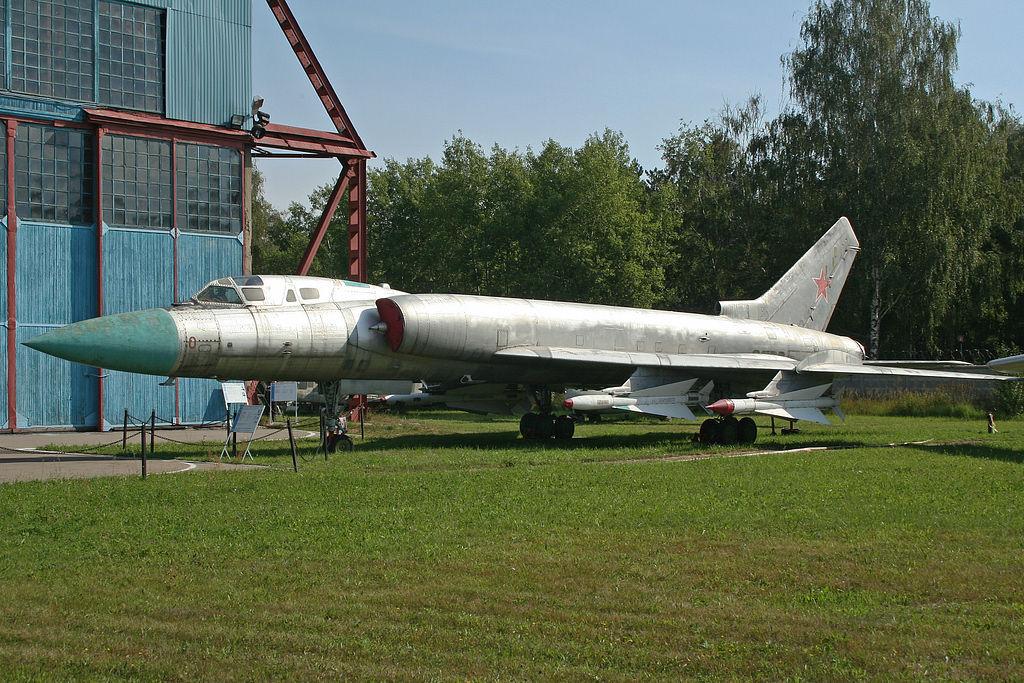
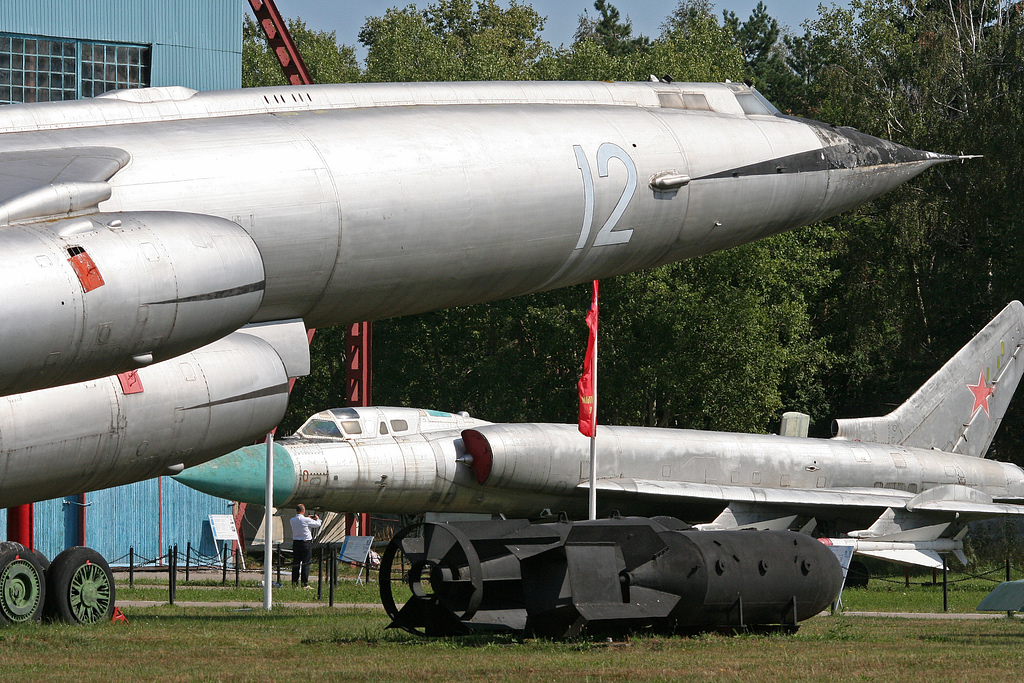
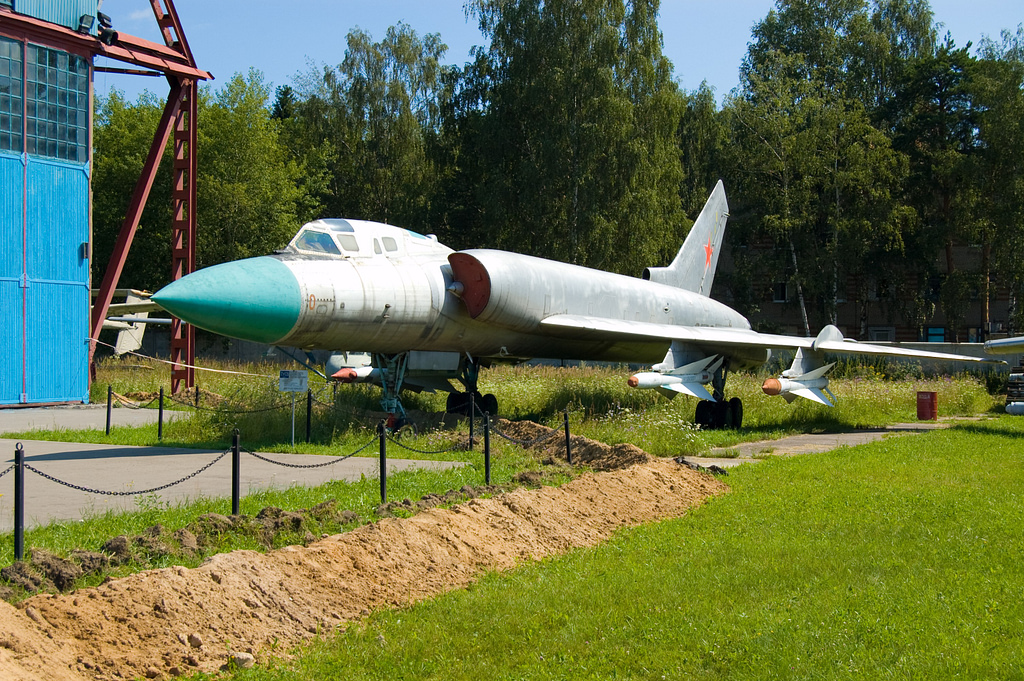
A handful survive on display, notably at the Central Air Force Museum at Monino, where the sheer scale of the “fighter” is unmistakable.
Twelve stories about the biggest fighter
The bomber that became a fighter
The Tu-128 grew out of Tupolev’s cancelled Tu-98 supersonic bomber.
Read the full story
Defending an impossible frontier
Thousands of kilometres of Arctic and Siberian border, thinly covered by radar.
Read the full story
The parade that puzzled the West
Shown publicly in 1961, the aircraft was hard for Western analysts to classify.
Read the full story
“Big Nose”
The Smerch radar filled the huge nose and searched for bombers tens of kilometres out.
Read the full story
A monster called Ash
The Tu-128 was the only aircraft ever to carry the huge R-4 missile.
Read the full story
Hunting beyond the radar net
In the empty north the crew could search and engage with less ground control.
Read the full story
The biggest fighter ever fielded
At ~30 m and ~43 t, larger and heavier than many bombers.
Read the full story
The Tu-128UT and its hump
A two-seat trainer with an added stepped instructor cockpit gave the type a distinctive bump.
Read the full story
A job measured in deterrence
Credited with no aerial kills; reportedly used against reconnaissance balloons.
Read the full story
Chasing the uncatchable
The Fiddler was reportedly scrambled against SR-71 flights it could not catch.
Read the full story
Cold, remote and demanding
The type flew from bleak northern bases across the Soviet Arctic and Siberia.
Read the full story
Handing over to the Foxhound
Retired around 1990, its role passing to the MiG-31.
Read the full story
The Fiddler in pictures
Where the Fiddler flew
The score that defines it
The Tu-128 fought no air battles and is credited with no confirmed aerial victories — that was never how it was meant to be judged. Its record is one of presence: hours of patrol over the emptiest airspace on Earth, and the deterrent effect of making the northern approaches a place no bomber crew could treat as undefended.
Compare the combat record of every military aircraft. Figures as of July 2026.
Everything people ask about the Tu-128
Can I fly in a Tu-128?
Why is the Tu-128 called the largest interceptor ever?
What was the Tu-128 built to do?
What missiles and radar did it carry?
How fast was the Tu-128?
Did the Tu-128 ever shoot anything down?
Who operated the Tu-128, and is it still in service?
You can’t fly the Tu-128.
These, you can.
Some legends only live in museums — others are fuelled and waiting. MiGFlug has put civilians in real military jet cockpits since 2004.
 Fly the L-39 AlbatrosThe world’s most-flown jet trainer — aerobatics included
 Fly the F-104 Starfighter“The missile with a man in it”
 Fly the MiG-21The Cold War’s most-produced jet
 驾驶T-33流星战斗机America’s first jet trainer
 Fly the DH VampireA piece of early jet history
 Fly the S.211Agile Italian jet trainer
 Fly the MB-326The classic Aermacchi jet
 Fly the MiG-15The Soviet legend of the Korean War
Continue the tour
Every fact, checked
- Key Aero — Tupolev Tu-128 ‘Fiddler’Overview of the type’s role, radar and service by an established aviation publisher.
- GlobalSecurity.org — Tu-128 FiddlerMission, area-defence concept, Tu-98 origin and production figures.
- Military Factory — Tupolev Tu-28 / Tu-128Specifications, dimensions, armament and the “largest interceptor” description.
- Plane Historia — Tu-128 FiddlerDevelopment history, dimensions, engines and service dates.
- War History OnlineThe frontier-defence rationale and why so few, large interceptors were needed.
- RedStarTu-98 origin, Smerch radar detection range and R-4RM/R-4TM missile data.
- The National InterestSize framing, ground-control interception and semi-autonomous operation.
- National Museum of the US Air ForceReference for Soviet Cold-War air-defence context and preserved airframes.