
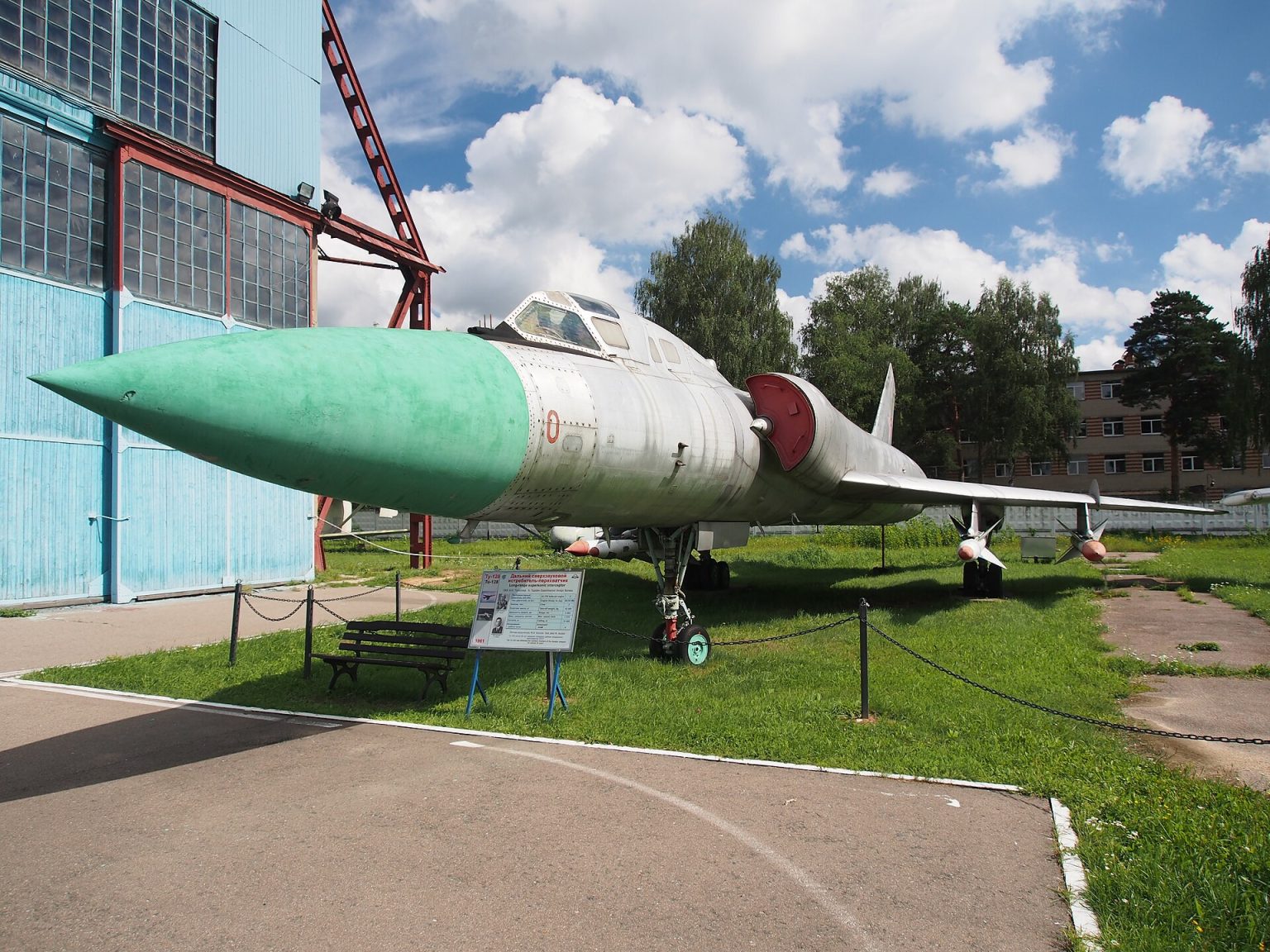
Tupolev Tu-128
“Fiddler”
The largest and heaviest fighter-interceptor ever to enter service — a bomber-sized jet built to guard the vast, radar-poor Soviet Arctic and Siberia against American nuclear bombers.
A fighter the size of a bomber
The Soviet Union faced a defensive problem no other country shared: thousands of kilometres of Arctic coastline and Siberian frontier, thinly covered by radar and dotted with only a handful of airfields. Across that emptiness American strategic bombers — the B-52 and its successors — could in theory approach from the north. Small, short-legged interceptors could not hope to patrol such distances. What the PVO air-defence force needed was something entirely different: a very large aircraft that could fly far, loiter for hours, and carry a radar and missiles powerful enough to find and kill a bomber on its own.
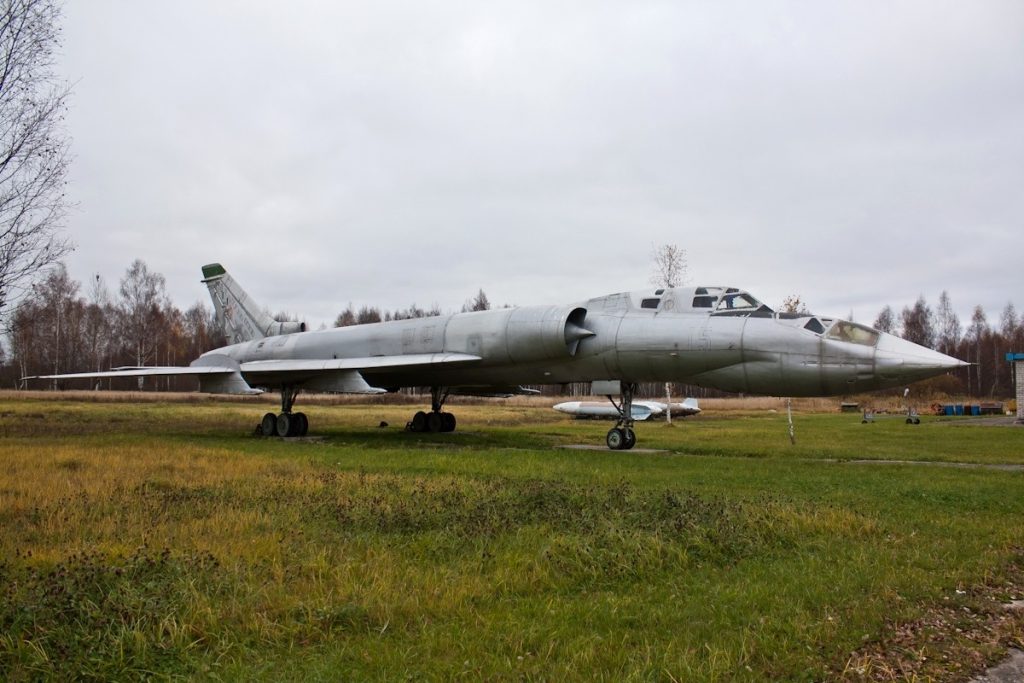
The answer was the Tupolev Tu-128, known to NATO as the “Fiddler.” Tupolev was a bomber design house, and the interceptor showed it: the Tu-128 grew out of the abandoned Tu-98 “Backfin” supersonic bomber, and at close to 30 metres long and roughly 43 tonnes it was larger and heavier than many of the bombers it was meant to shoot down. It is commonly described as the largest and heaviest purpose-built interceptor ever to enter service.
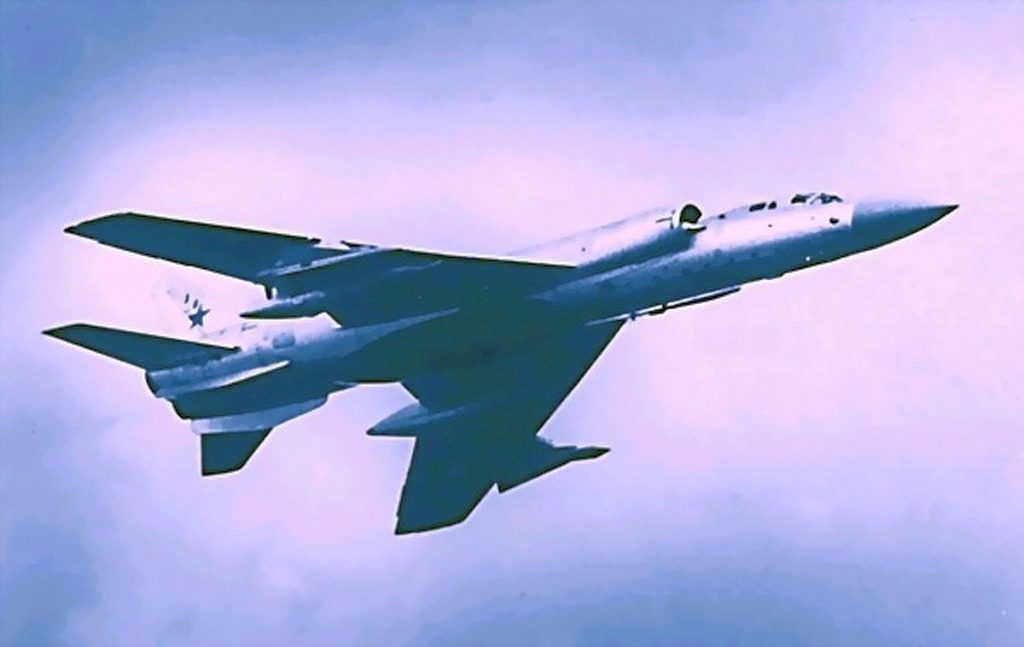
First flown on 18 March 1961 and revealed to the public at the Tushino aviation display that summer, the Tu-128 entered PVO service in 1965 as part of an integrated interception complex — the aircraft, its big Smerch radar, four large R-4 (NATO AA-5 “Ash”) missiles, and a ground-control network. Its size bought range and endurance rather than agility: this was never a dogfighter, but an area-defence weapon designed to meet a bomber far from base and destroy it with a single long-range salvo.
The Tu-128 was flown by the Soviet Union alone and never exported. Around 198 were built before production ended, and the type served the length of the northern frontier until it was retired around 1990, its role passing to the far more capable MiG-31 “Foxhound.” It fought no air battles and is credited with no aerial victories — its value was measured in deterrence and in the coverage it gave an otherwise almost undefendable expanse.
01The Tu-128 Fiddler’s mission: defending the Soviet Arctic against the bomber threat
Soviet air defence in the late 1950s was built around ground-controlled interception: radar stations tracked an intruder and vectored a fighter onto it by radio. That system worked over populated western regions but broke down across the Arctic and Siberia, where radar coverage was sparse and airfields were hundreds of kilometres apart. A bomber crossing the pole toward Soviet cities might fly for a long time before any interceptor could reach it.
The Tu-128 was the PVO’s answer to that gap. By making the interceptor very large, Tupolev could give it the fuel for long patrols — commonly cited endurance is on the order of two-and-a-half to three hours — and a radar big enough to search for targets with less dependence on ground stations. A small number of regiments, spread along the northern frontier, could in principle cover an enormous area. It was a solution shaped entirely by Soviet geography, and no Western air force ever built anything quite like it.
What makes it special
Built for reach, not for turning
The Tu-128 was sized around fuel and endurance. Two Lyulka AL-7F-2 afterburning turbojets carried a jet of roughly 43 tonnes on patrols lasting a reported two-and-a-half to three hours. Its wing was large simply to lift that weight; the airframe was limited to gentle manoeuvres (around +2.5 g). This was an area-defence interceptor meant to cover distance, never to dogfight.
The Smerch radar and the R-4 missile
The interceptor was one half of a weapon system. Its Smerch radar (NATO nickname “Big Nose”) filled the enormous nose and is commonly cited with a bomber-detection range of around 50 km. It guided four huge R-4 (AA-5 “Ash”) missiles — two radar-guided R-4R and two infrared R-4T — each weighing close to half a tonne. The Tu-128 was the only aircraft ever to carry the R-4.
A bomber airframe turned interceptor
Tupolev was a bomber bureau, and the Tu-128 descended directly from the cancelled Tu-98 “Backfin” bomber prototype. The result was a two-seat aircraft — pilot and radar operator in tandem — nearly 30 metres long. That heritage is why the “fighter” ended up larger and heavier than many strategic bombers, and why it is so often called the biggest interceptor ever flown operationally.
02The Tu-128 Fiddler’s radar and missiles: hunting bombers far from the ground network
Smaller Soviet interceptors of the era leaned heavily on the Vozdukh ground-control system to be steered onto their targets. The Tu-128 was designed to need it less. Its Smerch radar was large and powerful for its day, giving the two-man crew the ability to search a volume of sky and lock a bomber-sized target at a reported few tens of kilometres, then engage with radar-guided R-4R missiles at range or infrared R-4T missiles closer in. In the radar-poor north that semi-autonomous capability mattered: a Tu-128 could be pointed roughly toward an intruder and finish the interception on its own sensors, rather than being flown onto the target metre by metre from the ground. Accounts still describe the type as working within the wider ground-control network in normal operations; the onboard radar reduced, rather than eliminated, its dependence on it.
03The Tu-128 Fiddler’s size: why the largest interceptor ever was built by a bomber house
The claim that the Tu-128 is the largest and heaviest interceptor ever operated is widely repeated, and the numbers support it: a length of about 30 metres and a maximum weight in the region of 43 tonnes put it beyond any Western fighter and beyond most contemporary bombers. The reason lies in its origin. Rather than design a clean-sheet fighter, Tupolev adapted the airframe philosophy of its cancelled Tu-98 supersonic bomber, trading agility for the fuel volume and radar size that the Arctic-defence mission demanded. The oversized result was a deliberate engineering choice: only something that large could carry enough fuel, a powerful enough radar and heavy enough missiles to police the emptiest airspace on Earth.
Full specifications
Baseline note: the figures below describe the production Tupolev Tu-128 (OKB samolyot 128, service designation Tu-128, NATO Fiddler-B), the two-seat long-range patrol interceptor built at Voronezh from 1961 to 1970 on two Lyulka AL-7F-2 turbojets and carrying four Bisnovat R-4 missiles. It is the right baseline because 188 of the 198 airframes ever completed were built to this standard, and because every other machine in the story is either a modification of it or a paper project that was never cut in metal. Deltas for the Tu-128M of 1979 (RP-SM Smerch-M radar, R-4RM and R-4TM rounds, a lowered engagement floor) and for the three-seat Tu-128UT trainer are in grey. Five warnings before any number below is read. First, the headline claim needs stating precisely. The Tu-128 is the largest interceptor ever to enter squadron service anywhere and the heaviest empty — but it is not the heaviest at maximum take-off weight, because the MiG-31 that replaced it grosses 46,200 kg against the Tu-128’s 43,700 kg. The MiG-31 simply carries more fuel in a much smaller aeroplane: 22.69 m long against 30.06 m, 61.6 m² of wing against 96.94 m², 21,820 kg empty against 24,500 kg. On every dimension that describes the size of an aircraft rather than the weight of its fuel load, the Tu-128 wins, and it is not close. Second, the designations are a thicket. The prototype was covered in the West as the Tu-28 and inside the bureau as samolyot 128; the service name settled as Tu-128 in 1963; Tu-102 appears in some Western writing as a supposed bureau designation and should be treated with caution. The whole aircraft-plus-radar-plus-missile system, which is how the PVO actually bought and thought about it, was the Tu-128S-4 complex, and the modernised system the Tu-128S-4M. Third, the two maximum speeds quoted everywhere are not alternatives but different aeroplanes: 1,665 km/h, about Mach 1.5, is the figure with four missiles on the pylons, and the 1,910 to 1,929 km/h sometimes printed is a clean airframe. No operational Tu-128 ever flew clean, so the higher number is a test figure and nothing more. Fourth, empty weight is genuinely disputed: 24,500 kg is the standard Western figure and is used for the loadings below, while several Russian sources give about 27,700 kg, almost certainly an equipped or operating empty weight rather than the same quantity. Do not mix the two. Fifth, and most often got wrong, the missiles are R-4 rounds — development designation K-80, NATO AA-5 Ash — and not the R-8 / AA-3 Anab carried by the Su-11 and Yak-28P. Sources that give the Tu-128 "Anab" missiles have confused two entirely different weapons, and the modernised rounds appear in print as both R-4RM/R-4TM and R-4MR/R-4MT.
Dimensions & weights
- Crew
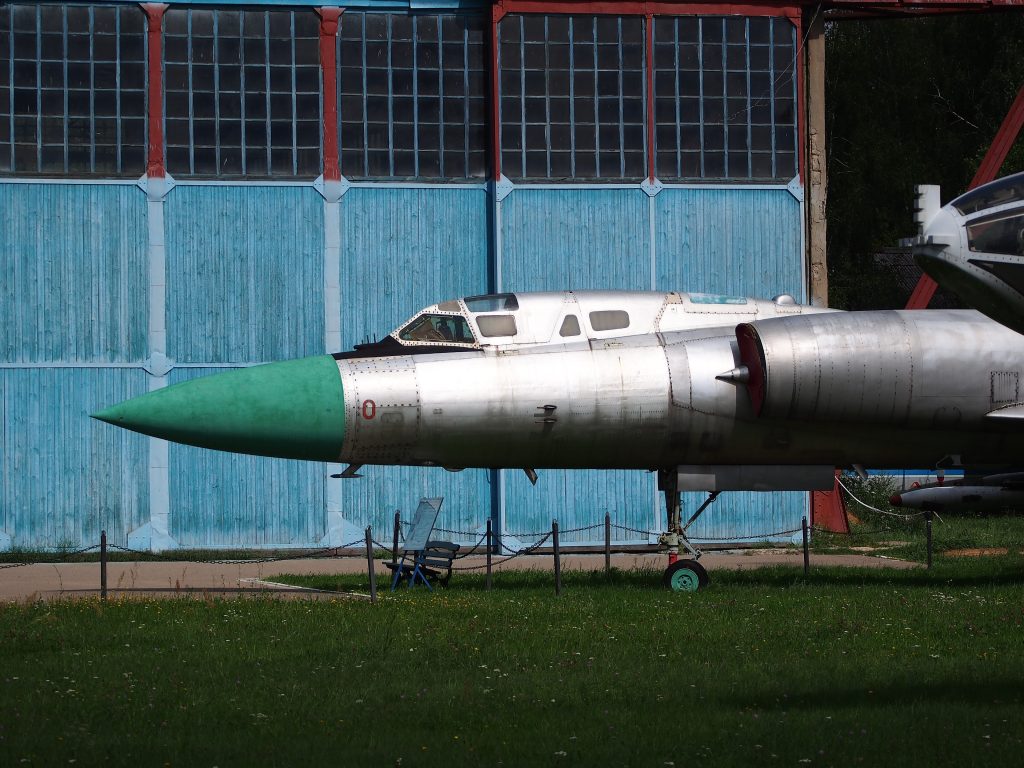
- 2 — pilot and navigator-operator in tandem under separate upward-hinged canopies, the navigator working the Smerch radar and the missile channel. This is the single most important design decision in the aeroplane: unlike the Su-9 and Su-11, the Tu-128 never asked one man to fly at Mach 1.5 in Arctic cloud and run a radar intercept at the same time. The Tu-128UT trainer added a third cockpit, cut into the nose ahead of and below the pilot in the space the radar had occupied, which gave the trainer its drooping profile and its service nickname Pelikan, the pelican
- Length
- 30.06 m (98 ft 7 in) — longer than a Boeing 737-100 airliner, and eleven metres longer than an F-4 Phantom II. This is a fighter with the footprint of a medium bomber, which is exactly what it was before it was a fighter
- Wingspan
- 17.53 m (57 ft 6 in)
- Height
- 7.15 m (23 ft 5 in)
- Wing area
- 96.94 m² (1,043 sq ft) — more than half again the MiG-31’s 61.6 m² (663 sq ft) and nearly twice the F-14A’s wing at full spread. The area is what bought the endurance and the high-altitude loiter; it did not buy agility, because the airframe was never stressed to use it
- Wing planform
- Mid-set swept wing of compound planform, roughly 56° on the inner leading edge with a reduced-sweep outer panel and a leading-edge discontinuity — published sweep angles differ between sources and between quarter-chord and leading-edge conventions, so treat any single figure with suspicion; the shape is inherited more or less intact from the Tu-98 bomber
- Empty weight
- 24,500 kg (54,013 lb) — heavier empty than any other interceptor that ever reached a squadron, the MiG-31 included (21,820 kg / 48,105 lb). Several Russian sources give about 27,720 kg (61,113 lb), which appears to be an equipped weight measured on a different basis
- Normal take-off weight
- 40,000 kg (88,185 lb) — the standard patrol weight, four missiles and full internal fuel
- Maximum take-off weight
- 43,700 kg (96,342 lb); 43,000 kg (94,799 lb) is also widely quoted and the difference is probably a fuel-density or equipment-standard convention rather than two different aeroplanes
- Internal fuel
- ~13,600 kg (~29,980 lb) — carried entirely inside the wing and the deep fuselage, including the volume that had been the Tu-98’s bomb bay. There were no drop tanks, no conformal tanks and no refuelling probe: what the aeroplane launched with was all it would ever have
- Wing loading
- 413 kg/m² (84.5 lb/sq ft) at normal take-off weight, rising to 451 kg/m² (92.3 lb/sq ft) at maximum — high for the era, and a fair warning that this aeroplane turned like the bomber it descended from
- Scale against its successor
- Tu-128 versus MiG-31: 30.06 m against 22.69 m (74 ft 5 in) in length, 17.53 m against 13.46 m (44 ft 2 in) in span, 96.94 m² against 61.6 m² in wing area — and the MiG-31 does the job better on every count, which is the whole argument of the Tu-128’s career in one line
Performance
- Maximum speed, armed
- 1,665 km/h (1,035 mph; 899 kn), about Mach 1.5 at altitude — the operationally meaningful figure, with four R-4 rounds hung on the pylons
- Maximum speed, clean
- 1,910 km/h (1,187 mph; 1,031 kn); 1,929 km/h also appears. A test-flight number for an airframe configuration that no squadron aircraft ever flew in, and it should never be quoted as the type’s combat speed
- Patrol speed
- About 900 km/h (559 mph; 486 kn) at 11,000 m (36,100 ft) on dry thrust — the number that actually mattered, because the aeroplane spent its life loitering on a barrier line rather than dashing. Published loiter figures vary and depended on weight and altitude band
- Range
- 2,565 km (1,594 miles; 1,385 nmi)
- Combat radius
- ~1,100 km (~683 miles; ~594 nmi) — sources differ, and the useful figure in PVO planning was not a radius but a barrier line: the northern regiments were expected to meet B-52s roughly 1,500 km out from the Kola coast, before the bombers reached stand-off missile release
- Endurance
- Over 3 hours — 3 h 30 min is quoted for an economical high patrol. Endurance, not speed, is the entire point of the design
- Service ceiling
- 15,600 m (51,200 ft)
- Absolute ceiling
- 20,000 m (65,600 ft) — a zoom figure, not a sustainable altitude
- Engagement envelope
- Optimised against high-altitude targets; the R-4 could be fired at aircraft flying above the launch aeroplane, but the original complex had no useful capability against a low-flying target — the Tu-128M of 1979 lowered the usable engagement floor substantially, which is the main reason the upgrade existed; exact floor figures differ between sources and are not reliably published in English
- Rate of climb
- No authoritative figure appears in the open literature — which is itself informative. Thrust-to-weight was 0.51 at normal take-off weight and 0.46 at maximum, roughly a loaded medium bomber’s figure and about two thirds of the MiG-31’s. The Tu-128 was not scrambled to climb through a raid; it was already up there, orbiting, when the raid arrived
- Load factor limit
- +2.5 g — the number that ends every argument about whether this aircraft could fight. A Second World War fighter was stressed to twice that. A hard turn at patrol weight was structurally out of the question
- Approach and landing
- Minimum flying speed of about 280 km/h (174 mph; 151 kn), with a braking parachute on rollout and a requirement for the long hard runways of a bomber base — which shaped where the type could be based in the Arctic as much as its radar did
Propulsion & systems
- Engines
- 2 × Lyulka AL-7F-2 afterburning turbojets — the same engine family as the Su-7, Su-9 and Su-11, buried in the rear fuselage and fed by lateral intakes on the fuselage sides behind the cockpits. Reliable by the standards of Soviet first-generation afterburning turbojets, and thirsty by anyone’s
- Thrust, dry
- 72.8 kN (16,400 lbf) each; 145.6 kN (32,700 lbf) total — the figure the aeroplane actually cruised on for hours at a time
- Thrust, reheat
- 99.1 kN (22,300 lbf) each; 198.2 kN (44,600 lbf) total
- Thrust-to-weight
- 0.51 at 40,000 kg; 0.46 at maximum take-off weight — afterburner was for the terminal dash to a firing position, and it emptied the tanks fast enough that its use was planned in minutes
- Radar
- RP-S Smerch ("Whirlwind", NATO Big Nose), I/J-band, in a nose radome of unprecedented size for a fighter: detection out to about 50 km (31 miles), lock-on at 35 to 40 km (22 to 25 miles) and a practical missile launch range of 20 to 25 km (12 to 16 miles). Enormous for 1965, crude by any later standard: no look-down capability worth the name, no track-while-scan, one target at a time
- Radar, Tu-128M
- RP-SM Smerch-M from the 1977 trials and the 1979 service standard, with better performance against targets below the interceptor and matched R-4RM and R-4TM rounds. It closed part of the low-altitude gap; it did not turn the aircraft into a MiG-31, and everyone involved knew it
- Weapon system
- Tu-128S-4 complex — the PVO bought aircraft, radar and missiles as one certified system, which is why "Tu-128S-4" and not "Tu-128" is the correct name for what a regiment actually operated. The modernised system was the Tu-128S-4M
- Ground control and datalink
- Interceptions were normally run from the ground through the PVO’s Vozdukh control system, and over the Arctic where no ground radar existed, from the Tu-126 Moss airborne radar picket — equipment fits varied between regiments and upgrade standards, so treat any single avionics list as one period’s snapshot
- Undercarriage
- Tricycle gear with four-wheel main bogies retracting rearwards into pods faired into the wing trailing edge — a Tupolev signature carried straight across from the bomber line, and one of the quickest ways to recognise the type in silhouette
- Airframe
- Area-ruled fuselage derived directly from the Tu-98 bomber, with the former bomb bay volume given over to fuel and equipment — no bay, no internal stores, no reconnaissance fit. The Tu-128 could not carry a bomb even if the PVO had wanted it to
- Crew escape
- Upward-firing ejection seats for both crew — and, in the Tu-128UT, for the instructor in the nose position as well
- Production
- 198 airframes in total to 1970 — 188 interceptors plus 10 new-build Tu-128UT trainers, with a further 4 trainers converted from interceptors. Never exported, never licence-built, and flown by exactly one air arm in its whole life
04The Tu-128 Fiddler’s cost: why no reliable price exists
The Tu-128 was a Soviet state product, built for the PVO and never sold on any open market. As a result there is no meaningful flyaway unit price for it in the public record, and no credible cost-per-flight-hour figure exists in open sources. Any precise dollar cost attached to the type should be treated as guesswork rather than a sourced number. What can be said with confidence is that it was a large, fuel-hungry twin-engined aircraft, and that only around 198 were built — a small run reflecting its specialised role rather than any published economics.
Armament & payload
The Tu-128 carried four missiles, no gun, and had no other trick of any kind
The armament of the largest interceptor ever built can be written in one line: four Bisnovat R-4 air-to-air missiles on four underwing pylons. There is no cannon, no bomb rack, no rocket pod, no drop tank, no reconnaissance pack and no air-to-ground capability of any sort, on an airframe descended from a bomber and large enough to have carried all of them. That emptiness is not an oversight. The PVO bought a flying missile launcher with a very large radar and a very large fuel tank, and it deliberately bought nothing else.
The interesting decision is how the four rounds were made up. Standard fit was two R-4R with semi-active radar homing and two R-4T with infrared homing, and the pairing was the whole tactical idea: a two-round salvo fired at one target put a radar seeker and a heat seeker into the air at once, so that chaff could not defeat both and a cloud deck or a flare could not defeat both either. With four rounds an aircraft got two such salvoes, and PVO planning assumed two Tu-128s were needed for a high probability of killing a single B-52 — a candid admission that a lone R-4 was, on its own numbers, closer to a one-in-four proposition than a certainty.
The R-4 itself was a genuinely enormous weapon: 5.45 m long in its radar form, 492.5 kg on the rail, with a 53 kg warhead — heavier than a Sidewinder is in total, and closer in size to a small surface-to-air missile than to anything a Western fighter carried. Four of them, plus their pylons, cost the aeroplane most of a hundred knots off its clean top speed, which nobody minded, because speed was never what this design was selling. Weapon fits followed the certified complex rather than the airframe: a Tu-128S-4 regiment flew R-4R and R-4T rounds, a Tu-128S-4M regiment after 1979 flew the modernised R-4RM and R-4TM (also written R-4MR and R-4MT), and the two standards were not interchangeable in service.
Gun
- None. Not a single round, on any Tu-128, Tu-128M or Tu-128UT ever built. The card is kept because the absence is the most eloquent fact in the aircraft’s armament.
- This was doctrine, not omission. A gun implies closing to visual range and manoeuvring, and a 40-tonne aeroplane stressed to +2.5 g was never going to do either.
- Unlike the Su-9, where the missing gun was a scandal after the U-2 and RB-47 intercepts of 1960, nobody seriously argued the Tu-128 should have had one. Its targets were bombers on a straight line over the pole, not fighters.
- There was also no gun camera installation of any tactical use, and no provision to add one; kill assessment rested on the radar and on ground control.
Air-to-air
- 4 × Bisnovat R-4 (development designation K-80, NATO AA-5 Ash) on four underwing pylons — the complete offensive armament of the type.
- R-4R, semi-active radar homing: 5.45 m long, 310 mm in diameter, 1.3 m span, 492.5 kg, 53 kg warhead, about Mach 1.6, effective from roughly 2 km out to 25 km against a non-manoeuvring target.
- R-4T, infrared homing: 5.2 m long, 480 kg, the same 53 kg warhead, effective from about 2 km to 15 km — shorter-legged than the radar round and restricted to rear-hemisphere shots.
- R-4RM and R-4TM from the 1979 Tu-128M standard: improved seekers, better performance against targets below the launch aircraft, and matched to the Smerch-M radar. Retired with the aeroplane in 1990.
- Not, under any circumstances, the R-8 / AA-3 Anab of the Su-11 and Yak-28P. The two weapons are routinely confused in English-language sources and share nothing but a Soviet origin.
Air-to-surface guided
- None, of any kind, ever. No anti-radiation round, no television or command-guided missile, no anti-ship weapon.
- The fire-control system had no air-to-ground modes at all; Smerch was a pure air-intercept radar with no mapping function.
- This is remarkable given the ancestry. The Tu-98 it grew from was a bomber, and the family connection ran the other way entirely: the interceptor was stripped of strike capability, not given it.
- Western intelligence initially assumed the opposite, reading the big two-seat airframe first seen at Tushino in 1961 as a strike or reconnaissance machine; the fighter role was not confidently understood in the West until the later 1960s.
Bombs
- None. No bomb bay, no external racks, no ballistic computing of any sort.
- The Tu-98’s bomb bay volume was filled with fuel and equipment during the conversion to an interceptor, so the physical space no longer existed.
- Proposed bomber and strike derivatives of the airframe were studied inside the bureau and none of them was built, which is why no Tu-128 ever carried an air-to-ground store of any description.
Rockets
- None. No unguided rocket pods were carried or cleared, on any variant.
- Unguided rockets had been a standard Soviet interceptor weapon a decade earlier, on the MiG-17PF and MiG-19PM generation, and were obsolete against high-altitude bombers by the time the Tu-128 entered service.
- The four pylons were plumbed and wired for R-4 rounds specifically; there was no multi-purpose stores management system to hang anything else on.
Pods & other stores
- No external fuel tanks. Range and endurance came entirely from internal fuel, and there was no in-flight refuelling probe — unusual for an aircraft whose entire purpose was loitering a long way from home.
- No ECM, targeting or reconnaissance pods in squadron use. Self-protection was essentially non-existent, on the reasonable assumption that unescorted bombers would not be shooting back.
- The prototype flew at the 1961 Tushino display with two K-80 missile mock-ups and large flight-test recording containers under the fuselage — the only pods the type is reliably photographed carrying, and purely a test installation.
- A braking parachute in the tail, and that is the end of the external stores list.
Three typical loadouts
- Standard barrier patrol, Tu-128S-4
- 2 × R-4R and 2 × R-4T, full internal fuel, orbiting a designated barrier line at 11,000 m or above on dry thrust for three hours or more, under control from a ground station or from a Tu-126 Moss. The mixed pair was doctrine, not preference: one radar seeker and one heat seeker went at each target so that no single countermeasure could defeat the salvo.
- Modernised patrol, Tu-128S-4M after 1979
- 2 × R-4RM and 2 × R-4TM with the Smerch-M radar, flown by the same regiments against the same targets, but with a usefully lower engagement floor against aircraft trying to come in beneath the barrier. Around fifty aircraft were brought to this standard.
- Conversion training, Tu-128UT
- No missiles at all, and no radar — the Smerch and its radome were removed and a third cockpit for the instructor built into the nose in their place. Fourteen aircraft, ten new-build and four converted, carried the entire conversion workload for six regiments, and gave the type its only nickname worth repeating: Pelikan.
Sourcing caveat: R-4 performance figures are Soviet-era published values for a non-manoeuvring high-altitude target and should be read as an upper bound rather than an operational expectation. The type never fired a missile at a manned aircraft in anger, so there is no combat record against which to test them; the only publicly reported shooting was against drifting reconnaissance balloons. Kill-probability figures quoted in Russian accounts, including the requirement for two aircraft per B-52, come from planning documents rather than from trials results.
Variants
One bomber prototype, one interceptor, one trainer, and a long shelf of projects that were never built
The Tu-128 family tree is short and unusually honest. A failed supersonic bomber became an interceptor; the interceptor was built in one basic standard for nine years, upgraded once, and given a trainer; and every attempt to develop it into something better was killed, most of them by the Mikoyan designs that eventually replaced it. There is no export entry and no licence-built entry in this list, and that absence is itself a fact about the type: the Tu-128 answered a problem that only the Soviet Union had, and no other air force was ever offered one.
That problem was geography. The shortest route from American bomber bases to Soviet targets ran over the pole, across several thousand kilometres of Arctic coast, tundra and Siberian forest where there were almost no airfields, almost no ground radar, and in places no people. Point-defence interceptors of the Su-9 and MiG-19 class were useless there because there was nothing for them to defend from and nothing to guide them. What the PVO needed was an aeroplane that could take off from one of the handful of long runways that existed, fly several hundred kilometres out, and then simply stay there for hours with a radar big enough to find a bomber on its own. Every ugly compromise in the Tu-128 — the weight, the size, the +2.5 g limit, the absence of a gun — follows from that sentence.
- Tu-98 samolyot 98 (NATO Backfin) (built 1955, first flight 1956, 1 built)
- The ancestor: a swept-wing supersonic medium bomber on two AL-7F engines, ordered in April 1954 to replace the Tu-16. It failed its state trials, never entered production, and ended its life as a systems testbed for the interceptor that replaced it, with a final flight on 21 November 1960 that ended in an undercarriage collapse. Its fuselage, wing and engine installation are the Tu-128.
- Tu-28 / samolyot 128 prototype (NATO Fiddler-A) (first flight 18 March 1961)
- The interceptor prototype, distinguished by twin ventral fins later deleted. Flown from Zhukovsky by M. V. Kozlov with navigator K. I. Malkhasyan, and shown at the Tushino display that July carrying K-80 missile mock-ups, where Western observers photographed it, misjudged its role, and for a time misattributed it to the Yakovlev bureau.
- Pre-series aircraft (1961–1962, a handful)
- A small batch for the development and state trials programme, run from 1962 at Akhtubinsk with test crews that included the future cosmonaut G. T. Beregovoy. Sources disagree on the exact number, generally quoting three or four.
- Tu-128 / Tu-128S-4 (NATO Fiddler-B) (1962–1970, 188 built)
- The production interceptor and the subject of every figure on this page. Aircraft reached the 148th combat training centre at Savasleyka in 1964 and the complex was formally accepted into PVO service in 1965, which is why introduction dates of 1964, 1965 and 1966 all appear in print without any of them being wrong. Sixty-four aircraft were in service by August 1967.
- Tu-128UT / Tu-28UT Pelikan (1970–1971, 10 built plus 4 conversions)
- The trainer, and visually the strangest aircraft in the family. The Smerch radar and its radome came out and an instructor’s cockpit went into the nose ahead of and below the pilot, giving a drooped, beaked profile. No radar and no missiles, so it could teach handling, instrument flying and landing but not interception — a limitation the regiments lived with because the alternative was no two-seat conversion at all.
- Tu-128M / Tu-128S-4M (trials 1977, in service 1979, about 50 converted)
- The only upgrade the type ever received: the RP-SM Smerch-M radar with better performance against targets below the interceptor, and R-4RM and R-4TM missiles to match. Field trials were flown in the summer of 1977 by 356th Regiment crews at the Sary-Shagan range near Lake Balkhash. It bought perhaps a decade of usefulness against low-level penetration, which the original complex could not touch.
- Tu-28A (project, not built)
- An early improved-interceptor study that went no further than paper.
- Tu-28-80 and Tu-28-100 (projects, late 1950s to 1963, not built)
- Proposed versions built around uprated Smerch derivatives and longer-ranged K-80M and K-100 missiles, intended to give the complex a genuine stand-off engagement. Neither was ordered.
- Tu-138 (project, cancelled 1965)
- A substantially redesigned successor with a new radar and missile fit, cancelled before metal was cut when the PVO judged that the money was better spent on the Mikoyan line.
- Tu-148 (project, cancelled early 1970s)
- The last and most ambitious of them, a variable-geometry multirole aircraft intended to be interceptor, strike aircraft and reconnaissance platform at once. It lost decisively to the MiG-25 and the MiG-31 that grew from it, and with it the Tupolev bureau left the fighter business for good.
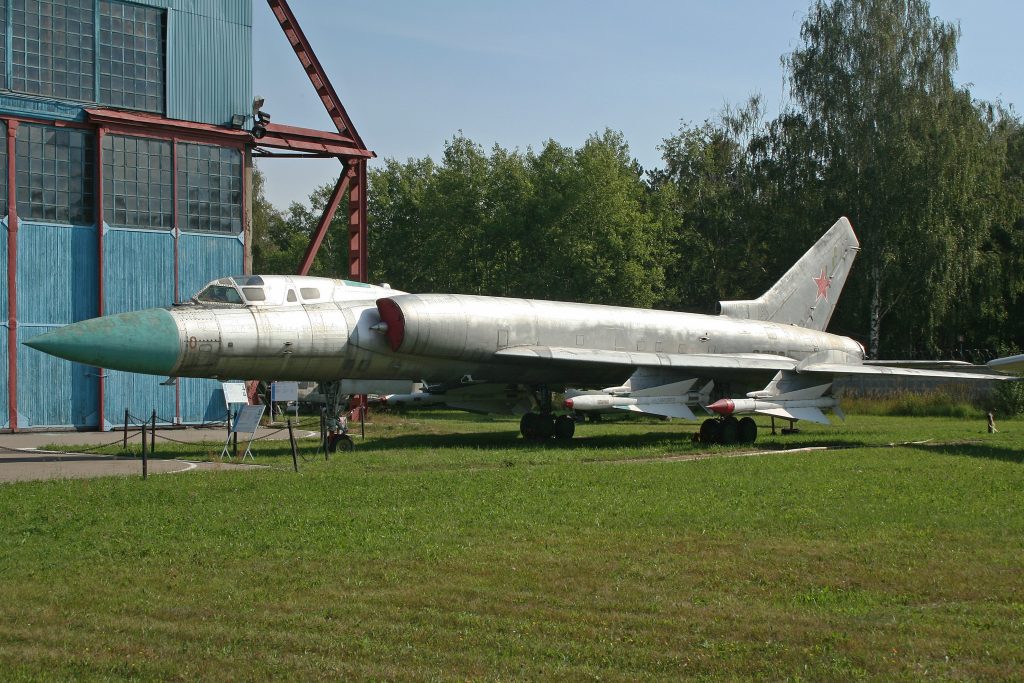
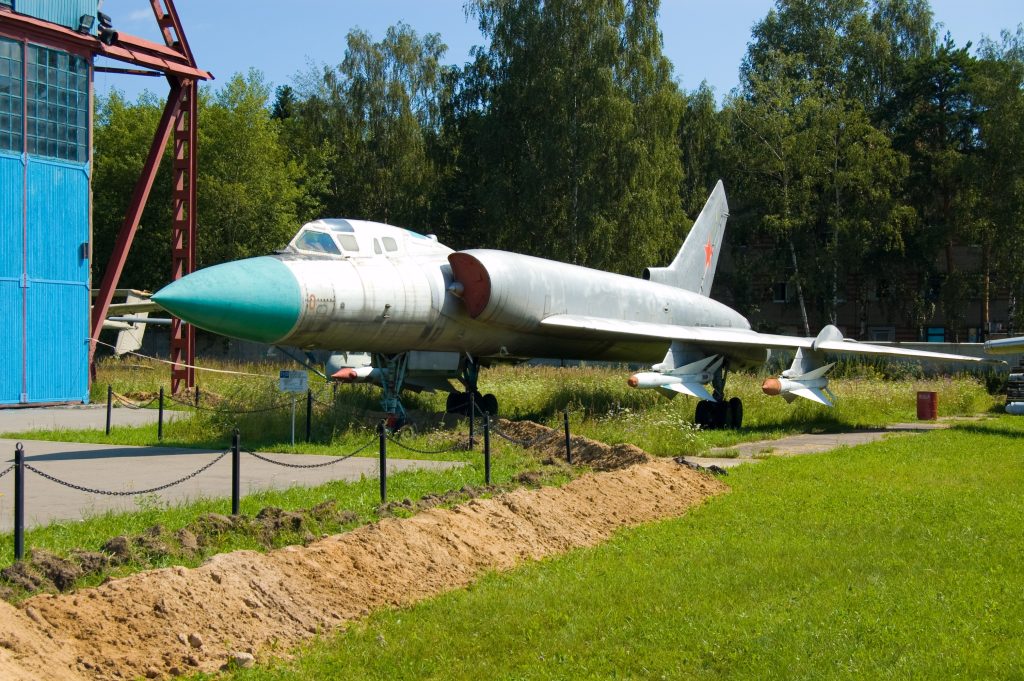
Closing note on survivors. Very few Tu-128s survive, because the fleet was not retired so much as destroyed: from the late 1980s airframes were broken up at their bases, some with explosive cutting cord, and others were disposed of at sea. The one unambiguous museum aircraft is the prototype itself, construction number 71281, at the Central Air Force Museum at Monino outside Moscow — the machine that first flew on 18 March 1961 and appeared at Tushino that July, delivered from Zhukovsky on 2 February 1973 with 398 hours 36 minutes and 450 landings on the airframe. Beyond Monino the picture is thin and poorly documented: Russian accounts report one Tu-128M and one Tu-128UT surviving at the Rzhev storage base, where roughly fifty modernised aircraft were concentrated at the end, and mention individual airframes at Savasleyka and at the air-defence academy at Tver, none of which is confirmed by a published museum catalogue. Anyone repeating a figure of "several preserved examples" should say which and where, because the honest answer is one certain and a small number reported. What can be said without qualification is that every surviving Tu-128 is an original airframe. No replica or reproduction of the type has ever been built, none was exported, and there is no airworthy example anywhere: the last of them stopped flying with the PVO in 1990, with some sources putting final disposal as late as 1992.
From bomber prototype to Arctic sentinel
The Tu-98 bomber
Tupolev builds and tests the Tu-98 “Backfin” supersonic bomber prototype. It is not adopted, but its airframe becomes the basis for a very different aircraft.
The requirement
The PVO calls for a long-range area interceptor able to patrol the radar-poor Arctic and Siberian frontier and destroy bombers far from base.
First flight
The prototype flies on 18 March 1961 and is shown publicly at the Tushino aviation display that summer, where Western observers struggle to classify it.
Enters service
The Tu-128 joins the PVO as part of the Tu-128S-4 interception complex: the aircraft, its Smerch radar and four R-4 missiles working with ground control.
Production ends
Manufacture wraps up at around 198 aircraft, including a small batch of two-seat Tu-128UT conversion trainers.
The Tu-128M
An upgraded variant enters service with an improved Smerch-M radar and modernised R-4 missiles, extending the type’s usefulness into the 1980s.
Retirement
The Fiddler is withdrawn as its area-defence role passes to the far more capable MiG-31 “Foxhound.”
Museum pieces
A handful survive on display, notably at the Central Air Force Museum at Monino, where the sheer scale of the “fighter” is unmistakable.
Twelve stories about the biggest fighter
The bomber that became a fighter
The Tu-128 grew out of Tupolev’s cancelled Tu-98 supersonic bomber.
Read the full story
Defending an impossible frontier
Thousands of kilometres of Arctic and Siberian border, thinly covered by radar.
Read the full story
The parade that puzzled the West
Shown publicly in 1961, the aircraft was hard for Western analysts to classify.
Read the full story
“Big Nose”
The Smerch radar filled the huge nose and searched for bombers tens of kilometres out.
Read the full story
A monster called Ash
The Tu-128 was the only aircraft ever to carry the huge R-4 missile.
Read the full story
Hunting beyond the radar net
In the empty north the crew could search and engage with less ground control.
Read the full story
The biggest fighter ever fielded
At ~30 m and ~43 t, larger and heavier than many bombers.
Read the full story
The Tu-128UT and its hump
A two-seat trainer with an added stepped instructor cockpit gave the type a distinctive bump.
Read the full story
A job measured in deterrence
Credited with no aerial kills; reportedly used against reconnaissance balloons.
Read the full story
Chasing the uncatchable
The Fiddler was reportedly scrambled against SR-71 flights it could not catch.
Read the full story
Cold, remote and demanding
The type flew from bleak northern bases across the Soviet Arctic and Siberia.
Read the full story
Handing over to the Foxhound
Retired around 1990, its role passing to the MiG-31.
Read the full story
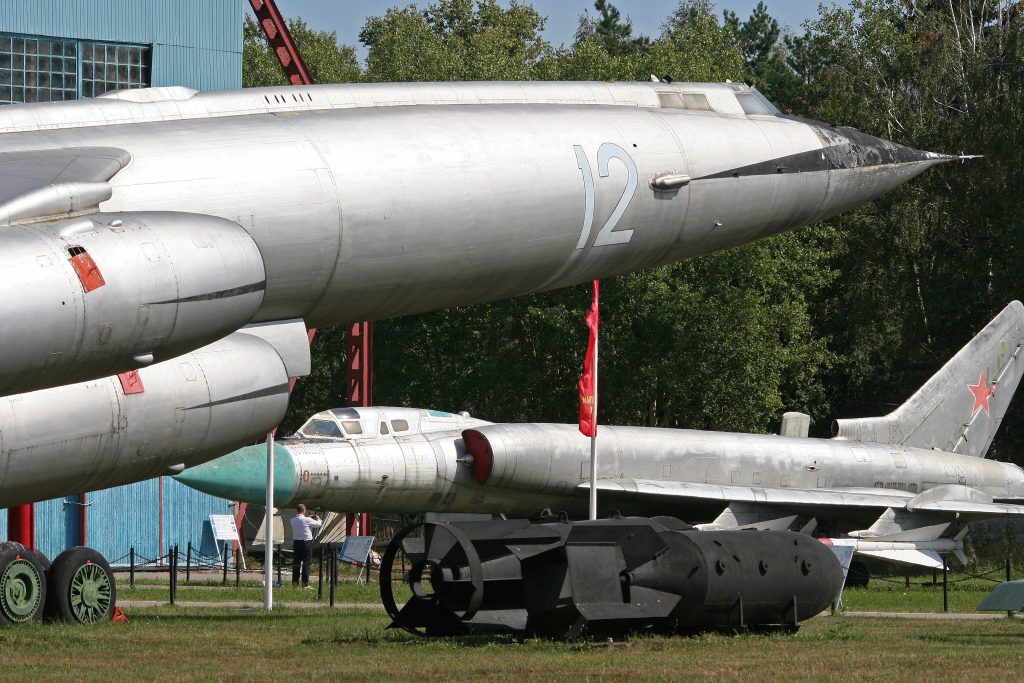
The Fiddler in pictures
Where the Fiddler flew
The score that defines it
The Tu-128 fought no air battles and is credited with no confirmed aerial victories — that was never how it was meant to be judged. Its record is one of presence: hours of patrol over the emptiest airspace on Earth, and the deterrent effect of making the northern approaches a place no bomber crew could treat as undefended.
Compare the combat record of every military aircraft. Figures as of July 2026.
Everything people ask about the Tu-128
Can I fly in a Tu-128?
Why is the Tu-128 called the largest interceptor ever?
What was the Tu-128 built to do?
What missiles and radar did it carry?
How fast was the Tu-128?
Did the Tu-128 ever shoot anything down?
Who operated the Tu-128, and is it still in service?
You can’t fly the Tu-128.
These, you can.
Some legends only live in museums — others are fuelled and waiting. MiGFlug has put civilians in real military jet cockpits since 2004.
 Fly the L-39 AlbatrosThe world’s most-flown jet trainer — aerobatics included
 Fly the F-104 Starfighter“The missile with a man in it”
 Fly the MiG-21The Cold War’s most-produced jet
 Fly the T-33 Shooting StarAmerica’s first jet trainer
 Fly the DH VampireA piece of early jet history
 Fly the S.211Agile Italian jet trainer
 Fly the MB-326The classic Aermacchi jet
 Fly the MiG-15The Soviet legend of the Korean War
Continue the tour
Every fact, checked
- Key Aero — Tupolev Tu-128 ‘Fiddler’Overview of the type’s role, radar and service by an established aviation publisher.
- GlobalSecurity.org — Tu-128 FiddlerMission, area-defence concept, Tu-98 origin and production figures.
- Military Factory — Tupolev Tu-28 / Tu-128Specifications, dimensions, armament and the “largest interceptor” description.
- Plane Historia — Tu-128 FiddlerDevelopment history, dimensions, engines and service dates.
- War History OnlineThe frontier-defence rationale and why so few, large interceptors were needed.
- RedStarTu-98 origin, Smerch radar detection range and R-4RM/R-4TM missile data.
- The National InterestSize framing, ground-control interception and semi-autonomous operation.
- National Museum of the US Air ForceReference for Soviet Cold-War air-defence context and preserved airframes.