
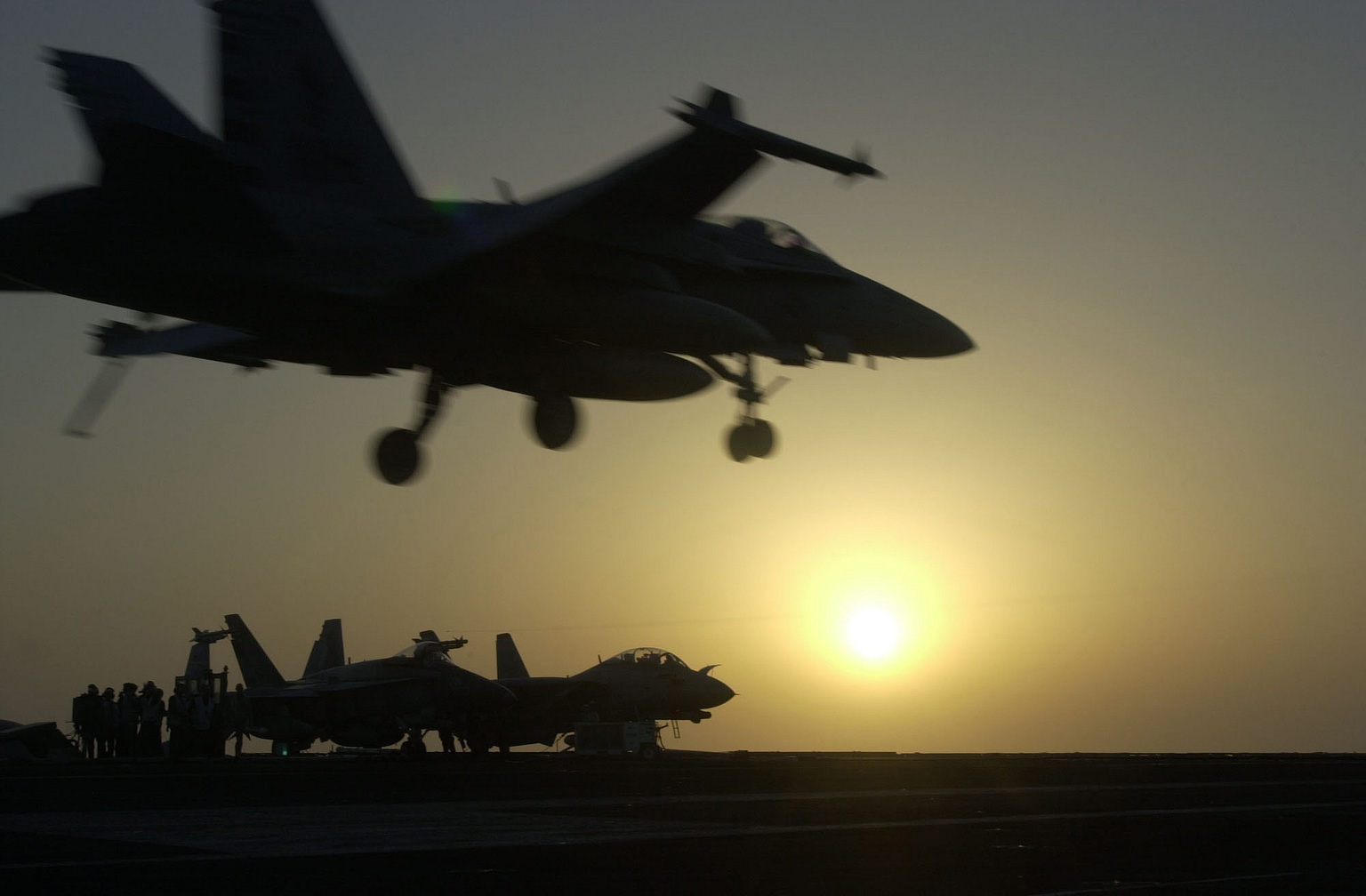
McDonnell Douglas F/A-18
“Hornet”
The world’s first true carrier multirole fighter — born from a jet that lost the contest the F-16 won, it merged fighter and attack into one airframe, proved it in a single 40-second Desert Storm sortie, and armed seven allied air forces. This is the original “legacy” Hornet (A/B/C/D), not the larger Super Hornet.
The winner that lost — and rewrote how navies fly
The Hornet grew out of a loser. Northrop’s YF-17 “Cobra” lost the US Air Force’s Lightweight Fighter fly-off to the General Dynamics YF-16 in 1975 — the design that became the F-16. But the US Navy wanted a twin-engine, carrier-capable multirole jet, and picked the YF-17 as the basis for its Naval Air Combat Fighter. McDonnell Douglas became prime contractor, with Northrop as partner, and heavily navalized the design: a bigger, stronger structure, folding wings, carrier landing gear and an arrestor hook.
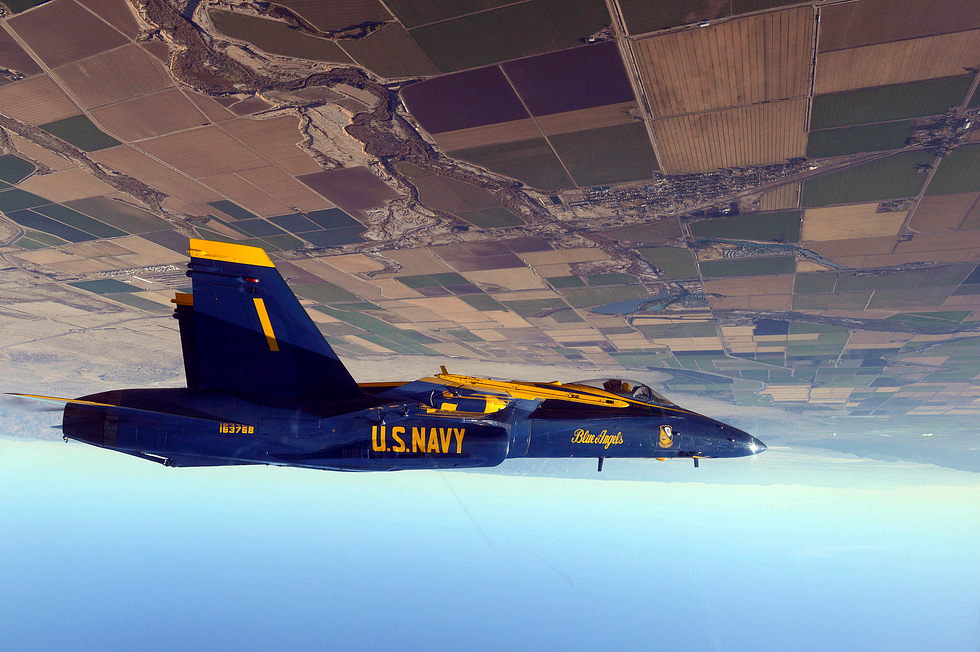
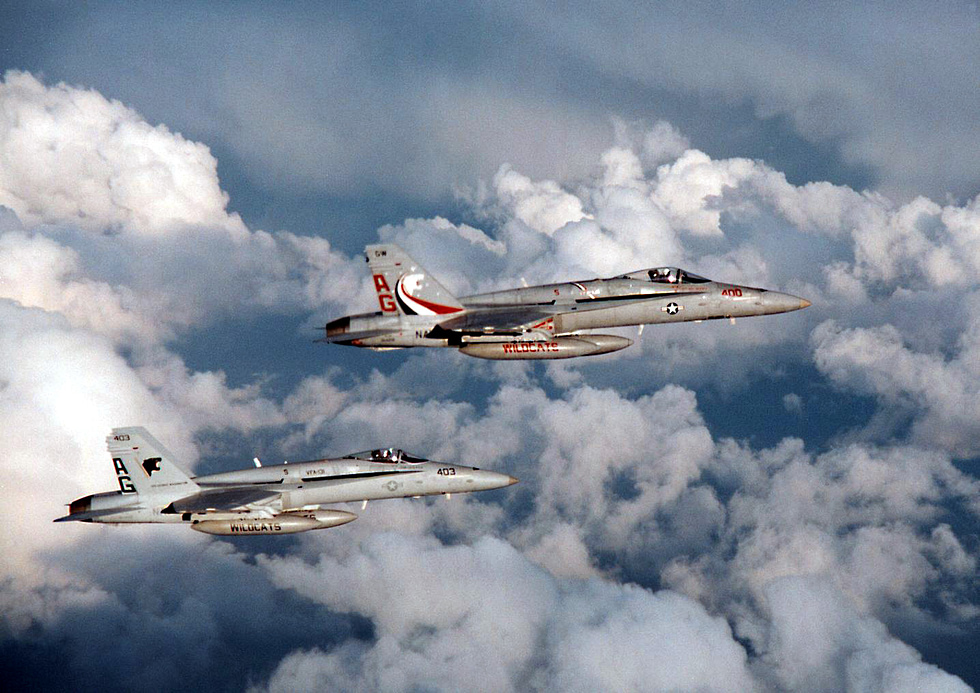
The F/A-18 first flew on 18 November 1978 and entered US Navy and Marine Corps service in 1983 with squadrons VMFA-314 and VFA-113. Its breakthrough was doing two jobs in one airframe — fighter a attack, hence the “F/A” designation — replacing separate F-4s and A-7s. The improved F/A-18C/D arrived from 1987 with new avionics and weapons, and the US Navy’s Blue Angels have flown Hornets since 1986.
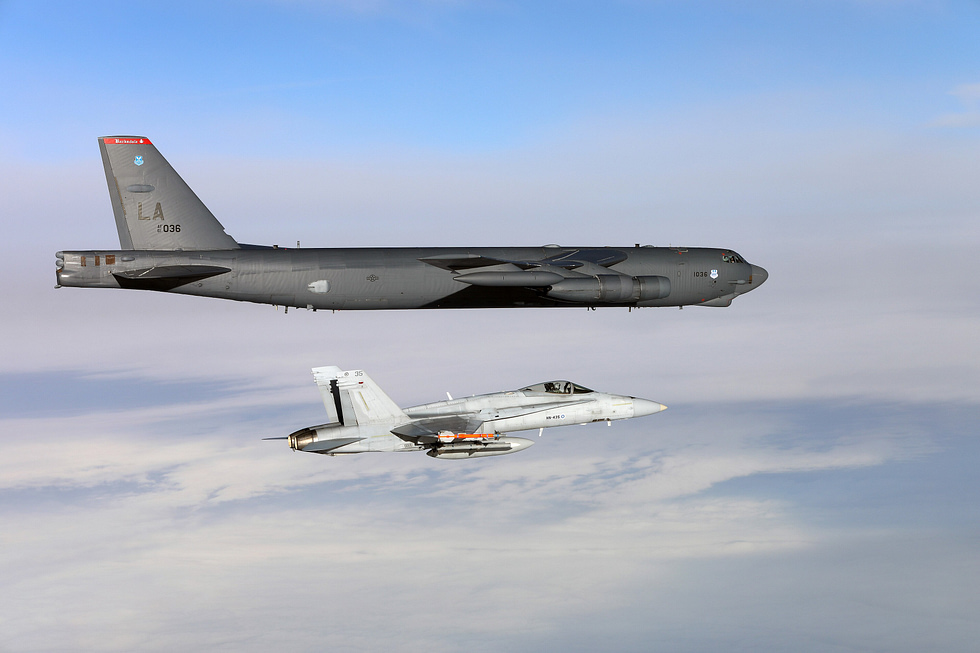
Widely exported, the legacy Hornet armed seven allied air forces — Canada, Australia, Spain, Kuwait, Finland, Switzerland and Malaysia — and flew combat for many of them. Today it is an active but retreating aircraft: the US Navy retired the legacy Hornet from its front-line fleet squadrons in 2018, Australia bowed out in 2021, and Canada, Finland and Switzerland are transitioning to the F-35. This page is the original “legacy” Hornet — not the larger, later Super Hornet.
01The multirole revolution, proven in one 40-second F/A-18 sortie
On the opening morning of Desert Storm, 17 January 1991, four VFA-81 “Sunliners” F/A-18Cs launched from USS Saratoga, each hauling four 2,000-lb Mk 84 bombs toward the H-3 airfield in western Iraq. An E-2C Hawkeye warned of MiG-21s closing head-on. Lt Cdr Mark Fox a Lt Nick Mongillo swung to the threat and killed both MiGs — Fox with an AIM-9 Sidewinder, Mongillo with an AIM-7 Sparrow — then rolled back onto their attack run and dropped their bombs on target.
The whole air-to-air engagement lasted under a minute. No aircraft type had ever so publicly demonstrated the “F/A” promise: win the dogfight a complete the strike on the same mission, without swapping jets or jettisoning ordnance. It became the enduring case study for why one multirole airframe could replace two specialists.
What makes the F/A-18 Hornet special
Twin GE F404 turbofans
Two General Electric F404 turbofans (F404-GE-400/-402), roughly 78–80 kN each in afterburner, gave the reliability, tolerance and quick throttle response the Navy demanded. Two engines meant redundancy for long over-water carrier sorties, and strong spool-up for the exacting carrier approach — a deliberate contrast to the single-engine F-16.
Leading-edge extensions & high-alpha control
The big wing-root leading-edge extensions (LEX), paired with relaxed stability, generate stabilising vortices that keep airflow attached at extreme angles of attack. The result is superb slow-speed, nose-high controllability — the signature air-show and dogfight trait that lets the Hornet point its nose where older jets would simply depart.
Carrier-suitable, digital, and multirole
A beefed-up structure, folding wings, tailhook and rugged gear made it carrier-suitable; a digital fly-by-wire system, APG-65/73 radar, HOTAS controls and glass-cockpit multifunction displays let one pilot switch from fighter to attack in flight. That marriage of a robust airframe and modern avionics is the core “F/A” idea made real.
02The F/A-18’s LEX: vortices that tame high angle of attack
The strakes running forward of the wing roots are not decoration. At high angle of attack they shed powerful vortices that re-energise the airflow over the wing, keeping it attached when the nose is pointed high and older designs would stall and depart. That is why the Hornet stays crisply controllable in the slow, nose-high regime — a decisive advantage in a close-in knife-fight and, just as importantly, on the low-and-slow carrier approach where control authority is everything.
03Why the Hornet is heavier than the F-16 it shared a contest with
The YF-17 and YF-16 were rival lightweight fighters, but navalizing the YF-17 into the F/A-18 meant reinforcing almost everything: a heavier structure to survive catapult shots and arrested landings, catapult-capable nose gear, an arrestor hook and wings that fold to fit crowded decks. All of that added weight over a land-based fighter like the F-16. The payoff was an aircraft that could slam onto a pitching carrier deck day and night, over open ocean, on two engines — exactly what the Navy could not get from the lighter, single-engine design.
Full F/A-18C specifications
Airframe & Performance
- Posádka
- 1 (C) / 2 (D)
- Délka
- ~17.1 m (17.07 m)
- Rozpětí křídel
- ~11.4 m (~8.4 m folded)
- Výška
- ~4.7 m (4.66 m)
- Plocha křídla
- ~37.2 m²
- Max takeoff weight
- ~23,500 kg (up to ~25,400 kg cited)
- Max speed
- >Mach 1.8 · ~1,900 km/h
- Servisní strop
- ~15,000 m (~50,000 ft)
- Bojový rádius
- ~537 km / 290 nm (interdiction; profile-dependent)
Propulsion & Armament
- Motor
- 2 × GE F404-GE-402 (EPE)
- Tah
- ~78–80 kN each with afterburner
- Cannon
- 1 × 20 mm M61 Vulcan (~578 rounds)
- Air-to-air
- AIM-9, AIM-7, AIM-120 AMRAAM
- Air-to-ground
- Mk 80 bombs, JDAM/JSOW, Maverick, HARM, Harpoon
- First flight
- 18 November 1978
- Unit cost
- ~US$29–57M (historic; varies widely)
- Cost per flight hour
- No single reliable public figure
04The F/A-18 Hornet’s cost: why the numbers are slippery
Published unit costs for the legacy Hornet range roughly from US$29 million to US$57 million depending on the variant, the year and how the accounting is done — flyaway cost, program cost, then-year versus constant dollars all give different answers. Treat any single figure as an approximation. No credible, consistent cost-per-flight-hour number exists in open sources for the legacy A/B/C/D either. What is clear is the value proposition the Navy bought: a single airframe that did the work of two, cutting the number of aircraft types a carrier air wing had to buy, crew, arm and maintain.
From rejected prototype to retreating veteran
The YF-17 loses
Northrop’s YF-17 loses the USAF Lightweight Fighter fly-off to the YF-16 — the jet that becomes the F-16.
The Navy adopts the loser
The US Navy selects the YF-17 as the basis for its Naval Air Combat Fighter; McDonnell Douglas becomes prime contractor.
First flight
The navalized F/A-18 takes to the air for the first time.
Enters service
The Hornet joins US Navy and Marine Corps squadrons VMFA-314 and VFA-113.
The Blue Angels adopt it
The US Navy flight demonstration squadron re-equips with the Hornet, making its shape iconic.
The improved C/D
The F/A-18C/D enters production with upgraded avionics and expanded weapons.
Two MiGs, then the bombs
VFA-81 Hornets down two MiG-21s in under a minute on the opening morning of Desert Storm, then complete their bombing run.
Kosovo, Iraq, Afghanistan
US and allied Hornets fly combat over the Balkans, Iraq (2003 onward) and Afghanistan.
US Navy retires the legacy Hornet
Front-line fleet squadrons hand over to the Super Hornet; legacy Hornets pass to reserve and training roles.
Australia retires its Classic Hornets
The RAAF withdraws its F/A-18A/B fleet, replaced by the F-35A. Canada, Finland and Switzerland are also transitioning to the F-35.
From the flight line: twelve Hornet stories
Born from a rejected fighter
The winner that lost
Read the full story
Two MiGs killed, then the bombs still fell
Dogfight and strike, one sortie
Read the full story
Why it’s F/A, not just F or A
What the slash means
Read the full story
America’s team flew Hornets for 34 years
The Blue Angels’ mount
Read the full story
How the LEX tame high angle of attack
Vortices that keep flying
Read the full story
MiGFlug’s home country flies the Hornet
Switzerland’s Alpine Hornets
Read the full story
Cold-weather Hornets on the Baltic frontier
The Finnish Ilmavoimat
Read the full story
Folding wings, a hook and a very strong airframe
Built for the boat
Read the full story
The Hornet went to war for many flags
Allied over many skies
Read the full story
The Classic Hornet’s Down Under farewell
Australia says goodbye
Read the full story
Legacy Hornet vs Super Hornet
Don’t confuse the cousins
Read the full story
The workload the Hornet handed its aviator
One pilot, two jobs
Read the full story
The Hornet in pictures
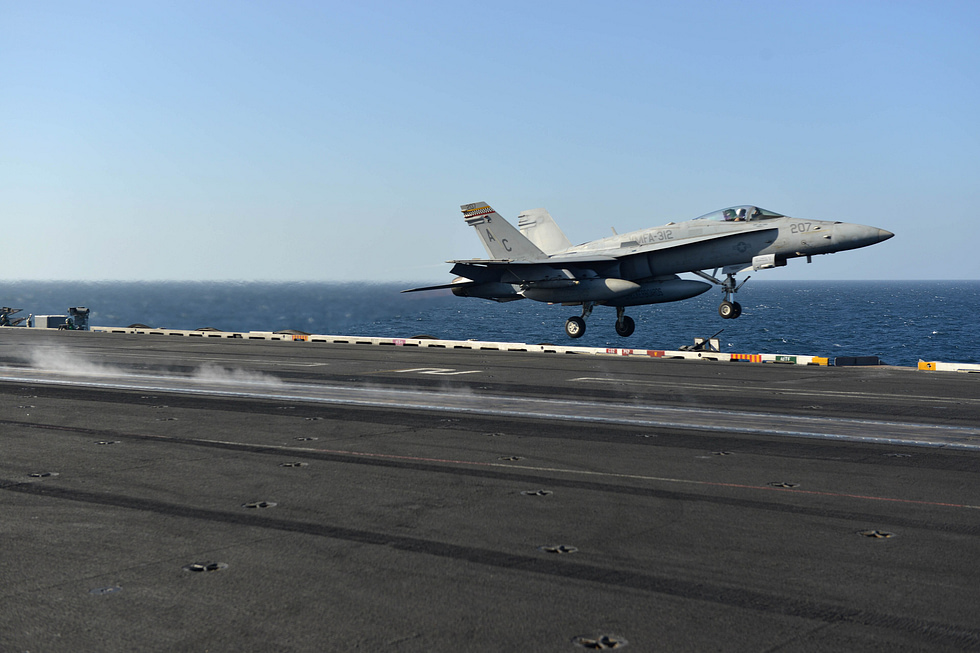
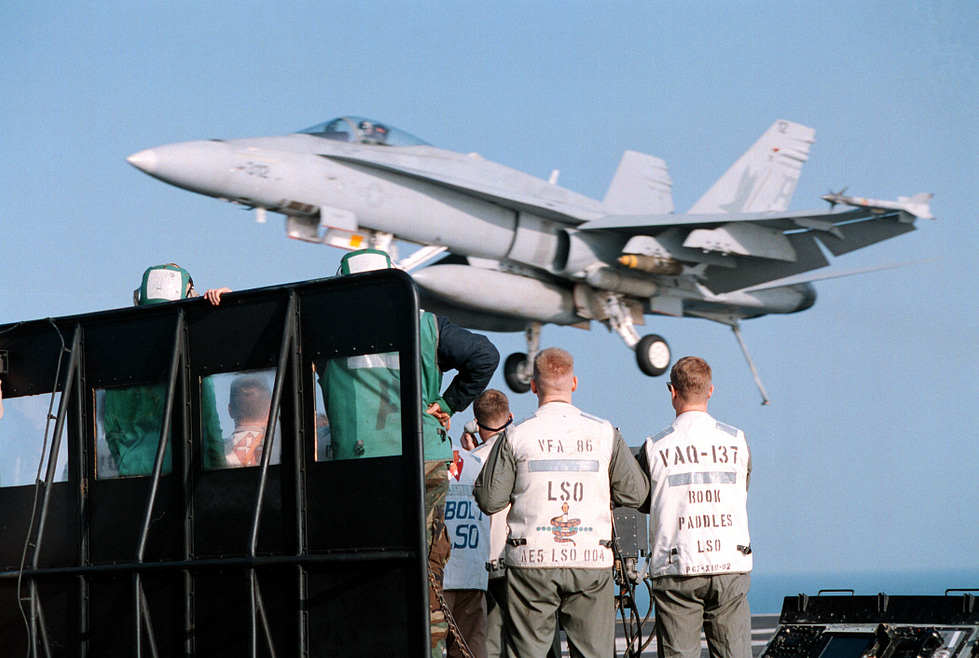
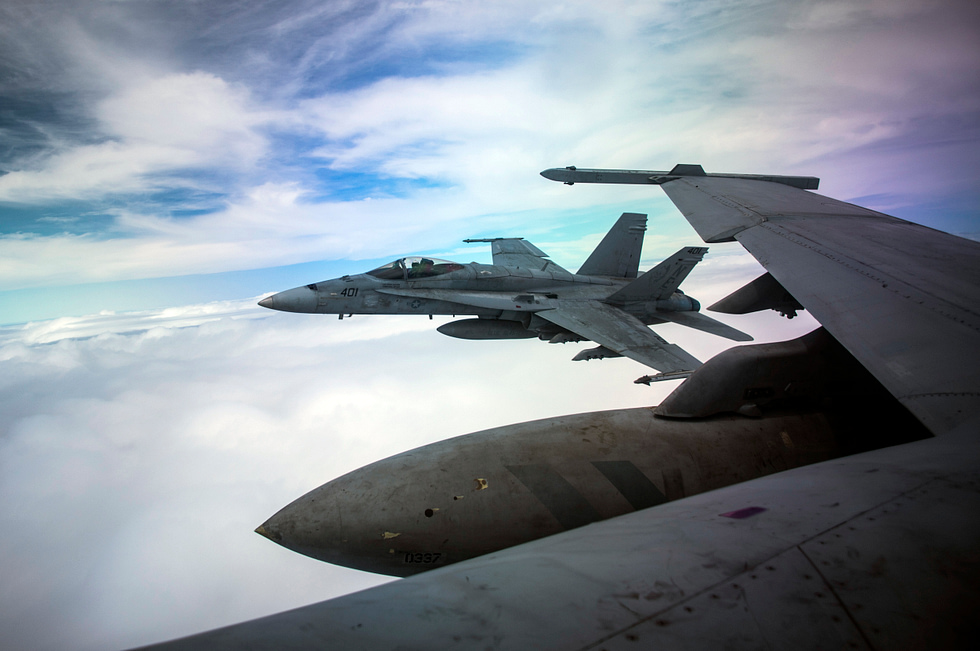
The Hornet in motion
A legacy F/A-18 Hornet video feature is on the way.
Where the Hornet flies
Combat-proven, under many flags
The legacy Hornet made its combat debut in Operation Desert Storm in 1991 — including the two US Navy MiG-21 kills of 17 January, after which the same Hornets completed their bombing run — and went on to fly thousands of strike sorties. It later served over the Balkans and Kosovo (1999), Iraq (2003 onward) and Afghanistan, flown by US Navy and Marine crews and by allies. Per-nation air-to-air tallies for the legacy jet are small and sometimes contested, so specific claims are best hedged.
Compare the combat record of every military aircraft. Figures as of July 2026.
Everything people ask about the F/A-18 Hornet
Can I fly in an F/A-18 Hornet?
Why is it called “F/A”?
Is the Hornet the same as the Super Hornet?
How fast is the F/A-18 Hornet?
Is it related to the F-16?
Who flies the legacy Hornet now?
Did the F/A-18 Hornet see combat?
Do the Blue Angels fly the Hornet?
You can’t fly the Hornet.
These, you can.
Some legends only live in museums — others are fuelled and waiting. MiGFlug has put civilians in real military jet cockpits since 2004.
 Fly the L-39 AlbatrosThe world’s most-flown jet trainer — aerobatics included
 Fly the F-104 Starfighter“The missile with a man in it”
 Fly the MiG-21The Cold War’s most-produced jet
 Leťte s T-33 Shooting StarAmerica’s first jet trainer
 Fly the DH VampireA piece of early jet history
 Fly the S.211Agile Italian jet trainer
 Fly the MB-326The classic Aermacchi jet
 Fly the MiG-15The Soviet legend of the Korean War
Continue the tour
Every fact, checked
- NAVAIR / US NavyOfficial F/A-18 A–D product data and specifications.
- GlobalSecurity.orgF/A-18 specifications and variant history.
- USNA Naval AviationHornet development and service overview.
- The Aviation Geek ClubThe VFA-81 17 January 1991 MiG kills, in detail.
- Vintage Aviation News / Coffee or DieThe Fox & Mongillo dogfight-and-bomb sortie.
- The War Zone (TWZ)Australia’s Classic Hornet retirement, November 2021.
- AeroTime / Australian AviationOperator retirements and F-35 transitions.
- Boeing / McDonnell Douglas heritageOrigins of the YF-17 and F/A-18 program.