
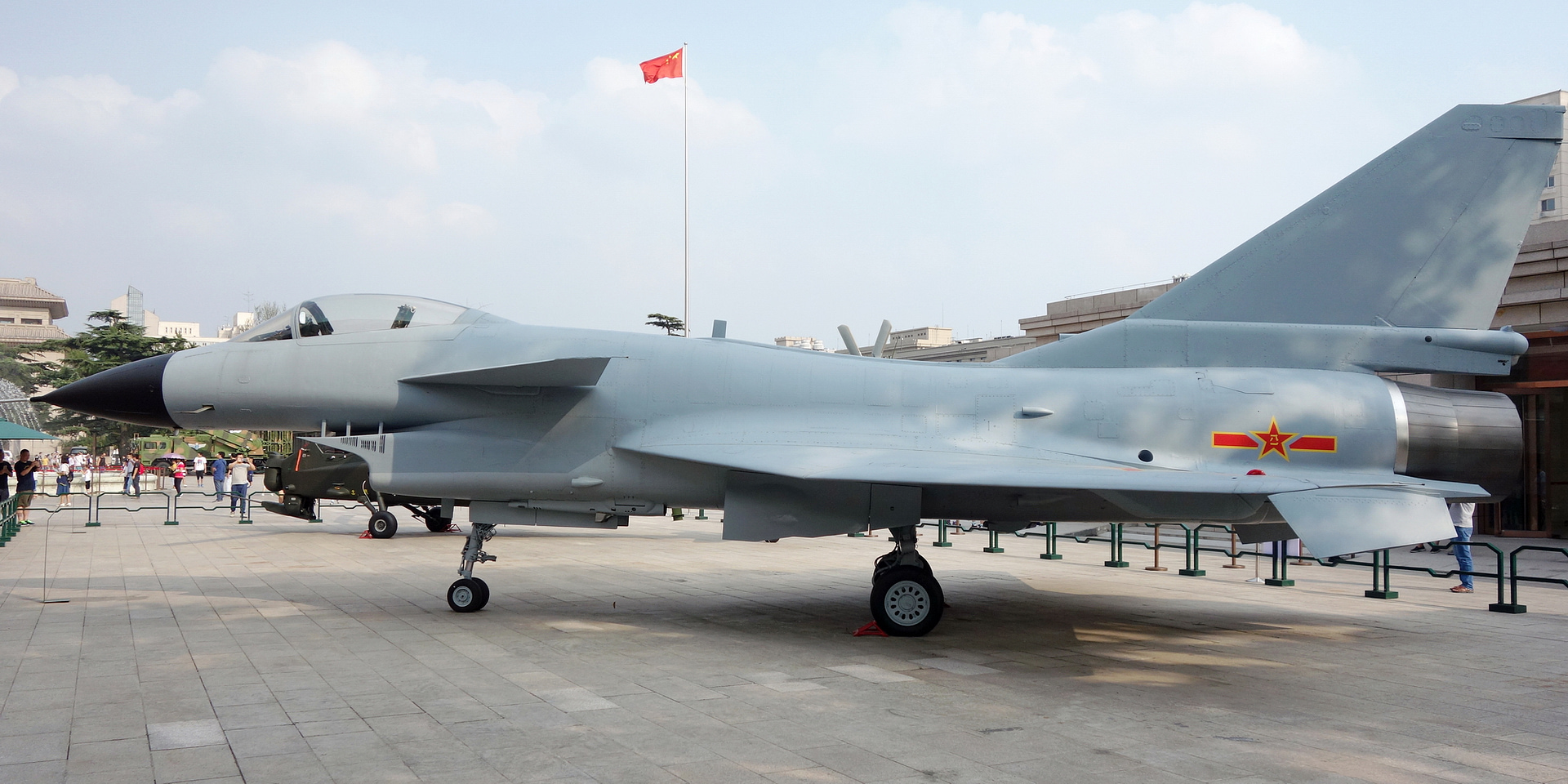
Chengdu J-10
“Vigorous Dragon”
China’s first fully indigenous 4th-generation fighter — a single-engine, canard-delta multirole jet that proved Chengdu could build a modern combat aircraft from the ground up, and whose latest J-10C version sits at the centre of one of the most contested air-combat claims in years.
>
China’s coming-of-age fighter
For decades the People’s Liberation Army Air Force flew licence-built and reverse-engineered Soviet designs. The Chengdu J-10 was meant to change that. Conceived under a programme reportedly approved in the 1980s as “Project No. 10,” it was China’s attempt to design and build a genuinely modern, agile multirole fighter using its own design bureau — the Chengdu Aircraft Design Institute (also called the 611 Institute), under chief designer Song Wencong.
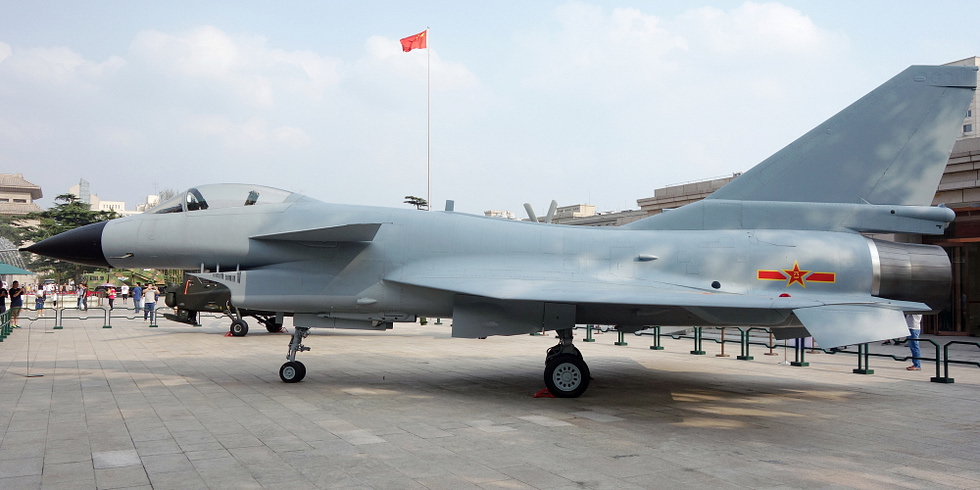
The result, first flown on 23 March 1998 and fielded in numbers from the mid-2000s, is a single-engine, tailless canard-delta aircraft: a large delta wing paired with movable foreplanes, deliberately built to be aerodynamically unstable and flyable only through a digital fly-by-wire system. In broad configuration it resembles Western canard-delta fighters such as the Eurofighter and Gripen, and Chinese officials present it as a domestic design descended from earlier cancelled projects.
Where the aircraft came from remains debated. Russian engineers and some Western analysts have long argued that China benefited from Israeli work on the cancelled IAI Lavi — itself closely tied to the F-16 — while Chinese sources attribute the layout to indigenous research going back to the 1960s. The claims of direct technology transfer are unproven and denied by the parties involved; what is clear is that the J-10 became the platform on which China’s modern fighter, radar and engine industries matured, paving the way for the J-20.
01The J-10’s contested origins: the Lavi debate, and why it matters
The single most argued-over question about the J-10 is how much it owes to outside help. From the late 1980s onward, reports — amplified by Russian engineers quoted in the 2000s and by trade publications such as Jane’s — claimed the design drew on Israeli technical data from the cancelled IAI Lavi, a fighter developed with heavy US involvement and strong F-16 lineage. Israel officially denied transferring the Lavi to China, and the specifics have never been independently confirmed.
Chinese accounts, including statements attributed to chief designer Song Wencong, trace the canard-delta layout instead to earlier domestic studies such as the cancelled J-9. The honest position is that both influences may be partly true and neither is fully documented in open sources: the J-10 clearly sits in the same design family as several Western canards, but the airframe, intake, canard placement and systems differ enough that it is not a straight copy of any of them. Treat any confident claim in either direction — “it’s just a Lavi” or “it’s wholly indigenous” — with caution.
What makes the J-10 special
Canard-delta and relaxed stability
The J-10 pairs a large delta wing with all-moving canard foreplanes and is built to be relaxed-stability — deliberately unstable in pitch for sharper manoeuvring. That makes it impossible to fly by hand, so it depends entirely on a digital fly-by-wire flight-control system. Mastering that combination was a genuine milestone for China’s aerospace industry and is central to the aircraft’s reputation for agility.
The J-10C’s AESA radar and PL-15 missile
The latest J-10C reportedly carries an indigenous active electronically scanned array (AESA) radar and the long-range PL-15 air-to-air missile, alongside the short-range PL-10. On paper this pairing is meant to let the jet detect and engage targets at long range. Exact performance figures for both radar and missile are classified and the widely quoted numbers should be read as estimates, not verified data.
From Russian engine to homegrown WS-10
For most of its life the J-10 flew on the Russian Saturn AL-31FN because China’s own WS-10 “Taihang” engine was not ready. The airframe was even adapted to take the Russian engine. Only around 2019–2021 did the indigenous WS-10B appear on production J-10Cs — a long-delayed but significant step toward engine independence.
02The J-10’s fly-by-wire: why an unstable jet needs a computer to fly
A conventionally stable aircraft naturally returns to level flight; a relaxed-stability design like the J-10 does not, trading that self-correcting tendency for much quicker response to control inputs. The price is that a human pilot cannot react fast enough to keep it under control — the aircraft would diverge in fractions of a second. A digital fly-by-wire computer sits between stick and control surfaces, making dozens of tiny corrections per second. Developing a reliable, quadruple-redundant flight-control system was one of the hardest parts of the J-10 programme, and getting it right is a large part of why the aircraft is considered a real coming-of-age for Chinese fighter design.
03The J-10’s engine problem: two decades on a Russian powerplant
China selected an indigenous turbofan — the WS-10 — for the J-10 early in the programme, but the engine suffered years of reliability and quality problems. Rather than wait, Chengdu fitted the imported Russian AL-31FN, and the airframe was reworked to suit it. For roughly twenty years the flagship “indigenous” fighter therefore relied on a foreign engine — a standing reminder that jet engines were, and to some extent remain, one of the hardest technologies for China to master. The WS-10B only became a visible, fielded fit on the J-10C around 2021. Thrust figures for both engines are commonly cited in the ~122–147 kN (with afterburner) range but vary by source and variant.
Full J-10 specifications
Airframe & Performance
- Posádka
- 1 (J-10S trainer seats 2)
- Délka
- ~16.9 m
- Rozpětí křídel
- ~9.8 m
- Výška
- ~5.7 m
- Plocha křídla
- ~37 m²
- Max takeoff weight
- ~19,000 kg (estimated)
- Max speed
- ~Mach 1.8+ at altitude (commonly cited)
- Servisní strop
- ~18,000 m (estimated)
- Bojový rádius
- ~550–1,240 km, load-dependent (estimated)
- Ferry range
- ~2,900 km with drop tanks
Propulsion, Sensors & Armament
- Engine (J-10A/B)
- 1 × Saturn AL-31FN (Russian)
- Engine (J-10C, later)
- 1 × Shenyang WS-10B “Taihang”
- Thrust (afterburner)
- ~122–147 kN, variant-dependent (estimated)
- Radar
- Pulse-Doppler (J-10A) · AESA (J-10C, reported)
- Gun
- 1 × 23 mm twin-barrel cannon
- Závěsné body
- 11
- Main missiles
- PL-8/PL-10 (IR) · PL-12/PL-15 (radar BVR)
- First flight
- 23 March 1998
- Unit cost
- ~$40–60 million, J-10CE export (estimated)
- Cost per flight hour
- No reliable public figure
04The J-10’s specs and price: why almost every figure is an estimate
The J-10 is a Chinese state programme, and China publishes very little verified data about it. As a result nearly every specification you will see — top speed, ceiling, weights, radar range, missile range, thrust and especially cost — is an outside estimate assembled from airshow observation, export brochures and analyst modelling, not an official figure. Reported export prices for the J-10CE cluster very roughly in the $40–60 million range, but even that is uncertain and package-dependent. No credible cost-per-flight-hour figure exists in open sources. Read the numbers on this page as best-available approximations, not hard facts.
From secret programme to export fighter
Project No. 10 approved
China launches a programme to build an indigenous multirole fighter at Chengdu, with Song Wencong as chief designer. Much of the work stays secret for years.
First flight
The first prototype flies on 23 March 1998, piloted by Lei Qiang — the debut of China’s first home-designed 4th-generation fighter.
Enters PLAAF service
The baseline single-seat J-10A is fielded with the People’s Liberation Army Air Force in the mid-2000s.
Officially unveiled
China publicly reveals the J-10 in January 2007, ending years of secrecy around the programme.
J-10B arrives
The improved J-10B introduces a diverterless supersonic inlet, a new radar and infrared search-and-track; production runs into the mid-2010s.
J-10C in service
Ten/Ta/To J-10C, with a reported AESA radar and PL-15 missile, is declared combat-ready — the definitive current version.
Homegrown engine
Production J-10Cs appear with the indigenous WS-10B engine, reducing reliance on Russian powerplants after roughly two decades.
First export: Pakistan
Pakistan receives its first J-10CE fighters, making it the type’s launch export customer and first foreign operator.
Contested combat debut
During the May 2025 India–Pakistan clashes, Pakistan claims its J-10CEs downed Indian jets including Rafales — claims that remain disputed and unverified by neutral sources.
Twelve stories about the J-10
The fighter China built to grow up
Project No. 10 was as much about industrial capability as about the aircraft itself.
Read the full story
A jet that can’t be flown by hand
The J-10 is deliberately unstable — only a computer keeps it in the air.
Read the full story
Copy, inspiration, or coincidence?
Analysts still argue over how much the J-10 owes to Israel’s cancelled Lavi.
Read the full story
Twenty years on a borrowed heart
China’s indigenous fighter spent most of its life on a Russian engine.
Read the full story
The diverterless nose
The J-10B introduced a bumped intake that hints at stealth-era thinking.
Read the full story
The version everyone means today
The J-10C added an AESA radar and long-range missiles — and drew the export interest.
Read the full story
Pakistan takes the Dragon
In 2022 Pakistan became the J-10’s first foreign operator.
Read the full story
The contested Rafale claims
Pakistan says its J-10CEs downed Indian jets; the truth is genuinely disputed.
Read the full story
The August 1st display team
China’s national aerobatic team flies the J-10 in front of the world.
Read the full story
A fighter built in the hundreds
More than 600 J-10s are estimated to have been produced.
Read the full story
The stock that moved on a dogfight
Reports of the May 2025 clashes reportedly moved the maker’s share price.
Read the full story
The bridge to the J-20
The J-10 taught China the skills its stealth fighter would need.
Read the full story
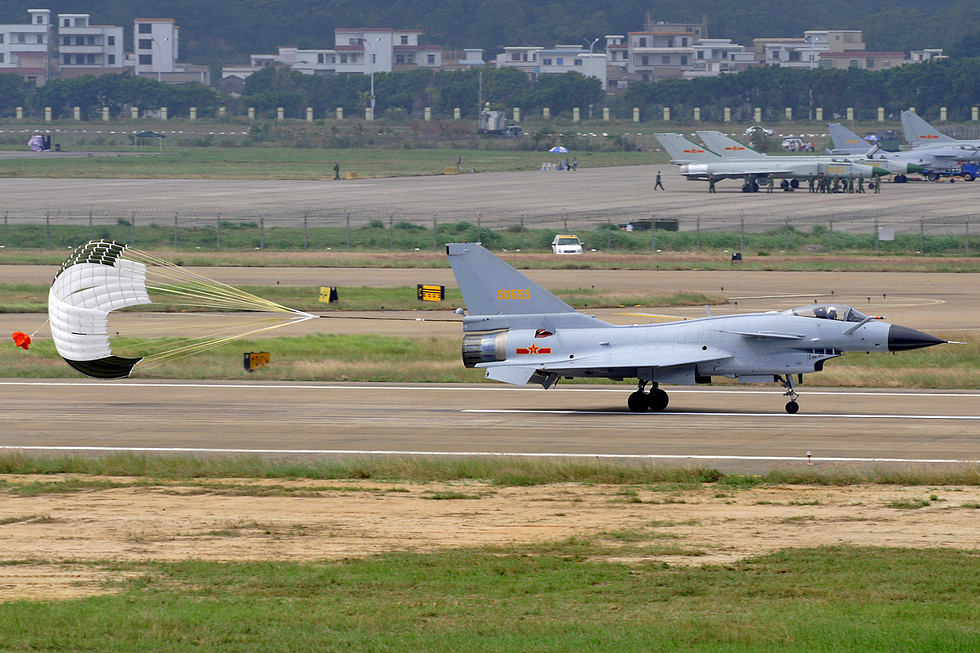
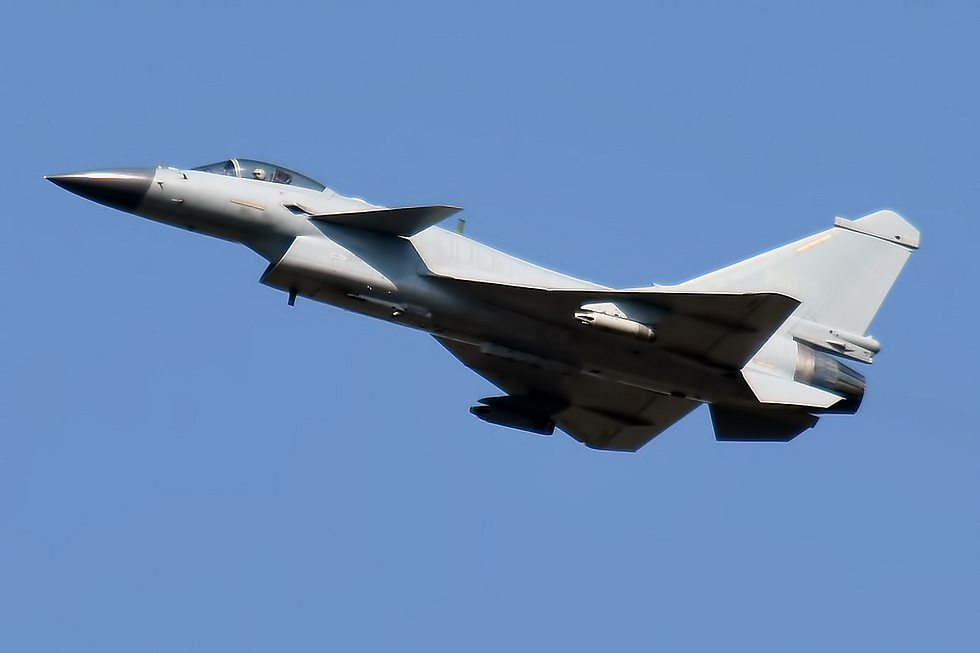
The J-10 in pictures
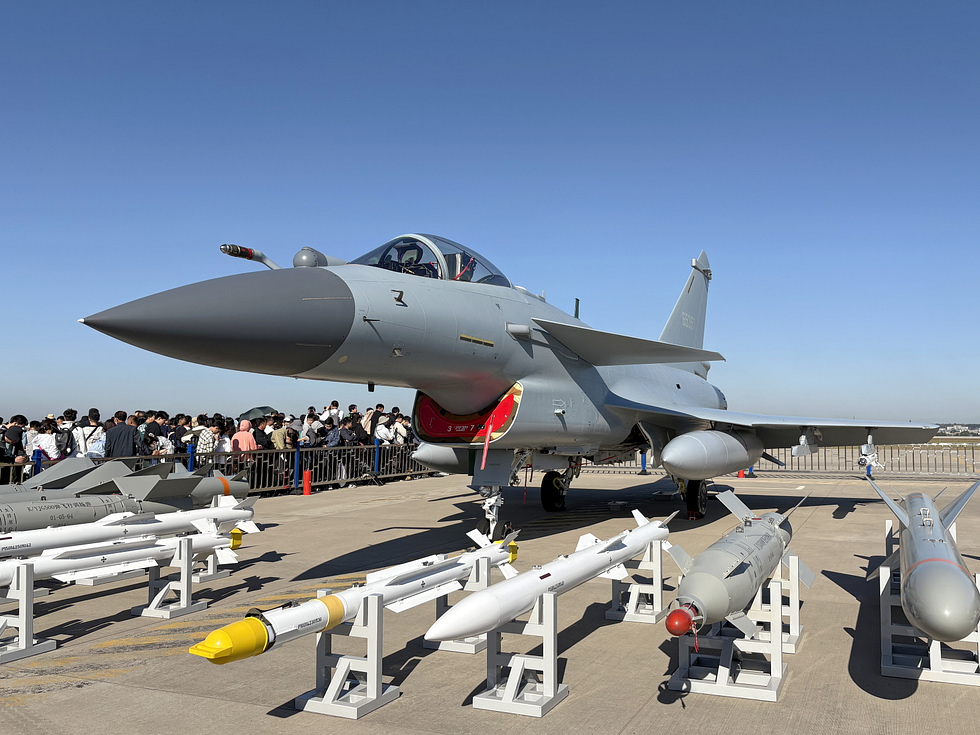
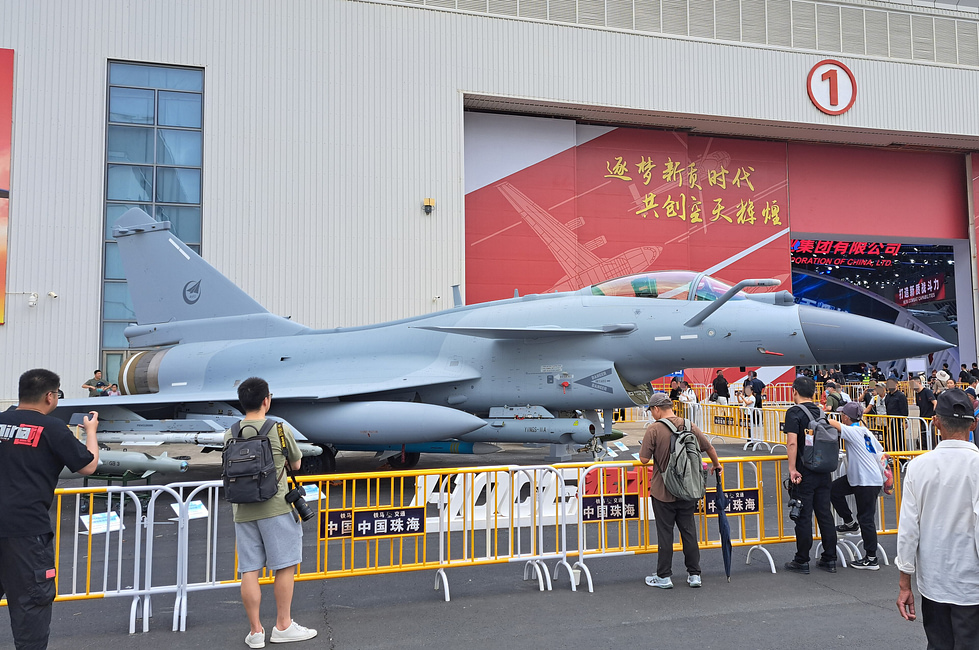
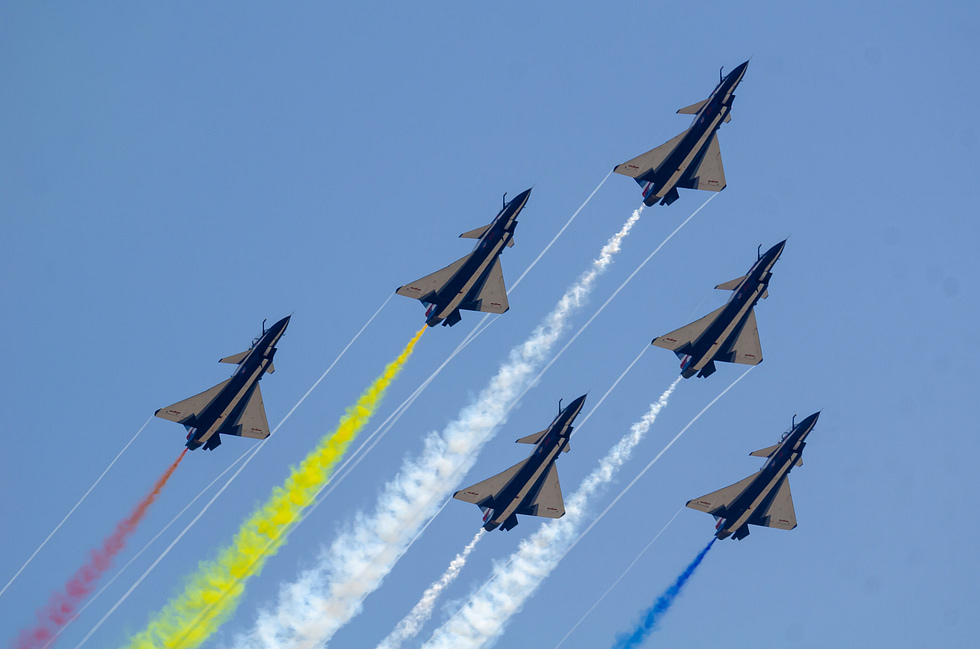
The J-10 in motion
Video coming soon. A featured flying-display and analysis video of the Chengdu J-10 will be added here.
The Chengdu J-10 in motion
Found And Explained — one of the most-watched Chengdu J-10 films on YouTube.
Where the J-10 flies
The contested combat record
For most of its life the J-10 had no combat history at all — it served as a peacetime frontline fighter. That changed, controversially, in May 2025, when Pakistan claimed its J-10CE fighters shot down Indian aircraft, including French-built Rafales, during cross-border clashes. The claims are heavily disputed and have not been independently verified, and they are the subject of active information warfare on both sides. The figures below are claims, not confirmed results.
Pakistan said its J-10CEs, firing PL-15 missiles, downed multiple Indian aircraft including Rafales; India initially denied losses and later acknowledged some without confirming numbers or causes. Independent outlets and some US and French officials indicated India likely lost at least a few aircraft, but did not fully confirm Pakistan’s specific tally or the exact role of the J-10C. Both governments have obvious incentives to shape the story, and no neutral body has published a definitive account. Compare the combat record of every military aircraft. Figures as of July 2026 and, for May 2025, unverified.
Everything people ask about the J-10
Can I fly in a J-10?
Can a civilian fly the J-10?
Is the J-10 a copy of the Israeli Lavi or the F-16?
Did a J-10 really shoot down a Rafale in 2025?
What engine does the J-10 use?
How does the J-10C compare to Western fighters?
Who operates the J-10?
You can’t fly the J-10.
These, you can.
Some legends only live in museums — others are fuelled and waiting. MiGFlug has put civilians in real military jet cockpits since 2004.
 Fly the L-39 AlbatrosThe world’s most-flown jet trainer — aerobatics included
 Fly the F-104 Starfighter“The missile with a man in it”
 Fly the MiG-21The Cold War’s most-produced jet
 Leťte s T-33 Shooting StarAmerica’s first jet trainer
 Fly the DH VampireA piece of early jet history
 Fly the S.211Agile Italian jet trainer
 Fly the MB-326The classic Aermacchi jet
 Fly the MiG-15The Soviet legend of the Korean War
Continue the tour
Every fact, checked
- The War Zone (TWZ)The J-10 at 25: development, design and its significance to Chinese aviation.
- 19FortyFiveThe J-10’s long dependence on the Russian AL-31 engine before the WS-10 was ready.
- The AviationistReporting on the May 2025 clashes and the contested Rafale shootdown claims.
- ReutersIndependent reporting on Indian aircraft losses and the limits of verification.
- FlightGlobalAnalysis of the disputed imagery and claims from the 2025 conflict.
- Army RecognitionJ-10 variants, weapons and the J-10CE export configuration.
- Airforce TechnologyReference specifications and programme background for the J-10.
- The EurasianTimesJ-10C variant analysis and its role in the India-Pakistan air balance.