
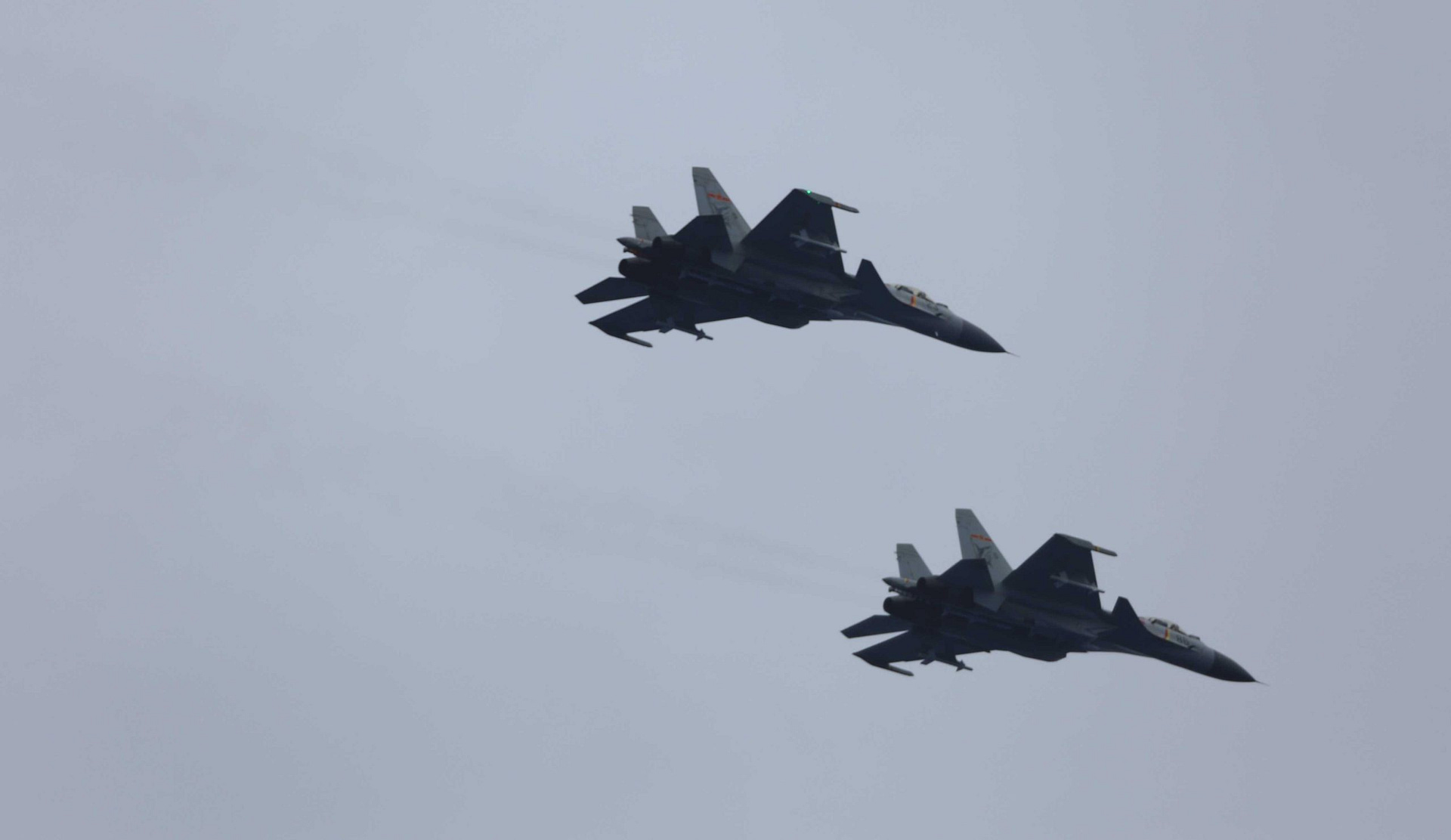
Shenyang J-15
“Flying Shark”
China’s carrier-based multirole fighter — a navalised member of the Su-27/Su-33 “Flanker” family, built for the PLA Navy and, according to numerous reports, informed by an unfinished Su-33 prototype obtained from Ukraine.
China’s first fixed-wing carrier fighter
As China set out in the 1990s and 2000s to build a blue-water navy, it faced a gap it could not quickly fill on its own: a fixed-wing fighter able to fly from an aircraft carrier. The natural starting point was the Su-27/Su-33 “Flanker” family it already operated in land-based form. According to numerous reports, around 2001 China obtained an unfinished Su-33 prototype — the T-10K-3 — from Ukraine, and the Shenyang Aircraft Corporation studied it while developing a carrier fighter of its own. The result was the J-15, nicknamed the “Flying Shark.”
The J-15 first flew reportedly in 2009 — the date most often cited is 31 August 2009, though at least one account questions whether a flight took place that year. It is a navalised Flanker: folding wings to fit a crowded hangar deck, strengthened landing gear, and an arrestor hook for recovery. On the deck of China’s first carrier, the Liaoning, test pilot Dai Mingmeng made the first arrested landing in November 2012, with four more pilots qualifying shortly after.
The aircraft’s origins remain contested. Western analysts widely describe it as a Su-33 derivative — some go further and call it an unlicensed copy — while China presents it as an indigenously developed design with Chinese avionics, weapons and, increasingly, Chinese engines. Both framings sit alongside the same hardware. Early aircraft used the Russian AL-31F turbofan; footage released in 2022 showed operational J-15s fitted with the domestic WS-10 (Taihang), though exactly which airframes now fly which engine is not publicly settled.
The J-15 also illustrates the limits of the ski-jump. The Liaoning and the later Shandong launch aircraft by STOBAR — a bow ramp rather than a catapult — which caps the weight a heavy Flanker can carry off the deck, forcing trade-offs between fuel and weapons. China’s third carrier, the Fujian, adds electromagnetic catapults, and catapult-capable variants (reported as the J-15T / J-15B) have been tested to exploit them. Twin-seat (J-15S) and electronic-warfare (J-15D) versions round out a family that is still evolving. Production totals are not officially disclosed and open-source estimates vary widely.
01The Shenyang J-15’s origins: the Ukrainian prototype and the “copy” debate
The most repeated account of the J-15’s beginnings runs through Ukraine. After the collapse of the Soviet Union, an unfinished Su-33 carrier-fighter prototype — the T-10K-3 — is reported to have remained in Ukrainian hands, and China is said to have acquired it around 2001. Analysts believe Shenyang used it to accelerate development of a domestic carrier fighter, which is the basis for the persistent Western characterisation of the J-15 as a Su-33 clone.
China rejects that framing, describing the aircraft as a domestically developed design that pairs a Flanker-derived airframe with Chinese radar, avionics and weapons. Both accounts should be read with caution: the underlying details rest largely on analyst inference, satellite imagery and state-media footage rather than on official disclosure. What is not in dispute is that the J-15 gave the PLA Navy its first operational fixed-wing carrier fighter.
What makes it special
A Flanker rebuilt for the deck
The J-15 takes the large twin-engine Su-27/Su-33 airframe and navalises it for carrier life: folding wings to save hangar space, reinforced landing gear to absorb hard arrested landings, an arrestor hook, and canards inherited from the Su-33 line for low-speed control. It is a heavy fighter — a point critics raise about ski-jump operations — but it gives the PLA Navy a long-range, large-payload airframe.
Ski-jump today, catapult tomorrow
The baseline J-15 launches by STOBAR — rolling off the Liaoning nebo Shandong ski-jump ramp under its own power. That limits takeoff weight and forces trade-offs between fuel and weapons. For the catapult-equipped Fujian, catapult-capable variants reported as the J-15T / J-15B add a nose-gear launch bar and, reportedly, strengthened gear, allowing heavier launches.
Chinese systems — and Chinese engines
China describes the J-15 as carrying indigenous avionics, reportedly including an AESA radar on newer aircraft, and Chinese weapons such as PL-8, PL-12 and PL-15 air-to-air missiles and YJ-83 anti-ship missiles. The most-watched change is propulsion: from the Russian AL-31F toward the domestic WS-10. These capability and fielding details are widely reported but not officially confirmed.
02The J-15’s STOBAR problem: why the ski-jump caps its payload
A ski-jump launch trades runway for a ramp: the aircraft accelerates along the deck and is flung upward, buying a few seconds for the engines and wings to take over. For a light fighter that works well; for a heavy Flanker it is marginal. To get airborne off the ramp the J-15 must keep its takeoff weight down, which in practice means less fuel, fewer weapons, or both. Reporting on STOBAR sorties has described loads limited to roughly a pair of anti-ship missiles plus air-to-air missiles. A catapult removes much of that penalty, which is a central reason China moved to the electromagnetic catapults on the Fujian. The exact numbers here are estimates drawn from imagery and analysis, not published figures.
03The J-15’s engines: the slow switch from Russian AL-31F to Chinese WS-10
For much of its life the J-15 was the last Chinese Flanker derivative still flying on the Russian AL-31F. China’s goal was to replace it with the indigenous WS-10 “Taihang” family, and in November 2022 state television aired footage of operational J-15s fitted with a navalised WS-10 (reported as the WS-10H). The programme has reportedly had teething issues over the years — questions about thrust, engine life and maritime corrosion protection — and open sources cannot say precisely how many airframes now fly the domestic engine versus the Russian one. Treat any firm split as an estimate.
Full specifications
Airframe & Performance
- Posádka
- 1 (2 in J-15S / J-15D)
- Délka
- ~21.9 m (estimate)
- Rozpětí křídel
- ~14.7 m · folding wings
- Výška
- ~5.9 m (estimate)
- Max takeoff weight
- ~33,000 kg (some sources ~28,500 kg)
- Max speed
- ~Mach 2 (estimate)
- Launch method
- STOBAR ski-jump; CATOBAR on J-15T/B
- Recovery
- Arrested landing (tailhook)
- First flight
- Reportedly 2009
- Introduced
- Carrier landings from 2012
Propulsion, Systems & Cost
- Engines
- 2 × AL-31F or WS-10 (reported)
- Radar
- Indigenous; AESA reported on newer aircraft
- Air-to-air missiles
- PL-8, PL-12, PL-15 (reported)
- Anti-ship missiles
- YJ-83 / YJ-83K (reported)
- Variants
- J-15, J-15T/B, J-15S, J-15D
- Operators
- PLA Navy (China)
- Built
- Not officially disclosed (estimates vary)
- Unit cost
- No reliable public figure
- Cost per flight hour
- No reliable public figure
04The Shenyang J-15’s operating costs: why no reliable price exists
The J-15 is a Chinese state product, built for the PLA Navy and never sold on an open market, so a firm flyaway unit price simply does not exist in the public record. Nor is there a credible public cost-per-flight-hour figure for the type. Even the number of aircraft built is not officially disclosed — open-source estimates have ranged from a couple of dozen in the late 2010s to figures in the region of fifty or more since, but these are analyst estimates that vary widely and should not be read as sourced totals. Any precise dollar figure attached to a J-15 online is, in practice, a guess.
From a borrowed prototype to a carrier air wing
The Ukrainian prototype
China is reported to have acquired the unfinished Su-33 prototype T-10K-3 from Ukraine, informing Shenyang’s carrier-fighter work.
First flight (reported)
The J-15 is reported to have first flown, with 31 August 2009 the most-cited date — though the exact date is not firmly established.
First carrier landing
Pilot Dai Mingmeng makes the first arrested landing aboard the carrier Liaoning in November 2012; four more pilots qualify shortly after.
EW variant and a fatal crash
The electronic-warfare J-15D is reported to have first flown late in the year; in April, pilot Zhang Chao died in a crash reportedly linked to a flight-control failure.
Second carrier enters service
The Shandong, China’s first domestically built carrier, is commissioned — another ski-jump ship operating the J-15.
Domestic engines revealed
State-television footage shows operational J-15s fitted with the indigenous WS-10 engine, a step away from reliance on the Russian AL-31F.
A catapult carrier launches
The Fujian, China’s first catapult-equipped carrier, is launched — setting the stage for catapult-capable J-15 variants.
Catapult and EW jets at sea
State media show catapult launches of the J-15T and operational J-15D electronic-warfare aircraft as the Fujian conducts sea trials.
Twelve stories from the Flying Shark
The Ukrainian ghost prototype
China’s carrier fighter reportedly began with an unfinished jet bought from a cash-strapped ex-Soviet state.
Read the full story
Dai Mingmeng, first man down
One pilot made the first-ever arrested landing on a Chinese carrier.
Read the full story
“Aircraft Carrier Style”
A launch officer’s crouch became a national meme.
Read the full story
Why “Flying Shark”?
A carrier jet named for a predator that hunts at the surface.
Read the full story
The ski-jump penalty
The ramp that launches the jet also handicaps it.
Read the full story
Four missiles that made a point
A single image hinted at what catapults buy.
Read the full story
Cutting the Russian engine cord
For years it flew on Russian hearts.
Read the full story
China’s answer to the Growler
A jamming jet built to blind an enemy fleet.
Read the full story
A Flanker for the catapult age
A purpose-built jet for China’s newest carrier.
Read the full story
A fatal reminder of the risks
The programme’s progress was shadowed by loss.
Read the full story
Is the Flanker too big for a boat?
A recurring critique of a heavy naval fighter.
Read the full story
Sharing the deck with a stealth jet
The Flying Shark may not have the carrier to itself.
Read the full story
The Flying Shark in pictures
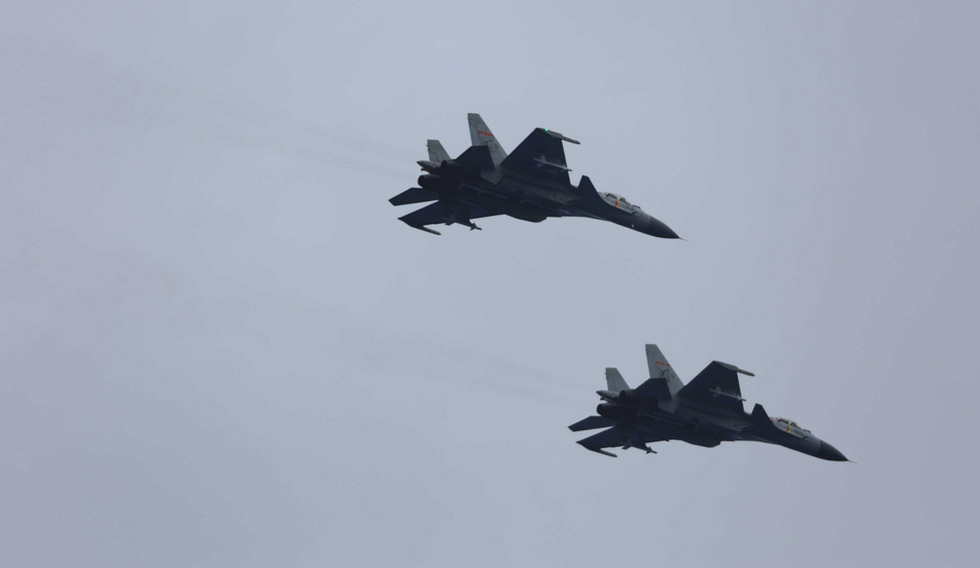
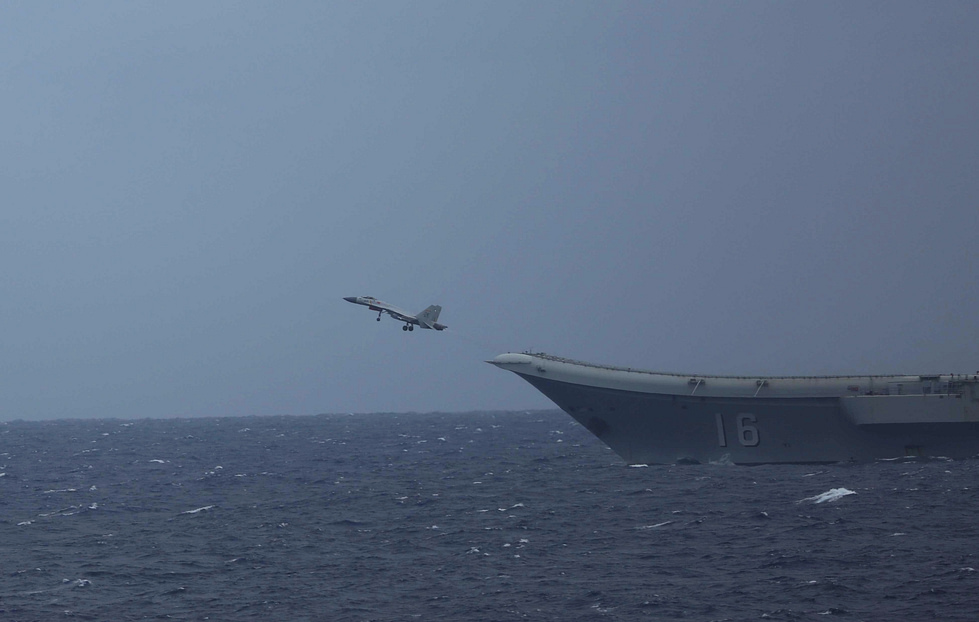
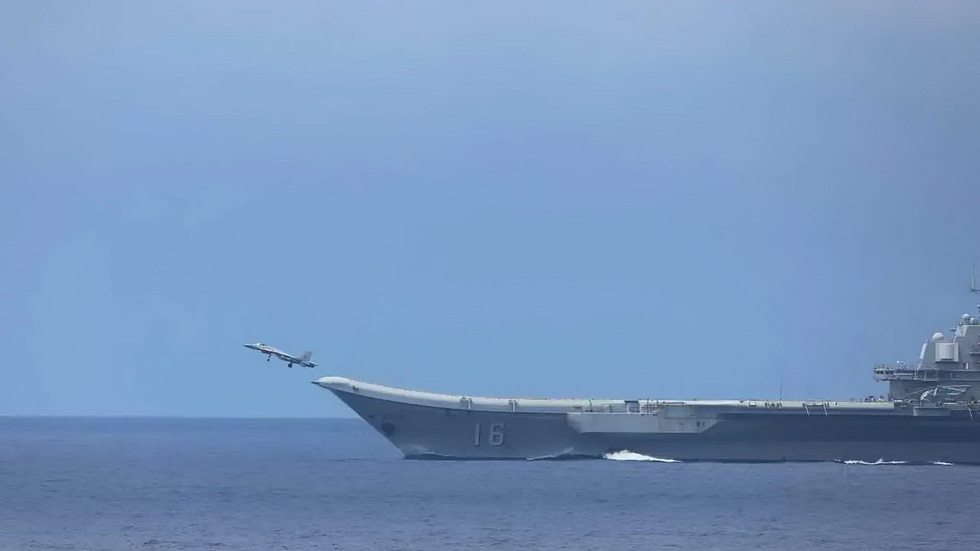
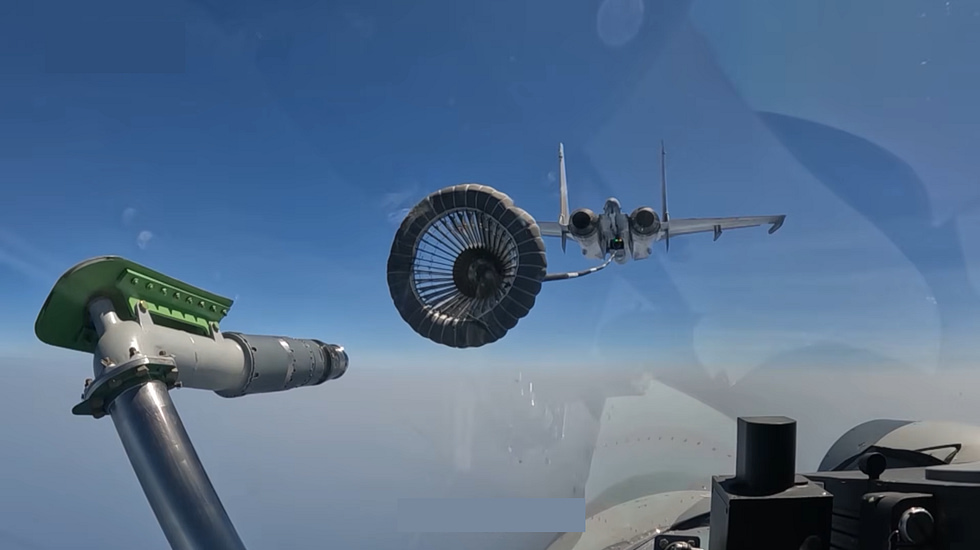
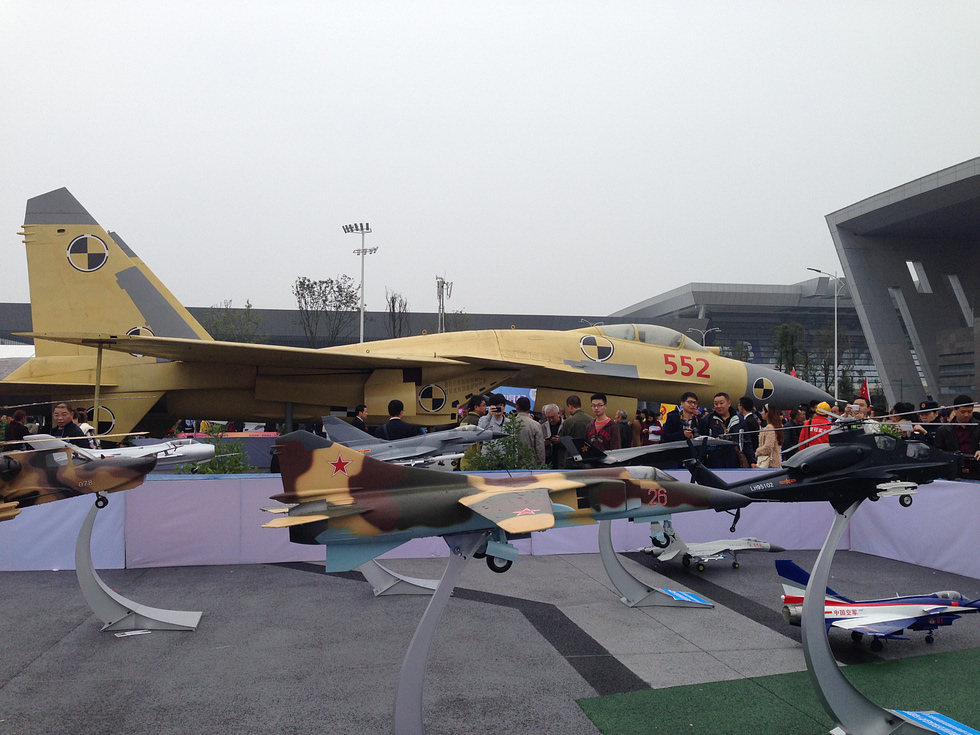
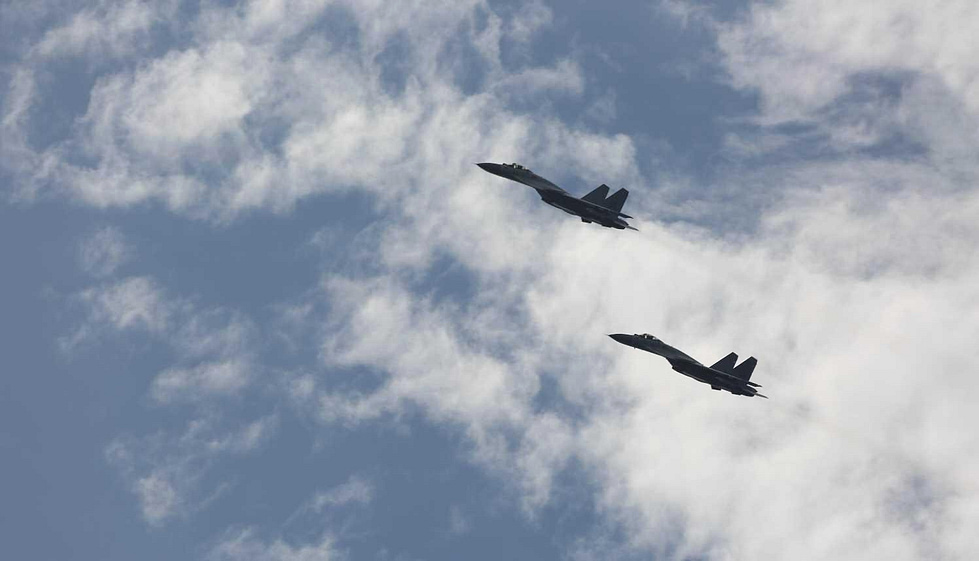
The Flying Shark in motion
A verified, high-authority video feature for the J-15 is coming soon. In the meantime, explore the photo gallery above and the operations map below.
Where the Flying Shark flies
A record measured in milestones, not kills
The J-15 has not been used in air-to-air combat, and it has no confirmed aerial victories or losses to enemy action. Its story so far is one of firsts — qualifying pilots, carriers and catapults — rather than battle. The figures below mark that progress; capability and production claims remain hedged in open sources.
Compare the combat record of every military aircraft. Figures as of July 2026.
Everything people ask about the J-15
Can I fly in a J-15?
Is the J-15 a copy of the Su-33?
What engine does the J-15 use?
What carriers operate the J-15?
What are the J-15 variants?
Why is the ski-jump a limitation?
How many J-15s have been built?
Has the J-15 ever seen combat?
You can’t fly the J-15.
These, you can.
Some legends only live in museums — others are fuelled and waiting. MiGFlug has put civilians in real military jet cockpits since 2004.
 Fly the L-39 AlbatrosThe world’s most-flown jet trainer — aerobatics included
 Fly the F-104 Starfighter“The missile with a man in it”
 Fly the MiG-21The Cold War’s most-produced jet
 Leťte s T-33 Shooting StarAmerica’s first jet trainer
 Fly the DH VampireA piece of early jet history
 Fly the S.211Agile Italian jet trainer
 Fly the MB-326The classic Aermacchi jet
 Fly the MiG-15The Soviet legend of the Korean War
Continue the tour
Every fact, checked
- GlobalSecurity.org — J-15Foundational timeline, the T-10K-3 acquisition and the designers.
- The War Zone — domestic enginesThe AL-31F to WS-10/WS-10H engine transition, dated to 2022.
- USNI News — Fujian catapult testsJ-15T catapult launches during the Fujian’s 2025 sea trials.
- Janes — indigenous enginesIndependent assessment of the J-15 with WS-10 engines.
- Council on Foreign RelationsNeutral analysis of the first carrier operations and their limits.
- South China Morning PostThe 2016 Zhang Chao crash and the flight-control debate.
- China Military (PLA English site)Official profile of first carrier pilot Dai Mingmeng — a Chinese state source; read with that in mind.
- Defense NewsThe November 2022 footage showing a domestic engine on the J-15.