

Fairey Fulmar
The Fairey Fulmar: the “wrong” aeroplane that held the line at sea
On paper the Fairey Fulmar looks like a mistake. It was a fighter that could not really dogfight. It was heavier than a Hurricane, slower than a Spitfire, and it carried a second crewman where a single-seat fighter carried more fuel or more speed. When it went to war in 1940 the aeroplanes it was meant to stop — Messerschmitt Bf 109s, Bf 110s, Italian Macchis — could out-climb and out-turn it without trying. By every measure that mattered in a fighter-versus-fighter duel, the Fulmar was outclassed the day it entered service.
And yet, between 1940 and 1942, this “wrong” aeroplane became the single most important fighter the Royal Navy’s Fleet Air Arm possessed — and, by the war’s end, the most successful British naval fighter of all: it is commonly credited with destroying more enemy aircraft than any other Fleet Air Arm fighter type of the Second World War. Understanding how those two facts sit together is the whole story of the Fulmar, and it is a far more interesting story than the raw performance figures suggest.
The reason comes down to a single, unglamorous truth about war at sea: a carrier fleet lives or dies by whether it can keep enemy aircraft away from its ships. In 1940 the Royal Navy was fighting in the Mediterranean, one of the most air-threatened stretches of water on earth, ringed by Italian and later German airfields. What it needed was not a champion dogfighter but a reliable, long-legged, heavily armed fighter that could take off from a carrier, stay up for hours, intercept the bombers and shadowers hunting the fleet, and — crucially — find its way back to a small moving ship at the end of it all. Judged against that job, rather than against the Spitfire, the Fulmar was not a poor fighter at all. It was very nearly the ideal one.
The Fulmar was not designed as a fighter at all. It grew out of the Fairey P.4/34, a light bomber that looked like a scaled-down Fairey Battle. When the Admiralty needed a modern eight-gun monoplane fighter for its aircraft carriers in a hurry, Fairey adapted that airframe. The result kept the bomber’s roomy two-seat layout and its gentle, forgiving handling, and added the fixed forward armament of a land fighter: eight .303-inch Browning machine guns in the wings, the same battery carried by early Hurricanes and Spitfires. It was powered by a Rolls-Royce Merlin, the same engine family that won the Battle of Britain.
That second seat is the key to everything. Fleet Air Arm doctrine in the late 1930s held that an aircraft operating hundreds of miles out over a featureless ocean, with no radio beacons and a moving carrier to find again, needed a dedicated observer/navigator. A lost fighter over the sea was a dead fighter. So the Navy accepted the weight and drag of a second crewman and his navigation gear as the price of getting its aircraft home. The cost was performance; the benefit was reach, endurance, and a crew that could actually find the enemy — and find the ship again afterwards.
What the Fulmar was good at, it was very good at. It had long range and long endurance — up to five and a half hours in the later Mk II — so it could loiter on patrol far from the fleet. Its eight guns made it a steady, heavy-hitting gun platform. And the aircraft it most needed to kill were not nimble single-seat fighters but shadowing reconnaissance aircraft and bomb-laden strike aircraft — Italian and German bombers trying to sink the carriers and the merchant ships they escorted. Against those slower, heavier targets, the Fulmar’s eight guns and steady aim were exactly enough.
Its great proving ground was the Mediterranean. Flying from the armoured carriers Illustrious a Formidable, Fulmars fought over the desperate Malta convoys of 1941–42, breaking up formations of Italian and German bombers again and again as the Navy pushed supplies through to the besieged island. Fulmars also covered the hunt for the Bismarck in the Atlantic in May 1941 and helped defend Ceylon against Japanese carrier aircraft in the Indian Ocean in April 1942. By late 1941 the type had claimed well over a hundred enemy aircraft.
The Fulmar was never a war-winner and it never pretended to be. From 1942 it was steadily replaced in the front line by faster machines — the Sea Hurricane, the Grumman Martlet (Wildcat), and finally the navalised Seafire. But it had done the one job that mattered when nothing better existed: it kept enemy aircraft off the fleet during the Royal Navy’s hardest years at sea. That is why historians keep returning to the same verdict — the Fulmar was the right aeroplane at the right time, even though it was the wrong aeroplane on paper.
To see why the Navy tolerated the Fulmar’s shortcomings, you have to understand where the Fleet Air Arm stood in 1940. For most of the inter-war years the Royal Navy did not even control its own aircraft; the Fleet Air Arm had only returned to full Admiralty control in 1937, and it entered the war equipped with a collection of biplanes and stop-gaps that were, almost without exception, a generation behind the land-based fighters of the RAF and the Luftwaffe. The Blackburn Skua, the Navy’s first monoplane fighter, was really a dive-bomber pressed into the fighter role. Against that background the Fulmar was not a disappointment — it was a leap forward. It was the first Fleet Air Arm fighter with a modern eight-gun battery and a Merlin engine, and for a service starved of anything modern, that mattered enormously.
The Fulmar also has to be judged against the aircraft it actually met, not the ones we remember most. In the Mediterranean in 1940 its principal opponents were Italian: the Fiat CR.42 biplane, the Macchi C.200, and above all the SM.79 trimotor bomber. Against unescorted or lightly escorted bombers the Fulmar’s eight guns were more than enough, and its two-man crew — one flying, one watching and navigating — gave it a genuine tactical advantage in spotting and shadowing. It was only when the Fulmar met first-rank single-seat fighters — the Messerschmitt Bf 109 over the Mediterranean, the Mitsubishi A6M Zero over the Indian Ocean — that its limitations became brutally obvious.
There is a wider lesson in the Fulmar’s career, and naval historians return to it often: a carrier fighter’s job is not primarily to win dogfights. It is to protect the fleet. A slow, long-legged, heavily armed two-seater that can find and destroy the aircraft trying to sink your ships is worth more, in that specific job, than a brilliant dogfighter that runs out of fuel and cannot find its way home. The Fulmar was a blunt instrument, but it was the right blunt instrument for a navy that needed, above all, to keep the enemy’s bombs off its decks. When better aircraft finally arrived, the Fulmar bowed out without fuss — but the fleet it had protected was still afloat, and that was the whole point.
That is why the Fulmar rewards a second look. It is easy to laugh at a fighter that could not fight fighters, and easy to forget an aeroplane that never had a glamorous moment or a famous ace. But strip away the expectations we bring from the land war — from the Battle of Britain and its nimble single-seaters — and judge the Fulmar as a naval weapon system, and a very different aircraft emerges: durable, far-ranging, heavily armed, well crewed, and, for two crucial years, the thing that kept the Royal Navy’s carriers alive. The rest of this page is the story of how it did that.
— The Fulmar’s combat record, 1940–1942
01Why the Fairey Fulmar had two seats: Fleet Air Arm navigation doctrine explained+
Single-seat fighters win dogfights; two-seat fighters find their way home. In the late 1930s the Royal Navy had to choose, and it chose navigation. Carrier aircraft of the era had no reliable long-range radio navigation aids, and the carrier itself was a small, moving target somewhere in a very large ocean. A pilot who chased an enemy for twenty minutes could easily lose the fleet entirely.
The Admiralty’s answer was to put a trained observer/navigator in the back seat of its fighters, responsible for dead-reckoning navigation, radio work, and lookout. This is why the Fulmar — and the earlier Blackburn Skua and later Fairey Firefly — were two-seaters while their land-based contemporaries were not. The doctrine was much criticised after the war for crippling fighter performance, and the Navy eventually abandoned it in favour of single-seat types like the Seafire and Wildcat. But in 1940 it reflected a real problem, and the Fulmar’s long, safe reach over the sea was a direct dividend of that second seat.
There was a human dimension to the doctrine too. Fleet Air Arm crews were a team of two who trained and flew together, and the trust between a Fulmar’s pilot and observer — one flying and fighting, the other navigating, working the radio and watching the sky behind — was part of what made the aircraft effective. It is no accident that the two-seat tradition ran deep in British naval aviation, from the Fulmar through the Firefly to the Gannet and beyond; the Navy valued the second pair of hands and eyes, and only gave them up when technology finally made them unnecessary.
02From light bomber to fighter: how the Fairey P.4/34 became the Fulmar+
The Fulmar’s ancestor was the Fairey P.4/34, a two-seat light bomber prototype of 1937 that resembled a smaller Fairey Battle. It was pleasant to fly and structurally sound, but as a day bomber it was already obsolescent. When the Admiralty issued a requirement for an eight-gun two-seat carrier fighter, Fairey’s designer Marcel Lobelle reworked the P.4/34 into a naval fighter: the wing was revised to carry eight guns, folding gear and naval equipment were added, and the airframe was navalised for catapult launch and arrested landing.
Building a fighter on a bomber’s bones had consequences. The Fulmar inherited the bomber’s size, weight and generous fuel volume — good for endurance, bad for agility. But it also inherited docile, honest handling, which mattered enormously for young pilots flying off a pitching deck at night. The prototype flew on 4 January 1940, and the type entered squadron service with No. 806 Naval Air Squadron only months later — a remarkably fast route from drawing board to carrier deck, achieved precisely because Fairey started from an aircraft that already existed.
The compromise cut both ways for the rest of the aircraft’s life. Every time a pilot wished the Fulmar climbed faster or turned tighter, he was paying the bill for the bomber it had once been; every time a crew flew a five-hour patrol far out over the ocean and came home safely, they were collecting the dividend. You cannot understand the Fulmar without holding both facts in mind at once, because they are the same fact seen from two directions: this was a big, roomy, long-legged aeroplane, and that was its curse as a dogfighter and its blessing as a fleet-defence fighter.
03The state of the Fleet Air Arm in 1940: why the Fairey Fulmar was a leap forward+
It is impossible to judge the Fulmar fairly without knowing how poor the Fleet Air Arm’s hand was in 1940. Between the wars, naval aviation in Britain had been run jointly with the RAF, and the Navy had regained full control of its own air arm only in 1937 — far too late to develop a modern carrier fighter before war broke out. The Fleet Air Arm therefore went to war with an inventory dominated by biplanes: the Fairey Swordfish torpedo bomber, the Gloster Sea Gladiator, and the Blackburn Skua, a monoplane that was really a dive-bomber doing double duty as a fighter.
Set against that, the Fulmar was genuinely modern. It was an all-metal monoplane with a retractable undercarriage, folding wings, a Rolls-Royce Merlin and a battery of eight guns — the first Fleet Air Arm fighter to combine all of those things. For pilots who had trained to fight from open biplane cockpits, stepping into a Fulmar was stepping into a different era. The type’s reputation suffers today because we compare it with the Spitfire and the Zero; in the context of the Fleet Air Arm it actually joined, it was a substantial and badly needed advance.
This context also explains the Navy’s tolerance for the Fulmar’s failings. A service that had gone to war with biplane fighters was in no position to be fussy about a modern monoplane that was merely slow. The perfect was not on offer in 1940; the Fulmar was, and it was a great deal better than what had come before. Understanding that is the difference between seeing the Fulmar as a bad fighter and seeing it as what it really was — the best carrier fighter the Fleet Air Arm could actually get its hands on when it needed one most.
04The Fairey Fulmar’s enemies: Italian bombers, German fighters and the Japanese Zero+
The Fulmar’s reputation swings wildly depending on which enemy you put it against. In the Mediterranean in 1940 it mostly faced the Italian Regia Aeronautica: Savoia-Marchetti SM.79 trimotor bombers, Fiat CR.42 biplane fighters and Macchi C.200 monoplanes. Against the bombers — unarmoured, and often unescorted so far out to sea — the Fulmar was lethal, and its long endurance let it stay on station to catch them. This is the context in which it ran up most of its score.
Against Germany’s Messerschmitt Bf 109 and Bf 110, which arrived in the Mediterranean with the X. Fliegerkorps in early 1941, the picture darkened: the 109 could out-climb, out-run and out-turn the Fulmar at will, and only teamwork, tactics and the Fulmar’s rugged airframe kept losses bearable. The nadir came over the Indian Ocean in April 1942, when Fulmars were thrown against the Mitsubishi A6M Zero defending Ceylon. The Zero was one of the finest dogfighters in the world in 1942, and the slow two-seat Fulmar simply could not live with it in a turning fight. The honest summary is that the Fulmar was excellent against bombers, competitive against second-rate fighters, and outclassed by the best single-seaters of its day — which is exactly what you would expect of a heavy two-seater built on a light-bomber airframe.
How the Fairey Fulmar was built: eight guns, a Merlin, and a navigator
The Fulmar was an all-metal, low-wing monoplane with a retractable undercarriage, a Rolls-Royce Merlin up front and a two-man cockpit under a long glazed canopy. Its whole character came from a single design decision made before Fairey drew a line: it was built on the airframe of a light bomber rather than designed from scratch as a fighter. That gave it a big, roomy fuselage, a generous wing, and lots of internal volume for fuel — and it made the aircraft heavy. The engineering story of the Fulmar is really the story of how the Navy loaded a bomber-sized airframe with fighter armament and naval equipment, and lived with the performance that resulted.
Eight-gun battery
The Fulmar carried eight .303-inch Browning machine guns in the wings — the same heavy fixed forward armament as an early Hurricane or Spitfire, and far more firepower than any previous Fleet Air Arm fighter. Against the unarmoured Italian bombers and shadowers it was built to stop, a single well-aimed burst from eight guns was devastating. Against fast, armoured single-seat fighters it was less effective, because the Fulmar could rarely hold an agile opponent in its sights long enough for the rifle-calibre rounds to do decisive damage.
Merlin power — but not enough of it
The Mk I used the Rolls-Royce Merlin VIII of about 1,080 hp; the Mk II fitted the Merlin 30 of about 1,300 hp. It was the right engine family — the same one that powered the Hurricane and Spitfire — but the Fulmar was simply too heavy for it. The bomber-derived airframe, the second crewman, the fuel for long endurance and the naval equipment all added weight, so the Merlin was always hauling more than it would in a single-seat fighter. The result was an aircraft that was steady and reliable but never fast, and never a strong climber.
Reach over the ocean
Folding wings, a catapult-strong airframe, arrester gear and a two-man crew made the Fulmar a true carrier aircraft. Its real advantage was endurance — up to about five and a half hours in the Mk II — which let it patrol far from the fleet, loiter on station waiting for an attack to develop, and always navigate home. In the fleet-defence role, that reach mattered more than speed: a fighter overhead for hours is worth more than a faster one that has already had to land and refuel.
05The Fairey Fulmar’s armament: why eight rifle-calibre guns were both its strength and its limit+
Eight .303-inch Brownings sounds formidable, and against the right target it was. A single well-aimed burst could tear apart an unarmoured or lightly protected bomber, and the Fulmar’s steady gun platform made those bursts count. This is why the type was so effective against Italian SM.79 trimotors and German Ju 88s attacking the Mediterranean convoys.
But rifle-calibre .303 rounds lacked hitting power against armoured, self-sealing targets, and the Fulmar was too slow to hold an enemy single-seater in its sights long enough to land a decisive burst. Trials and some later aircraft experimented with heavier .50-inch guns, but the Fulmar’s combat record was built almost entirely on the eight-gun .303 battery. Its firepower was ideal for the anti-bomber, fleet-defence role the Navy actually needed — and inadequate for the fighter-versus-fighter role it was never really suited to.
It is a neat illustration of a wider truth about weapons: there is no such thing as ‘good’ firepower in the abstract, only firepower that is well or badly matched to a target. Eight .303 guns were a superb answer to a formation of unarmoured Italian trimotors and a poor answer to an armoured, fast-moving fighter. The Fulmar carried the same guns in both cases; what changed was the enemy, and with it the verdict on the aircraft.
06The Fairey Fulmar as a night fighter and reconnaissance aircraft: the other jobs it did+
The Fulmar’s size, stability and endurance made it a natural second-line workhorse once faster fighters arrived. Its long legs and a dedicated navigator in the back seat made it genuinely useful for reconnaissance and shadowing, where finding a target and reporting its position accurately mattered more than raw speed.
Attempts to turn it into a radar-equipped night fighter were less happy. Early airborne-interception radar sets were bulky and their aerials disrupted the airflow, further blunting an already modest performance, and the type was never a real success in the dedicated night-fighting role. Even so, the Fulmar’s ability to operate in poor visibility and at night — getting airborne, finding the enemy, and getting back to the deck — was part of why the Navy valued it during the lean years.
07What made the Fairey Fulmar a carrier aircraft: folding wings, catapults and arrester gear+
A land fighter and a carrier fighter are not the same machine, even when they share an engine. To operate from a ship the Fulmar needed a whole suite of naval features that a Spitfire lacked. Its wings folded back alongside the fuselage so it could be struck down on the carrier’s lifts and packed into a crowded hangar. Its airframe and undercarriage were strengthened to survive the sudden shock of an arrested landing — catching a wire with a tailhook and being dragged to a violent stop in a few metres — and to withstand catapult launches when there was not enough deck to take off under its own power.
All of this added weight, and weight is the enemy of fighter performance. Every pound of folding mechanism, arrester hook, catapult spool and naval radio was a pound that a land fighter did not have to carry. The Fulmar’s modest speed and climb were, in part, simply the price of being able to work from a ship at all. But those same features are what let it be there in the first place — out in the middle of the ocean, where the fleet needed a fighter and no land-based aircraft could reach.
It is a trade-off that every carrier aircraft in history has had to make, and it is why navalised versions of land fighters — the Seafire, the Sea Hurricane — were always a little heavier and a little less capable than their land-based parents. The Fulmar simply sat at the far end of that spectrum: a fighter so thoroughly optimised for carrier operations and endurance that it had given up trying to compete with land fighters at all. Whether that was wisdom or necessity is a fair debate, but the aircraft that resulted did the naval job it was built for better than anything else the Fleet Air Arm had.
What it was like to fly and fight the Fairey Fulmar
Pilots who flew the Fulmar tended to describe it in the same slightly affectionate, slightly rueful tone: a pleasant, honest aeroplane that was simply short of power. It was stable and forgiving, with none of the vicious tendencies that made some high-performance fighters dangerous to inexperienced pilots. For a young naval aviator learning to land on a heaving deck, that docility was worth a great deal — a fighter that tried to kill you on approach was no use on a carrier, however fast it was in a straight line.
Deck operations were the hardest part of any carrier pilot’s life, and the Fulmar’s good manners at low speed made it a relatively kind aircraft in this respect. It came aboard steadily, its long nose notwithstanding, and its sturdy naval undercarriage and arrester hook were built to absorb the punishment of repeated arrested landings. Getting airborne from a short deck, often with a full fuel and ammunition load, was helped by catapult launches when the wind and deck length demanded them. None of this was easy — carrier flying never is — but the Fulmar did not add unnecessary vices to an already demanding job.
In combat, the Fulmar’s tactics flowed directly from its strengths and weaknesses. Its pilots learned not to try to dogfight enemy single-seaters, which was a losing game, but to use height, surprise and their heavy gun battery to make a single decisive pass at bombers and shadowers. Fighter direction — being vectored onto the enemy by radar and radio from the carrier — was in its infancy, but the Fulmar’s long endurance meant it could be positioned patiently, loitering on patrol until an attack developed. The second crewman helped here too, sharing the lookout and freeing the pilot to concentrate on the intercept.
Against fast fighters, survival came down to teamwork and toughness. Fulmar crews used mutual support, defensive tactics and the aircraft’s rugged construction to weather encounters they could not win outright. The type could absorb damage and keep flying, and its endurance meant a crew that broke off an unequal fight usually had the fuel to get home. It was not a recipe for glory, but it kept aircrew alive and kept fighters available for the next attack — which, for a fleet under sustained air assault, was exactly what was needed.
Taken together, these habits — patient positioning, single decisive passes at bombers, mutual support against fighters, and a hard-headed refusal to be drawn into unwinnable dogfights — add up to a coherent way of fighting that squeezed the most out of a limited aircraft. The Fulmar’s record was not built by aces performing miracles; it was built by ordinary crews flying a modest aeroplane intelligently, again and again, over the most dangerous waters of the war. That, in the end, is the most impressive thing about it.
08The armoured carriers: how HMS Illustrious and Formidable shaped the Fairey Fulmar’s war+
The Fulmar’s Mediterranean career is inseparable from the ships it flew from. HMS Illustrious and HMS Formidable were the Royal Navy’s new armoured-deck fleet carriers, designed to survive air attack in the confined, dangerous waters of the Mediterranean where land-based bombers were never far away. Their armoured flight decks made them tough targets — Illustrious famously survived a concentrated Stuka attack in January 1941 that would have sunk an unarmoured carrier — but the armour came at a price: a smaller air group than contemporary American or Japanese carriers carried.
That smaller air group put a premium on each fighter’s versatility and endurance, which suited the Fulmar well. A carrier that could only embark a modest number of fighters needed each of them to be able to stay airborne a long time and to double as a reconnaissance aircraft — both Fulmar strengths. The marriage of the armoured carrier and the long-legged two-seat fighter was, in its way, a coherent system: a ship that could take a hit and a fighter that could keep watch for hours, together holding the ring in the most dangerous sea in the world.
The loss and near-loss of these ships also shaped the Fulmar’s story. When Illustrious was badly damaged by German dive-bombers in January 1941 and forced to withdraw for repairs, the burden fell on Formidable; when Ark Royal was torpedoed and sank in November 1941, another pool of experienced Fulmar squadrons was gone. The type’s combat record was written by a small, hard-pressed force of carriers and crews operating with almost no margin, which makes what they achieved — and the tally they ran up — all the more striking.
09Fighter direction and radar: the Fairey Fulmar and the birth of modern fleet air defence+
One reason the Fulmar succeeded despite its modest performance was that it arrived just as the Royal Navy was learning to use radar and radio to direct its fighters. Early shipborne radar could detect incoming raids at a distance, and fighter-direction officers aboard the carriers began to vector patrolling fighters onto the enemy before they arrived — turning a slow fighter’s greatest weakness, its inability to chase, into a manageable problem by positioning it in advance.
The Fulmar’s long endurance made it an ideal partner for this emerging system. A fighter that could loiter for hours could be held on patrol and guided into position as threats developed, rather than having to be scrambled and climb frantically after the enemy was already overhead. Fleet air defence as it would be practised for the rest of the war — radar detection, ground-controlled interception, standing combat air patrols — was taking shape in exactly the years the Fulmar was the fleet’s main fighter, and the type was very much a part of that story.
In that sense the Fulmar was a bridge in more ways than one. It bridged the gap between the biplane era and the modern single-seat naval fighter; and it also helped bridge the gap between the ad-hoc air defence of the early war and the sophisticated, radar-directed fleet air defence that would protect Allied carriers for the rest of the conflict. An aircraft can contribute to a revolution in tactics without being a revolutionary aircraft itself, and the Fulmar is a good example of exactly that.
Fairey Fulmar specifications, dimensions and performance
The figures below describe an aircraft that was big and long-legged for a fighter and modest in outright performance. Read them alongside the comparison in expander 12 and the picture becomes clear: the Fulmar traded speed and agility for reach, firepower and a second crewman — a bargain that made sense for fleet defence and nonsense for dogfighting.
| Posádka | 2 (pilot + observer/navigator) |
|---|---|
| Délka | 40 ft 2 in (12.2 m) |
| Rozpětí křídel | 47 ft 4 in (14.4 m) |
| Engine (Mk I) | Rolls-Royce Merlin VIII, ~1,080 hp |
| Engine (Mk II) | Rolls-Royce Merlin 30, ~1,300 hp |
| Vyzbrojení | 8 × .303 in (7.7 mm) Browning MGs (wings) |
| Wings | Folding, for carrier stowage |
| First flight | 4 January 1940 (prototype) |
| Top speed (Mk I) | ~265 mph (~426 km/h) |
|---|---|
| Top speed (Mk II) | ~272 mph (~438 km/h) |
| Endurance | ~4 h (Mk I) / ~5.5 h (Mk II) |
| Service entry | June 1940 (No. 806 NAS) |
| Number built | ~600 (approx. 150 Mk I + 450 Mk II) |
| Unit cost | Not reliably recorded (WWII) |
| Cost per flight hour | Not reliably recorded (WWII) |
| Surviving airframes | 1 (prototype N1854, Yeovilton) |
10The Fairey Fulmar’s variants: Mk I and Mk II compared+
Two main marks were built. The Fulmar Mk I (around 150 aircraft) used the Merlin VIII of about 1,080 hp and entered service in 1940; it did the hardest early fighting over the Mediterranean. The Fulmar Mk II (around 450 aircraft) fitted the more powerful Merlin 30 of about 1,300 hp, giving slightly better performance and longer endurance, and became the definitive version. A number of aircraft were completed or converted for reconnaissance and night-fighting duties. Total production is commonly given as about 600 aircraft, though exact figures vary between sources.
Beyond the two main marks, individual aircraft were fitted out for particular tasks — reconnaissance cameras, night-fighting radar, tropical equipment for service in hot climates — but these were adaptations of the basic airframe rather than distinct new models. The Fulmar was never developed into the long line of progressively more powerful variants that some wartime fighters spawned, largely because it was already being overtaken by better aircraft by the time such development would have mattered. Its career was short and concentrated, and its variant history is correspondingly simple.
11The Fairey Fulmar’s operating costs: why the real numbers were never recorded+
Unlike modern military aircraft, wartime types like the Fulmar were not costed in the detailed unit-price and cost-per-flight-hour terms that later programmes use, and any surviving figures are fragmentary and heavily distorted by wartime accounting, inflation and lend-lease arrangements. There is no reliable published cost-per-flight-hour for the Fulmar, so we record it honestly as not reliably recorded rather than inventing a number. What can be said is that the Fulmar was cheap to build relative to its value: it used an existing airframe design and a proven engine, and it was produced quickly at a time when the Fleet Air Arm had nothing better available.
12The Fairey Fulmar versus its contemporaries: how the numbers stack up+
The table below sets the Fulmar Mk II against the fighters it fought beside and against. The pattern is clear at a glance: the Fulmar was slower and less agile than every single-seat fighter here, but it carried a second crewman and had the endurance to match. It was, in the truest sense, a different kind of aircraft doing a different kind of job.
| Fairey Fulmar Mk II | ~272 mph · crew 2 · 8 × .303 · very long endurance |
|---|---|
| Sea Hurricane | ~330 mph · crew 1 · 8 × .303 (or 4 × 20 mm) |
| Grumman Martlet / Wildcat | ~320 mph · crew 1 · 4–6 × .50 |
| Supermarine Seafire | ~350+ mph · crew 1 · cannon + MG |
| Messerschmitt Bf 109E | ~350 mph · crew 1 · cannon + MG |
| Mitsubishi A6M Zero | ~330 mph · crew 1 · cannon + MG · superb agility |
Figures are approximate and vary by variant, altitude and source. The comparison is not meant to flatter the Fulmar — it plainly loses on speed to all of them. It is meant to show why the Navy still valued it: none of those single-seaters could stay airborne as long, carry a navigator, or be relied upon to find a carrier again at the end of a long over-water patrol. In the fleet-defence role, endurance and a second pair of eyes were worth more than another fifty miles an hour.
This is also why the aircraft that replaced the Fulmar did not simply do the same job faster — they represented a different philosophy. The Sea Hurricane, Martlet and Seafire were single-seat fighters that accepted shorter range and no dedicated navigator in exchange for the performance to beat enemy fighters, relying on radar and improved radio to manage the navigation and interception problems the Fulmar had solved with a man in the back seat. Neither approach was simply right or wrong; they were answers to the same question asked in different years, with different technology and against different enemies.
The Fairey Fulmar: a wartime timeline
The Fairey Fulmar in action: twelve moments from its war
Twelve episodes that together explain the paradox at the heart of the Fulmar — hopeless against a nimble fighter, invaluable in defence of the fleet. Swipe or use the arrows to move through them, and open any card to read the full story.
First blood, 2 September 1940
Fulmars of 806 Naval Air Squadron, flying from HMS Illustrious, opened the type’s account against the Italian Regia Aeronautica in the central Mediterranean.
Read the full story
In its very first weeks in action the Fulmar showed exactly what it was for. Operating from the new armoured carrier HMS Illustrious, No. 806 Squadron intercepted Italian Savoia-Marchetti SM.79 bombers and reconnaissance aircraft trying to find and attack the British fleet. The Fulmar’s eight guns and steady aim made short work of the unarmoured trimotors, and within days the type had begun a run of success that would make it the Fleet Air Arm’s most valuable fighter of the period. It was the perfect illustration of the Fulmar’s paradox: hopeless against a nimble fighter, deadly against a bomber.
The action set the tone for the whole Mediterranean campaign. The Fulmar could not have caught a modern single-seat fighter, but it did not need to: the enemy that mattered most out here was the bomber and the shadower, and against those the two-seater’s guns and endurance made it a genuine menace. Within weeks 806 Squadron’s pilots had learned to use their height, their firepower and their observers’ eyes to break up attacks before they could reach the ships.
The Illustrious months
For roughly four months from autumn 1940, Illustrious’s Fulmars gave the Mediterranean Fleet something close to air superiority.
Read the full story
Historians of the Mediterranean carrier war often single out the winter of 1940–41 as the Fulmar’s finest hour. Flying from HMS Illustrious, the type broke up Italian air attacks so consistently that the fleet enjoyed a period of near-immunity from the air — a remarkable achievement for an aircraft everyone agreed was too slow. It ended only when the German X. Fliegerkorps arrived in Sicily with Ju 87 Stukas and Ju 88s in early 1941, bringing a far heavier and better-coordinated threat that eventually crippled Illustrious herself.
It is worth pausing on how unusual that was. A carrier fleet operating within range of hundreds of enemy aircraft, enjoying months of near-immunity from air attack, is a rare thing in naval history — and it was achieved by an aircraft that every pilot who flew it knew to be too slow. The lesson the Royal Navy drew was that fleet air defence was as much about endurance, numbers and good direction as it was about the raw performance of any single fighter.
Formidable’s guns
The squadrons aboard HMS Formidable accounted for a large share of all Fulmar victories.
Read the full story
When HMS Formidable relieved the battered Illustrious in the Mediterranean, her Fulmar squadrons carried on the work. Formidable’s fighters are credited with a substantial portion of the type’s total claims — a reminder that the Fulmar’s record was built by a handful of hard-worked carrier squadrons operating almost continuously in the most dangerous waters of the war.
Formidable’s squadrons flew in the aftermath of the near-loss of Illustrious, at a moment when the Mediterranean Fleet’s margins were razor-thin. That so much of the Fulmar’s score was run up by so few aircraft, operating almost continuously and taking losses of their own, is a reminder that the type’s reputation was earned in sustained, grinding combat rather than in a handful of celebrated dogfights.
Covering the fleet at Matapan
In the March 1941 Battle of Cape Matapan, carrier aircraft helped the Royal Navy win a decisive night victory over the Italian fleet.
Read the full story
The Fulmar’s job at Matapan was not to sink ships — that was the work of the Swordfish torpedo bombers — but to keep enemy aircraft away and to scout. Fleet defence and reconnaissance, unglamorous but essential, were exactly the tasks the two-seat Fulmar was built for, and its presence over the fleet was part of the air cover that let the Royal Navy fight and win the action off the Greek coast.
Matapan, fought on the night of 27–28 March 1941, ended with three Italian heavy cruisers and two destroyers sunk and the Italian battle fleet driven back to port for months. It was the Royal Navy’s greatest fleet action of the Mediterranean war, and carrier air power — the Swordfish that crippled the Italian ships and the Fulmars that kept watch overhead — was central to it.
Chasing the Bismarck
Fulmars flew shadowing and search sorties during the hunt for the German battleship Bismarck in May 1941.
Read the full story
When the Bismarck broke out into the Atlantic, every available aircraft joined the search. Fulmars flew long over-water patrols — precisely the kind of endurance mission their two-man crews and big fuel load suited — helping to maintain contact with the German battleship until heavier forces could close in. It was another example of the Fulmar doing quiet, vital work far from any dogfight.
Hunting a fast battleship across the open Atlantic was exactly the kind of long-range, over-water search mission that exposed the difference between a land fighter and a naval one. A Spitfire had neither the range nor the navigator to do it; the Fulmar had both. It is a small but telling example of why the Fleet Air Arm accepted the Fulmar’s poor turn of speed in exchange for its reach.
Easter Sunday over Ceylon
In April 1942 Fulmars helped defend Ceylon (Sri Lanka) against the Japanese carrier striking force.
Read the full story
When the Japanese fast carrier force raided into the Indian Ocean in April 1942, the Fulmar found itself hopelessly outclassed by the nimble A6M Zero. Yet the type was thrown into the defence of Ceylon anyway, because it was what the Fleet Air Arm had. The Ceylon operations underlined both the Fulmar’s limits against first-class fighters and the desperate circumstances in which the Navy relied on it.
The Indian Ocean raid cost the Royal Navy dearly and demonstrated, painfully, that a two-seat fighter built on a light-bomber airframe had no business tangling with the finest carrier fighter in the world. The Fulmar crews fought anyway, because they had to; the episode is a sober counterweight to the type’s Mediterranean successes and a reminder of how quickly its limits showed against a first-class opponent.
Running the gauntlet to Malta
The Fulmar’s defining campaign was the defence of the Malta convoys against relentless Axis air attack.
Read the full story
Keeping the besieged island of Malta supplied meant fighting merchant convoys through a corridor of sea within easy reach of Italian and German airfields. Carrier-borne Fulmars flew top cover, breaking up formation after formation of attacking bombers. It was exhausting, attritional work in which the Fulmar’s endurance and heavy gun battery mattered far more than its lack of speed, and it is the campaign most associated with the type.
The Malta convoys were among the most fiercely contested operations of the entire naval war, and the strain on the carrier fighter squadrons was immense. The Fulmar’s ability to stay airborne for hours and to keep coming back to break up wave after wave of attackers — rather than any single spectacular victory — is what made it valuable here. It was attrition warfare, and endurance was a weapon.
Killing the shadowers
Much of the Fulmar’s value lay in shooting down the reconnaissance aircraft that found the fleet for the enemy.
Read the full story
Before an air attack came the shadower: a lone reconnaissance aircraft trailing the fleet and radioing its position to distant bomber bases. Shooting these shadowers down — or driving them off — was one of the most important jobs a carrier fighter could do, because a fleet that could not be found could not be bombed. The Fulmar, with its long endurance and steady guns, was very good at exactly this unglamorous but decisive task.
This is the job the Fulmar was quietly best at, and it rarely makes the history books because it produced few dramatic dogfights. Yet driving off or destroying the shadower could save an entire convoy, because an attack that never finds its target never happens. The two-seat Fulmar, with a dedicated observer scanning the sky, was unusually well suited to this patient, decisive work.
Life in the observer’s cockpit
The second crewman navigated, worked the radio, watched the sky behind, and got the aircraft home.
Read the full story
The Fulmar’s observer sat behind the pilot with a chart board, a compass and a radio. His dead-reckoning navigation was what allowed the fighter to range far out over the ocean and still find a small, moving carrier in the failing light at the end of a patrol. Fleet Air Arm crews knew the second seat cost them performance — but they also knew it was often the difference between ditching in an empty sea and landing safely back on deck.
Fleet Air Arm observers were highly trained specialists, and their skill in the back seat is one of the least celebrated reasons for the Fulmar’s success. Navigation over the sea in 1940 was an art as much as a science, done with a compass, a watch, a chart and a great deal of mental arithmetic. A good observer was worth the performance the second seat cost — and many a Fulmar crew owed its life to one.
The night-fighter experiment
Radar-equipped Fulmars were tried as night fighters, with limited success.
Read the full story
The Navy experimented with fitting airborne-interception radar to Fulmars to catch attackers in darkness. In practice the bulky early radar sets and their drag-inducing aerials further blunted an already modest performance, and the Fulmar never became a real success as a dedicated night fighter. The idea, however, pointed towards the radar-equipped night fighters — like the later Firefly — that would follow.
The radar night-fighter Fulmars pointed the way to a capability that would become central to naval aviation later in the war and afterwards. If the Fulmar itself was too slow and too draggy to make the concept work well, the experiment was still valuable, and it fed directly into the design of purpose-built radar-equipped naval night fighters that followed.
Handing over the deck
From 1942 the Fulmar gave way to the Sea Hurricane, Martlet and Seafire.
Read the full story
As faster fighters became available, the Fulmar was steadily withdrawn from the front-line fighter role. The Sea Hurricane, the American Grumman Martlet (Wildcat) and the navalised Supermarine Seafire could all do what the Fulmar could not — meet enemy single-seaters on something like equal terms. The Fulmar slipped back into reconnaissance, training and second-line duties, its hardest fighting already behind it.
The handover was gradual rather than abrupt, and for a time Fulmars, Sea Hurricanes and Martlets served side by side on British carriers. But the direction of travel was clear: the future belonged to the single-seat fighter, and the Fulmar’s retirement from the front line marked the end of the Fleet Air Arm’s reliance on the two-seat fighter as its main carrier defence.
The last Fulmar in the world
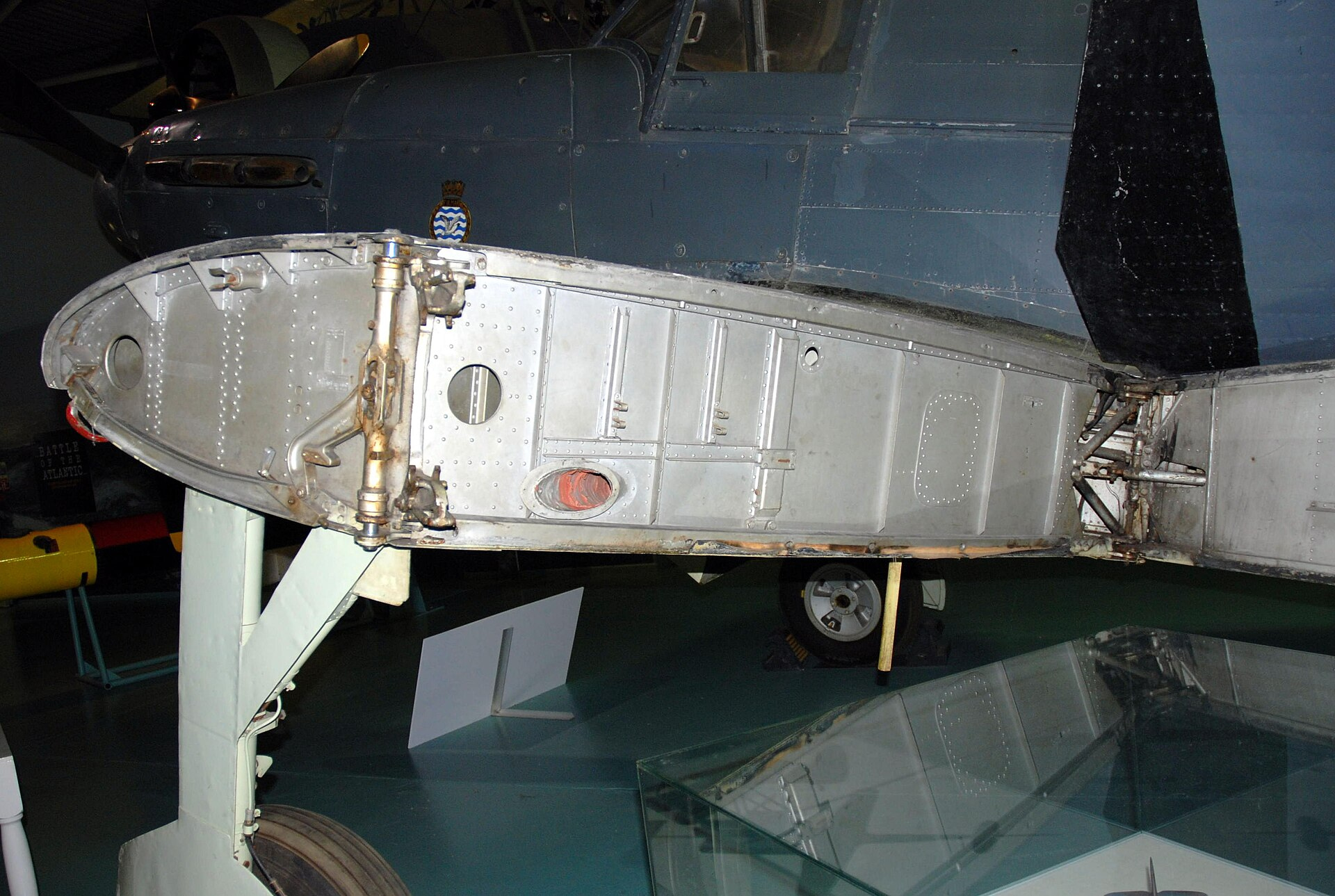
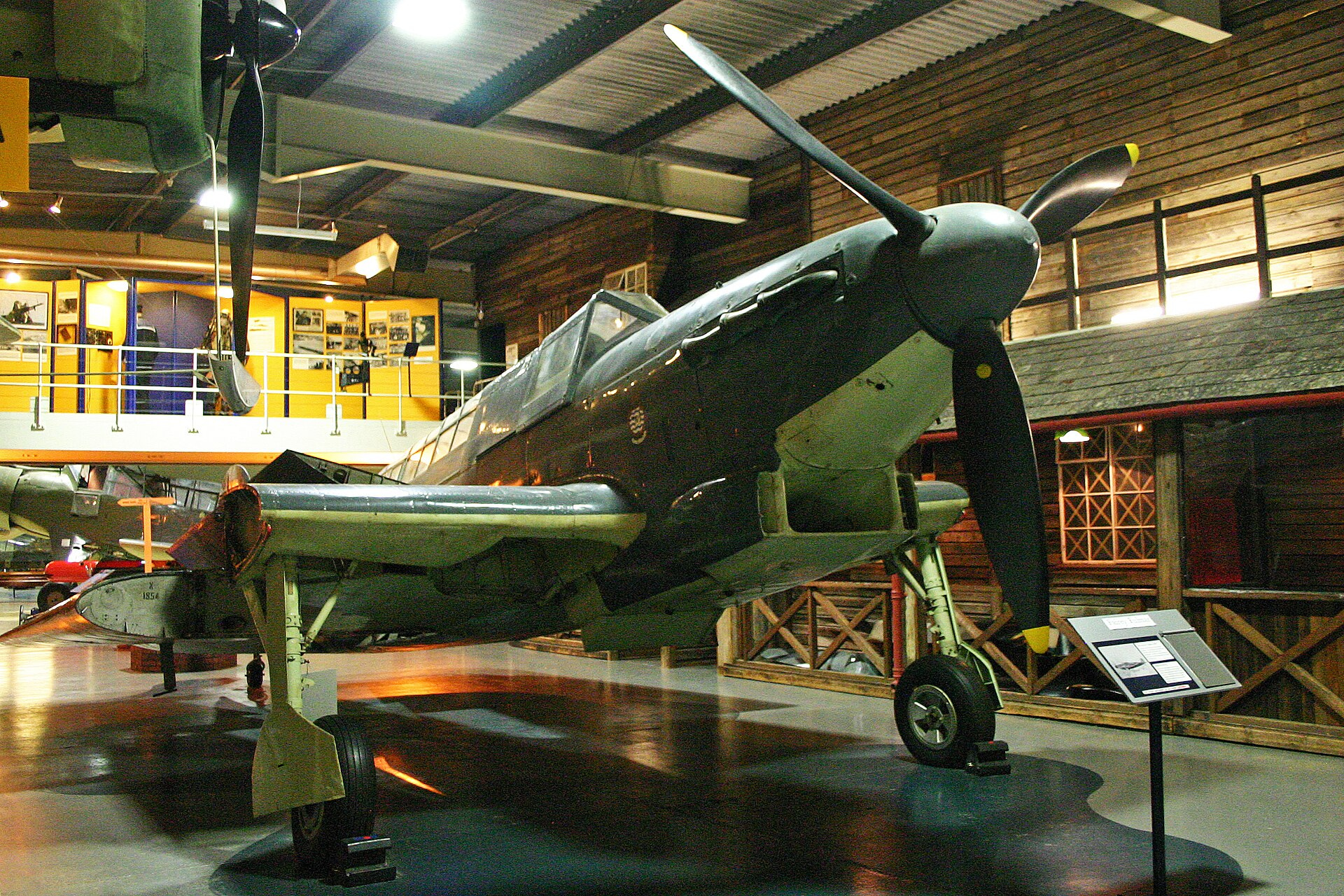
Only one Fulmar survives: the prototype, N1854, at the Fleet Air Arm Museum, Yeovilton.
Read the full story
Of the roughly six hundred Fulmars built, exactly one remains. It is the original prototype, N1854, which after the war carried the civil registration G-AIBE and was retained by Fairey before eventually passing to the Fleet Air Arm Museum at RNAS Yeovilton, where it is preserved today. It is the only surviving example of the aircraft that, for two crucial years, was the most successful fighter the Royal Navy had — a fitting last representative of a type whose value was always greater than its performance figures suggested.
Standing in front of N1854 today, it is easy to see the aircraft’s honest, workmanlike character: big, sturdy, unglamorous, built to do a job. That the museum’s example is the very first Fulmar ever flown gives it a special resonance — the survivor is also the ancestor, the aeroplane from which the whole story of the Royal Navy’s top-scoring fighter began.
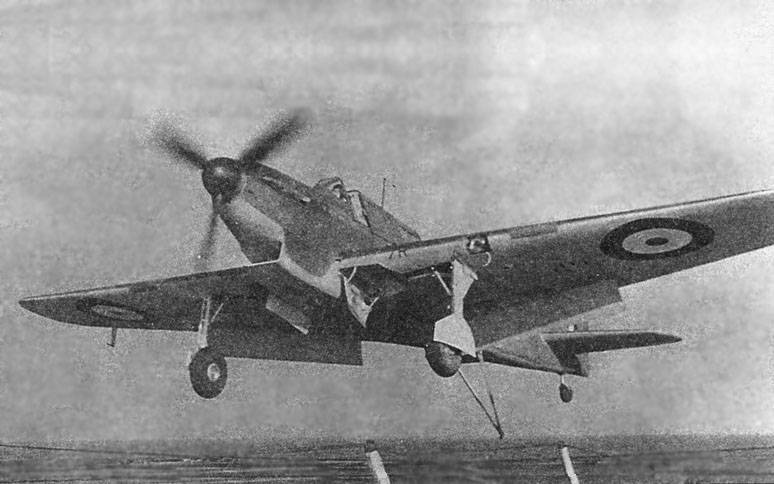
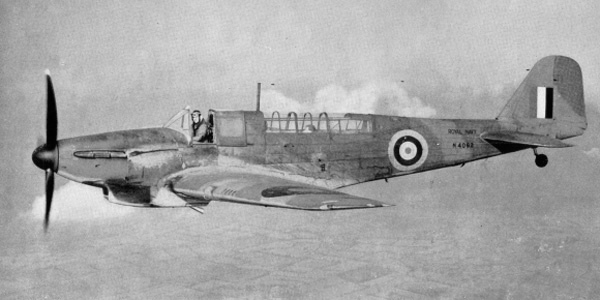
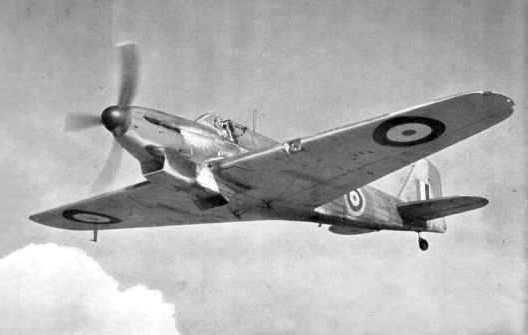
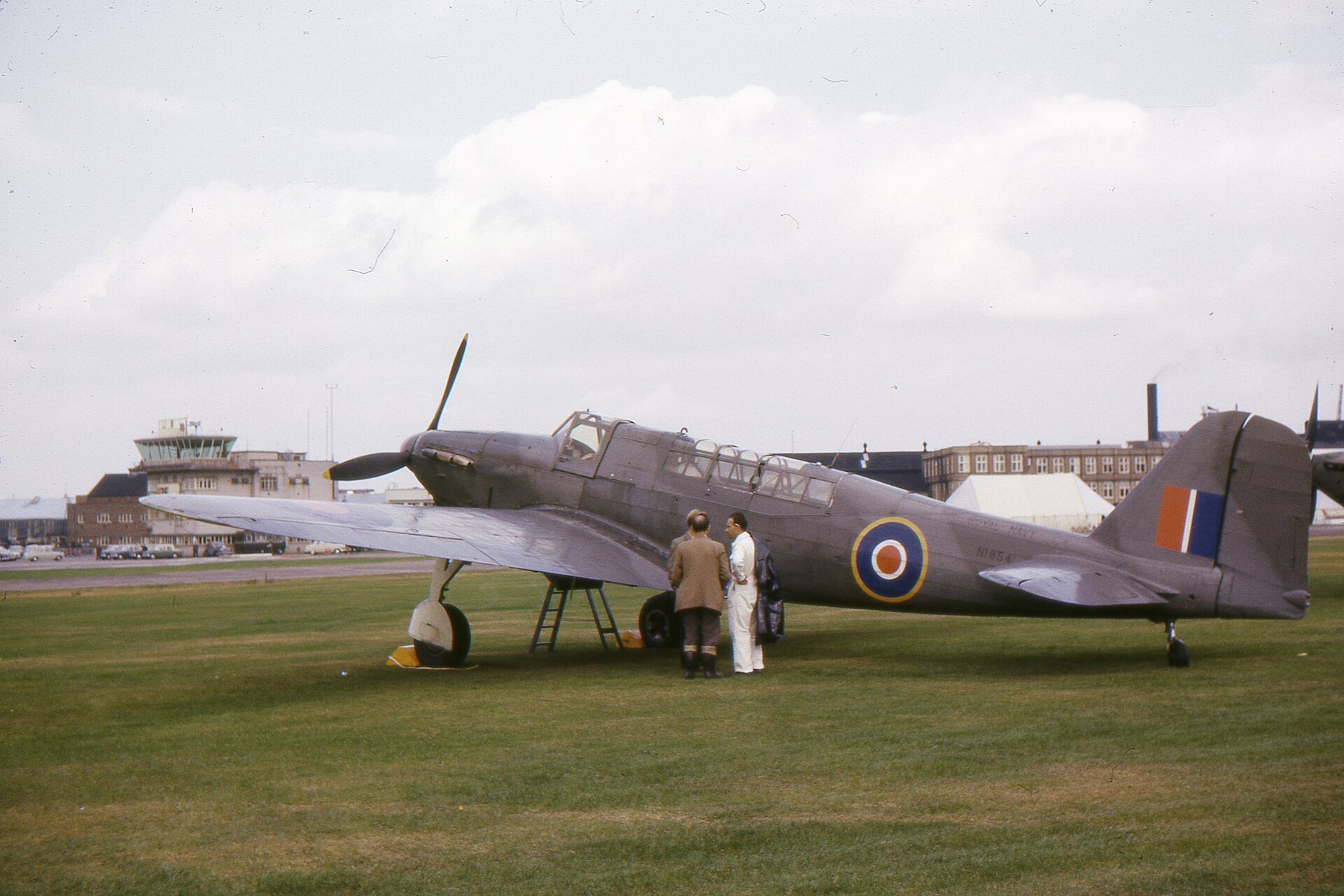
The Fairey Fulmar in photographs
Wartime Royal Navy photographs of the Fulmar in service, alongside detailed images of the sole survivor at the Fleet Air Arm Museum. Every image is credited and used under a public-domain or Creative Commons licence — see the captions.
The Fairey Fulmar on video
The “stop-gap” in the title is fair, and it is also the point. The Fulmar was always meant to fill a gap until something better arrived, and it did exactly that — but it filled the gap so effectively, in the two years when the Royal Navy needed a carrier fighter most, that it ended the war as the Fleet Air Arm’s highest-scoring fighter of all. A stop-gap that becomes your most successful weapon of its kind is a stop-gap worth remembering.
Where the Fairey Fulmar flew and fought
An all-British story: designed and built in the United Kingdom, flown almost exclusively by the Royal Navy’s Fleet Air Arm, and fought over the Mediterranean, the Indian Ocean and the Atlantic. Toggle the categories to explore.
The Fulmar is one of the most single-nation aircraft in this encyclopedia. It was designed by Fairey Aviation in Britain, built in Britain, and flown almost exclusively by one operator — the Royal Navy’s Fleet Air Arm. There were no large foreign air forces flying Fulmars, no export orders that put the type on the strength of other nations’ navies. Its geography is therefore not a map of operators but a map of where a British carrier fighter was carried into action, and that spread — from the central Mediterranean to the coast of Ceylon — tells you a great deal about how far the Royal Navy’s reach extended in the early war years.
Ten/Ta/To Mediterranean was the Fulmar’s main theatre by far. Operating from Alexandria and Gibraltar and from the carriers between them, Fulmars fought over the sea off Italy, Greece, Crete, Libya and Egypt, and above all over the convoy route to Malta. This is where the great majority of its victories were won, against the Italian Regia Aeronautica and, from 1941, the German Luftwaffe. In the Atlantic, Fulmars flew the long over-water search sorties of the Bismarck chase in May 1941. In the Indian Ocean, they were flung into the defence of Ceylon against the Japanese carrier raid of April 1942, and carrier aircraft including Fulmars supported the landings at Madagascar the following month. A few also flew in the cold northern waters off Norway during Arctic operations.
The Fairey Fulmar by the numbers
Numbers alone never tell the whole story of air combat, and the Fulmar’s are worth reading carefully. The bulk of its claims came in a concentrated burst between the autumn of 1940 and the end of 1941, flown from a handful of carriers by a small number of squadrons — among them Nos. 806, 803, 807 and 808 — operating almost continuously in the Mediterranean. A large share of all Fulmar victories was scored by the squadrons aboard HMS Formidable alone, and Ark Royal’s squadrons added many more before that carrier was lost in November 1941.
Against those successes must be set the losses. The Fulmar was not invulnerable; it was shot down by flak, by enemy fighters and in accidents, and its crews paid the price of flying an under-powered fighter in contested skies. But the exchange was favourable enough, and the type’s contribution to fleet defence important enough, that the overall verdict has never really been in doubt. Whichever precise figure you accept, the Fairey Fulmar destroyed more enemy aircraft than any other fighter the Fleet Air Arm flew in the Second World War — a remarkable record for an aeroplane that began life as a light bomber and could not out-turn a Zero.
What the Fairey Fulmar left behind
The Fulmar’s front-line career lasted barely three years, and it never became famous the way the Spitfire or the Swordfish did. Yet its legacy is real, and it runs in two directions — one practical, one doctrinal.
It is a legacy that is easy to underrate precisely because the Fulmar did its most important work in the shadows: shooting down shadowers no one remembers, breaking up raids that therefore never became famous disasters, and getting crews home across empty seas. The absence of catastrophe is a hard thing to celebrate, but for a fleet at war it is the highest achievement of all. Much of what the Fulmar accomplished is best measured by the things that did not happen — the carriers that were not sunk, the convoys that got through, the ships that were still there the next morning.
The practical legacy is simple: the fleet survived. Through the two hardest years of the naval war, 1940 and 1941, when the Royal Navy was fighting a superior Italian fleet in the Mediterranean, hunting German raiders in the Atlantic, and running the gauntlet to Malta, the Fulmar was the fighter that stood between the carriers and the enemy’s bombers. It did not do it gloriously, but it did it, and it did it more effectively than any other Fleet Air Arm fighter of the period. The commonly cited tally — on the order of 112 to 122 enemy aircraft destroyed, more than any other British naval fighter type of the war — is the measure of that.
The doctrinal legacy is more subtle. The Fulmar was the high-water mark of the two-seat carrier-fighter idea, and also the aircraft that quietly proved it was a dead end. Its successor, the Fairey Firefly, kept the two-seat layout and did useful work, but the future belonged to single-seat naval fighters — the Seafire, the Wildcat, the Hellcat and Corsair — that could fight enemy fighters on equal terms and relied on radar and better radio to solve the navigation problem the observer had once solved by hand. The Fulmar was the last of a line as much as the first of a new fleet, and its very success in the anti-bomber role helped clarify what a carrier fighter actually needed to be.
Perhaps the fairest verdict is the one that keeps recurring in the histories: the Fulmar was a compromise aircraft that happened to be exactly the compromise the Fleet Air Arm needed in 1940. It was never going to win a dogfight against the best of its era, and it never had to. It had to protect the fleet, and it did — which is why an aeroplane that looks like a mistake on paper is remembered, rightly, as the most successful fighter the Royal Navy flew in the Second World War.
Perhaps the last word should go to the paradox that has run through this whole page. Almost everything the casual critic says about the Fulmar is true — it was slow, it was heavy, it could not dogfight, it was obsolete as a fighter almost as soon as it appeared, and it was hurried out of front-line service the moment better aircraft could be found. And yet it was also, by a clear margin, the highest-scoring fighter the Fleet Air Arm ever operated, the shield of the Mediterranean Fleet in its worst years, and the aircraft that made carrier air defence work when the Royal Navy had almost nothing else. Both of those things are true at once. Learning to hold them together is not just how you understand the Fulmar; it is a small lesson in how to judge any weapon honestly — not against an ideal, but against the job it was actually asked to do, in the circumstances in which it actually had to do it.
13The last Fairey Fulmar: the story of the sole survivor at Yeovilton+
Only one Fulmar survives, and by a nice historical accident it is the very first one ever built. N1854 was the prototype that made the type’s maiden flight on 4 January 1940. After the war it was retained by the Fairey company and given the civil registration G-AIBE, used for a time as a communications and demonstration aircraft, before eventually being preserved. Today it belongs to the Fleet Air Arm Museum at RNAS Yeovilton in Somerset, where it is displayed as the only complete Fairey Fulmar left anywhere in the world.
That a prototype should be the sole survivor is oddly fitting for the Fulmar. It was an aircraft that was rushed into service, worked hard through the worst years of the naval war, and then quietly scrapped in bulk once better machines arrived — the fate of most workhorse aircraft that are valued for what they do rather than admired for what they are. The survival of N1854 gives the type a face, and a place, and lets visitors stand in front of the actual aeroplane that began the story of the Royal Navy’s top-scoring fighter.
For anyone who wants to see a Fulmar, then, there is exactly one place in the world to do it: the Fleet Air Arm Museum at RNAS Yeovilton in Somerset, England, whose collection tells the wider story of British naval aviation of which the Fulmar is a part. There is no airworthy Fulmar anywhere, and given that only a single airframe survives, there almost certainly never will be — which makes N1854 not just the last of its kind but, in all likelihood, the last there will ever be.
14From Fulmar to Firefly, Seafire and Wildcat: what replaced it and why+
The Fulmar was replaced from 1942 by a mix of aircraft, each better than the Fulmar in the specific way the Fulmar was weak. The Hawker Sea Hurricane brought single-seat agility and speed to carrier decks and to catapult-armed merchant ships. The American Grumman Martlet — the British name for the F4F Wildcat — brought rugged reliability, heavy .50-calibre guns and a fighter that could actually mix it with enemy single-seaters. And the navalised Supermarine Seafire brought Spitfire performance to sea, if at the cost of a fragile undercarriage and short range.
The Fulmar’s direct spiritual successor was another Fairey two-seater, the Firefly, which kept the observer’s cockpit and the fleet-reconnaissance role but added far more power, cannon armament and much better performance. Between them, these aircraft took over the jobs the Fulmar had been doing — some needing raw fighter performance, some needing the endurance and the second crewman — and the Fulmar slipped back into training and second-line duties. It had bridged the gap, which was always what it had been built to do.
15Fairey Aviation and Fulmar production: building a fighter in a hurry+
The Fulmar was a product of Fairey Aviation, one of the great names of British aircraft manufacture between the wars and the company behind the Swordfish, the Battle, the Albacore and later the Firefly and Gannet. Fairey’s ability to turn the P.4/34 into a serviceable carrier fighter quickly was exactly what the Fleet Air Arm needed in 1939–40, when there was no time to develop an all-new naval fighter before the shooting started. Production ran to roughly 600 aircraft — about 150 of the Merlin VIII-powered Mk I and around 450 of the more powerful Mk II — though as with much wartime production the exact figures vary between sources.
That the Fulmar could be designed, tested and put into squadron service inside a couple of years was a direct dividend of building on an existing airframe. It was not the aircraft Fairey or the Navy would have chosen with more time, but it was one that could actually be delivered when it was needed. In a war, an adequate aeroplane that exists in 1940 is worth far more than a superb one that arrives in 1943 — and the Fulmar’s greatest single virtue may simply have been that it was ready.
16Fairey Fulmar myths and misconceptions: setting the record straight+
The Fulmar attracts more than its share of lazy verdicts, usually along the lines of “a useless, obsolete two-seater.” The reality is more interesting. Yes, it was slow and could not dogfight a modern single-seater — but it was also the Fleet Air Arm’s top-scoring fighter of the war, and it achieved that record not by luck but by being well matched to the specific job of fleet air defence against bombers and shadowers. Calling it useless ignores both its results and the desperate context in which it fought.
A second misconception is that the two-seat layout was simply a mistake. It was a deliberate choice rooted in the very real navigation problem of over-water carrier operations in an era before reliable long-range radio aids, and it gave the Fulmar genuine advantages in reconnaissance, shadowing and endurance. The doctrine was later superseded, but it was not foolish in 1940. The honest summary is the one this page keeps returning to: the Fulmar was a flawed fighter and an effective one at the same time, and understanding how both can be true is the key to understanding the aircraft at all.
A final myth worth puncturing is that the Fulmar was somehow unique in its shortcomings. In truth every early-war carrier fighter involved painful compromises, and several navies fielded aircraft that were, in their own ways, just as flawed. What set the Fulmar apart was not that it was worse than its contemporaries but that it was pressed into such intense, sustained action so early — and that, against the odds, it delivered. Judged by results rather than by data-sheet performance, it is one of the quiet success stories of British naval aviation.
Fairey Fulmar: frequently asked questions
Can I fly in a Fairey Fulmar?
No — and honestly, nobody can. Only one Fairey Fulmar survives anywhere in the world: the original prototype, N1854, which is a static museum exhibit at the Fleet Air Arm Museum in Yeovilton, England. There is no airworthy Fulmar and none is available to fly in. But you absolutely can fly in a genuine ex-military fast jet or warbird today: MiGFlug arranges flights in aircraft such as the Hawker Hunter, de Havilland Vampire, L-39 Albatros and MiG-29. See what is currently available at migflug.com/flights-prices.
Why did the Fairey Fulmar have two seats?
Because Fleet Air Arm doctrine of the late 1930s held that a carrier aircraft operating far out over the ocean needed a dedicated observer/navigator. With no reliable long-range navigation aids and a small, moving carrier to find again, the second crewman’s dead-reckoning navigation was what got the aircraft home. The Navy accepted the extra weight and reduced performance as the price of reach and safety over the sea. The doctrine was later abandoned in favour of single-seat naval fighters as radar and better radio solved the navigation problem in other ways — but in 1940, with a small moving carrier to find at the end of every sortie, the observer in the back seat was often the difference between a fighter that came home and one that did not.
Was the Fairey Fulmar a good fighter?
It depends what you mean. As a dogfighter it was poor: heavy, underpowered and unable to meet enemy single-seaters like the Bf 109 on equal terms. But as a fleet-defence fighter in 1940–41 it was excellent — long-ranged, steady, and heavily armed, ideal for intercepting the bombers and reconnaissance aircraft that threatened the fleet. It is commonly credited with destroying more enemy aircraft than any other Fleet Air Arm fighter of the war. The right question is not ‘was it a good fighter?’ but ‘was it good at the job the Fleet Air Arm actually needed doing?’ — and for the fleet-defence role in 1940–41, the answer is emphatically yes.
How many .303 guns did the Fulmar carry?
Eight. The Fulmar carried a battery of eight .303-inch (7.7 mm) Browning machine guns in its wings — the same heavy fixed forward armament as an early Hurricane or Spitfire. Some trials and later aircraft experimented with heavier .50-inch guns, but the eight-gun .303 battery was the standard fit and the basis of the type’s combat record.
What engine did the Fairey Fulmar use?
A Rolls-Royce Merlin. The Mk I used the Merlin VIII of about 1,080 hp; the more common Mk II used the Merlin 30 of about 1,300 hp. It was the same engine family that powered the Hurricane and Spitfire, but the Fulmar was heavy for its power and so was always underpowered as a fighter.
Why was the Fulmar replaced so quickly?
Because better aircraft became available. From 1942 the Sea Hurricane, the American Grumman Martlet (Wildcat) and the navalised Supermarine Seafire could all do what the Fulmar could not — meet enemy single-seat fighters on something like equal terms. The Fulmar was withdrawn from front-line fighter squadrons around 1943 and continued in reconnaissance and second-line roles. It is worth stressing that the Fulmar was never meant to be a long-term solution: it was a stop-gap that bought time, and being replaced by better aircraft once they arrived was exactly what was supposed to happen. Its early retirement is a sign that it succeeded, not that it failed.
How many Fairey Fulmars are left?
Just one. Of roughly 600 built, the sole survivor is the prototype, N1854 (later civil-registered G-AIBE), preserved at the Fleet Air Arm Museum at RNAS Yeovilton. It is the only complete Fulmar left in the world.
Where did the Fairey Fulmar see combat?
Mostly in the Mediterranean, flying from the carriers HMS Illustrious, Formidable and Ark Royal — defending the fleet and the Malta convoys against Italian and German aircraft from 1940 onwards. Fulmars also flew in the Atlantic during the hunt for the Bismarck in May 1941, and in the Indian Ocean during the defence of Ceylon (Sri Lanka) against Japanese carrier aircraft in April 1942. A few also flew in northern waters and in support of operations off Madagascar.
How many enemy aircraft did the Fairey Fulmar destroy?
The commonly cited figure is on the order of 112 to 122 enemy aircraft destroyed — the highest total of any Fleet Air Arm fighter type of the war. As with all air-combat claims of the period these numbers should be treated as approximate, but the broad conclusion is well established: no other British naval fighter of the Second World War shot down more enemy aircraft than the Fulmar.
Was the Fairey Fulmar related to the Fairey Battle?
Indirectly, yes. The Fulmar was developed from the Fairey P.4/34, a light-bomber prototype that looked like a smaller Fairey Battle and shared its general layout. Fairey reworked that airframe into a two-seat carrier fighter, which is why the Fulmar has a bomber’s roomy fuselage and gentle handling rather than the tight, twitchy feel of a purpose-built single-seat fighter.
You can’t fly the Fulmar — but these, you can
The last Fairey Fulmar is a museum piece. If you want to feel what it is like to strap into a real ex-military aircraft and fly it for yourself, MiGFlug makes it possible — in genuine jets and warbirds, with professional pilots, over some of the best flying country in the world.
See every aircraft you can fly at migflug.com/flights-prices
More from the Book of Beasts
 Fairey FireflyThe Fulmar’s bigger, faster successor — a two-seat naval fighter-reconnaissance aircraft.
 Fairey SwordfishThe fabric-winged “Stringbag” torpedo bomber that fought alongside the Fulmar at sea.
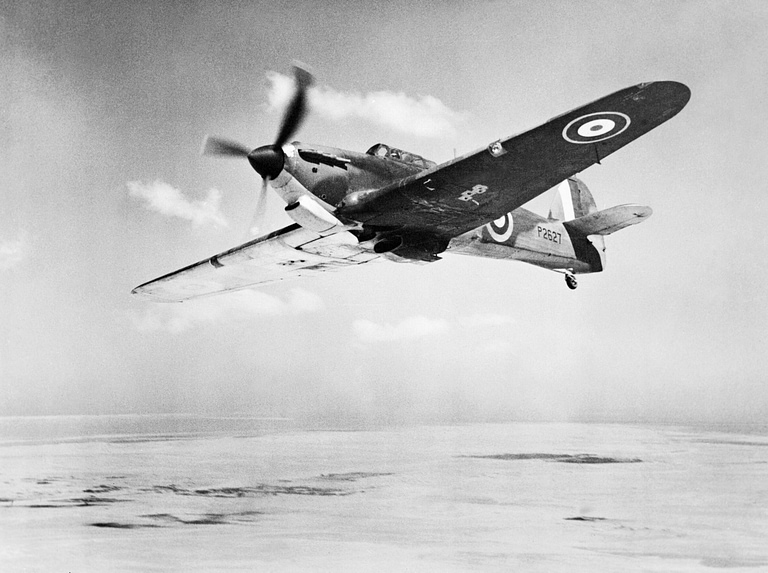 Hawker HurricaneThe eight-gun Merlin fighter whose navalised Sea Hurricane helped replace the Fulmar.
Sources & further reading