
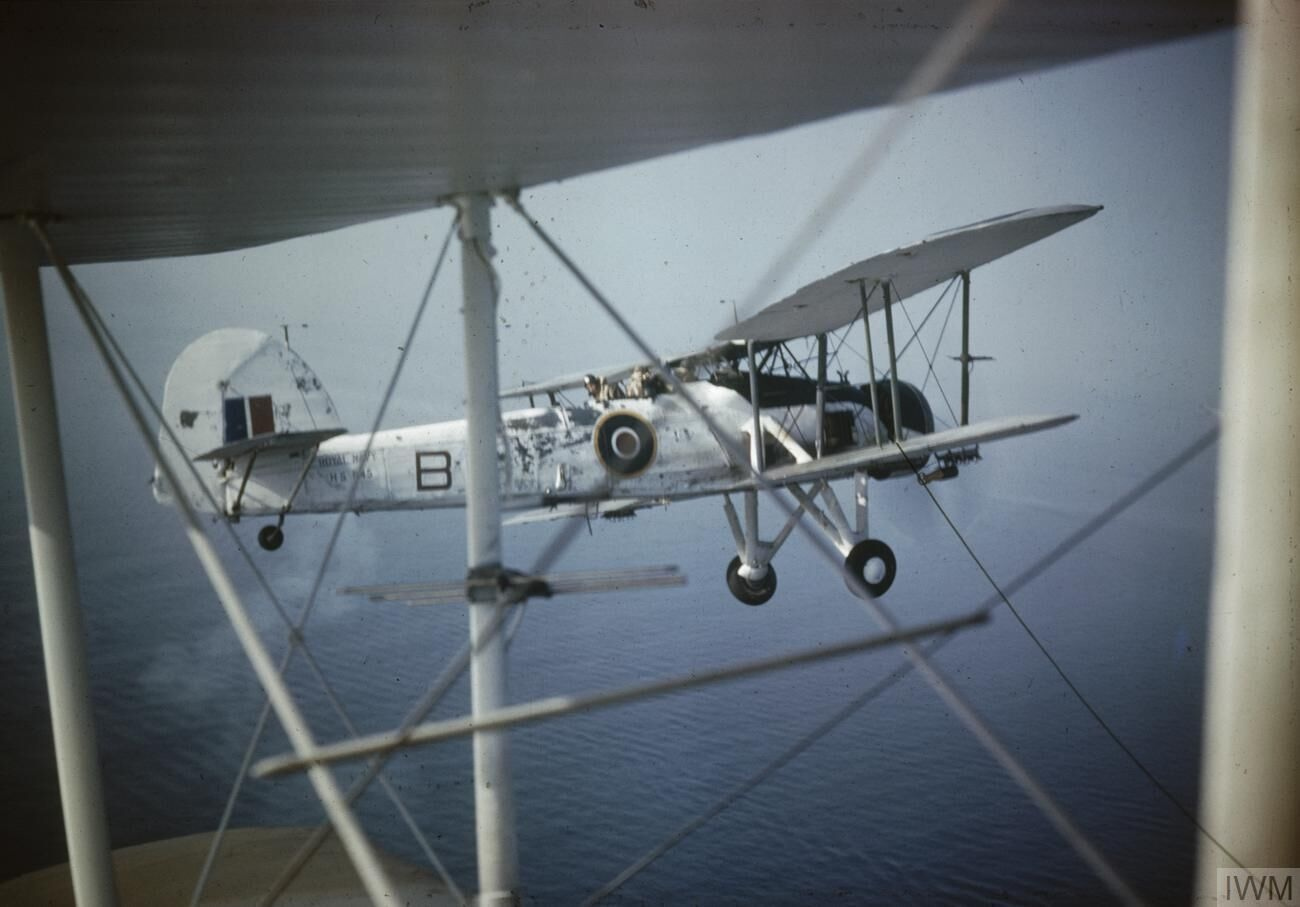
Fairey Swordfish
“Stringbag”
An obsolete-looking fabric-and-metal biplane that went to war in 1939 and became one of the most effective torpedo bombers of all — the aircraft that crippled the Italian fleet at Taranto and jammed the Bismarck’s rudder.
The obsolete biplane that refused to lose
By the time Britain went to war in 1939, the Fairey Swordfish already looked like a museum piece. It was an open-cockpit biplane of metal frame and fabric skin, with a fixed undercarriage and a top speed of barely 220 km/h — slower than some of the airliners of its day and a world away from the sleek monoplane fighters entering service. First flown in 1934 and in Fleet Air Arm service from 1936, it seemed destined for a quiet, brief career. Instead it became one of the most effective and enduring naval aircraft of the entire war.
The Swordfish was designed to a single demanding brief: a carrier aircraft that could deliver a torpedo, spot the fall of naval gunfire, and fly long over-water reconnaissance — the “TSR” role. Crews soon nicknamed it the “Stringbag,” not for its rigging but for the sheer variety of loads it could carry, like a household string shopping bag that always seemed to stretch to fit one more item: a torpedo, bombs, mines, depth charges, flares or rockets. Slow, docile and almost impossible to stall, it could be flung off a pitching deck in filthy North Atlantic weather that grounded faster aircraft.
That combination produced two of the most famous naval air actions in history. On the night of 11–12 November 1940, 21 Swordfish flying from HMS Illustrious attacked the Italian battle fleet in its harbour at Taranto, crippling three battleships at anchor for the loss of two aircraft — a night torpedo raid widely cited as a model the Japanese studied before planning the attack on Pearl Harbor. Six months later, in May 1941, a single torpedo dropped by a Swordfish from HMS Ark Royal jammed the rudder of the battleship Bismarck, leaving Germany’s most powerful warship steaming in circles until the Home Fleet caught and sank her.
For all its dash-and-glory moments, the Swordfish did its most important work in the long, grinding Battle of the Atlantic. Flying from tiny escort carriers with ASV radar, rockets and depth charges, it became a patient U-boat hunter and convoy guardian, where its slow, forgiving handling was an asset rather than a liability. Remarkably, it outlived the very aircraft built to replace it — the Fairey Albacore was retired first — and stayed in front-line service until 1945. Around 2,400 were built. The Stringbag had gone to war looking a decade out of date, and finished it as a legend.
01The Fairey Swordfish’s nickname: why the Fleet Air Arm called it the “Stringbag”
The name had nothing to do with the aircraft’s wire-braced biplane rigging, as is sometimes assumed. Crews called it the Stringbag after the string shopping bags of the era, which could be stuffed with an apparently endless and mismatched assortment of goods. The Swordfish was the same: on any given sortie it might carry a torpedo, or a bomb load, or depth charges, or naval mines, or flares for night spotting, or — later in the war — underwing rockets. Whatever the Admiralty needed carried out over the sea, the Stringbag seemed able to stretch to fit it. The nickname became a badge of affection for an aircraft its crews trusted absolutely.
What makes it special
A rugged, slow biplane built around its load
The Swordfish was fabric over a metal frame, with open cockpits and a fixed undercarriage — deliberately simple and immensely strong. Its low speed and gentle stall made it forgiving to fly and hard to break, and its airframe could be adapted to almost any weapon the Fleet Air Arm needed: a torpedo, bombs, mines, depth charges, flares or rockets. That versatility earned it the “Stringbag” name and kept it useful long after faster designs had come and gone.
A carrier — and escort-carrier — torpedo bomber
Built for the Royal Navy’s fleet carriers, the Swordfish turned out to be perfectly suited to the small, slow escort carriers that guarded Atlantic convoys. Its docile handling let it operate from short, pitching decks in weather that grounded higher-performance aircraft, launching and recovering in conditions that would have wrecked a monoplane. Slowness, on a carrier deck in a gale, was a virtue.
Longevity: it outlasted its own replacement
The Fairey Albacore was designed specifically to replace the Swordfish — and was withdrawn from service first. The Stringbag simply kept working, taking on ASV radar, rocket rails and depth charges for the anti-submarine war and serving to the very end in 1945. Few combat aircraft have ever outlived their intended successor so completely.
02The Fairey Swordfish’s Bristol Pegasus engine and open cockpit
Power came from a single Bristol Pegasus nine-cylinder radial of roughly 690 horsepower — modest even by the standards of the mid-1930s, and the reason the Swordfish cruised so slowly. The crew of two or three sat in open cockpits, exposed to the full brutality of North Atlantic and Arctic weather; long anti-submarine patrols in an open Swordfish, in winter, were an ordeal of cold and wind that pushed men to the limit of endurance. Yet the same simplicity made the aircraft dependable and easy to maintain aboard ship, far from workshops.
03The Fairey Swordfish as a submarine-hunter: radar, rockets and escort carriers
As the Battle of the Atlantic ground on, the Swordfish found its most important role. Fitted with early ASV (air-to-surface-vessel) radar, it could locate surfaced U-boats at night and in poor visibility, then attack with depth charges or, from 1943, batteries of underwing rocket projectiles. Flying from merchant-hull escort carriers and even catapult-equipped merchant ships, Swordfish crews are credited with sinking or sharing in the destruction of more than twenty U-boats and helping close the mid-Atlantic gap. Its slow, stable flight made it an ideal weapons platform for this patient, unglamorous work.
Full specifications
Airframe & Performance (Swordfish Mk I)
- Posádka
- 2–3 (pilot, observer, telegraphist/air gunner)
- Délka
- ~10.9 m (35 ft 8 in)
- Rozpětí křídel
- ~13.9 m (45 ft 6 in)
- Výška
- ~3.76 m (12 ft 4 in)
- Max takeoff weight
- ~3,400 kg
- Max speed
- ~220 km/h (139 mph) at low level
- Rozsah
- ~840 km (~1,030 km on reconnaissance)
- Servisní strop
- ~5,030 m (16,500 ft)
- Configuration
- Single-engine biplane, fixed undercarriage
Propulsion, Armament & Production
- Motor
- 1 × Bristol Pegasus radial
- Power
- ~690 hp (later marks ~750 hp)
- Main weapon
- 1 × 18-in torpedo (~730 kg)
- Alternative loads
- Bombs, mines, depth charges or 8 rockets
- Guns
- 2 × .303 in machine guns (1 fixed, 1 flexible)
- First flight
- 17 April 1934
- Built
- ~2,400 (1936–1944)
- Cost per flight hour
- No reliable public figure
04The Fairey Swordfish’s cost: why no reliable price exists
The Swordfish was a wartime state product, built for the Royal Navy under government contract rather than sold on any open market, so a clean flyaway unit price simply does not exist in the public record. Production was shared with Blackburn Aircraft (which built the majority of the roughly 2,400 airframes, giving rise to the affectionate variant nickname “Blackfish”), and costs were absorbed into the broader war economy. No credible cost-per-flight-hour figure exists for the type in open sources either. Any precise price attached to a Swordfish today should be read as an estimate, not a sourced figure.
From private venture to Atlantic workhorse
The TSR concept
Fairey develops a torpedo-spotter-reconnaissance biplane for the Fleet Air Arm, refining an earlier private-venture design.
First flight
The definitive TSR II prototype flies on 17 April 1934, establishing the Swordfish layout.
Enters service
The Swordfish joins the Fleet Air Arm as the Royal Navy’s standard carrier torpedo bomber.
The Taranto raid
On 11–12 November, 21 Swordfish from HMS Illustrious cripple three Italian battleships in harbour at night.
The Bismarck strike
In May a Swordfish torpedo from HMS Ark Royal jams the Bismarck’s rudder, sealing the battleship’s fate.
The Channel Dash
Six Swordfish attack German warships in the Channel and are all lost; their leader, Eugene Esmonde, is awarded a posthumous Victoria Cross.
The U-boat war
Flying from escort carriers with ASV radar, rockets and depth charges, the Swordfish becomes a key convoy-escort submarine hunter.
End of the line
The Swordfish serves to the end of the war, outliving its intended replacement. Around 2,400 were built.
From the Stringbag: twelve Swordfish stories
Three jobs in one biplane
The Swordfish was designed to carry a torpedo, spot naval gunfire and fly long reconnaissance — all in one airframe.
Read the full story
Why they called it the Stringbag
The name came from the string shopping bags of the day — endlessly stretchable to fit whatever you piled in.
Read the full story
The night 21 biplanes rewrote naval war
On 11–12 November 1940, Swordfish from HMS Illustrious crippled three Italian battleships at anchor.
Read the full story
The raid Japan studied
Taranto is widely cited as an inspiration for the Japanese planning of the 1941 attack on Pearl Harbor.
Read the full story
The torpedo that doomed a battleship
A single Swordfish hit jammed the Bismarck’s rudder, leaving her unable to steer for home.
Read the full story
Esmonde’s last flight
Six Swordfish attacked German battlecruisers in daylight and were annihilated; their leader won a posthumous VC.
Read the full story
Hunting U-boats from a merchant deck
Flying from tiny escort carriers, Swordfish became patient submarine hunters over the Atlantic convoys.
Read the full story
Slow enough to survive
The Swordfish’s very slowness could confuse anti-aircraft gun predictors built to track faster aircraft.
Read the full story
The plane that outlived its replacement
The Fairey Albacore was built to replace the Swordfish — and was retired first.
Read the full story
An open cockpit over the Atlantic
Long patrols in an open Swordfish, in winter, were an endurance test of cold, wind and spray.
Read the full story
Rockets and depth charges
Late-war Swordfish carried rocket projectiles and depth charges to hunt surfaced submarines.
Read the full story
Still flying today
A handful of Swordfish are kept airworthy in Britain, honouring the type at air shows.
Read the full story
The Swordfish in pictures
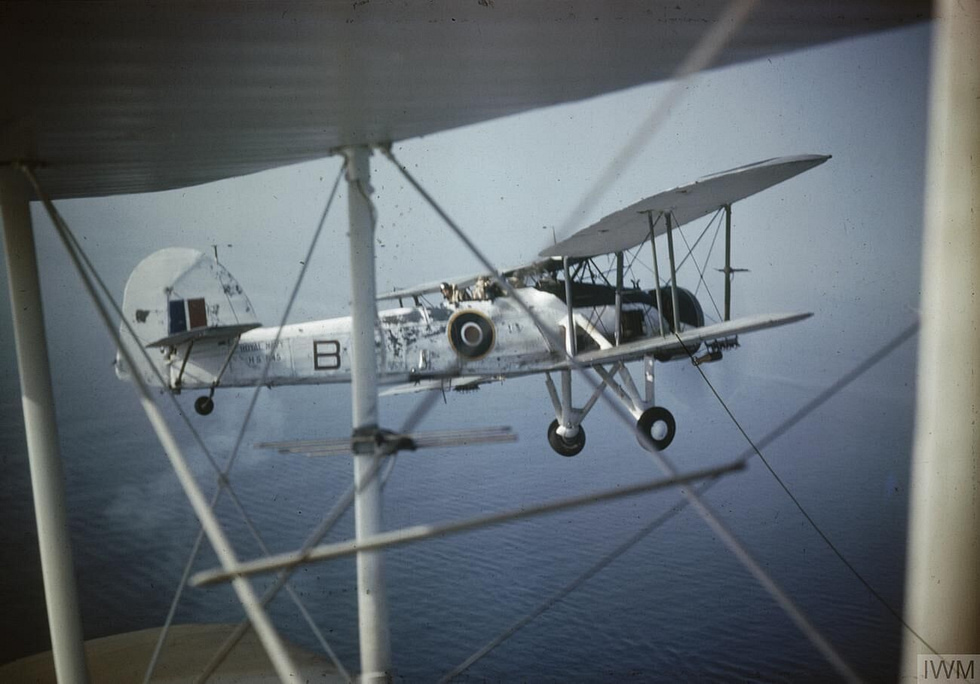


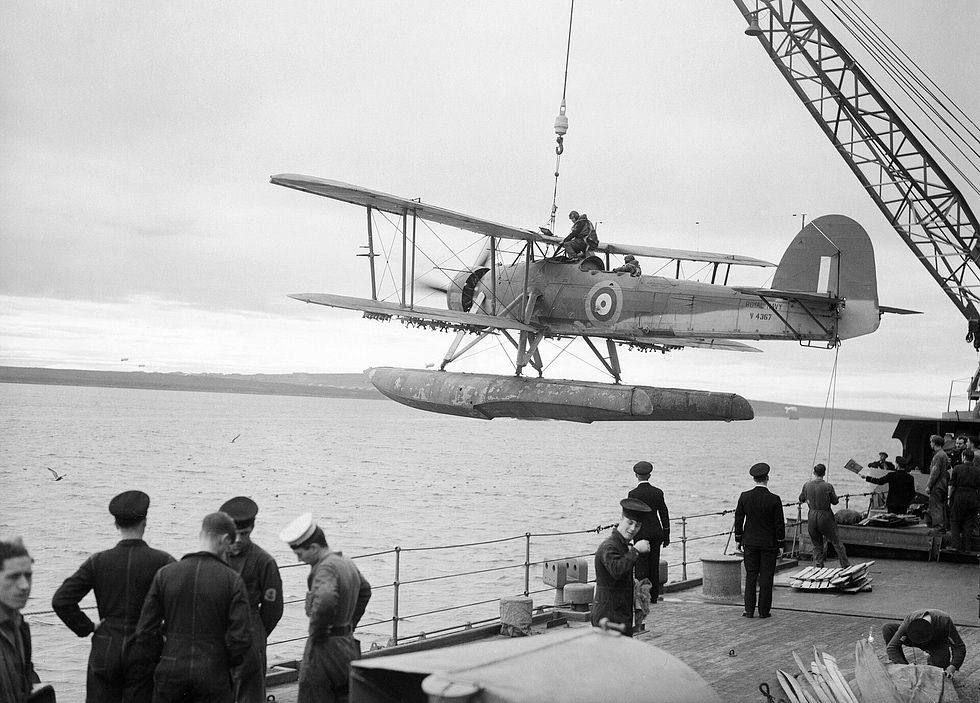

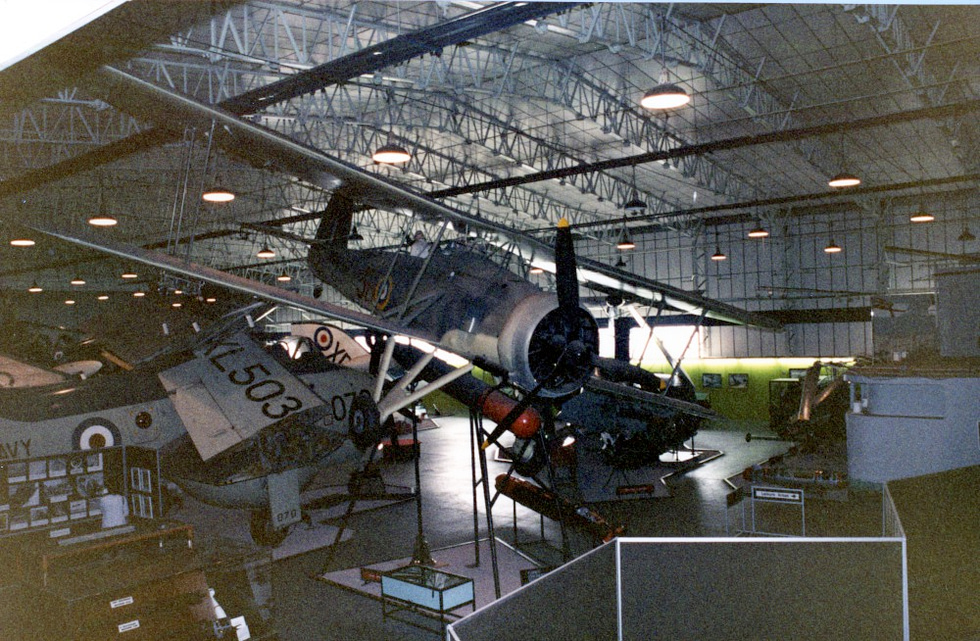
The Swordfish in motion
A verified archive film of the Fairey Swordfish is coming soon. In the meantime, the photo gallery above and the stories below capture the Stringbag at war and in preservation.
Where the Swordfish flew
The score that defines it
The Swordfish’s record is not written in air-to-air kills — it was never a fighter. It is measured in enemy warships crippled and submarines sunk. In a single night at Taranto it changed the balance of naval power in the Mediterranean; six months later it helped doom the Bismarck; and across the Atlantic it became one of the war’s most effective convoy guardians.
Compare the combat record of every military aircraft. Figures as of July 2026.
Everything people ask about the Fairey Swordfish
Can I fly in a Fairey Swordfish?
Why was the Swordfish called the “Stringbag”?
What did the Swordfish do at Taranto?
Did a Swordfish really cripple the Bismarck?
How slow was the Swordfish?
How many Swordfish were built?
Was the Swordfish obsolete?
Are any Swordfish still flying?
You can’t fly the Swordfish.
These, you can.
Some legends only live in museums — others are fuelled and waiting. MiGFlug has put civilians in real military jet cockpits since 2004.
 Fly the L-39 AlbatrosThe world’s most-flown jet trainer — aerobatics included
 Fly the F-104 Starfighter“The missile with a man in it”
 Fly the MiG-21The Cold War’s most-produced jet
 Leťte s T-33 Shooting StarAmerica’s first jet trainer
 Fly the DH VampireA piece of early jet history
 Fly the S.211Agile Italian jet trainer
 Fly the MB-326The classic Aermacchi jet
 Fly the MiG-15The Soviet legend of the Korean War
Continue the tour
Every fact, checked
- Imperial War Museums — The Bismarck Action: The Swordfish AttackPrimary museum account of the 26 May 1941 torpedo strike on the Bismarck.
- The National WWII Museum — Strike on Taranto, November 1940The night raid on the Italian fleet and its influence on later naval planning.
- Navy Wings — Fairey Swordfish LS326The naval-aviation charity that keeps airworthy Swordfish flying today.
- HistoryNet — The glorious “Stringbag”Design origins, the nickname and the type’s wartime career.
- Warfare History Network — The Fairey Swordfish Torpedo BomberDetailed operational history of the Stringbag at war.
- War History Online — Fairey SwordfishThe outdated biplane that helped sink the Bismarck.
- Aviation History — Fairey SwordfishReference for specifications, variants and production.
- MiGFlug Afterburner — Taranto 1940MiGFlug’s own long-read on the Swordfish raid that rewrote naval warfare.