
Fiat BR.20 Cicogna
Italy’s first genuinely modern bomber – an all-metal monoplane that looked the part in 1936, then aged into one of the Regia Aeronautica’s most exposed medium bombers by 1940.
Příběh
The Fiat BR.20 Cicogna: the bomber that was modern for about four years
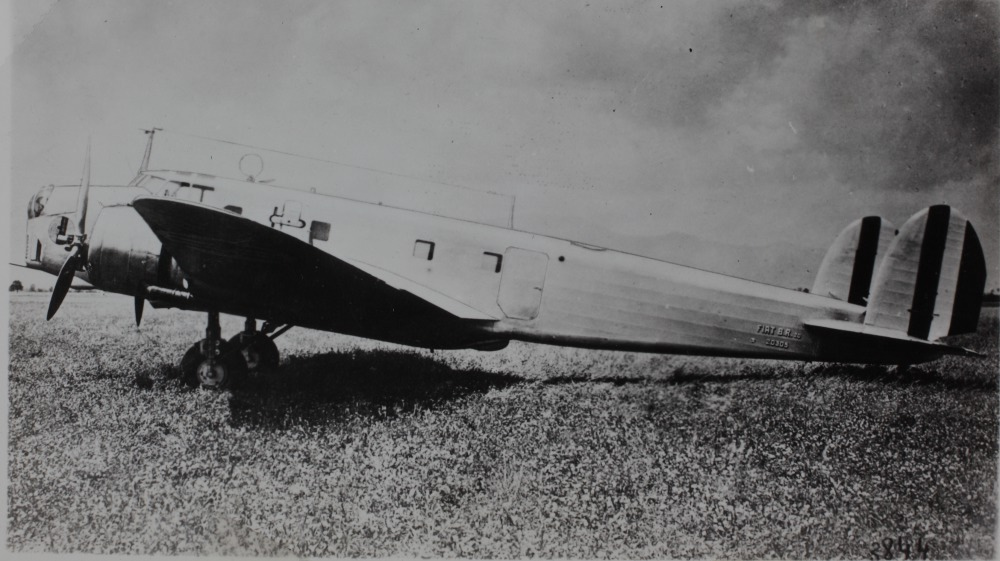
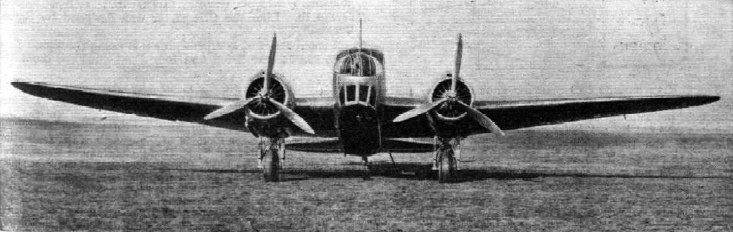
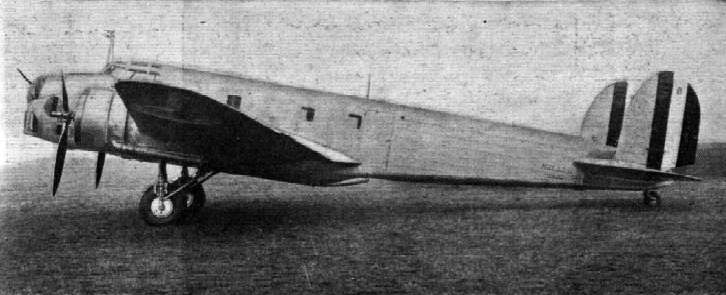
When the Fiat BR.20 Cicogna (“Stork”) first flew on 10 February 1936, it was, by the standards of the day, a strikingly modern machine: an all-metal, twin-engined cantilever monoplane with retractable landing gear, powered gun turrets and an enclosed cockpit, at a moment when much of the world’s bomber fleet was still built around fabric, struts and open positions. For Italy it was a genuine milestone – widely described as the country’s first modern all-metal bomber – and it entered service quickly, giving the Regia Aeronautica a weapon that, on paper, sat among the more advanced medium bombers of the mid-1930s.
The “BR” in the name stands for “Bombardiere Rosatelli”, after Fiat’s chief engineer Celestino Rosatelli, whose earlier B.R. designs had been a line of single-engined biplane bombers. The BR.20 was a clean break from that lineage, borrowing structural ideas from Fiat’s own APR.2 civil transport and wrapping them around two big Fiat A.80 RC.41 radial engines of roughly 1,000 horsepower each. A crew of five – pilot, co-pilot, bombardier/nose gunner, radio operator and a dorsal gunner – worked a design that could carry around 1,600 kg of bombs out to a useful range, and reach a top speed commonly quoted at about 440 km/h.
That is where the good news largely ends. The BR.20’s problem was not its debut but its stagnation. Aviation moved brutally fast between 1936 and 1940, and the Cicogna did not move with it. Its A.80 engines were heavy, thirsty and never especially reliable; its defensive armament – typically three 12.7 mm Breda-SAFAT machine guns – was thin for a bomber expected to fly by day against modern fighters; and within the Regia Aeronautica itself the aircraft was steadily overshadowed by the three-engined Savoia-Marchetti SM.79 Sparviero, which was faster, tougher and far more popular with crews. An improved BR.20M (“Modificato”) with a reshaped nose, more armour and structural reinforcement kept the type competitive on paper, but by 1940-42 the Cicogna was, honestly, an outdated and vulnerable aircraft being asked to do a modern bomber’s job.
Its combat record reads like a tour of the Second World War’s Mediterranean and European fringes. The BR.20 saw its baptism of fire in the Spanish Civil War, where a small number flew with the Italian “Aviazione Legionaria” in support of Franco’s Nationalists. In an unusual twist for an Italian aircraft, it became a genuine export success in the Far East: Japonsko bought more than eighty, operating them as the “Type I” heavy bomber and throwing them into the Second Sino-Japanese War over Čína, making the Cicogna one of very few foreign aircraft types Imperial Japan ever imported in quantity. And in the autumn of 1940 the BR.20M became one of the odder footnotes of the Battle of Britain, when the Corpo Aereo Italiano sent a bomber force to raid south-east England – an expedition that achieved very little and lost aircraft to the weather and the RAF for negligible result.
Elsewhere the type soldiered on over North Africa, Malta, Greece, Yugoslavia and even briefly the Eastern Front, always more workhorse than war-winner, until the survivors were finally retired in 1946. Today not a single complete Fiat BR.20 exists anywhere in the world – only wreckage, relics and a handful of recovered parts remain. It is a revealing aircraft precisely because it is not a legend: the Cicogna is the story of how quickly “modern” could curdle into “obsolete” in the late 1930s, and of an industry that built a promising airframe and then let it stand still.
To be fair to the design, much of what went wrong was not the airframe’s fault. The basic structure was sound, the aircraft was pleasant enough to fly when its engines cooperated, and in the right conditions it did its job. The failure was one of development and doctrine rather than of original conception: Italy built a competitive bomber in 1936 and then, pulled between too many programmes and short of industrial capacity, never gave it the new engines, heavier defensive armament or higher-flying airframe that its foreign contemporaries received as a matter of course. The Heinkel He 111, a near-exact contemporary, was re-engined and up-gunned through the war and stayed relevant; the BR.20 received only the incremental BR.20M and slid into obsolescence.
That is why the Cicogna is worth a serious museum page despite never becoming famous. It is a clean illustration of a lesson every air force has had to relearn: that an aircraft is never “finished” the day it enters service, and that the types which endure are the ones that are continuously improved. Measured honestly – modern in 1936, outclassed by 1940, overshadowed at home by the SM.79, blooded in Spain, sold in surprising numbers to Japan for its war in China, and thrown ineffectively at Britain in the winter of 1940 – the BR.20 tells that lesson better than many far more celebrated machines.
01The Fiat BR.20 Cicogna’s name and lineage: what “Bombardiere Rosatelli” really means
Fiat’s inter-war bomber line carried the initials “B.R.” for Bombardiere Rosatelli, honouring engineer Celestino Rosatelli, who also gave his “C.R.” initials to Fiat’s famous fighter biplanes such as the CR.42 Falco. The earlier B.R. bombers – the B.R.1, B.R.2, B.R.3 and so on – were single-engined biplanes. The BR.20 broke sharply with that tradition: a twin-engined, all-metal cantilever monoplane owing more to modern transport-aircraft practice than to Rosatelli’s biplane heritage. The name “Cicogna” (Italian for stork) followed a Fiat habit of bird names, and the “20” simply continued the B.R. sequence. Understanding that lineage explains a common confusion: the BR.20 is a completely different, much larger and later aircraft than the little “BR” biplanes – and unrelated to Fiat’s contemporaneous CR fighters despite the shared designer.
02The Fiat BR.20 Cicogna versus the SM.79: why Italy preferred a trimotor
The Cicogna’s biggest rival was domestic. The Savoia-Marchetti SM.79 Sparviero, a three-engined mixed-construction bomber, entered service around the same time and rapidly became the backbone of the Regia Aeronautica’s bomber and torpedo-bomber force. Crews trusted the SM.79’s three engines for the long over-water Mediterranean legs, valued its speed and found it able to absorb damage. The twin-engined BR.20, with two temperamental radials and lighter defensive armament, always looked the poorer relation. Italy therefore concentrated its bomber and anti-shipping effort on the SM.79 and its successors, leaving the BR.20 as a secondary type. This is why the Cicogna, despite being technically “more modern” in layout at its debut, never became the star: doctrine, engine reliability and crew confidence all favoured the trimotor.
Design & Engineering
How the Fiat BR.20 Cicogna was built – and where it fell behind
Structurally, the Cicogna was a thoroughly modern aeroplane for its moment: a stressed-skin, all-metal machine that abandoned the wood, fabric and bracing wires of the biplane generation. Its shortcomings were not in that basic architecture but in the parts that had to keep improving through the war – the engines, the guns and the pace of development. The six feature cards below sketch both sides of the aircraft: what made it modern in 1936, and what left it exposed by 1940.
An all-metal modern airframe
Cantilever monoplane wing, semi-monocoque all-metal fuselage, retractable main gear and powered turrets – a clean, modern configuration in 1936 that put the Cicogna structurally ahead of the biplanes and fabric bombers it replaced.
Two Fiat A.80 RC.41 radials
Power came from two Fiat A.80 RC.41 air-cooled radials of roughly 1,000 hp each. They gave respectable speed on the demonstration circuit but were heavy, thirsty and never truly dependable, capping the aircraft’s altitude, load and reliability.
Light defence, modest load
Typically three 12.7 mm Breda-SAFAT machine guns in nose, dorsal and ventral positions defended a bomb load of about 1,600 kg. Adequate in 1936; dangerously thin against the eight-gun fighters the Cicogna met by 1940.
The BR.20M nose
The major production variant lengthened and re-glazed the nose to give the bombardier a better working position and sight picture, and added armour and local reinforcement – useful refinements that nonetheless left the aircraft’s fundamentals untouched.
Five stations, big blind arcs
Pilot, co-pilot, bombardier/nose gunner, radio operator and dorsal/ventral gunner shared the fuselage. The hand-aimed guns left wide unprotected arcs a single attacking fighter could exploit – a fatal weakness by 1940.
Frozen performance
With no better engines ever fitted in quantity, the Cicogna’s speed, ceiling and load stayed pegged at 1936 levels while rivals climbed away year on year – the single clearest reason the design aged so badly.
03The Fiat BR.20 Cicogna’s engines and performance: why “1,000 hp each” was not enough
On raw numbers the BR.20 looks reasonable: two radials of about 1,000 hp, a top speed frequently quoted around 440 km/h, a ceiling in the region of 7,000-8,000 m and a range of roughly 2,700 km. In practice, weight growth, drag and the A.80’s poor reliability eroded those figures in service, and cruising speeds with a full bomb load were far more pedestrian. Against Hurricanes and Spitfires – or Chinese-flown fighters over China – a lightly armed medium bomber cruising well below its quoted maximum was acutely vulnerable. The BR.20M tried to address protection with more armour and a revised nose, but could do nothing fundamental about the engines. All performance figures here should be read as period estimates that varied by variant, load and source.
04The Fiat BR.20 Cicogna’s variants: BR.20, BR.20M and the one-off BR.20bis
The baseline BR.20 equipped the first units and the Spanish and Japanese customers. The major production model was the BR.20M (“Modificato”), introduced from around 1940 with a lengthened, better-glazed nose for the bombardier, additional armour and local structural strengthening; several hundred were built and it carried most of the type’s wartime service. A further, largely experimental BR.20bis reworked the nose and defensive armament and tried more powerful engines, but it arrived far too late to matter and was not produced in numbers. Total production across all versions is usually given as somewhere between about 500 and 600 aircraft – figures vary between sources and should be treated as approximate.
05The Fiat BR.20 Cicogna’s operating costs: what a 1930s Italian bomber actually cost
Honestly, no reliable unit price, programme cost or cost-per-flight-hour figure survives for the BR.20 in a form worth quoting. Italian wartime procurement accounting was opaque, currency values shifted, and the aircraft was retired in 1946 with no complete example preserved and no civil or warbird operation since. Any specific dollar or lira figure you see attached to the Cicogna online should be treated with great caution. What can be said qualitatively is that its twin thirsty A.80 radials made it comparatively expensive to run for its modest bomb load, one of several reasons Italy favoured other types. In the specifications below we mark cost fields as not reliably recorded rather than invent a number.
Full Specifications
Fiat BR.20 Cicogna specifications and cost data
Figures below are representative of the BR.20M and drawn from standard references; values varied by variant, engine batch and loading, so several are flagged as estimates. Cost fields are recorded honestly rather than guessed.
| Typ | Twin-engine medium bomber |
|---|---|
| Posádka | 5 (pilot, co-pilot, bombardier/nose gunner, radio operator, dorsal gunner) |
| First flight | 10 February 1936 |
| Délka | ~16.7 m (54 ft 9 in) |
| Rozpětí křídel | ~21.6 m (70 ft 9 in) |
| Pohonná jednotka | 2 × Fiat A.80 RC.41 18-cylinder air-cooled radial |
| Power | ~1,000 hp (746 kW) each (estimate; varied by batch) |
| Max speed | ~440 km/h (270 mph) (estimate) |
| Rozsah | ~2,750 km (1,710 mi) (estimate) |
| Servisní strop | ~7,200-8,000 m (estimate, varies by source) |
| Bomb load | ~1,600 kg (3,500 lb) maximum |
|---|---|
| Defensive armament | 3 × 12.7 mm Breda-SAFAT machine guns (nose, dorsal, ventral) (varied by variant) |
| Number built | ~500-600 all variants (sources vary) |
| Main variants | BR.20, BR.20M, BR.20bis (experimental) |
| In service | 1936-1946 |
| Unit cost | Not reliably recorded (WWII) |
| Cost per flight hour | Not applicable – no surviving / airworthy example |
| Programme cost | Not documented |
| Survivors | None complete; wreck relics and parts only |
| Plocha křídla | ~74 m² (estimate) |
|---|---|
| Výška | ~4.75 m (estimate) |
| Prázdná hmotnost | ~6,500 kg (estimate, BR.20M) |
| Loaded weight | ~10,300-10,900 kg (estimate, varies by source) |
| Cestovní rychlost | ~340 km/h (estimate) |
| Climb / ceiling | Modest; ceiling ~7,200-8,000 m (estimate) |
| Bomb bay | Internal, up to ~1,600 kg mixed loads |
| Designer | Celestino Rosatelli (Fiat) |
| Výrobce | Fiat Aviazione, Turin, Italy |
| Italy (Regia Aeronautica) | Primary operator, 1936-1946 |
|---|---|
| Japan (Army Air Force) | 82 aircraft as “Type I” heavy bomber |
| Španělsko | 13 in Civil War; 9 to Spanish State air force |
| Venezuela | 1 aircraft exported |
| China (Republic of China) | 1 captured example, 1939 |
| Theatres | Spain, China, Britain, North Africa, Malta, Greece, Yugoslavia, USSR |
Reading these numbers in context
Taken in isolation, the BR.20’s specification sheet looks unremarkable and even respectable: a five-man medium bomber, two thousand-horsepower radials, roughly 440 km/h flat out, about 1,600 kg of bombs and a useful range. The problem only becomes visible when you compare it against the calendar. Those numbers were competitive in 1936 and merely ordinary by 1940 – and specifications frozen in time are, in a fast-moving arms race, a slow-motion liability.
Two figures on the sheet matter more than the rest. The first is the defensive armament: three hand-aimed machine guns to protect a large day bomber is thin, and it stayed thin while fighter firepower elsewhere multiplied. The second is the pair of Fiat A.80 engines, whose real-world reliability lagged well behind their paper output and dragged practical performance below the quoted maxima. Every “estimate” flag in the tables above is deliberate: sources disagree, variants differed, and loaded-out service performance was typically worse than the demonstration figures. Where a value cannot be honestly pinned down – most obviously the cost fields – this page says so rather than inventing a number.
Timeline
The Fiat BR.20 Cicogna’s service life, year by year
Stories & Eyewitnesses
Twelve things worth knowing about the Fiat BR.20 Cicogna
OriginsItaly’s first modern bomberWhy 1936 mattered
The name“Bombardiere Rosatelli”The BR behind BR.20
ŠpanělskoBaptism of fire, 1937Aviazione Legionaria
JaponskoThe “Type I” heavy bomber80+ exported east
ČínaOver the Sino-Japanese frontHeavy losses
BritainThe Corpo Aereo ItalianoBattle of Britain, 1940
RivalryOutshone by the SM.79The trimotor won
EnginesThe A.80 problemPower without reliability
UpgradeThe BR.20MA better nose, more armour
Deserts & mountainsMediterranean workhorse1940-42
Eastern FrontA cold, brief deployment1941-43
LegacyNo survivors, only relicsA vanished type
Photo Gallery
The Fiat BR.20 Cicogna in photographs
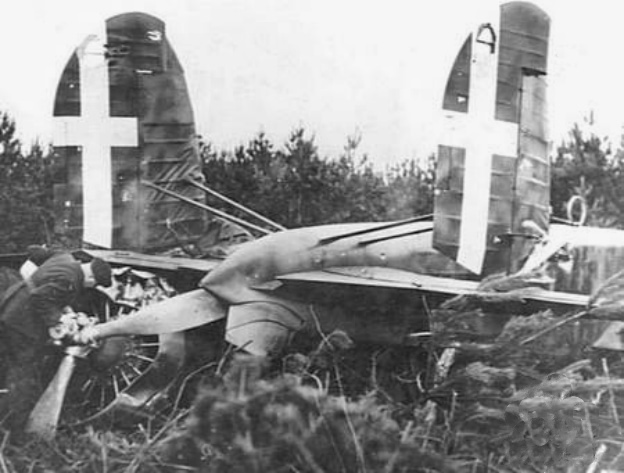
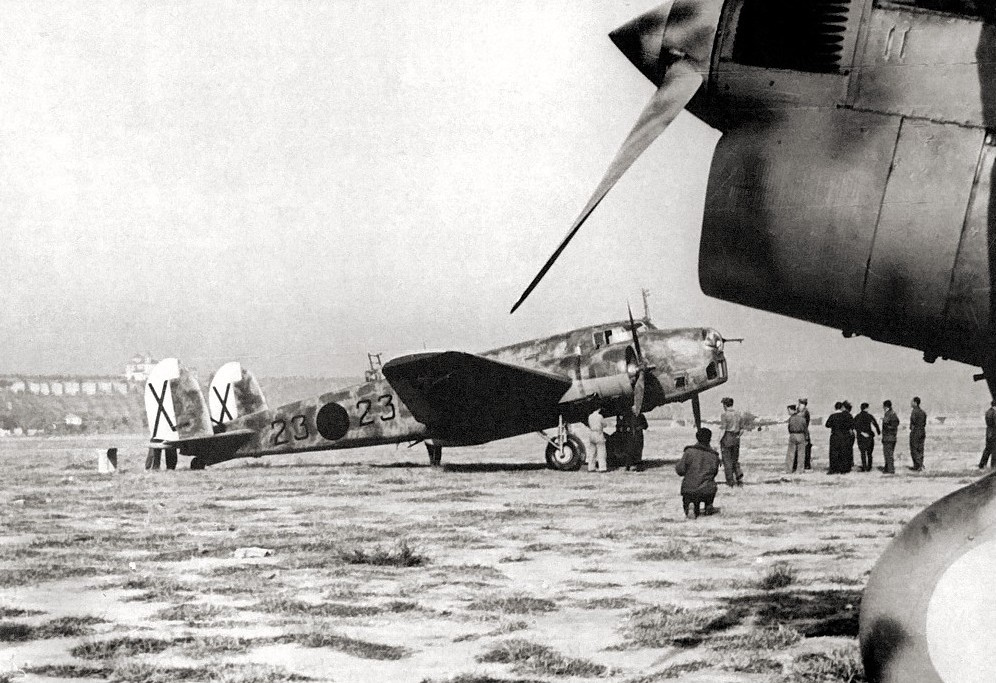
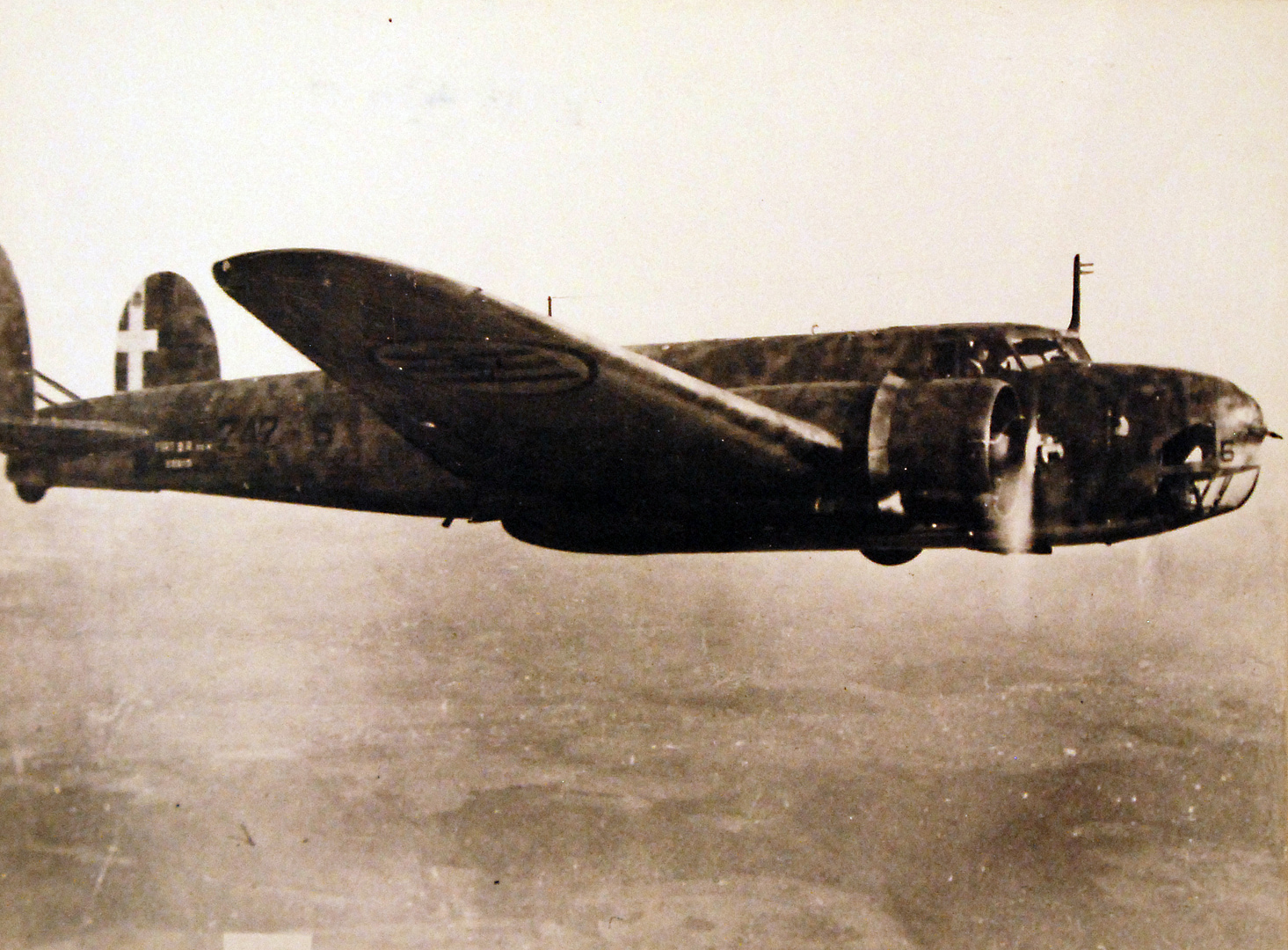
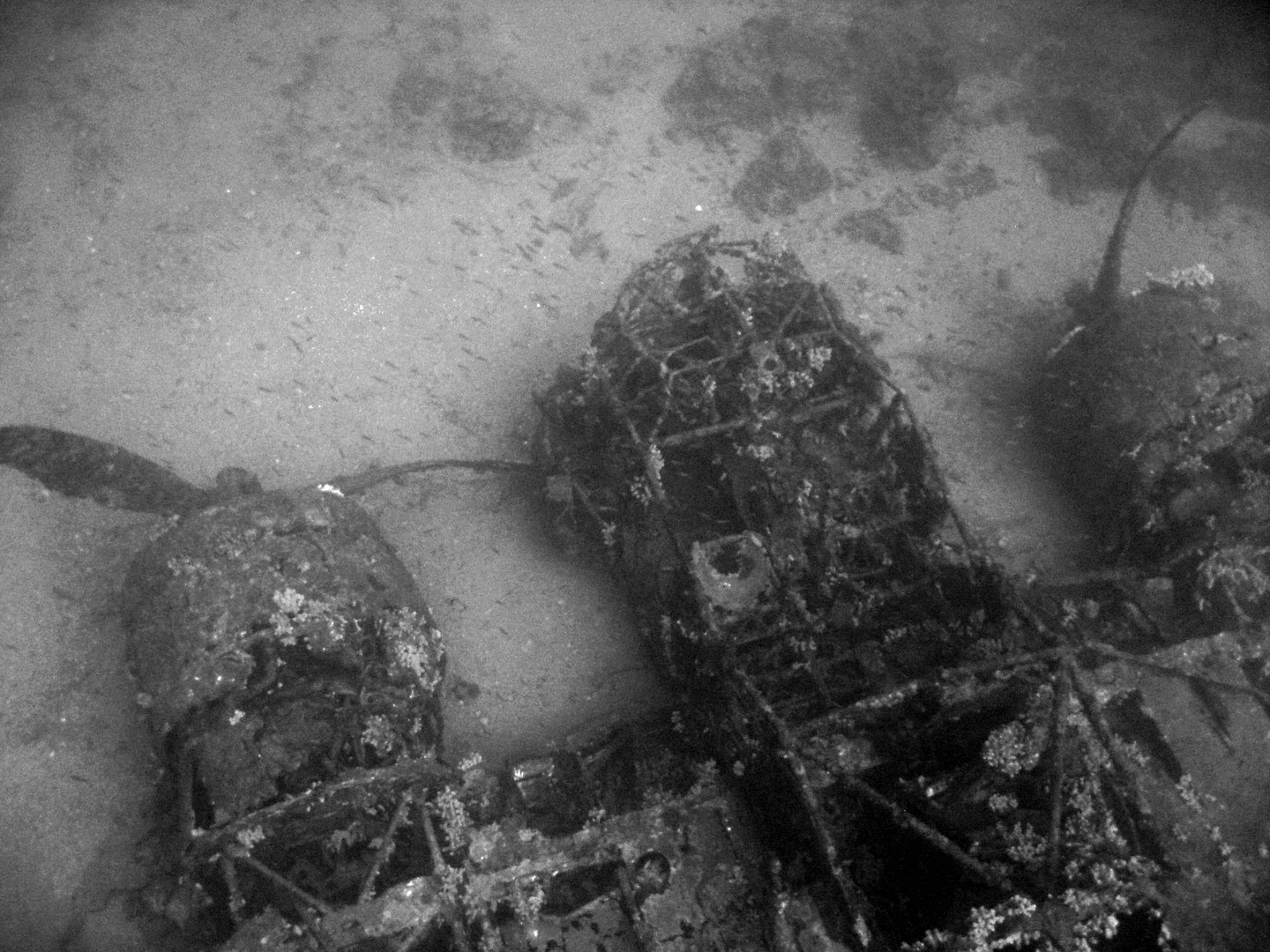
Period photographs of the Cicogna in Italian, Spanish and captured service, plus the wreckage that is all that survives today. Click any image to enlarge. Every photo is credited to its source and licence.
Video
The Fiat BR.20 Cicogna on film: a documentary history
“Italy’s First Modern Bomber (That Aged Like Milk) | Fiat BR.20” by Rex’s Hangar – an established WWII-aircraft documentary channel (~173,000 views, ~8,100 likes at time of writing). A thorough, well-sourced history of the Cicogna’s design, service and decline.
Operations Map
Where the Fiat BR.20 Cicogna flew and fought
Italy built it (blue); the Regia Aeronautica and Japan fought with it across Spain, China, Britain, the Mediterranean, the Balkans and the Eastern Front (theatres in camo); it was exported to Japan, Spain and Venezuela (grey); and today only relics survive. Hover or tap a country for detail. Toggle the categories below the map.
A note on how to read this map. Following the convention used across the Book of Beasts, the camouflage-shaded “theatres” category marks the countries where the Cicogna saw combat, not the nations whose air forces flew it. So the United Kingdom is shaded because the Corpo Aereo Italiano’s BR.20Ms bombed south-east England, and China is shaded because Japanese “Type I” BR.20s fought there – even though the bombers were Italian- and Japanese-crewed. Italy is shown in origin blue as the manufacturer, and also carries the “surviving airframes” note because the only physical relics of the type are found there. Because no operator flies the BR.20 today, there is no MiGFlug booking layer on this particular map – the blue is reserved for the aircraft’s country of origin.
Combat Record
The Fiat BR.20 Cicogna’s war, in numbers
The numbers above only hint at the shape of the BR.20’s war. What they capture is a bomber that was produced in respectable but not overwhelming quantity, that achieved one genuinely notable export success, and that was used hard across an unusually wide spread of fronts before disappearing entirely. What they cannot capture is the central pattern of its combat record: a steady, grinding attrition rather than any decisive achievement.
Across Spain, China, Britain, North Africa, Malta, the Balkans and the Eastern Front, the Cicogna’s story is remarkably consistent. Wherever fighter opposition was weak or disorganised – early Spain, permissive corners of the Mediterranean – it coped. Wherever it met modern, well-handled fighters and effective anti-aircraft defences – China in 1938-39, England in 1940, Malta throughout – it suffered disproportionately for the results it achieved. That consistency is the real “statistic” of the BR.20: not a single dramatic figure, but the repeated demonstration that a lightly armed, underpowered day bomber, however modern-looking, could not survive a contested modern battlefield without paying a heavy price.
Combat figures for the Cicogna are fragmentary and contested; the numbers above are broad, well-attested orders of magnitude rather than precise tallies. Loss records from the Malta, Greek and Battle of Britain operations in particular vary considerably between sources, and are presented here as estimates.
The War In Depth
The Fiat BR.20 Cicogna’s war, theatre by theatre
The Cicogna’s career touched almost every front the Regia Aeronautica fought on, plus a second, entirely separate war in the Far East under Japanese colours. These expanders go deeper into each chapter – and into the technical and doctrinal reasons the aircraft struggled once the fighting turned serious.
06The Fiat BR.20 Cicogna in Spain: the Aviazione Legionaria and the first combat lessons
Italy used the Spanish Civil War (1936-39) as a live proving ground for much of its air force, and the BR.20 was part of that experiment. A small batch – commonly given as thirteen aircraft – was sent to serve with the Aviazione Legionaria, the Italian volunteer air contingent fighting for Franco’s Nationalists. There the Cicogna flew conventional bombing missions, and on the relatively permissive skies of the Spanish front it performed acceptably: opposition fighters were often older types, and the aircraft’s modern layout and reasonable speed let it operate without catastrophic loss.
That comparatively gentle debut may, in hindsight, have flattered the design. The lessons that mattered most – that the defensive armament was too light and the engines too fragile for a contested, fast-moving air war – were not fully driven home in Spain, where the pace and quality of fighter opposition were lower than what the type would face in 1940. When the war ended, nine surviving BR.20s were handed over to the new Spanish State air force, making Spain the Cicogna’s first foreign operator and giving the aircraft a modest post-war afterlife on the Iberian peninsula. All specific figures here vary slightly between sources and should be read as approximate.
07The Fiat BR.20 in Japanese service: the “Type I” heavy bomber over China
The most surprising chapter of the BR.20 story unfolded thousands of miles from Italy. In the late 1930s Imperial Japan, expanding its war in China and not yet able to field enough modern bombers of its own, turned to foreign suppliers – and bought the Fiat BR.20 in quantity. Orders totalling more than eighty aircraft made the Cicogna one of the very few foreign combat types Japan ever imported in numbers, and the Japanese Army Air Force pressed it into service as the “Type I” heavy bomber, sometimes rendered “I-shiki”.
Committed to the Second Sino-Japanese War from around 1938, the BR.20 equipped bomber units operating over China and Manchuria. Here the aircraft’s weaknesses were exposed far more sharply than in Spain: against determined Chinese fighter defence, its three machine guns and modest performance left it exposed, and losses were significant. The Japanese soon prioritised indigenous designs such as the Mitsubishi Ki-21, and the BR.20’s front-line career in the East was relatively short. Even so, the episode is historically striking – a mid-1930s Italian bomber flying combat missions in Chinese skies under the flag of Imperial Japan – and it remains one of the aircraft’s most distinctive claims to a footnote in aviation history.
08The Fiat BR.20M and the Corpo Aereo Italiano: the ineffective Battle of Britain raids
When France fell and the Battle of Britain reached its height, Mussolini was determined that Italian airmen should be seen to take part in the assault on Britain. The result was the Corpo Aereo Italiano, an expeditionary air corps deployed to bases in occupied Belgium in the autumn of 1940. Its bomber element was built around the BR.20M, and from October 1940 these aircraft flew a short series of raids against targets in south-east England.
The campaign is almost universally judged a failure. The BR.20M was slower and more lightly armed than the German bombers it flew alongside, its crews were unfamiliar with the weather and conditions of the North Sea and English Channel in winter, and the results achieved were militarily negligible. Losses came not only from RAF fighters and anti-aircraft fire but heavily from accidents and the appalling weather; several aircraft were lost for reasons unconnected to enemy action. By the start of 1941 the bomber effort had been quietly scaled back and the Corpo Aereo Italiano’s contribution to the air war over Britain is remembered, fairly, as a costly gesture rather than a serious military threat. It is one of the clearest illustrations of how far the once-modern Cicogna had fallen behind by 1940.
09The Fiat BR.20 over the Mediterranean, North Africa and Malta
The Cicogna’s steadiest employment came in the Mediterranean theatre, where the Regia Aeronautica used it for conventional bombing against British and Commonwealth forces. BR.20 and BR.20M units operated from Italian, Libyan and Aegean bases, striking at ports, airfields and troop concentrations across the Western Desert campaign and taking part in the long, grinding air offensive against Malta.
None of this was glamorous, and much of it was expensive. The Malta campaign in particular was a war of attrition in which Italian bombers ran a gauntlet of fighters and increasingly effective anti-aircraft defences; over its course the BR.20 force suffered heavy cumulative losses to combat and accidents. Operating a lightly armed, unarmoured-by-modern-standards medium bomber by day over defended targets was inherently costly, and the Cicogna paid the price. As newer types and greater German involvement reshaped the Mediterranean air war, the BR.20 was progressively pushed into secondary and second-line roles.
10The Fiat BR.20 in the Balkans and on the Eastern Front
The BR.20 also flew in two further theatres that are easy to overlook. During the Greco-Italian War of 1940-41 the type bombed Greek targets, frequently in poor weather over difficult mountainous terrain, and it took part in the Axis invasion of Yugoslavia in April 1941. Neither campaign showed the aircraft in a decisive light, but both kept the ageing Cicogna in continuous front-line use across the Balkans.
Further east, a small BR.20M detachment accompanied the Italian expeditionary corps sent to fight alongside Germany in the Soviet Union from 1941. There it flew reconnaissance and bombing sorties in support of Italian ground forces before being withdrawn as the situation on the Eastern Front deteriorated and Italy’s fortunes turned. It was a minor deployment in terms of numbers, but it underlines how widely – and how thinly – the Cicogna was spread across the many fronts of Italy’s war.
11Why the Fiat BR.20 Cicogna aged so badly: engines, armament and doctrine
The Cicogna’s decline was not the result of any single flaw but of several compounding ones. First, the engines: the two Fiat A.80 RC.41 radials were powerful on paper but heavy, thirsty and unreliable, and no substantially better powerplant was ever fitted in quantity. That froze the aircraft’s performance at a level that was competitive in 1936 and mediocre by 1940. Second, the defensive armament: three rifle-and-heavy machine guns were simply not enough to protect a day bomber against modern eight-gun monoplane fighters, and the aircraft lacked the speed to run from them.
Third, and most important, was the failure to develop the design. While Britain, Germany and the United States iterated their bombers aggressively through the late 1930s, the BR.20 received only the incremental BR.20M update. Italian industry, stretched thin and pulled between competing priorities, never gave the Cicogna the new engines, heavier armament or pressurised, higher-flying airframe that might have kept it relevant. The aircraft therefore stands as a case study in how a promising, genuinely modern 1936 design could become dangerously obsolete within four years purely through developmental neglect.
12The Fiat BR.20 Cicogna compared: the He 111, the Blenheim and the SM.79
Placing the Cicogna alongside its contemporaries makes its standing clearer. Germany’s Heinkel He 111, which first flew in 1935, was of a similar generation but was developed relentlessly, re-engined and up-armed through the war; it remained front-line into the mid-war years where the BR.20 did not. Britain’s Bristol Blenheim, another fast-for-1936 light-medium bomber, likewise proved vulnerable by 1940-41 but was produced and adapted in far greater numbers and variety.
The most instructive comparison, though, remains the home-grown Savoia-Marchetti SM.79. Slower to look modern – it was a three-engined, partly wooden design – the Sparviero nonetheless outlasted and outperformed the Cicogna in Italian service, becoming a feared torpedo bomber in the Mediterranean. That an apparently less “advanced” trimotor should so thoroughly eclipse the sleek, all-metal BR.20 is the central irony of the Cicogna’s story: modern appearance counted for far less than reliable engines, adequate defence and, above all, continuous development.
13Why no complete Fiat BR.20 Cicogna survives, and what remains
Of the roughly five to six hundred BR.20s built, not one complete airframe survives today. Several factors conspired to erase the type. It was built in only moderate numbers by the standards of major combatants; it was worn out hard across many theatres; and by 1946, when the last examples were retired, a defeated and impoverished post-war Italy had neither the resources nor the appetite to preserve obsolete bombers. Unlike the SM.79, which enjoyed a measure of post-war affection and preservation, the Cicogna simply disappeared.
What remains is fragmentary: wreck sites of aircraft lost over land and sea, recovered components, and relics held by enthusiasts and a handful of collections. These fragments are valuable to historians and modellers for confirming construction details, but they fall far short of a restorable, let alone flyable, machine. It is precisely because nothing complete survives that no honest cost-per-flight-hour, restoration cost or airworthy valuation can be given for the BR.20 – and why you will never see one fly at an airshow. The Cicogna is, in the most literal sense, a bomber that the twentieth century used up.
14The Fiat BR.20 Cicogna’s crew and how the aircraft was flown
The BR.20 was worked by a crew of five, each with a clearly defined station. The pilot and co-pilot sat side by side in the enclosed cockpit; ahead and below, the bombardier occupied the glazed nose, where he also manned the forward machine gun and, over the target, took control of the bomb release through the aircraft’s bombsight. A radio operator handled communications and navigation aids, while a dedicated gunner served the dorsal position – and, in the ventral station, the aircraft’s belly defence. On the BR.20M the nose was lengthened and further glazed specifically to give the bombardier a better working position and field of view.
In the air the Cicogna was, by most accounts, a reasonably straightforward aircraft to fly when its engines behaved, but it demanded constant attention to those engines and offered its crew little protection once fighters arrived. The defensive scheme – a handful of hand-aimed machine guns spread thinly around the fuselage – left large blind arcs, and a single well-flown attacking fighter could exploit them. For the men who flew it into the war’s harder theatres, the BR.20 offered a comfortable enough office and a frighteningly exposed one at the same time.
15Production numbers and why the sources disagree about the Fiat BR.20
You will see the total number of BR.20s built quoted variously as “over 500”, “about 580”, or figures approaching 600, and there is no single authoritative tally that every source accepts. The disagreement is normal for Italian wartime aircraft: production records are incomplete, prototypes and sub-variants are counted differently by different historians, and export aircraft (to Japan, Spain and Venezuela) are sometimes folded into the total and sometimes listed separately. The major production model, the BR.20M, accounts for the bulk of the figure, with a few hundred built; the original BR.20 and the experimental BR.20bis make up much smaller numbers.
For this reason every production, loss and performance figure on this page is deliberately hedged. The honest position is that the BR.20 was built in the low-to-mid hundreds – a moderate production run by the standards of the major combatant powers, but a significant one for Italy – and that precise single numbers should be regarded with healthy scepticism. Where this page gives a figure such as “~580 built”, it should be read as a representative central estimate rather than a confirmed count.
16The Fiat BR.20 Cicogna’s defensive armament: why three machine guns were not enough
A day bomber lives or dies by its ability to fend off fighters, and here the Cicogna was chronically under-provided. The type typically carried three 12.7 mm Breda-SAFAT heavy machine guns – one in the nose, one in a dorsal position and one firing from a ventral station – sometimes supplemented by a lighter weapon. On paper the 12.7 mm Breda-SAFAT was a respectable gun. In practice, three hand-aimed positions spread around a large fuselage could not cover every approach, and the gunners faced wide blind arcs that an experienced fighter pilot could attack through with relative impunity.
Compare this with the eight-gun batteries of the Hurricane and Spitfire the BR.20M met over Britain in 1940, or the concentrated fire a determined Chinese-flown fighter could bring to bear over China in 1938-39, and the mismatch is obvious. The BR.20M added armour to protect the crew, but armour does not shoot back, and the aircraft lacked the speed to escape trouble. The defensive scheme was, in short, a 1936 answer to a 1940 problem – and it was one of the principal reasons the Cicogna suffered so heavily whenever it met a capable opponent.
17The Fiat BR.20 Cicogna and Italian air-power doctrine of the 1930s
The BR.20 was conceived in the intellectual climate of Giulio Douhet’s Italy, where air-power theorists placed enormous faith in the bomber as a war-winning weapon in its own right. A fast, modern medium bomber like the Cicogna fitted that vision neatly on paper: it promised to strike enemy targets at speed, in daylight, trusting to its performance for protection. The trouble was that the theory outran the technology. The idea that “the bomber will always get through” assumed bombers could stay ahead of interceptors – and by 1940 they emphatically could not, least of all a design frozen at 1936 performance.
Italian doctrine also spread industrial effort across a bewildering range of types and manufacturers rather than concentrating on a few well-developed designs, which is part of why the BR.20 never received the sustained investment that kept foreign contemporaries competitive. When war came, the Regia Aeronautica found itself committed to daylight medium-bombing with aircraft that the reality of modern air defence had already overtaken. The Cicogna was not uniquely at fault here – it was a product of a doctrine and an industrial system that, together, failed to keep its bombers current.
18The Fiat BR.20 Cicogna’s place in history: a case study in stagnation
It would be easy to dismiss the BR.20 as simply a bad aircraft, but that misses the more interesting truth. The Cicogna was not born bad – it was born genuinely modern, a clean all-metal monoplane that briefly ranked among the better medium bombers in the world and that Italy could be proud of in 1936. What makes it historically valuable is the speed and completeness of its fall: within four years the same airframe was sending crews to their deaths over Britain, Malta and China because it had been allowed to stand still while everyone else raced ahead.
In that sense the BR.20 is a near-perfect case study in how air power really works. Raw design cleverness at a single moment counts for little; what decides an aircraft’s fate is sustained investment – in engines, in armament, in protection and in continual iteration. Italy, with limited industrial capacity and too many competing programmes, could not give the Cicogna that investment, and the aircraft paid for it. Remembered honestly, the BR.20 is not a legend and not a villain, but a cautionary tale: the bomber that was modern for about four years, and obsolete for the rest of its life.
19The Fiat BR.20 Cicogna’s cost and value: why no honest price can be quoted
Museum visitors and comparison-shoppers naturally ask what an aircraft cost, both to buy and to operate. For the BR.20, the honest answer is that no reliable figure exists in a form worth quoting. Italian wartime procurement accounting was opaque and inconsistent, the lira’s value shifted dramatically across the late 1930s and the war, and export deals to Japan, Spain and Venezuela were negotiated under terms that were rarely published. Any specific unit price you find attached to the Cicogna online should be treated with real caution.
The operating side is even clearer: because not one complete BR.20 survives, and none has flown since 1946, there is simply no modern data on fuel burn, maintenance man-hours or cost per flight hour of the kind that exists for preserved warbirds. What can be said qualitatively is that two heavy, thirsty and unreliable A.80 radials made the Cicogna comparatively expensive to run for its modest bomb load – a real factor in Italy’s preference for other types. That is why, throughout this page, cost fields are marked “not reliably recorded” or “not applicable” rather than filled with an invented number. An honest “we don’t know” is worth more than a confident guess.
20How the Fiat BR.20 Cicogna is remembered today: wrecks, relics and models
With no complete airframe to preserve, the Cicogna’s physical legacy is scattered and fragmentary. Enthusiasts and researchers document known wreck sites – aircraft lost over land and sea during the war – and a handful of recovered components and relics are held in private hands and small collections. These fragments matter to historians and modellers for confirming construction and detail, but they are a very long way from a restorable machine, let alone a flyable one.
In the wider culture the BR.20 survives mainly through photographs, a modest body of historical writing, scale-model kits, and documentary coverage such as the video embedded on this page. It is a type kept alive by interest rather than by hardware. That quiet, almost invisible afterlife is fitting for an aircraft whose defining characteristic was to be overtaken and forgotten – and it is exactly why a clear, honest, well-illustrated reference page is worth building for it. The Cicogna cannot speak for itself through a surviving airframe, so the record has to do the work instead.
21The Fiat BR.20 Cicogna’s prototype and pre-war service, 1936-1939
The BR.20’s story began in the mid-1930s, when Fiat’s Rosatelli team set out to give the Regia Aeronautica a genuinely modern twin-engined bomber. The prototype first flew on 10 February 1936, and the aircraft moved into service with encouraging speed – a reflection both of its sound basic design and of Italy’s urgency to modernise its bomber arm. In the peace-time years that followed, the Cicogna equipped a growing number of bomber groups and became one of the visible symbols of a Regia Aeronautica that Fascist Italy was keen to present as modern and formidable.
Those pre-war years flattered the type. Displayed at exhibitions, flown in exercises, and committed to the relatively permissive skies of the Spanish Civil War, the BR.20 looked every inch a capable modern bomber, and Italy’s propaganda made the most of it. The export orders from Japan, and the handover of aircraft to Spain, seemed to confirm the aircraft’s standing on the international stage. What none of this revealed was how quickly the ground was shifting beneath it: even as the Cicogna entered service, the fighters and defensive systems that would render it obsolete were already taking shape. The aircraft that entered the war in 1940 was, in every important respect, the same one that had impressed in 1936 – and that was precisely the problem.
Questions & Answers
Fiat BR.20 Cicogna: your questions answered
Can I fly in a Fiat BR.20 Cicogna?
No. Not a single complete Fiat BR.20 survives anywhere in the world – only wreckage and recovered parts remain – so there is no airworthy or bookable Cicogna, and MiGFlug does not offer flights in this aircraft. However, you can fly in several genuine military jets today: from L-39 Albatros jet-warbird sorties to fighter flights and even supersonic missions in types like the MiG-29. See the full list at migflug.com/flights-prices.
Was the Fiat BR.20 a good bomber?
It depends entirely on the date. In 1936 the BR.20 was a genuinely modern, all-metal monoplane bomber – one of Italy’s first, and among the more advanced medium bombers of its moment. But it barely developed afterwards, and by 1940-42 it was underpowered, lightly armed and vulnerable. So: promising and modern at its debut, outdated and exposed by the time it saw its heaviest fighting.
Why was the BR.20 overshadowed by the Savoia-Marchetti SM.79?
The three-engined SM.79 Sparviero was faster, tougher and more trusted by crews, especially for long Mediterranean sea crossings where a third engine was reassuring. The twin-engined BR.20, with two unreliable Fiat A.80 radials and lighter defensive armament, was always the poorer relation. Italian doctrine and production therefore favoured the SM.79, leaving the Cicogna as a secondary type.
Why did Japan buy the Fiat BR.20?
In the late 1930s Japan needed modern bombers quickly and bought more than eighty BR.20s from Italy, operating them as the “Type I” heavy bomber. It was a genuinely unusual arrangement – the Cicogna became one of very few foreign aircraft types Imperial Japan ever imported in quantity – and the aircraft was committed to the Second Sino-Japanese War over China, where its light defences led to heavy losses.
What happened when BR.20s raided Britain in 1940?
In late 1940 the Corpo Aereo Italiano sent a bomber force, including BR.20Ms, to join the German assault on Britain and raid south-east England. The campaign is remembered as largely ineffective: bad weather, the RAF and accidents cost the Italians a disproportionate number of aircraft for very little military result, and the expedition was quietly wound down.
How many Fiat BR.20s were built?
Sources disagree, but total production across all variants is usually given as somewhere between about 500 and 600 aircraft, the bulk of them the wartime BR.20M. Treat any single precise figure with caution – Italian wartime production records are incomplete and different references count prototypes and sub-variants differently.
Does any Fiat BR.20 survive today?
No complete example survives. The type was retired in 1946 and none were preserved intact. What remains are wreck sites, recovered fragments and relics in a few collections – enough to study details, but far from a flyable or even fully restored airframe. This is why no cost-per-flight-hour or restoration figure can honestly be quoted for it.
What does “Cicogna” mean, and what about “BR”?
“Cicogna” is Italian for “stork”. “BR” stands for “Bombardiere Rosatelli”, after Fiat’s chief engineer Celestino Rosatelli, who also designed Fiat’s “CR” fighter biplanes such as the CR.42 Falco. The BR.20 was a clean break from Rosatelli’s earlier single-engined biplane bombers, adopting a modern twin-engined monoplane layout.
What engines did the Fiat BR.20 use, and how powerful was it?
The BR.20 was powered by two Fiat A.80 RC.41 air-cooled radial engines, each producing roughly 1,000 hp (about 746 kW) – though exact figures varied by engine batch and are best treated as estimates. Those engines drove a top speed commonly quoted around 440 km/h. The problem was less peak power than reliability and weight: the A.80 was heavy, thirsty and prone to trouble, which limited the aircraft’s practical load, altitude and serviceability throughout its career.
How did the Fiat BR.20 compare to the German Heinkel He 111?
The two were roughly the same generation – the He 111 first flew in 1935, the BR.20 in 1936 – and looked broadly comparable in 1936. The decisive difference was development. Germany re-engined, up-armed and reworked the He 111 repeatedly, keeping it front-line into the mid-war years. The BR.20 received only the modest BR.20M update and fell behind. So while they started as near-contemporaries, the Heinkel evolved and the Cicogna stagnated – which is why one is far better remembered than the other.
Did the Fiat BR.20 serve outside Italy and Japan?
Yes, in small numbers. Beyond its major Italian and Japanese service, the type was exported to Spain, where nine surviving Aviazione Legionaria aircraft passed to the Spanish State air force after the Civil War, and at least one aircraft was sold to Venezuela. A single captured BR.20 is also recorded flying briefly with the Republic of China. These were minor operators, but they give the Cicogna a surprisingly international footprint for an aircraft so little remembered today.
What was the Corpo Aereo Italiano?
The Corpo Aereo Italiano was the Italian expeditionary air corps sent to occupied Belgium in late 1940 to take part in the German air campaign against Britain. Its bomber component was built around the Fiat BR.20M. Its brief operations over south-east England are remembered as largely ineffective and disproportionately costly, hampered by weather, unfamiliar conditions and the aircraft’s own limitations, and the effort was wound down by early 1941.
Is the Fiat BR.20 the same as the Fiat CR.42 or CR.32?
No – and this is a common mix-up. The Fiat CR.42 Falco and CR.32 are single-engined fighter biplanes; the BR.20 Cicogna is a much larger twin-engined monoplane medium bomber. They share only their manufacturer, Fiat, and their designer, Celestino Rosatelli, whose “CR” initials mark the fighters and whose “BR” initials mark the bombers. If you are looking at a small, agile biplane, that is a CR fighter, not a BR.20. The Cicogna is the big all-metal bomber described on this page.
Was the Fiat BR.20 ever used as a torpedo bomber?
No. That role in the Regia Aeronautica belonged above all to the Savoia-Marchetti SM.79 Sparviero, which became a genuinely feared anti-shipping torpedo bomber in the Mediterranean. The BR.20 was a conventional level bomber and served in that role throughout its career. The distinction is another reason the SM.79 is far better remembered: it found a deadly niche the Cicogna never did.
Can I see a Fiat BR.20 in a museum?
Not as a complete aircraft. Because no intact BR.20 survives, what exists in collections are relics, recovered fragments and wreck-site components rather than a whole airframe. Enthusiasts and a few museums hold and study these pieces, but there is no restored or displayable complete Cicogna anywhere. If you want to experience a real military aircraft in the air rather than a static exhibit, MiGFlug’s flights and prices page lists genuine jets you can actually fly in today.
You can’t fly the Cicogna – these, you can
The Fiat BR.20 is gone. Flying a real military jet is not.
No complete BR.20 exists and none will ever fly again. But you can still strap into a genuine military jet today – from jet-warbird sorties to supersonic fighter flights. MiGFlug arranges the real thing, worldwide.
The Cicogna belongs to a vanished era of loud radial engines and hand-aimed guns, and there is no way to relive it in the original metal. What you can do is experience the sensations its crews would recognise – the shove of real power, the horizon tilting hard, the ground dropping away – in aircraft that are still flying. MiGFlug specialises in exactly that: putting ordinary enthusiasts into genuine military jets with professional pilots, safely and for real. If this page has left you wanting to feel a warbird rather than just read about one, the flights below are where to start.
Related Aircraft
More from the Book of Beasts
The Cicogna makes most sense alongside its Italian contemporaries: the trimotor that eclipsed it, the fighter biplane that shared its designer’s initials, and the awkward monoplane fighter caught in the same late-1930s transition. Each tells another angle of the same story.
Sources & Further Reading
Where the Fiat BR.20 Cicogna facts come from
Note on accuracy: performance, production and loss figures for the BR.20 vary between sources and are flagged as estimates throughout. The central narrative – modern at its 1936 debut, outdated and vulnerable by 1940-42, overshadowed by the SM.79, blooded in Spain, notably exported to Japan for use over China, and largely ineffective with the Corpo Aereo Italiano over Britain, with no complete airframe surviving – reflects the consensus of the sources above.